Nordics Macro Daily(Beta Mode)
Riksbank Flags Inflation Risks; Norges Sells NOK
Market Snapshot
| Asset | Level | Change |
|---|---|---|
| OMX Stockholm 30 | 3,309.18 | -0.37% |
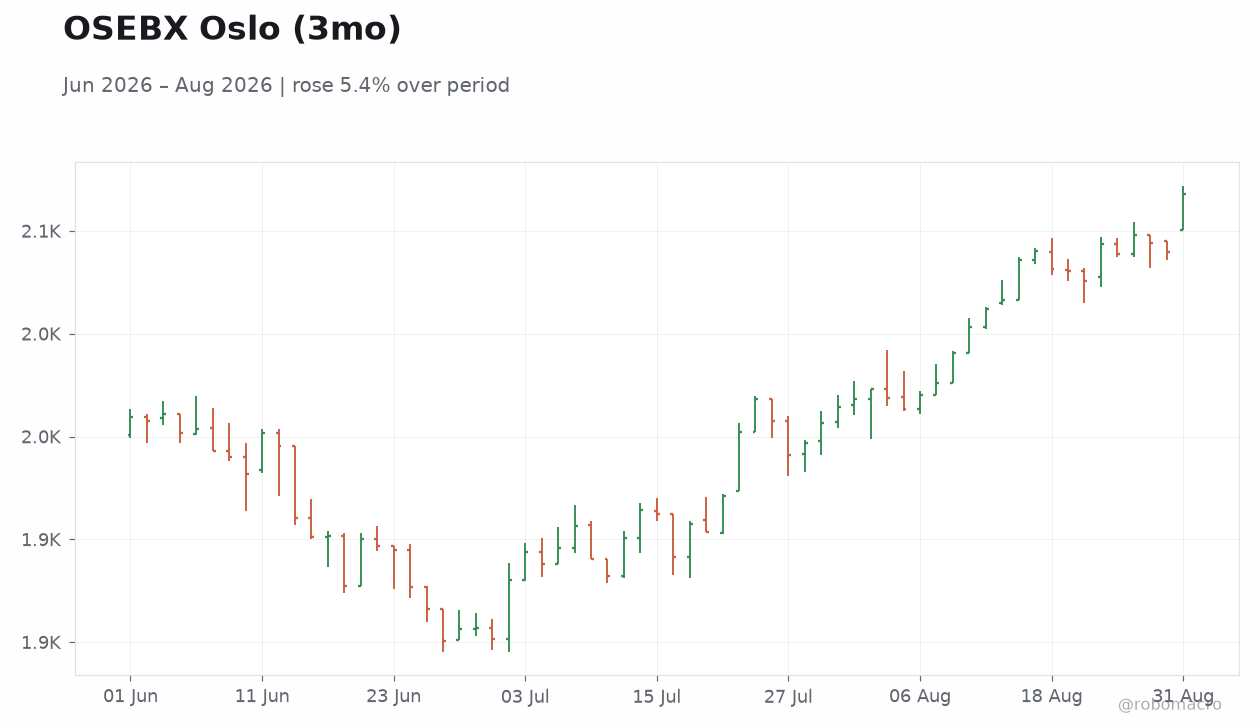
| Oslo Bors | 2,118.11 | +1.36% |
| OMX Copenhagen 25 | 1,911.87 | -0.29% |
| OMX Helsinki 25 | 6,441.71 | -0.88% |
| USD/SEK | 9.59 | -0.19% |
| USD/NOK | 9.35 | -0.15% |
| EUR/SEK | 11.13 | -0.02% |
| EUR/NOK | 10.85 | +0.00% |
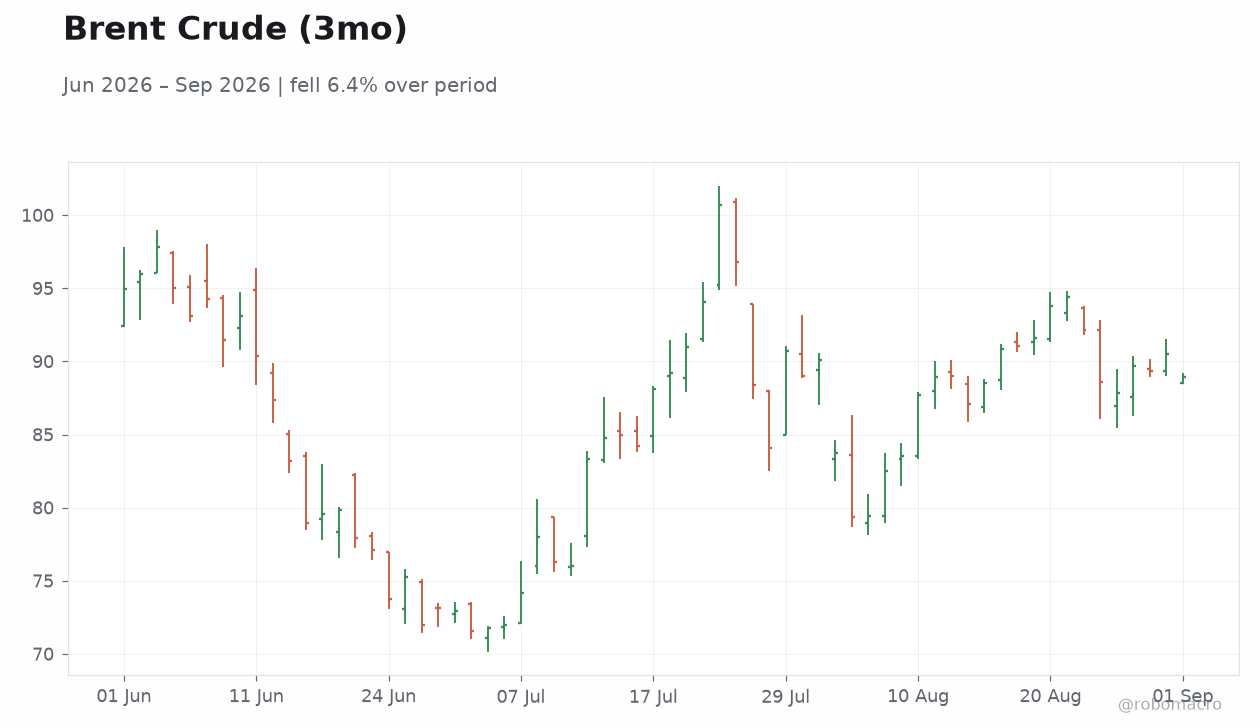
| Brent Crude | 88.94 | -1.71% |
| Gold | 4,485.50 | +1.23% |
| Bitcoin | 78,927.34 | +1.62% |
| Sweden 10Y Govt Yield | 3.12% | +5 bp |
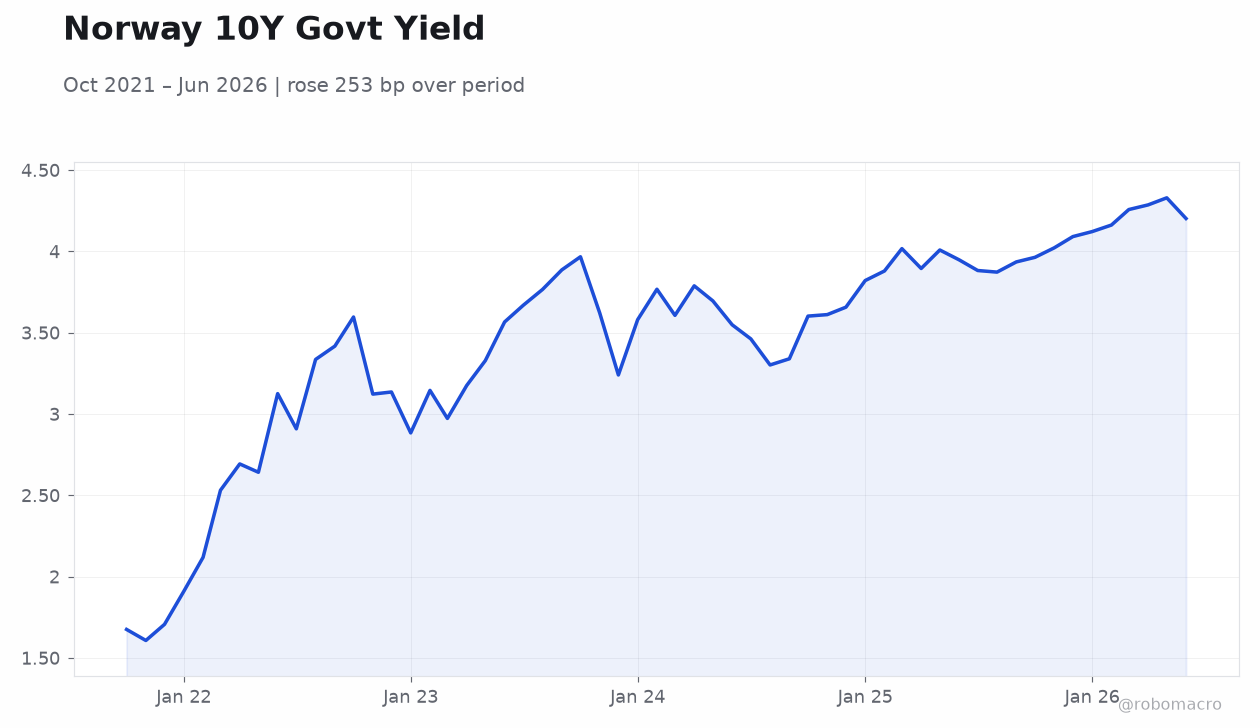
| Norway 10Y Govt Yield | 4.45% | +6 bp |
Prior Economic Events
| Data | Prior | Cons | Actual |
|---|---|---|---|
| No events available | |||
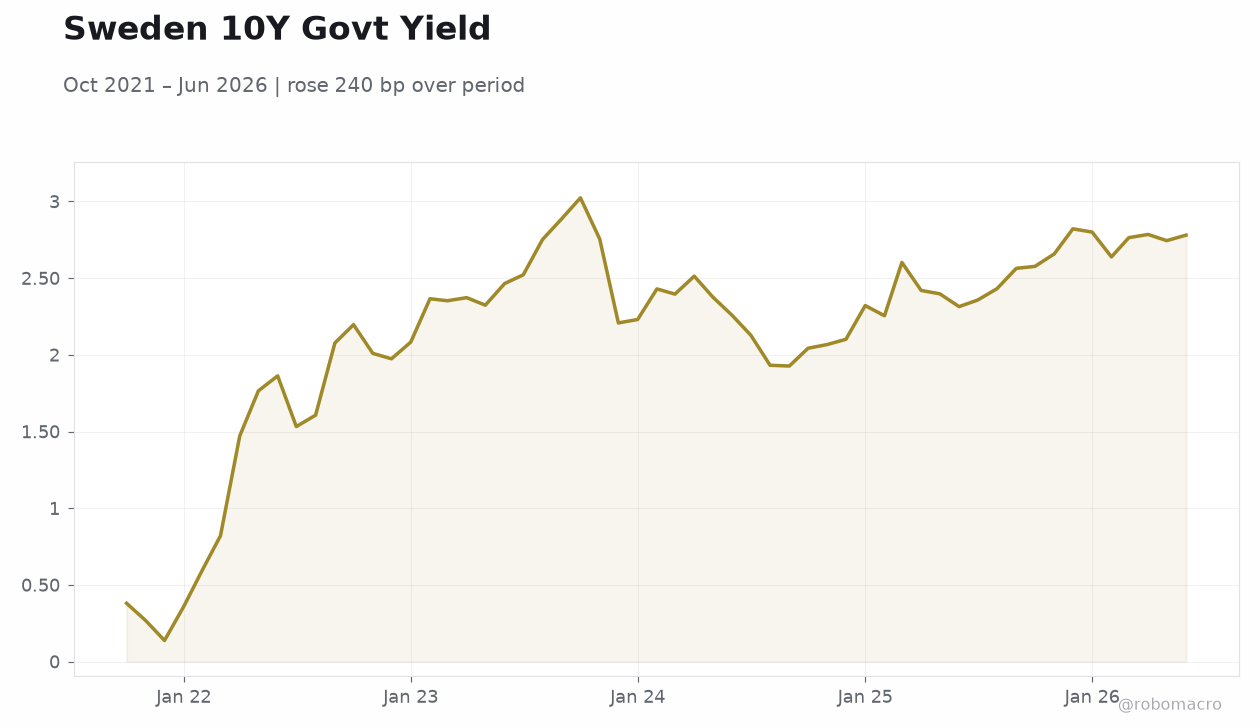 Sweden 10Y Govt Yield | Type: macro_line | Yield %: 2.781 (2026-06-01) | Range: 0.138–3.024 | Trend(5pt): 0.3806,1.974,2.43,2.42,2.781
Today's Economic Events
| Data | Prior | Cons | Time |
|---|---|---|---|
| No events available | |||
- Riksbank highlights elevated inflation risks while retaining policy flexibility.
- Norges Bank shifts to net NOK sales in September on oil-fund flows.
- Nordic equities mixed as Oslo rises on energy while Stockholm and Helsinki decline.
Yesterday's Recap
Swedish equities closed lower with the OMX Stockholm 30 falling 0.37 percent to 3,309.18 amid Riksbank comments that inflation risks have increased slightly. Norwegian markets outperformed as the Oslo Bors gained 1.36 percent to 2,118.11, supported by Brent crude at 88.94 despite a 1.71 percent daily drop. The Swedish krona strengthened modestly with USD/SEK at 9.59 after a 0.19 percent decline, while USD/NOK eased 0.15 percent to 9.35.
Ten-year government yields diverged, with Sweden’s rising 1.31 percent to 2.78 percent and Norway’s falling 2.94 percent to 4.20 percent. July CPI data showed Sweden at 0.18 percent year-over-year and Norway at 2.98 percent, providing limited immediate pressure on either central bank. Danish and Finnish indices posted modest losses of 0.29 percent and 0.88 percent respectively, with limited local data releases.
Norges Bank’s announcement of September NOK sales marked a clear shift from prior purchases. Gold rose 1.23 percent to 4,485.50 while Bitcoin gained 1.62 percent to 78,927.34, reflecting broader risk-on flows outside equities.
The Day Ahead
Markets face a quiet calendar with no major Nordic data releases scheduled for September 1. Attention centers on Norges Bank’s implementation of net kroner sales, which could influence near-term NOK liquidity and support the currency against the euro at 10.85. Swedish and Norwegian fixed-income markets will track any follow-through from yesterday’s yield moves, particularly Sweden’s 10-year at 2.78 percent.
Broader equity sentiment may respond to ongoing Riksbank rhetoric on inflation risks. Denmark’s Nationalbank and Finland’s ECB-aligned policy stance remain on hold pending euro-area developments. Currency pairs such as EUR/SEK at 11.13 offer little directional guidance ahead of the shift in Norwegian FX operations.
Energy traders will monitor Brent crude near 88.94 for any rebound that could further lift Oslo Bors components.
Other Economic Notes
Sweden’s export-oriented manufacturing sector continues to monitor krona stability after the currency reversed some 2025 gains against the dollar at 9.59. <i>↓ p.2</i>