Nordics Macro Daily(Beta Mode)
Brent Surge Bolsters NOK; Riksbank Holds Buffer
Market Snapshot
| Asset | Level | Change |
|---|---|---|
| OMX Stockholm 30 | 3,255.23 | +0.32% |
| Oslo Bors | 2,110.54 | +0.14% |
| OMX Copenhagen 25 | 1,865.05 | -0.82% |
| OMX Helsinki 25 | 6,540.50 | +0.48% |
| USD/SEK | 9.73 | +0.51% |
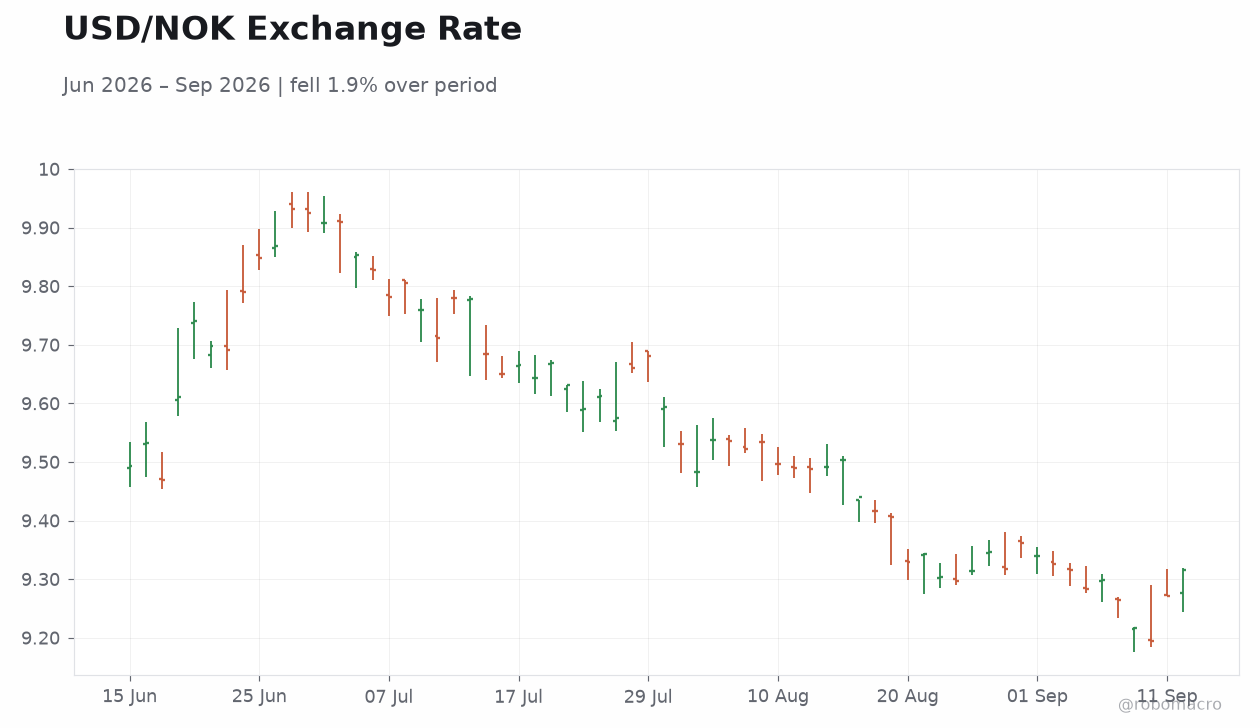
| USD/NOK | 9.31 | +0.45% |
| EUR/SEK | 11.25 | +0.09% |
| EUR/NOK | 10.77 | +0.04% |
| Brent Crude | 106.78 | +2.07% |
| Gold | 4,378.50 | +0.28% |
| Bitcoin | 77,744.64 | +0.61% |
| Sweden 10Y Govt Yield | 2.78% | +1.31% |
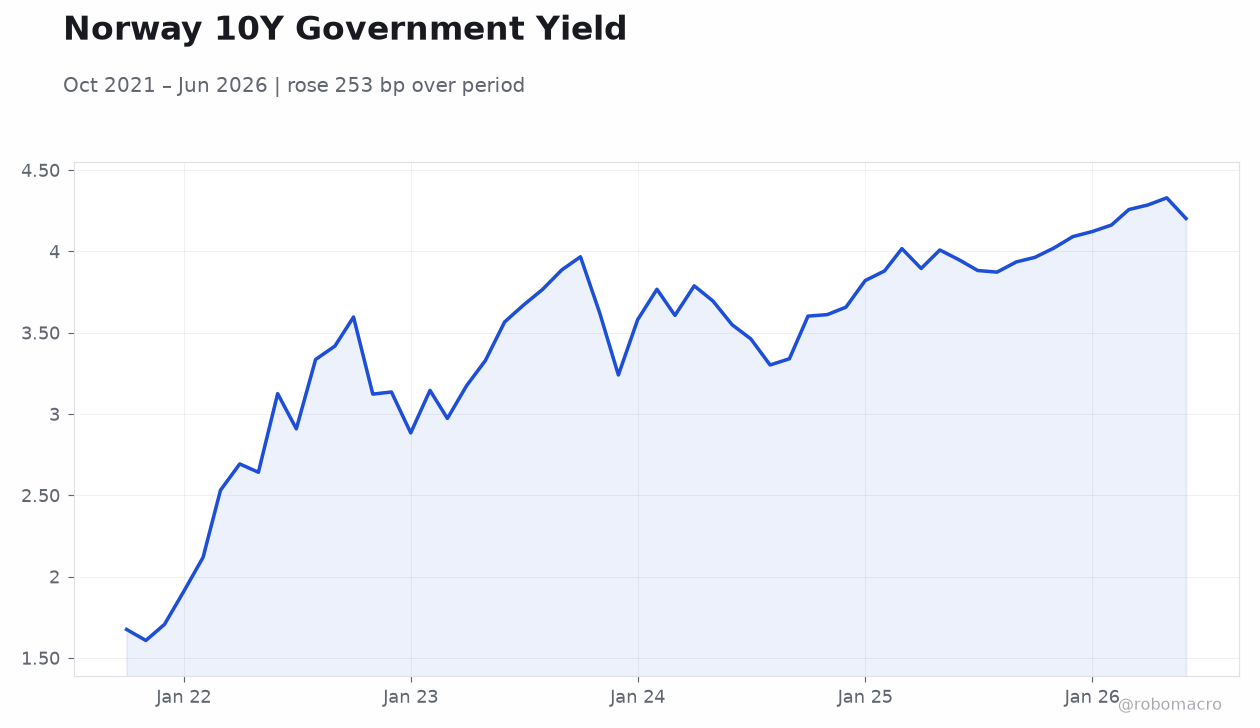
| Norway 10Y Govt Yield | 4.20% | -2.94% |
Prior Economic Events
| Data | Prior | Cons | Actual |
|---|---|---|---|
| No events available | |||
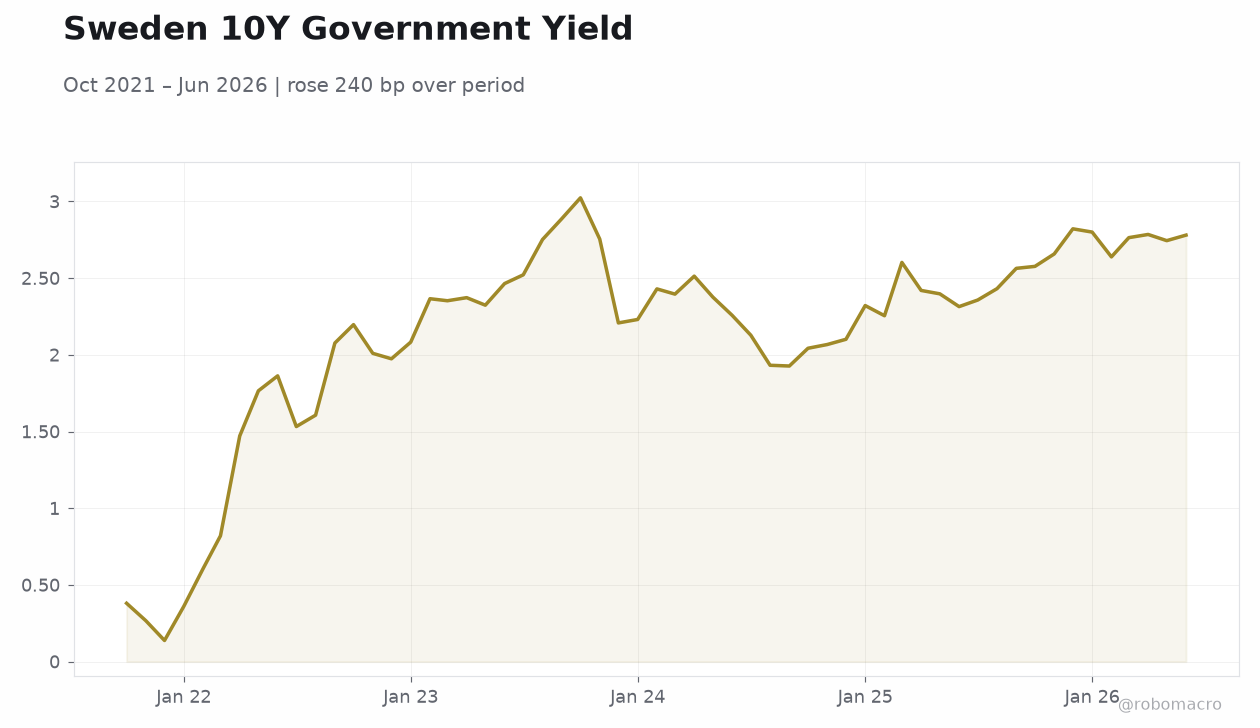 Sweden 10Y Government Yield | Type: macro_line | Yield %: 2.781 (2026-06-01) | Range: 0.138–3.024 | Trend(5pt): 0.3806,1.974,2.43,2.42,2.781
Today's Economic Events
| Data | Prior | Cons | Time |
|---|---|---|---|
| No events available | |||
- Riksbank keeps CCyB at 2% while SEK faces oil and ECB pressure
- Brent crude jumps 2.07% to 106.78, bolstering Norway’s fiscal outlook
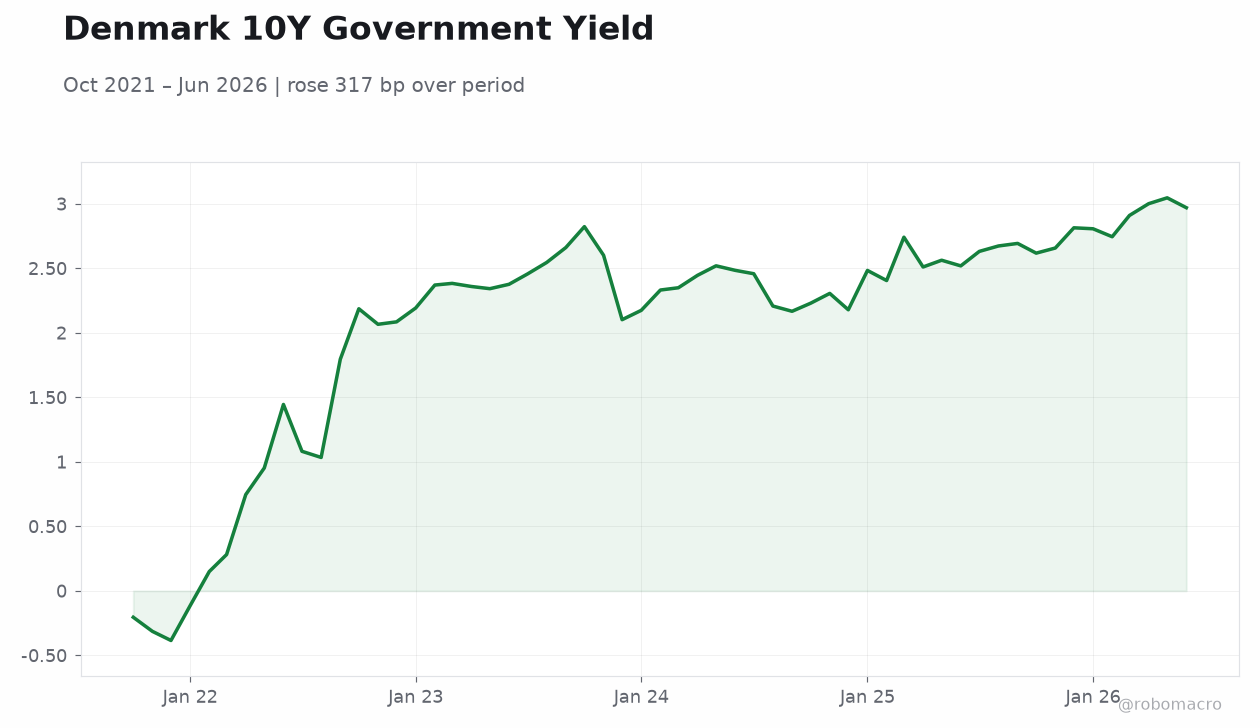
- Danmarks Nationalbank raises rates in line with ECB to defend EUR/DKK peg
Yesterday's Recap
Nordic equity markets closed mixed on September 13. OMX Stockholm 30 rose 0.32% to 3,255.23 while Oslo Bors gained 0.14% to 2,110.54. OMX Helsinki 25 advanced 0.48% to 6,540.50 but OMX Copenhagen 25 fell 0.82% to 1,865.05.
USD/SEK climbed 0.51% to 9.73 and USD/NOK rose 0.45% to 9.31 as the krona and krone weakened. Sweden’s Prime Minister Ulf Kristersson vowed to “make Sweden great again” ahead of the general election. Riksbank kept the countercyclical capital buffer at 2% and completed multiple government-bond auctions.
Danske Bank noted higher oil prices and the ECB stance are pressuring the Swedish krona. In Norway, softer inflation clouded September rate-hike odds while workplace stress rose despite traditional work-life balance. Danmarks Nationalbank hiked its key rate in line with the ECB.
The Day Ahead
No major economic releases are scheduled across Sweden, Norway, Denmark or Finland on September 14. Markets will monitor any follow-up comments from Riksbank or Norges Bank officials on the unchanged CCyB and softer Norwegian inflation. Brent crude near 106.78 will remain a focal point for NOK and Norway’s energy revenues.
Investors may also watch for further Danish statements on stablecoin risks flagged by Danmarks Nationalbank. Limited data flow leaves FX and bond markets sensitive to external moves in oil and ECB signals.
Other Economic Notes
Sweden’s export-oriented manufacturing sector faces headwinds from a stronger oil price and firmer ECB stance that weigh on the krona. Norway benefits directly from Brent’s 2.07% surge given its role as a major oil exporter, supporting fiscal revenues and the krone outlook. Denmark’s manufacturing and housing sectors remain tied to euro-area conditions via the ERM II peg.
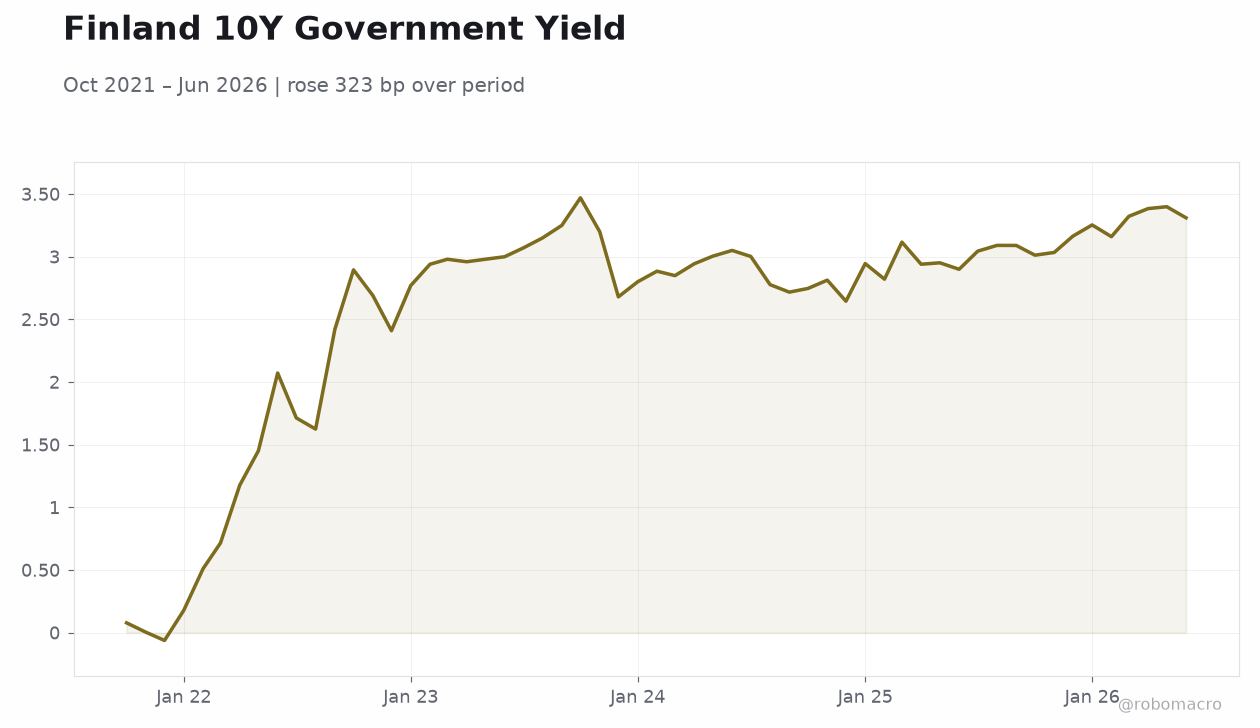
Finland’s eurozone membership means ECB policy dominates its rates and trade competitiveness. No fresh CPI or unemployment prints emerged yesterday, leaving the August readings—Sweden at 0.70% YoY and Norway at 3.30% YoY—as the latest benchmarks.
Global Macro News
Oil prices topped 100 USD per barrel, lifting Brent to 106.78 and providing a tailwind for Norway’s export revenues. Gold rose 0.28% to 4,378.50 amid ongoing geopolitical tensions, while Bitcoin gained 0.61%. ↓ p.2