Nordics Macro Daily(Beta Mode)
Nordic Stocks Slide as Krona Weakens
Market Snapshot
| Asset | Level | Change |
|---|---|---|
| OMX Stockholm 30 | 3,219.82 | -1.09% |
| Oslo Bors | 2,109.96 | -0.03% |
| OMX Copenhagen 25 | 1,860.34 | -0.25% |
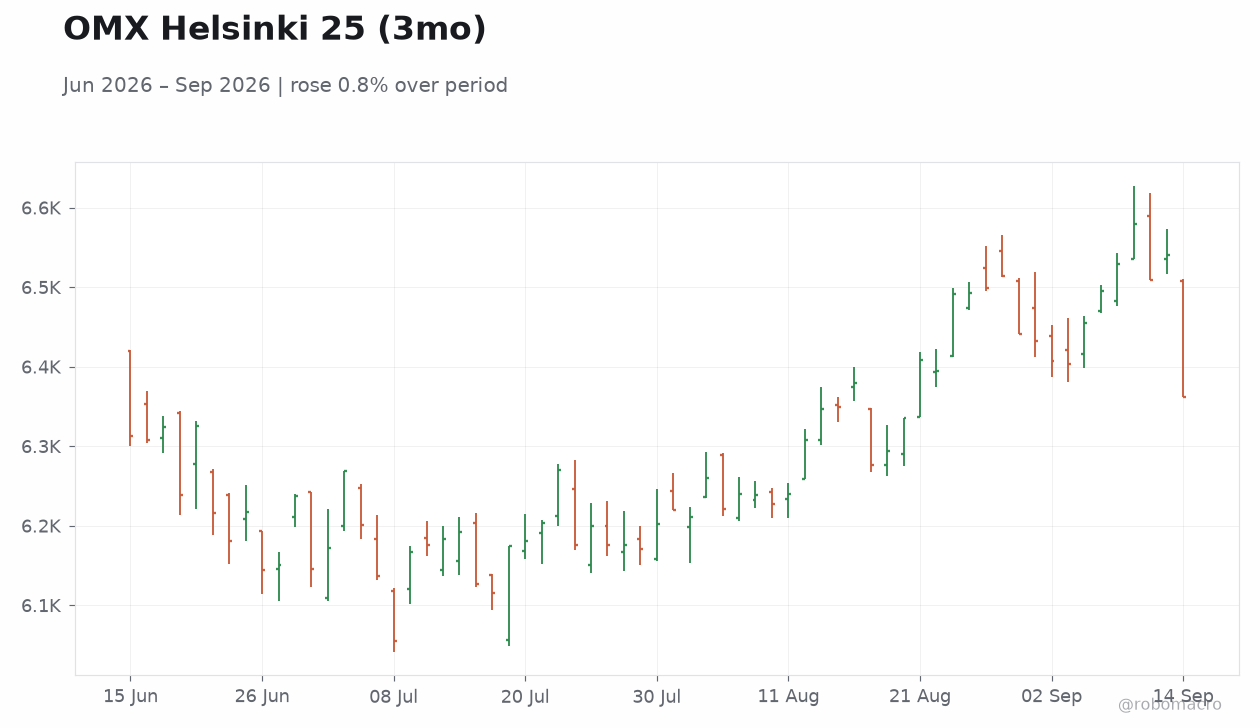
| OMX Helsinki 25 | 6,362.61 | -2.72% |
| USD/SEK | 9.78 | +0.81% |
| USD/NOK | 9.34 | +0.57% |
| EUR/SEK | 11.28 | +0.26% |
| EUR/NOK | 10.77 | +0.01% |
| Brent Crude | 107.35 | +1.58% |
| Gold | 4,326.70 | -0.58% |
| Bitcoin | 77,465.62 | +0.82% |
| Sweden 10Y Govt Yield | 3.23% | 0 bp |
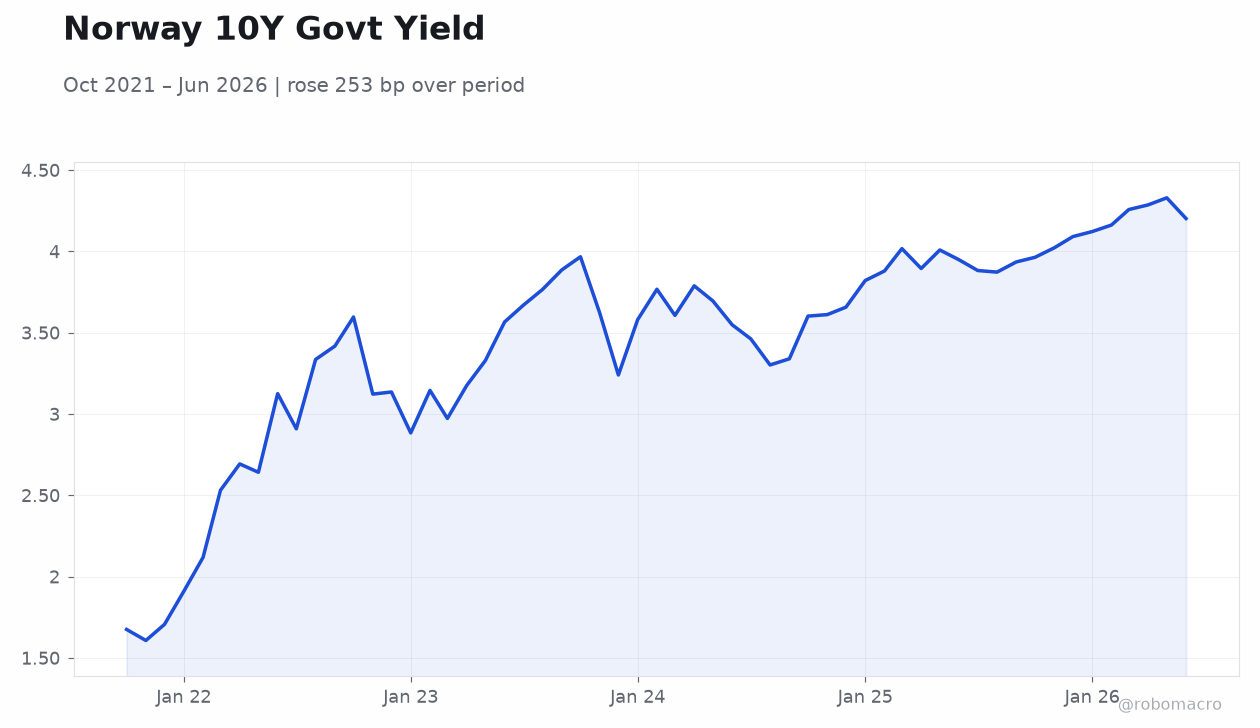
| Norway 10Y Govt Yield | 4.52% | -1 bp |
Prior Economic Events
| Data | Prior | Cons | Actual |
|---|---|---|---|
| No events available | |||
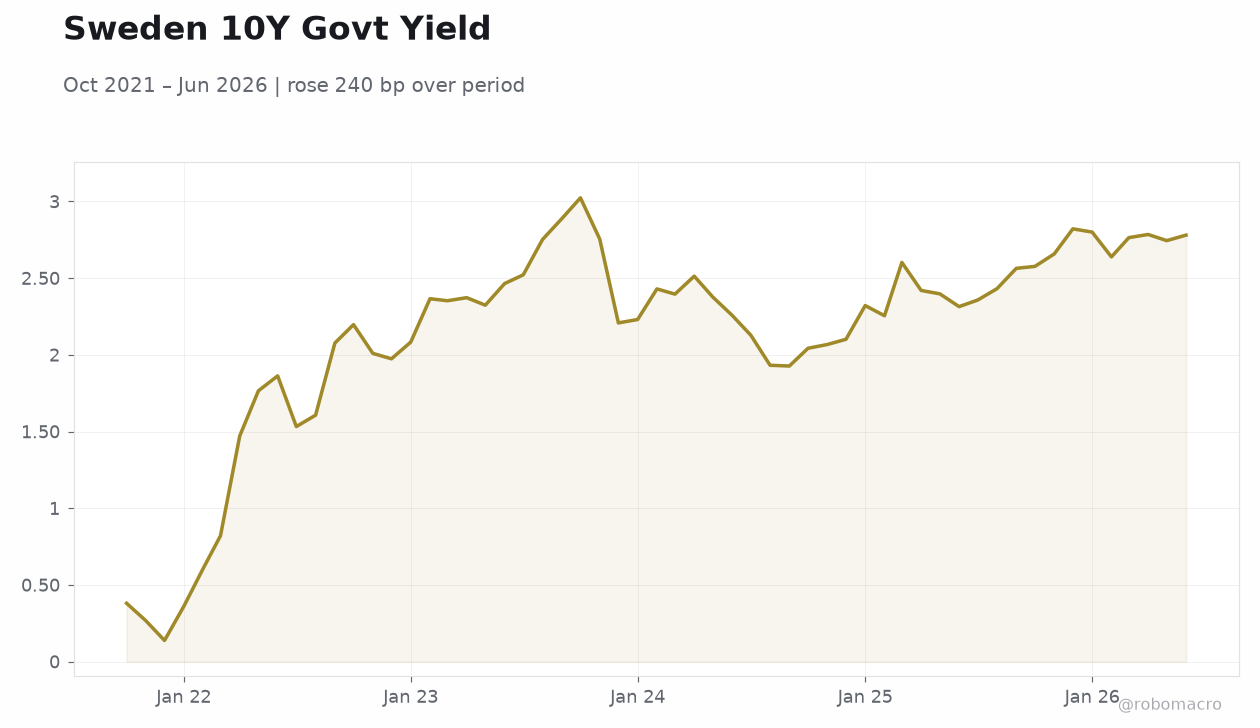 Sweden 10Y Govt Yield | Type: macro_line | Yield %: 2.781 (2026-06-01) | Range: 0.138–3.024 | Trend(5pt): 0.3806,1.974,2.43,2.42,2.781
Today's Economic Events
| Data | Prior | Cons | Time |
|---|---|---|---|
| No events available | |||
- OMX Helsinki 25 fell 2.72% while OMX Stockholm 30 dropped 1.09%, leading regional equity losses.
- USD/SEK rose 0.81% to 9.78 and USD/NOK gained 0.57% to 9.34 amid broad Nordic currency weakness.
- Brent crude advanced 1.58% to $107.35, providing support for Norway’s fiscal position.
Yesterday's Recap
No macroeconomic data releases occurred across Sweden, Norway, Denmark or Finland on September 14. Equity markets closed lower, with the OMX Helsinki 25 posting the steepest decline at 2.72% to 6,362.61 while the OMX Stockholm 30 fell 1.09% to 3,219.82. The OMX Copenhagen 25 eased 0.25% to 1,860.34 and Oslo Børs slipped 0.03% to 2,109.96.
Currency markets showed Nordic weakening against the dollar, with USD/SEK rising 0.81% to 9.78 and USD/NOK advancing 0.57% to 9.34. EUR/SEK gained 0.26% to 11.28 while EUR/NOK stayed essentially flat at 10.77. Government bond yields diverged, as the Swedish 10-year yield was unchanged at 3.23% and the Norwegian 10-year yield eased 1 bp to 4.52%.
Brent crude’s gain to $107.35 offered a modest positive impulse for Norway’s oil-linked revenues despite the krone’s depreciation.
The Day Ahead
The economic calendar for September 15-16 shows no scheduled data releases or central-bank meetings in any Nordic country. Market participants will therefore focus on external drivers, including global oil price movements and euro-area developments that influence the Danish krone peg. Sweden’s export-oriented manufacturing sector remains sensitive to any shifts in European demand signals.
Norway’s krone will continue to track Brent crude dynamics given the country’s position as an oil exporter. Finland, operating under ECB policy, faces limited domestic event risk until eurozone inflation prints emerge. Overall trading volumes may stay subdued absent fresh Nordic-specific catalysts.
Other Economic Notes
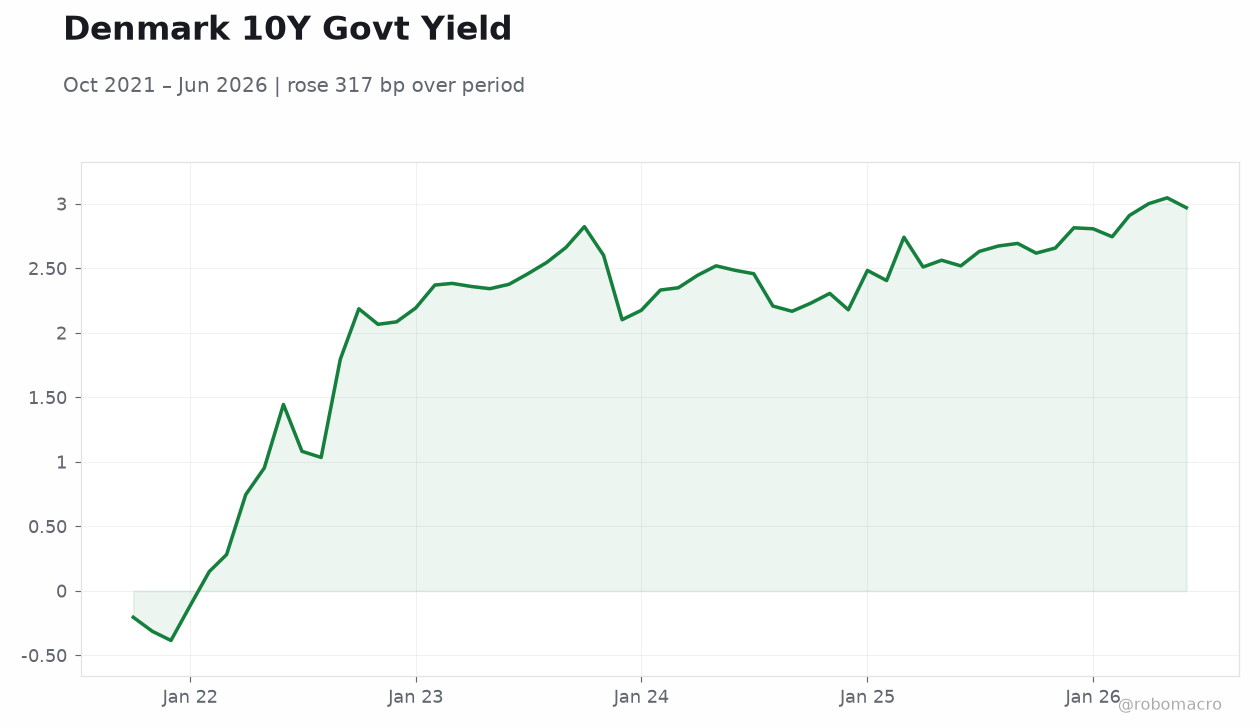
Sweden’s August CPI at 0.70% YoY underscores subdued price pressures that support a cautious Riksbank stance. Norway’s August CPI at 3.30% YoY remains elevated, keeping Norges Bank attentive to second-round effects from oil revenue inflows. Denmark’s currency peg to the euro limits independent policy flexibility and ties its economic cycle closely to ECB decisions.
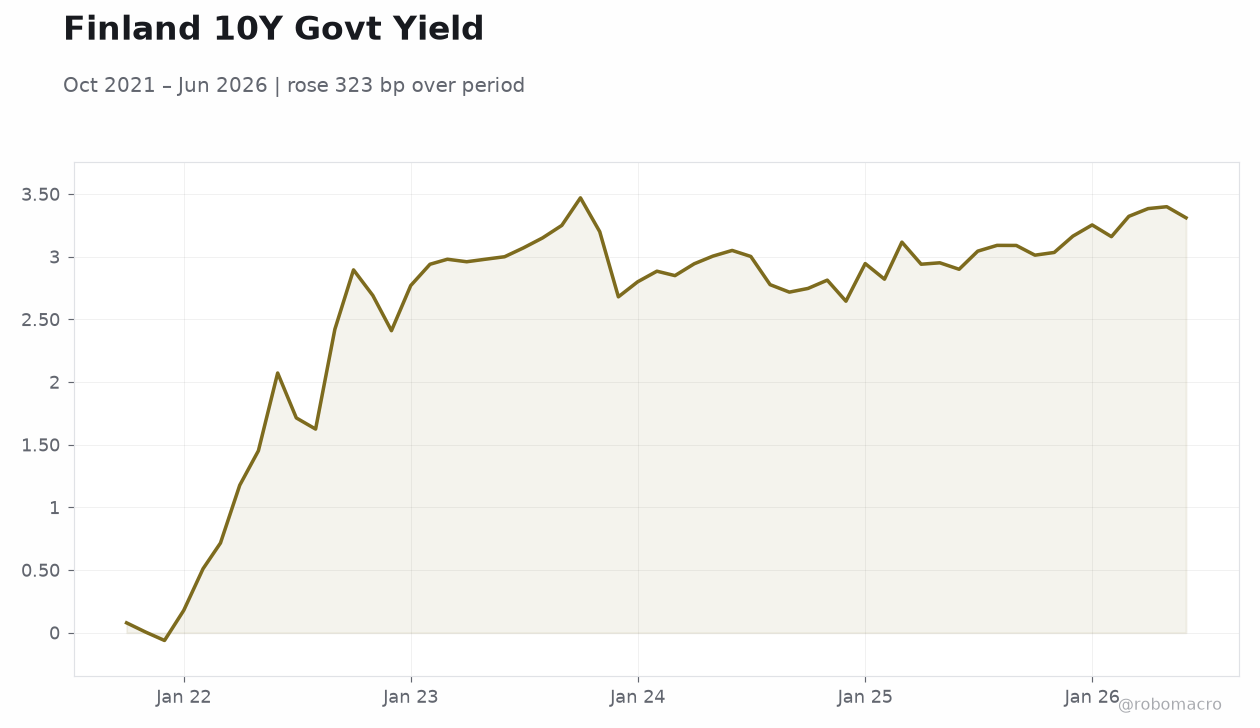
Finland’s eurozone membership means its interest-rate environment is set externally, reducing scope for domestic monetary divergence. Export competitiveness across Sweden and Denmark will hinge on euro-area growth momentum amid ongoing global commodity volatility.