Nordics Macro Daily(Beta Mode)
Nordic Equities Advance on Riksbank Survey
Market Snapshot
| Asset | Level | Change |
|---|---|---|
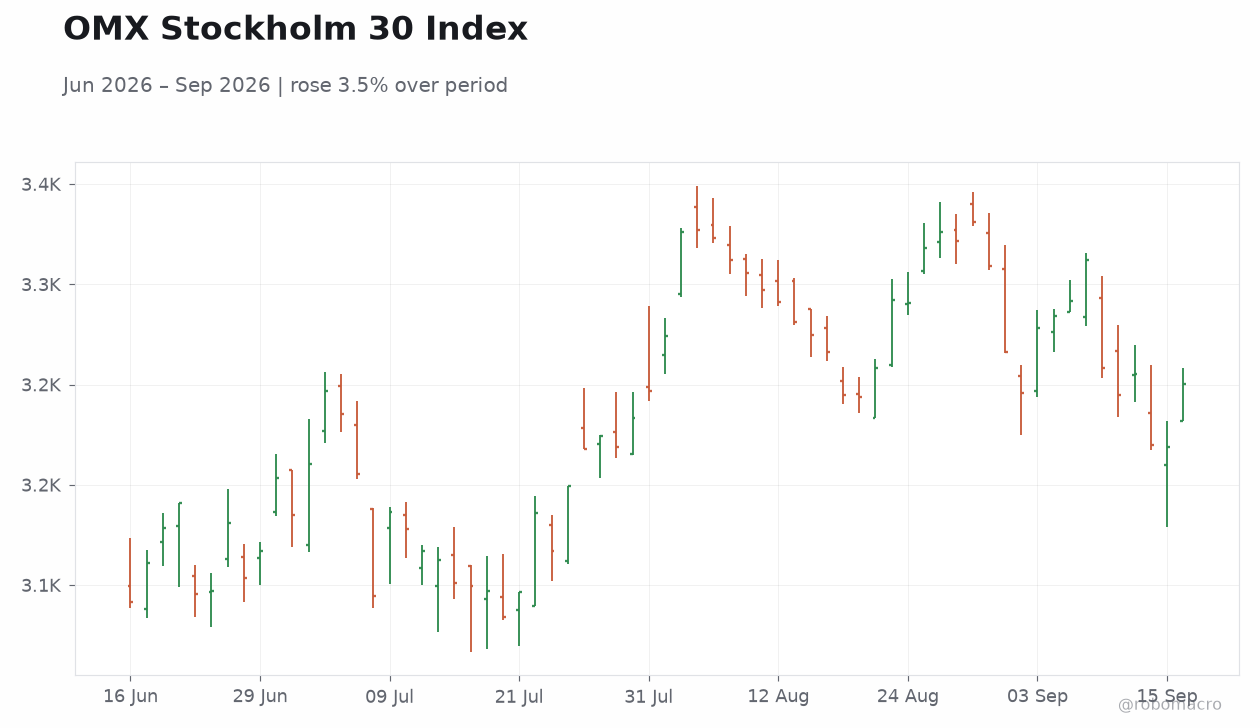
| OMX Stockholm 30 | 3,251.16 | +1.00% |
| Oslo Bors | 2,125.33 | +0.58% |
| OMX Copenhagen 25 | 1,859.95 | +0.55% |
| OMX Helsinki 25 | 6,513.29 | +1.05% |
| USD/SEK | 9.76 | +0.60% |
| USD/NOK | 9.35 | +0.27% |
| EUR/SEK | 11.27 | +0.21% |
| EUR/NOK | 10.79 | +0.15% |
| Brent Crude | 107.15 | -1.47% |
| Gold | 4,387.10 | +1.25% |
| Bitcoin | 75,732.80 | +0.16% |
| Sweden 10Y Govt Yield | 3.25% | +1 bp |
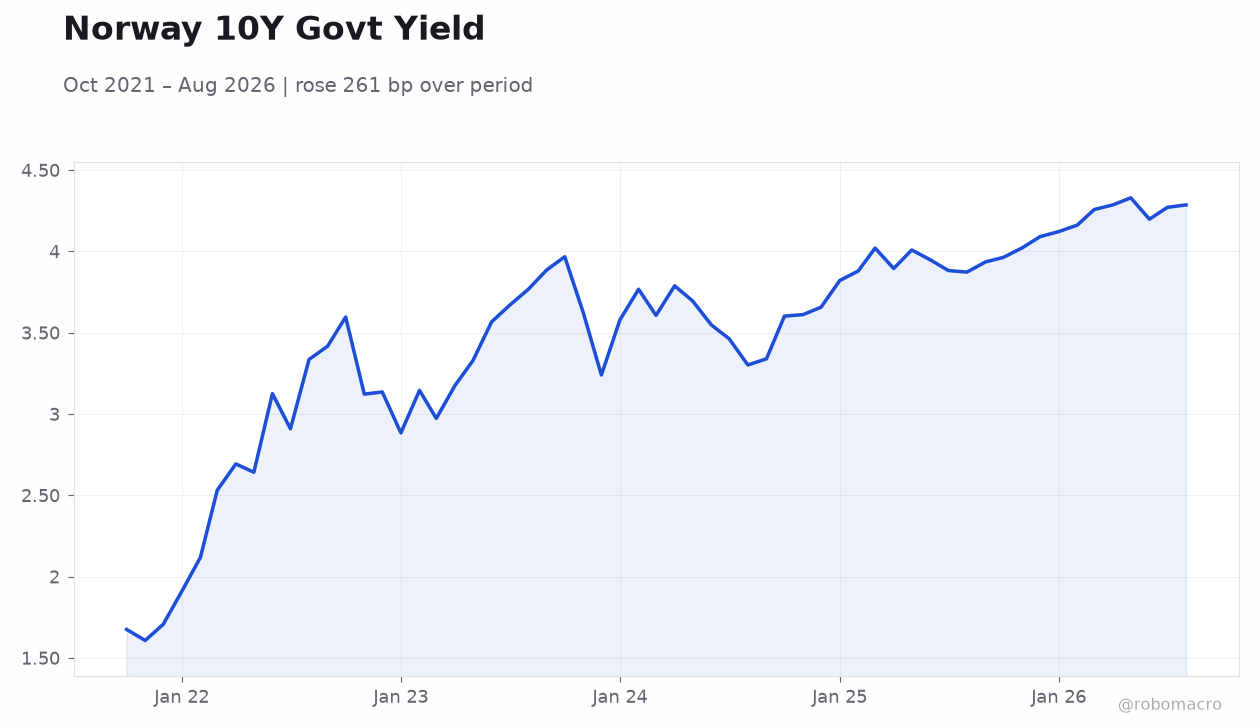
| Norway 10Y Govt Yield | 4.54% | -4 bp |
Prior Economic Events
| Data | Prior | Cons | Actual |
|---|---|---|---|
| No events available | |||
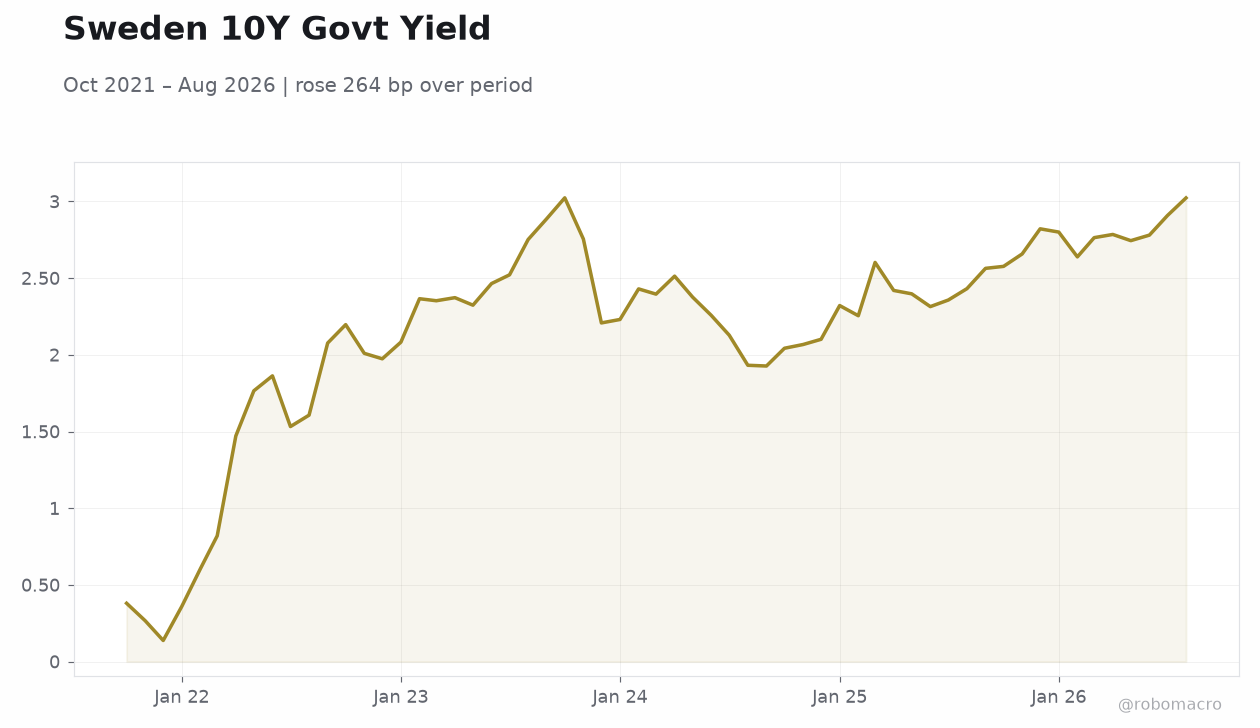 Sweden 10Y Govt Yield | Type: macro_line | Percent: 3.023 (2026-08-01) | Range: 0.138–3.024 | Trend(6pt): 0.3806,1.974,2.43,2.42,2.781,3.023
Today's Economic Events
| Data | Prior | Cons | Time |
|---|---|---|---|
| No events available | |||
- OMX Stockholm 30 rose 1.00% to 3,251.16 while Oslo Børs gained 0.58% to 2,125.33; Copenhagen and Helsinki indices also closed higher.
- Sweden 10-year yield edged up 1 bp to 3.25% and Norway 10-year yield fell 4 bp to 4.54%; Brent crude declined 1.47% to 107.15.
- Riksbank business survey showed improved demand and manageable war-related costs; Bank of Finland interim forecast confirmed continued positive economic track.
Yesterday's Recap
Equity markets across the Nordic region posted solid gains on September 15. The OMX Stockholm 30 climbed 1.00% to 3,251.16 and the Oslo Børs advanced 0.58% to 2,125.33, while the OMX Copenhagen 25 rose 0.55% and the OMX Helsinki 25 added 1.05%. Currency moves remained contained, with USD/SEK rising 0.60% to 9.76 and USD/NOK increasing 0.27% to 9.35.
The Riksbank released results of its certificate sale and published a business survey noting that demand has strengthened after earlier summer concerns and that cost increases from the war are viewed as manageable. Finland’s economy stays on a positive trajectory according to the Bank of Finland’s interim forecast. Norway’s Norges Bank continues to weigh inflation against growth, keeping the krone sensitive to energy-price swings.
Brent crude’s 1.47% drop to 107.15 offered limited immediate relief to Norway’s fiscal outlook given the absence of fresh production data. Sweden CPI YoY stood at 0.70% as of end-August while Norway CPI YoY was 3.30% as of the same date, providing the latest available inflation context ahead of any policy deliberations.
The Day Ahead
The Nordic economic calendar remains quiet through September 17 with no scheduled releases for CPI, GDP, unemployment or industrial production in Sweden, Norway, Denmark or Finland. Markets will monitor any follow-up commentary from the Riksbank on certificate operations and from Norges Bank on inflation-growth trade-offs. Attention may also turn to any updates on the Danish krone’s ERM II peg and to global oil-price movements that directly affect Norway’s export revenues.
Equity and fixed-income desks are expected to focus on positioning ahead of the upcoming Federal Reserve and Bank of Japan meetings. The Sweden 10-year yield closed at 3.25% and the Norway 10-year yield at 4.54%, levels that will serve as reference points for any intraday moves.
Other Economic Notes
Sweden’s export-oriented manufacturing sector benefits from the improved demand signals in the latest Riksbank survey, supporting the krona’s stability against the euro. Norway’s oil-export economy remains exposed to Brent volatility, with the recent price decline helping contain imported inflation pressures. ↓ p.2