Nordics Macro Daily(Beta Mode)
Riksbank Hike Expected in Q4 as Equities Diverge
Market Snapshot
| Asset | Level | Change |
|---|---|---|
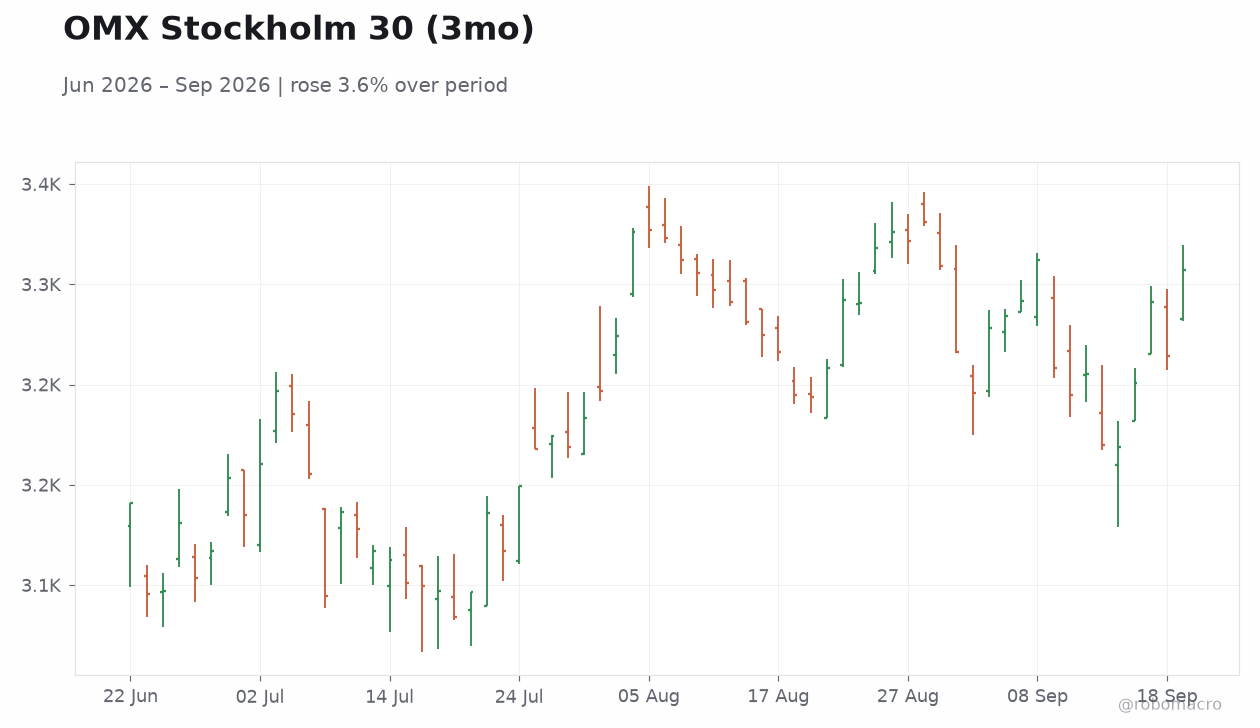
| OMX Stockholm 30 | 3,307.02 | +1.31% |
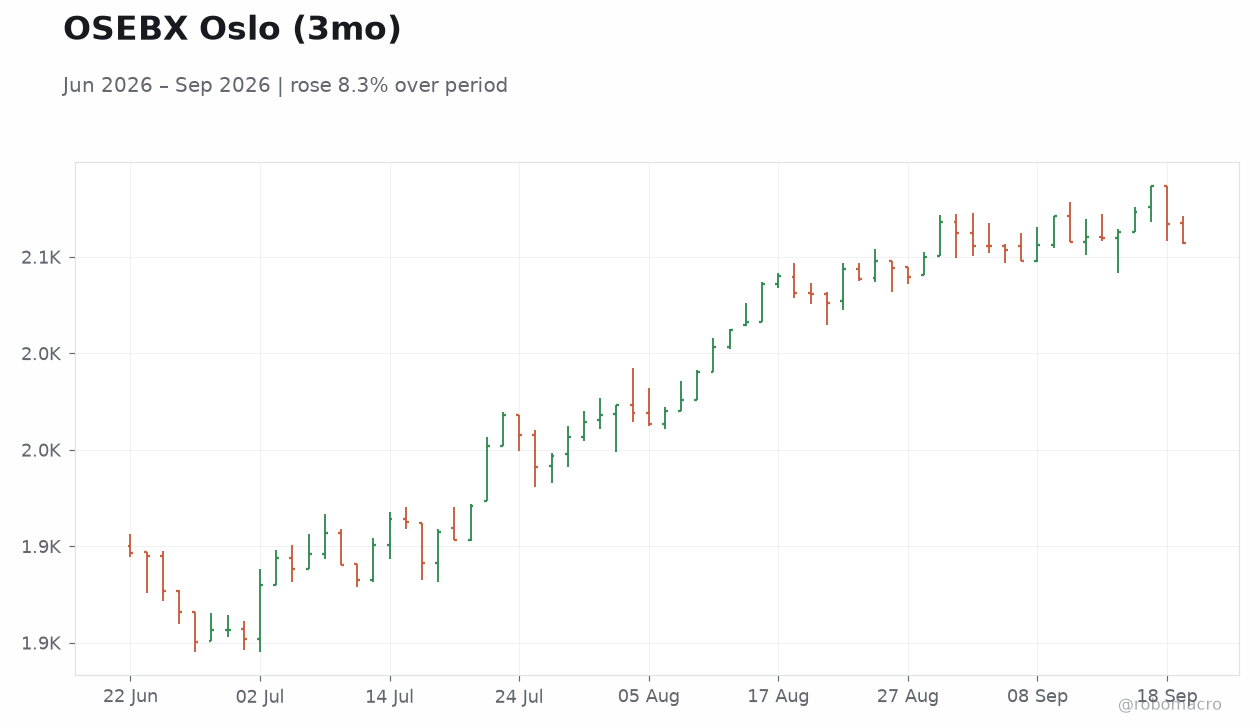
| Oslo Bors | nan | +nan% |
| OMX Copenhagen 25 | 1,858.54 | -0.62% |
| OMX Helsinki 25 | 6,585.46 | +0.41% |
| USD/SEK | 9.85 | +0.15% |
| USD/NOK | 9.46 | +0.25% |
| EUR/SEK | 11.28 | -0.09% |
| EUR/NOK | 10.82 | +0.22% |
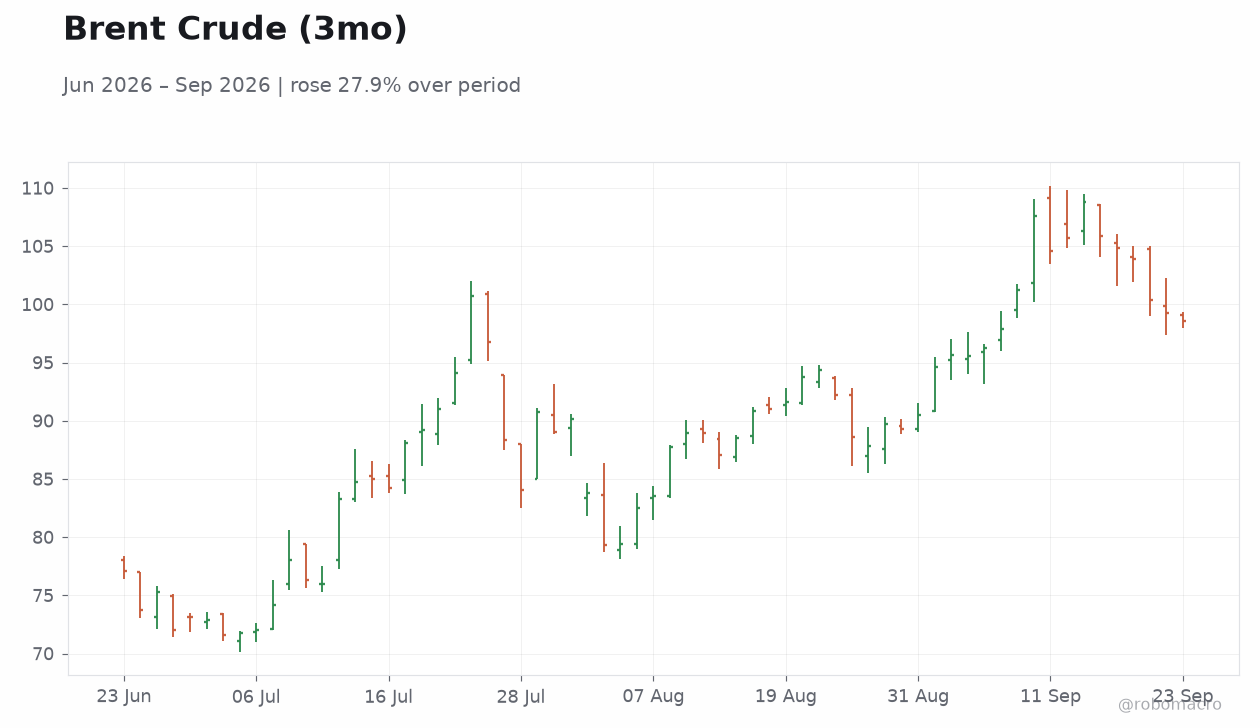
| Brent Crude | 98.50 | -0.76% |
| Gold | 4,379.80 | +0.08% |
| Bitcoin | 86,748.93 | +0.17% |
| Sweden 10Y Govt Yield | 3.14% | -7 bp |
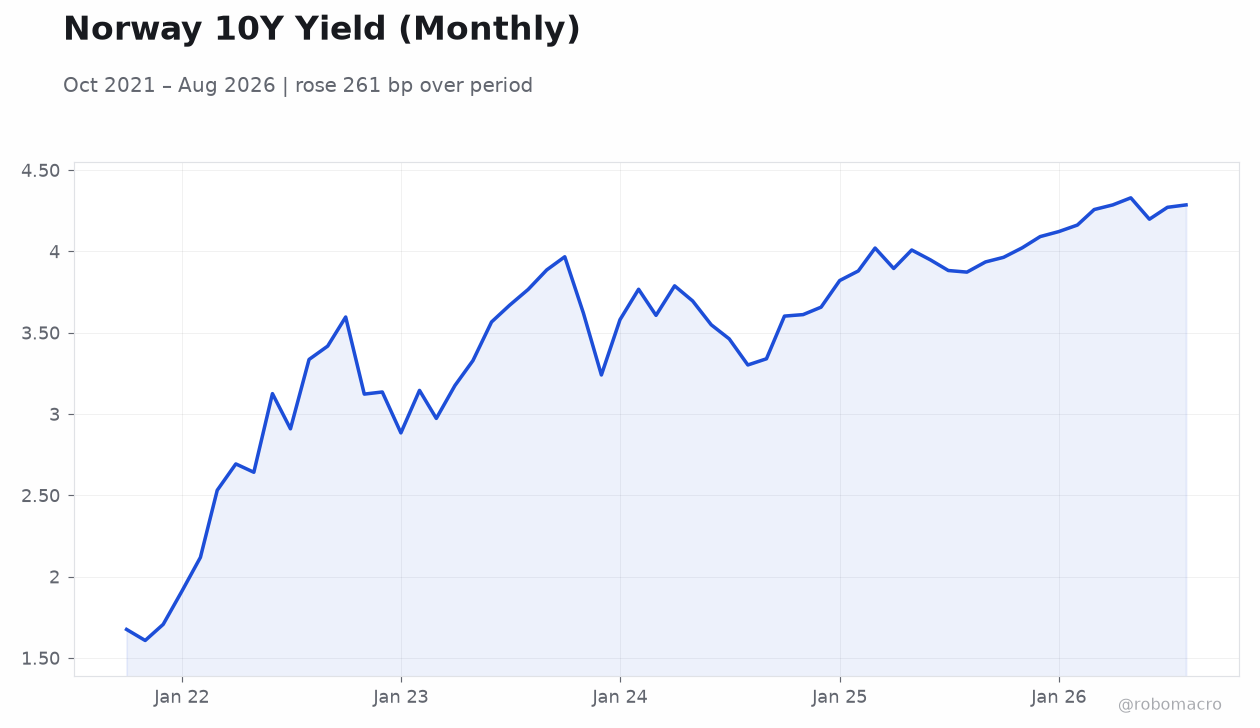
| Norway 10Y Govt Yield | 4.46% | -2 bp |
Prior Economic Events
| Data | Prior | Cons | Actual |
|---|---|---|---|
| No events available | |||
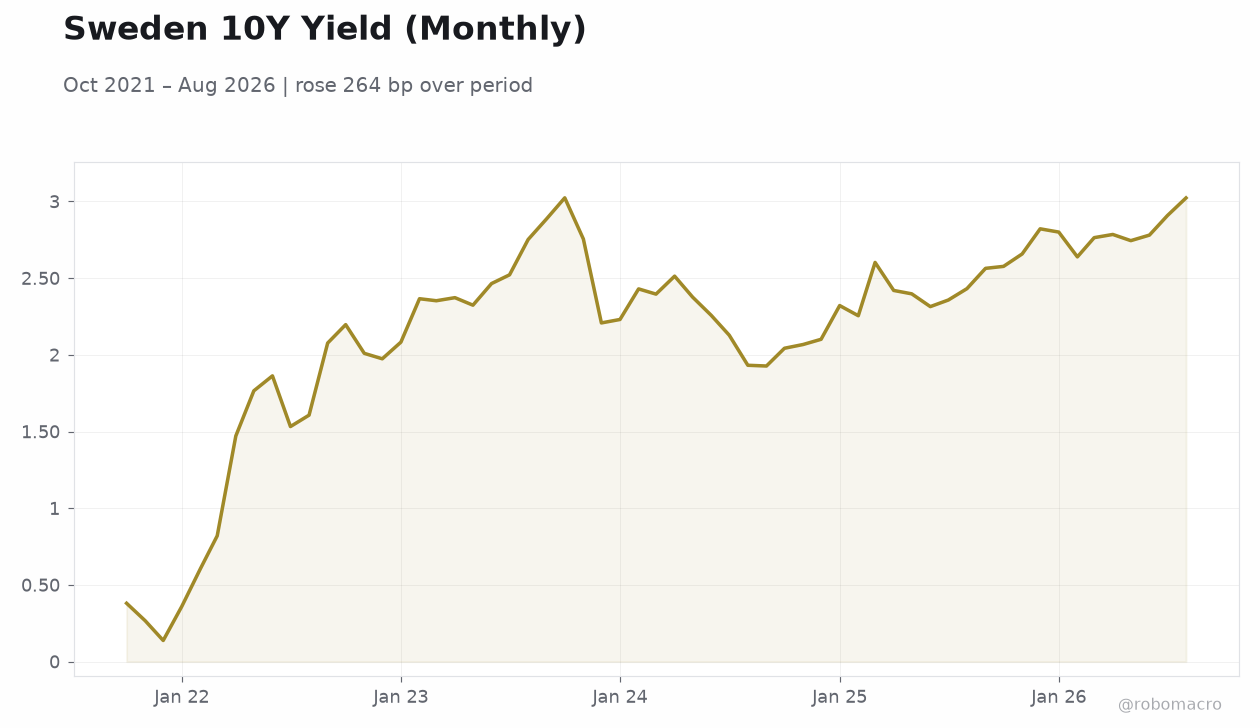 Sweden 10Y Yield (Monthly) | Type: macro_line | Yield %: 3.023 (2026-08-01) | Range: 0.138–3.024 | Trend(6pt): 0.3806,1.974,2.43,2.42,2.781,3.023
Today's Economic Events
| Data | Prior | Cons | Time |
|---|---|---|---|
| No events available | |||
- OMX Stockholm 30 rose 1.31% while Copenhagen 25 fell 0.62% on September 22.
- Sweden 10-year yield fell 7 bp to 3.14%; Norway 10-year eased 2 bp to 4.46%.
- Bloomberg survey shows Riksbank rate hike likely in Q4 2026.
Yesterday's Recap
Equity markets in the Nordic region posted mixed results on September 22. The OMX Stockholm 30 advanced 1.31% to 3,307.02, while the OMX Copenhagen 25 declined 0.62% to 1,858.54 and the OMX Helsinki 25 gained 0.41% to 6,585.46. Oslo Bors data remained unavailable.
FX moves stayed contained, with USD/SEK rising 0.15% to 9.85 and USD/NOK climbing 0.25% to 9.46. EUR/SEK slipped 0.09% to 11.28 and EUR/NOK advanced 0.22% to 10.82. Brent crude fell 0.76% to 98.50, trimming near-term support for Norway’s fiscal and currency outlook.
Swedish government bonds rallied as the 10-year yield dropped 7 bp to 3.14%, while Norway’s 10-year yield declined 2 bp to 4.46%. A Bloomberg survey indicated the Riksbank is expected to raise rates in Q4 2026, and routine Riksbank certificate sales proceeded without incident. Swedish political coverage noted the Tidö parties’ election loss and the resignation of Prime Minister Ulf Kristersson, opening the process for a new government.
No economic releases occurred across Sweden, Norway, Denmark or Finland.
The Day Ahead
Markets anticipate limited Nordic data releases on September 23. Attention centers on the Norges Bank policy meeting previewed for Thursday, with analysts focusing on oil-price effects on the krone and inflation path. Sweden’s political transition may generate further headlines but carries no immediate macro data impact.
Denmark and Finland remain quiet ahead of any ECB-related signals. Brent crude near 98.50 will continue to influence Norwegian fiscal projections and NOK volatility. No CPI, GDP or labor-market prints are scheduled across the region.
Other Economic Notes
Sweden’s August CPI at 0.70% YoY remains well below Norway’s 3.30% reading, underscoring divergent price pressures. Norway’s oil-export exposure leaves the krone sensitive to Brent moves, while Sweden’s manufacturing base tracks euro-area demand closely. Denmark’s ERM II peg keeps Danmarks Nationalbank policy aligned with the ECB, limiting independent rate flexibility.
Finland’s eurozone membership transmits ECB decisions directly to its economy and bond market. Housing-market data remain absent, keeping focus on yields and FX as primary indicators. Routine liquidity operations by the Riksbank confirm stable money-market conditions without altering the near-term policy outlook.