Nordics Macro Daily(Beta Mode)
Nordic Equities Mixed as Brent Slumps, SEK Weakens
Market Snapshot
| Asset | Level | Change |
|---|---|---|
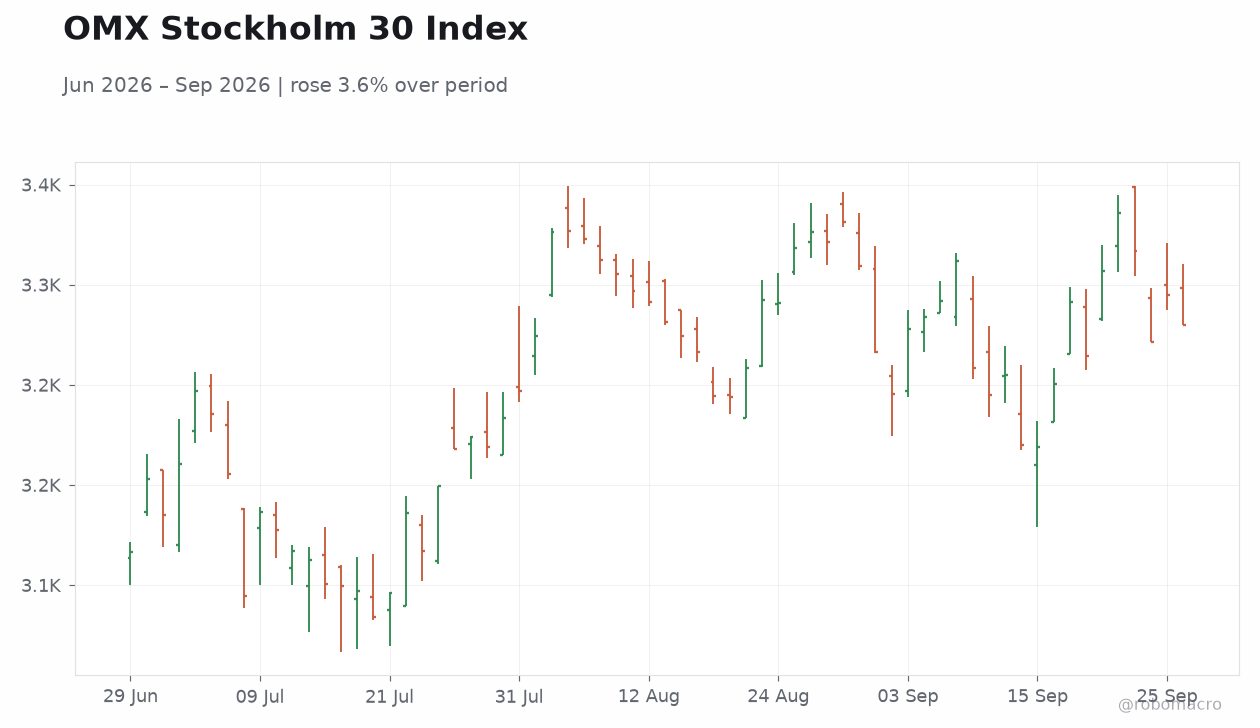
| OMX Stockholm 30 | 3,280.15 | -0.45% |
| Oslo Bors | 2,094.49 | +0.56% |
| OMX Copenhagen 25 | 1,835.07 | -0.08% |
| OMX Helsinki 25 | 6,494.31 | -0.42% |
| USD/SEK | 9.98 | +0.47% |
| USD/NOK | 9.52 | +0.06% |
| EUR/SEK | 11.34 | +0.32% |
| EUR/NOK | 10.83 | +0.09% |
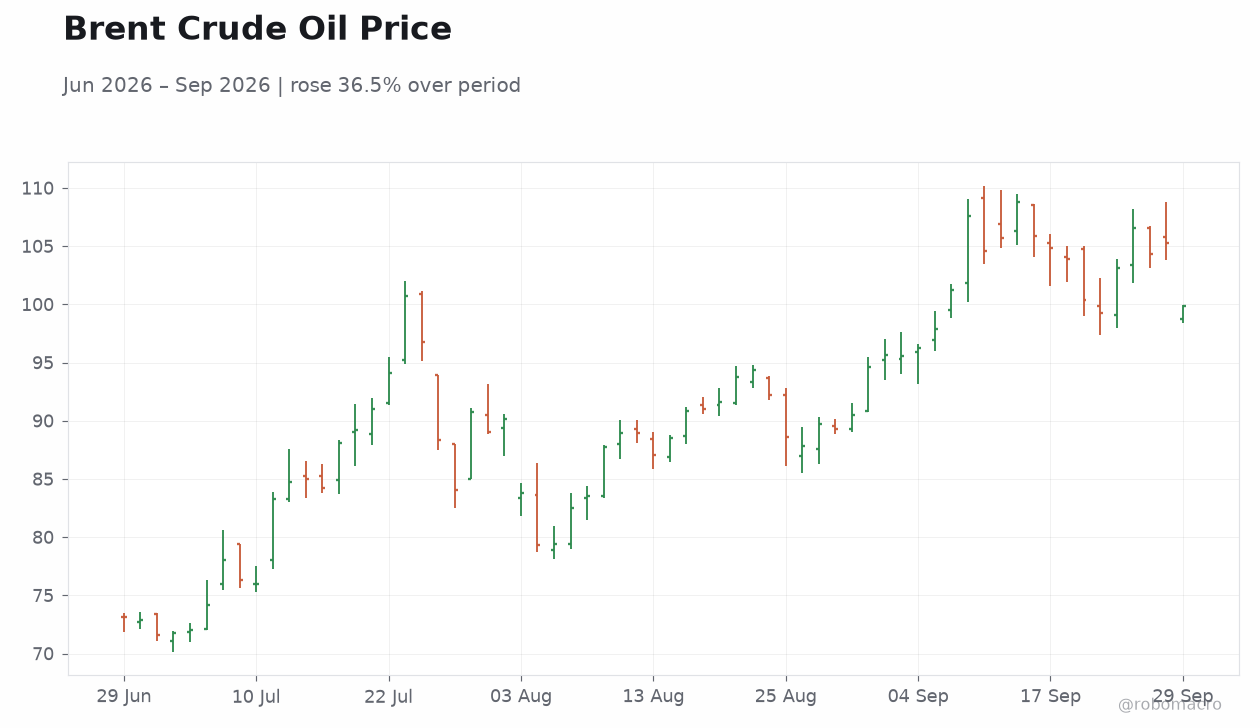
| Brent Crude | 99.82 | -5.19% |
| Gold | 4,157.70 | -0.26% |
| Bitcoin | 83,173.41 | -1.52% |
| Sweden 10Y Govt Yield | 3.28% | +3 bp |
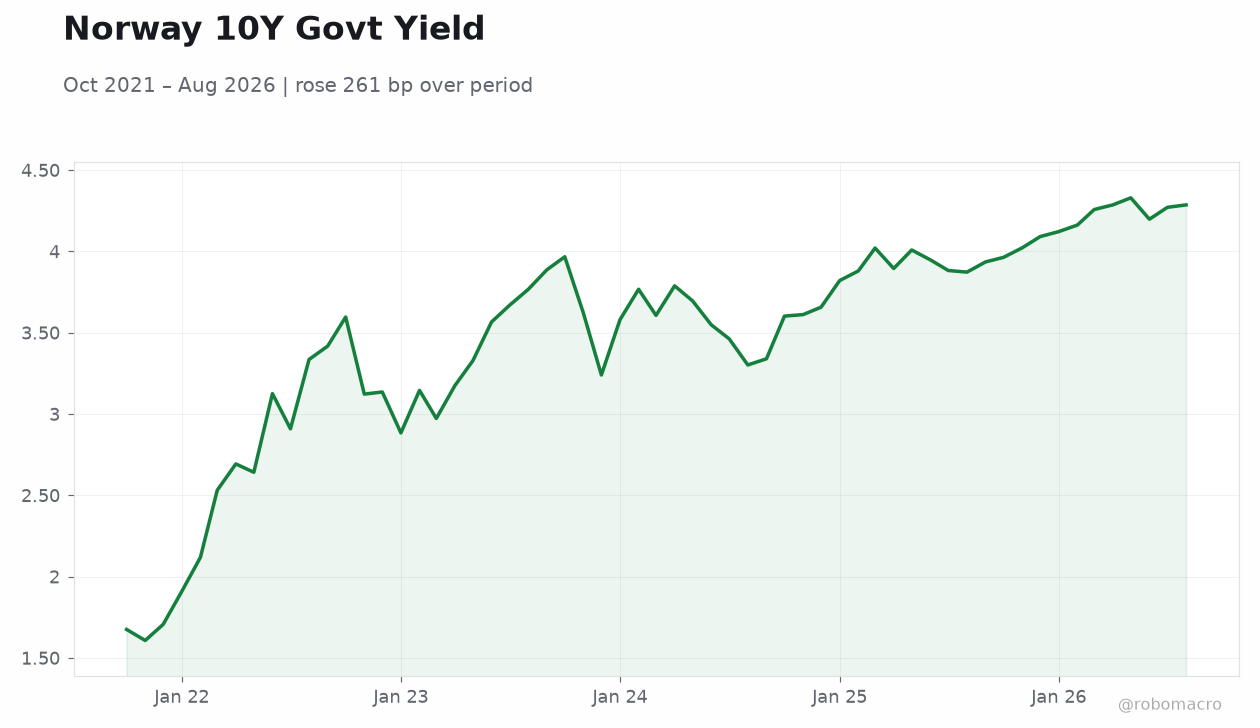
| Norway 10Y Govt Yield | 4.60% | +2 bp |
Prior Economic Events
| Data | Prior | Cons | Actual |
|---|---|---|---|
| No events available | |||
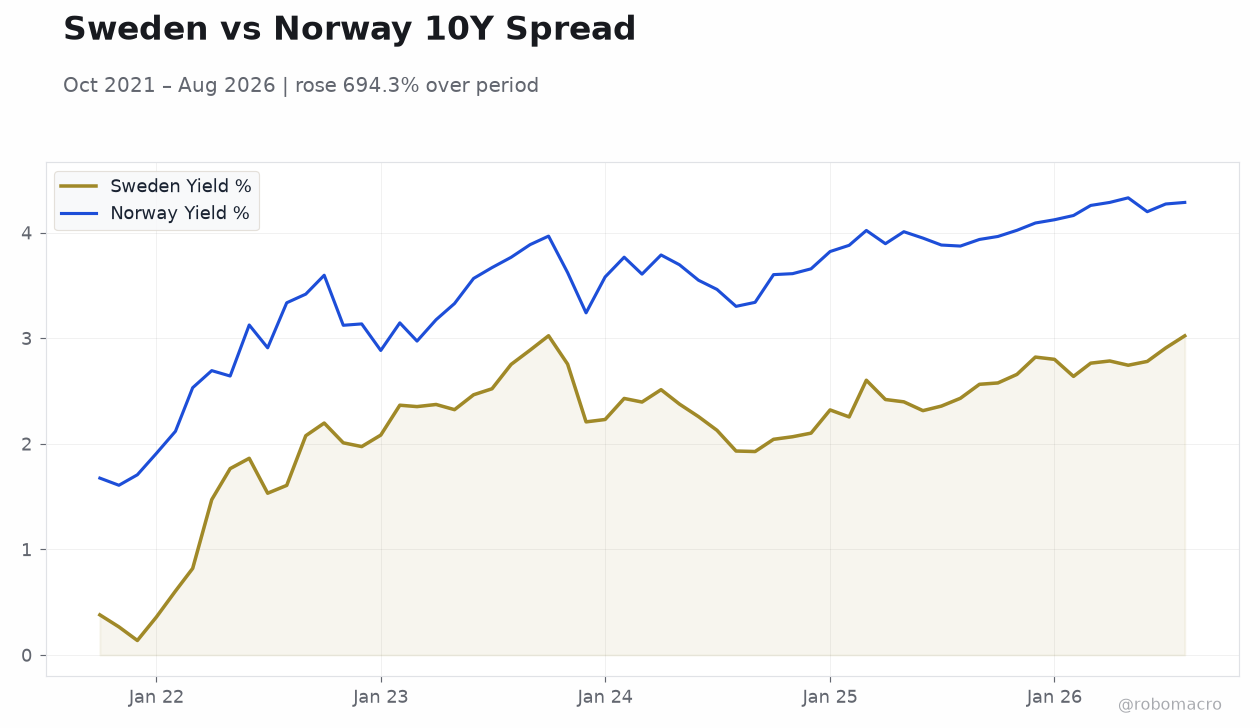 Sweden vs Norway 10Y Spread | Type: macro_line | Sweden Yield %: 3.023 (2026-08-01) | Range: 0.138–3.024 | Trend(6pt): 0.3806,1.974,2.43,2.42,2.781,3.023 | Norway Yield %: 4.286 (2026-08-01) | Range: 1.608–4.33 | Trend(6pt): 1.676,3.136,3.768,3.895,4.198,4.286
Today's Economic Events
| Data | Prior | Cons | Time |
|---|---|---|---|
| No events available | |||
- OMX Stockholm 30 fell 0.45% while Oslo Bors gained 0.56%; Brent crude dropped 5.19% to 99.82.
- USD/SEK rose 0.47% to 9.98 and Sweden 10-year yield climbed 3 bp to 3.28%.
- Riksbank conducted certificate buybacks; Norges Bank policy rate stands at 4.5% amid 3.30% Norway CPI.
Yesterday's Recap
Equity markets in the Nordic region closed mixed on 28 September with no economic data releases from Sweden, Norway, Denmark or Finland. The OMX Stockholm 30 declined 0.45% to 3,280.15 while the Oslo Bors advanced 0.56% to 2,094.49. OMX Copenhagen 25 eased 0.08% and OMX Helsinki 25 fell 0.42%.
USD/SEK rose 0.47% to 9.98 and EUR/SEK gained 0.32% to 11.34, reflecting modest krona softening. Norway’s 10-year government yield increased 2 bp to 4.60%. Brent crude’s 5.19% decline to 99.82 weighed on near-term Norwegian fiscal revenue expectations even as USD/NOK edged only 0.06% higher.
Sweden’s election winner Magdalena Andersson ended coalition talks without forming a government, adding political uncertainty. The Riksbank announced routine buybacks of certificates, a liquidity operation without immediate policy-rate implications. Gold eased 0.26% to 4,157.70 and Bitcoin declined 1.52% to 83,173.41, underscoring cautious global risk sentiment that spilled into Nordic assets.
The Day Ahead
No macroeconomic releases, central-bank meetings or bond auctions are scheduled for Sweden, Norway, Denmark or Finland on 29-30 September. Market participants will therefore focus on external drivers including Brent crude price action and euro-area developments. Norway’s oil-dependent fiscal outlook remains sensitive to further energy-price volatility.
SEK and NOK trading ranges are likely to stay narrow absent fresh domestic data. Investors will monitor any follow-up statements from the Riksbank on liquidity operations and from Norges Bank on inflation persistence at the 3.30% YoY level recorded in August. Denmark and Finland stay aligned with broader European conditions, leaving their near-term moves dependent on external demand signals rather than domestic prints.
Other Economic Notes
Sweden’s fragmented parliament continues to complicate government formation after Magdalena Andersson returned her mandate. Norway’s oil-fund transfers face reduced near-term inflows following the sharp Brent decline, though the krone showed limited depreciation. Denmark’s export sector and Finland’s euro-area integration leave both economies exposed to broader European demand weakness.
↓ p.2