Nordics Macro Daily(Beta Mode)
Riksbank Minutes Turn Hawkish as Brent Slumps
Market Snapshot
| Asset | Level | Change |
|---|---|---|
| OMX Stockholm 30 | 3,268.98 | -0.52% |
| Oslo Bors | 2,075.18 | -0.02% |
| OMX Copenhagen 25 | 1,824.13 | -0.48% |
| OMX Helsinki 25 | 6,425.90 | -0.55% |
| USD/SEK | 10.03 | +0.34% |
| USD/NOK | 9.60 | +0.66% |
| EUR/SEK | 11.34 | +0.11% |
| EUR/NOK | 10.91 | +0.28% |
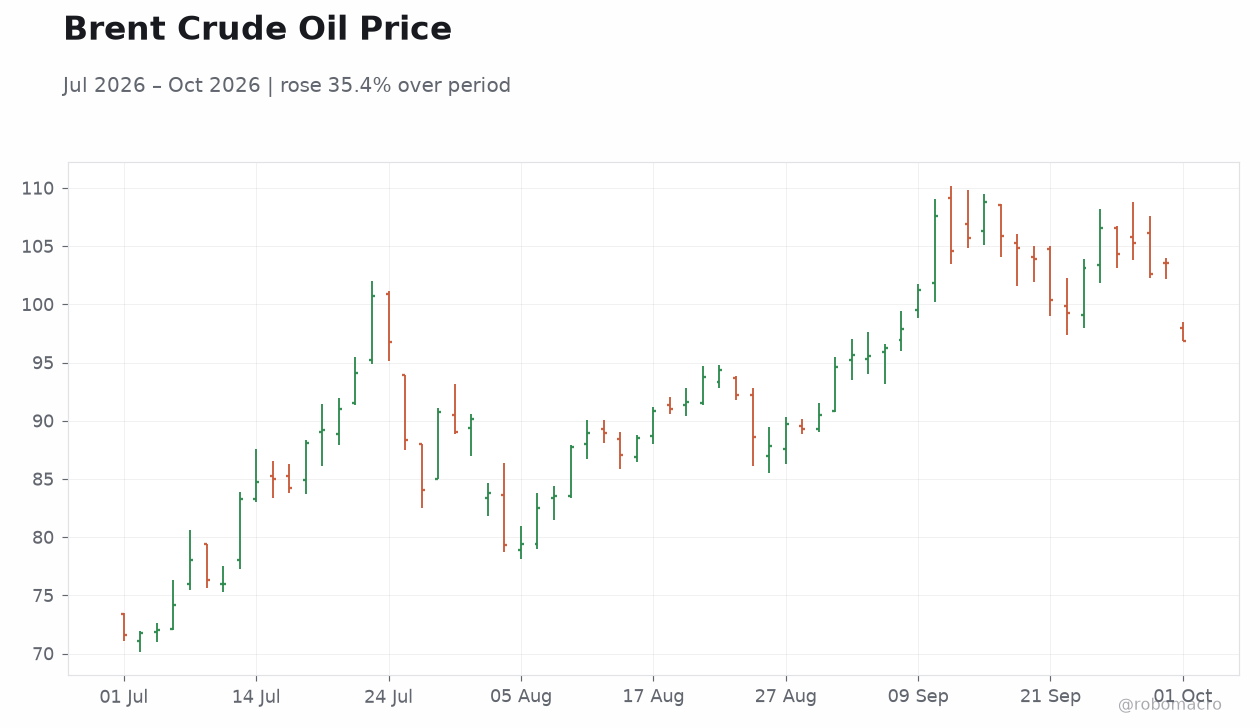
| Brent Crude | 96.94 | -6.37% |
| Gold | 4,208.50 | +0.52% |
| Bitcoin | 84,168.87 | +0.65% |
| Sweden 10Y Govt Yield | 3.25% | -4 bp |
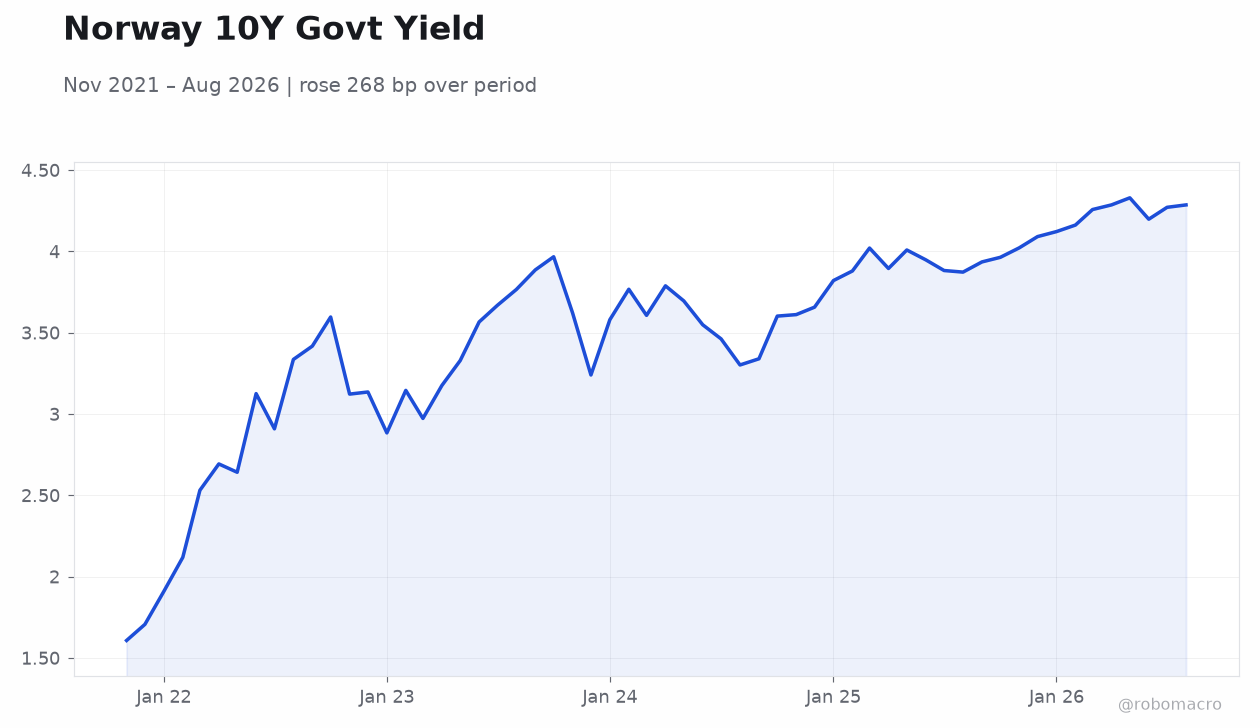
| Norway 10Y Govt Yield | 4.62% | -2 bp |
Prior Economic Events
| Data | Prior | Cons | Actual |
|---|---|---|---|
| No events available | |||
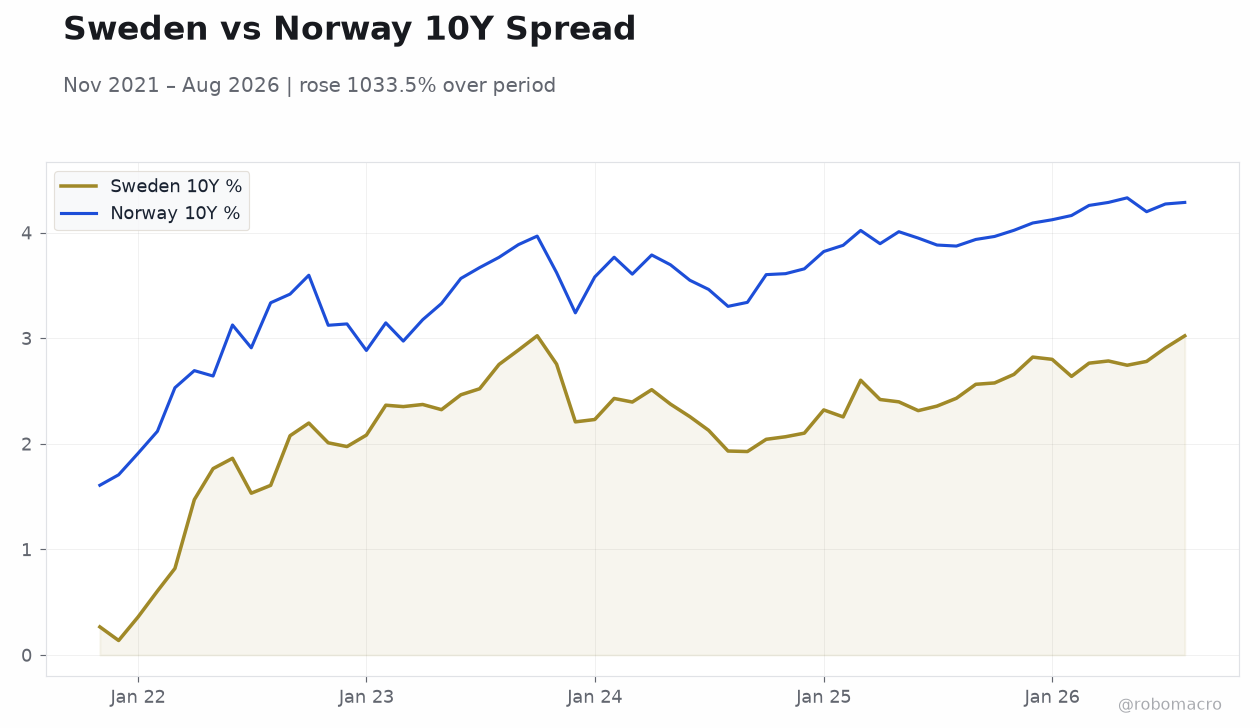 Sweden vs Norway 10Y Spread | Type: macro_line | Sweden 10Y %: 3.023 (2026-08-01) | Range: 0.138–3.024 | Trend(6pt): 0.2667,2.083,2.396,2.398,2.908,3.023 | Norway 10Y %: 4.286 (2026-08-01) | Range: 1.608–4.33 | Trend(6pt): 1.608,2.884,3.607,4.009,4.272,4.286
Today's Economic Events
| Data | Prior | Cons | Time |
|---|---|---|---|
| No events available | |||
- Riksbank minutes reveal all governors shifted hawkish, flagging November rate-hike risk amid demand and supply pressures.
- Nordic equities closed lower while Brent crude plunged 6.37 percent, pressuring Norges Bank’s krone sales program.
- Sweden and Norway 10-year yields eased 4 bp and 2 bp respectively as currencies weakened against the dollar.
Yesterday's Recap
Equity markets across the Nordic region posted modest losses on September 30. The OMX Stockholm 30 fell 0.52 percent to 3,268.98 while the Oslo Bors slipped 0.02 percent to 2,075.18. The OMX Copenhagen 25 declined 0.48 percent and the OMX Helsinki 25 dropped 0.55 percent.
USD/SEK rose 0.34 percent to 10.03 and USD/NOK climbed 0.66 percent to 9.60, reflecting broad Nordic-currency softening. Brent crude tumbled 6.37 percent to 96.94, directly weighing on Norway’s fiscal outlook and prompting Norges Bank to continue its monthly krone sales. Sweden’s 10-year government yield fell 4 bp to 3.25 percent and Norway’s 10-year yield eased 2 bp to 4.62 percent.
No macroeconomic data releases occurred in Sweden, Norway, Denmark or Finland.
The Day Ahead
The Nordic data calendar remains empty through October 2, leaving markets to digest the September Riksbank minutes and Brent’s sharp decline. Traders will monitor any follow-up comments from Riksbank officials for confirmation of a potential November hike. Norges Bank’s ongoing krone sales program will continue to influence NOK flows amid lower oil revenue.
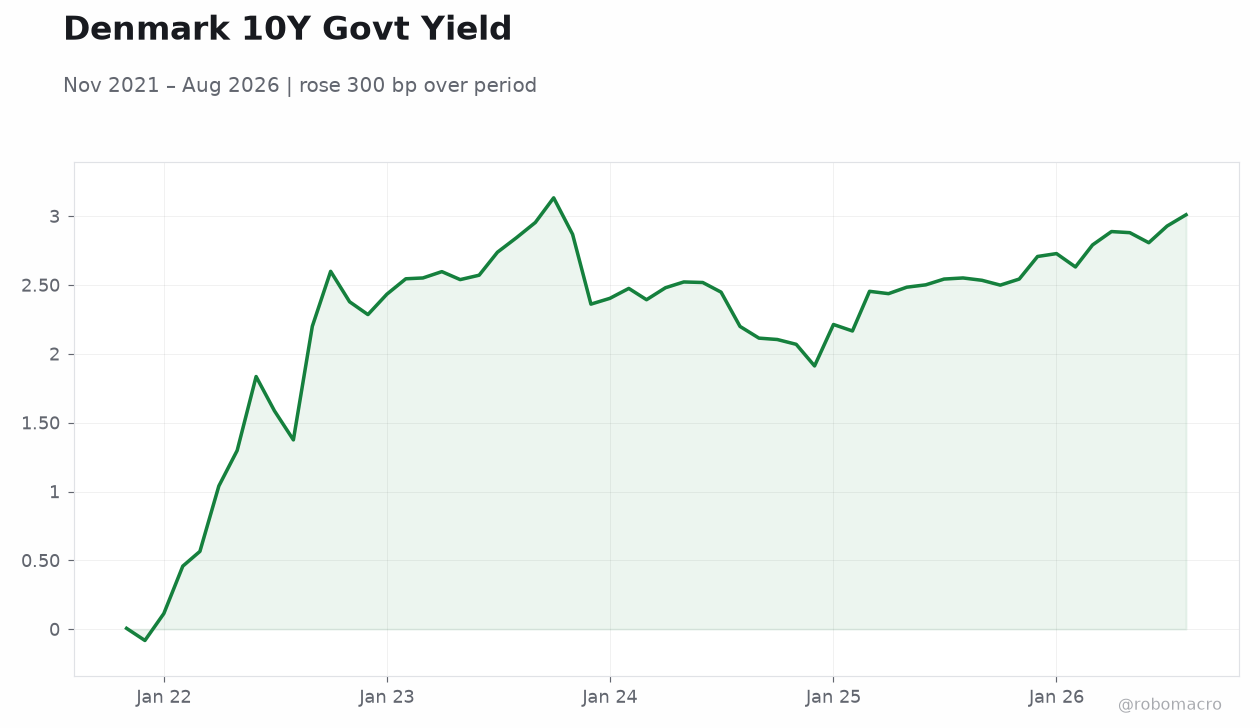
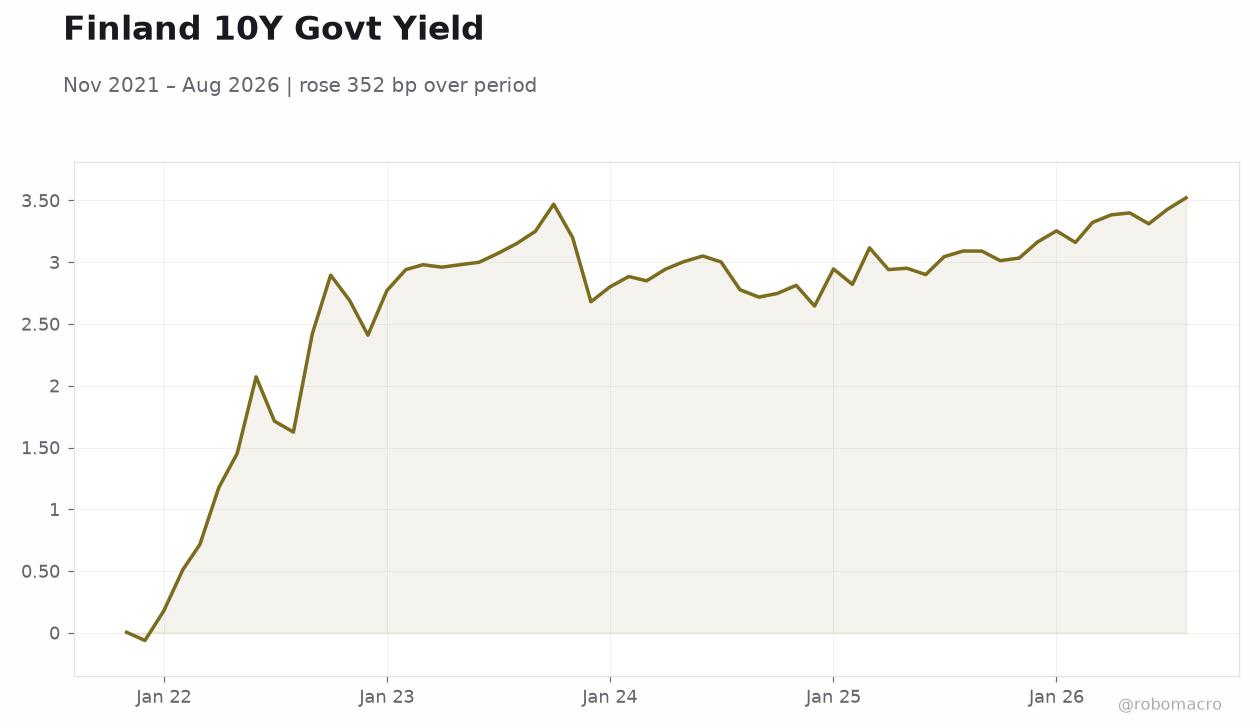
Danish and Finnish markets stay focused on ECB policy signals given the EUR/DKK peg and Finland’s euro-area membership. Attention may also turn to any updates on Swedish government-formation talks that could affect fiscal policy expectations.
Other Economic Notes
Sweden’s August CPI at 0.70 percent year-on-year underscores the inflation risks cited by Deputy Governor Jansson, who warned that rising demand and supply-side constraints threaten price stability. Norway’s August CPI of 3.30 percent year-on-year remains elevated despite softer oil prices, supporting Norges Bank’s cautious stance. Export-oriented manufacturing sectors in Sweden and Denmark face headwinds from weaker Nordic currencies and global demand uncertainty.
Finland’s euro-area exposure means ECB energy-crisis concerns will continue to shape its growth and inflation outlook.
Global Macro News
Brent’s 6.37 percent drop to 96.94 reverberates through Norway’s oil-funded economy and fiscal transfers. ↓ p.2