Nordics Macro Daily(Beta Mode)
Nordic Equities Mixed as Swedish Yields Ease
Market Snapshot
| Asset | Level | Change |
|---|---|---|
| OMX Stockholm 30 | 3,257.59 | -0.09% |
| Oslo Bors | 2,067.06 | +0.21% |
| OMX Copenhagen 25 | 1,810.90 | -0.45% |
| OMX Helsinki 25 | 6,395.27 | -0.33% |
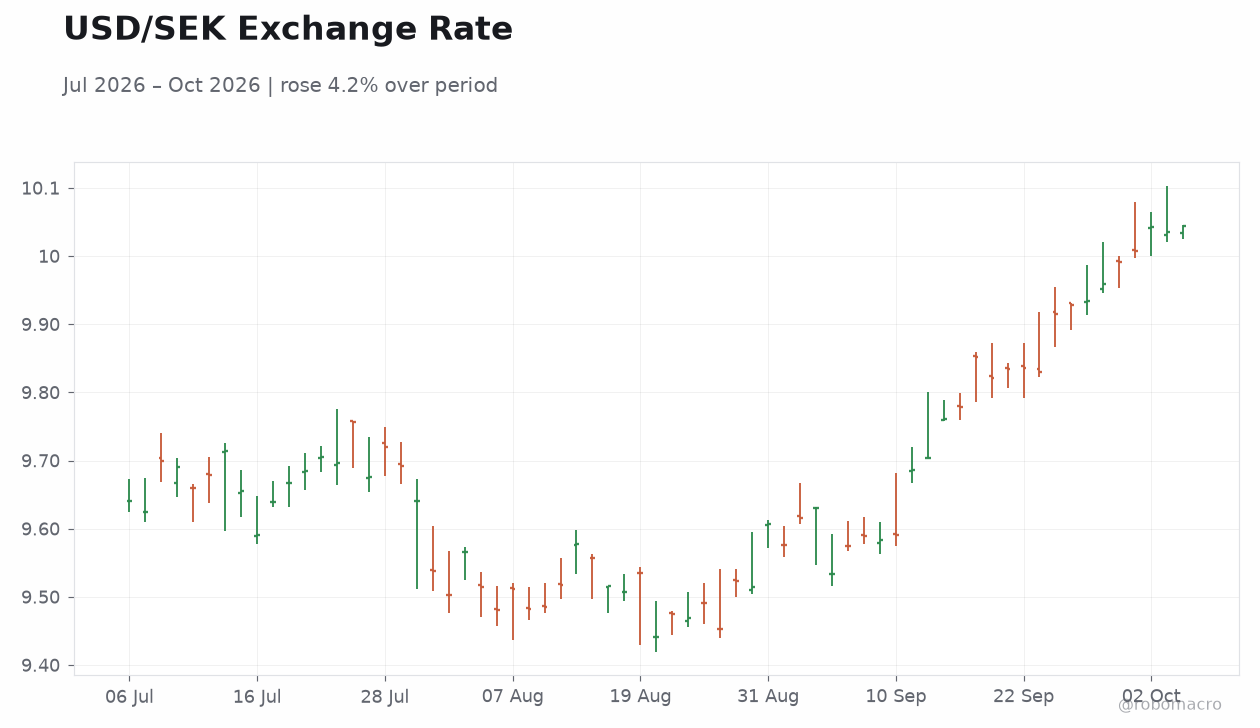
| USD/SEK | 10.04 | +0.09% |
| USD/NOK | 9.60 | -0.23% |
| EUR/SEK | 11.26 | -0.26% |
| EUR/NOK | 10.76 | -0.56% |
| Brent Crude | 100.96 | +0.64% |
| Gold | 4,149.20 | -0.18% |
| Bitcoin | 85,606.19 | -1.01% |
| Sweden 10Y Govt Yield | 3.14% | -11 bp |
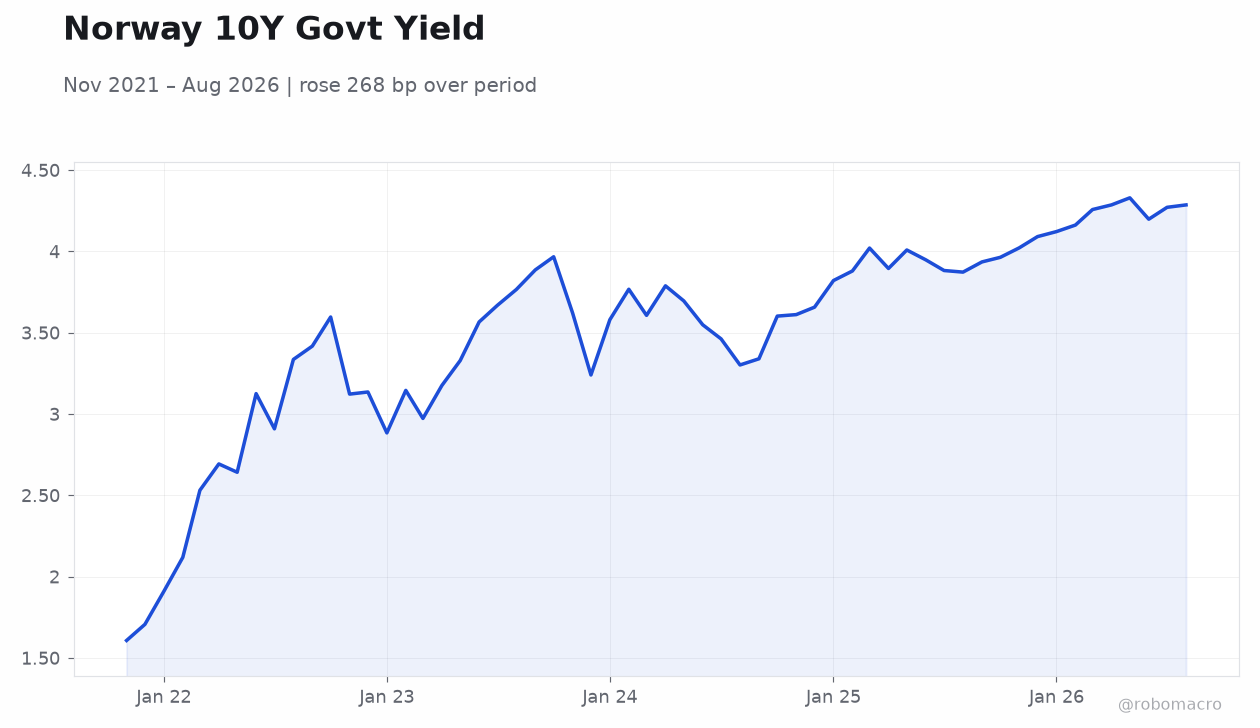
| Norway 10Y Govt Yield | - | - |
Prior Economic Events
| Data | Prior | Cons | Actual |
|---|---|---|---|
| No events available | |||
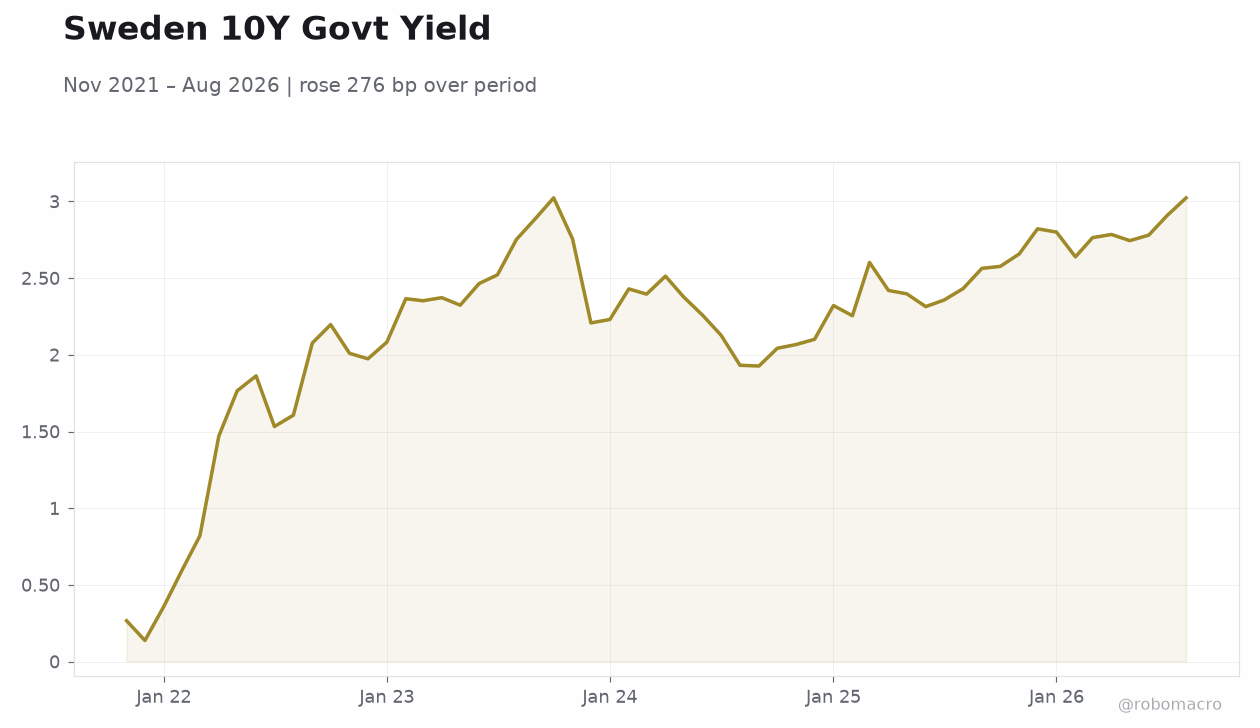 Sweden 10Y Govt Yield | Type: macro_line | Yield %: 3.023 (2026-08-01) | Range: 0.138–3.024 | Trend(6pt): 0.2667,2.083,2.396,2.398,2.908,3.023
Today's Economic Events
| Data | Prior | Cons | Time |
|---|---|---|---|
| No events available | |||
- OMX Stockholm 30 fell 0.09% while Oslo Bors rose 0.21%; Copenhagen and Helsinki indices declined.
- Sweden 10-year yield dropped 11 bp to 3.14%; Brent crude climbed 0.64% to 100.96.
- USD/SEK edged up 0.09% to 10.04; EUR/NOK fell 0.56% to 10.76 amid quiet data calendar.
Yesterday's Recap
Nordic equity markets closed mixed on October 5 with limited directional conviction. The OMX Stockholm 30 declined 0.09% to 3,257.59 while Oslo Bors advanced 0.21% to 2,067.06. OMX Copenhagen 25 fell 0.45% to 1,810.90 and OMX Helsinki 25 slipped 0.33% to 6,395.27.
Sweden’s 10-year government yield eased 11 bp to 3.14%, reflecting modest duration buying. Currency moves remained contained, with USD/NOK declining 0.23% to 9.60 and EUR/SEK falling 0.26% to 11.26. Brent crude rose 0.64% to 100.96, supporting Norwegian energy exposure, while gold and Bitcoin posted small losses.
No macroeconomic releases occurred across Sweden, Norway, Denmark or Finland, leaving market moves driven by external flows rather than domestic data surprises. Norway CPI YoY stood at 3.30% as of August 31 and Sweden CPI YoY at 0.70% as of the same date, providing the latest available inflation context.
The Day Ahead
The Nordic calendar remains empty on October 7 with no scheduled CPI, GDP, labor or trade prints. Riksbank and Norges Bank officials have no public appearances listed. Denmark’s Nationalbank is not expected to intervene in FX markets absent EUR/DKK pressure.
Finland, operating under ECB policy, faces no separate data events. Equity and fixed-income desks will likely focus on external drivers such as Brent crude and euro-area sentiment. Thin domestic news flow should keep trading ranges narrow across the four markets.
Norway’s oil-export status keeps Brent price movements central to fiscal and krone dynamics, while Sweden and Denmark remain sensitive to global manufacturing demand given their export-oriented industrial bases.
Other Economic Notes
Finland’s eurozone membership transmits ECB policy directly into local borrowing costs and competitiveness. Housing-market data gaps persist across the region, limiting visibility on consumer resilience. Overall, subdued Nordic data flow shifts attention to external commodity and euro-area signals.
Norges Bank Investment Management added to renewable-energy commitments, illustrating long-term portfolio strategy separate from short-term policy. Policy divergence remains clear: Sweden and Norway retain independent calendars while Denmark shadows the ECB and Finland operates inside it.