Nordics Macro Daily(Beta Mode)
Helsinki Leads Nordics Higher; Brent Tops $100
Market Snapshot
| Asset | Level | Change |
|---|---|---|
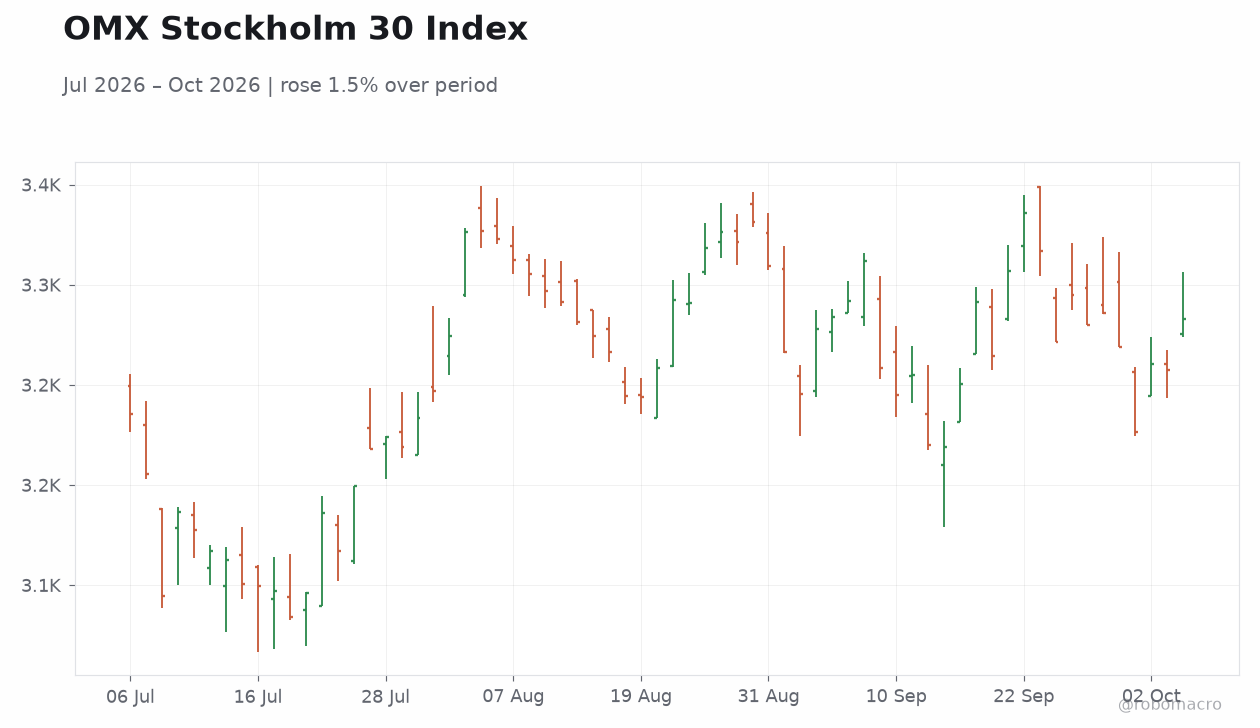
| OMX Stockholm 30 | 3,282.94 | +0.78% |
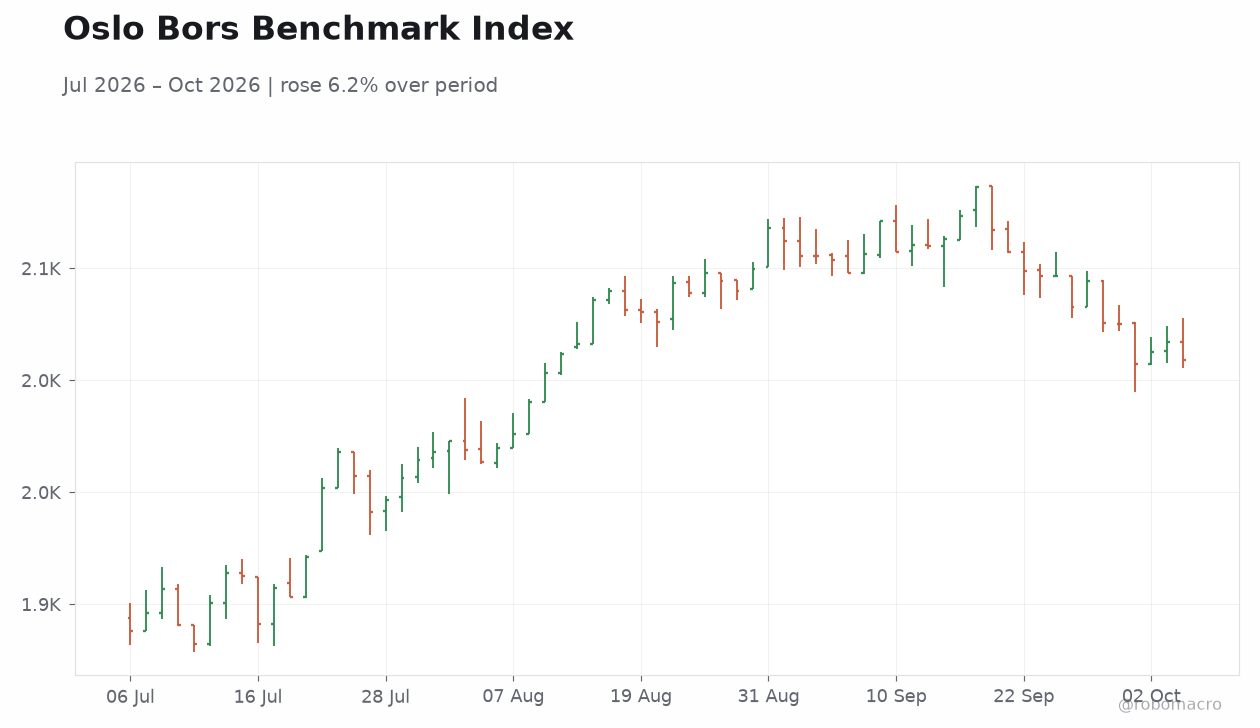
| Oslo Bors | 2,059.27 | -0.38% |
| OMX Copenhagen 25 | 1,821.97 | +0.61% |
| OMX Helsinki 25 | 6,461.40 | +1.03% |
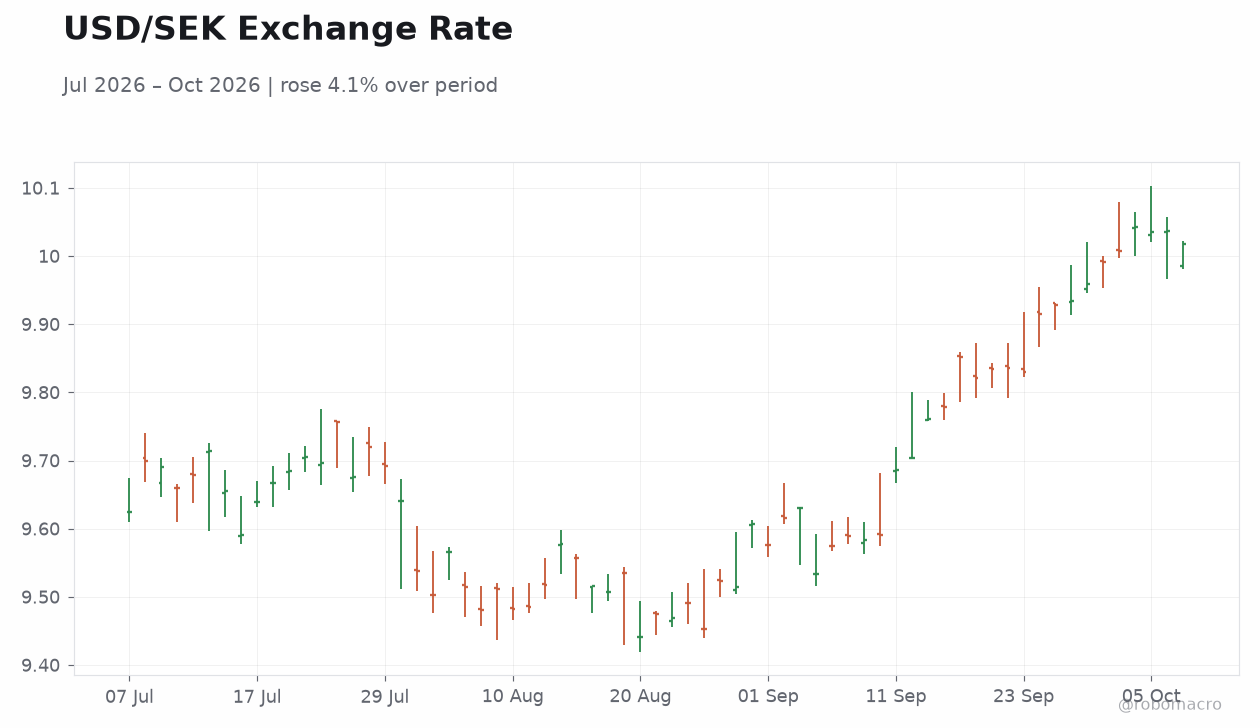
| USD/SEK | 10.02 | -0.19% |
| USD/NOK | 9.57 | -0.28% |
| EUR/SEK | 11.25 | -0.05% |
| EUR/NOK | 10.75 | -0.14% |
| Brent Crude | 101.38 | +0.80% |
| Gold | 4,162.80 | -0.58% |
| Bitcoin | 84,112.98 | -1.95% |
| Sweden 10Y Govt Yield | 3.15% | +1 bp |
| Norway 10Y Govt Yield | - | - |
Prior Economic Events
| Data | Prior | Cons | Actual |
|---|---|---|---|
| No events available | |||
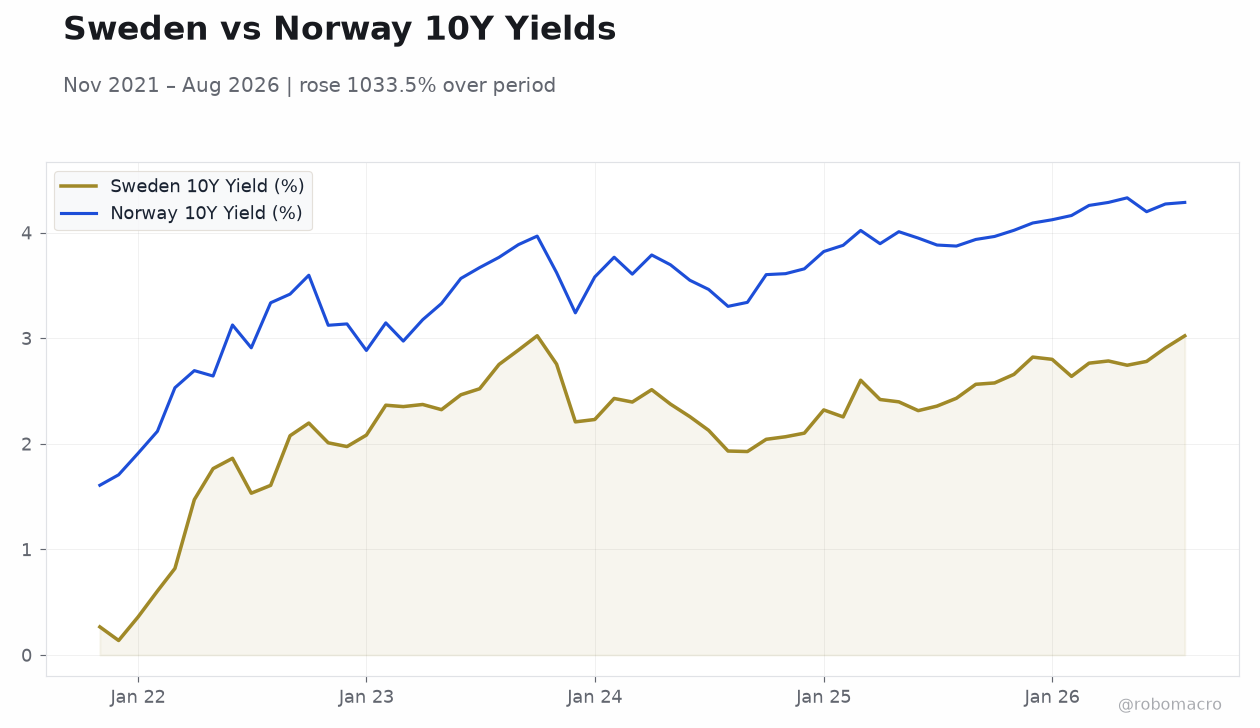 Sweden vs Norway 10Y Yields | Type: macro_line | Sweden 10Y Yield (%): 3.023 (2026-08-01) | Range: 0.138–3.024 | Trend(6pt): 0.2667,2.083,2.396,2.398,2.908,3.023 | Norway 10Y Yield (%): 4.286 (2026-08-01) | Range: 1.608–4.33 | Trend(6pt): 1.608,2.884,3.607,4.009,4.272,4.286
Today's Economic Events
| Data | Prior | Cons | Time |
|---|---|---|---|
| No events available | |||
- Helsinki gained 1.03% to 6,461.40, leading Nordic equity markets higher, while Oslo slipped 0.38% despite Brent crude rising 0.80% to $101.38.
- The Swedish 10-year government yield edged up 1 bp to 3.15%, while the krona and krone firmed against the dollar and euro.
- The Bank of Finland flagged that a prolonged Middle East conflict could have far-reaching consequences for the euro area economy, a key external risk for Finland's export sector.
Yesterday's Recap
Nordic equity markets diverged on Tuesday. Helsinki's OMX 25 led the region, adding 1.03% to close at 6,461.40, while Stockholm's OMX 30 rose 0.78% to 3,282.94 and Copenhagen's OMX 25 advanced 0.61% to 1,821.97. Oslo bucked the trend, falling 0.38% to 2,059.27 despite Brent crude gaining 0.80% to $101.38 — a reminder that the energy-heavy index does not always track oil one-for-one.
Currency markets favoured the Nordic currencies: USD/SEK eased 0.19% to 10.02 and USD/NOK slipped 0.28% to 9.57, while EUR/SEK fell 0.05% to 11.25 and EUR/NOK weakened 0.14% to 10.75. In fixed income, Sweden's 10-year government yield ticked up 1 bp to 3.15%. The Riksbank conducted its routine certificate sale operations, announcing conditions and results as part of its liquidity management framework.
In political news, the Sweden Democrats reshuffled key parliamentary committee posts, while Stockholm's government moved to make permanent temporary legislation protecting teenage deportees. Oslo's headlines included the government's proposal to raise the minimum age for electric scooters and reports that DNB will cut 400 jobs.
The Day Ahead
The calendar is light on tier-one Nordic data releases for Wednesday, leaving markets to trade on central bank commentary and global cues. Attention stays on the Riksbank's ongoing certificate operations, which shape short-term krona liquidity conditions. Swedish rates desks will watch the 10-year yield around the 3.15% level for direction after Tuesday's marginal rise.
In Norway, follow-through from leaks about the 2027 budget proposal may influence krone sentiment, particularly with Brent holding above $100. Finnish and Danish markets will take their cue from euro area developments, with the Bank of Finland's commentary on Middle East risks framing the external outlook. Equity traders will track whether Helsinki's momentum extends into a second session.
Other Economic Notes
Norway's fiscal position remains a central theme, with Brent crude near $101 supporting the oil revenue that underpins the sovereign wealth fund and krone stability. ↓ p.2