Riksbank Hike Odds Firm as SEK Steadies, Stocks Slip
OMX Stockholm 303,226.82-1.71%
Oslo Bors2,043.68-0.76%
OMX Copenhagen 251,812.58-0.52%
OMX Helsinki 256,406.24-0.85%
Market Snapshot
| Asset | Level | Change |
|---|
| OMX Stockholm 30 | 3,226.82 | -1.71% |
| Oslo Bors | 2,043.68 | -0.76% |
| OMX Copenhagen 25 | 1,812.58 | -0.52% |
| OMX Helsinki 25 | 6,406.24 | -0.85% |
| USD/SEK | 10.00 | -0.39% |
| USD/NOK | 9.55 | -0.45% |
| EUR/SEK | 11.20 | -0.45% |
| EUR/NOK | 10.72 | -0.25% |
| Brent Crude | 102.42 | +2.22% |
| Gold | 4,158.40 | +0.43% |
| Bitcoin | 82,597.60 | -3.46% |
| Sweden 10Y Govt Yield | 3.17% | +2 bp |
| Norway 10Y Govt Yield | - | - |
Prior Economic Events
| Data |
Prior |
Cons |
Actual |
| No events available |
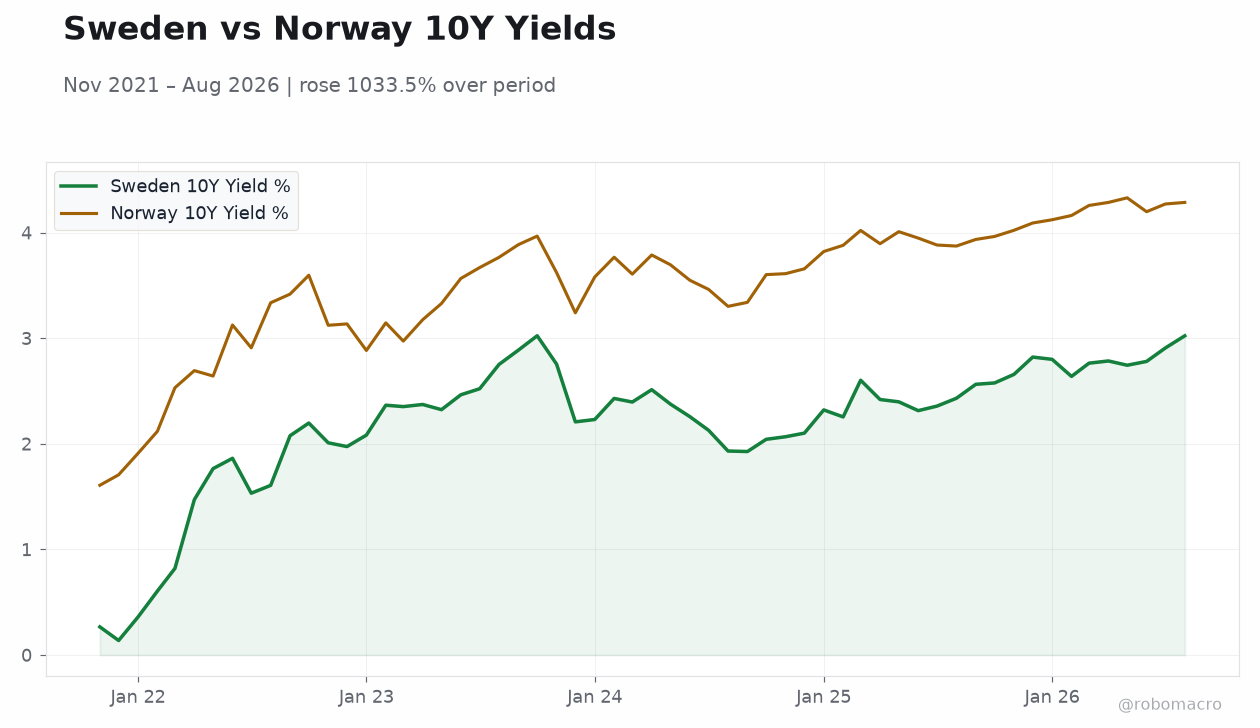
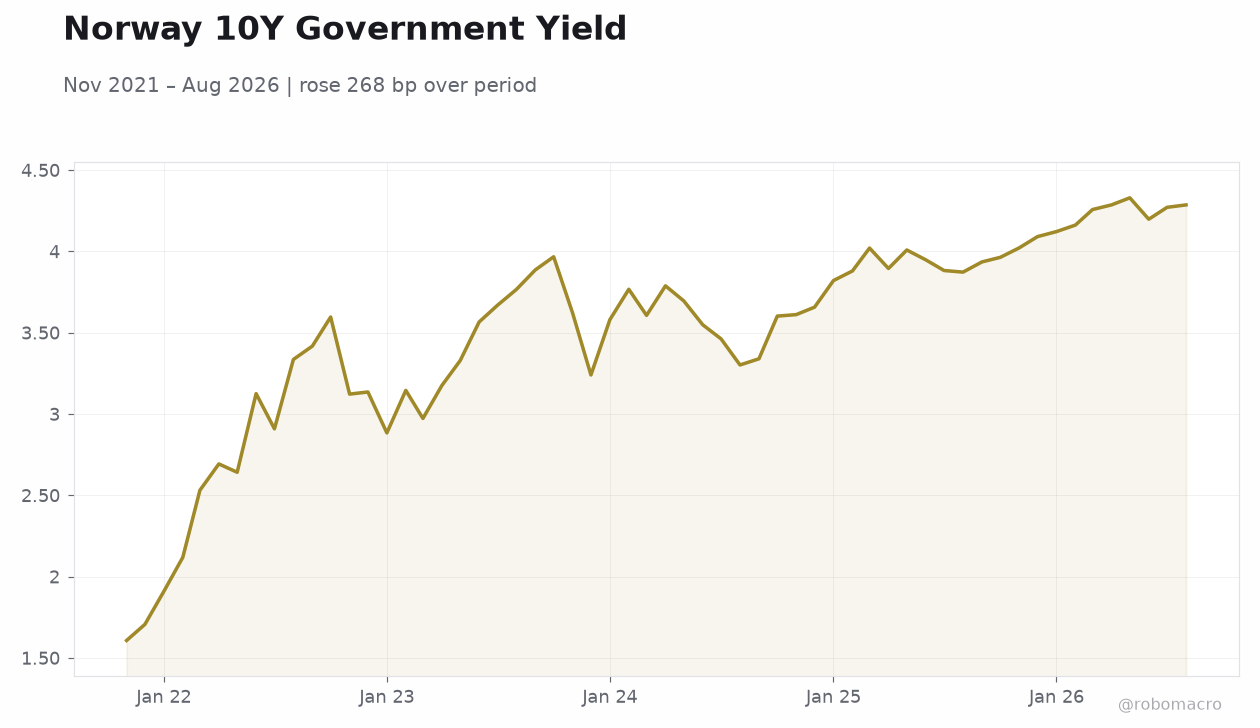 Norway 10Y Government Yield | Type: macro_line | Norway 10Y Yield %: 4.286 (2026-08-01) | Range: 1.608–4.33 | Trend(6pt): 1.608,2.884,3.607,4.009,4.272,4.286
Today's Economic Events
| Data |
Prior |
Cons |
Time |
| No events available |
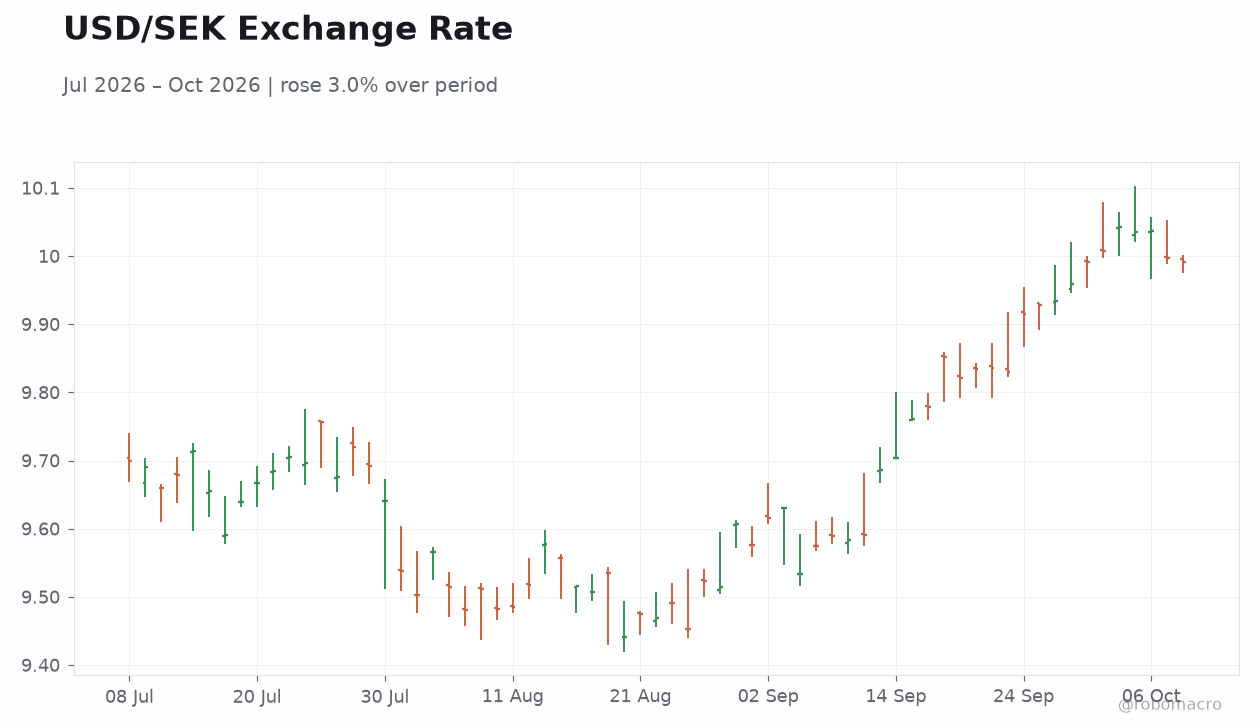
- Swedish CPIF inflation more than doubled in September on energy prices and a softer krona, keeping a Riksbank hike firmly in play and supporting SEK against the dollar.
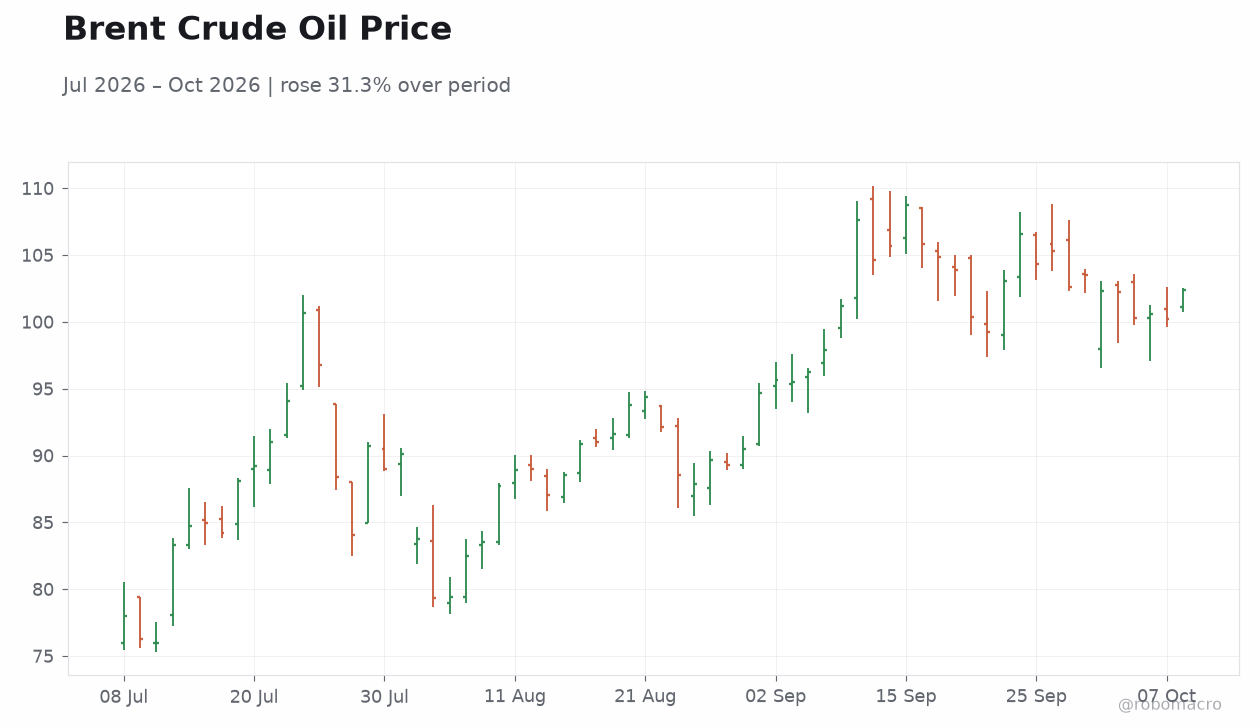
- Brent crude jumped 2.2% to $102.42, boosting Norway's fiscal terms and underpinning the krone even as Oslo equities fell 0.76%.
- Nordic benchmarks closed lower across the board, Stockholm down 1.71%, while Sweden's 10-year yield rose 2 bp to 3.17%.
Yesterday's Recap
Swedish inflation data dominated the session, with the CPIF measure surging to 1.5% year-on-year in September according to preliminary Statistics Sweden estimates — more than double the prior pace, driven by higher energy prices and a weaker krona. The print landed squarely in the Riksbank's hawkish camp, with Bloomberg reporting that steady underlying inflation keeps a rate hike on the table and Finimize noting the bank still sees tightening despite the headline cooling narrative. Currency markets rewarded the repricing: USD/SEK slipped 0.39% to 10.00 and EUR/SEK eased 0.45% to 11.20, while USD/NOK fell 0.45% to 9.55 and EUR/NOK lost 0.25% to 10.72 as the dollar softened broadly.
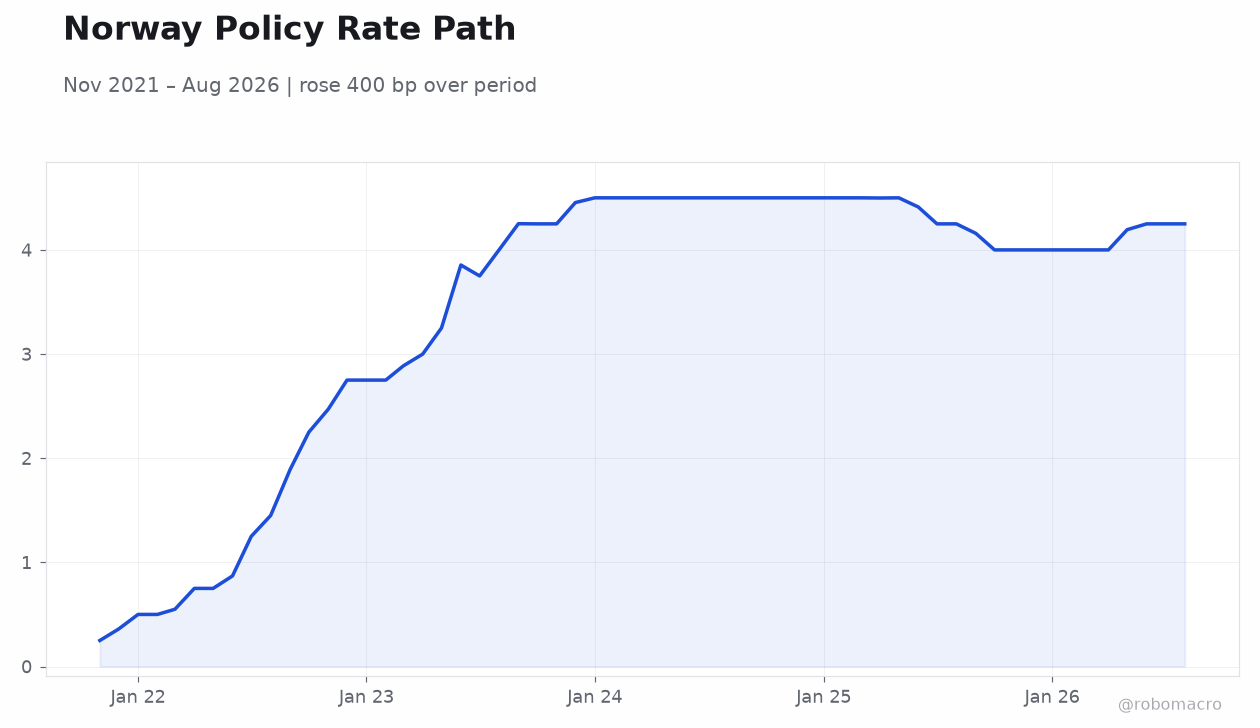
Norway's government presented its draft 2027 budget, featuring income tax cuts and higher levies on electric vehicles and energy — a fiscal package with implications for household demand and Norges Bank's assessment of the output gap. Equity markets had a rough day: the OMX Stockholm 30 fell 1.71% to 3,226.82, Oslo Børs shed 0.76% to 2,043.68, Copenhagen's OMX 25 lost 0.52% to 1,812.58, and Helsinki dropped 0.85% to 6,406.24. Sweden's 10-year government yield rose 2 bp to 3.17%, consistent with the hawkish repricing of Riksbank expectations.
Brent crude rallied 2.22% to $102.42, a tailwind for Norway's oil-linked fiscal revenues and the krone.
The Day Ahead
Attention stays on the Riksbank today as markets digest the September inflation surprise and refine expectations for the next policy meeting. Norway's 2027 budget debate continues in the Storting, with fiscal impulse estimates feeding directly into Norges Bank's projections for mainland demand. Swedish housing market indicators will be scrutinized for signs that higher borrowing costs are cooling transaction volumes, a key channel for the Riksbank's tightening transmission.
Danish data flow remains light, with Copenhagen markets tracking the ECB's policy stance given the krone's ERM II peg. Finnish sentiment indicators will be watched for evidence of eurozone weakness spilling into export orders. Across the region, krona and krone strength against a softer dollar will frame the inflation outlook into year-end.
Page 1
Never miss an issue
Subscribe to Nordics Macro Daily and get each new issue delivered to your inbox.
Already a member? Visit robomacro.com
to log in and manage subscriptions, or use Forgot Password to set a password.