Nordic Equities Grind Higher; Kroner Rallies With Brent
OMX Stockholm 303,276.81+0.21%
Oslo Bors2,086.70+0.75%
OMX Copenhagen 251,840.16+0.16%
OMX Helsinki 256,401.65-0.05%
Market Snapshot
| Asset | Level | Change |
|---|
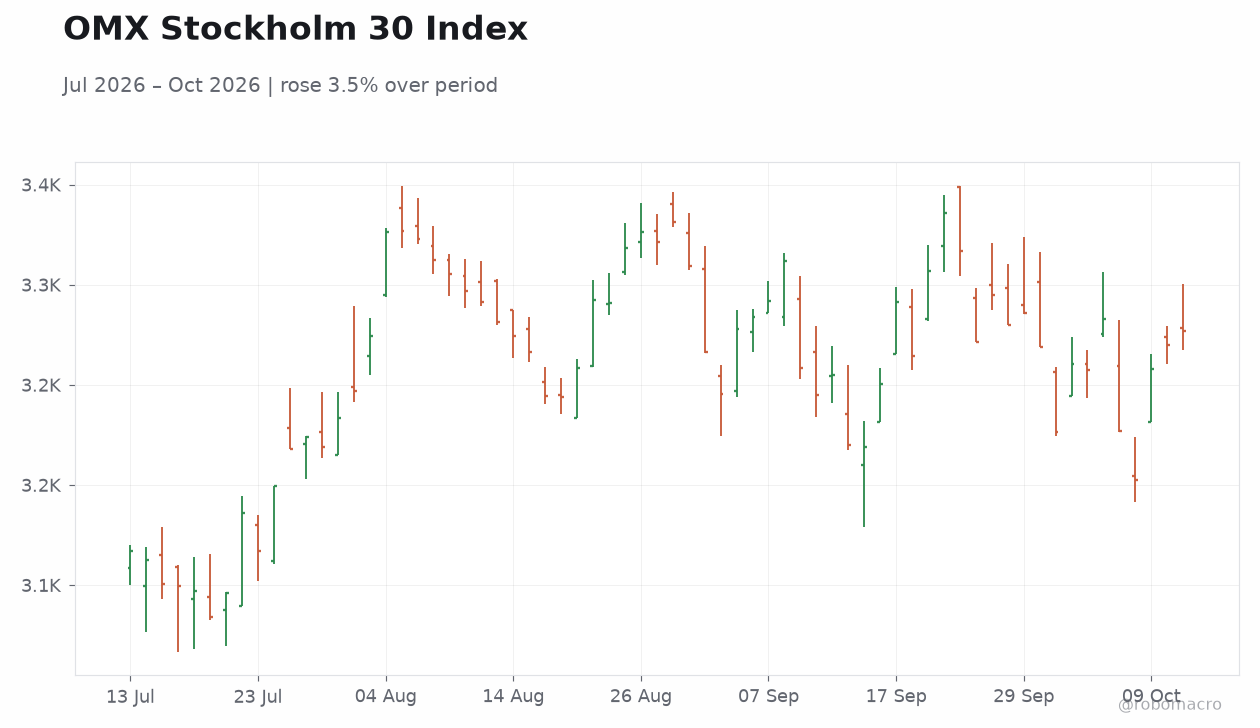
| OMX Stockholm 30 | 3,276.81 | +0.21% |
| Oslo Bors | 2,086.70 | +0.75% |
| OMX Copenhagen 25 | 1,840.16 | +0.16% |
| OMX Helsinki 25 | 6,401.65 | -0.05% |
| USD/SEK | 9.95 | -0.89% |
| USD/NOK | 9.49 | -0.80% |
| EUR/SEK | 11.15 | -0.45% |
| EUR/NOK | 10.64 | -0.38% |
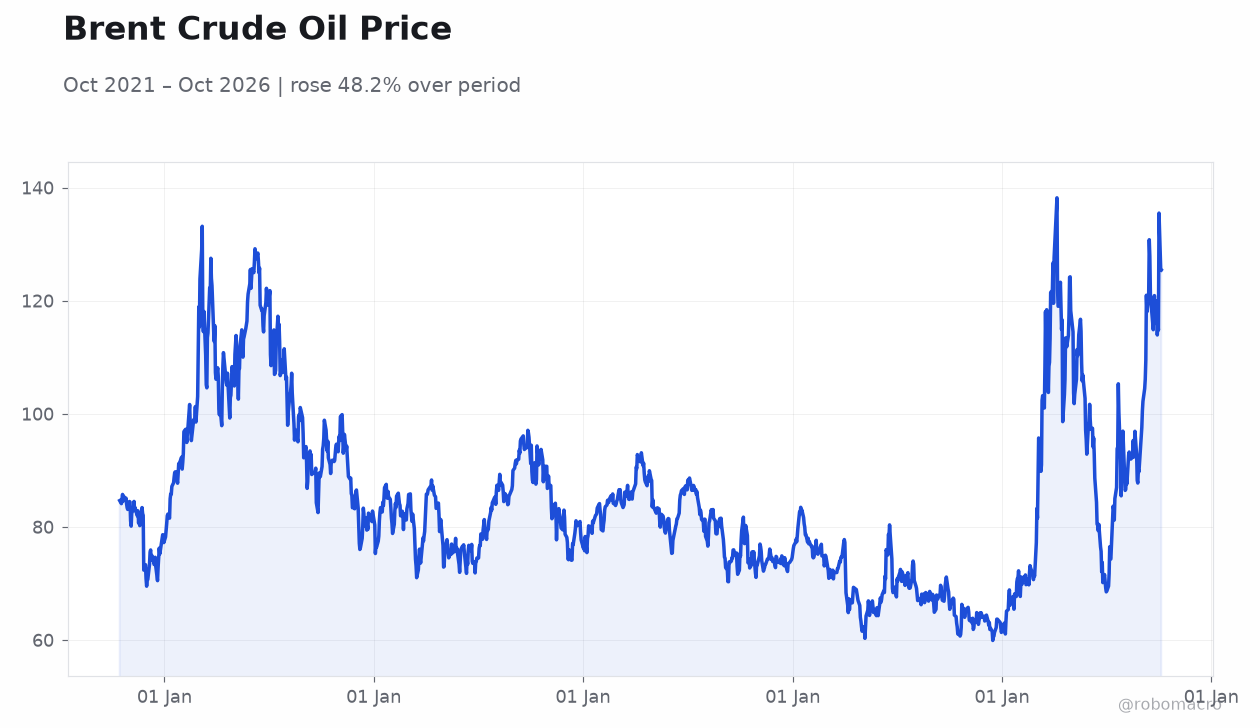
| Brent Crude | 106.33 | +0.61% |
| Gold | 4,189.90 | +0.30% |
| Bitcoin | 83,513.77 | +2.14% |
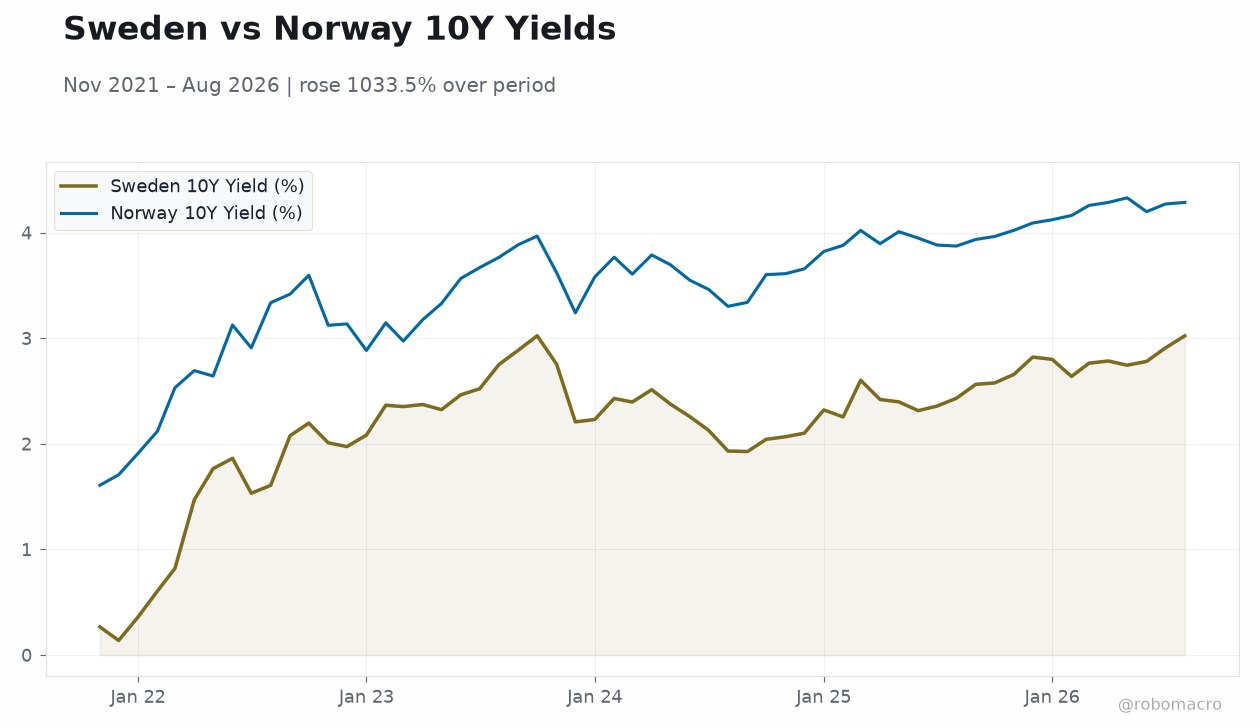
| Sweden 10Y Govt Yield | 3.18% | -2 bp |
| Norway 10Y Govt Yield | - | - |
Prior Economic Events
| Data |
Prior |
Cons |
Actual |
| No events available |
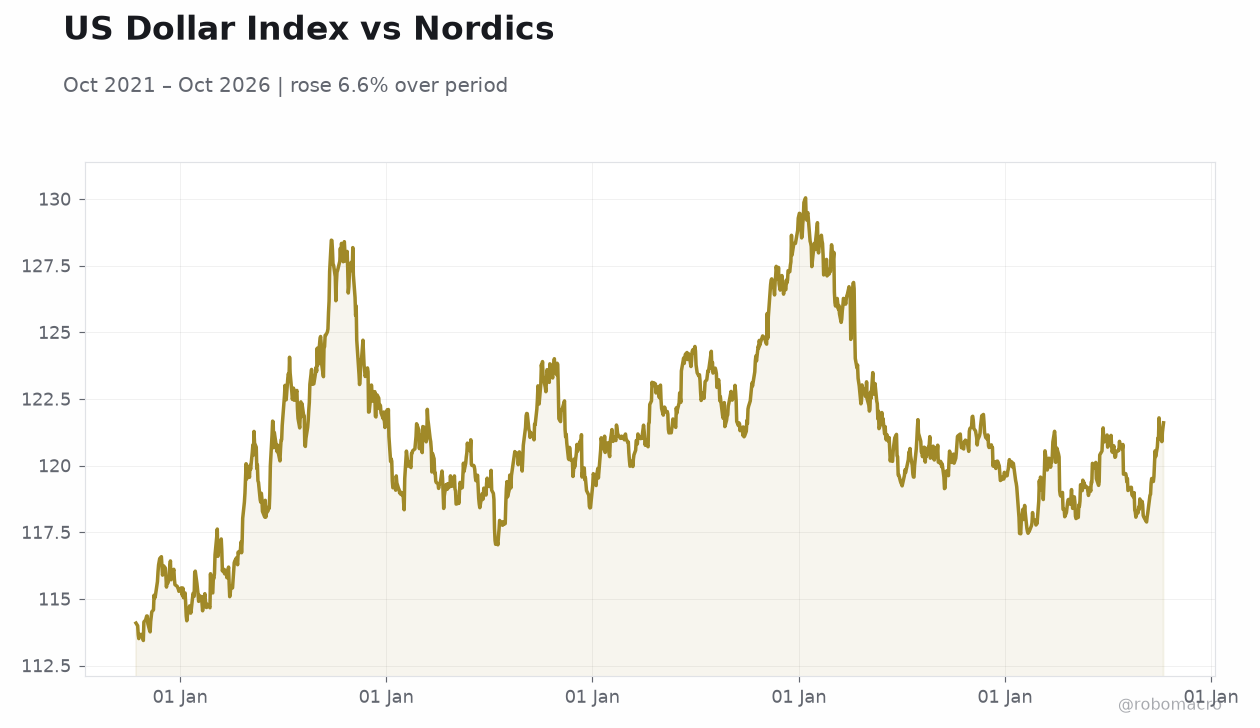 US Dollar Index vs Nordics | Type: macro_line | Broad Dollar Index: 121.6 (2026-10-09) | Range: 113.4–130 | Trend(6pt): 114.1,119.2,122.3,119.9,121.3,121.6
Today's Economic Events
| Data |
Prior |
Cons |
Time |
| No events available |
- Oslo Børs led Nordic gainers, up 0.75% to 2,086.70, as Brent crude held near $106 and the krone firmed 0.80% against the dollar.
- Sweden's 10-year yield eased 2 bp to 3.18% while USD/SEK fell 0.89% to 9.95, signaling a broad softening in the dollar against Nordic currencies.
- Riksbank continued routine certificate operations, auctioning SEK 470bn in liquidity management, with market commentary flagging a more hawkish tone from the bank.
Yesterday's Recap
Nordic equity markets closed mixed but tilted higher, with Oslo Børs outperforming at +0.75% to 2,086.70 on the back of firm crude prices, while OMX Stockholm 30 added 0.21% to 3,276.81 and OMX Copenhagen 25 edged up 0.16% to 1,840.16. Helsinki was the laggard, with OMX Helsinki 25 essentially flat at -0.05% to 6,401.65. Currency markets told a coherent story of dollar weakness: USD/SEK dropped 0.89% to 9.95 and USD/NOK fell 0.80% to 9.49, while EUR crosses also softened, with EUR/SEK at 11.15 (-0.45%) and EUR/NOK at 10.64 (-0.38%).
In fixed income, Sweden's 10-year government yield eased 2 bp to 3.18%, a modest bull-flattening that suggests domestic rates markets are pricing a patient rather than aggressive Riksbank path. Brent crude rose 0.61% to $106.33, directly supporting Norway's fiscal terms and the krone's bid. Gold added 0.30% to $4,189.90 and Bitcoin rallied 2.14% to $83,514, reflecting continued appetite for alternative stores of value.
On the political front, Sweden's Social Democrat leader was set to meet the parliament speaker, a procedural step that keeps coalition arithmetic in focus, while Norwegian headlines centered on domestic politics rather than data.
The Day Ahead
The calendar is light on tier-one Nordic releases today, leaving the tape driven by central bank operations and global spillovers. Attention stays on Riksbank liquidity management, with the bank's regular certificate auctions continuing to fine-tune system liquidity in the Swedish money market. Swedish rates desks will watch how the 10-year yield behaves around 3.18% after yesterday's 2 bp easing, particularly if the dollar's slide extends and pulls EUR/SEK lower through the 11.15 handle.
In Norway, the krone's strength against both the dollar and euro bears watching for any signaling from Norges Bank officials on currency strength feeding into the inflation outlook. Danish and Finnish markets have no major domestic catalysts, so Copenhagen and Helsinki will take their cues from eurozone rates and the ECB complex. With no dominant domestic print, equity flows into the region's large-cap exporters will hinge on the global risk tone.
Page 1
Never miss an issue
Subscribe to Nordics Macro Daily and get each new issue delivered to your inbox.
Already a member? Visit robomacro.com
to log in and manage subscriptions, or use Forgot Password to set a password.