Nordics Macro Daily(Beta Mode)
Nordic Equities Slip, SEK Firms as Brent Surges
Market Snapshot
| Asset | Level | Change |
|---|---|---|
| OMX Stockholm 30 | 3,238.64 | -0.89% |
| Oslo Bors | 2,089.89 | -0.43% |
| OMX Copenhagen 25 | 1,857.56 | +0.44% |
| OMX Helsinki 25 | 6,251.46 | -1.24% |
| USD/SEK | 9.91 | -0.13% |
| USD/NOK | 9.40 | -0.25% |
| EUR/SEK | 11.12 | -0.02% |
| EUR/NOK | 10.57 | -0.17% |
| Brent Crude | 110.04 | +1.15% |
| Gold | 4,133.10 | -0.23% |
| Bitcoin | 82,815.30 | +1.17% |
| Sweden 10Y Govt Yield | 3.22% | +6 bp |
| Norway 10Y Govt Yield | - | - |
Prior Economic Events
| Data | Prior | Cons | Actual |
|---|---|---|---|
| No events available | |||
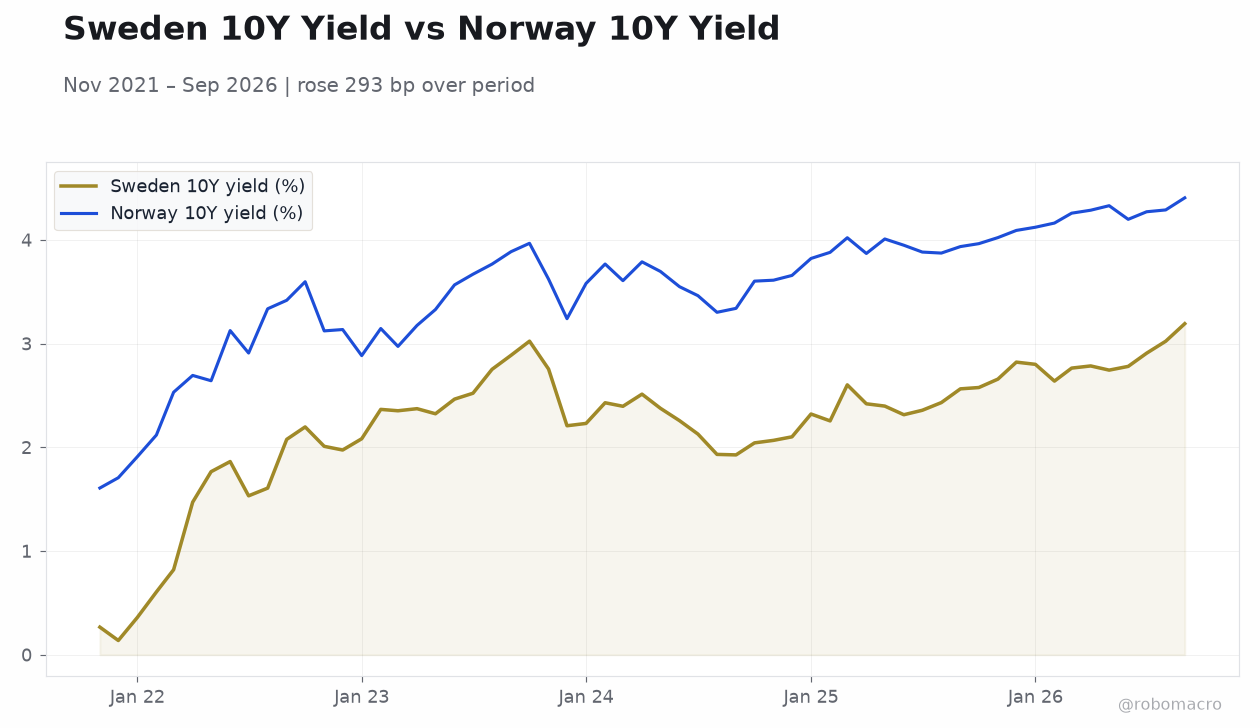 Sweden 10Y Yield vs Norway 10Y Yield | Type: macro_line | Sweden 10Y yield (%): 3.192 (2026-09-01) | Range: 0.138–3.192 | Trend(6pt): 0.2667,2.083,2.396,2.398,2.908,3.192 | Norway 10Y yield (%): 4.406 (2026-09-01) | Range: 1.608–4.406 | Trend(6pt): 1.608,2.884,3.607,4.009,4.272,4.406
Today's Economic Events
| Data | Prior | Cons | Time |
|---|---|---|---|
| No events available | |||
- Nordic bourses trade mixed-to-lower, with Helsinki and Stockholm leading declines while Copenhagen bucks the trend
- Swedish 10-year yield climbs 6 bp to 3.22% as krona firms modestly against both USD and EUR
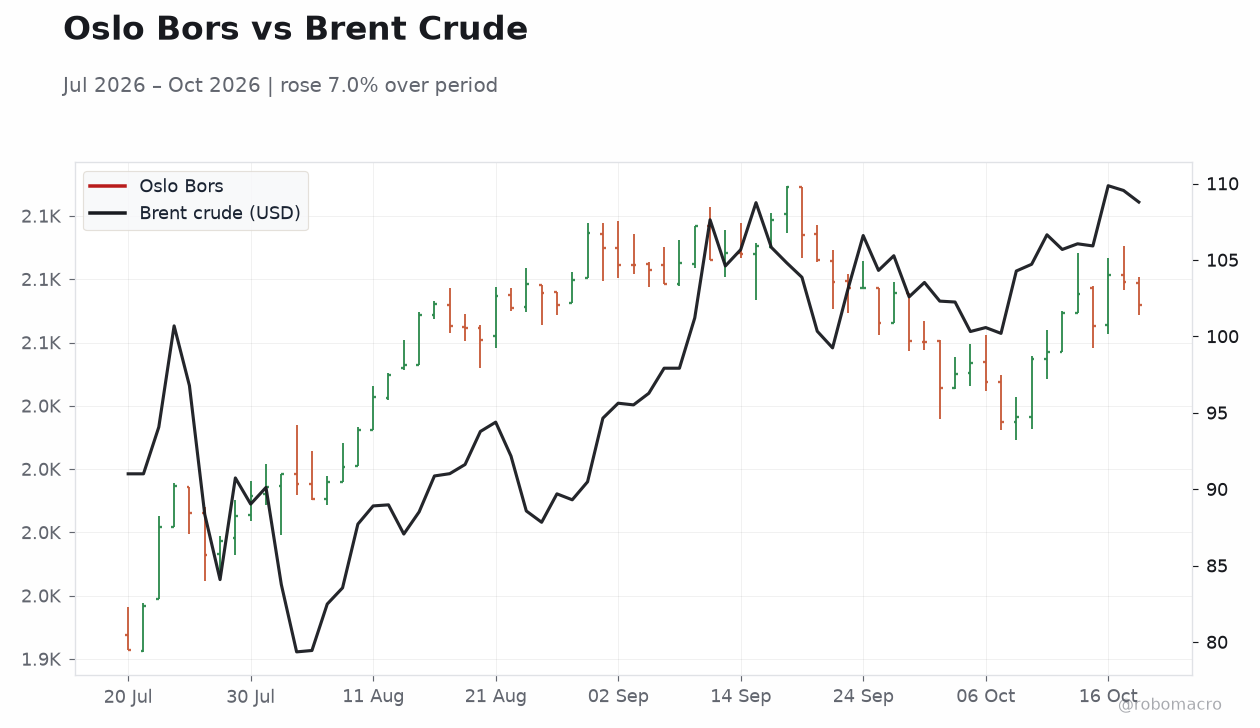
- Brent crude above $110 supports Norwegian fiscal outlook, though Oslo Bors still slips
Yesterday's Recap
Nordic equity markets closed broadly lower on Tuesday, with the OMX Helsinki 25 the weakest performer at -1.24% and Stockholm's OMX 30 off -0.89%, while Copenhagen's OMX 25 managed a modest +0.44% gain. Oslo Bors slipped -0.43% despite Brent crude rallying +1.15% to $110.04, a level that materially improves Norway's fiscal and export revenue outlook. In FX, the Swedish krona strengthened against the dollar (USD/SEK -0.13% to 9.91) and held essentially flat versus the euro (EUR/SEK -0.02% to 11.12), while the Norwegian krone also firmed (USD/NOK -0.25% to 9.40; EUR/NOK -0.17% to 10.57).
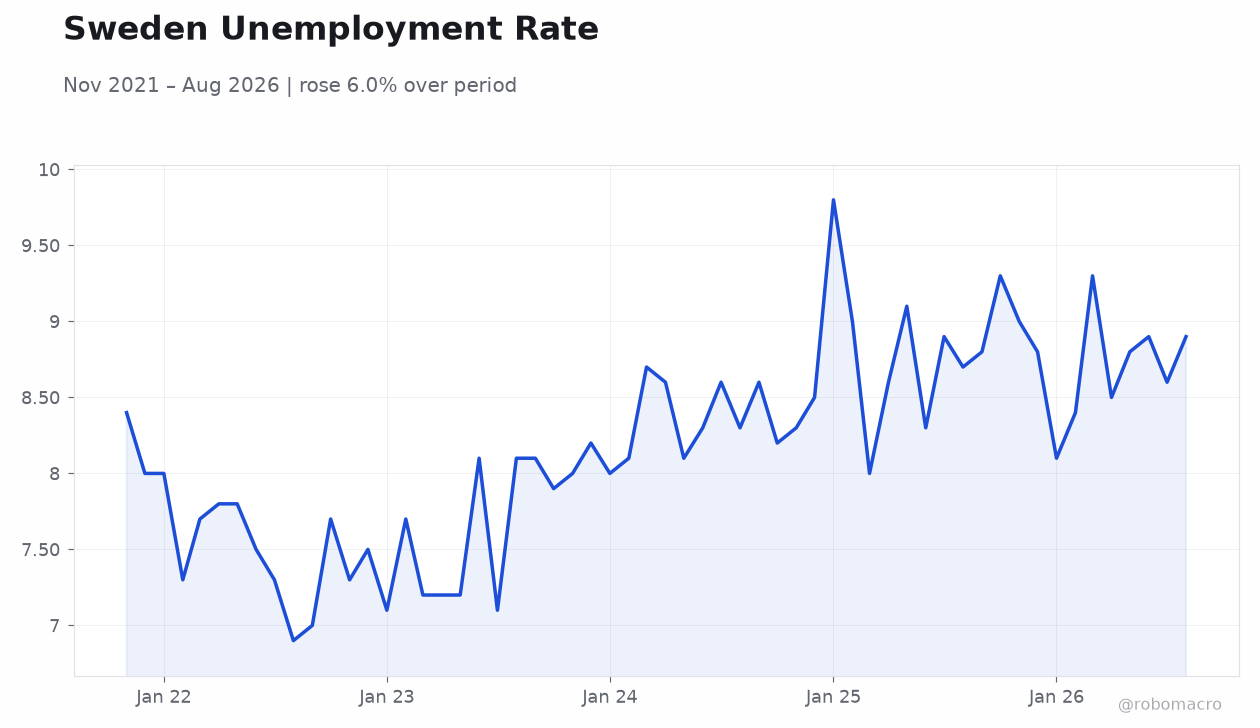
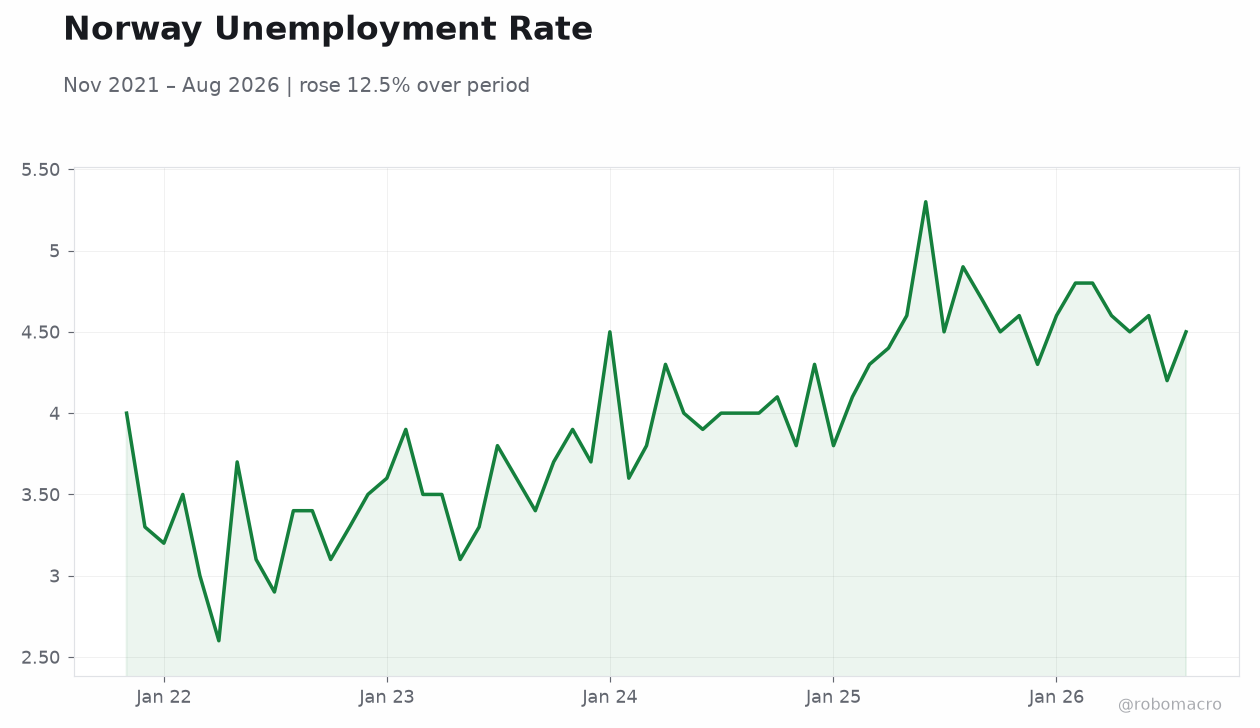
Rates moved against the risk backdrop, with the Swedish 10-year government yield rising 6 bp to 3.22%, a notable back-up even as equities softened. Sweden's September CPI printed at 1.50% year-on-year, comfortably below the Riksbank's 2% target and reinforcing the case for a cautious, data-dependent policy stance. Norway's August CPI ran at 3.30% year-on-year, still above target and keeping Norges Bank's easing path shallow.
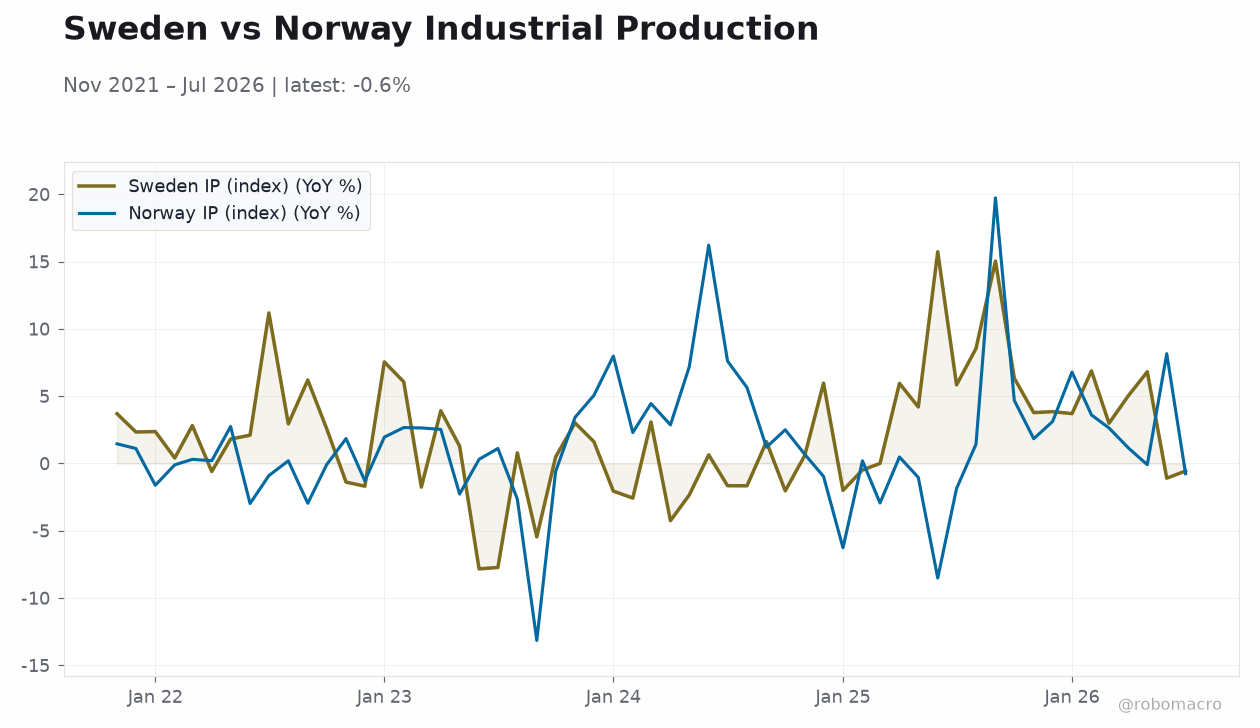
Denmark's growth outlook drew scrutiny as a watchdog flagged slower expansion as the Novo Nordisk-led pharmaceutical boom loses momentum.
The Day Ahead
The Nordic calendar is light on Wednesday, with no major scheduled releases across Sweden, Norway, Denmark, or Finland, leaving markets to trade off global risk sentiment and commodity moves. With Brent holding above $110, Norwegian energy names and the krone remain the key domestic transmission channel to watch intraday. Swedish rates will be sensitive to any further back-up in the 10-year, particularly with the yield now at 3.22% and CPI running well below target — a combination that keeps real yields elevated and could weigh on rate-sensitive sectors.
Danish markets will continue to digest the softer growth narrative around the pharmaceutical complex, while Finnish equities remain tethered to euro-area sentiment and ECB expectations. Absent domestic catalysts, watch EUR/SEK and EUR/NOK for spillover from broader euro and dollar moves.
Other Economic Notes
Sweden's low headline inflation (1.50% YoY) alongside a 10-year yield at 3.22% implies a restrictive real rate environment that could pressure housing and consumption-sensitive activity. ↓ p.2