Nordics Macro Daily(Beta Mode)
Nordics Rise as Brent Slides, Riksbank Eyes E-Krona
Market Snapshot
| Asset | Level | Change |
|---|---|---|
| OMX Stockholm 30 | 3,225.43 | +1.57% |
| Oslo Bors | 2,125.05 | +1.14% |
| OMX Copenhagen 25 | 1,906.74 | +1.34% |
| OMX Helsinki 25 | 6,290.25 | +1.83% |
| USD/SEK | 9.95 | +0.31% |
| USD/NOK | 9.32 | +0.03% |
| EUR/SEK | 11.12 | -0.14% |
| EUR/NOK | 10.40 | -0.41% |
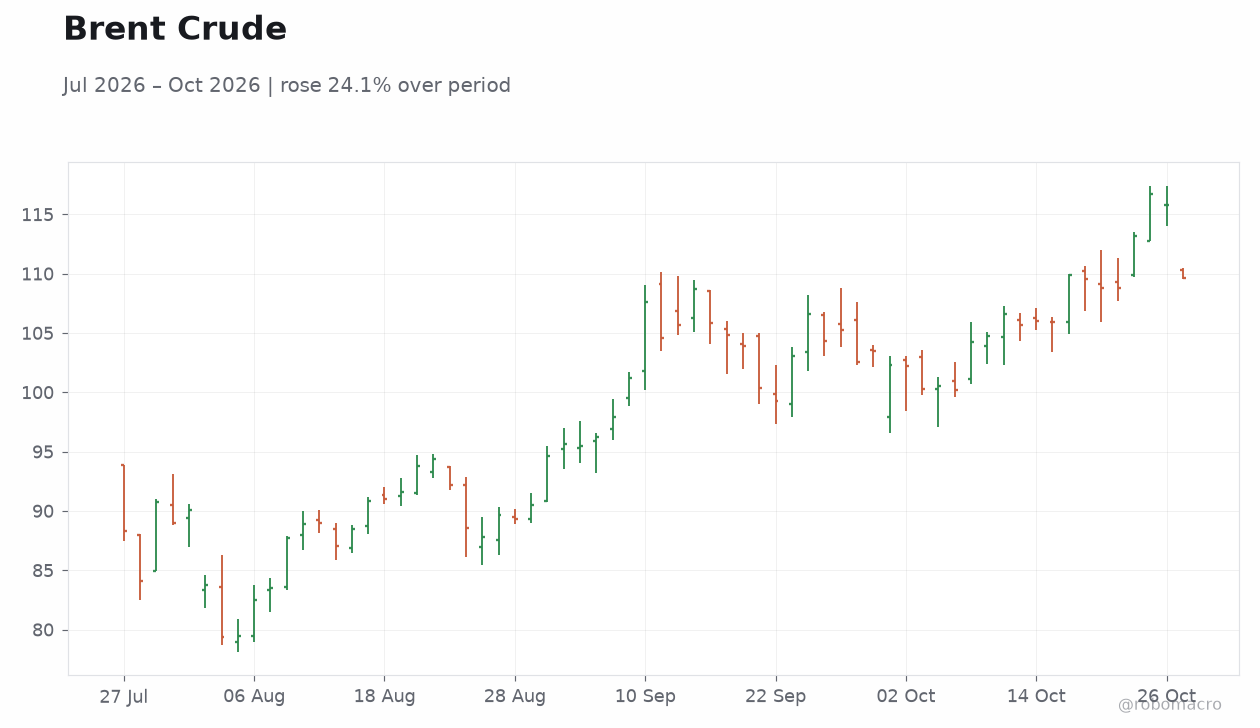
| Brent Crude | 109.61 | -5.35% |
| Gold | 4,023.60 | -0.37% |
| Bitcoin | 79,691.65 | -0.42% |
| Sweden 10Y Govt Yield | 3.11% | -1 bp |
| Norway 10Y Govt Yield | - | - |
Prior Economic Events
| Data | Prior | Cons | Actual |
|---|---|---|---|
| No events available | |||
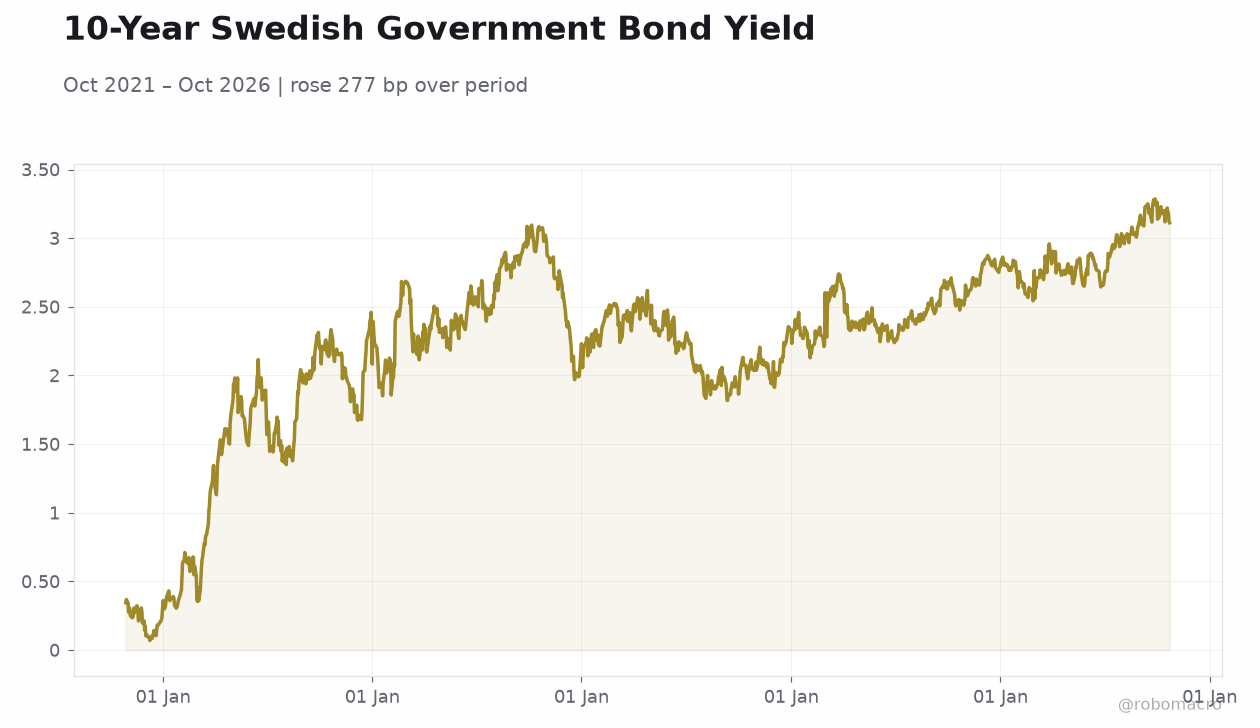 10-Year Swedish Government Bond Yield | Type: macro_line | 10-Year Swedish Government Bond Yield: 3.112 (2026-10-23) | Range: 0.06946–3.285 | Trend(6pt): 0.3451,2.018,2.57,2.411,3.183,3.112
Today's Economic Events
| Data | Prior | Cons | Time |
|---|---|---|---|
| No events available | |||
- Nordic equities posted broad gains with OMX Helsinki 25 leading at +1.83% and OMX Stockholm 30 up 1.57%.
- Brent crude fell 5.35% to $109.61, pressuring Norway’s fiscal outlook while the krone held steady.
- Sweden’s 10-year yield eased 1 bp to 3.11% as Riksbank reopened the e-krona discussion amid declining cash use.
Yesterday's Recap
Nordic equity markets advanced across the board despite an absence of fresh data releases. The OMX Stockholm 30 climbed 1.57% to 3,225.43 while the Oslo Bors rose 1.14% to 2,125.05. OMX Copenhagen 25 gained 1.34% and OMX Helsinki 25 added 1.83%, reflecting broad risk appetite.
Sweden’s 10-year government yield declined 1 bp to 3.11%, consistent with the latest verified print. USD/SEK edged 0.31% higher to 9.95 while EUR/SEK slipped 0.14%. Brent’s sharp 5.35% drop to $109.61 weighed on Norway’s oil-linked revenues, yet USD/NOK remained nearly unchanged at 9.32.
Riksbank commentary on the e-krona project drew attention as cash usage continued to decline in Sweden. EUR/NOK eased 0.41% to 10.40, underscoring limited immediate transmission from oil-price moves into the currency pair.
The Day Ahead
The Nordic calendar remains empty of scheduled releases, leaving markets to focus on external drivers. Investors will monitor any follow-up statements from the Riksbank on its digital currency initiative. Norway’s sovereign wealth fund activity and logistics commitments may also surface in headlines.
Currency pairs such as EUR/NOK and EUR/SEK are expected to trade in narrow ranges absent fresh policy signals. Attention will likely shift toward global oil dynamics and their direct impact on Norwegian fiscal balances. Equity flows into OMX indices may persist if Brent stabilizes near current levels.
Gold’s modest 0.37% decline to $4,023.60 and Bitcoin’s 0.42% drop offer little directional cue for regional risk assets.
Other Economic Notes
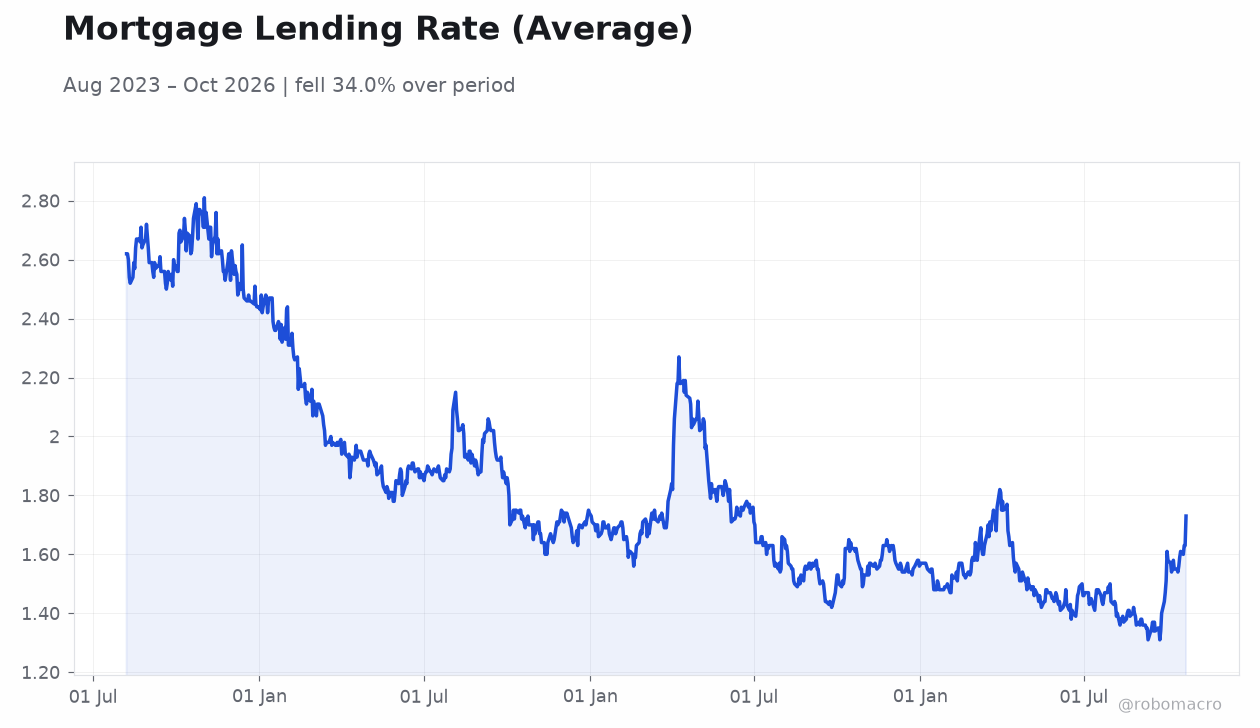
Sweden’s verified September CPI at 1.50% YoY continues to anchor expectations for steady Riksbank policy. Norway’s August CPI reading of 3.30% YoY highlights persistent price pressures tied to energy and imported goods. Export-oriented manufacturing sectors in Sweden and Denmark remain sensitive to euro-area demand and global trade conditions.
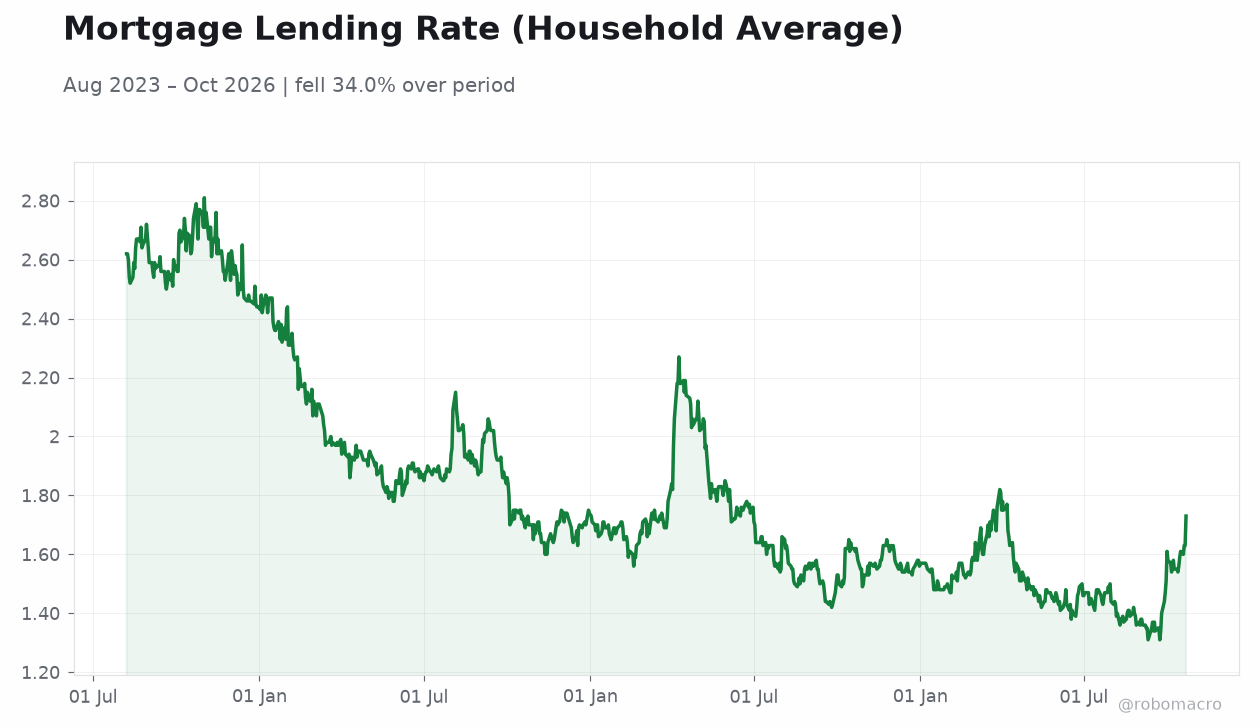
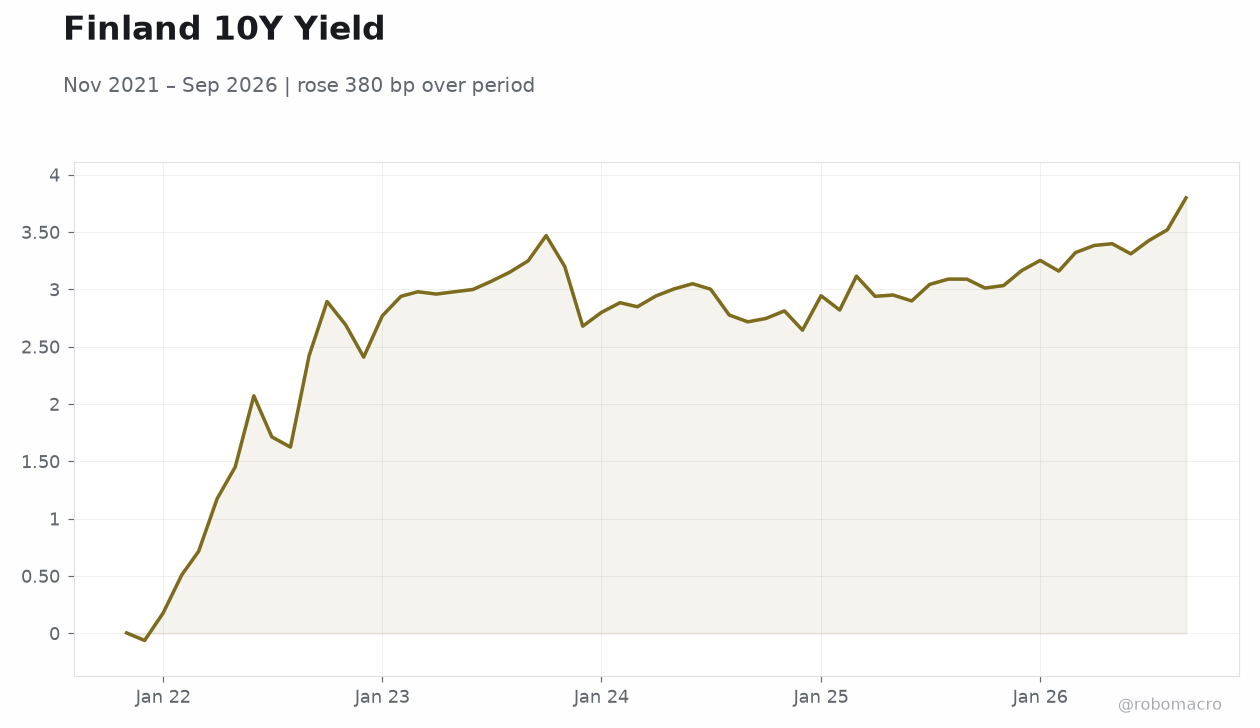
Finland’s eurozone membership means its financing costs track ECB decisions directly, limiting independent policy space. Housing-market sentiment in Sweden shows no new catalysts after yesterday’s quiet session. Bitcoin and gold moves remain peripheral to Nordic macro drivers.