Nordics Macro Daily(Beta Mode)
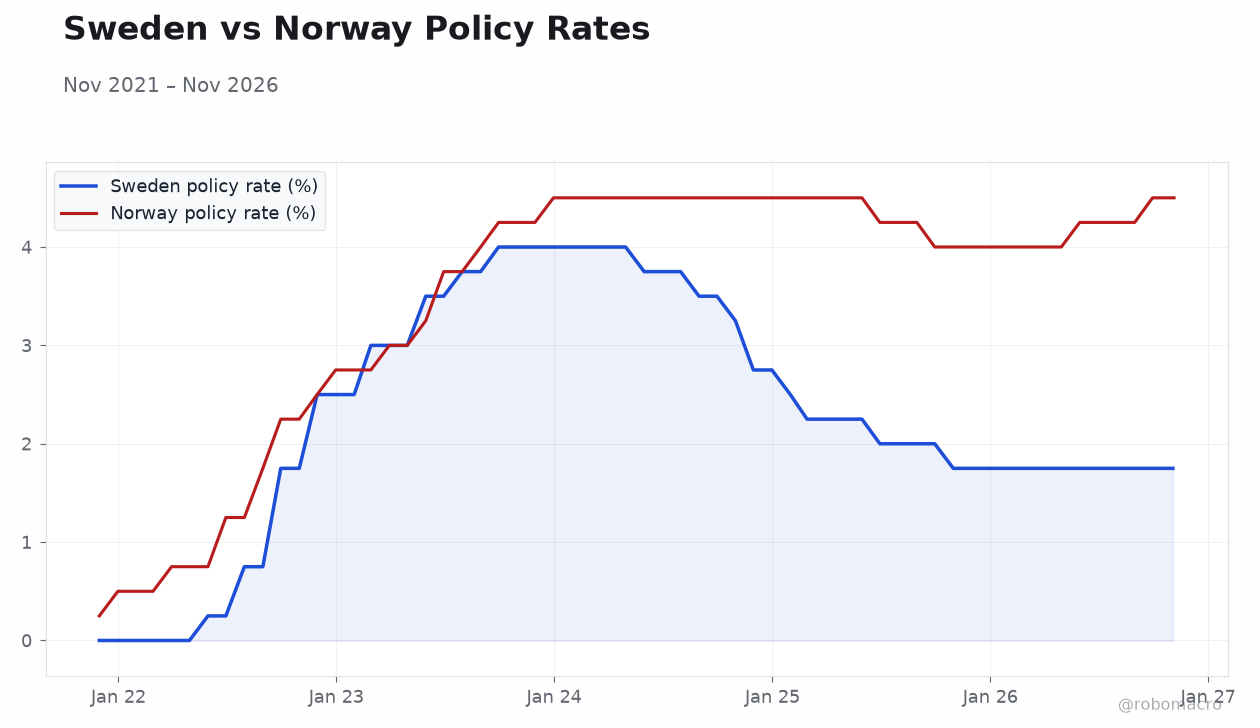
Riksbank Hikes to 2%, Norges Bank Holds at 4.5%
Market Snapshot
| Asset | Level | Change |
|---|---|---|
| OMX Stockholm 30 | 3,301.09 | -0.32% |
| Oslo Bors | 2,080.59 | -1.03% |
| OMX Copenhagen 25 | 2,021.86 | -0.23% |
| OMX Helsinki 25 | 6,254.30 | -0.56% |
| USD/SEK | 9.83 | +1.04% |
| USD/NOK | 9.32 | +0.28% |
| EUR/SEK | 11.01 | +0.71% |
| EUR/NOK | 10.44 | -0.05% |
| Brent Crude | 99.67 | +1.40% |
| Gold | 4,054.70 | -1.43% |
| Bitcoin | 75,512.21 | -6.09% |
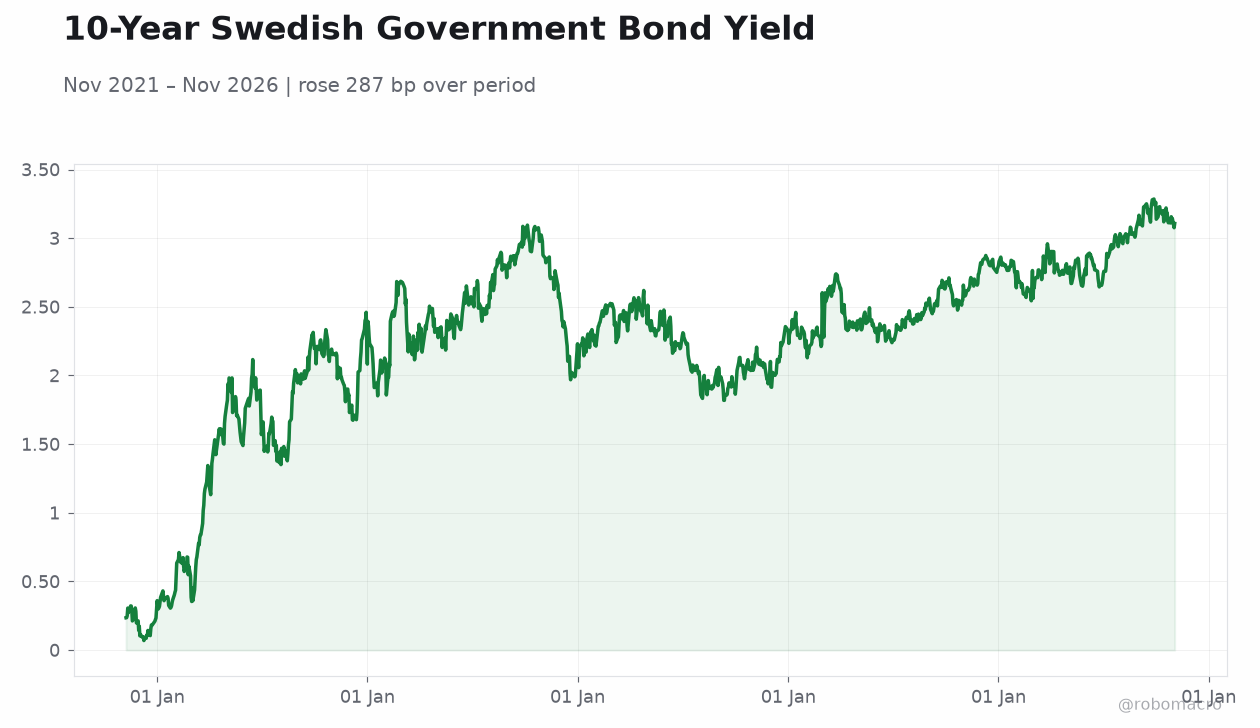
| Sweden 10Y Govt Yield | 3.11% | +3 bp |
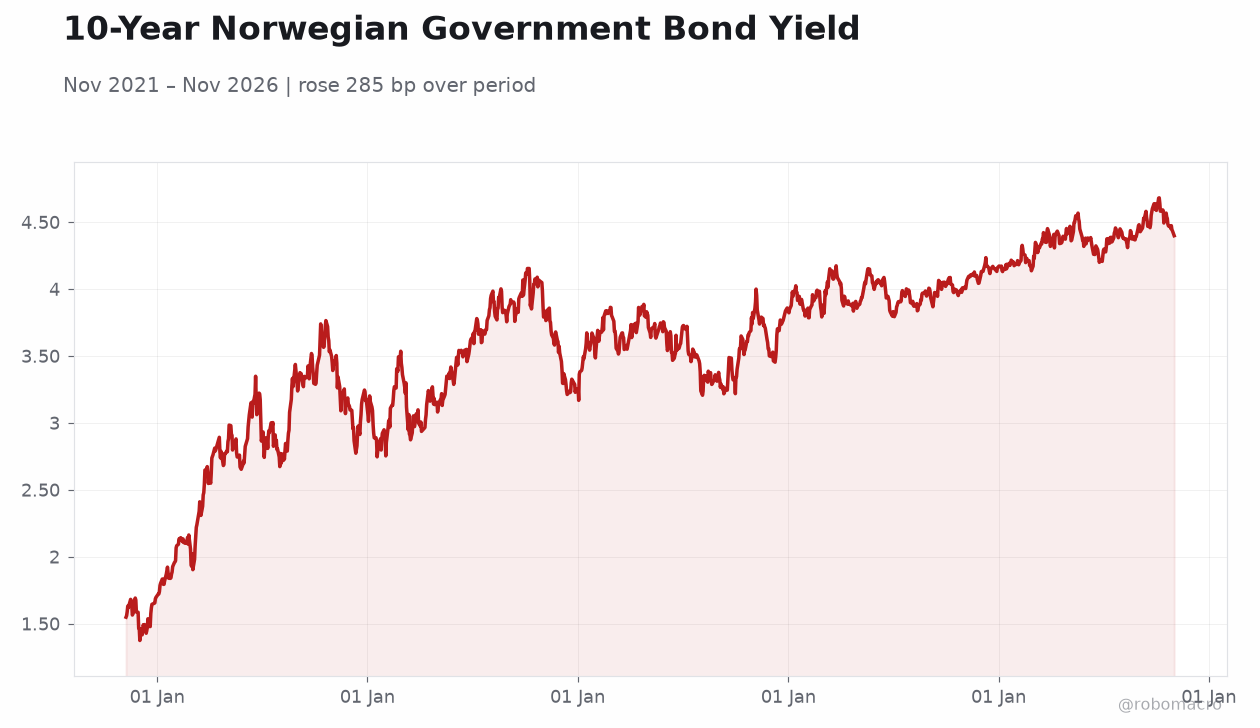
| Norway 10Y Govt Yield | - | - |
Prior Economic Events
| Data | Prior | Cons | Actual |
|---|---|---|---|
| Riksbank Rate Decision | 1.75 | 2 | 2 |
| Riksbank Press Conference | - | - | - |
| Norges Bank Interest Rate Decision | 4.50 | 4.50 | 4.50 |
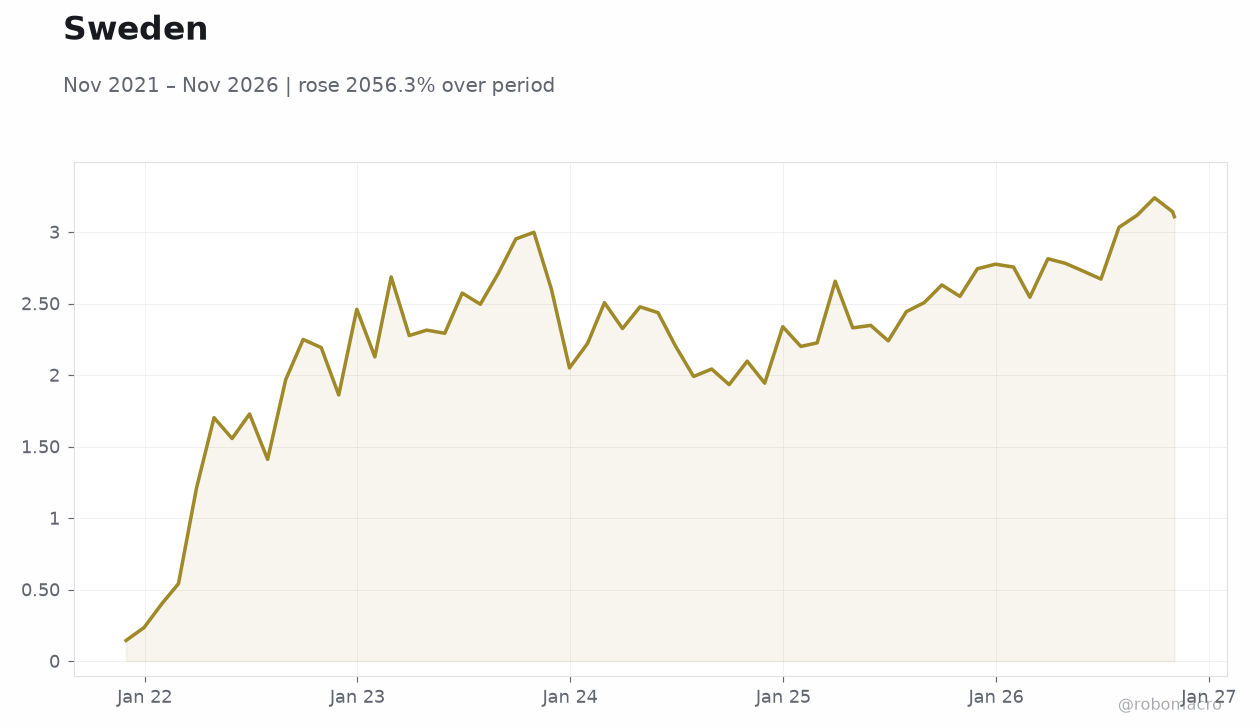 Sweden | Type: macro_line | Sweden 10Y (%): 3.107 (2026-11-03) | Range: 0.1441–3.239 | Trend(5pt): 0.1441,2.686,2.436,2.507,3.107
Today's Economic Events
| Data | Prior | Cons | Time |
|---|---|---|---|
| No events available | |||
- Riksbank raised its policy rate to 2.00% from 1.75%, a more hawkish step than consensus, while Norges Bank held at 4.50% as expected and signaled readiness to tighten further.
- The Swedish krona weakened despite the hike, with USD/SEK up 1.04% to 9.83 and EUR/SEK up 0.71% to 11.01, as markets questioned the durability of the tightening path amid soft inflation.
- Nordic equities were broadly lower, led by Oslo Bors down 1.03%, while Brent crude rose 1.40% to $99.67, supporting Norway's fiscal outlook.
Yesterday's Recap
The Riksbank delivered a 25 bp hike on November 4, lifting its policy rate to 2.00% versus consensus of 2.00% and a previous 1.75%, a more aggressive move than many had anticipated given Sweden's CPI running at just 1.10% year-on-year. The accompanying press conference reinforced a commitment to additional tightening, though analysts at Nomura and Commerzbank flagged that the inflation setback leaves the Riksbank path in doubt and shifts market focus toward the February meeting. The krona failed to rally on the hike, with USD/SEK climbing 1.04% to 9.83 and EUR/SEK up 0.71% to 11.01, suggesting markets are skeptical the tightening cycle can extend far.
Norges Bank held its key rate at 4.50% on November 5, matching consensus and the prior level, while signaling readiness to tighten again should inflation pressures persist; Norwegian CPI stands at 3.38% year-on-year. Oslo Bors fell 1.03% and the krone was mixed, with USD/NOK up 0.28% to 9.32 and EUR/NOK essentially flat at 10.44. Sweden's 10-year government yield rose 3 bp to 3.11%, reflecting the hawkish surprise, while OMX Stockholm 30 slipped 0.32%, OMX Copenhagen 25 fell 0.23%, and OMX Helsinki 25 dropped 0.56%.
The Day Ahead
The Nordic calendar is empty for November 6, with no scheduled data releases across Sweden, Norway, Denmark, or Finland. Market attention will instead center on digesting the Riksbank's hawkish hike and Norges Bank's hold, particularly the implications for the krona and krone into the weekend. With no domestic prints, traders will look to broader European and US data for direction, and any spillover from eurozone inflation headlines could influence EUR/SEK and EUR/NOK crosses.
Norwegian housing market softness — house prices fell as sales slid, per The Local Norway — will remain a background theme for Norges Bank's tightening bias. Danish and Finnish markets will trade without fresh catalysts, leaving the EUR/DKK peg and ECB expectations as the primary anchors for Copenhagen and Helsinki.
Other Economic Notes
Norway's housing market is showing strain, with house prices falling as sales slide, a dynamic that complicates Norges Bank's readiness to tighten further even as CPI holds at 3.38%. ↓ p.2