Nordics Macro Daily(Beta Mode)
Riksbank Signals More Hikes; NOK Inflation Cools
Market Snapshot
| Asset | Level | Change |
|---|---|---|
| OMX Stockholm 30 | 3,327.75 | +0.54% |
| Oslo Bors | 2,081.41 | +0.09% |
| OMX Copenhagen 25 | 2,000.55 | -0.88% |
| OMX Helsinki 25 | 6,282.48 | +0.06% |
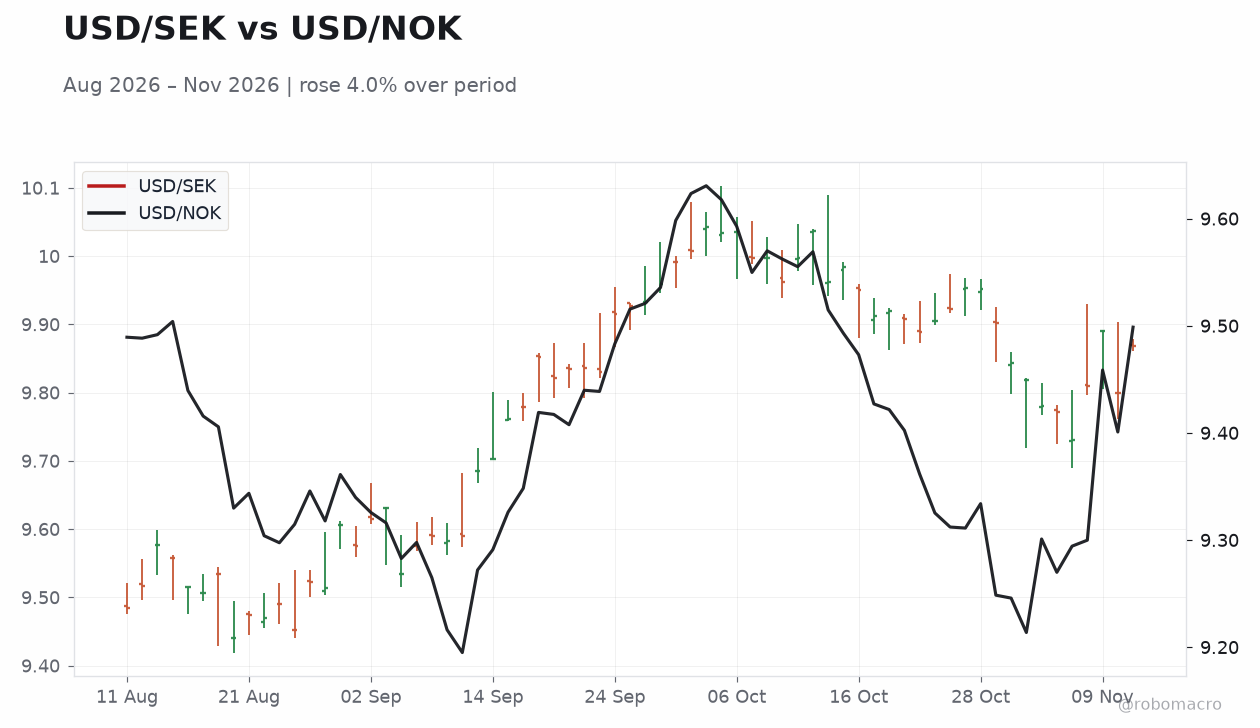
| USD/SEK | 9.87 | +0.72% |
| USD/NOK | 9.50 | +1.03% |
| EUR/SEK | 11.02 | +0.21% |
| EUR/NOK | 10.61 | +0.52% |
| Brent Crude | 92.40 | +0.99% |
| Gold | 4,054.50 | +0.60% |
| Bitcoin | 73,664.27 | -2.07% |
| Sweden 10Y Govt Yield | 2.97% | -1 bp |
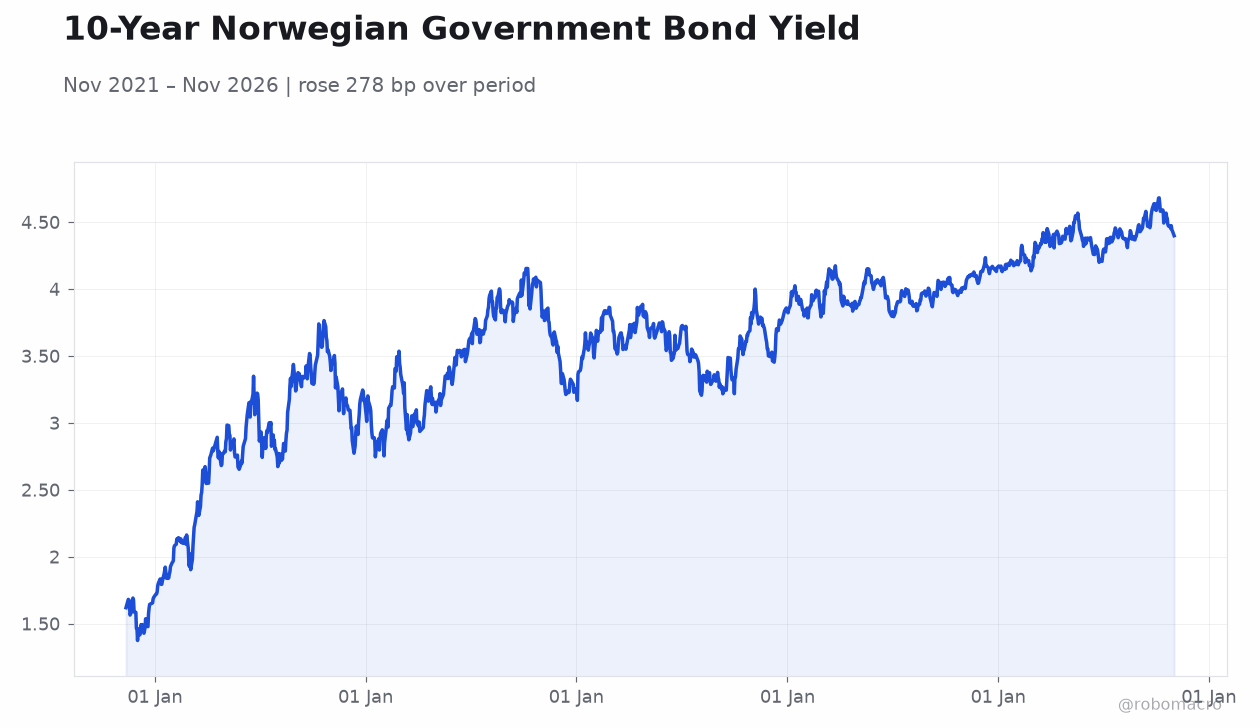
| Norway 10Y Govt Yield | - | - |
Prior Economic Events
| Data | Prior | Cons | Actual |
|---|---|---|---|
| No events available | |||
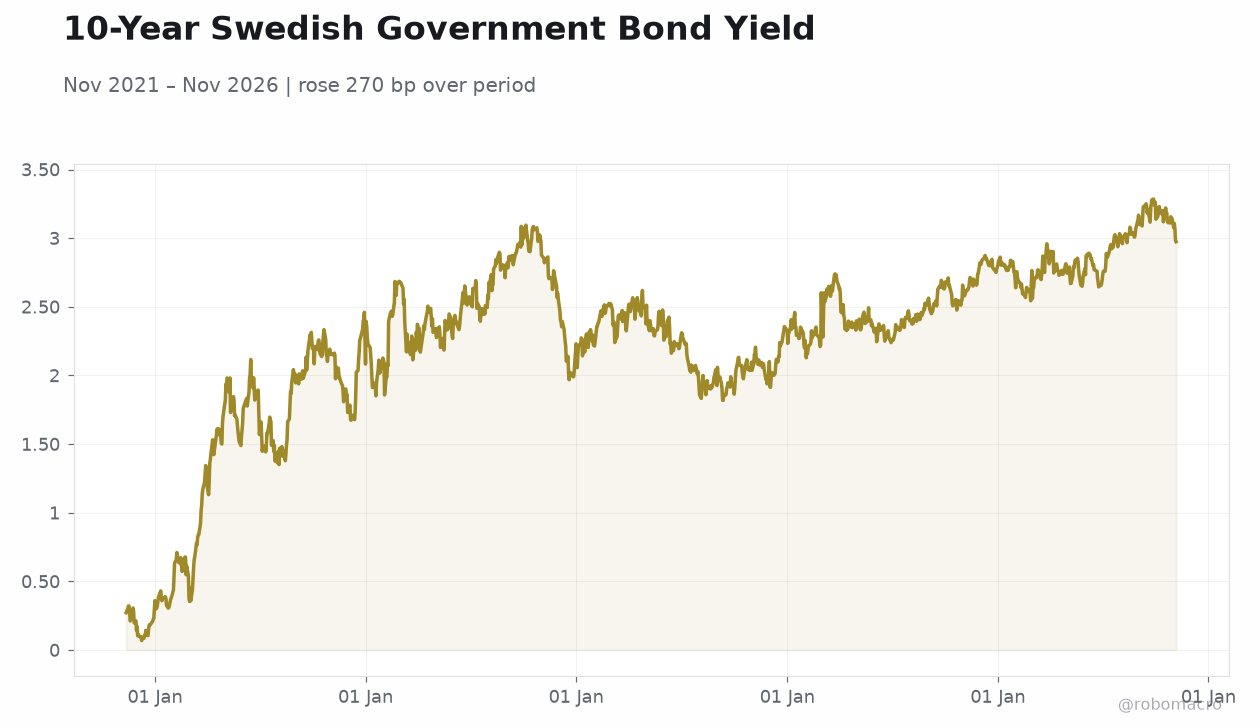 10-Year Swedish Government Bond Yield | Type: macro_line | 10-Year Swedish Government Bond Yield: 2.974 (2026-11-06) | Range: 0.06946–3.285 | Trend(6pt): 0.2724,2.395,2.339,2.415,2.982,2.974
Today's Economic Events
| Data | Prior | Cons | Time |
|---|---|---|---|
| No events available | |||
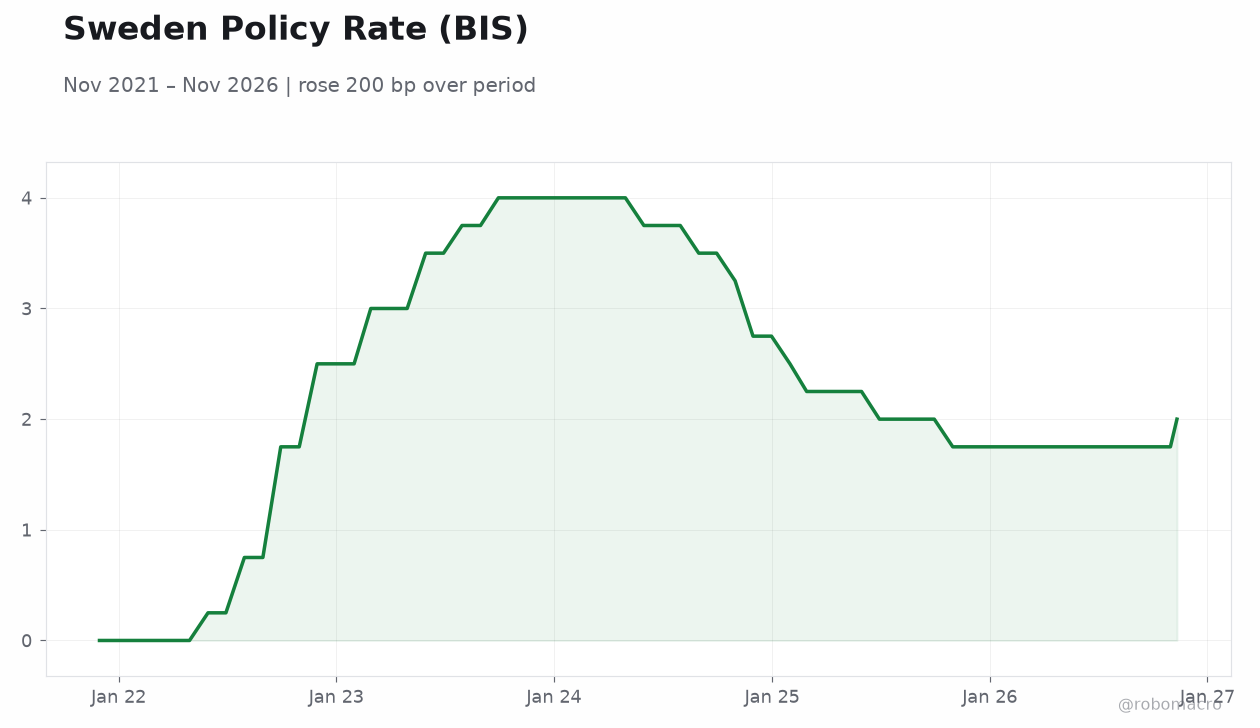
- Riksbank November minutes flag further rate increases ahead, reinforcing the hawkish tilt after the 4 November +25bp hike to 2.00%.
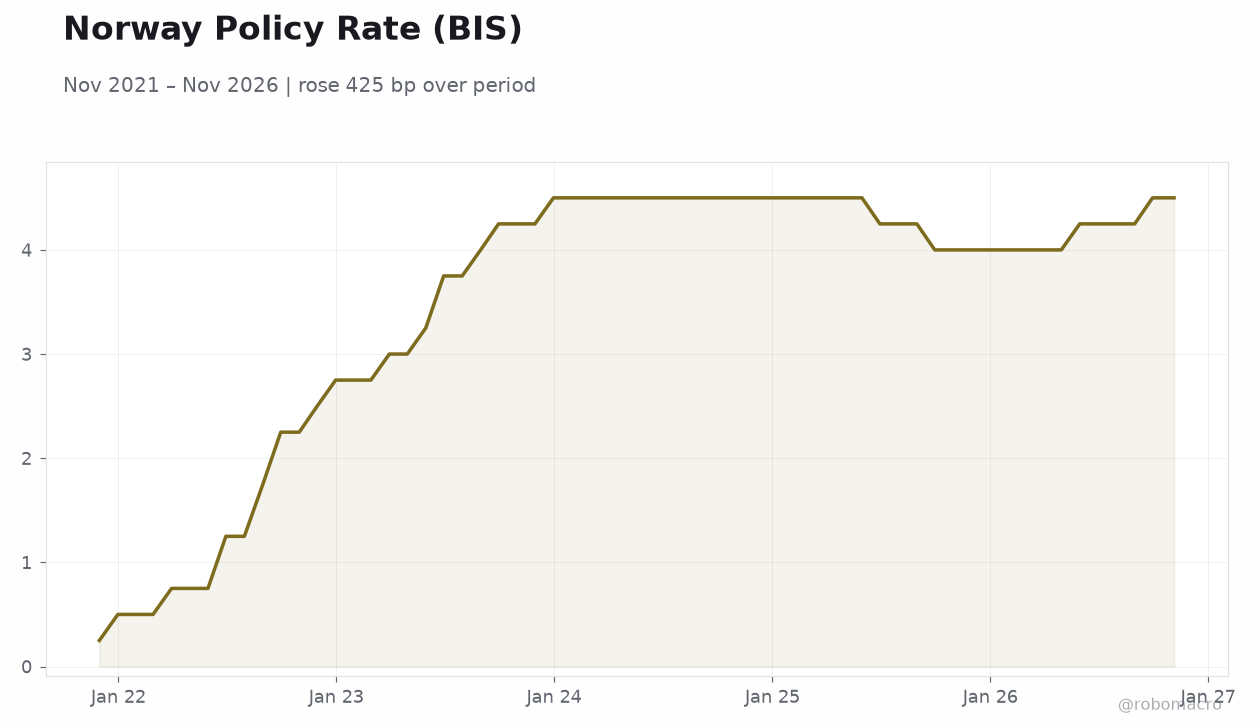
- Norwegian core inflation cooled in October, easing pressure on Norges Bank to follow through with another hike from 4.50%.
- SEK and NOK both weakened against the dollar, with USD/NOK up over 1% as Brent pushed toward $92.40.
Yesterday's Recap
Sweden dominated the Nordic narrative on Tuesday, with the Riksbank's November minutes showing the committee expects to raise the key rate again in the coming year, a signal that reinforced the hawkish message delivered at the 4 November decision, when the policy rate was lifted 25bp to 2.00%. Swedish equities were firm, with the OMX Stockholm 30 up 0.54% to 3,327.75, while the 10-year government yield eased 1 bp to 2.97%. The krona remained soft despite the hawkish minutes, with USD/SEK up 0.72% to 9.87 and EUR/SEK 0.21% higher at 11.02; SEB's outlook sees the krona recovering lost ground next year, targeting 10.55 against the euro and 9.02 against the dollar by end-2027.
In Norway, October core inflation cooled, easing pressure on Norges Bank after its September hike to 4.50%, though headline CPI remains at 3.60% year-on-year. Oslo Bors edged up 0.09% to 2,081.41, with USD/NOK up 1.03% to 9.50 and EUR/NOK 0.52% higher at 10.61. Denmark lagged, with the OMX Copenhagen 25 down 0.88% to 2,000.55, while Finland's OMX Helsinki 25 was essentially flat, up 0.06% at 6,282.48.
The Day Ahead
The Nordic calendar is light on Wednesday, with no major scheduled releases across the four countries, leaving markets to digest the Riksbank minutes and the Norwegian inflation print. Attention turns to the Swedish parliament, which votes on Wednesday on a constitutional change enabling dual citizens convicted of crimes harming Sweden's vital interests to have citizenship revoked — a political rather than market event, but one worth monitoring for sentiment. With no domestic data to steer direction, SEK and NOK will trade on euro-area and global risk appetite, and Danish rates will continue to track ECB expectations given the EUR/DKK peg.
Finnish markets will likewise take their cue from broader eurozone developments rather than local catalysts. The next meaningful Nordic event risk sits further out, with the Riksbank's next decision on 16 December and Norges Bank on 17 December.
Other Economic Notes
The Nordic growth picture remains bifurcated, with oil-linked Norway supported by Brent near $92.40 while Sweden's export-oriented manufacturing sector contends with a soft krona and subdued inflation at 1.10% year-on-year. Denmark's equity underperformance on Tuesday stands out against firmer Swedish and Norwegian bourses, a reminder that Copenhagen's index is heavily weighted toward a handful of large-cap names sensitive to global risk sentiment. ↓ p.2