Nordics Macro Daily(Beta Mode)
Nordic Stocks Fall as Riksbank Hike Weighs on Sentiment
Market Snapshot
| Asset | Level | Change |
|---|---|---|
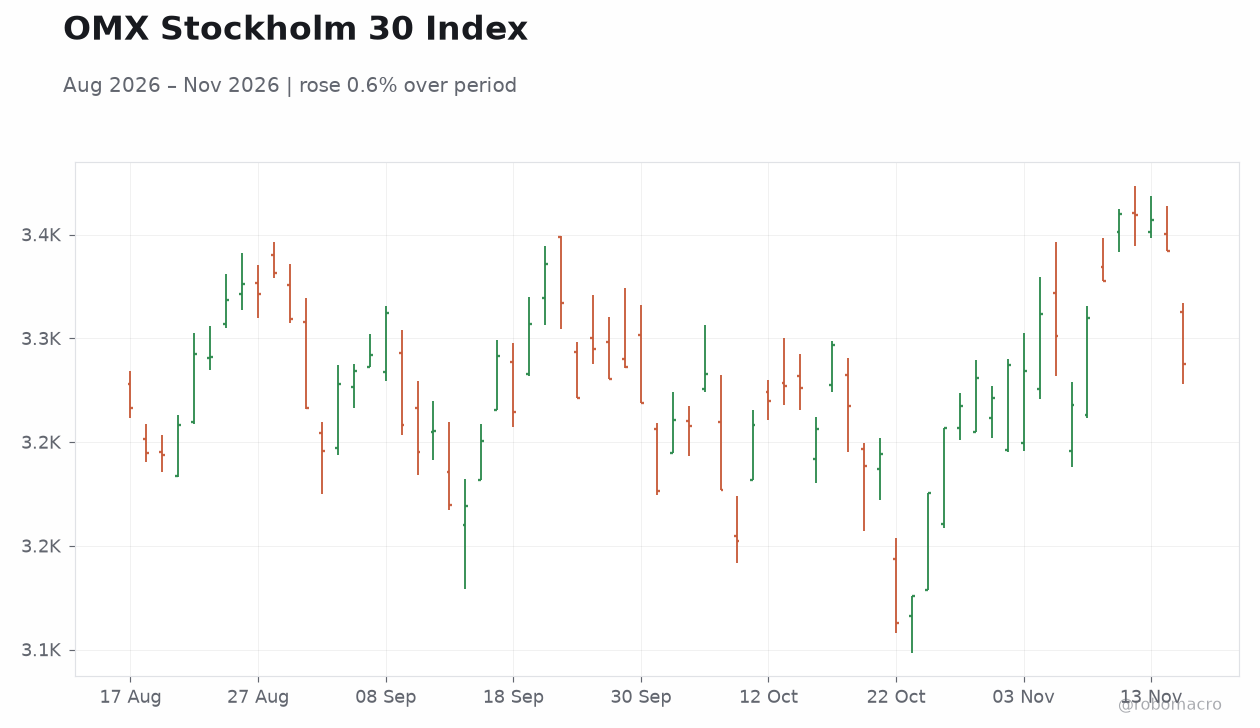
| OMX Stockholm 30 | 3,287.48 | -1.63% |
| Oslo Bors | 2,095.90 | -0.34% |
| OMX Copenhagen 25 | 1,993.03 | -1.29% |
| OMX Helsinki 25 | 6,174.05 | -1.84% |
| USD/SEK | 10.14 | +0.41% |
| USD/NOK | 9.64 | -0.13% |
| EUR/SEK | 11.14 | +0.28% |
| EUR/NOK | 10.59 | -0.26% |
| Brent Crude | 92.87 | -0.29% |
| Gold | 3,793.30 | -1.83% |
| Bitcoin | 64,648.05 | -0.32% |
| Sweden 10Y Govt Yield | 3.11% | +3 bp |
| Norway 10Y Govt Yield | 4.38% | +2 bp |
Prior Economic Events
| Data | Prior | Cons | Actual |
|---|---|---|---|
| No events available | |||
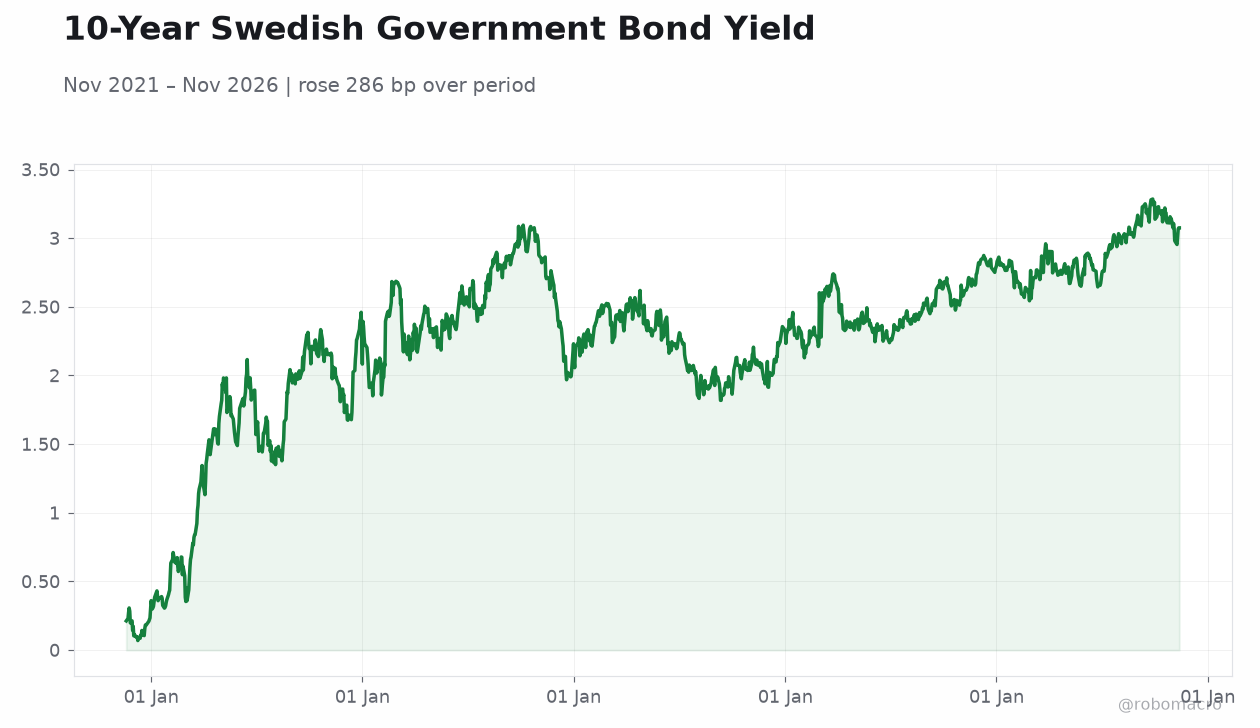
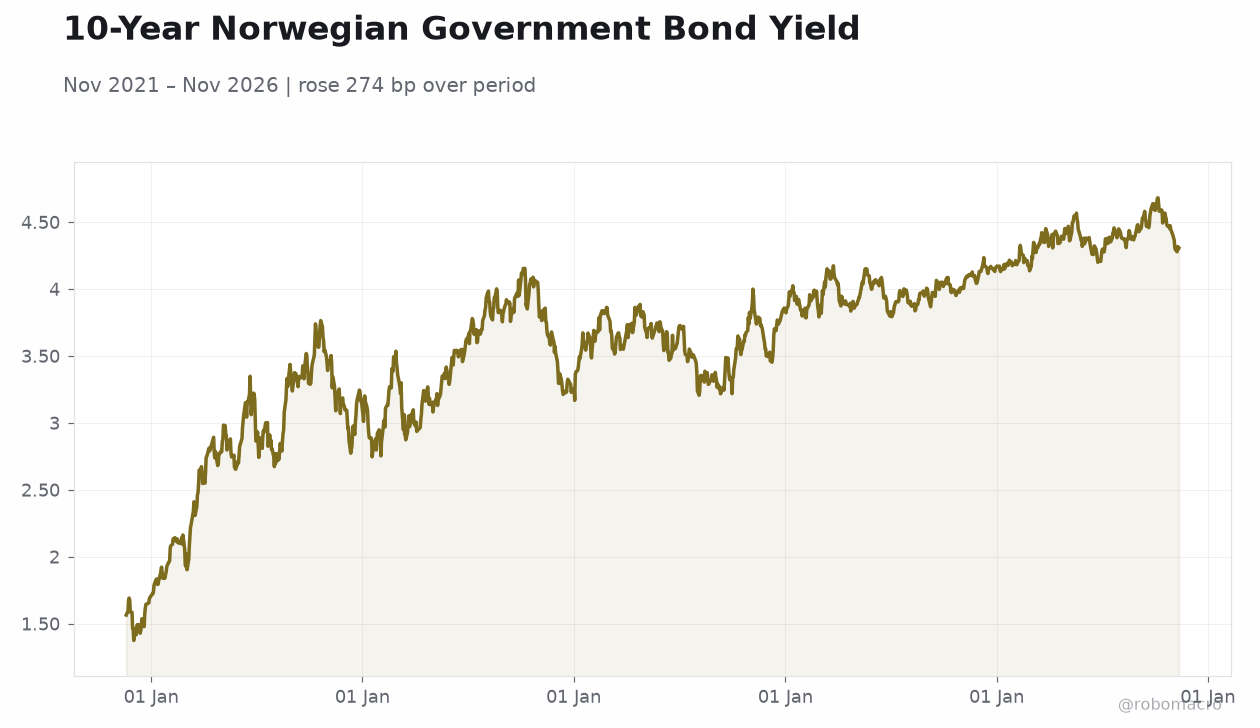
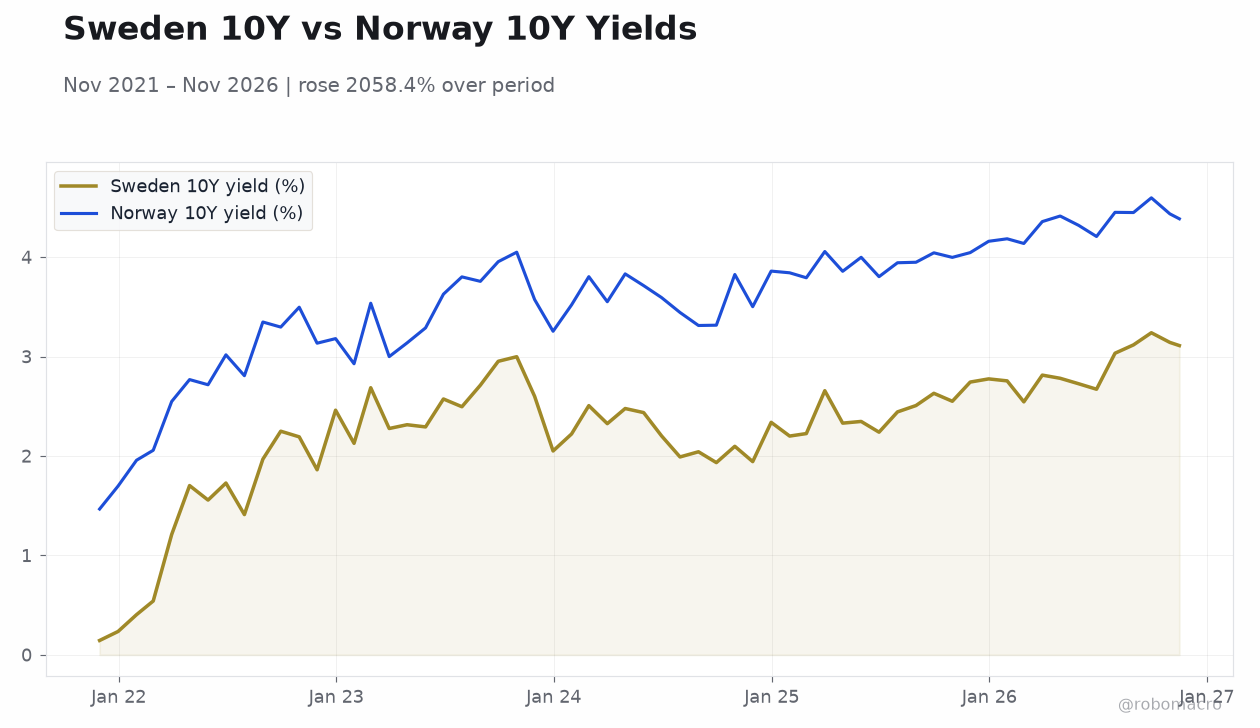 Sweden 10Y vs Norway 10Y Yields | Type: macro_line | Sweden 10Y yield (%): 3.11 (2026-11-16) | Range: 0.1441–3.239 | Trend(5pt): 0.1441,2.686,2.436,2.507,3.11 | Norway 10Y yield (%): 4.385 (2026-11-16) | Range: 1.466–4.596 | Trend(5pt): 1.466,3.536,3.713,3.948,4.385
Today's Economic Events
| Data | Prior | Cons | Time |
|---|---|---|---|
| No events available | |||
- Nordic equities sold off broadly, with OMX Stockholm -1.63%, OMX Helsinki -1.84% and OMX Copenhagen -1.29%, as the Riksbank's November 4 hike to 2.00% weighs on rate-sensitive sectors.
- SEK weakened (USD/SEK +0.41% to 10.14, EUR/SEK +0.28% to 11.14) while NOK held firm (USD/NOK -0.13% to 9.64) despite softer Brent at $92.87.
- Swedish and Norwegian 10-year yields pushed higher (+3 bp to 3.11% and +2 bp to 4.38% respectively), tracking global duration weakness and gold's -1.83% slide.
Yesterday's Recap
Nordic equity markets suffered a broad risk-off session on November 17, with Sweden's OMX Stockholm 30 falling 1.63% to 3,287.48 and Finland's OMX Helsinki 25 dropping 1.84% to 6,174.05 — the weakest performer in the bloc. Denmark's OMX Copenhagen 25 shed 1.29% to 1,993.03, while Norway's Oslo Bors proved comparatively resilient, down only 0.34% to 2,095.90, supported by energy weighting even as Brent eased 0.29% to $92.87. FX markets diverged: the Swedish krona softened, with USD/SEK up 0.41% to 10.14 and EUR/SEK up 0.28% to 11.14, reflecting the Riksbank's November 4 hike to 2.00% and the market's reassessment of the Swedish growth outlook.
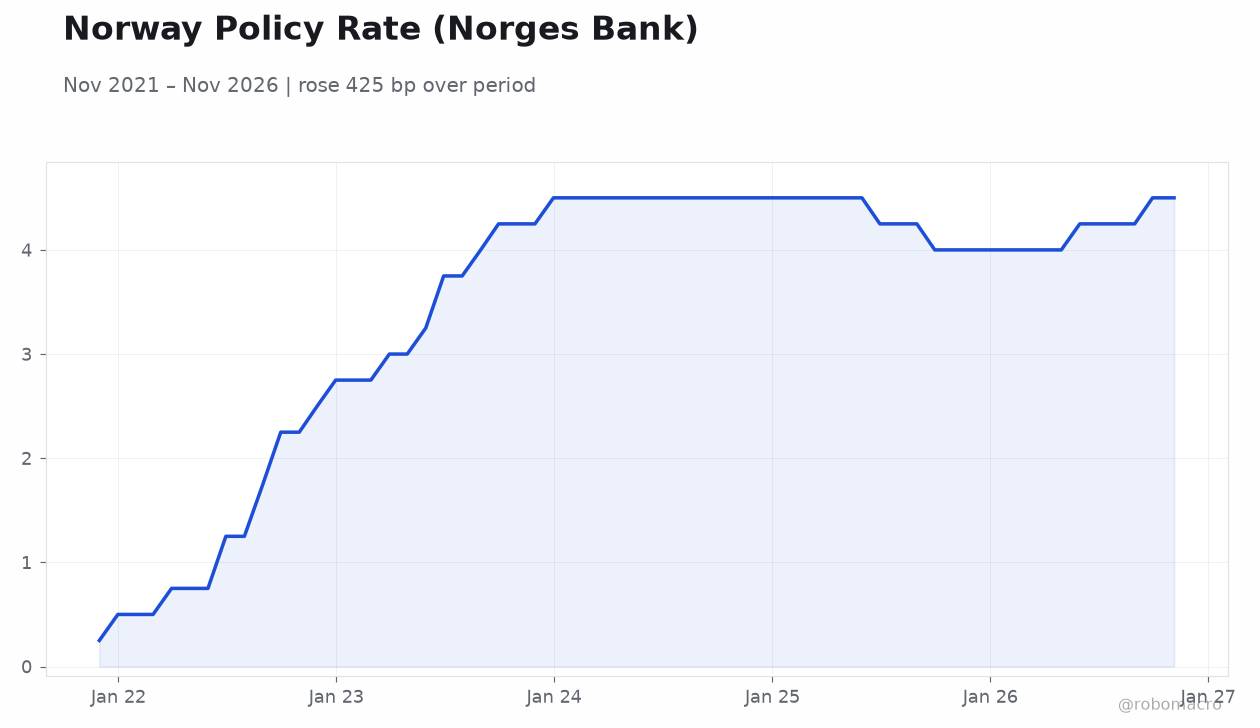
The Norwegian krone was steadier, USD/NOK slipping 0.13% to 9.64 and EUR/NOK down 0.26% to 10.59, though ING and other desks flagged downside risk as oil retreats and Norges Bank turns cautious. Rates moved higher across the bloc: Sweden's 10-year yield rose 3 bp to 3.11% and Norway's 2 bp to 4.38%, extending the global duration selloff. Swedish politics added a domestic overlay, with centre-left parties set to open coalition talks amid clashing demands, a backdrop markets are watching for fiscal implications.
The Day Ahead
The Nordic calendar is empty for November 18, leaving markets to digest yesterday's equity rout and the ongoing repricing of Riksbank and Norges Bank policy paths. With no domestic prints to anchor sentiment, SEK and NOK will trade primarily off eurozone and global risk appetite, and the Swedish krona remains vulnerable following its recent softening. Norwegian markets will keep a close watch on Brent, given the krone's sensitivity to oil and Norges Bank's cautious tone.
Danish rates and the EUR/DKK peg should remain stable absent ECB signals, while Finnish equities will track broader European sentiment after leading yesterday's decline. Attention increasingly turns to the December 16 Riksbank and December 17 Norges Bank meetings as the next scheduled policy catalysts.
Other Economic Notes
Sweden's inflation picture remains benign, with CPI at 1.10% year-on-year as of October 31 — well below target — yet the Riksbank raised its policy rate to 2.00% on November 4, a divergence that continues to puzzle rate strategists and weighs on the krona. ↓ p.2