Nordics Macro Daily(Beta Mode)
Krone, Krona Slip as Equities Sell Off, Oil Tumbles
Market Snapshot
| Asset | Level | Change |
|---|---|---|
| OMX Stockholm 30 | 3,256.21 | -0.95% |
| Oslo Bors | 2,073.85 | -1.05% |
| OMX Copenhagen 25 | 1,972.23 | -1.04% |
| OMX Helsinki 25 | 6,108.59 | -1.06% |
| USD/SEK | 10.18 | +0.51% |
| USD/NOK | 9.72 | +0.96% |
| EUR/SEK | 11.16 | +0.28% |
| EUR/NOK | 10.65 | +0.72% |
| Brent Crude | 89.24 | -2.95% |
| Gold | 3,739.10 | -0.07% |
| Bitcoin | 63,276.34 | -2.49% |
| Sweden 10Y Govt Yield | 3.11% | 0 bp |
| Norway 10Y Govt Yield | 4.40% | +2 bp |
Prior Economic Events
| Data | Prior | Cons | Actual |
|---|---|---|---|
| No events available | |||
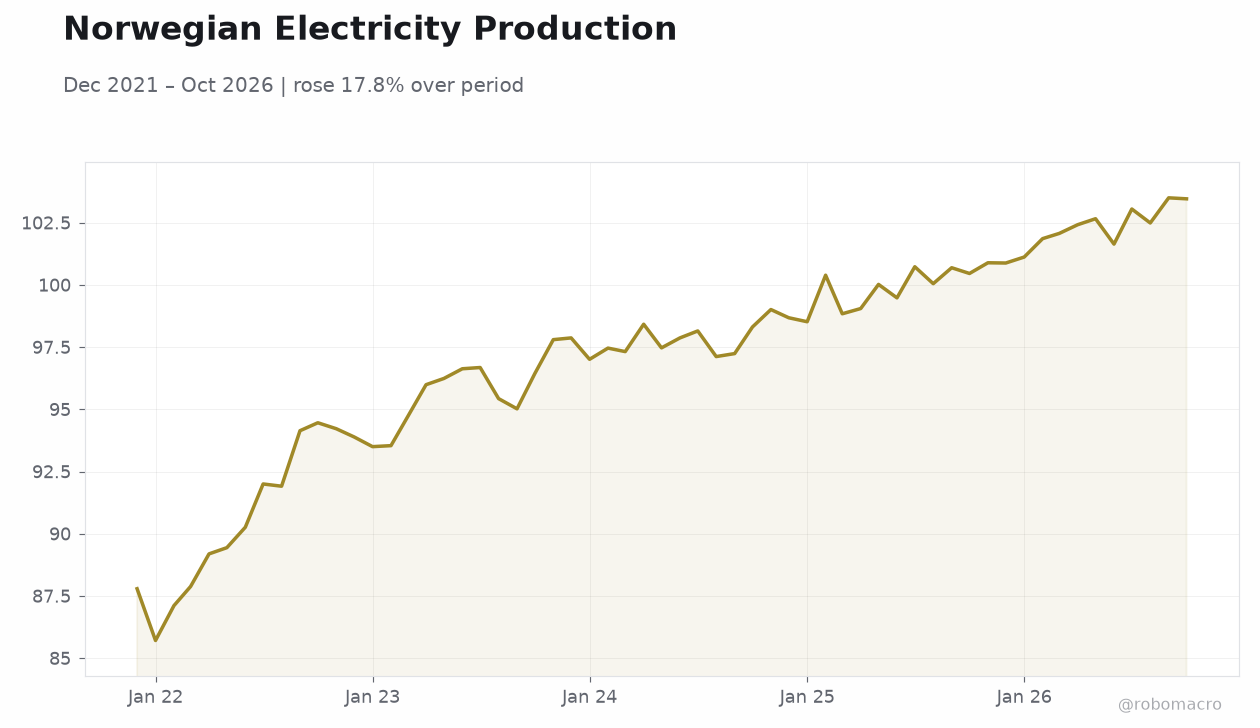 Norwegian Electricity Production | Type: macro_line | Norwegian Electricity Production: 103.5 (2026-10-01) | Range: 85.71–103.5 | Trend(6pt): 87.79,93.54,98.42,99.48,102.5,103.5
Today's Economic Events
| Data | Prior | Cons | Time |
|---|---|---|---|
| No events available | |||
- Nordic equities fell across all four markets, with Oslo Bors down 1.05% and OMX Stockholm 30 off 0.95%, as Brent crude slid 2.95% to $89.24.
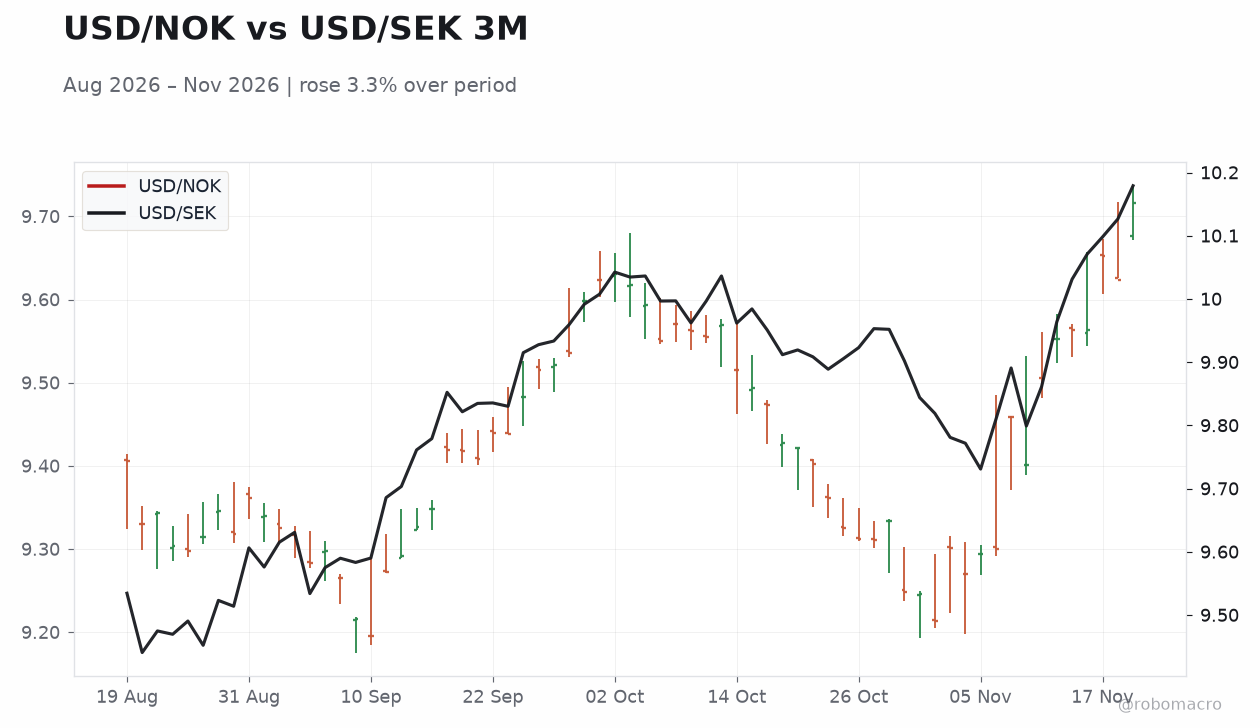
- USD/NOK rose 0.96% to 9.72 and USD/SEK climbed 0.51% to 10.18, pressuring the export-heavy krona and krone complex.
- Riksbank's Hjelm flagged a further rate hike as likely, reinforcing the hawkish tilt after the November 4 increase to 2.00%.
Yesterday's Recap
Nordic equity markets sold off in unison on November 18, with OMX Stockholm 30 falling 0.95% to 3,256.21, Oslo Bors dropping 1.05% to 2,073.85, OMX Copenhagen 25 down 1.04% to 1,972.23 and OMX Helsinki 25 off 1.06% to 6,108.59 — a strikingly uniform risk-off session across the bloc. The trigger was clearly commodity-led: Brent crude tumbled 2.95% to $89.24, a direct negative for Norway's fiscal outlook and a weight on energy-heavy Oslo listings. FX markets reflected the stress, with USD/NOK up 0.96% to 9.72 and USD/SEK up 0.51% to 10.18, while EUR/SEK rose 0.28% to 11.16 and EUR/NOK 0.72% to 10.65.
Rates were comparatively calm: Sweden's 10-year yield held at 3.11% (0 bp), while Norway's 10-year edged 2 bp higher to 4.40%, a modest steepening consistent with oil-linked fiscal risk rather than a broad duration selloff. Gold was essentially flat at $3,739.10 (-0.07%), offering little safe-haven offset, while Bitcoin's 2.49% decline to $63,276 underscored the broader de-risking tone. No scheduled Nordic macro releases printed yesterday, so price action was driven entirely by external commodity and FX dynamics.
The Day Ahead
The Nordic calendar is empty for November 19, leaving markets to trade off global risk sentiment and oil price direction. With Brent having broken lower, NOK crosses will be the primary transmission channel — traders will watch whether USD/NOK holds above the 9.70 area or extends toward 9.75. Swedish rate expectations remain in focus after Riksbank's Hjelm said a further hike is likely, with the krona's weakness itself now an explicit policy input per BNY commentary.
Danish and Finnish markets will track euro-area sentiment given the DKK peg to the euro and Finland's direct ECB exposure. No tier-one data means positioning ahead of the December 16 Riksbank and December 17 Norges Bank meetings will dominate flow.
Other Economic Notes
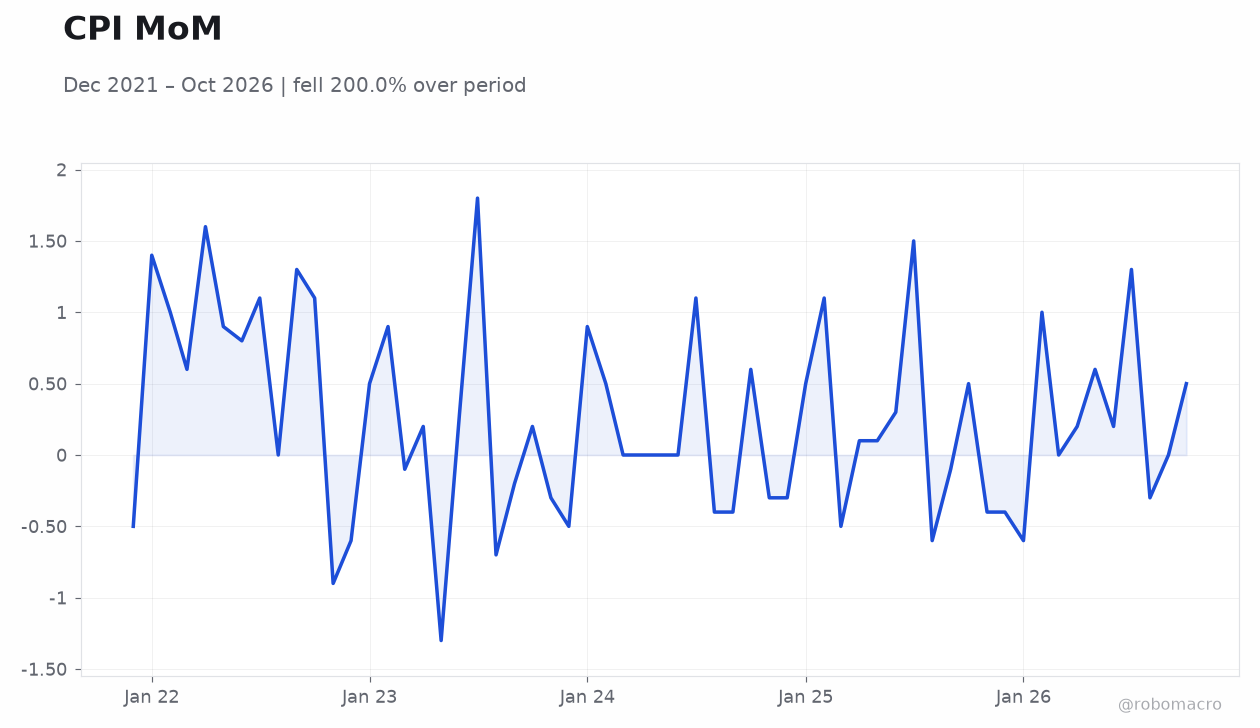
Norway's policy mix is increasingly uncomfortable: CPI at 3.60% sits well above target while Brent's slide threatens the fiscal revenue base that underwrites the sovereign wealth fund. Sweden's disinflation story is far more advanced, with CPI at 1.10%, yet the Riksbank has still chosen to hike — a divergence that speaks to krona weakness rather than domestic price pressure. Denmark's Nationalbank must defend the EUR/DKK peg with the ECB on hold, limiting its room for maneuver.
↓ p.2