Nordics Macro Daily(Beta Mode)
Riksbank Hearing; Yields Ease, Equities Diverge
Market Snapshot
| Asset | Level | Change |
|---|---|---|
| OMX Stockholm 30 | 3,256.72 | +0.02% |
| Oslo Bors | nan | +nan% |
| OMX Copenhagen 25 | 1,972.23 | -1.04% |
| OMX Helsinki 25 | 6,108.59 | -1.06% |
| USD/SEK | 10.18 | +0.15% |
| USD/NOK | 9.76 | +0.64% |
| EUR/SEK | 11.18 | +0.21% |
| EUR/NOK | 10.72 | +0.67% |
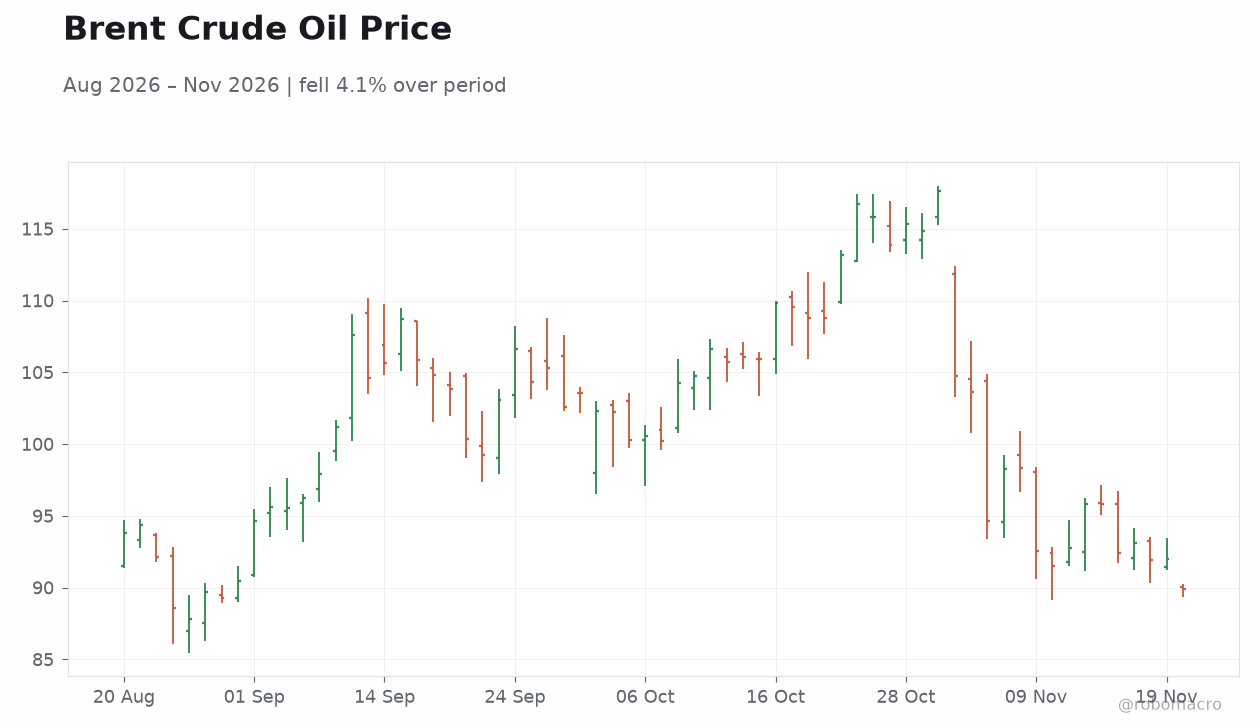
| Brent Crude | 89.87 | -2.29% |
| Gold | 3,524.90 | -4.36% |
| Bitcoin | 61,566.88 | -2.26% |
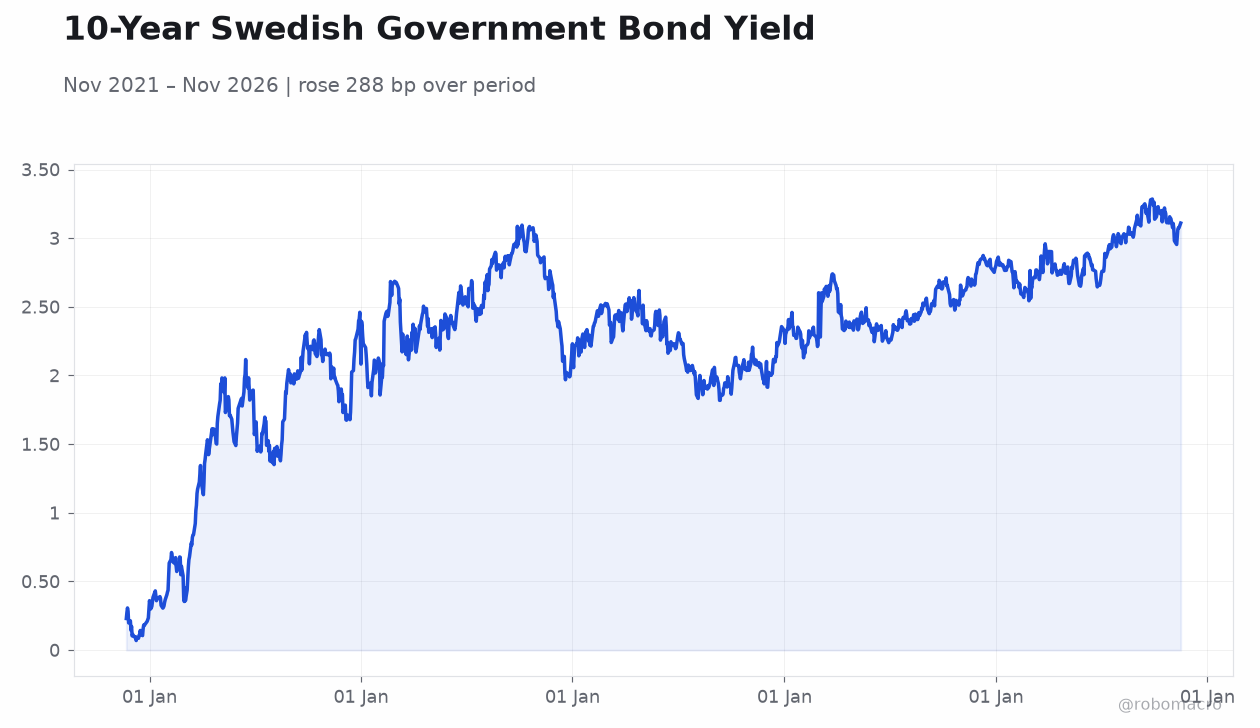
| Sweden 10Y Govt Yield | 3.10% | -1 bp |
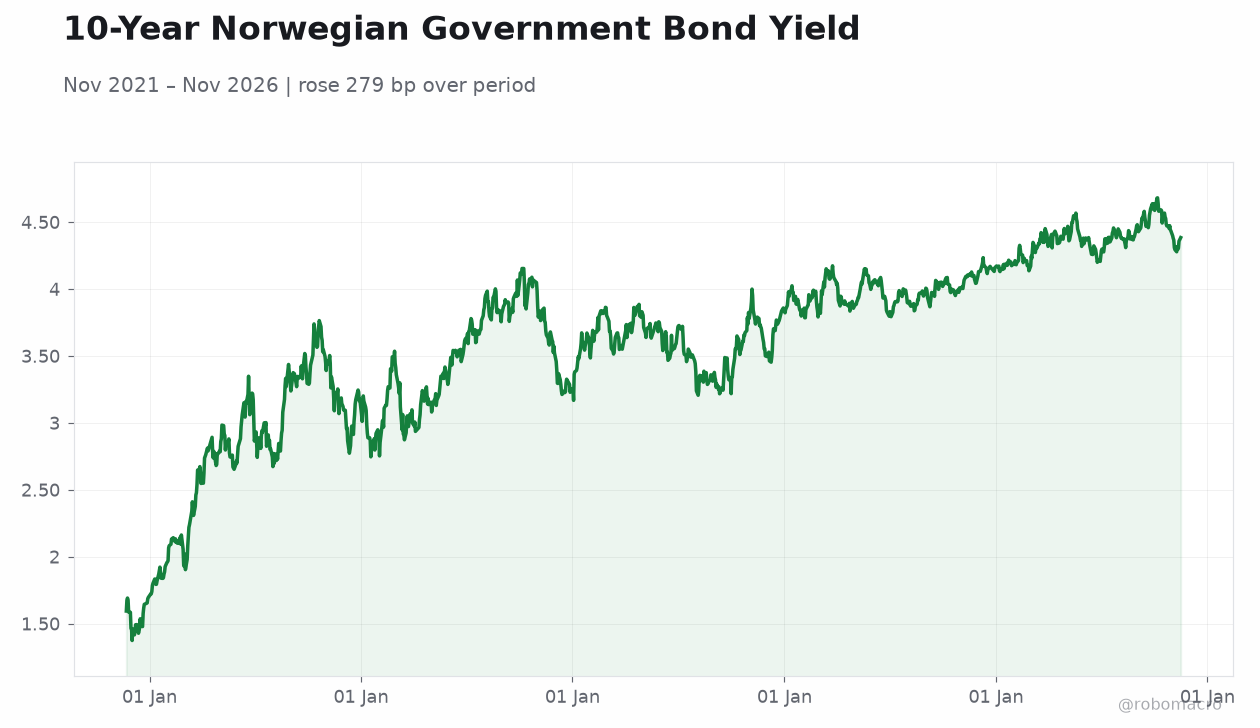
| Norway 10Y Govt Yield | 4.34% | -6 bp |
Prior Economic Events
| Data | Prior | Cons | Actual |
|---|---|---|---|
| No events available | |||
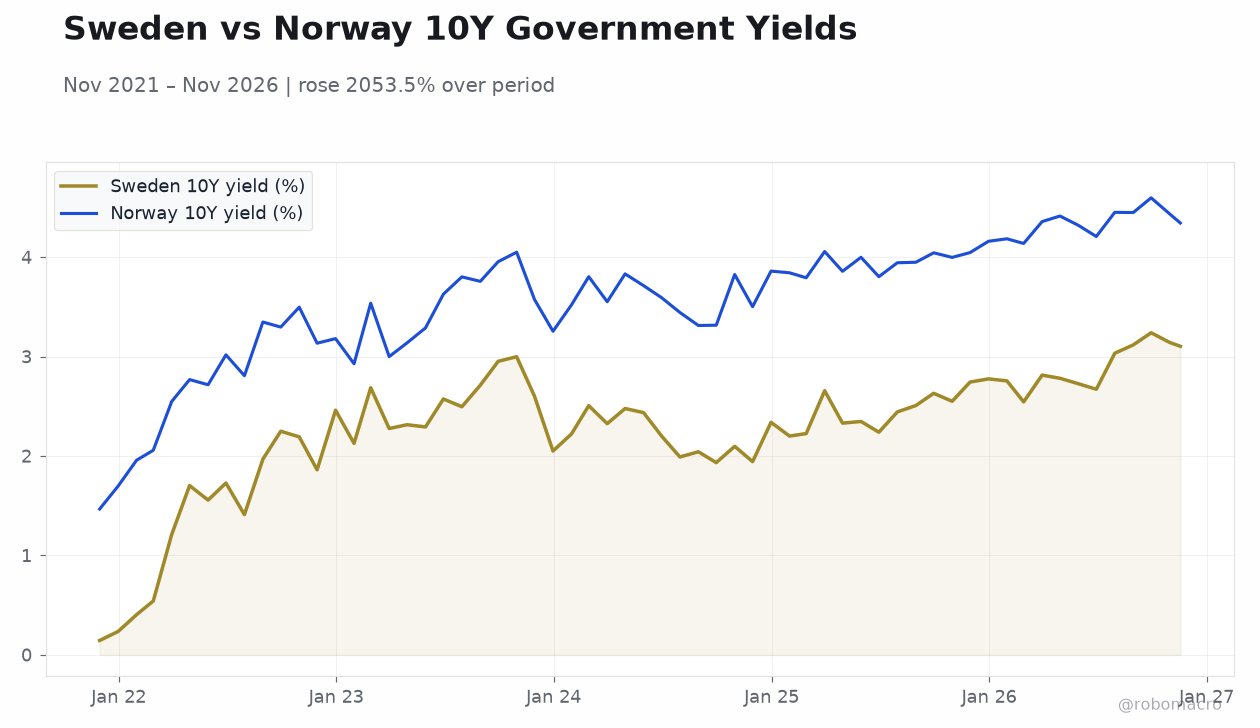 Sweden vs Norway 10Y Government Yields | Type: macro_line | Sweden 10Y yield (%): 3.103 (2026-11-18) | Range: 0.1441–3.239 | Trend(5pt): 0.1441,2.686,2.436,2.507,3.103 | Norway 10Y yield (%): 4.343 (2026-11-18) | Range: 1.466–4.596 | Trend(5pt): 1.466,3.536,3.713,3.948,4.343
Today's Economic Events
| Data | Prior | Cons | Time |
|---|---|---|---|
| No events available | |||
- Nordic equities diverged Wednesday, with Copenhagen and Helsinki each shedding over 1% while Stockholm held flat; Oslo Bors data unavailable.
- Norwegian 10-year yield fell 6 bp to 4.34% and Swedish 10-year eased 1 bp to 3.10% as global bond markets steadied.
- Brent crude slid 2.29% to $89.87, a headwind for Norwegian fiscal revenue and krone sentiment; gold plunged 4.36%.
Yesterday's Recap
Nordic markets closed Wednesday with a clear risk-off tilt in the export-heavy economies. Denmark's OMX Copenhagen 25 fell 1.04% and Finland's OMX Helsinki 25 dropped 1.06%, while Sweden's OMX Stockholm 30 was essentially unchanged at 3,256.72 (+0.02%); Oslo Bors data was unavailable in the feed. Rates markets moved the other way: the Norwegian 10-year government yield eased 6 bp to 4.34% and the Swedish 10-year declined 1 bp to 3.10%, per the latest observations dated 2026-11-18.
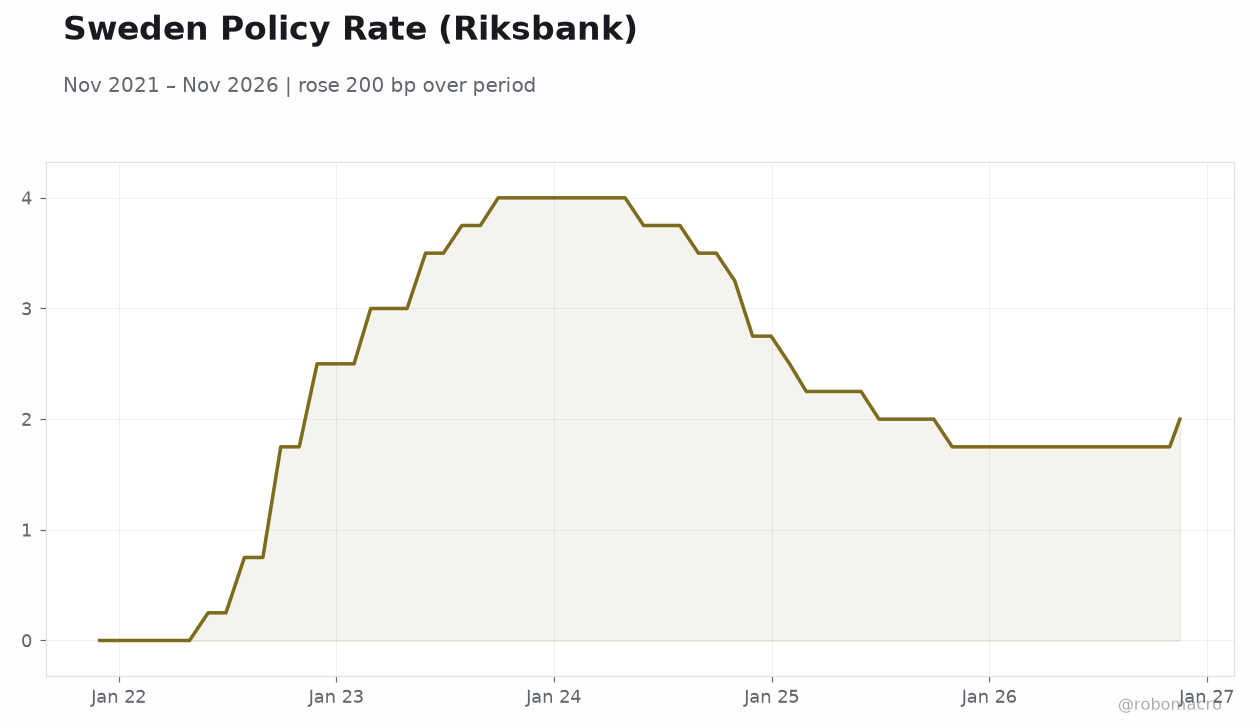
FX reflected krone softness, with USD/NOK up 0.64% and EUR/NOK up 0.67%, while USD/SEK rose 0.15% and EUR/SEK 0.21%. The Riksbank's Executive Board appeared before the Finance Committee in a monetary policy hearing, a routine parliamentary accountability session following the 2026-11-04 decision that raised the policy rate 25 bp to 2.00%. Commodities offered little support to the Nordic complex: Brent fell 2.29% to $89.87, a direct negative for Norway's fiscal outlook, while gold dropped 4.36% and Bitcoin lost 2.26%.
No Nordic macro data releases were recorded in the calendar for the session.
The Day Ahead
The Nordic calendar is empty for Thursday, November 20, with no scheduled data releases across Sweden, Norway, Denmark, or Finland. Attention therefore shifts to secondary market drivers: Brent's slide below $90 and its implications for Norwegian petroleum revenue and krone dynamics, and the ongoing read-across from this week's sovereign bond moves. Danish and Finnish equity underperformance will bear watching given their export orientation and sensitivity to euro-area demand.
With no domestic prints, positioning ahead of December central bank meetings — the Riksbank on 2026-12-16 and Norges Bank on 2026-12-17 — is likely to dominate flow. Global cues, including Fed commentary and commodity swings, will set the tone for Nordic FX and rates.
Other Economic Notes
The divergence between Nordic equity markets and rates tells a nuanced story: bond yields easing while Copenhagen and Helsinki equities sell off suggests investors are pricing softer growth in the export-manufacturing economies rather than a broad risk-off shock. ↓ p.2