Nordics Macro Daily(Beta Mode)
Nordic Equities Slide as Brent Crude Plunges 4%
Market Snapshot
| Asset | Level | Change |
|---|---|---|
| OMX Stockholm 30 | 3,214.14 | -1.45% |
| Oslo Bors | 2,030.14 | -0.87% |
| OMX Copenhagen 25 | 1,947.88 | -0.09% |
| OMX Helsinki 25 | 5,954.82 | -0.97% |
| USD/SEK | 10.27 | -0.03% |
| USD/NOK | 9.83 | +0.00% |
| EUR/SEK | 11.24 | +0.31% |
| EUR/NOK | 10.76 | +0.32% |
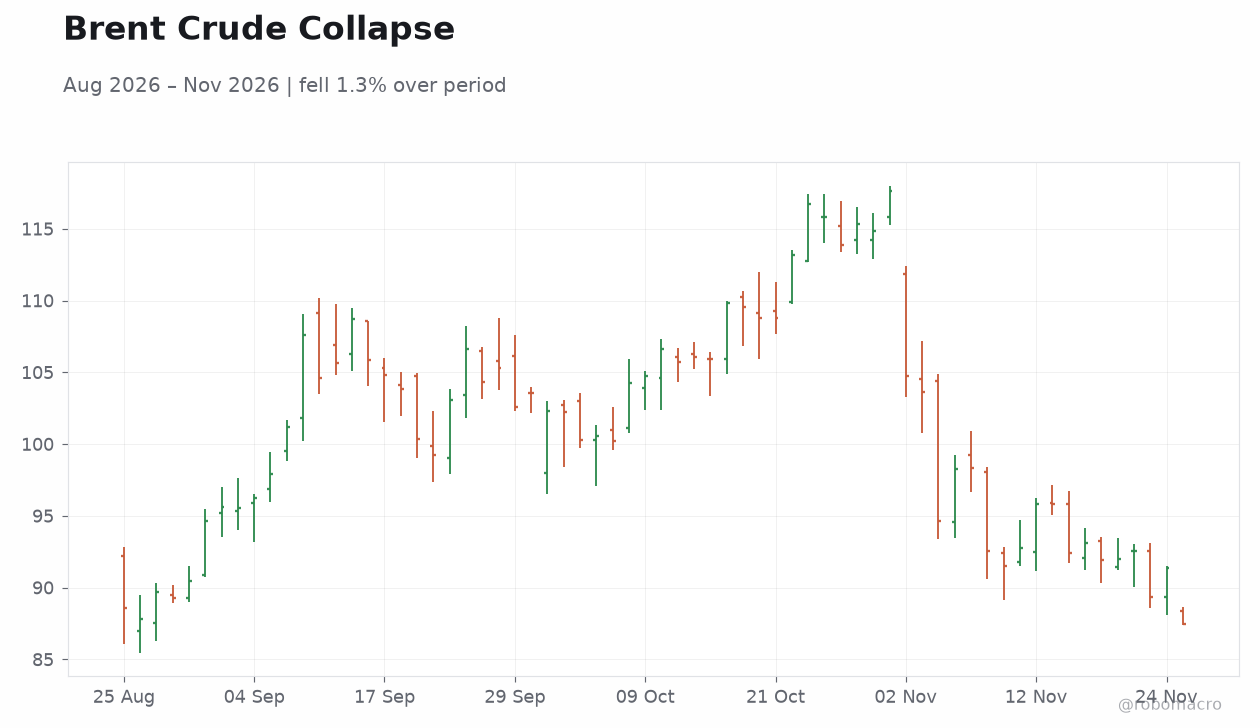
| Brent Crude | 87.46 | -4.31% |
| Gold | 3,545.90 | -0.45% |
| Bitcoin | 59,058.17 | -3.52% |
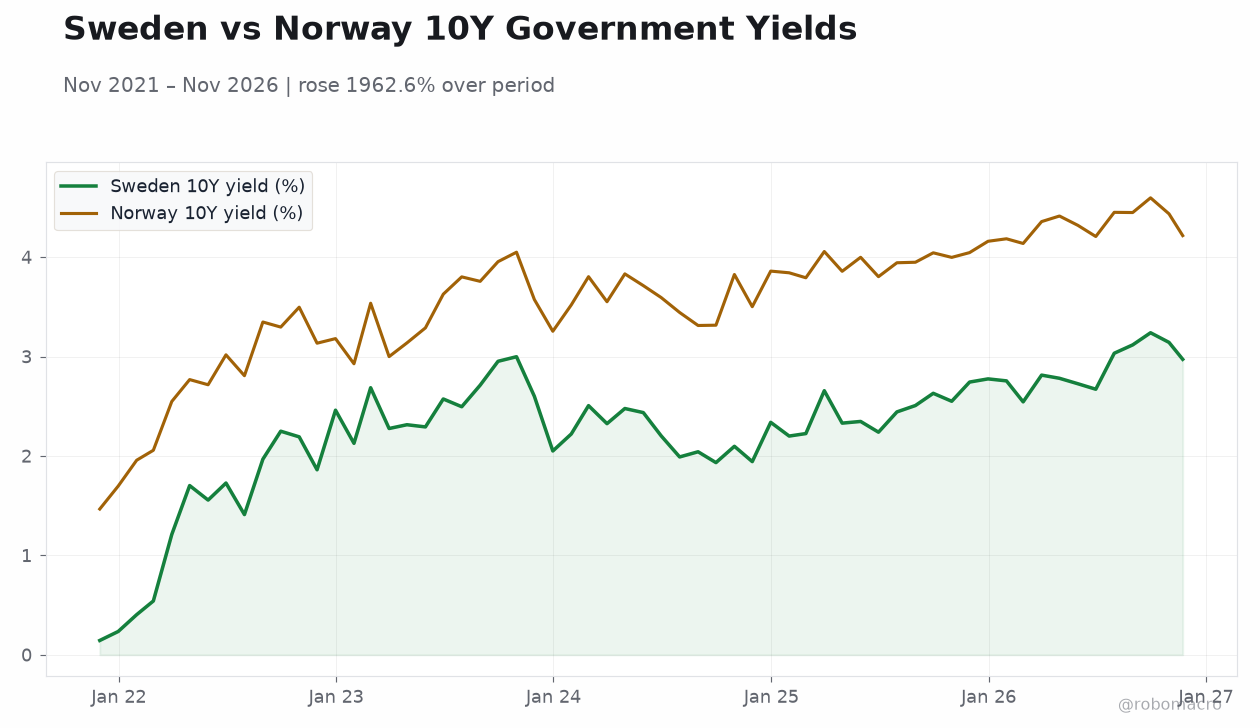
| Sweden 10Y Govt Yield | 2.97% | -3 bp |
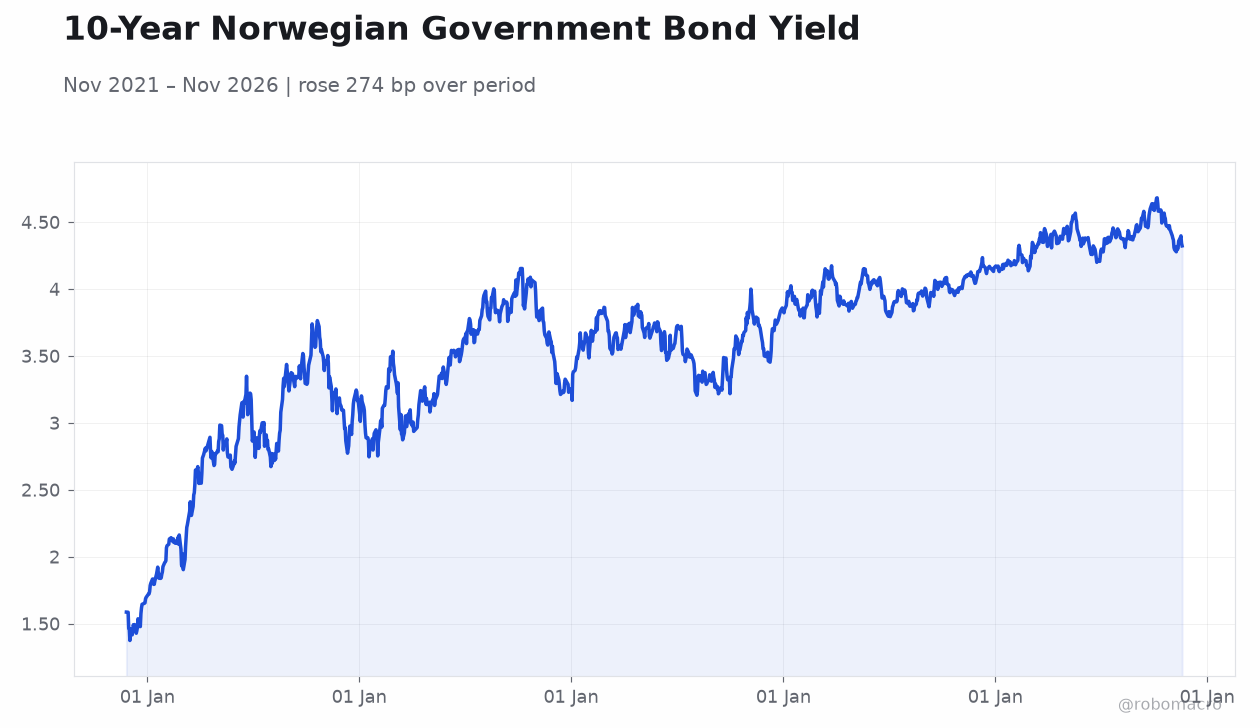
| Norway 10Y Govt Yield | 4.22% | -3 bp |
Prior Economic Events
| Data | Prior | Cons | Actual |
|---|---|---|---|
| No events available | |||
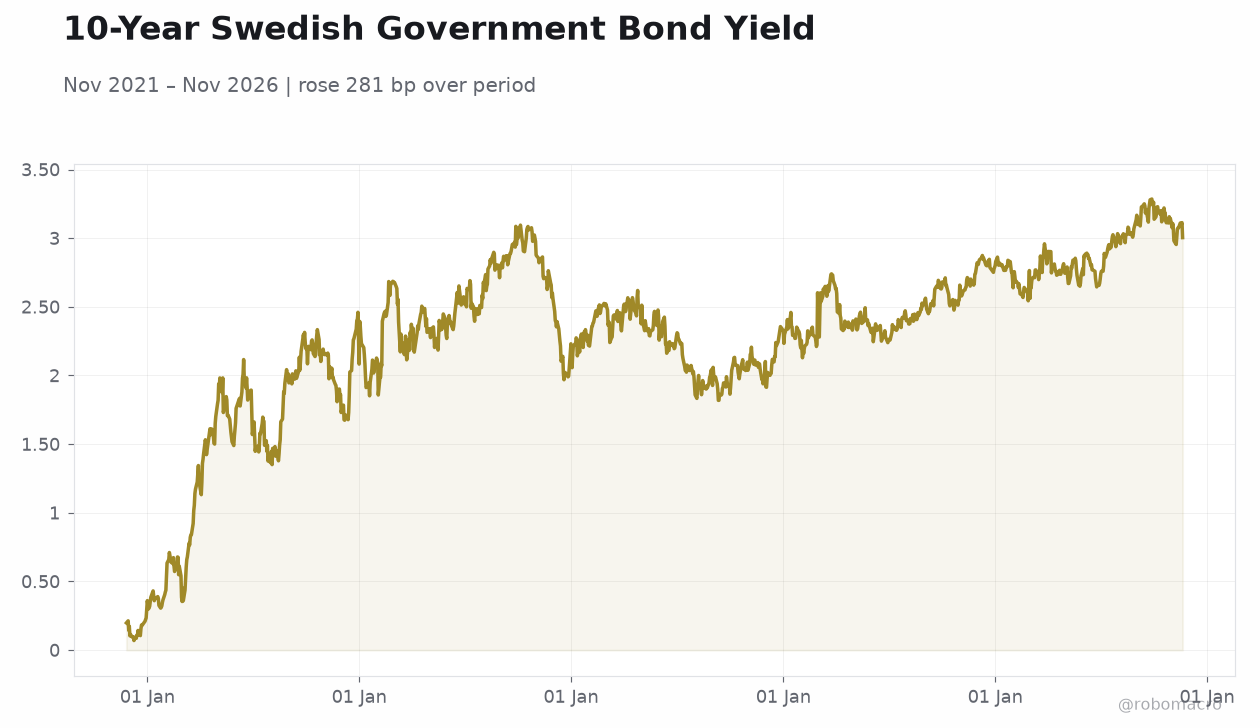 10-Year Swedish Government Bond Yield | Type: macro_line | 10-Year Swedish Government Bond Yield: 3.004 (2026-11-20) | Range: 0.06946–3.285 | Trend(6pt): 0.198,2.659,2.467,2.435,3.113,3.004
Today's Economic Events
| Data | Prior | Cons | Time |
|---|---|---|---|
| No events available | |||
- Nordic bourses sold off across the board, with OMX Stockholm 30 down 1.45% and Oslo Bors off 0.87% as Brent crude collapsed 4.31% to $87.46.
- Swedish and Norwegian 10-year government yields both eased 3 bp, to 2.97% and 4.22% respectively, tracking the global duration rally.
- The Riksbank holds at 2.00% following its November 4 hike, and Norges Bank holds at 4.50% following its September 24 hike, with next decisions set for December 16 and 17.
Yesterday's Recap
Nordic equity markets closed sharply lower on November 24, with Sweden bearing the brunt of the selloff as the OMX Stockholm 30 fell 1.45% to 3,214.14. Oslo Bors declined 0.87% to 2,030.14, weighed down by the 4.31% collapse in Brent crude to $87.46 — a direct hit to Norway's petroleum-linked fiscal outlook and energy-heavy index. Finland's OMX Helsinki 25 dropped 0.97% to 5,954.82, while Denmark's OMX Copenhagen 25 proved the most resilient, slipping just 0.09% to 1,947.88, consistent with the krone's euro peg insulating Danish assets from the risk-off tone.
In rates, the Swedish 10-year yield eased 3 bp to 2.97% and the Norwegian 10-year fell 3 bp to 4.22%, both as of November 23 data, reflecting a broader flight to duration. FX markets were comparatively calm: EUR/SEK rose 0.31% to 11.24 and EUR/NOK gained 0.32% to 10.76, while USD/SEK was essentially flat at 10.27 and USD/NOK unchanged at 9.83. The divergence between a weak equity tape and stable FX suggests the move was driven by commodity and global risk factors rather than Nordic-specific macro news, with no scheduled regional data releases on the calendar.
The Day Ahead
The Nordic calendar is empty for November 25, leaving markets to digest the prior session's commodity-driven selloff without fresh regional catalysts. With no Swedish, Norwegian, Danish, or Finnish prints scheduled, attention shifts to positioning ahead of the December central bank meetings — the Riksbank on December 16 and Norges Bank on December 17. Traders will watch Brent crude closely given its outsized influence on Oslo Bors and Norwegian fiscal revenues, and any further weakness could pressure the krone despite its current stability.
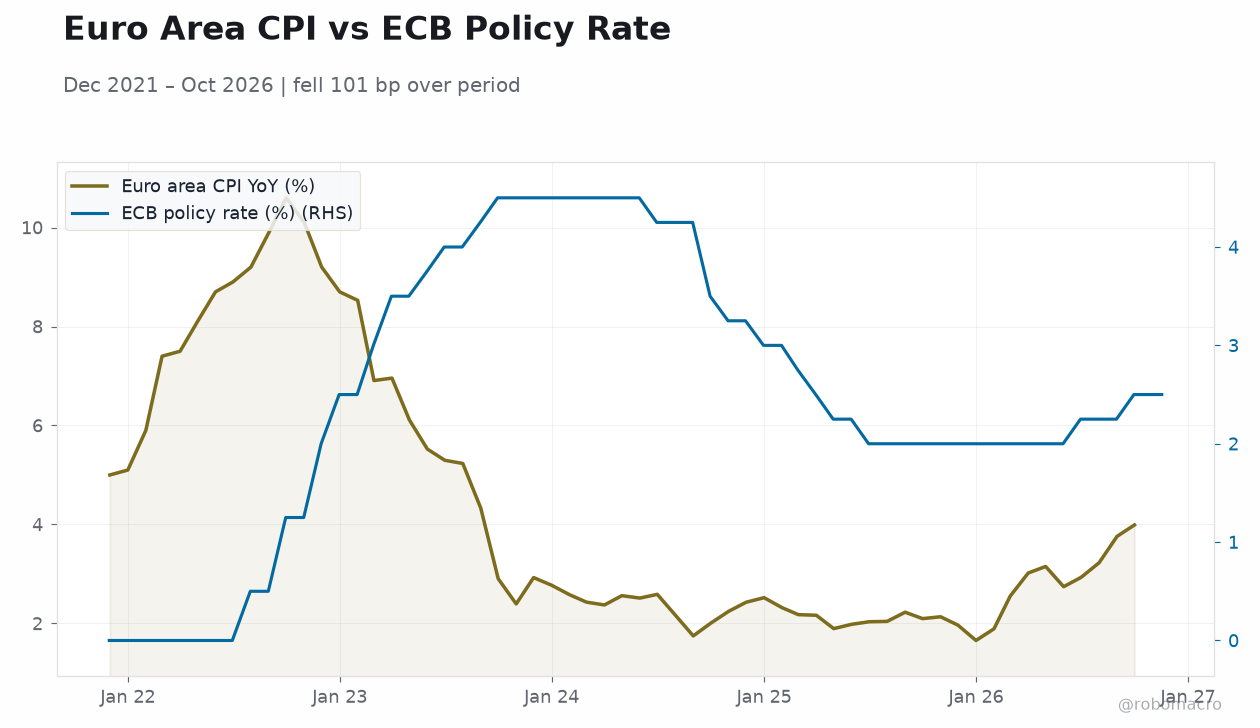
Swedish rate markets will also be sensitive to incoming euro-area data given the Riksbank's recent hike to 2.00% and Sweden's export exposure to the continent. Absent domestic data, Nordic assets will likely take their cue from global risk sentiment and energy prices.
Other Economic Notes
Sweden's inflation picture remains notably benign, with CPI at 1.10% year-on-year as of October — well below the Riksbank's target and a striking contrast to Norway's 3.60% print. That gap underpins the policy divergence between Stockholm and Oslo, though the Riksbank's November hike to 2.00% signals it is not yet declaring victory. ↓ p.2