Nordics Macro Daily(Beta Mode)
Nordic Stocks Rise as Yields Ease; Riksbank Warns on Inflation
Market Snapshot
| Asset | Level | Change |
|---|---|---|
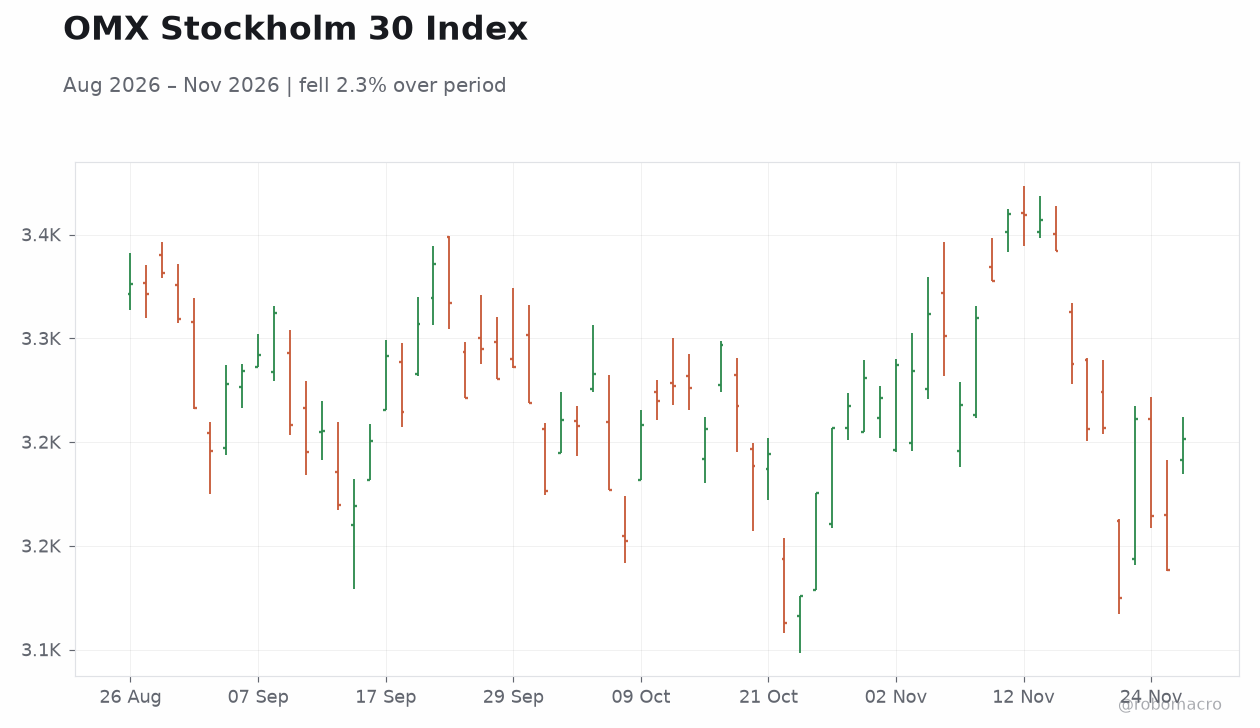
| OMX Stockholm 30 | 3,251.38 | +1.98% |
| Oslo Bors | 2,059.49 | +1.46% |
| OMX Copenhagen 25 | 1,955.27 | +1.44% |
| OMX Helsinki 25 | 5,994.73 | +2.18% |
| USD/SEK | 10.19 | -0.39% |
| USD/NOK | 9.73 | -0.49% |
| EUR/SEK | 11.19 | -0.34% |
| EUR/NOK | 10.68 | -0.65% |
| Brent Crude | 92.35 | -2.39% |
| Gold | 3,664.90 | +3.65% |
| Bitcoin | 61,616.02 | +2.05% |
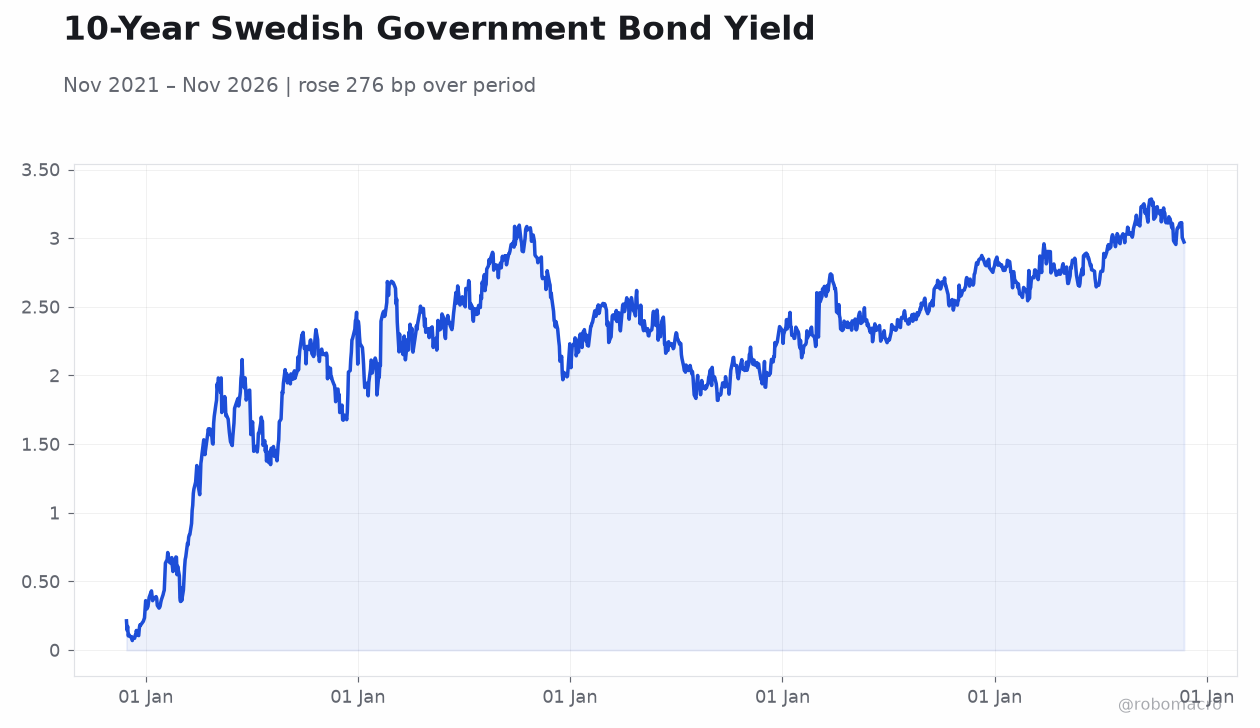
| Sweden 10Y Govt Yield | 2.93% | -3 bp |
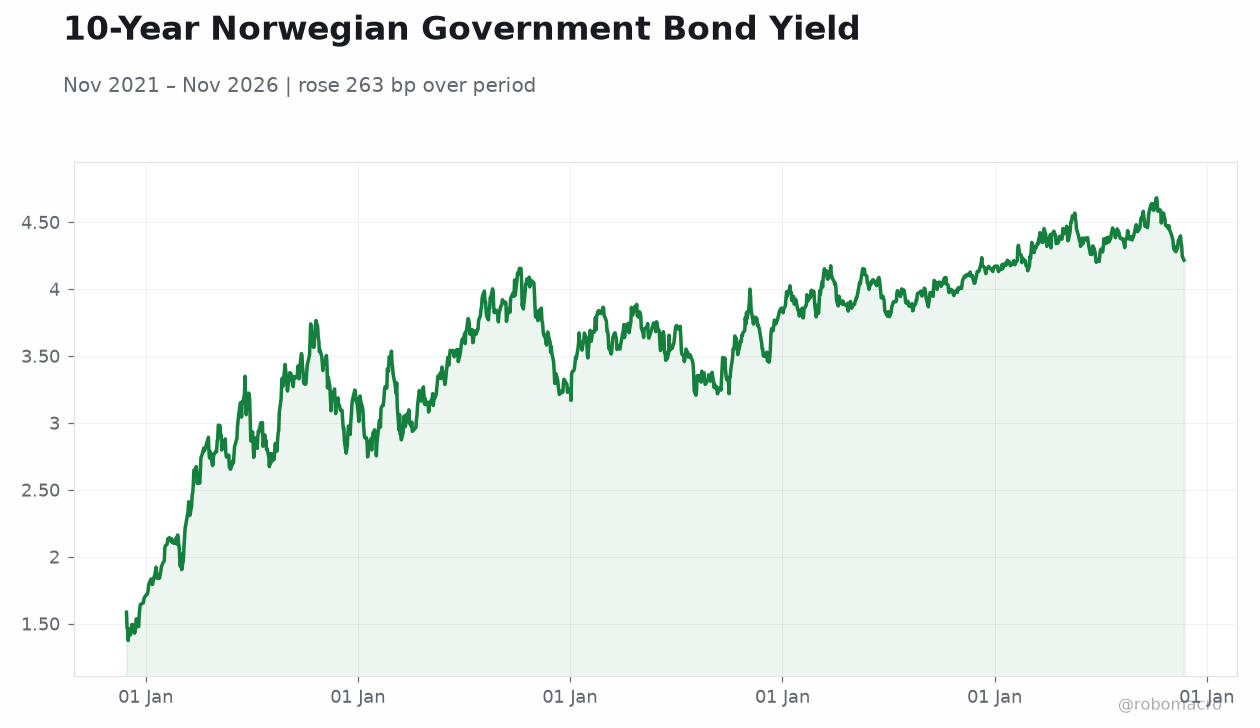
| Norway 10Y Govt Yield | 4.10% | -4 bp |
Prior Economic Events
| Data | Prior | Cons | Actual |
|---|---|---|---|
| No events available | |||
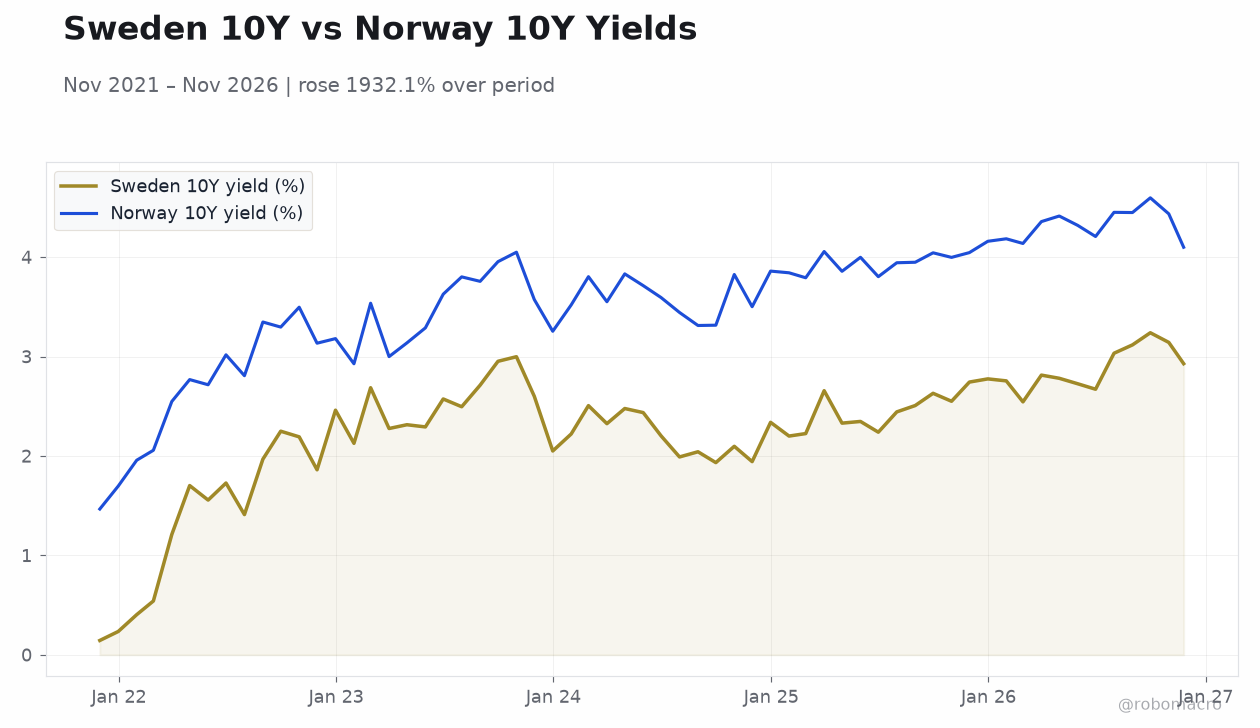 Sweden 10Y vs Norway 10Y Yields | Type: macro_line | Sweden 10Y yield (%): 2.928 (2026-11-25) | Range: 0.1441–3.239 | Trend(5pt): 0.1441,2.686,2.436,2.507,2.928 | Norway 10Y yield (%): 4.099 (2026-11-25) | Range: 1.466–4.596 | Trend(5pt): 1.466,3.536,3.713,3.948,4.099
Today's Economic Events
| Data | Prior | Cons | Time |
|---|---|---|---|
| No events available | |||
- Nordic equity indices rallied sharply, with OMX Helsinki 25 up 2.18% and OMX Stockholm 30 up 1.98%, as regional government yields eased
- Riksbank's Jansson warned inflation risks are rising, reinforcing the November 4 hike to 2.00% and tempering reversal expectations
- Brent crude fell 2.39% to $92.35, a headwind for Norway's fiscal outlook, while gold jumped 3.65% and the SEK and NOK firmed versus the dollar
Yesterday's Recap
Nordic markets posted broad-based gains on Thursday, with OMX Helsinki 25 leading at +2.18%, OMX Stockholm 30 +1.98%, Oslo Bors +1.46%, and OMX Copenhagen 25 +1.44%. Swedish and Norwegian government bonds rallied, with the Sweden 10-year yield easing 3 bp to 2.93% and the Norway 10-year falling 4 bp to 4.10%. The Swedish krona and Norwegian krone both strengthened against the dollar, with USD/SEK down 0.39% to 10.19 and USD/NOK down 0.49% to 9.73; EUR/NOK fell 0.65% to 10.68 and EUR/SEK slipped 0.34% to 11.19.
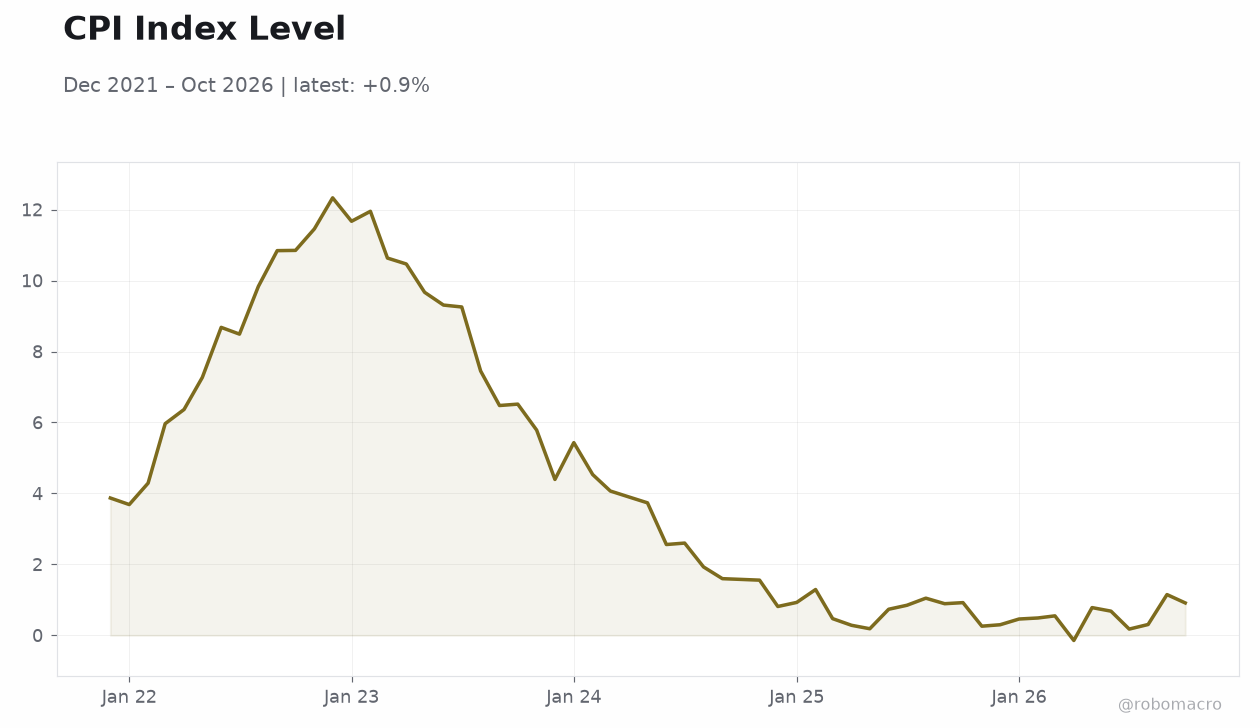
Riksbank Deputy Governor Jansson said inflation risks are on the rise, a notable signal given Sweden's CPI at 1.10% and the November 4 decision to hike the policy rate 25 bp to 2.00%. Norway's CPI remains elevated at 3.60%, consistent with Norges Bank's 4.50% policy rate set via a 25 bp hike on September 24 and held on November 5. Brent crude's 2.39% decline to $92.35 weighed on Norway's oil-linked fiscal prospects, even as Oslo equities advanced.
Danmarks Nationalbank published analysis flagging climate-driven storm surge risk to the financial sector, while Danish news flow centered on pension capital deployment and a potential DKK 12.1bn increase in Denmark's EU contribution.
The Day Ahead
The Nordic calendar is empty for Friday, November 27, with no scheduled data releases across Sweden, Norway, Denmark, or Finland. Attention turns to positioning ahead of the December central bank cycle, with the Riksbank's next decision set for December 16 and Norges Bank's for December 17. With no domestic prints to digest, markets will take direction from euro-area and US developments, particularly any signals on the ECB's December path that feed through Denmark's peg and Finland's rate outlook.
Swedish and Norwegian rate markets are likely to consolidate Thursday's yield declines, with the 10-year spreads to euro-area benchmarks remaining the key relative-value focus. Liquidity may thin into the weekend, amplifying moves in SEK and NOK crosses.
Other Economic Notes
Sweden's tourism sector is showing strength, with international overnight stays up 11% in 2026, though the increase was driven entirely by non-Swedish demand — a modest positive for service exports. ↓ p.2