South Africa Macro Daily(Beta Mode)
JSE Slips, Rand Weakens Amid Quiet Data
Market Snapshot
| Asset | Level | Change |
|---|---|---|
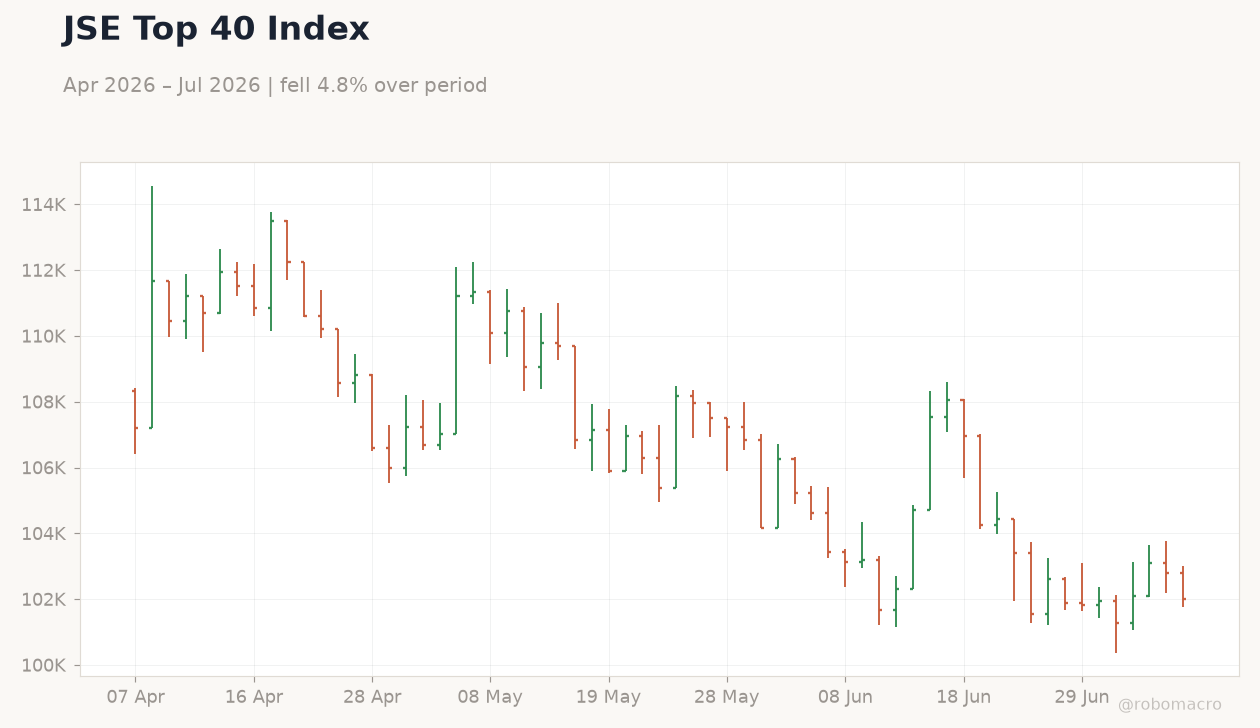
| JSE Top 40 | 102,013.10 | -0.76% |
| USD/ZAR | 16.26 | +0.40% |
| EUR/ZAR | 18.52 | -0.19% |
| Platinum | 1,646.90 | -0.26% |
| Gold | 4,136.30 | -0.22% |
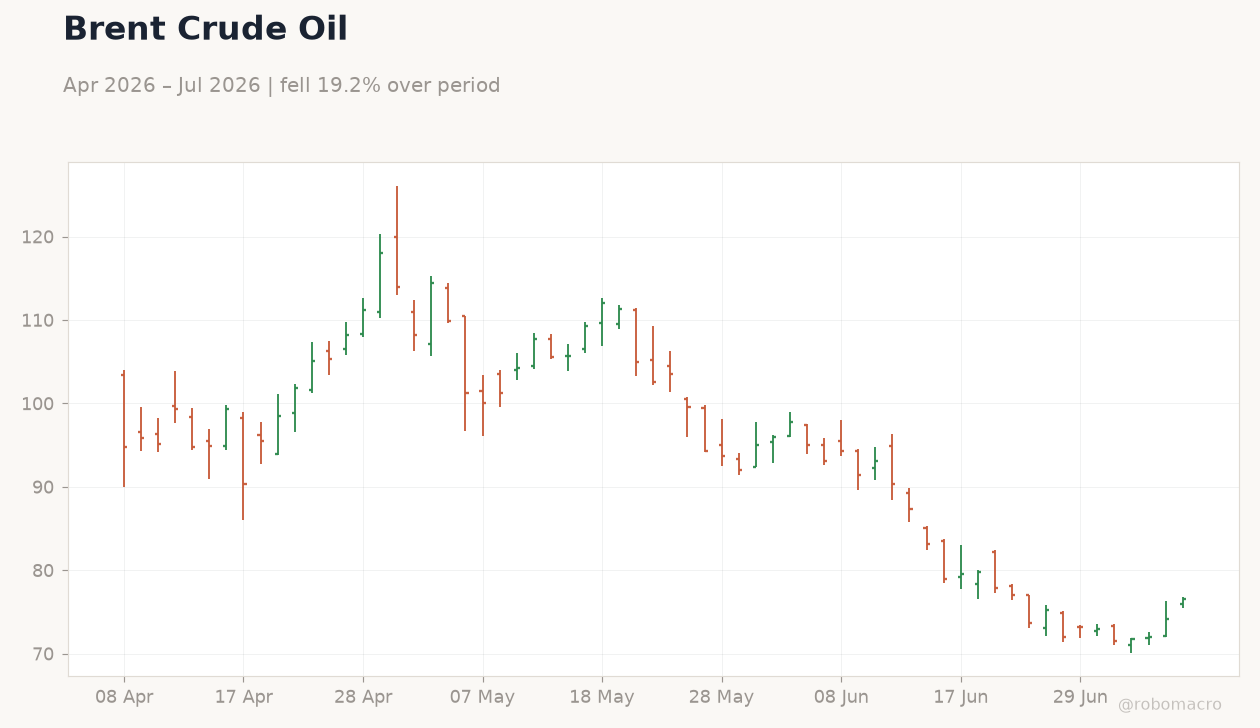
| Brent Crude | 76.64 | +3.34% |
| Naspers | 85,020.00 | +4.80% |
| Bitcoin | 62,674.82 | -2.06% |
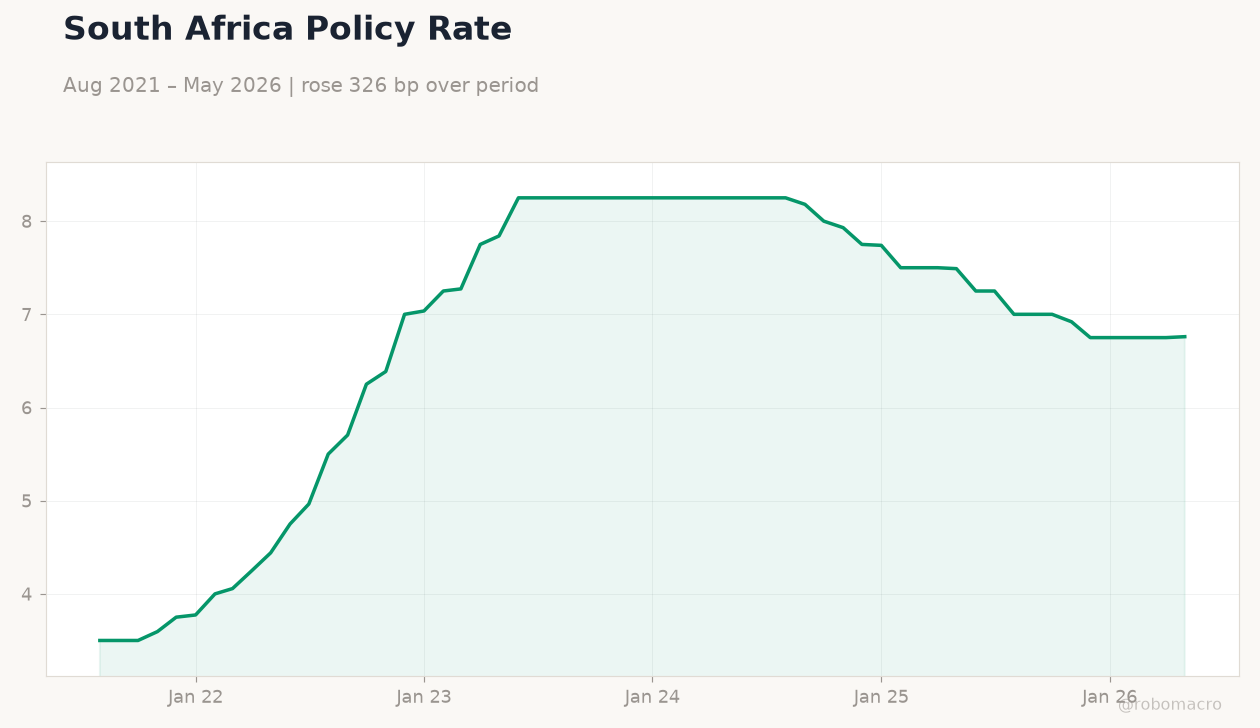
| South Africa Short-term Rate | 6.76% | +0.15% |
| South Africa Long-term Rate | 8.99% | +0.86% |
Prior Economic Events
| Data | Prior | Cons | Actual |
|---|---|---|---|
| No events available | |||
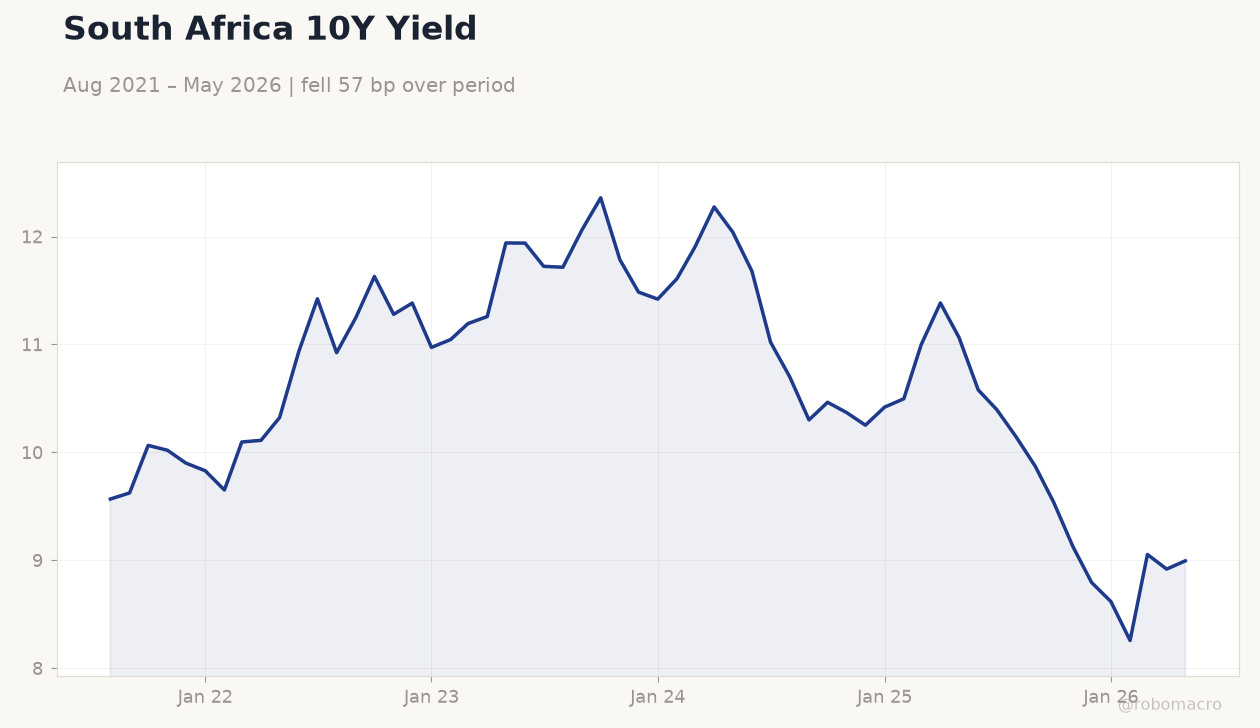 South Africa 10Y Yield | Type: macro_line | Long-term Rate %: 8.995 (2026-05-01) | Range: 8.257–12.36 | Trend(6pt): 9.568,11.63,11.49,10.5,8.918,8.995
Today's Economic Events
| Data | Prior | Cons | Time |
|---|---|---|---|
| No events available | |||
- JSE Top 40 fell 0.76% to 102,013.10 as resource stocks lagged.
- USD/ZAR rose 0.40% to 16.26 while Brent crude gained 3.34%.
- South Africa short-term rate edged up 0.15% to 6.76% with long-term yields climbing 0.86% to 8.99%.
Yesterday's Recap
South African markets recorded modest losses on thin trading volumes with no major data releases. The JSE Top 40 declined 0.76% to close at 102,013.10 while Naspers advanced 4.80% to offset broader weakness. USD/ZAR climbed 0.40% to 16.26 as the rand underperformed regional peers.
Platinum and gold each slipped around 0.25% despite Brent crude surging 3.34% to 76.64 on supply concerns. South Africa short-term rate rose 0.15 percentage points to 6.76% and the long-term rate jumped 0.86 points to 8.99%. Bitcoin fell 2.06% to 62,674.82 with limited local impact.
Overall activity remained subdued given the empty economic calendar.
The Day Ahead
No scheduled South African data releases or SARB events appear on the calendar for the coming session. Traders will monitor global risk sentiment and any follow-through in Brent crude prices. The absence of local prints leaves focus on external drivers such as US rate signals and commodity flows.
Mining equities may react to platinum and gold price stability after recent small declines. Market participants expect thin volumes until fresh catalysts emerge later in the week.
Other Economic Notes
Energy supply reliability continues to shape mining output expectations given ongoing load-shedding risks at key facilities. Foreign direct investment interest remains evident with Abu Dhabi’s Adnoc agreeing to acquire Shell’s South African fuel retail network. Fiscal receipts ran ahead of forecasts in recent months which helps contain deficit projections.
Broader capital flows into the rand stay sensitive to commodity price swings and external rate differentials.
Global Macro News
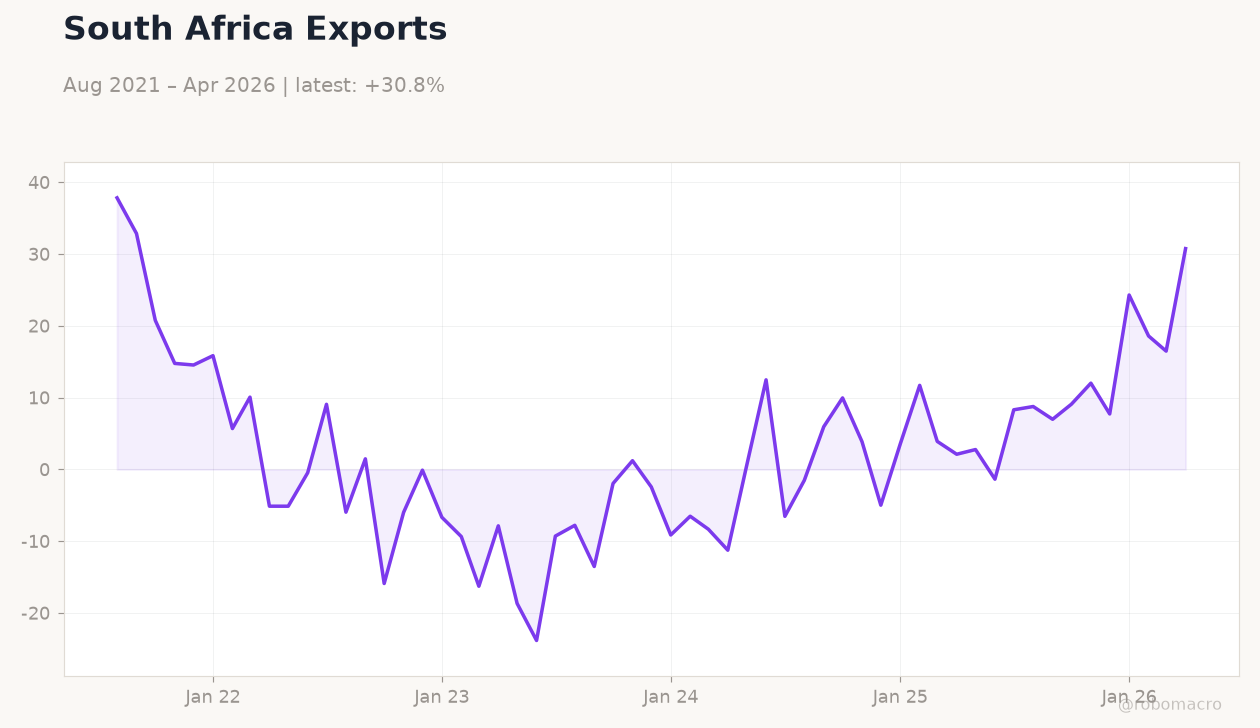
Brent crude strength provided some support to South African terms of trade despite the rand’s modest depreciation. Global equity sentiment turned cautious which weighed on the JSE resource-heavy index. Xenophobic tensions reported in local media risk dampening foreign investor appetite for South African assets over the medium term.
<i>↓ p.2</i>