South Africa Macro Daily(Beta Mode)
JSE Slips, Rand Weakens as Rates Rise
Market Snapshot
| Asset | Level | Change |
|---|---|---|
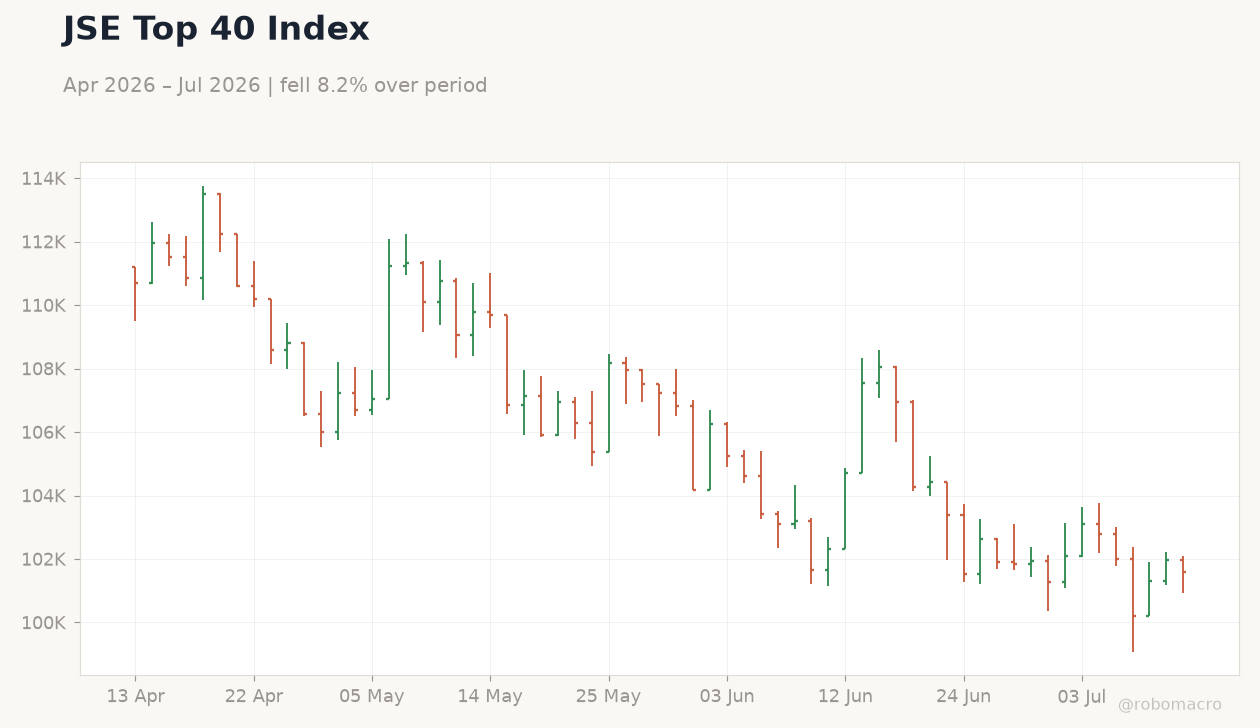
| JSE Top 40 | 101,575.30 | -0.39% |
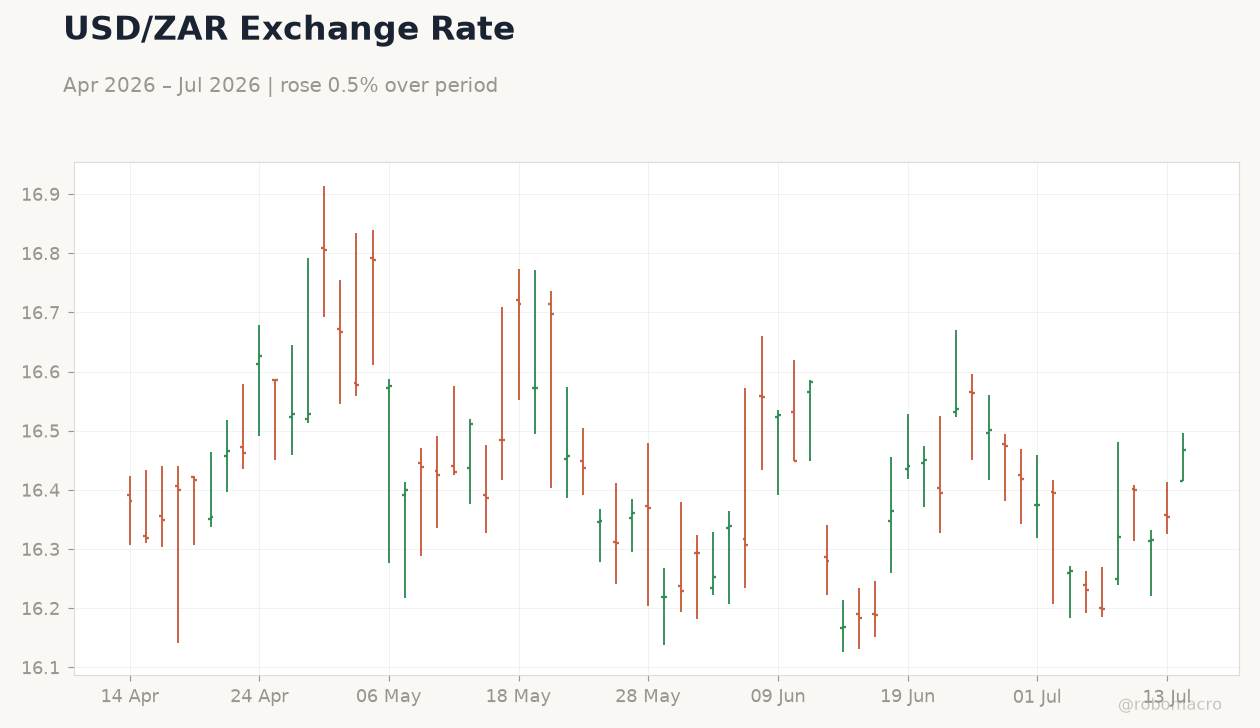
| USD/ZAR | 16.47 | +0.70% |
| EUR/ZAR | 18.75 | +0.56% |
| Platinum | 1,621.40 | +1.20% |
| Gold | 4,031.40 | +0.86% |
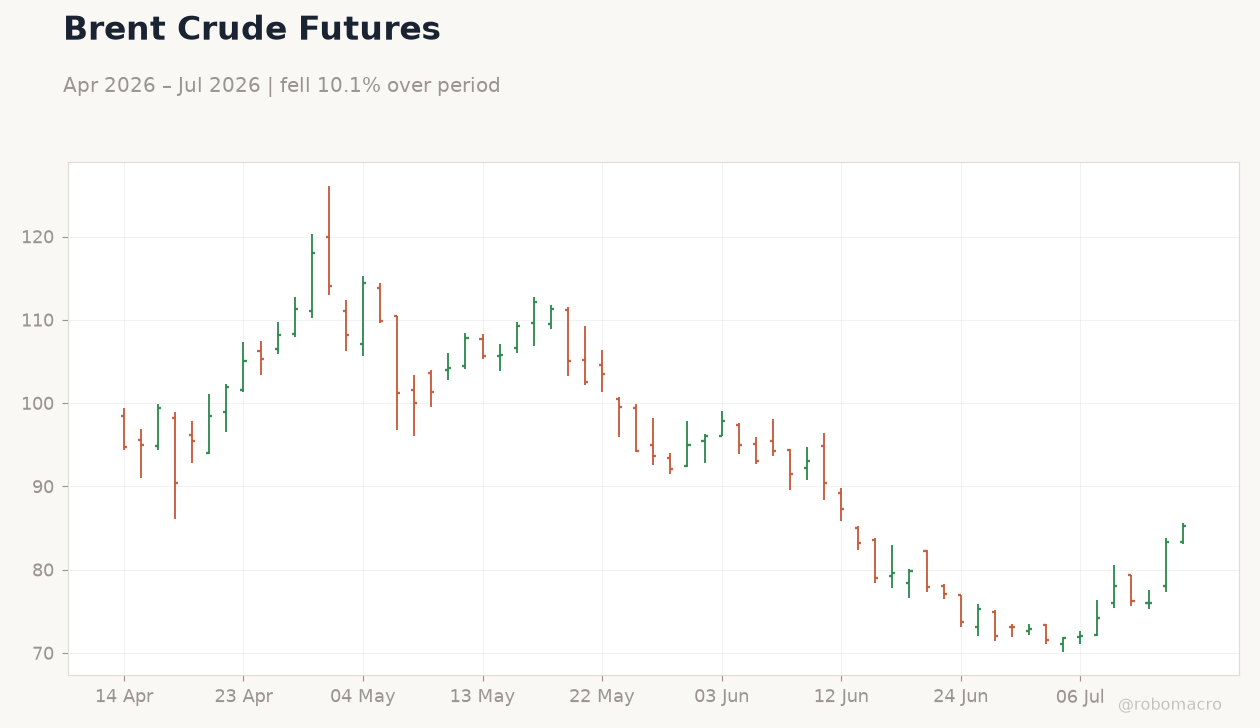
| Brent Crude | 85.31 | +2.41% |
| Naspers | 85,991.00 | -0.62% |
| Bitcoin | 62,599.09 | +0.58% |
| South Africa Short-term Rate | 6.76% | +0.15% |
| South Africa Long-term Rate | 8.99% | +0.86% |
Prior Economic Events
| Data | Prior | Cons | Actual |
|---|---|---|---|
| No events available | |||
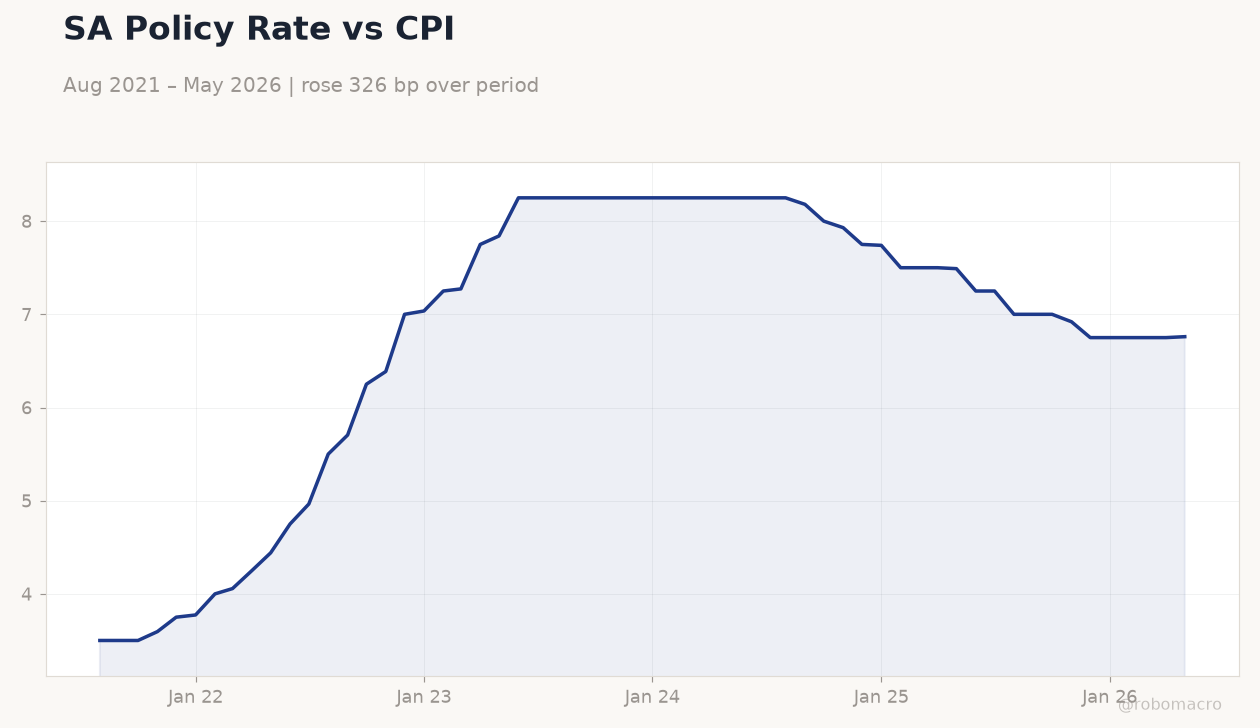 SA Policy Rate vs CPI | Type: macro_line | Short-term Rate %: 6.76 (2026-05-01) | Range: 3.5–8.25 | Trend(6pt): 3.5,6.25,8.25,7.5,6.75,6.76
Today's Economic Events
| Data | Prior | Cons | Time |
|---|---|---|---|
| No events available | |||
- JSE Top 40 fell 0.39% to 101,575.30 while USD/ZAR rose 0.70% to 16.47 amid higher yields.
- Short-term rates climbed 15 bp to 6.76% and long-term rates jumped 86 bp to 8.99%.
- Platinum and gold gained 1.20% and 0.86% respectively, supporting resource stocks despite equity weakness.
Yesterday's Recap
South African markets closed lower on Monday with the JSE Top 40 declining 0.39 percent to 101,575.30 as Naspers dropped 0.62 percent. The rand weakened, with USD/ZAR advancing 0.70 percent to 16.47 and EUR/ZAR rising 0.56 percent to 18.75. Short-term rates increased 15 basis points to 6.76 percent while long-term government bond yields surged 86 basis points to 8.99 percent.
Commodity prices provided some support, with platinum climbing 1.20 percent to 1,621.40 and gold advancing 0.86 percent to 4,031.40. Brent crude rose 2.41 percent to 85.31, reflecting global supply concerns. Bitcoin gained 0.58 percent to 62,599.09.
No major data releases occurred, leaving market moves driven by positioning and external factors.
The Day Ahead
Markets enter a data-light session with no scheduled South African economic releases. Attention turns to next week’s interest-rate decision amid recent hawkish signals from global central banks. Analysts will monitor rand volatility and any updates on Eskom load-shedding that could affect mining output.
JSE traders will assess whether commodity strength can offset domestic growth concerns highlighted in recent forecasts. Positioning ahead of CPI data later in the month may keep volumes thin. Focus remains on how higher yields influence equity and currency flows.
Other Economic Notes
Elevated long-term yields signal tighter financial conditions that could weigh on credit-sensitive sectors. Mining output resilience, inferred from stronger platinum prices, offers a buffer against broader economic softness. Relations with Nigeria over xenophobic incidents and deportee compensation add political risk that may deter foreign portfolio inflows.
National Treasury’s steady bond issuance programme continues without disruption despite the yield spike. Energy supply constraints remain a structural drag on industrial production and GDP momentum.