South Africa Macro Daily(Beta Mode)
Rand Weakens Ahead of Inflation Print
Market Snapshot
| Asset | Level | Change |
|---|---|---|
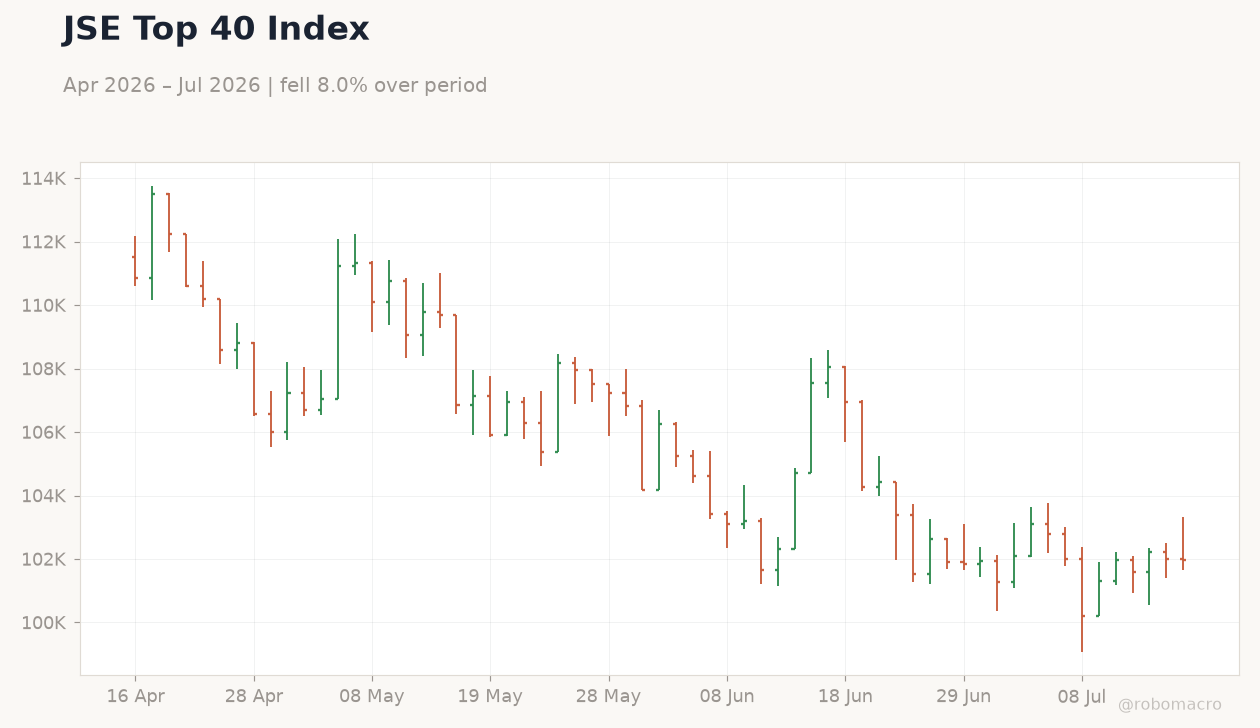
| JSE Top 40 | 101,983.80 | -0.02% |
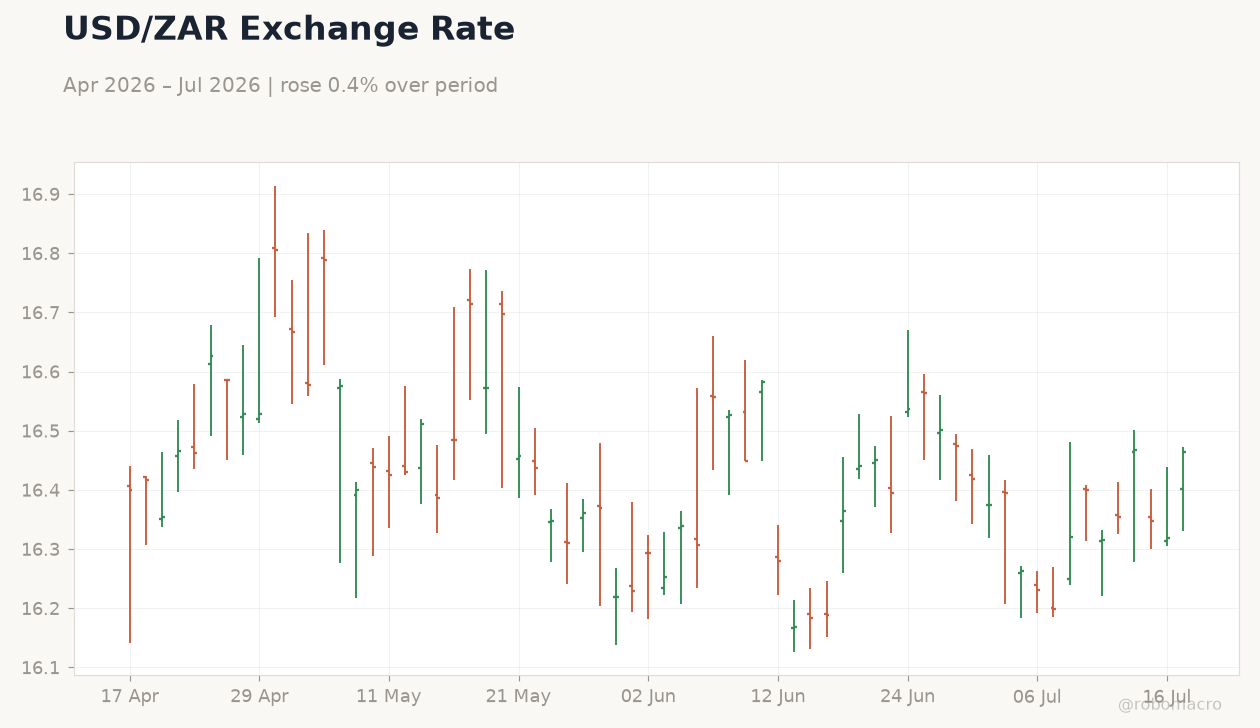
| USD/ZAR | 16.46 | +0.85% |
| EUR/ZAR | 18.72 | +0.17% |
| Platinum | 1,635.70 | +0.26% |
| Gold | 3,985.60 | -1.44% |
| Brent Crude | 84.23 | -0.85% |
| Naspers | 89,339.00 | +0.34% |
| Bitcoin | 63,483.99 | -1.90% |
| South Africa Short-term Rate | 7.00% | +3.55% |
| South Africa Long-term Rate | 8.70% | -3.28% |
Prior Economic Events
| Data | Prior | Cons | Actual |
|---|---|---|---|
| No events available | |||
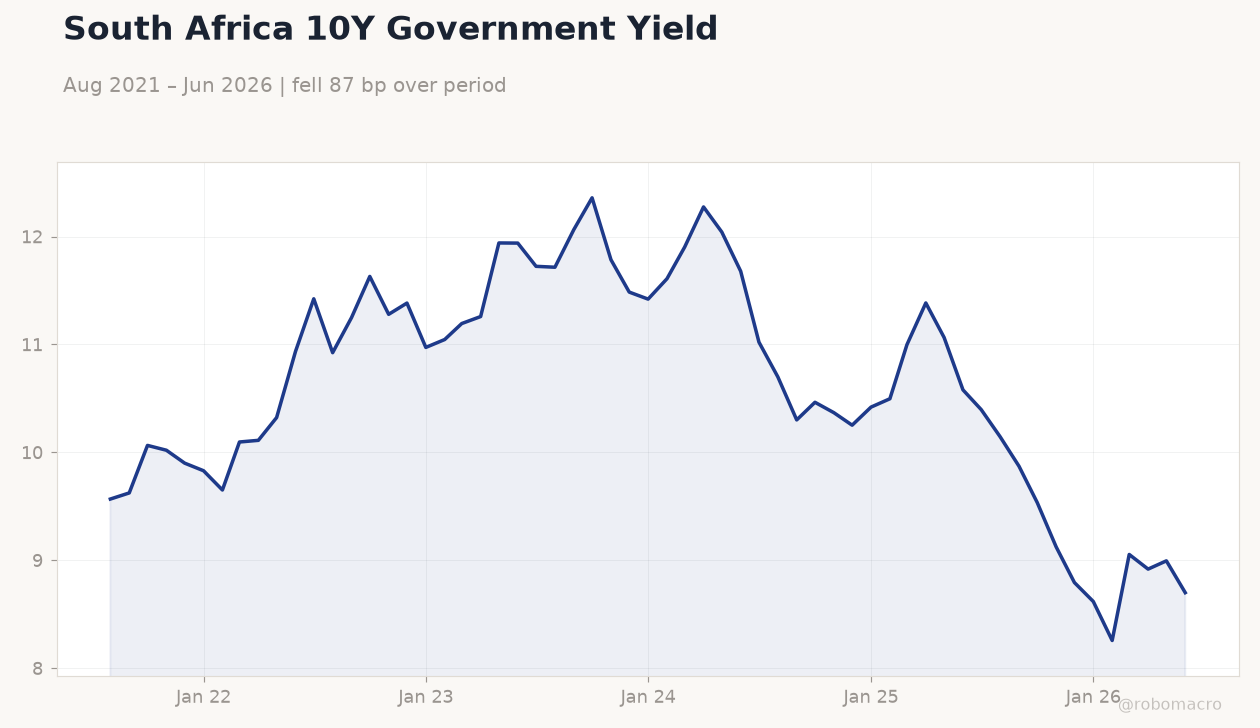 South Africa 10Y Government Yield | Type: macro_line | Yield %: 8.7 (2026-06-01) | Range: 8.257–12.36 | Trend(6pt): 9.568,11.63,11.49,10.5,8.918,8.7
Today's Economic Events
| Data | Prior | Cons | Time |
|---|---|---|---|
| Wednesday (2026-07-22) | |||
| Inflation Rate Month-over-Month | 0.70 | - | 04:00 |
| Inflation Rate Year-over-Year | 4.50 | - | 04:00 |
- USD/ZAR rises 0.85% to 16.46 on global rate signals
- JSE Top 40 holds near flat at 101,983.80
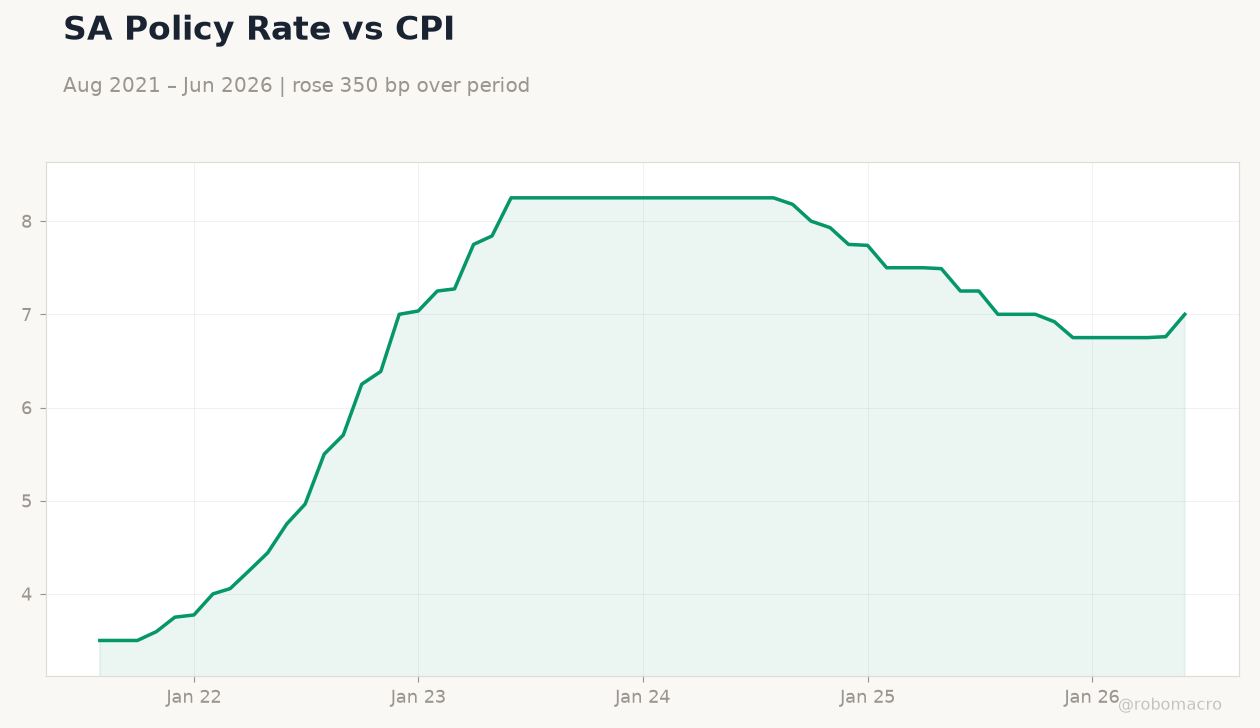
- SARB repo rate steady at 7.00% with CPI at 4.51% y/y
Yesterday's Recap
South African markets showed modest moves with no major data releases on 16 July. The JSE Top 40 edged down 0.02% to close at 101,983.80 while Naspers gained 0.34%. USD/ZAR climbed 0.85% to 16.46 as EUR/ZAR advanced 0.17% to 18.72.
The short-term rate reached 7.00% and the long-term rate fell to 8.70%. Platinum rose 0.26% to 1,635.70 while gold dropped 1.44% to 3,985.60 and Brent crude declined 0.85% to 84.23. Bitcoin fell 1.90% to 63,483.99.
The rand's weakness reflected broader dollar strength and limited local catalysts. Short-term yields rose 3.55% while longer-term yields eased 3.28%, producing a flatter curve amid external dollar support.
The Day Ahead
Markets await South Africa's July inflation figures due 22 July at 04:00 ET. The year-over-year rate carries a prior reading of 4.5% while the month-over-month rate stands at 0.7%. No other domestic releases appear on the immediate calendar.
Traders will monitor any revisions to consensus expectations ahead of the print. The data will inform views on whether the SARB maintains its current stance through the third quarter. Focus remains on whether the print stays near the 4.51% May benchmark or signals renewed price pressure that could delay any policy adjustment.
Other Economic Notes
Chief economist commentary highlighted that inflation concerns outweigh growth considerations at the SARB. National Treasury revenue trends and mining output gains offer limited offsets to external pressures. Eskom's continued absence of load-shedding supports industrial stability in the near term.
Broader policy focus remains on fuel stock strategies and their fiscal implications. These elements shape a cautious domestic backdrop ahead of the inflation release. Township economy discussions and repatriation flows from Zimbabwe add labor-market uncertainty that could influence medium-term growth readings without altering near-term rate expectations.
Global Macro News
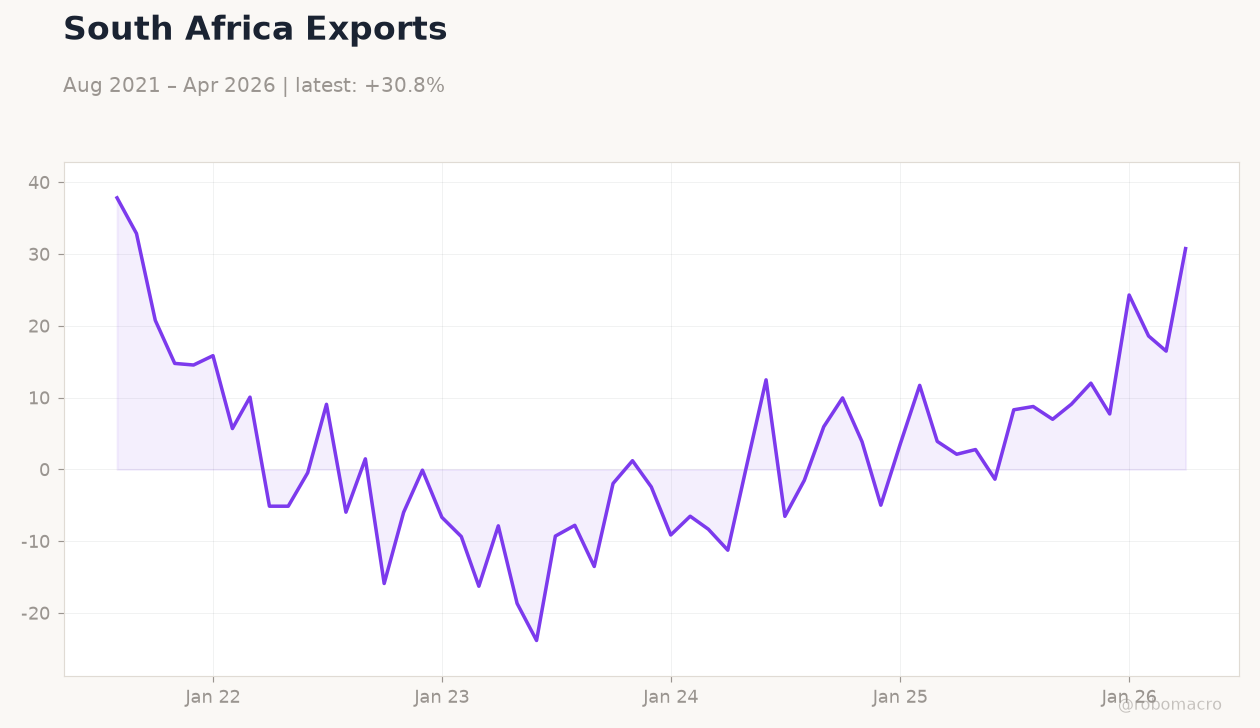
China's zero-tariff expansion lifted imports from Africa, providing a positive trade channel for South African exports. The Federal Reserve's Logan advocated modestly higher interest rates, reinforcing dollar support. <i>↓ p.2</i>