South Africa Macro Daily(Beta Mode)
Rand Weakens After SARB Holds Rates
Market Snapshot
| Asset | Level | Change |
|---|---|---|
| JSE Top 40 | 101,433.70 | +1.10% |
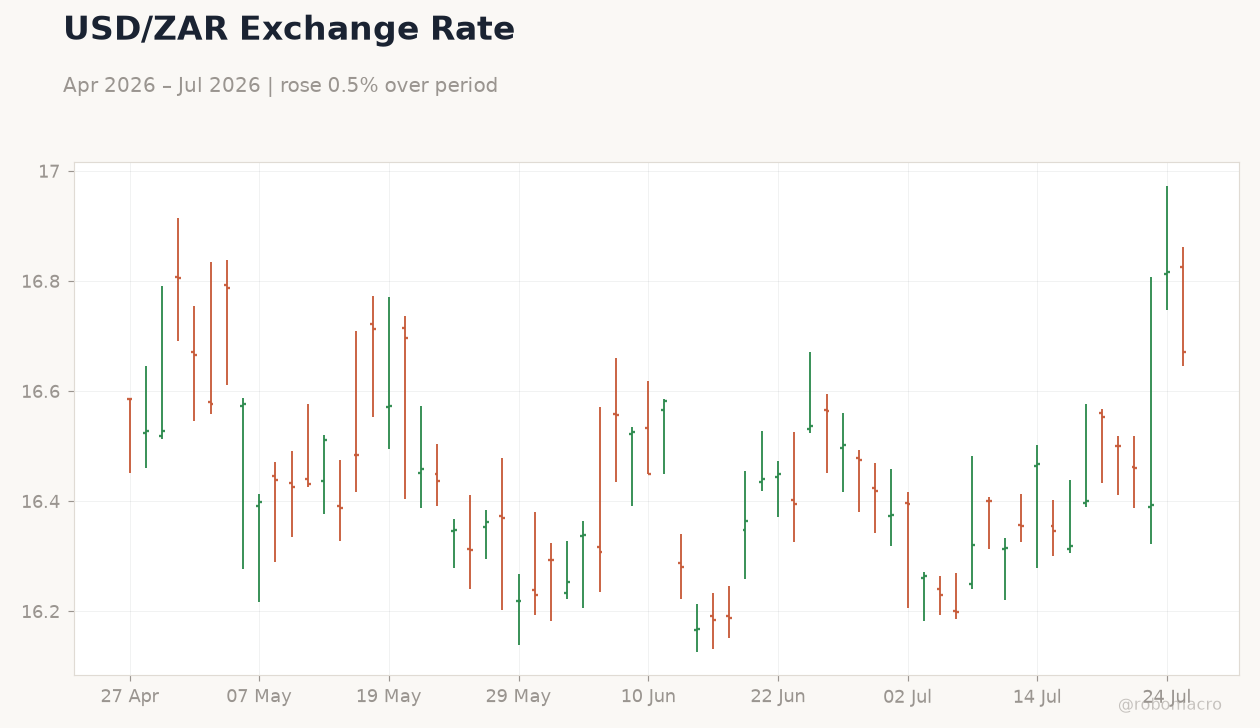
| USD/ZAR | 16.82 | +2.58% |
| EUR/ZAR | 19.00 | -0.68% |
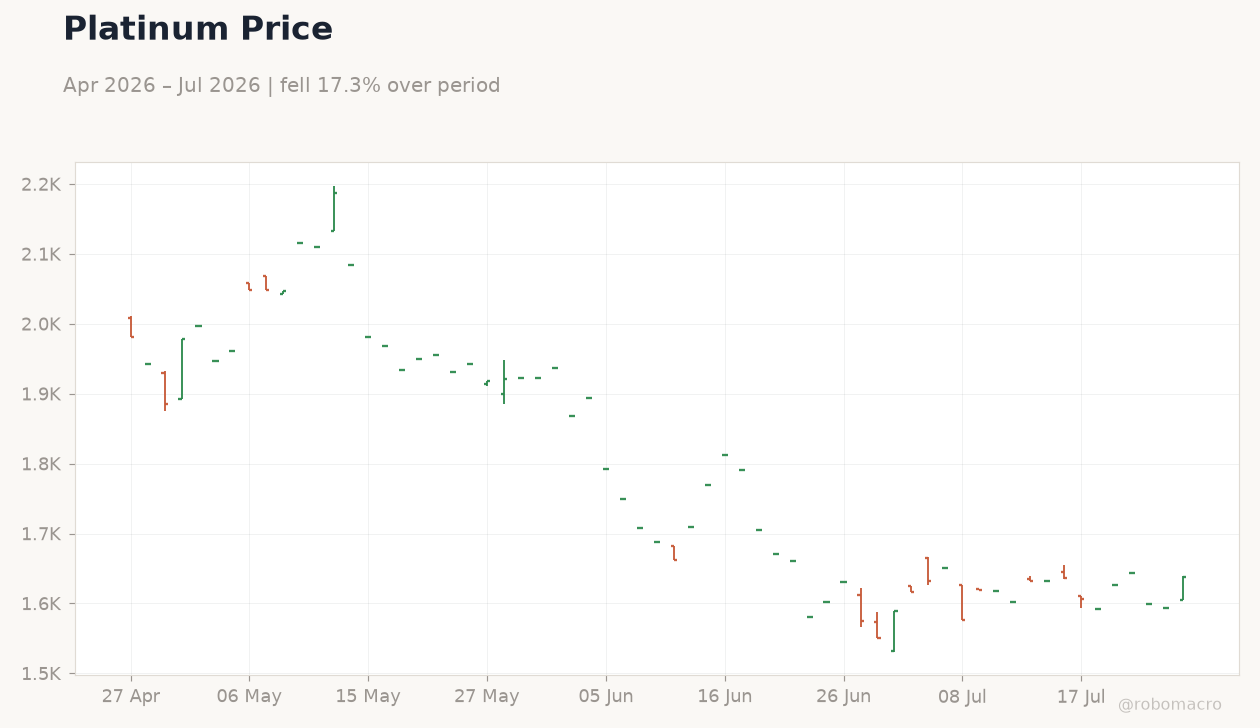
| Platinum | 1,638.10 | +2.81% |
| Gold | 4,100.10 | +0.80% |
| Brent Crude | 90.44 | -6.55% |
| Naspers | 78,960.00 | -0.69% |
| Bitcoin | 65,363.90 | +0.04% |
| South Africa Short-term Rate | 7.00% | +3.55% |
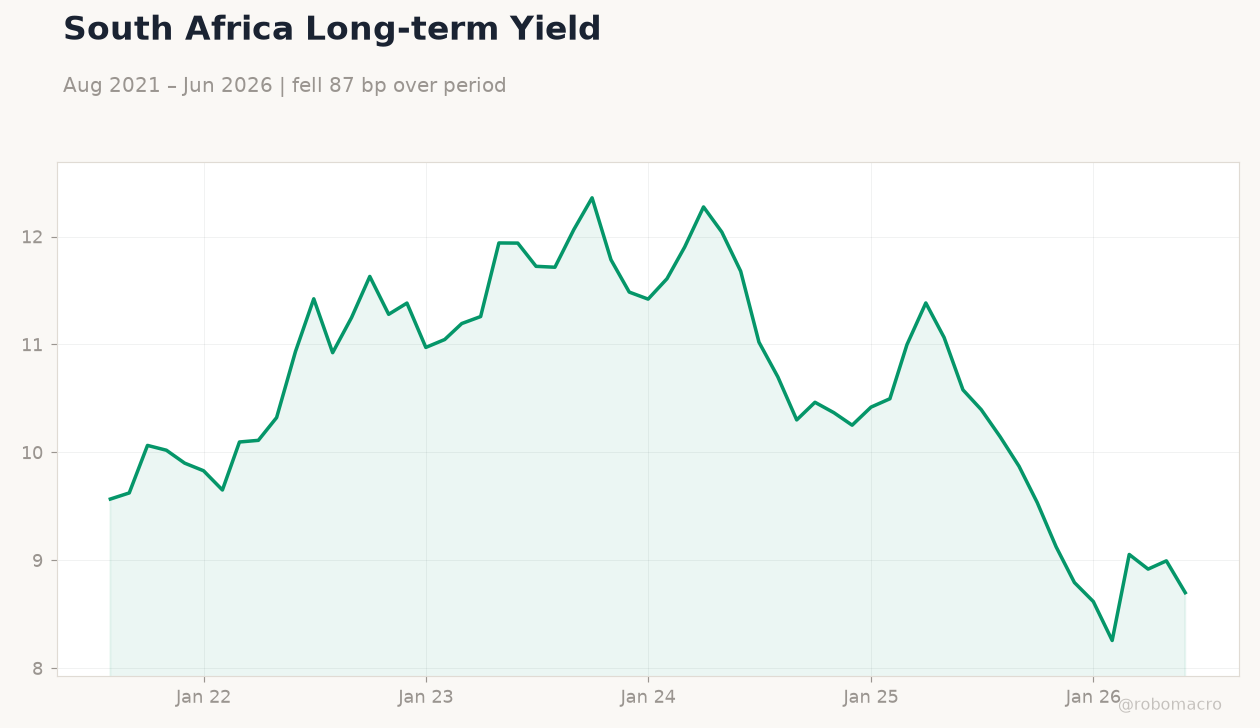
| South Africa Long-term Rate | 8.70% | -3.28% |
Prior Economic Events
| Data | Prior | Cons | Actual |
|---|---|---|---|
| No events available | |||
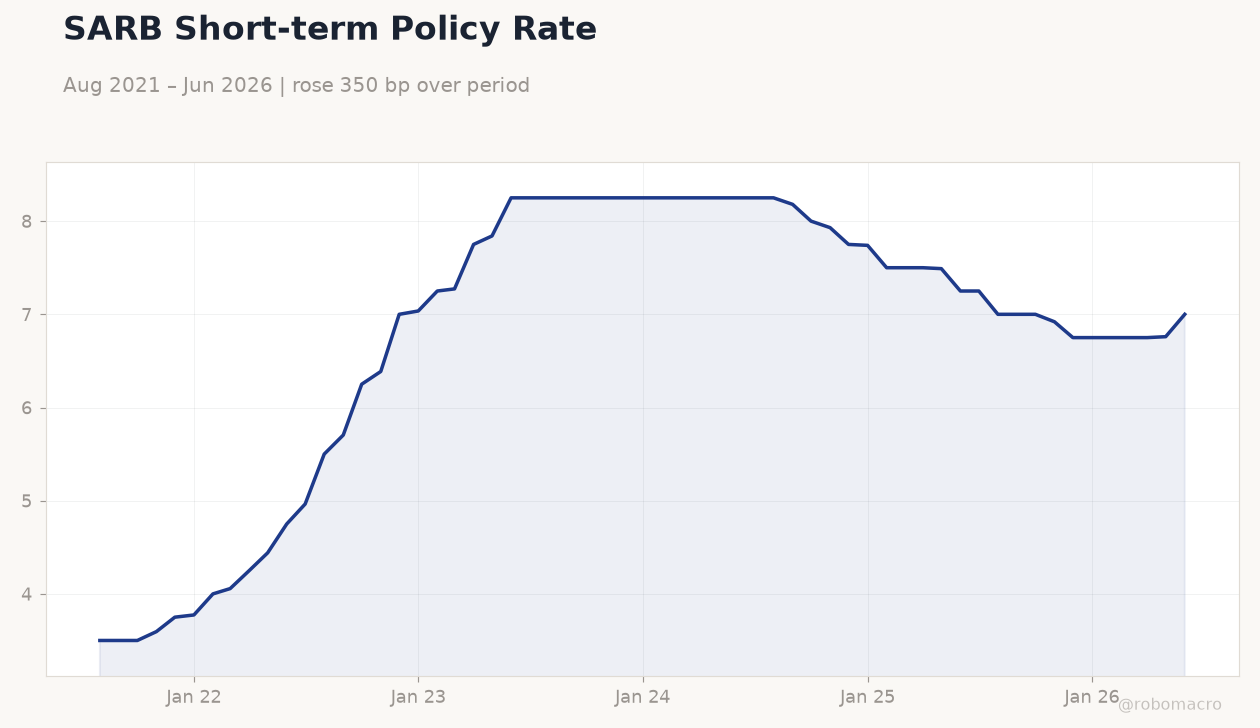 SARB Short-term Policy Rate | Type: macro_line | Rate (%): 7 (2026-06-01) | Range: 3.5–8.25 | Trend(6pt): 3.5,6.25,8.25,7.5,6.75,7
Today's Economic Events
| Data | Prior | Cons | Time |
|---|---|---|---|
| Friday (2026-07-31) | |||
| Trade Balance | -1,790m | - | 04:00 |
- SARB holds repo rate at 7.00%, rand drops over 2.5% to rank as worst global performer.
- JSE Top 40 gains 1.10% on mining strength while USD/ZAR rises 2.58% to 16.82.
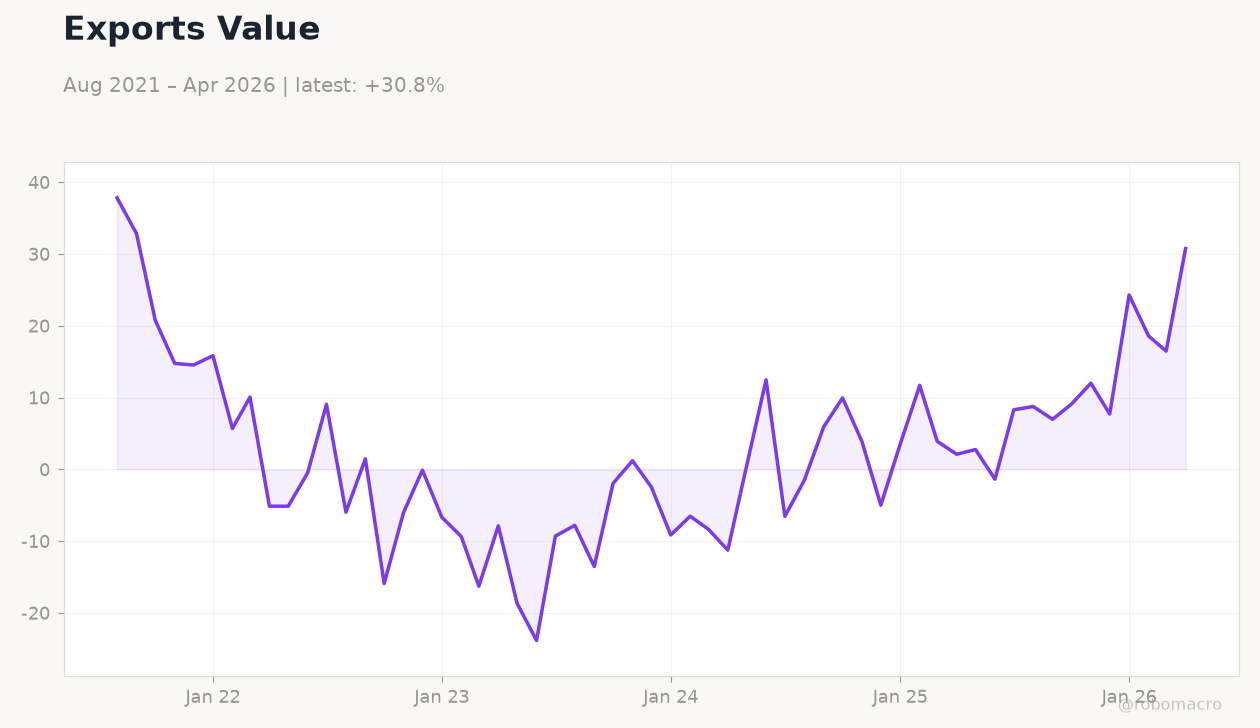
- Trade balance data due Friday amid focus on external accounts and capital flows.
Yesterday's Recap
South African markets absorbed the SARB’s decision to keep the repo rate unchanged at 7.00%. The rand posted the largest single-day decline among major currencies, with USD/ZAR climbing 2.58% to close at 16.82. EUR/ZAR eased 0.68% to 19.00 as the move remained dollar-specific.
The JSE Top 40 advanced 1.10% to 101,433.70, supported by platinum rising 2.81% to 1,638.10 and gold adding 0.80% to 4,100.10. Brent crude fell 6.55% to 90.44, weighing on energy names. The short-term rate rose 3.55% to 7.00% while the long-term rate declined 3.28% to 8.70%, flattening the front end.
Naspers slipped 0.69% to 78,960.00 and bitcoin edged 0.04% higher. No major data prints occurred, leaving the policy hold as the dominant driver of price action. Persistent infrastructure constraints, particularly in electricity supply, keep operating costs elevated for manufacturers and miners.
The Day Ahead
Attention turns to Friday’s trade balance release, the first key external data point since the SARB meeting. Markets will scrutinise the print for signs of narrowing deficits that could ease rand pressure. Analysts expect limited follow-through from the committee until the next inflation update.
Local equity flows may stay sensitive to commodity prices given the mining sector’s recent outperformance. Offshore positioning in USD/ZAR remains elevated after the surprise hold, raising the risk of further volatility on any data beat or miss. No SARB speakers are scheduled before the weekend.
Credit extension data due later this week will help gauge whether households and firms are responding to the unchanged policy rate.
Other Economic Notes
South Africa continues to face a narrow path between fiscal restraint and the need for higher fixed investment to lift potential growth. Recent political developments around the presidency have added little immediate market volatility yet underscore ongoing governance risks. External financing needs remain large, leaving the currency exposed to shifts in global risk appetite.
<i>↓ p.2</i>