South Africa Macro Daily(Beta Mode)
Rand Firms as JSE Climbs on Gold Surge
Market Snapshot
| Asset | Level | Change |
|---|---|---|
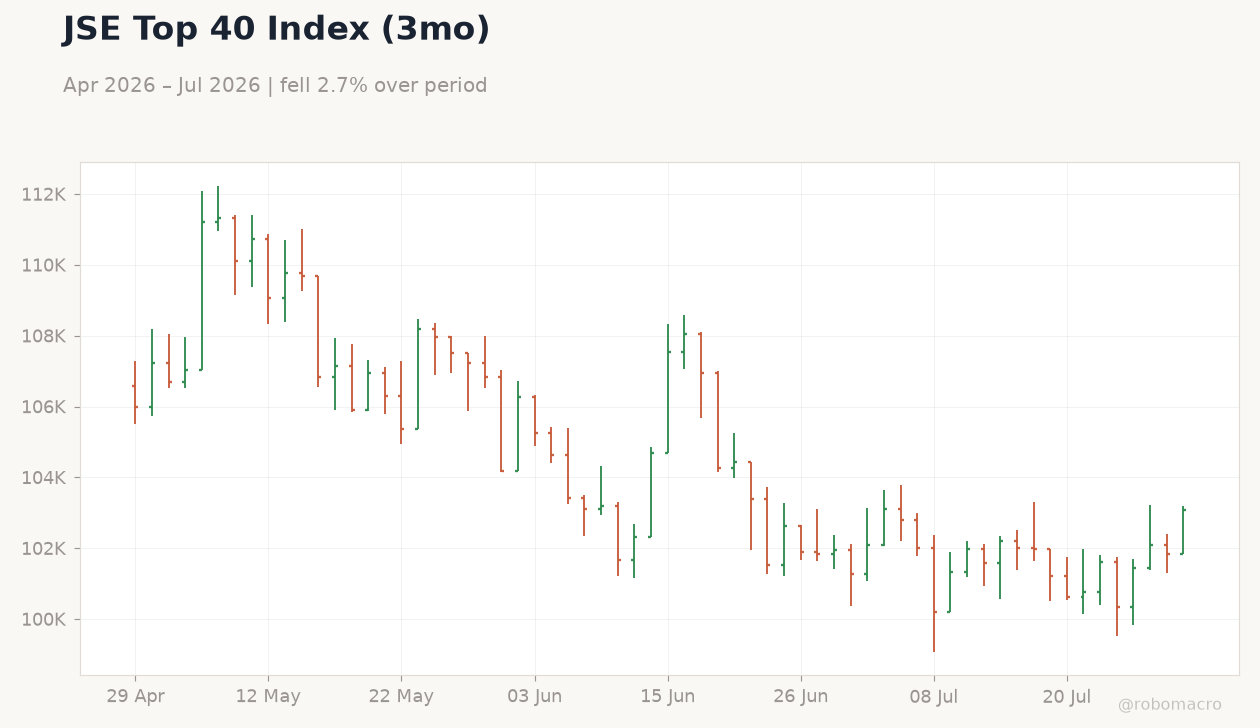
| JSE Top 40 | 103,090.93 | +1.24% |
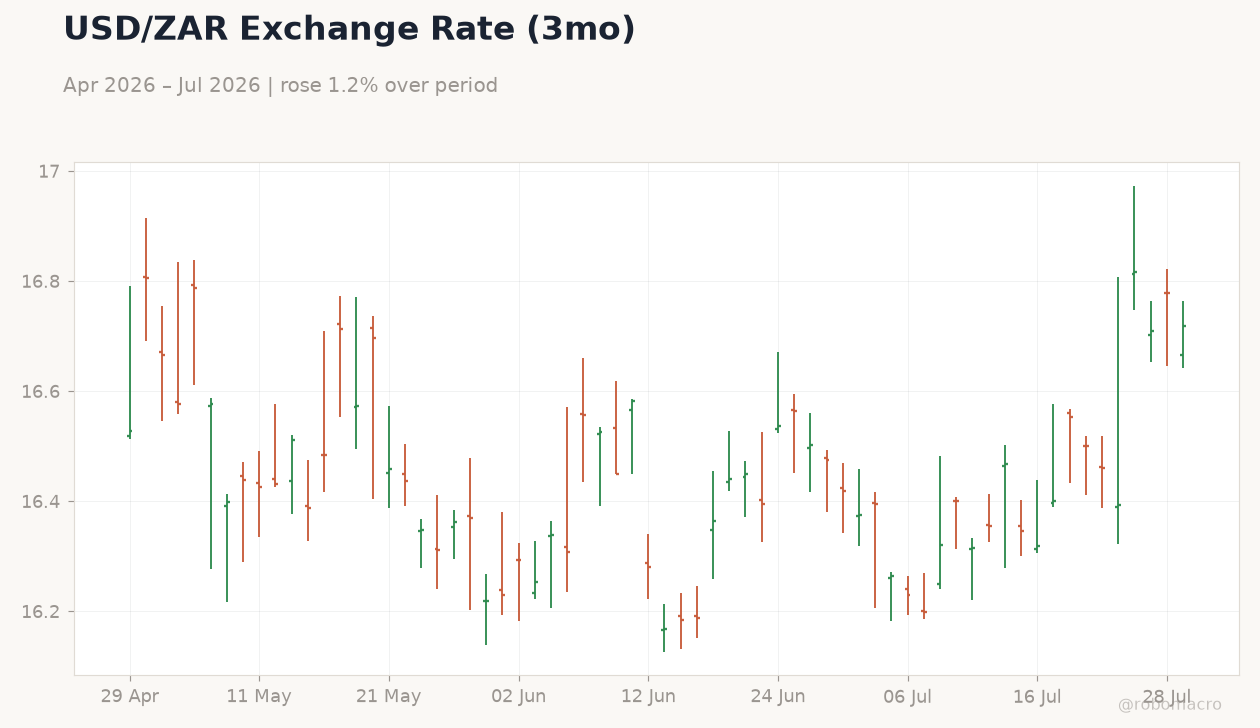
| USD/ZAR | 16.71 | -0.38% |
| EUR/ZAR | 19.06 | -0.11% |
| Platinum | 1,617.90 | +0.35% |
| Gold | 4,105.20 | +1.71% |
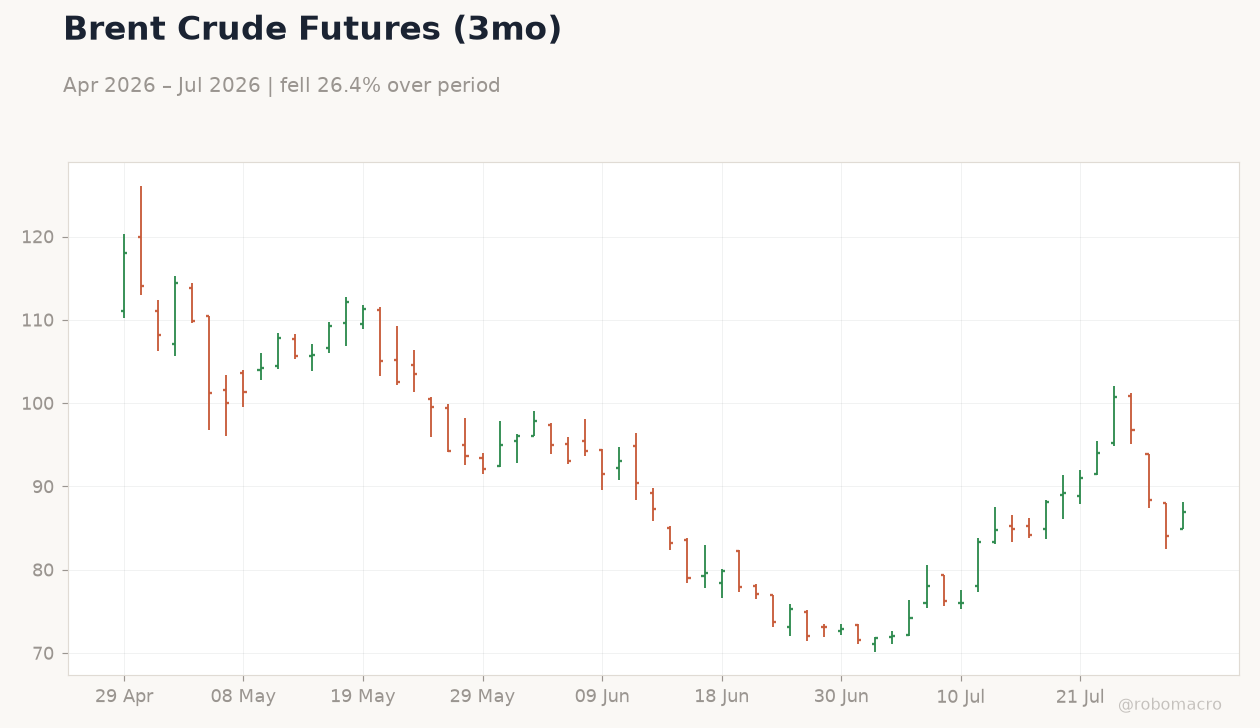
| Brent Crude | 86.88 | +3.32% |
| Naspers | 82,411.00 | +1.33% |
| Bitcoin | 64,379.59 | +0.80% |
| South Africa Short-term Rate | 7.00% | +3.55% |
| South Africa Long-term Rate | 8.70% | -3.28% |
Prior Economic Events
| Data | Prior | Cons | Actual |
|---|---|---|---|
| No events available | |||
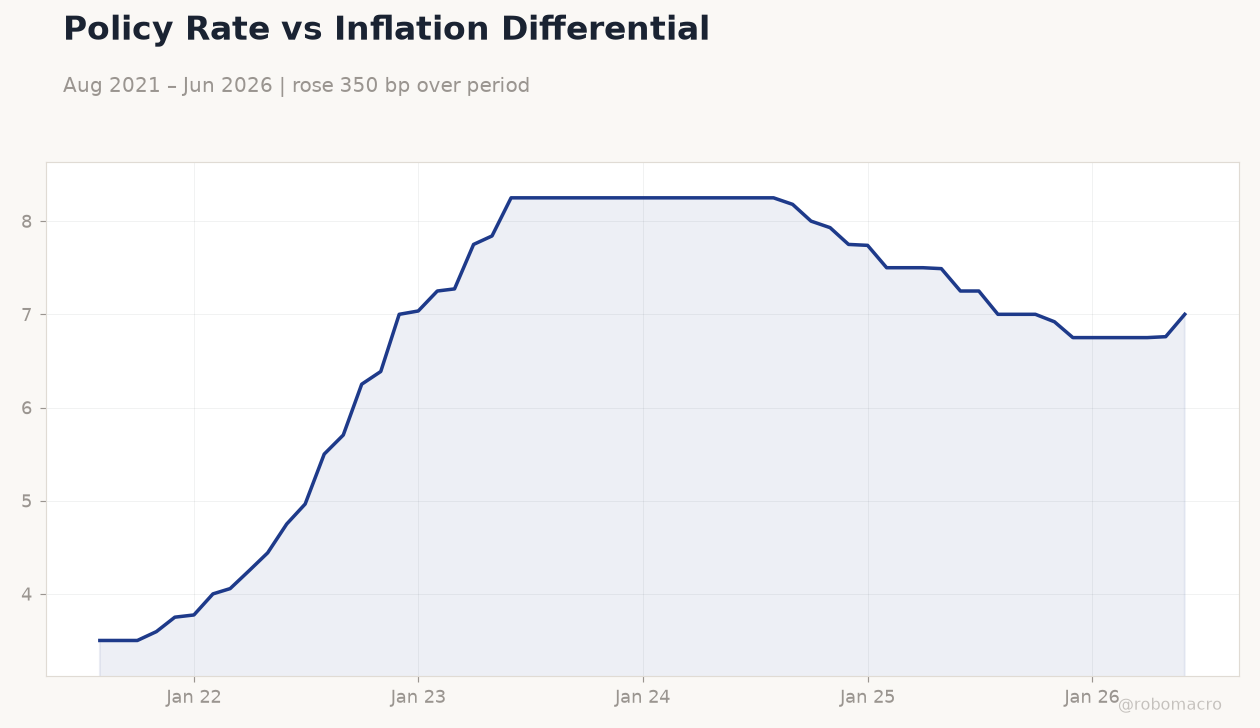 Policy Rate vs Inflation Differential | Type: macro_line | Repo Rate %: 7 (2026-06-01) | Range: 3.5–8.25 | Trend(6pt): 3.5,6.25,8.25,7.5,6.75,7
Today's Economic Events
| Data | Prior | Cons | Time |
|---|---|---|---|
| Friday (2026-07-31) | |||
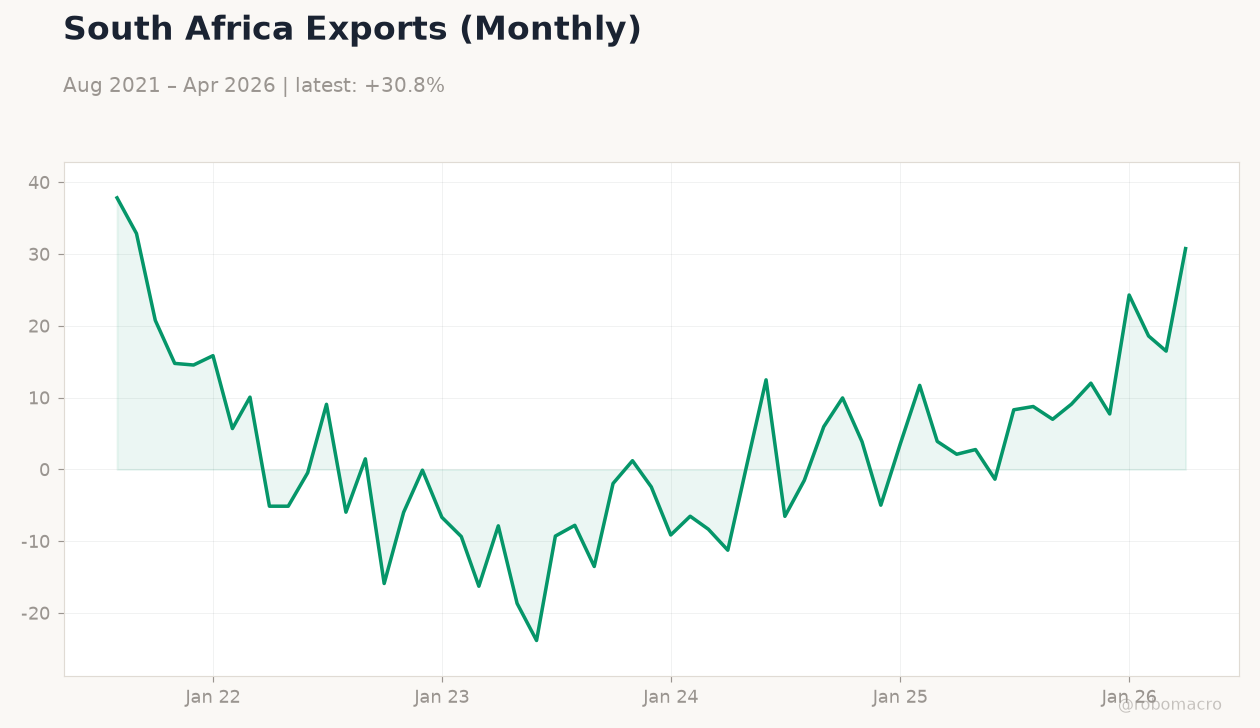
| Trade Balance | -1,790m | - | 04:00 |
- JSE Top 40 gains 1.24% to 103,090.93 while USD/ZAR drops 0.38% to 16.71
- Gold rises 1.71% to 4,105.20 and Brent crude jumps 3.32% to 86.88
- SARB holds repo rate at 7.00% with June CPI at 4.98% y/y near target
Yesterday's Recap
South African markets recorded solid gains with no major data releases on 28 July. The JSE Top 40 advanced 1.24% to close at 103,090.93, supported by resource stocks as gold climbed 1.71% to 4,105.20. The rand strengthened, with USD/ZAR falling 0.38% to 16.71 and EUR/ZAR easing 0.11% to 19.06.
Platinum added 0.35% to 1,617.90 while Brent crude surged 3.32% to 86.88 on global supply signals. South Africa short-term rates rose 3.55% to 7.00% and long-term rates fell 3.28% to 8.70%, steepening the curve. Naspers gained 1.33% to 82,411.00 and Bitcoin rose 0.80% to 64,379.59.
The moves reflected positioning ahead of the Friday Trade Balance print amid stable June CPI at 4.98% y/y.
The Day Ahead
Attention turns to the 31 July Trade Balance release at 04:00 ET, the sole scheduled South African data point this week. Markets will assess export performance against the prior -1.79 billion rand deficit, with consensus absent. Private-sector credit and BER Business Confidence figures remain in focus for any follow-through signals on domestic demand.
The SARB Quarterly Bulletin may provide additional color on credit and inflation trends. No MPC speakers are scheduled, leaving recent dovish guidance as the dominant policy anchor. Investors will monitor global dollar strength and gold prices for rand volatility into the weekend.
Other Economic Notes
Regional payment integration advanced as the SARB added the Angolan kwanza to the SADC-RTGS system, easing cross-border flows. Manufacturing competitiveness faces pressure from limited incentives for commercializing local R&D despite solid research output. Wildlife policy revisions aim to streamline responses to problem animals but lack legal enforcement mechanisms.
Fiscal data showed modest deficit narrowing from stronger June tax collections. Energy constraints persist with Eskom load-shedding risks elevated, though markets price limited immediate growth impact.
Global Macro News
A stronger dollar and softer gold prices capped rand gains despite domestic equity strength. <i>↓ p.2</i>