South Africa Macro Daily(Beta Mode)
Gold Rally Bolsters Rand Before CPI Print
Market Snapshot
| Asset | Level | Change |
|---|---|---|
| JSE Top 40 | 106,231.70 | -0.02% |
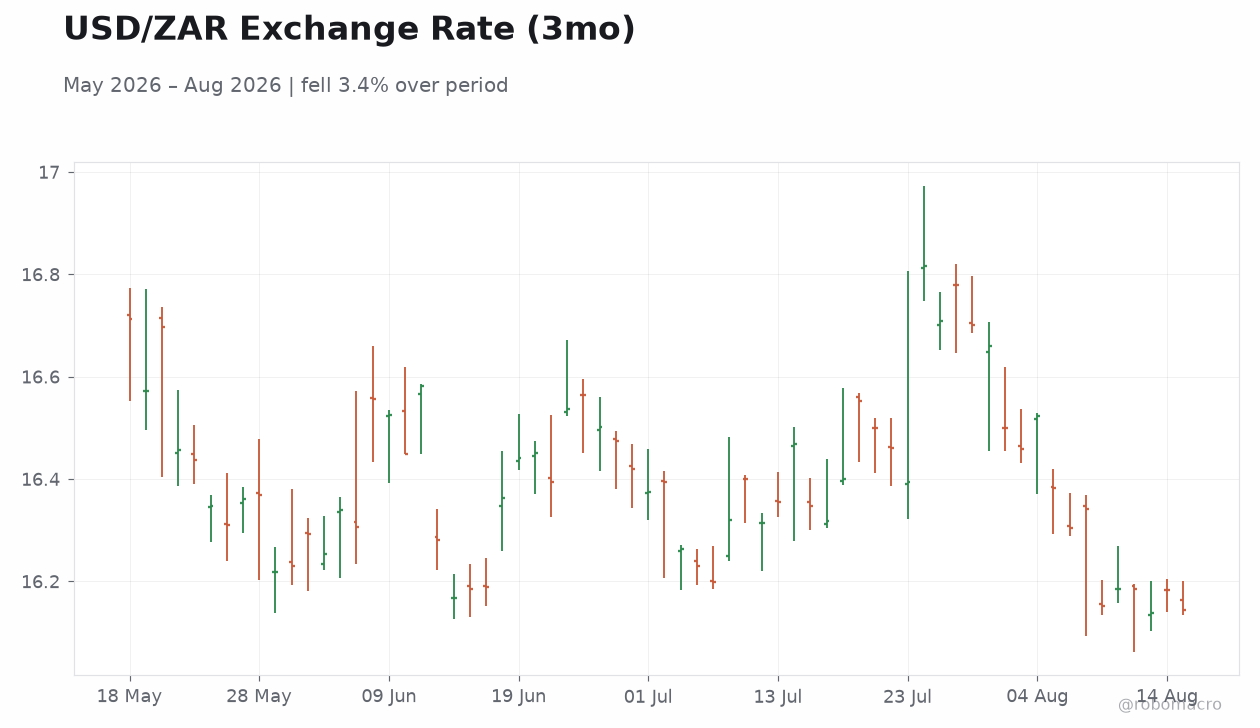
| USD/ZAR | 16.14 | -0.24% |
| EUR/ZAR | 18.71 | +0.20% |
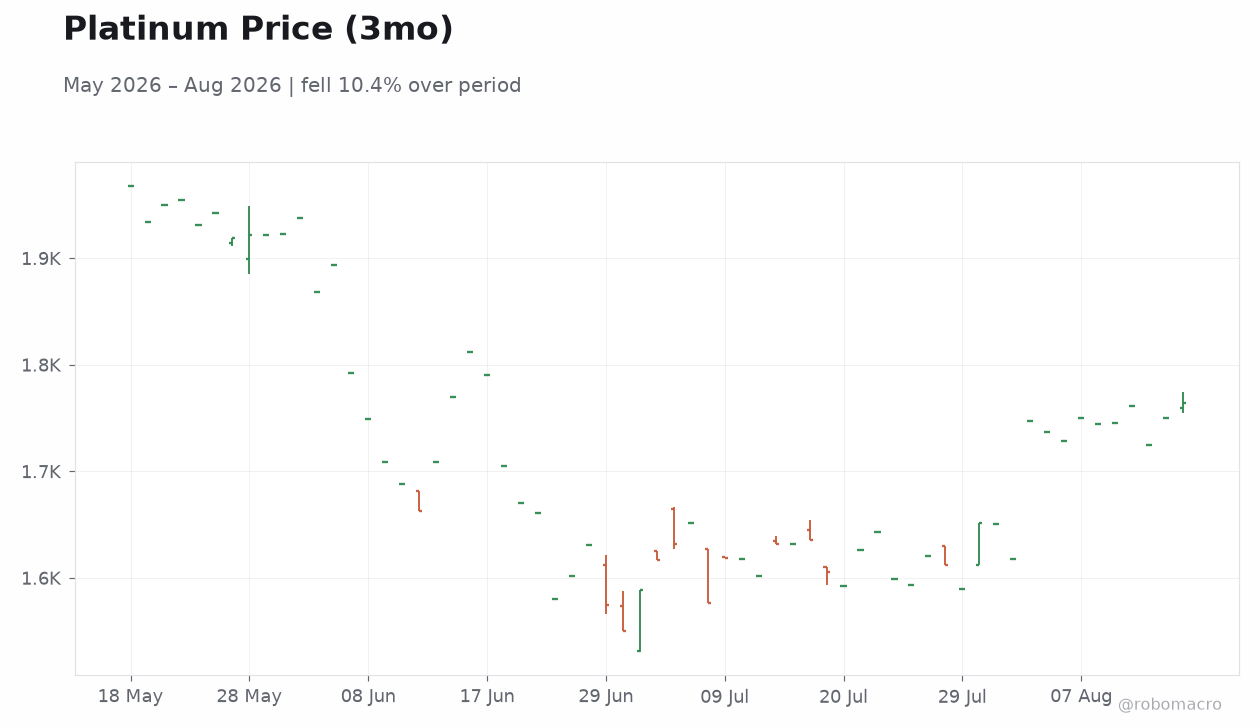
| Platinum | 1,762.70 | +0.73% |
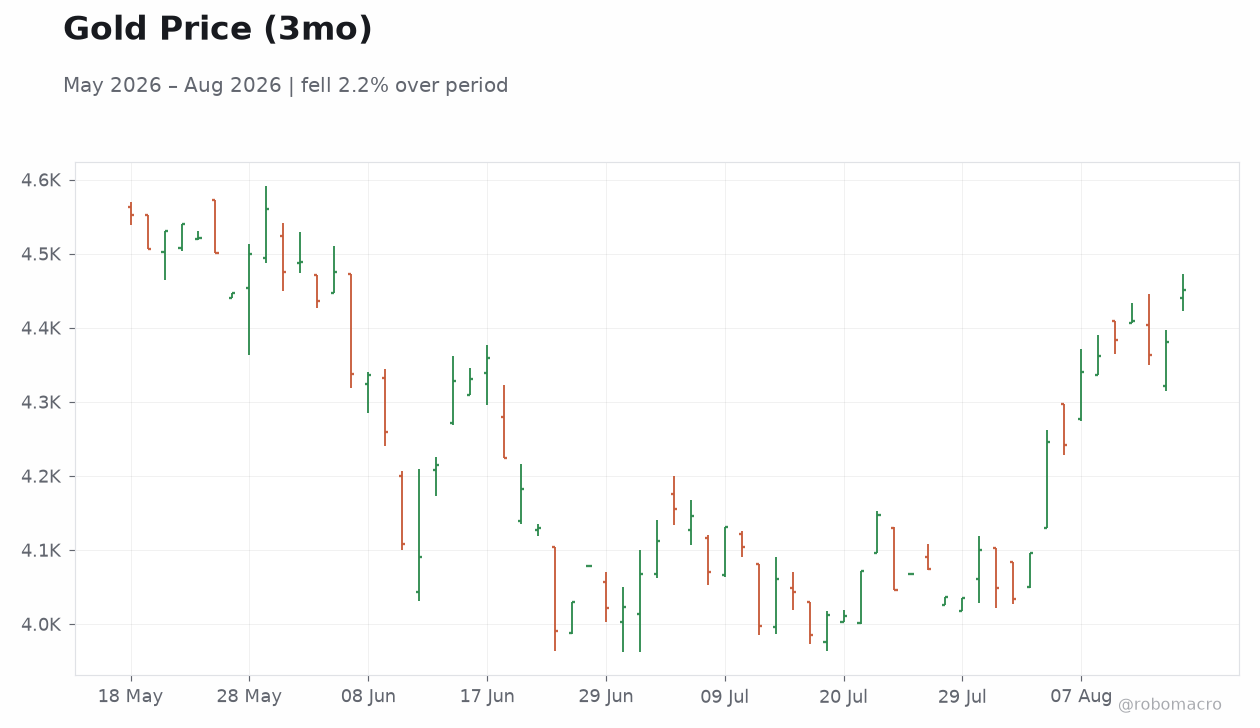
| Gold | 4,453.00 | +1.66% |
| Brent Crude | 88.55 | +0.03% |
| Naspers | 78,670.00 | -0.79% |
| Bitcoin | 63,456.27 | +0.69% |
| South Africa Short-term Rate | 7.00% | +3.55% |
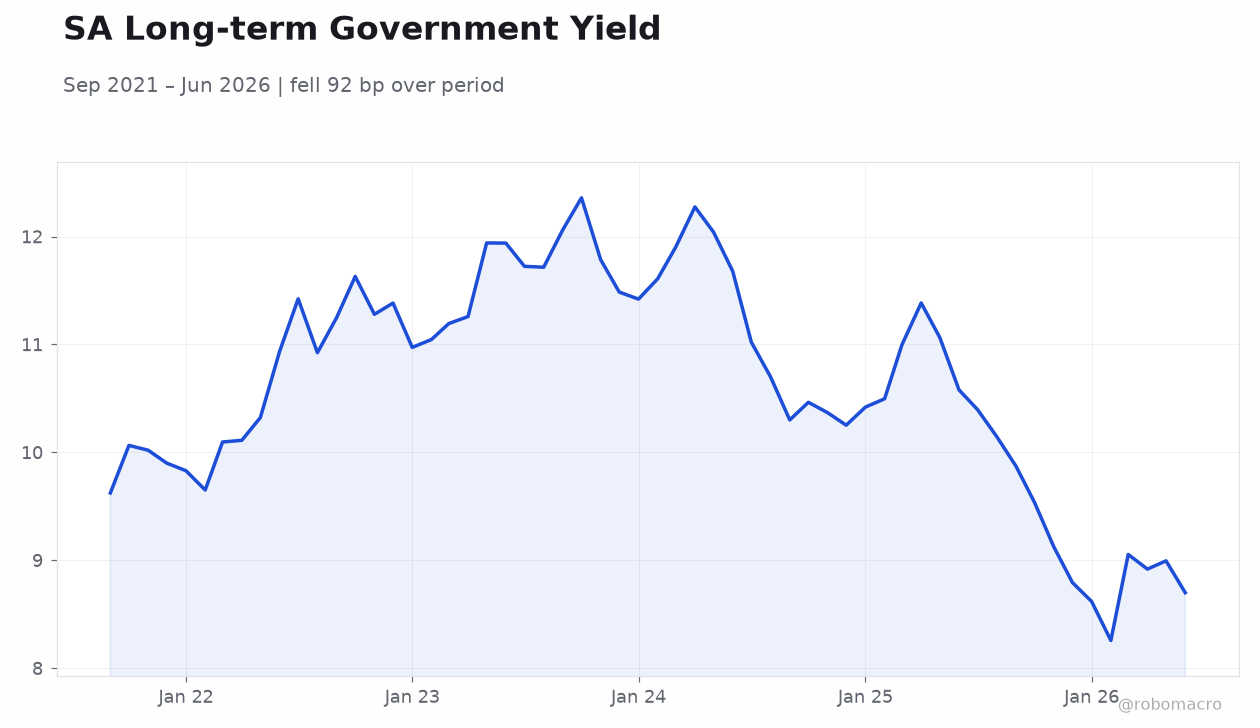
| South Africa Long-term Rate | 8.70% | -3.28% |
Prior Economic Events
| Data | Prior | Cons | Actual |
|---|---|---|---|
| No events available | |||
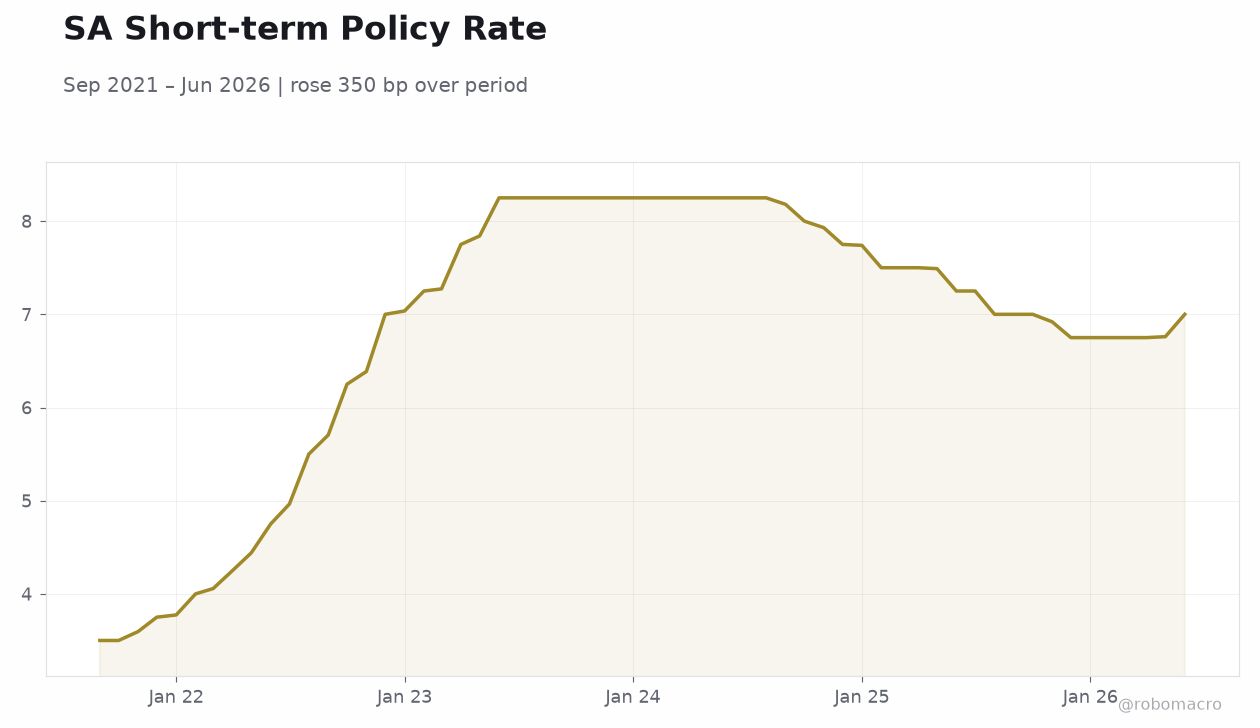 SA Short-term Policy Rate | Type: macro_line | Policy Rate %: 7 (2026-06-01) | Range: 3.5–8.25 | Trend(6pt): 3.5,6.386,8.25,7.5,6.76,7
Today's Economic Events
| Data | Prior | Cons | Time |
|---|---|---|---|
| Wednesday (2026-08-19) | |||
| Inflation Rate Month-over-Month | 0.70 | - | 00:00 |
| Inflation Rate Year-over-Year | 5 | - | 00:00 |
- Likely AGOA renewal boosts South Africa agriculture exports
- Net gold and forex reserves rise in July
- USD/ZAR eyes sub-16 level on bond buying and dollar weakness
Yesterday's Recap
The JSE Top 40 closed virtually flat at 106,231.70, down just 0.02 percent as resources offset weakness in Naspers, which fell 0.79 percent to 78,670. USD/ZAR declined 0.24 percent to 16.14 while EUR/ZAR rose 0.20 percent to 18.71, reflecting selective rand buying amid softer US dollar flows. Gold advanced 1.66 percent to 4,453.00 and platinum gained 0.73 percent to 1,762.70, lifting mining-related equities and supporting the currency.
South Africa’s short-term rate stood at 7.00 percent after a 3.55 percent daily move, while the long-term rate eased 3.28 percent to 8.70 percent. Net gold and forex reserves edged higher in July, adding a modest buffer to external accounts. No domestic data prints occurred, leaving market moves driven by commodity prices and cross-border flows.
Bitcoin rose 0.69 percent to 63,456.27, providing limited spillover to local risk sentiment.
The Day Ahead
South Africa will release inflation data on 19 August, covering both month-over-month and year-over-year readings. The prints arrive after the prior year-over-year rate of 5 percent and will shape expectations for the remainder of the third quarter. Traders will scrutinize the figures for any signs of persistent price pressures that could delay monetary easing.
No other high-impact local releases or SARB speeches are scheduled. Attention will also turn to any updates on the London Stock Exchange transition for the new benchmark rate. Market participants expect the data to influence OIS pricing around the timing of the next repo-rate adjustment.
Other Economic Notes
A likely extension of the Africa Growth and Opportunity Act with South Africa’s continued inclusion offers a clear lift to agricultural exporters by preserving duty-free access to the US market. Regulators plan to finalize central-clearing rules for the 9.3 trillion dollar OTC derivatives market by 2028, aligning local standards with global norms and reducing counterparty risk. South Africa is coordinating with the London Stock Exchange to migrate legacy contracts away from the soon-to-be-discontinued rand reference rate, supporting a smoother benchmark transition.
These steps occur against a backdrop of stable commodity revenues and gradual fiscal consolidation, keeping external vulnerability metrics contained.