South Africa Macro Daily(Beta Mode)
Rand Gains as JSE Slips, Gold Climbs
Market Snapshot
| Asset | Level | Change |
|---|---|---|
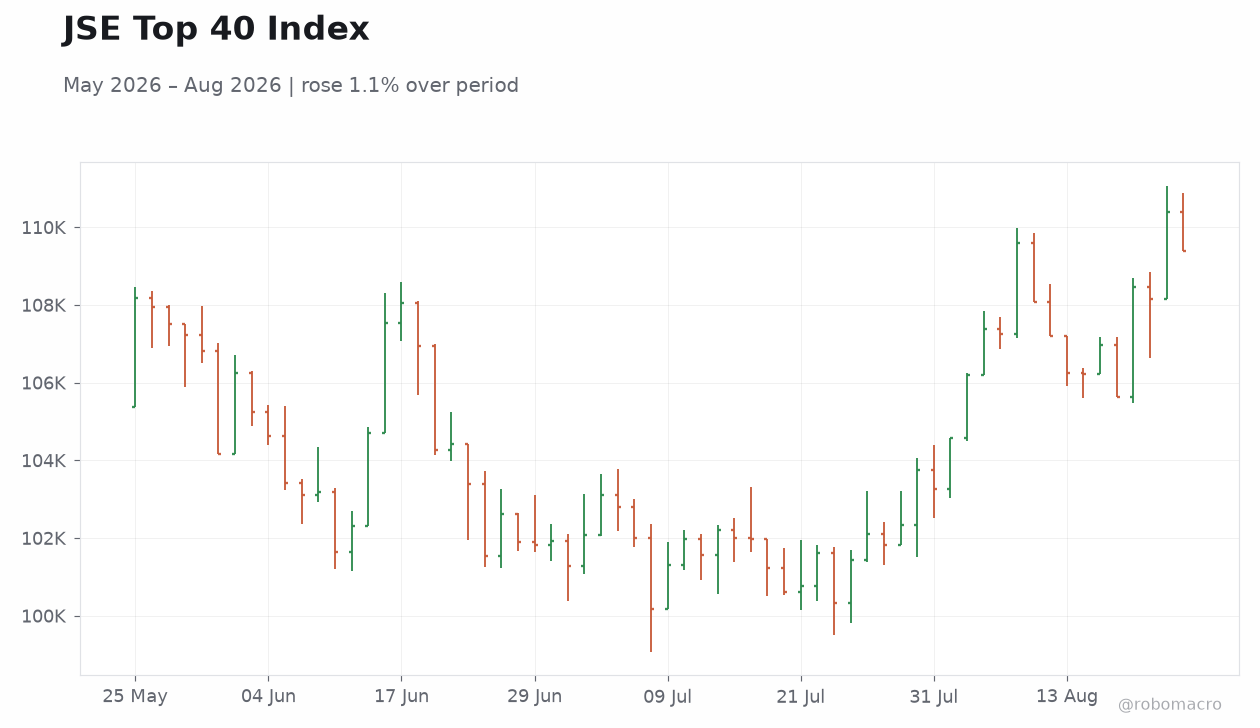
| JSE Top 40 | 109,389.60 | -0.90% |
| USD/ZAR | 15.99 | -0.67% |
| EUR/ZAR | 18.68 | -0.76% |
| Platinum | 1,859.70 | -1.09% |
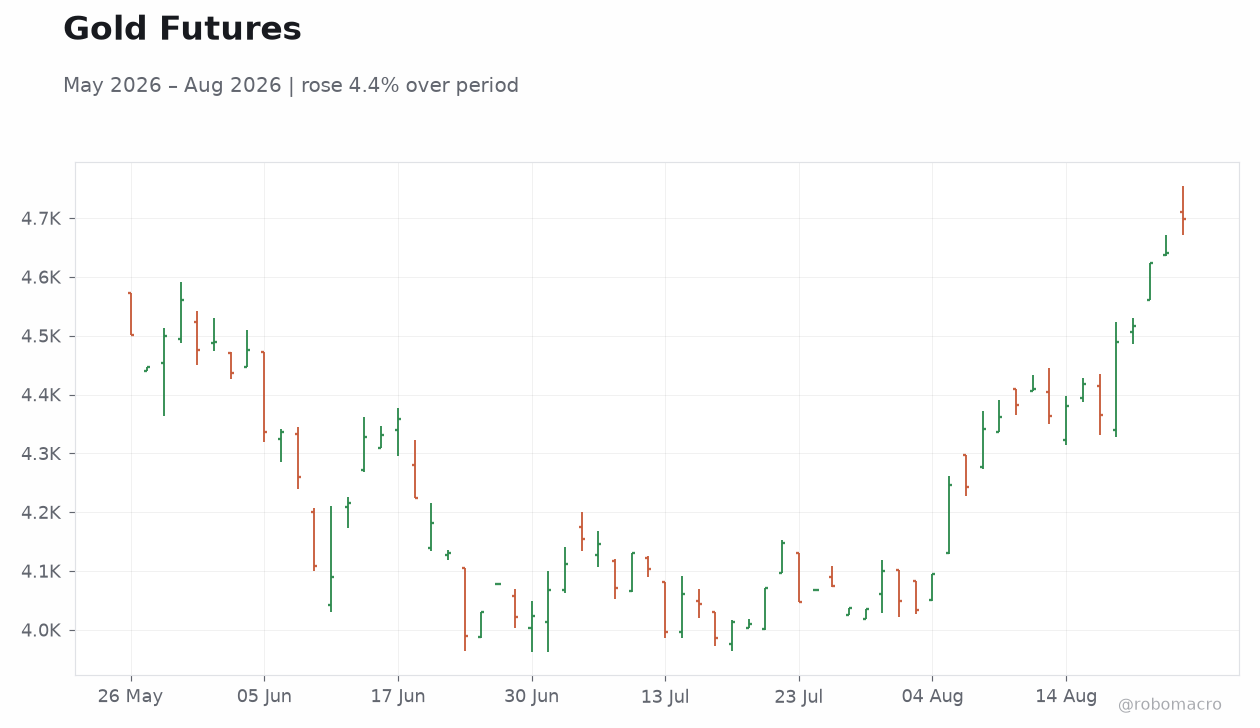
| Gold | 4,701.00 | +1.30% |
| Brent Crude | 91.40 | -0.84% |
| Naspers | 78,476.00 | +0.41% |
| Bitcoin | 80,699.34 | +3.79% |
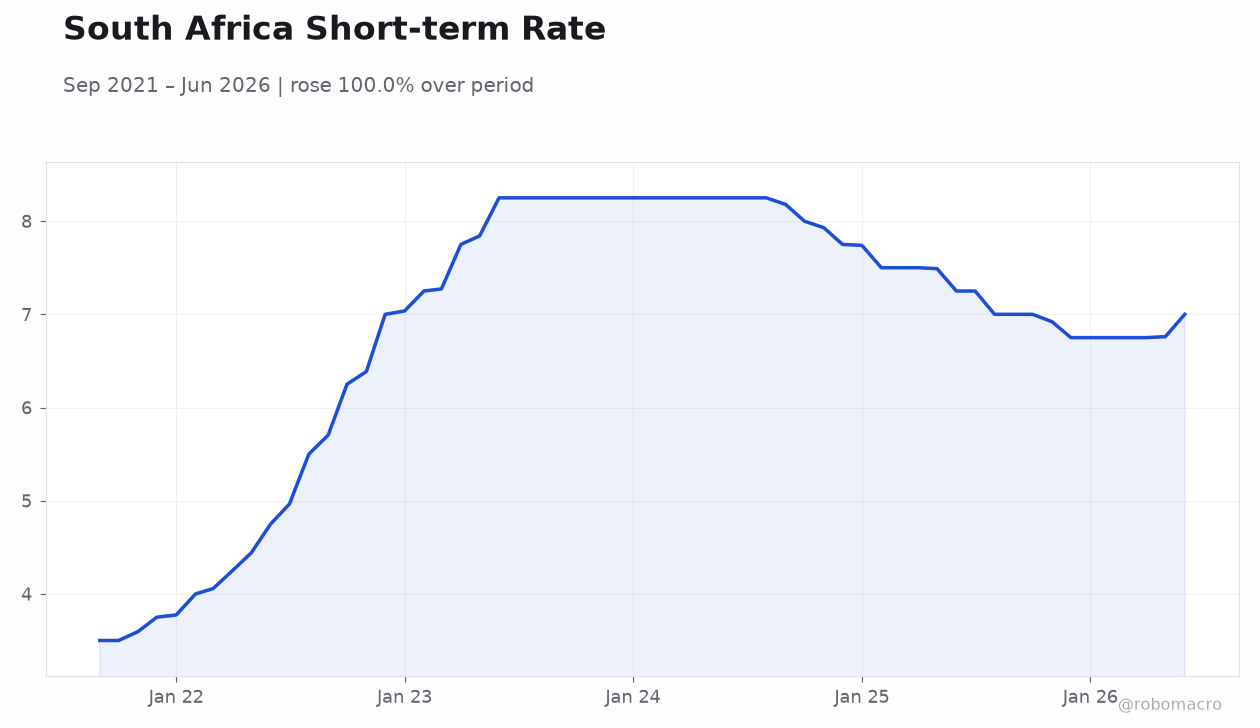
| South Africa Short-term Rate | 7.00% | +3.55% |
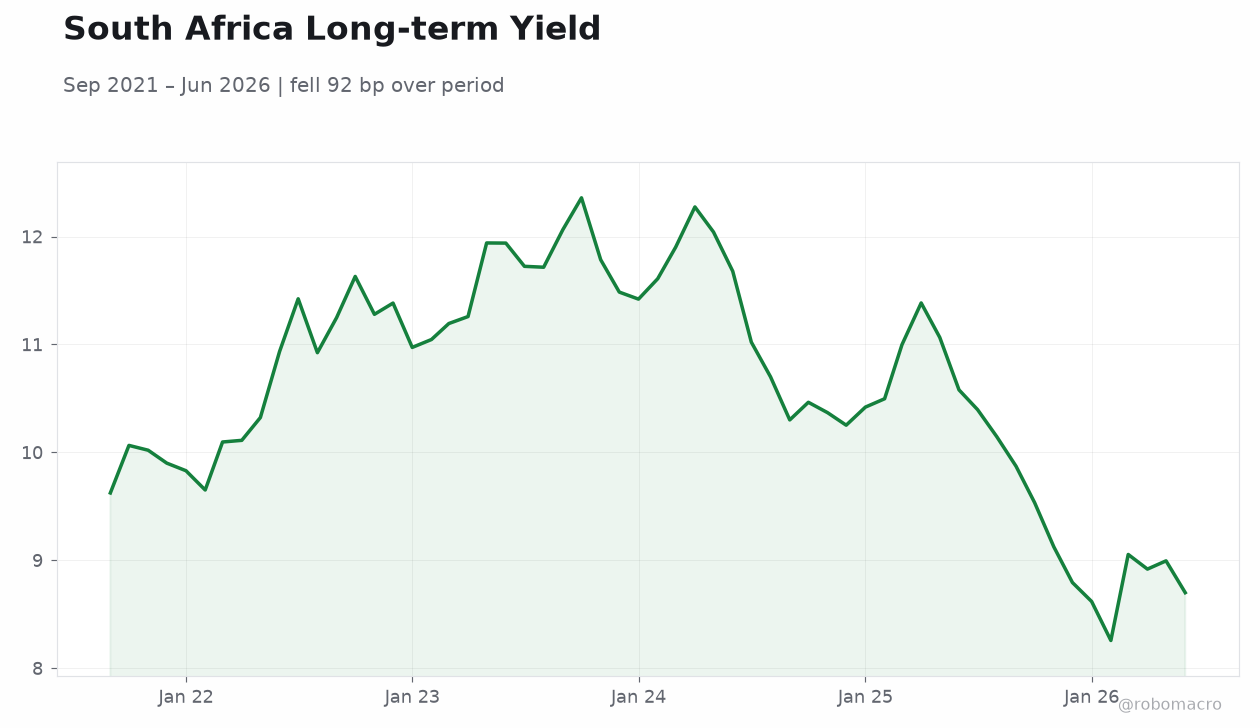
| South Africa Long-term Rate | 8.70% | -3.28% |
Prior Economic Events
| Data | Prior | Cons | Actual |
|---|---|---|---|
| No events available | |||
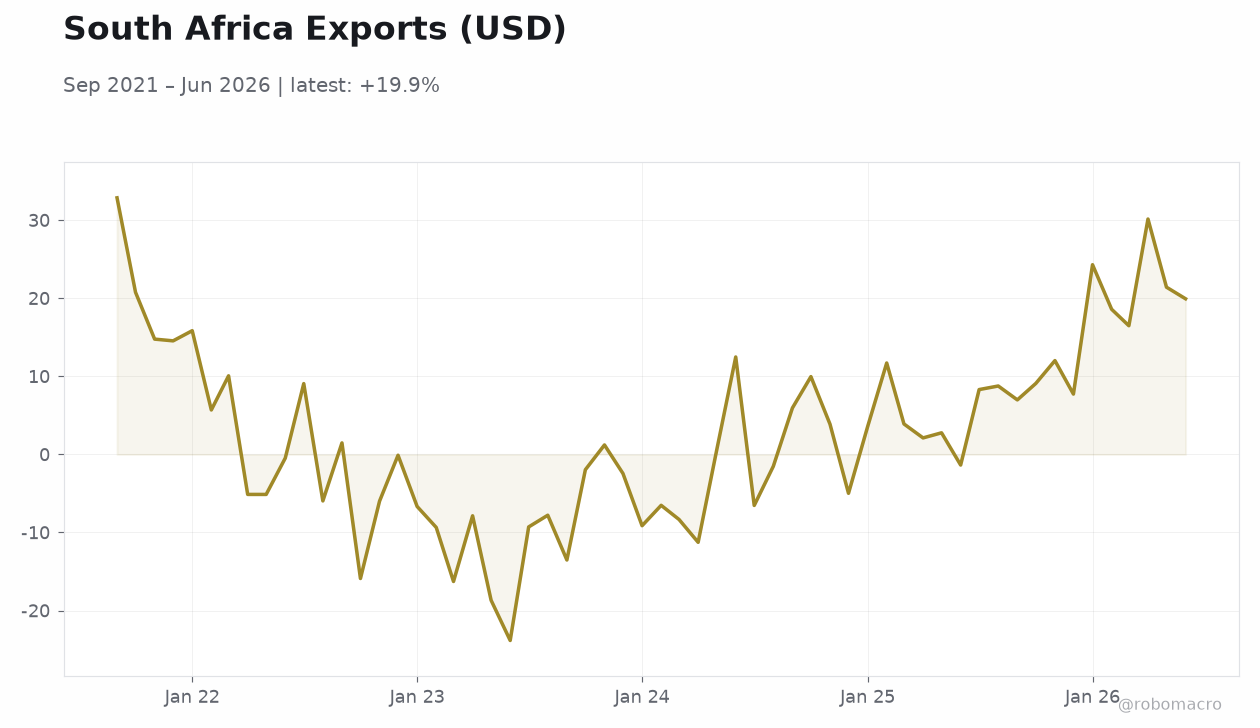 South Africa Exports (USD) | Type: macro_line | USD mn: 19.93 (2026-06-01) | Range: -23.83–32.86 | Trend(6pt): 32.86,-5.983,-9.132,3.902,21.42,19.93
Today's Economic Events
| Data | Prior | Cons | Time |
|---|---|---|---|
| Friday (2026-08-28) | |||
| Trade Balance | 17,750m | - | 08:00 |
- JSE Top 40 drops 0.9% while rand gains 0.67% versus USD
- Gold advances 1.3% offsetting platinum's 1.1% decline
- Short-term rates hold at 7.00% with long-term yields easing
Yesterday's Recap
South African markets closed mixed on August 24 with equities retreating as the JSE Top 40 fell 0.90% to 109,389.60. The rand posted solid gains, with USD/ZAR easing 0.67% to 15.99 and EUR/ZAR declining 0.76% to 18.68. Commodity moves diverged sharply: gold rose 1.30% to 4,701.00 while platinum slipped 1.09% to 1,859.70 and Brent crude fell 0.84% to 91.40.
Naspers advanced 0.41% to 78,476.00, providing some support to the equity index. South Africa’s short-term rate remained at 7.00%, while the long-term rate declined 3.28% to 8.70%. Bitcoin’s 3.79% surge to 80,699.34 offered little direct spillover to local assets.
No major data releases occurred, leaving price action driven by external flows and commodity volatility.
The Day Ahead
Attention turns to Friday’s Trade Balance release at 08:00, the sole scheduled event for the week. Markets will assess whether the prior 17.75 billion rand surplus narrows amid softer commodity prices. Equity traders will monitor JSE mining stocks for follow-through after gold’s advance and platinum’s retreat.
Rand volatility may increase ahead of month-end positioning and any shifts in global risk sentiment. Bond markets are expected to remain focused on the 8.70% long-term yield level after yesterday’s decline. No SARB speeches or policy announcements are listed, keeping the focus on external drivers and the trade print.
Other Economic Notes
South Africa’s inflation at 4.26% year-over-year remains inside the SARB’s 3-6% target band, supporting the current 7.00% repo rate. Persistent energy constraints continue to weigh on manufacturing and mining output, limiting upside to growth forecasts. The rand’s recent strength helps contain imported inflation but risks eroding competitiveness for exporters.
Mining sector performance remains split, with gold benefiting from safe-haven demand while platinum faces weaker industrial offtake. Fiscal pressures and load-shedding risks keep medium-term growth expectations subdued despite stable monetary conditions.
Global Macro News
Oil prices declined on uncertainty over Federal Reserve rate paths and potential Canadian tariff retaliation, pressuring Brent to 91.40. <i>↓ p.2</i>