South Africa Macro Daily(Beta Mode)
JSE Climbs as Rand Weakens Ahead of Trade Data
Market Snapshot
| Asset | Level | Change |
|---|---|---|
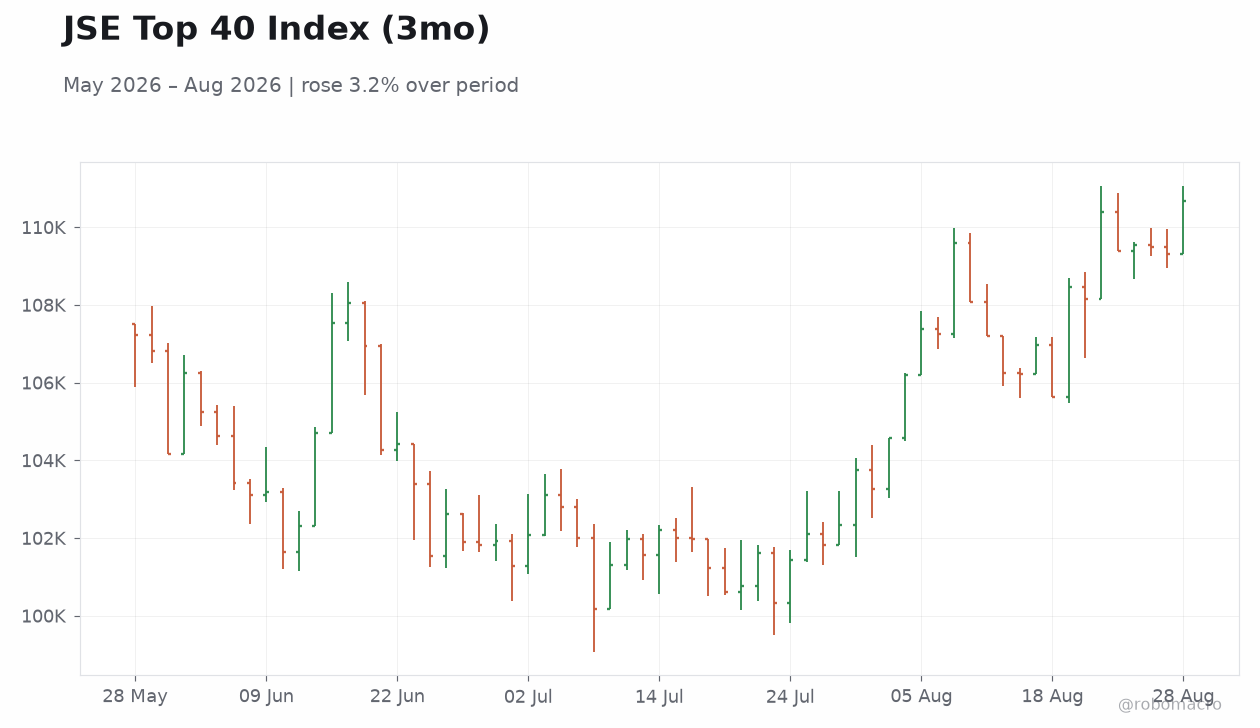
| JSE Top 40 | 110,675.50 | +1.24% |
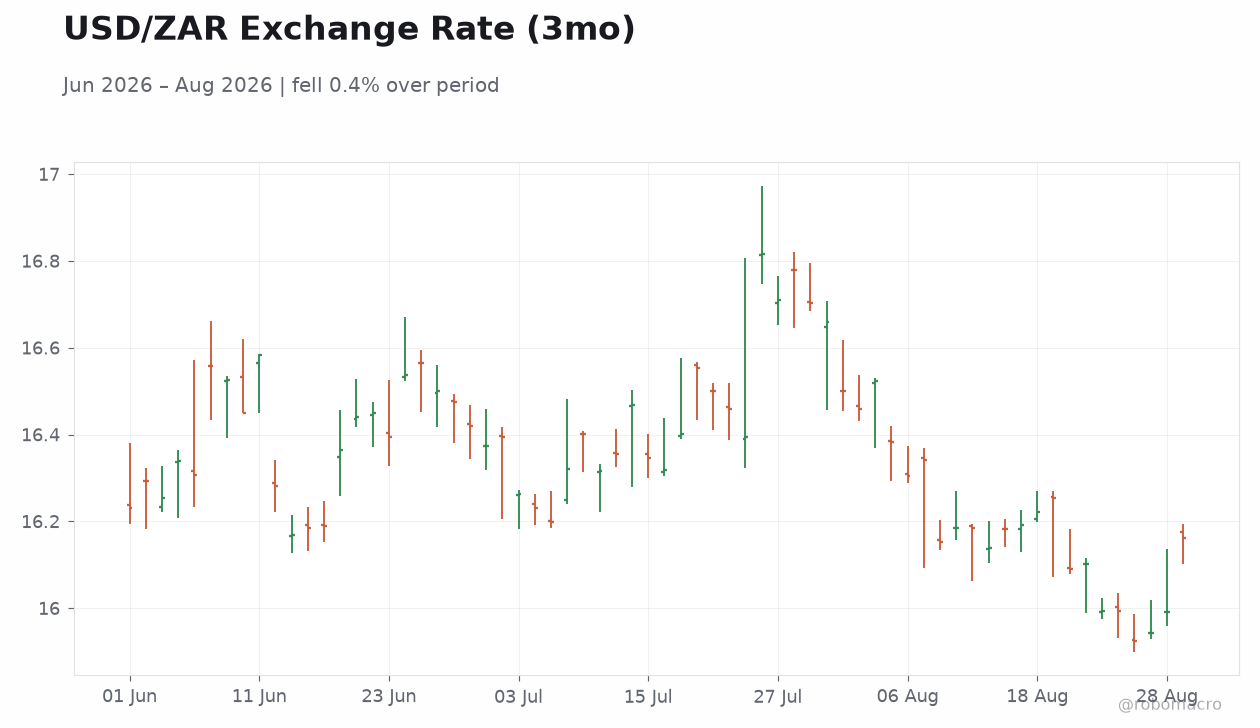
| USD/ZAR | 15.99 | +0.30% |
| EUR/ZAR | 18.64 | +0.29% |
| Platinum | 1,810.30 | -2.02% |
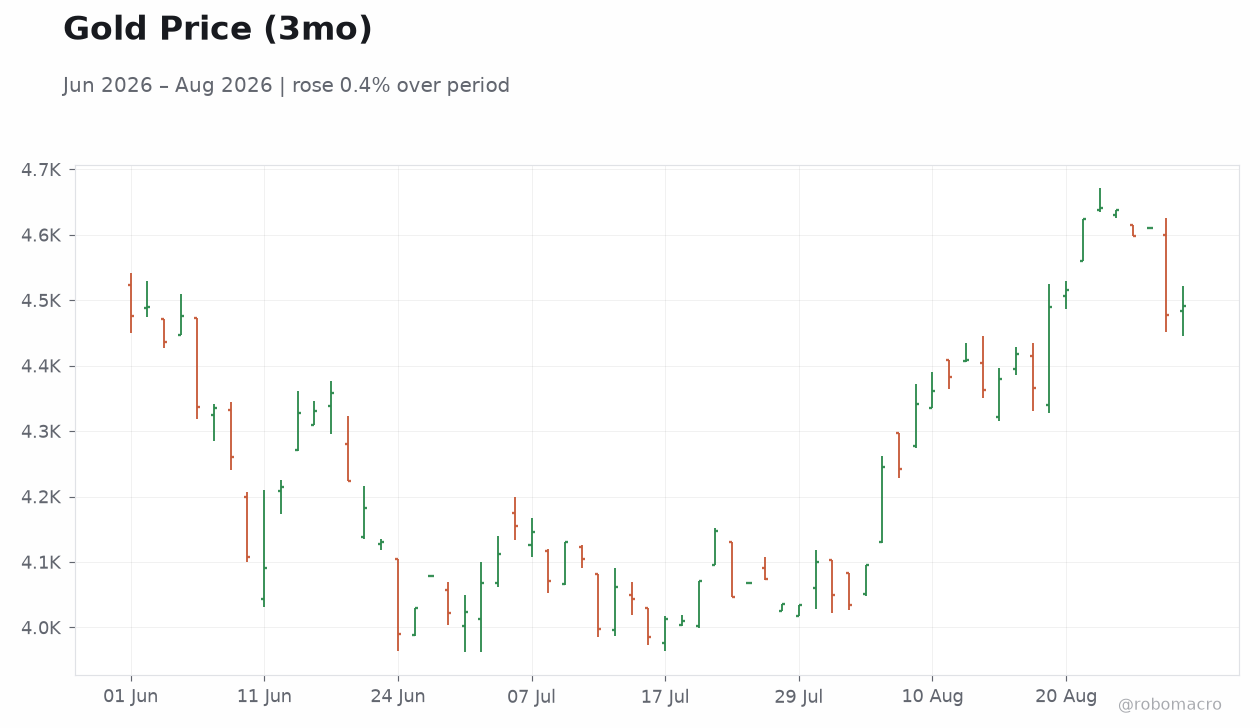
| Gold | 4,486.70 | +0.19% |
| Brent Crude | 90.69 | +1.55% |
| Naspers | 78,939.00 | +1.82% |
| Bitcoin | 77,994.01 | +0.21% |
| South Africa Short-term Rate | 8.48% | +4 bp |
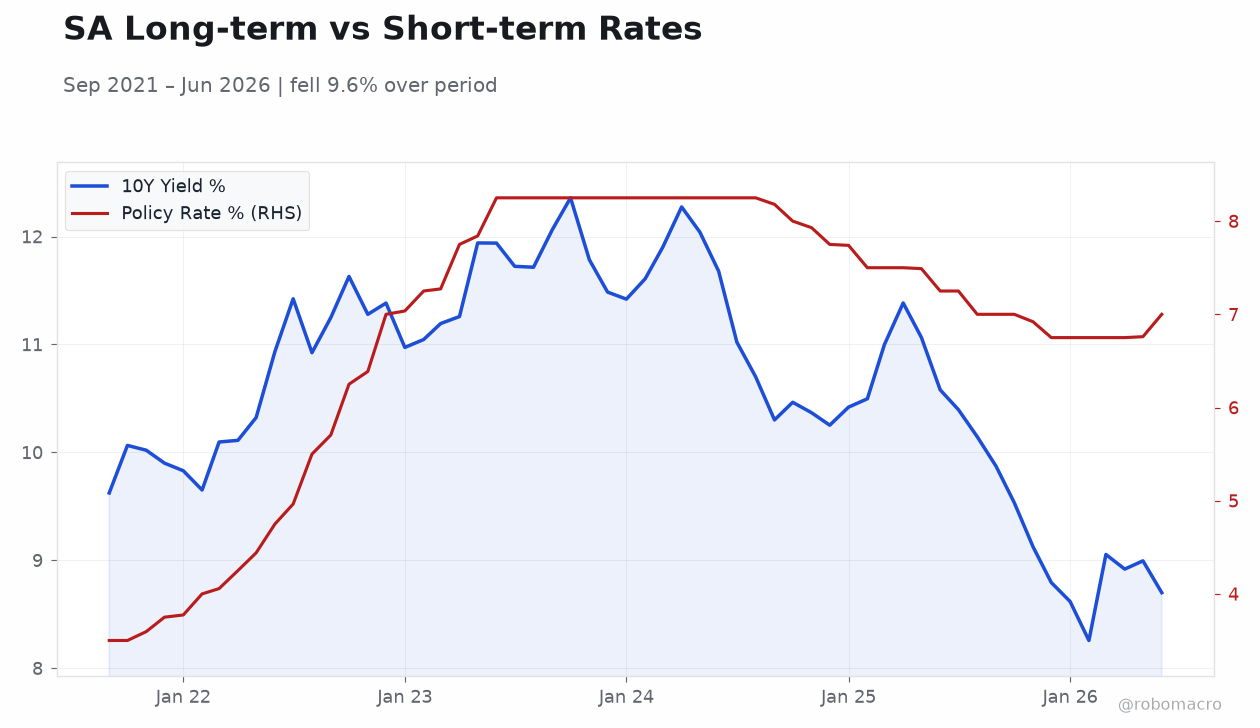
| South Africa Long-term Rate | 8.77% | +1 bp |
Prior Economic Events
| Data | Prior | Cons | Actual |
|---|---|---|---|
| No events available | |||
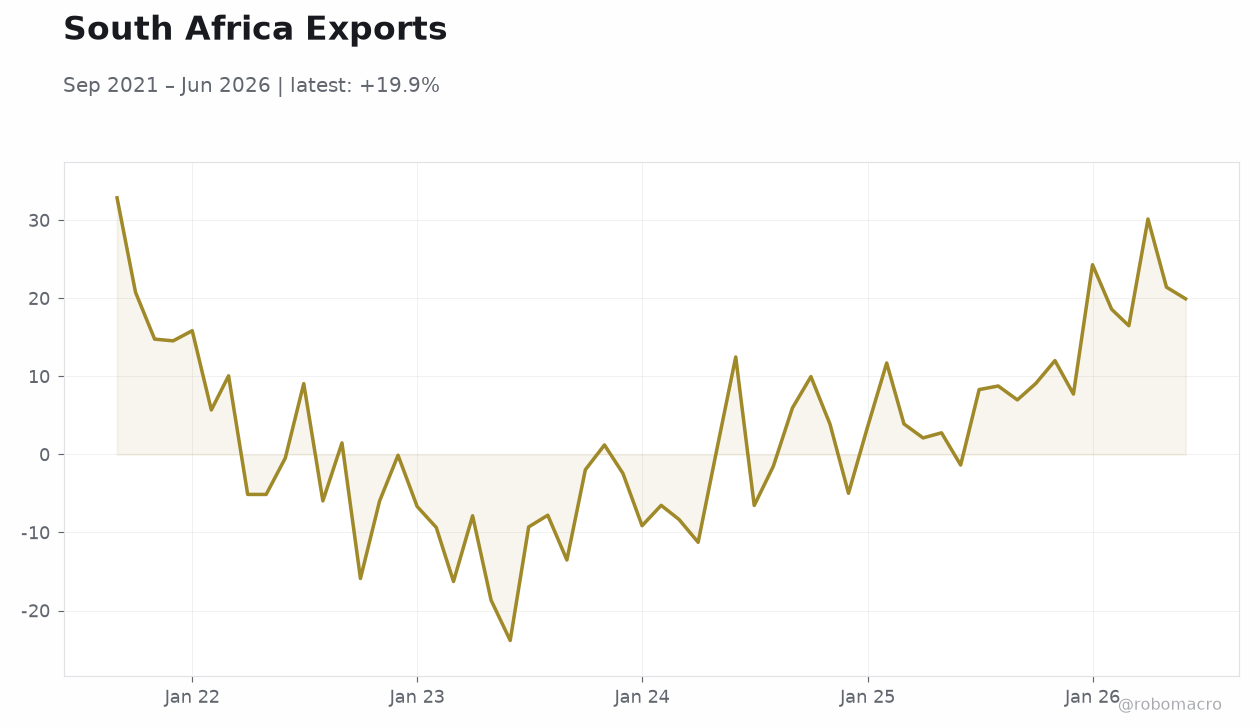 South Africa Exports | Type: macro_line | Exports (USD mn): 19.93 (2026-06-01) | Range: -23.83–32.86 | Trend(6pt): 32.86,-5.983,-9.132,3.902,21.42,19.93
Today's Economic Events
| Data | Prior | Cons | Time |
|---|---|---|---|
| Trade Balance | 17,750m | - | 04:00 |
- JSE Top 40 rises 1.24% to 110,675.50 led by Naspers
- USD/ZAR edges up 0.30% to 15.99 on shifting dollar views
- Trade Balance release due today following 17.75 billion rand prior
Yesterday's Recap
South African equity markets posted solid gains with the JSE Top 40 advancing 1.24 percent to close at 110,675.50, supported by a 1.82 percent rise in Naspers shares. The rand came under modest pressure as USD/ZAR climbed 0.30 percent to 15.99 while EUR/ZAR increased 0.29 percent to 18.64. Commodity moves diverged sharply with platinum falling 2.02 percent to 1,810.30 despite a 0.19 percent gain in gold to 4,486.70 and a 1.55 percent advance in Brent crude to 90.69.
Fixed-income markets reflected shifting rate expectations as the South Africa short-term rate rose 3.55 percent to 7.00 percent while the long-term rate declined 3.28 percent to 8.70 percent. No major economic data releases occurred on 30 August, leaving price action driven by external flows and global sentiment. Bitcoin added 0.21 percent to 77,994.01 in a quiet session for risk assets.
Overall, the moves pointed to selective equity strength amid rand softness and mixed commodity signals.
The Day Ahead
Attention centers on the 04:00 ET Trade Balance print, the sole scheduled release for 31 August, with the prior reading at 17.75 billion rand. Markets will assess whether the figure supports the current-account surplus trajectory or signals import pressure that could weigh on the rand. Analysts expect the data to influence USD/ZAR positioning ahead of any global risk shifts.
The release timing aligns with early Asian hours, potentially amplifying volatility in currency pairs. Broader market focus will remain on commodity price follow-through, particularly platinum’s recent weakness, which could affect mining equities. No SARB communications or policy events are listed, keeping the spotlight on external trade metrics.
Other Economic Notes
Mining sector dynamics remain central given platinum’s 2 percent drop against gold’s modest gain, highlighting divergent precious-metals performance that directly affects export revenues and JSE constituents. Energy supply constraints continue to shape industrial output expectations even as no fresh load-shedding updates emerged in the data window. The 7.00 percent short-term rate level anchors borrowing costs for corporates and households, influencing credit growth and investment decisions across the economy.
Rand sensitivity to global dollar sentiment adds another layer of volatility to inflation pass-through and imported goods pricing. <i>↓ p.2</i>