South Africa Macro Daily(Beta Mode)
Trade Surplus Widens as Factory Sentiment Sours
Market Snapshot
| Asset | Level | Change |
|---|---|---|
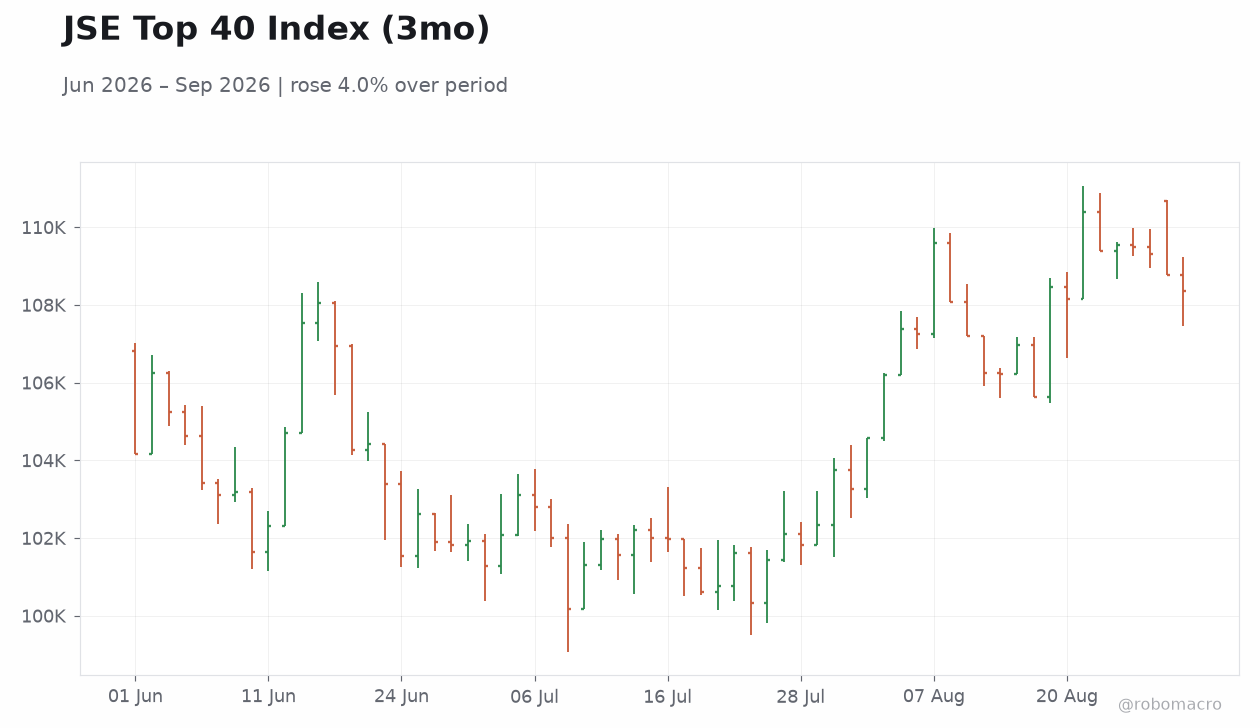
| JSE Top 40 | 108,358.40 | -0.37% |
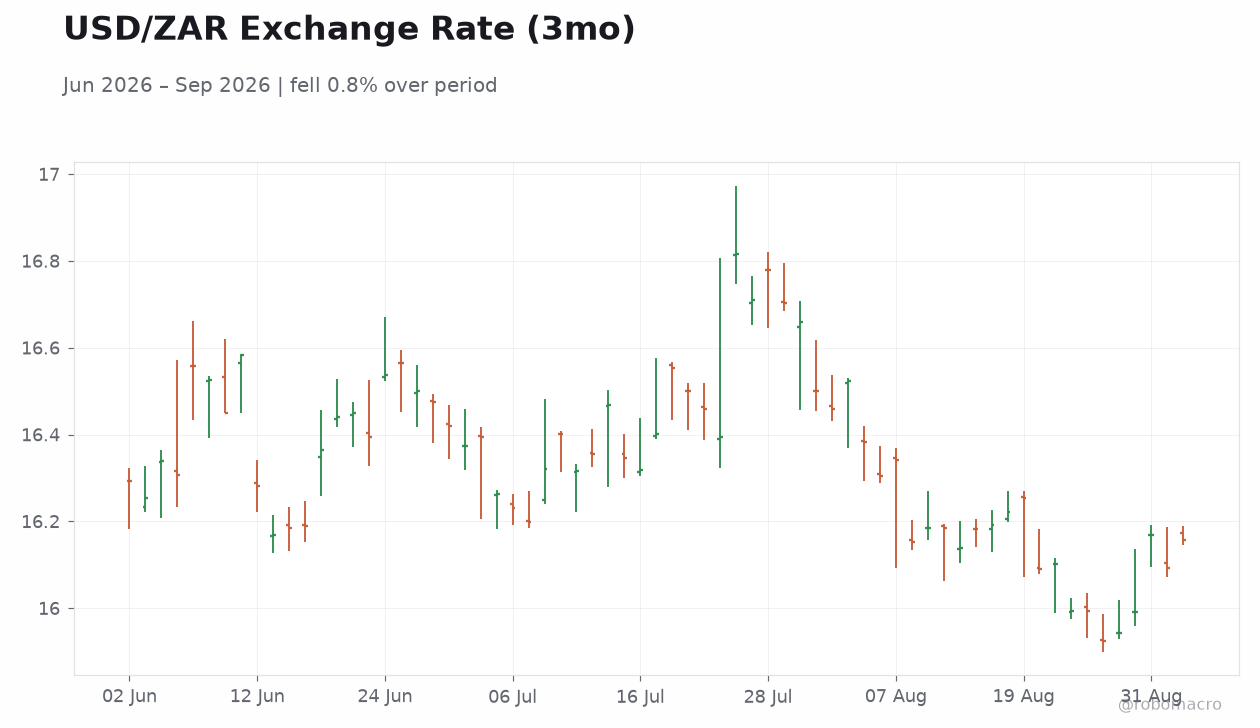
| USD/ZAR | 16.16 | +0.40% |
| EUR/ZAR | 18.71 | +0.02% |
| Platinum | 1,748.50 | -0.74% |
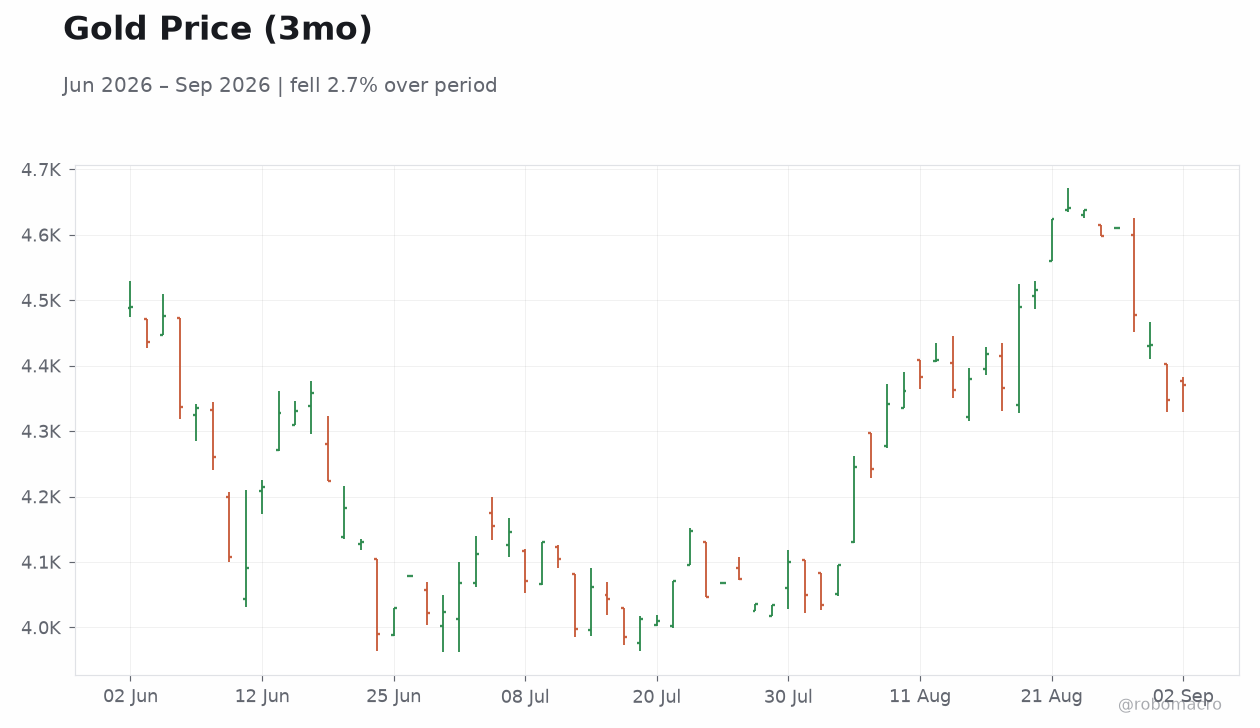
| Gold | 4,369.80 | +0.50% |
| Brent Crude | 95.39 | +0.78% |
| Naspers | 77,231.00 | -2.01% |
| Bitcoin | 77,650.79 | -1.14% |
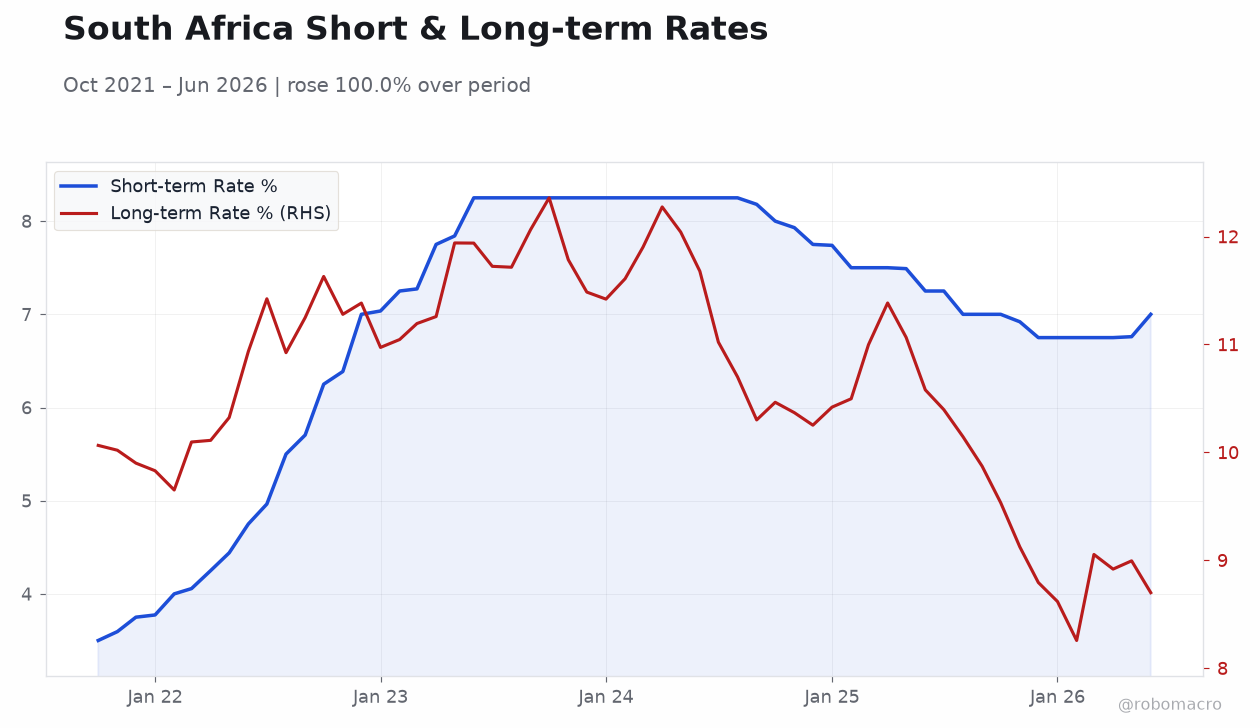
| South Africa Short-term Rate | 8.62% | +9 bp |
| South Africa Long-term Rate | 8.94% | +13 bp |
Prior Economic Events
| Data | Prior | Cons | Actual |
|---|---|---|---|
| Trade Balance | 17,230m | - | 20,140m |
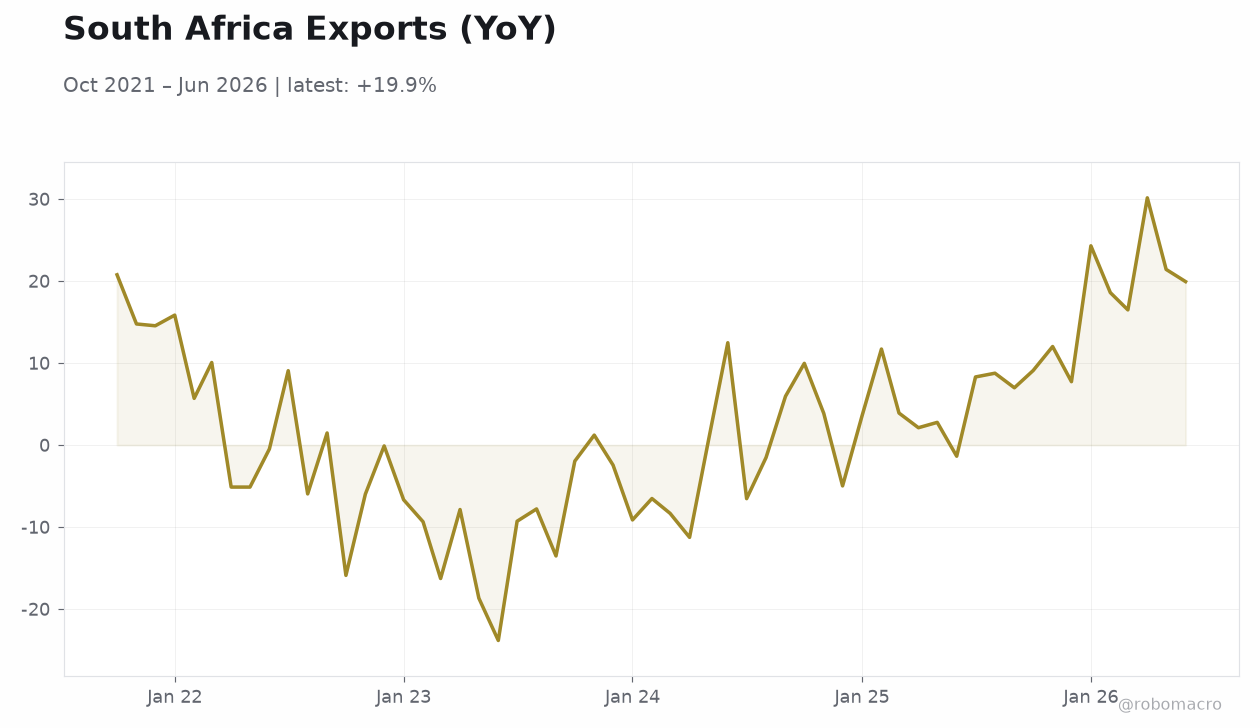 South Africa Exports (YoY) | Type: macro_line | Exports YoY %: 19.93 (2026-06-01) | Range: -23.83–30.15 | Trend(5pt): 20.76,-0.1073,-6.522,2.114,19.93
Today's Economic Events
| Data | Prior | Cons | Time |
|---|---|---|---|
| No events available | |||
- Trade surplus expands to ZAR 20.14bn from ZAR 17.23bn prior
- JSE Top 40 slips 0.37% while USD/ZAR rises 0.40% to 16.16
- Manufacturing sentiment deteriorates on weaker production momentum
Yesterday's Recap
South Africa posted a larger trade surplus of ZAR 20.14 billion, up from ZAR 17.23 billion, reflecting stronger export performance in mining and manufacturing goods. Equity markets closed lower with the JSE Top 40 falling 0.37 percent to 108,358.40 amid broad risk-off sentiment. The rand weakened against the dollar, with USD/ZAR climbing 0.40 percent to 16.16, while EUR/ZAR held nearly flat at 18.71.
Platinum prices declined 0.74 percent to 1,748.50, offsetting gains in gold which rose 0.50 percent to 4,369.80. Brent crude advanced 0.78 percent to 95.39, supporting resource-linked equities. Manufacturing sentiment deteriorated as production momentum slowed and local demand softened, according to Bloomberg data.
Naspers shares dropped 2.01 percent, contributing to the benchmark decline, while short-term rates stood at the 7.00 percent level.
The Day Ahead
No major South African data releases are scheduled for today, leaving markets to digest yesterday’s trade figures and manufacturing survey. Attention will likely shift to ongoing energy supply constraints and their impact on industrial output. The absence of fresh indicators may keep rand volatility tied to global commodity moves and US dollar strength.
Investors will monitor any updates on load-shedding schedules that could affect mining production. Broader sentiment may also respond to developments in platinum-group metals demand from global auto markets.
Other Economic Notes
Civil society groups continue to push for evidence-based energy transition policies that protect future rights while addressing immediate power shortages. Africa requires more than USD 200 billion annually in energy investment, with the new Africa Energy Bank set to begin operations in October. Persistent load-shedding remains a drag on manufacturing and mining output, weighing on growth prospects.
These structural challenges reinforce the need for reliable baseload capacity alongside renewable expansion to stabilize industrial activity.
Global Macro News
Global bond yields rose after the ECB lifted interest rates, with energy prices adding to European inflation pressures. Higher US rates continue to support the dollar, keeping pressure on emerging-market currencies including the rand. <i>↓ p.2</i>