South Africa Macro Daily(Beta Mode)
Rand Holds as Oil Fuels Hike Bets
Market Snapshot
| Asset | Level | Change |
|---|---|---|
| JSE Top 40 | 107,759.50 | +0.19% |
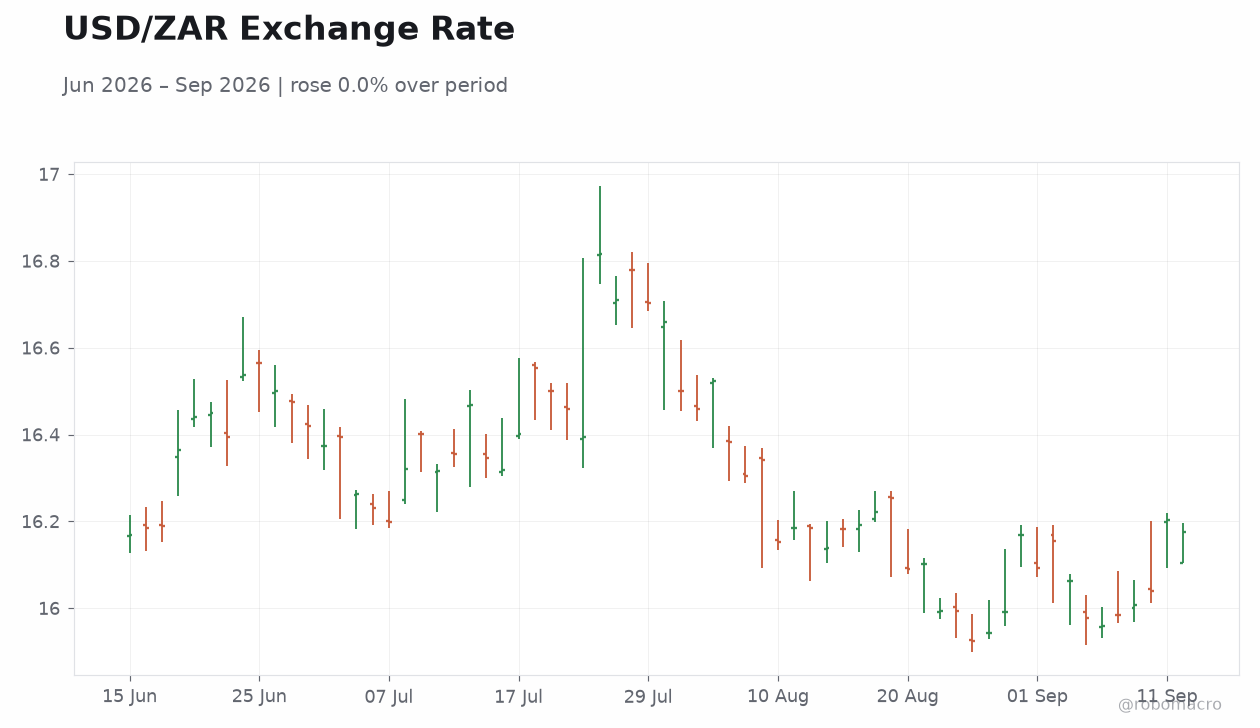
| USD/ZAR | 16.18 | -0.15% |
| EUR/ZAR | 18.72 | -0.49% |
| Platinum | 1,799.40 | +0.33% |
| Gold | 4,368.50 | +0.05% |
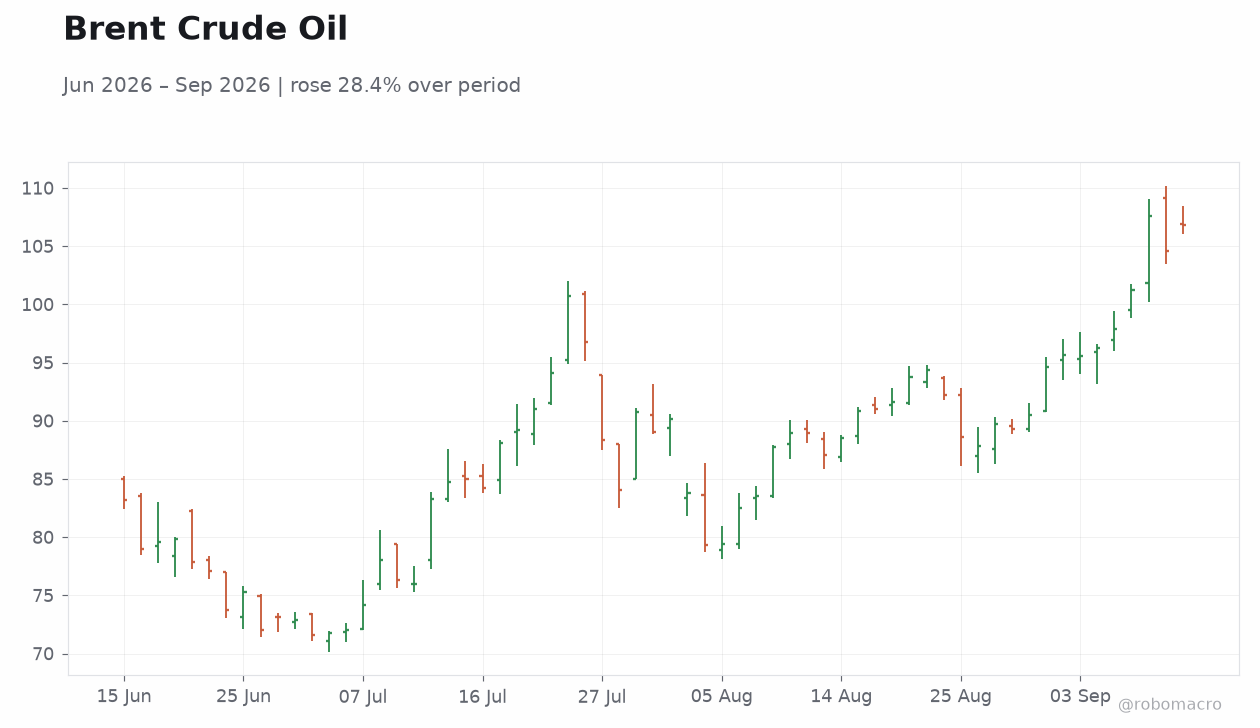
| Brent Crude | 106.69 | +1.99% |
| Naspers | 72,528.00 | -0.73% |
| Bitcoin | 77,555.47 | +0.37% |
| South Africa Short-term Rate | 7.00% | +3.55% |
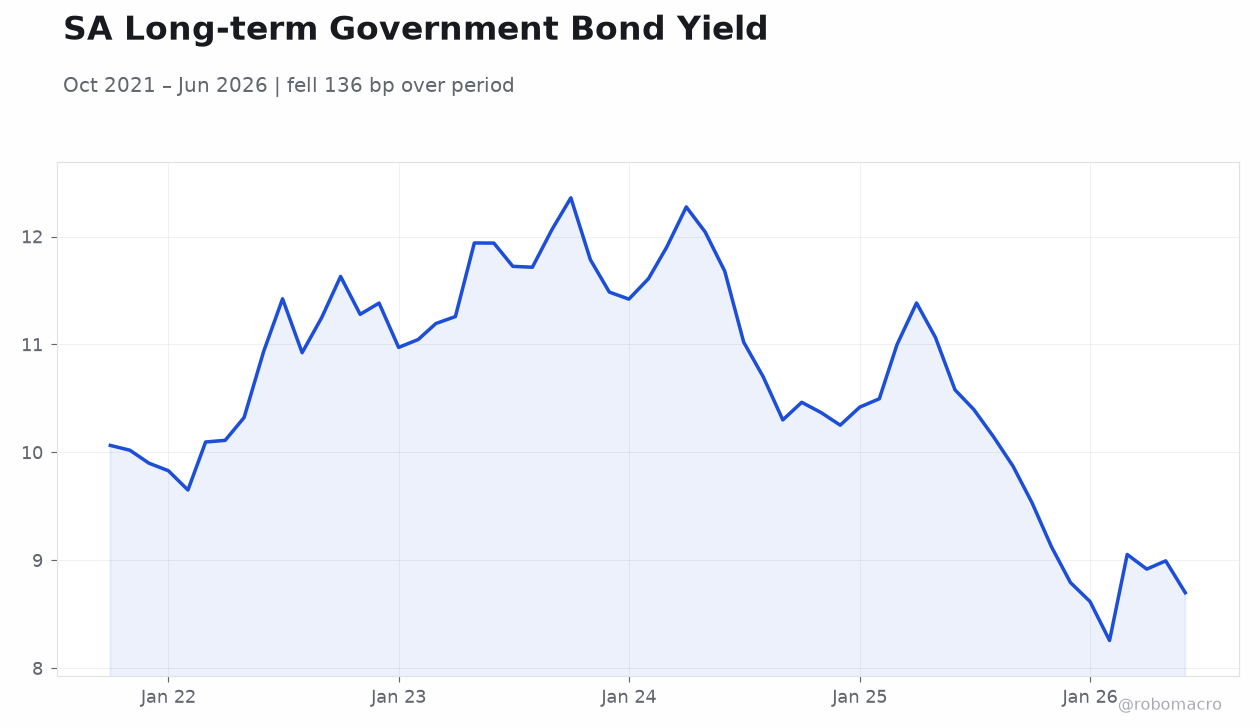
| South Africa Long-term Rate | 8.70% | -3.28% |
Prior Economic Events
| Data | Prior | Cons | Actual |
|---|---|---|---|
| No events available | |||
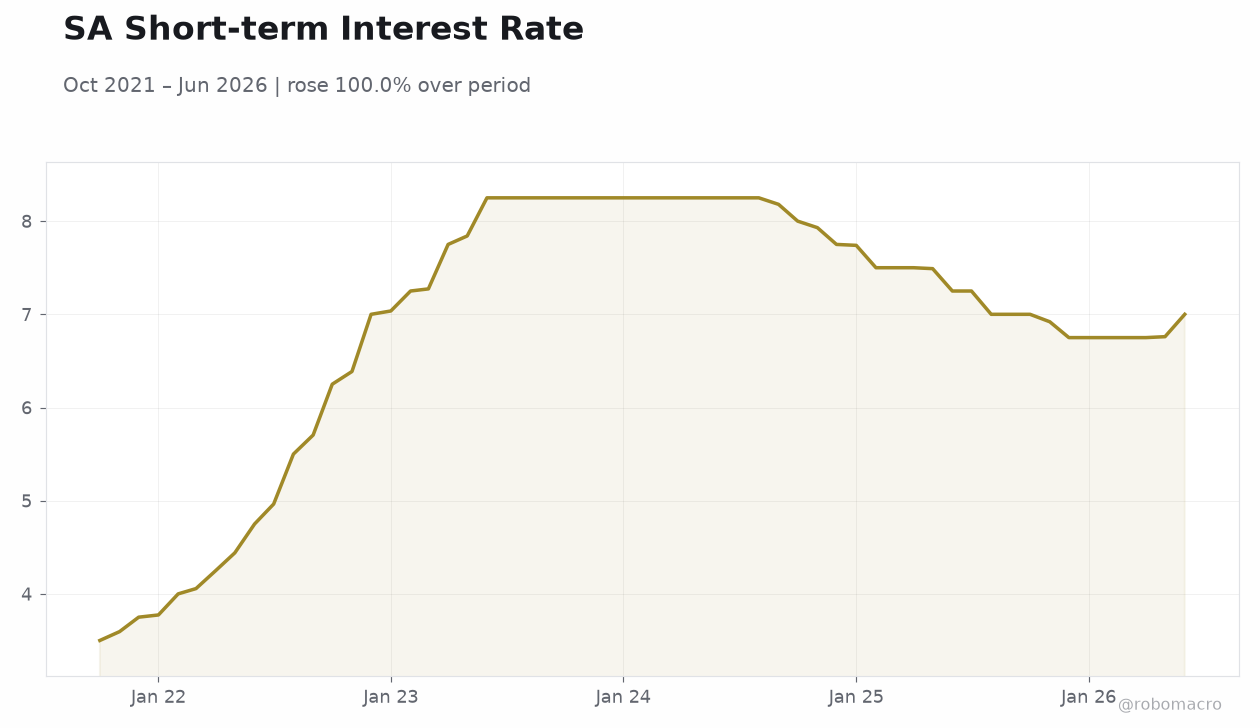 SA Short-term Interest Rate | Type: macro_line | %: 7 (2026-06-01) | Range: 3.5–8.25 | Trend(5pt): 3.5,7,8.25,7.5,7
Today's Economic Events
| Data | Prior | Cons | Time |
|---|---|---|---|
| No events available | |||
- JSE Top 40 rose 0.19% while USD/ZAR eased 0.15% to 16.18 amid Brent crude surge.
- Short-term rates climbed 3.55% to 7.00% as long-term yields fell 3.28% to 8.70%.
- No economic data released; diplomatic tensions with Nigeria over xenophobia dominated headlines.
Yesterday's Recap
South African markets closed mixed on 13 September with no scheduled data releases or SARB communications. The JSE Top 40 advanced 0.19% to 107,759.50 while platinum gained 0.33% to 1,799.40 and gold added 0.05% to 4,368.50. Brent crude jumped 1.99% to 106.69, lifting energy-related sentiment.
The rand firmed modestly as USD/ZAR declined 0.15% to 16.18 and EUR/ZAR dropped 0.49% to 18.72. Naspers fell 0.73% to 72,528.00 while Bitcoin rose 0.37% to 77,555.47. Short-term rates increased sharply to 7.00% against a 3.28% decline in long-term rates to 8.70%, reflecting divergent yield expectations.
Nigeria suspended official visits to South Africa following reports of attacks on nationals and a 30 September deadline issued by protesters for undocumented migrants to depart. South Africa extradited six Nigerians to the US on wire-fraud and money-laundering charges.
The Day Ahead
No economic releases or SARB events are scheduled for 14 September. Markets will monitor oil price volatility for any fresh signals on imported inflation. Diplomatic fallout from Nigeria’s travel ban may weigh on sentiment toward South African assets.
Traders will also track global equity flows into mining counters given platinum and gold gains. Load-shedding risks remain unaddressed in the immediate calendar. Attention stays on whether the recent short-term rate spike persists without new policy signals.
Other Economic Notes
South Africa has lost half its fuel-making capacity over the past decade, raising structural energy security concerns. Persistent xenophobic incidents continue to strain regional diplomacy and could affect labour mobility in key sectors. The absence of fresh CPI or growth prints leaves markets reliant on external drivers such as Brent crude for inflation expectations.
Mining equities showed resilience despite broader social tensions, underscoring commodity support for the current account. Fiscal and electricity supply updates remain absent from the immediate news flow.