South Africa Macro Daily(Beta Mode)
JSE Slides as Short-Term Yields Spike
Market Snapshot
| Asset | Level | Change |
|---|---|---|
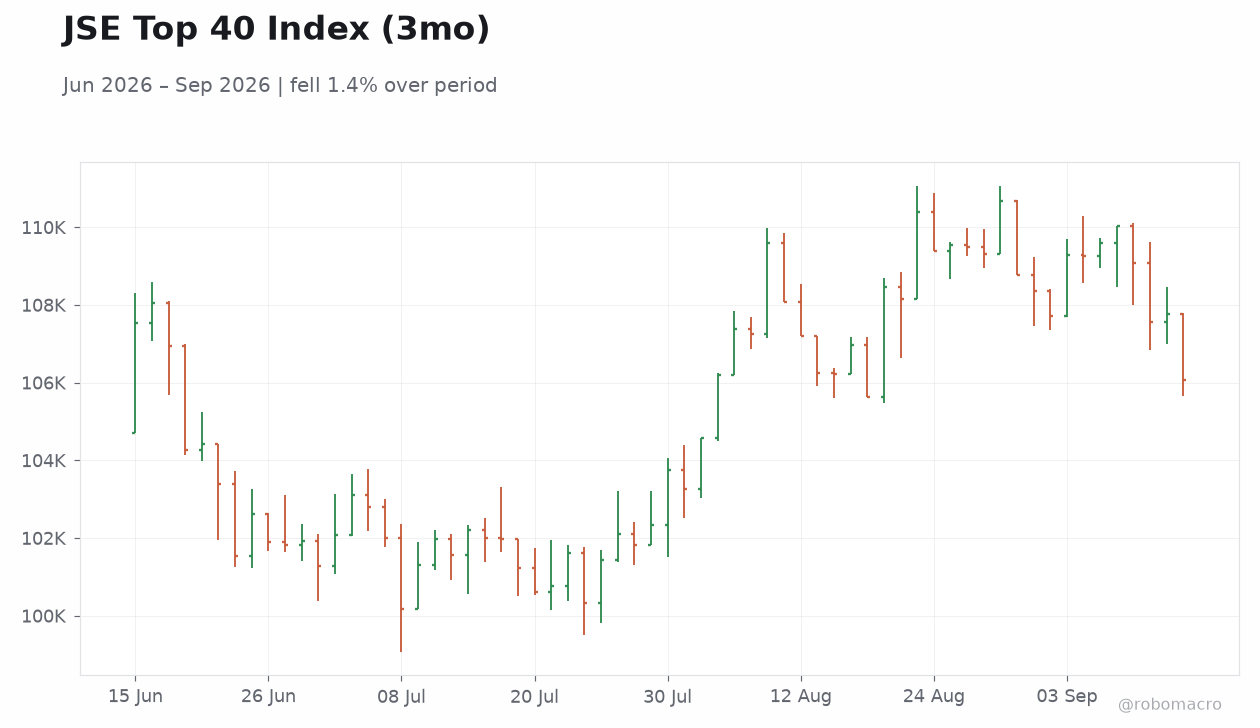
| JSE Top 40 | 106,066.20 | -1.57% |
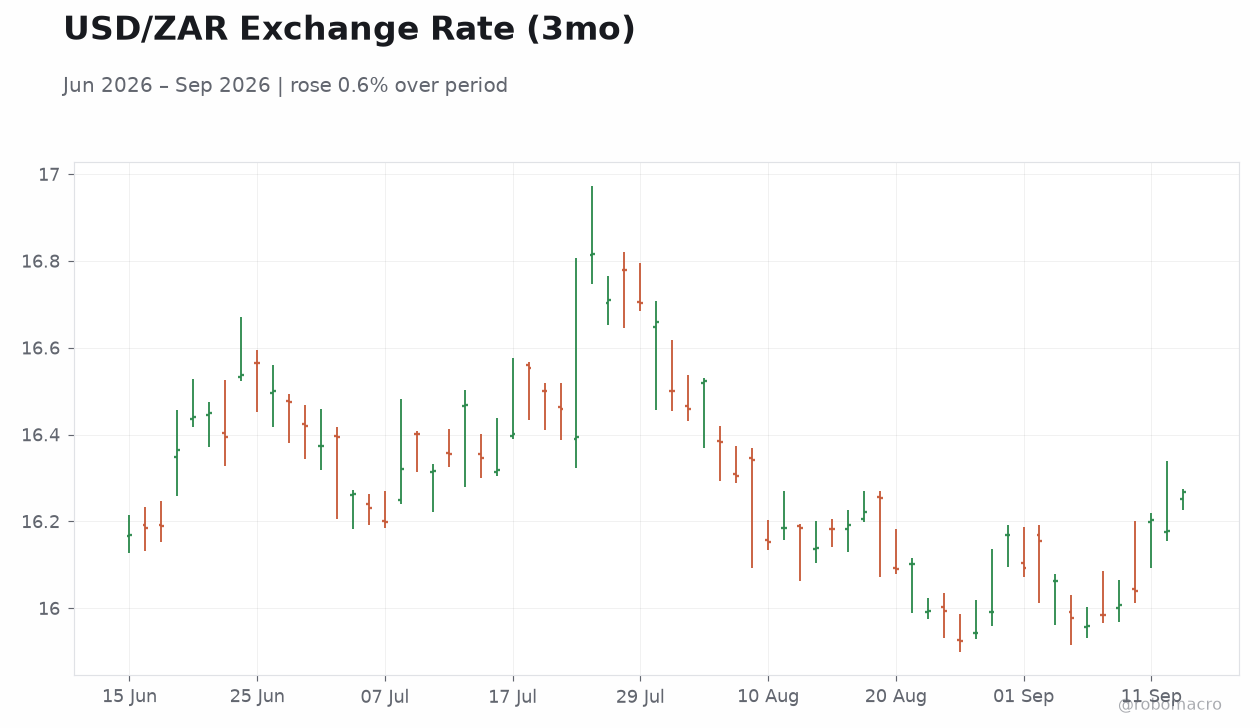
| USD/ZAR | 16.18 | -0.15% |
| EUR/ZAR | 18.77 | +0.09% |
| Platinum | 1,780.50 | +0.26% |
| Gold | 4,343.30 | -0.20% |
| Brent Crude | 107.08 | +1.32% |
| Naspers | 72,528.00 | -0.73% |
| Bitcoin | 77,652.41 | +1.06% |
| South Africa Short-term Rate | 7.00% | +3.55% |
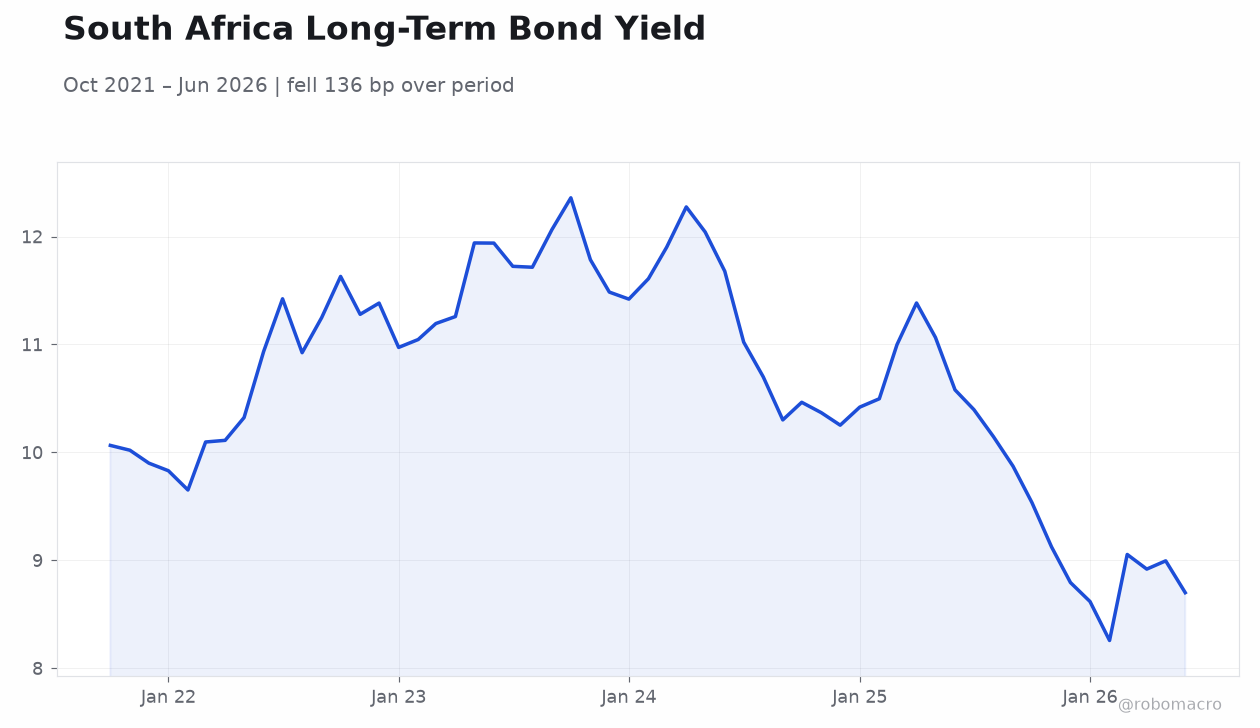
| South Africa Long-term Rate | 8.70% | -3.28% |
Prior Economic Events
| Data | Prior | Cons | Actual |
|---|---|---|---|
| No events available | |||
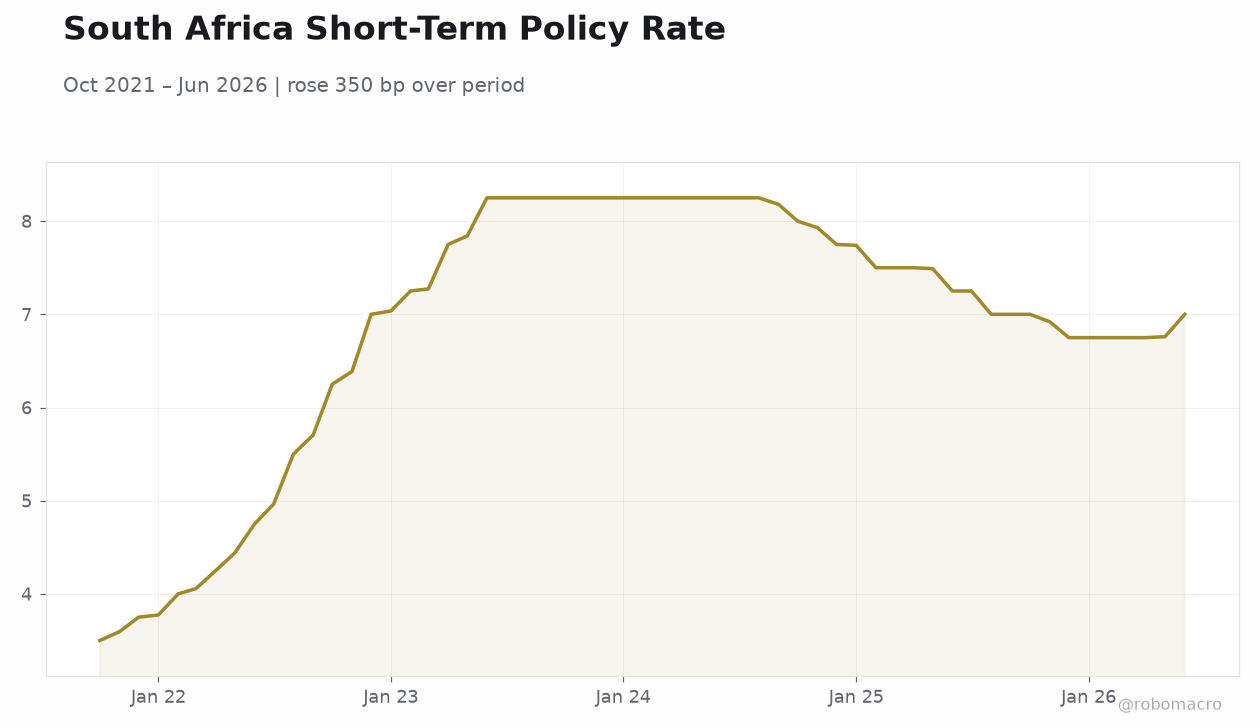 South Africa Short-Term Policy Rate | Type: macro_line | Percent: 7 (2026-06-01) | Range: 3.5–8.25 | Trend(5pt): 3.5,7,8.25,7.5,7
Today's Economic Events
| Data | Prior | Cons | Time |
|---|---|---|---|
| No events available | |||
- JSE Top 40 falls 1.57% to 106,066.20 with Naspers down 0.73%
- USD/ZAR eases 0.15% to 16.18 while short-term rates jump 3.55% to 7.00%
- Solar Industries launches $1.4 billion bid for Omnia as petrol import waste hits R19 billion
Yesterday's Recap
South African markets recorded no economic data releases on 14 September. The JSE Top 40 closed at 106,066.20 after a 1.57% decline while Naspers fell 0.73% to 72,528.00. USD/ZAR finished at 16.18 after a 0.15% drop and EUR/ZAR rose 0.09% to 18.77.
Brent Crude advanced 1.32% to 107.08, platinum gained 0.26% to 1,780.50 and gold eased 0.20% to 4,343.30. Bitcoin rose 1.06% to 77,652.41. South African short-term government bond yields climbed sharply to 7.00% while long-term yields declined to 8.70%.
The absence of fresh prints left market pricing for the SARB unchanged from prior sessions. Commodity moves offered limited offsets, with Brent providing the clearest positive signal amid broader equity weakness.
The Day Ahead
No scheduled data releases, SARB speeches or MPC minutes appear on the calendar for 15 September. Market participants will therefore focus on global commodity price movements and any corporate developments. The rand’s modest performance and equity weakness are expected to persist absent new domestic catalysts.
Attention may turn to ongoing corporate activity including the Solar Industries bid for Omnia. Energy import costs and regulatory signals in the crypto sector could also influence sentiment. Overall, the session is likely to remain data-light for South African assets, keeping volatility contained unless external risk factors intensify.
Other Economic Notes
Solar Industries placed a $1.4 billion bid for Omnia, highlighting consolidation interest in the chemicals and mining supply chain. Reports noted that South Africa continues to waste R19 billion annually on expensive petrol and diesel imports, underscoring structural energy vulnerabilities. In the crypto sector, 171 organisations signalled opposition to new SARB and FSCA capital-flow regulations, pointing to potential friction in cross-border flows.
These developments occur against a backdrop of limited load-shedding updates and steady mining output in the supplied data. Broader themes of fiscal leakage and regulatory pushback remain relevant for medium-term growth prospects.