South Africa Macro Daily(Beta Mode)
Yields Climb Ahead of Trade Balance
Market Snapshot
| Asset | Level | Change |
|---|---|---|
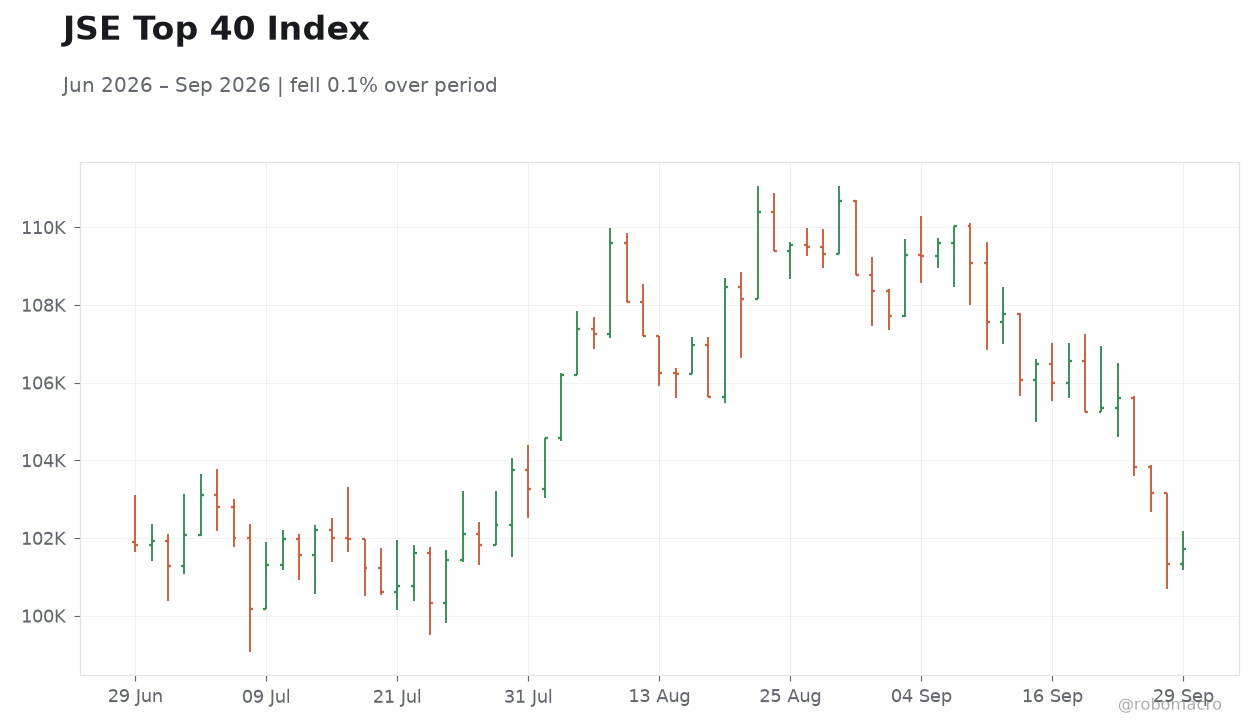
| JSE Top 40 | 101,729.70 | +0.39% |
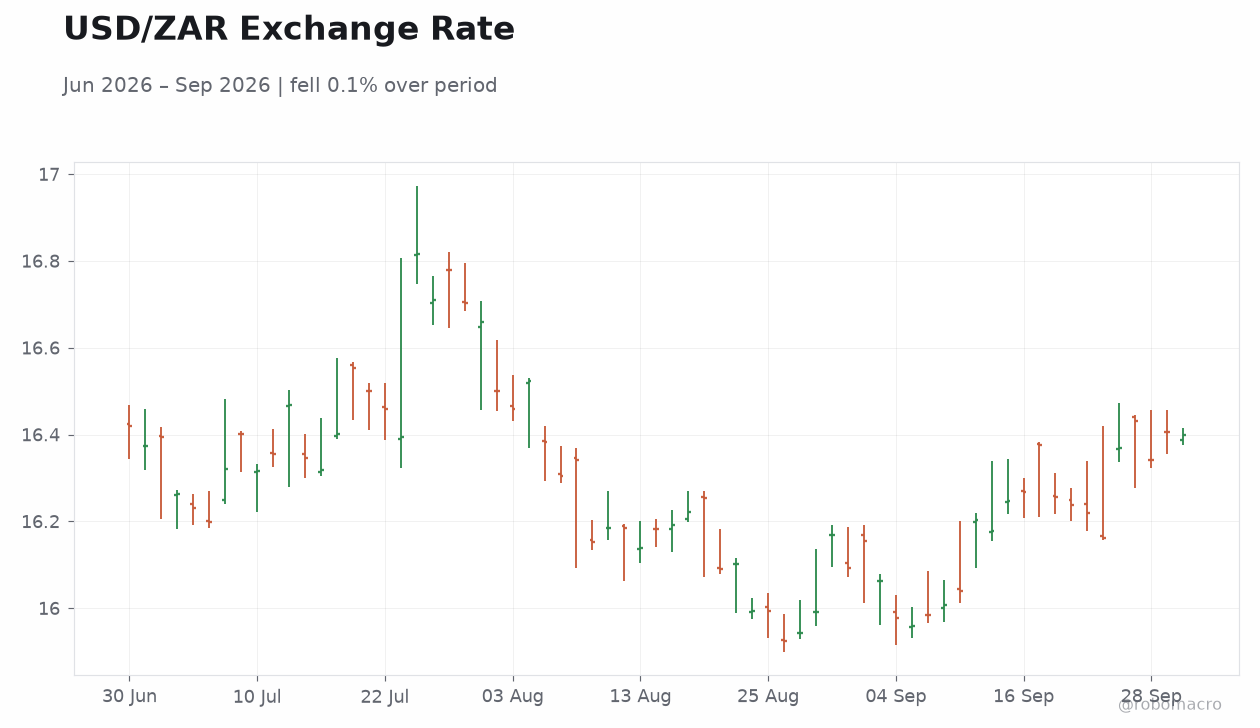
| USD/ZAR | 16.40 | -0.06% |
| EUR/ZAR | 18.58 | -0.37% |
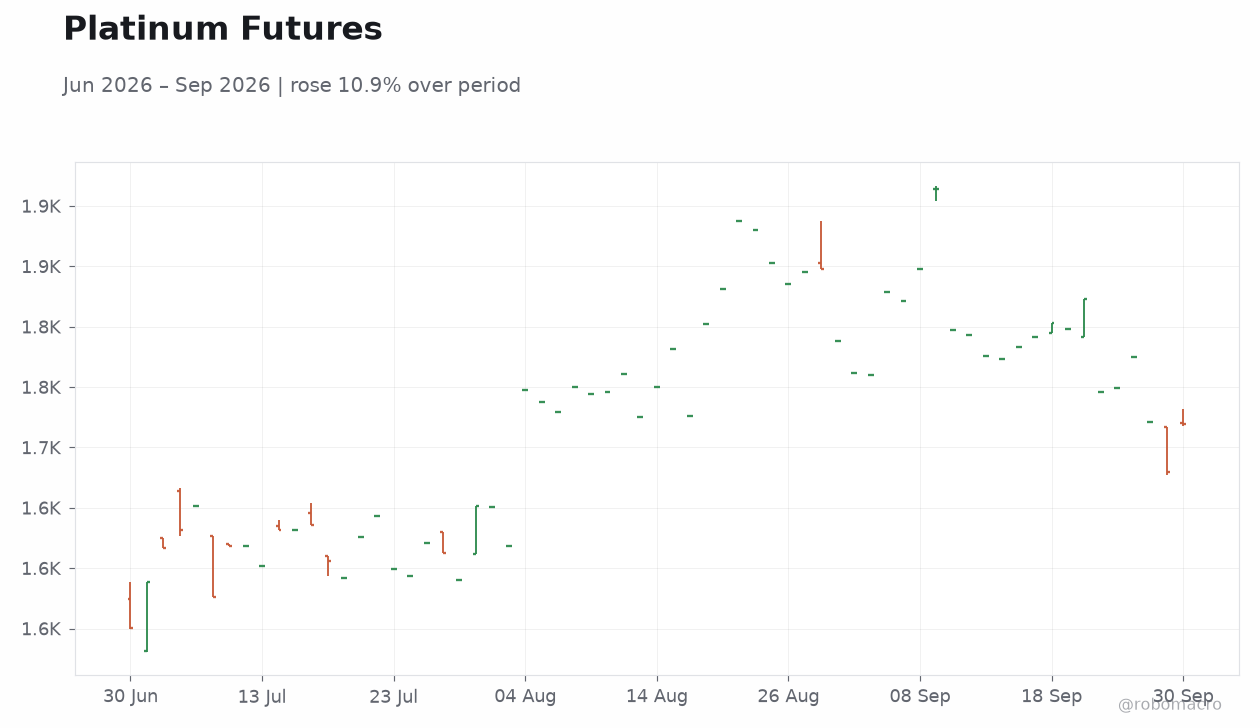
| Platinum | 1,719.10 | +2.32% |
| Gold | 4,205.70 | +0.62% |
| Brent Crude | 102.59 | -2.56% |
| Naspers | 71,795.00 | -0.06% |
| Bitcoin | 83,339.25 | -0.20% |
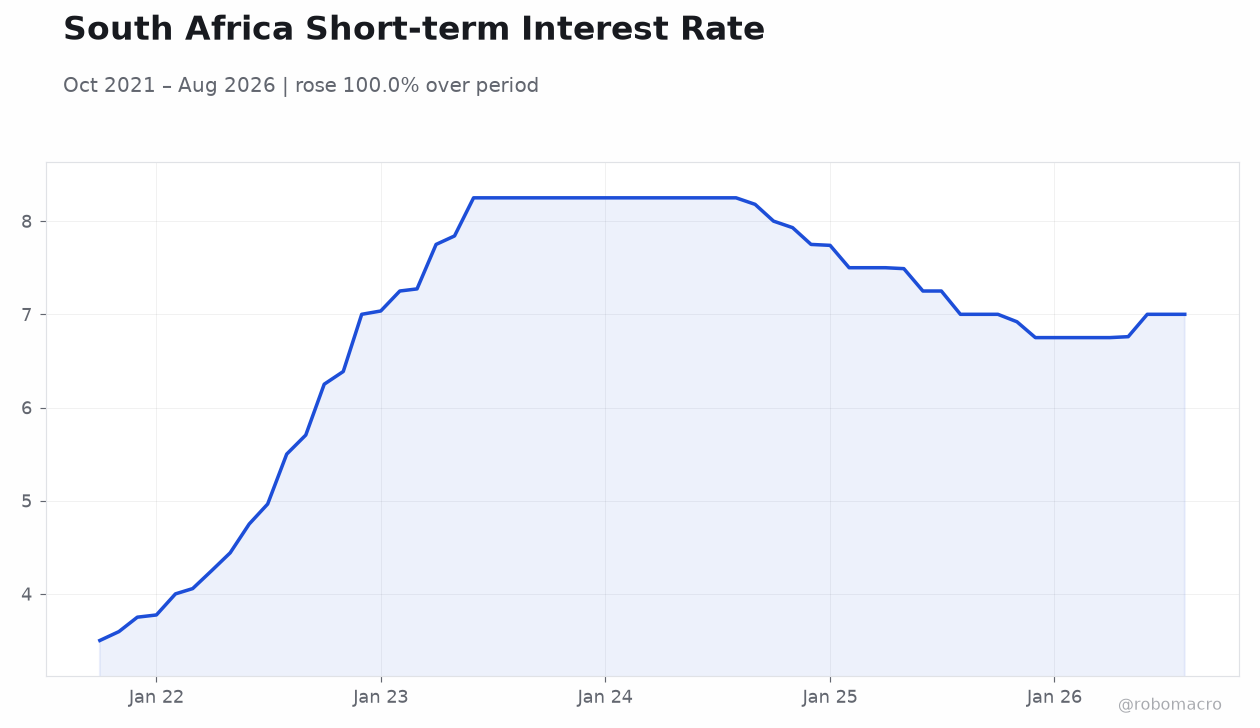
| South Africa 5Y Govt Yield | 8.78% | +2 bp |
| South Africa 10Y Govt Yield | 9.08% | +12 bp |
Prior Economic Events
| Data | Prior | Cons | Actual |
|---|---|---|---|
| No events available | |||
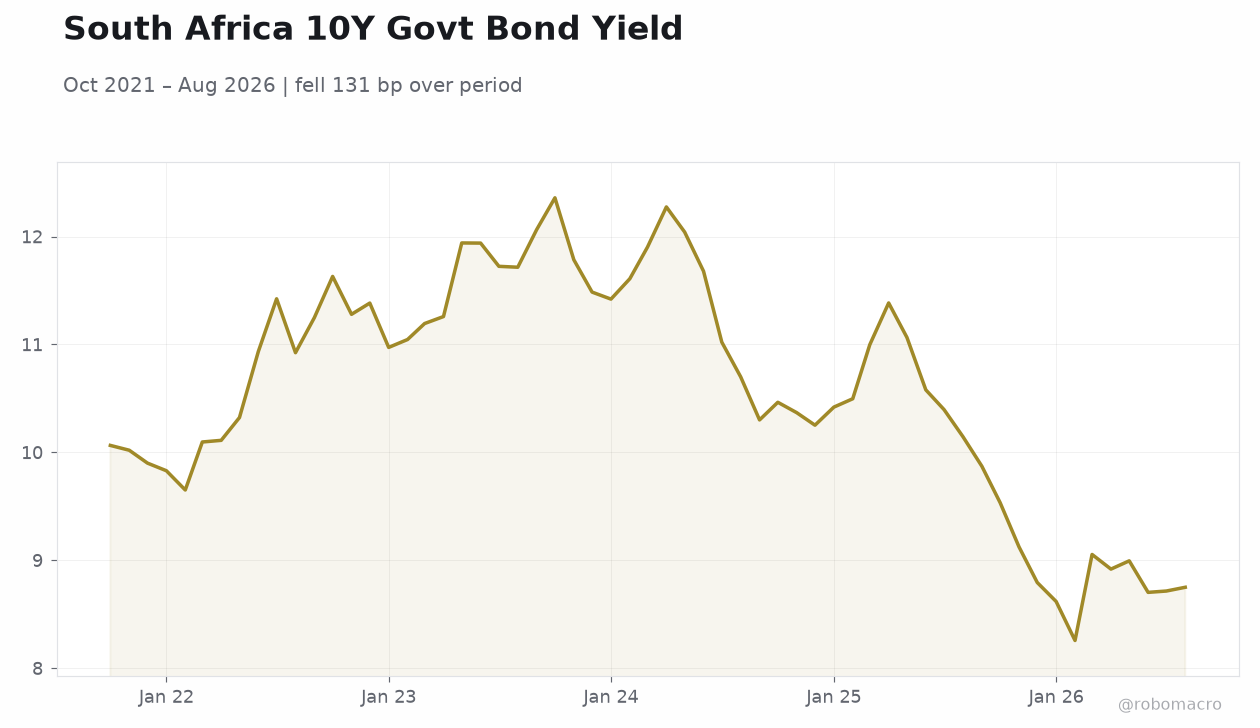 South Africa 10Y Govt Bond Yield | Type: macro_line | Yield %: 8.75 (2026-08-01) | Range: 8.257–12.36 | Trend(6pt): 10.06,11.38,11.61,11.38,8.703,8.75
Today's Economic Events
| Data | Prior | Cons | Time |
|---|---|---|---|
| Trade Balance | 20,140m | - | 04:00 |
- South African 10-year yield rises 12 bp to 9.08% while 5-year yield edges 2 bp higher to 8.78%.
- Foreign direct investment surges to 49.8 billion rand in Q2, driven by one telecom-sector loan.
- JSE Top 40 gains 0.39% and USD/ZAR holds at 16.40 as platinum and gold advance.
Yesterday's Recap
South African markets recorded modest gains on 29 September with no domestic data releases. The JSE Top 40 closed at 101,729.70, up 0.39 percent, while USD/ZAR finished at 16.40 after a 0.06 percent decline. EUR/ZAR eased 0.37 percent to 18.58.
Platinum rose 2.32 percent to 1,719.10 and gold advanced 0.62 percent to 4,205.70, offsetting a 2.56 percent drop in Brent crude to 102.59. Government bond yields moved higher, with the 5-year yield reaching 8.78 percent and the 10-year yield climbing to 9.08 percent. The rand showed limited movement ahead of the next day’s trade balance print.
Naspers slipped 0.06 percent to 71,795.00 and Bitcoin eased 0.20 percent to 83,339.25, reflecting cautious global risk appetite that tempered broader emerging-market flows.
The Day Ahead
South Africa’s Trade Balance for August is scheduled for release at 04:00 ET on 30 September, with the prior reading at 20.14 billion rand. No consensus estimate is available and no other local indicators or SARB speeches are listed. The print is expected to influence USD/ZAR and short-term yields if the outcome deviates from recent trends.
Markets will also monitor any follow-through from Governor Kganyago’s recent remarks on economic challenges. Global commodity moves in gold, platinum and oil may add volatility to mining equities and the current account outlook. With no further releases tomorrow, attention will stay on how the trade data shapes rand positioning and whether the FDI surge reported for Q2 sustains momentum into the final quarter.
Other Economic Notes
Foreign direct investment inflows reached 49.8 billion rand in the second quarter, though the increase rested largely on a single telecom loan. A strong grain harvest has kept food prices subdued, shielding consumers from broader inflation pressures despite risks from foot-and-mouth disease, higher fuel costs and an expected El Niño event. CPI stood at 4.26 percent year-on-year in July.
Kganyago highlighted both structural challenges and opportunities for the economy in the current environment. The rand extended losses earlier in the week before steadying on mixed data. ↓ p.2