South Africa Macro Daily(Beta Mode)
Trade Surplus Widens as SARB Completes MPC
Market Snapshot
| Asset | Level | Change |
|---|---|---|
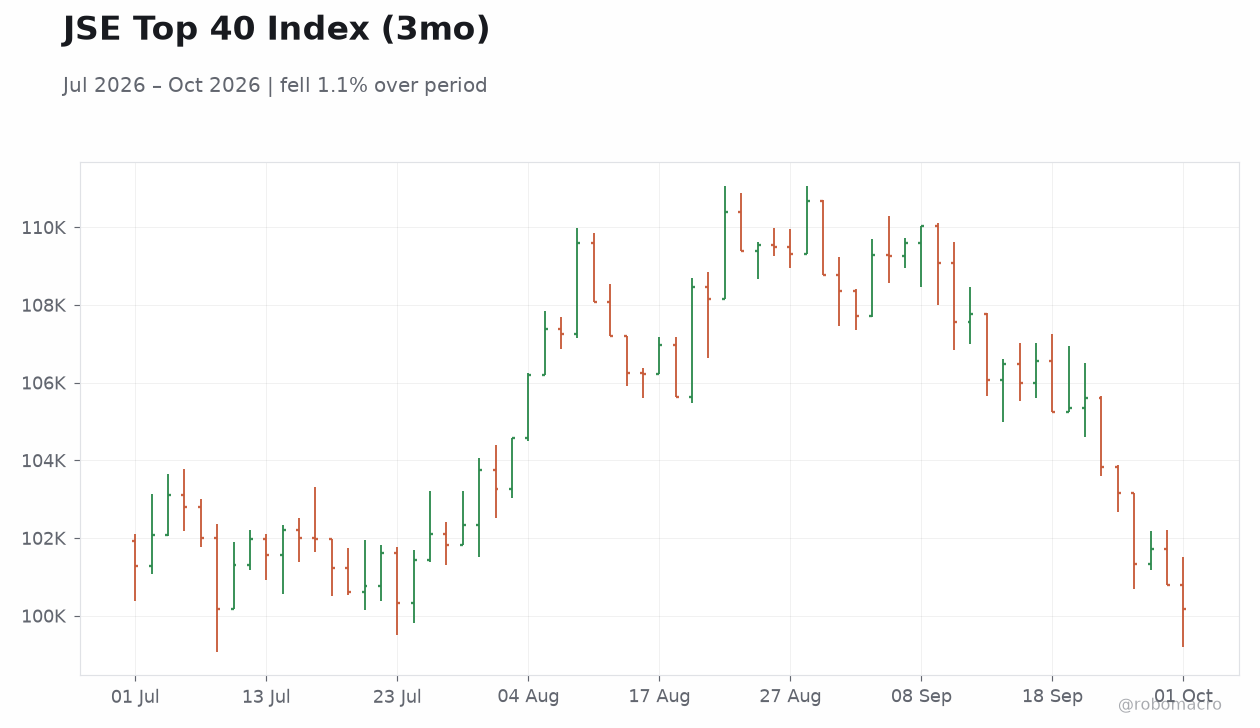
| JSE Top 40 | 100,172.70 | -0.61% |
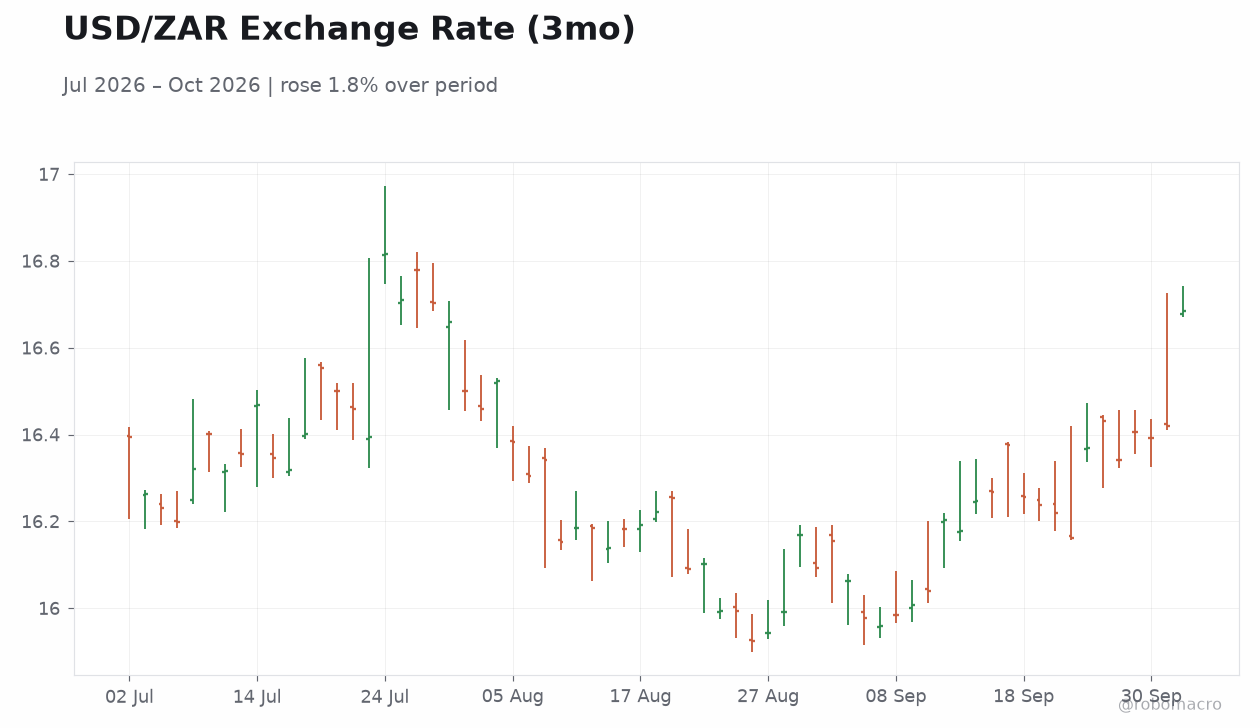
| USD/ZAR | 16.42 | +0.17% |
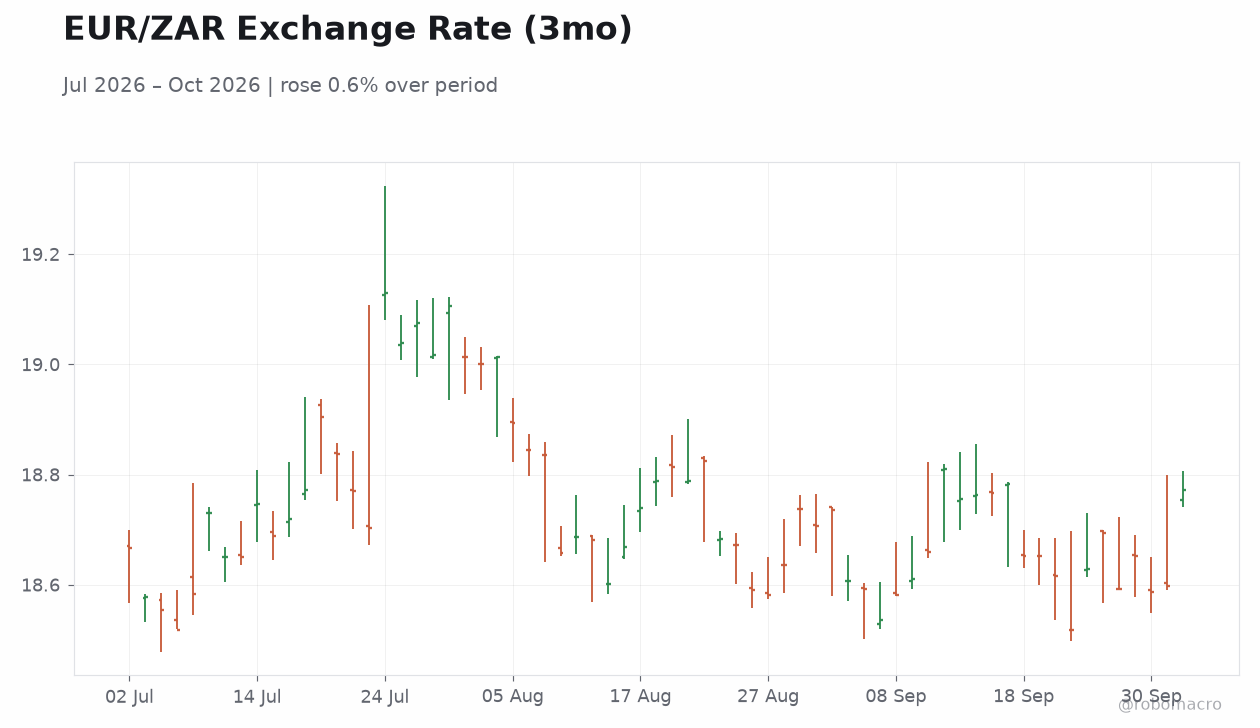
| EUR/ZAR | 18.77 | +0.94% |
| Platinum | 1,746.80 | +2.42% |
| Gold | 4,209.90 | +0.18% |
| Brent Crude | 102.04 | -0.26% |
| Naspers | 70,317.00 | +0.45% |
| Bitcoin | 85,485.81 | +2.31% |
| South Africa 5Y Govt Yield | - | - |
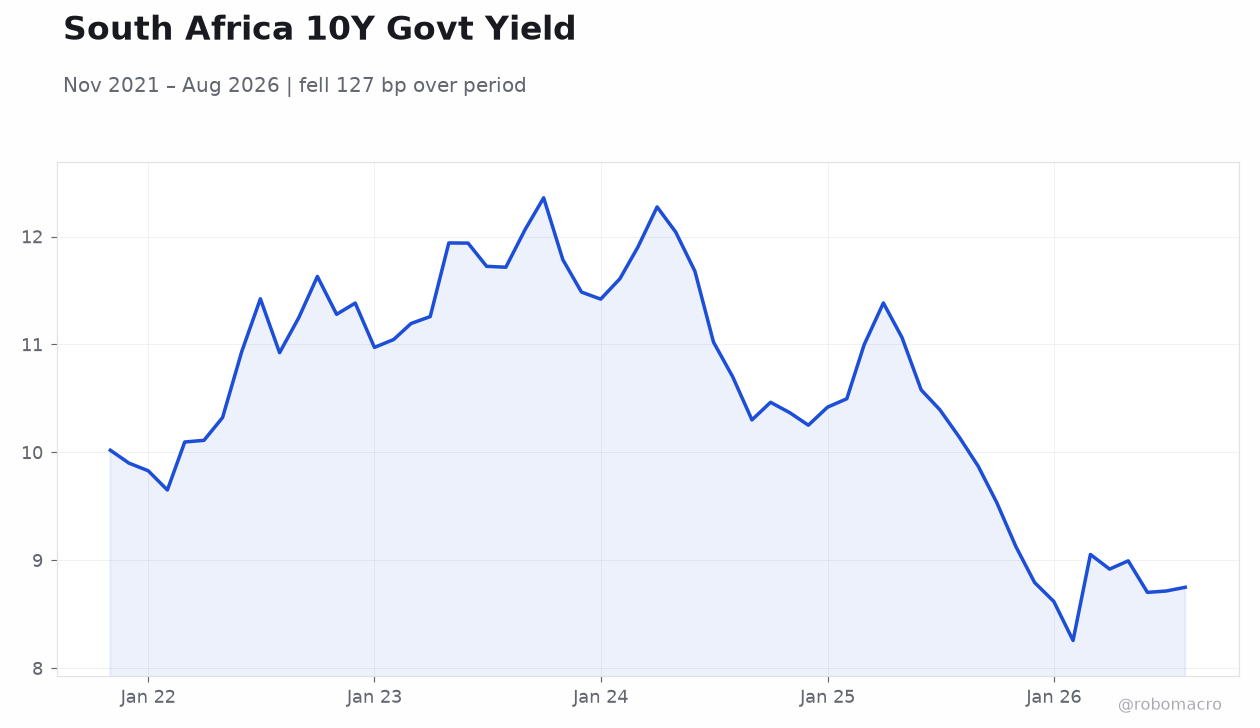
| South Africa 10Y Govt Yield | - | - |
Prior Economic Events
| Data | Prior | Cons | Actual |
|---|---|---|---|
| Trade Balance | 20,140m | - | 20,470m |
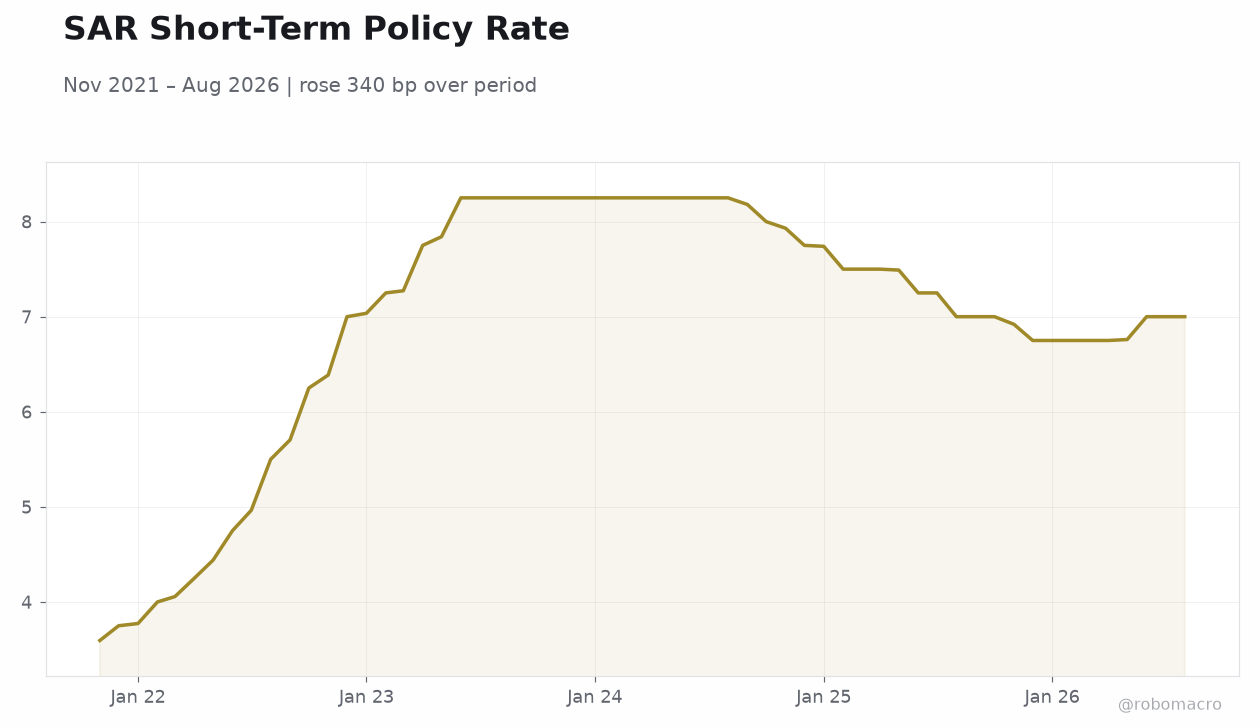 SAR Short-Term Policy Rate | Type: macro_line | Policy Rate (%): 7 (2026-08-01) | Range: 3.595–8.25 | Trend(5pt): 3.595,7.036,8.25,7.49,7
Today's Economic Events
| Data | Prior | Cons | Time |
|---|---|---|---|
| No events available | |||
- Trade balance surplus rises to ZAR 20.47 billion
- SARB names Franz Ruch as seventh MPC member
- JSE Top 40 falls 0.61% while rand edges weaker
Yesterday's Recap
South Africa’s trade balance surplus expanded to ZAR 20.47 billion for the period ending 30 September from ZAR 20.14 billion previously, providing modest support to external accounts. The JSE Top 40 closed 0.61% lower at 100,172.70 amid subdued local sentiment. USD/ZAR advanced 0.17% to 16.42 and EUR/ZAR climbed 0.94% to 18.77.
Platinum jumped 2.42% to 1,746.80 while gold gained 0.18% to 4,209.90 and Brent crude slipped 0.26% to 102.04. Foreign direct investment inflows reached USD 3.03 billion in the second quarter of 2026. The SARB appointed World Bank economist Franz Ruch as its seventh Monetary Policy Committee member, finalising the panel.
The 7.25% repo rate continues to weigh on household spending ahead of the festive season.
The Day Ahead
No South African data releases are scheduled for 2 October. Markets will monitor global risk appetite and any follow-through from the completed MPC. Rand trading ranges and commodity price moves will likely dominate price action.
Investor focus may also turn to external demand signals given the recent trade surplus. Broader African growth readings could influence sentiment toward regional assets.
Other Economic Notes
Foreign direct investment of USD 3.03 billion in Q2 underscores continued external interest in South African assets despite global headwinds. Africa’s real GDP expanded 1.6% in the same quarter, outpacing the 0.7% global pace and highlighting relative resilience. The higher repo rate environment adds sustained pressure on domestic consumption, particularly for lower-income households.
Steady commodity prices, especially platinum and gold, remain key supports for export earnings and the current account.
Global Macro News
South Korea’s September CPI eased modestly, signalling cooling global price pressures that could affect emerging-market rate expectations. Africa’s 1.6% Q2 GDP growth provides a constructive backdrop for South African exports and investment flows. World Bank economist Franz Ruch’s appointment to the SARB MPC introduces fresh analytical perspectives on inflation and growth dynamics.
↓ p.2