South Africa Macro Daily(Beta Mode)
Rand Weakens on Oil Rally, Yields Ease
Market Snapshot
| Asset | Level | Change |
|---|---|---|
| JSE Top 40 | 99,990.90 | -0.55% |
| USD/ZAR | 16.60 | +0.75% |
| EUR/ZAR | 18.49 | +0.55% |
| Platinum | 1,554.20 | -0.85% |
| Gold | 4,007.90 | -1.29% |
| Brent Crude | 116.72 | +3.14% |
| Naspers | 68,430.00 | +0.78% |
| Bitcoin | 79,470.71 | -1.63% |
| South Africa 5Y Govt Yield | 8.59% | -10 bp |
| South Africa 10Y Govt Yield | 8.82% | -7 bp |
Prior Economic Events
| Data | Prior | Cons | Actual |
|---|---|---|---|
| No events available | |||
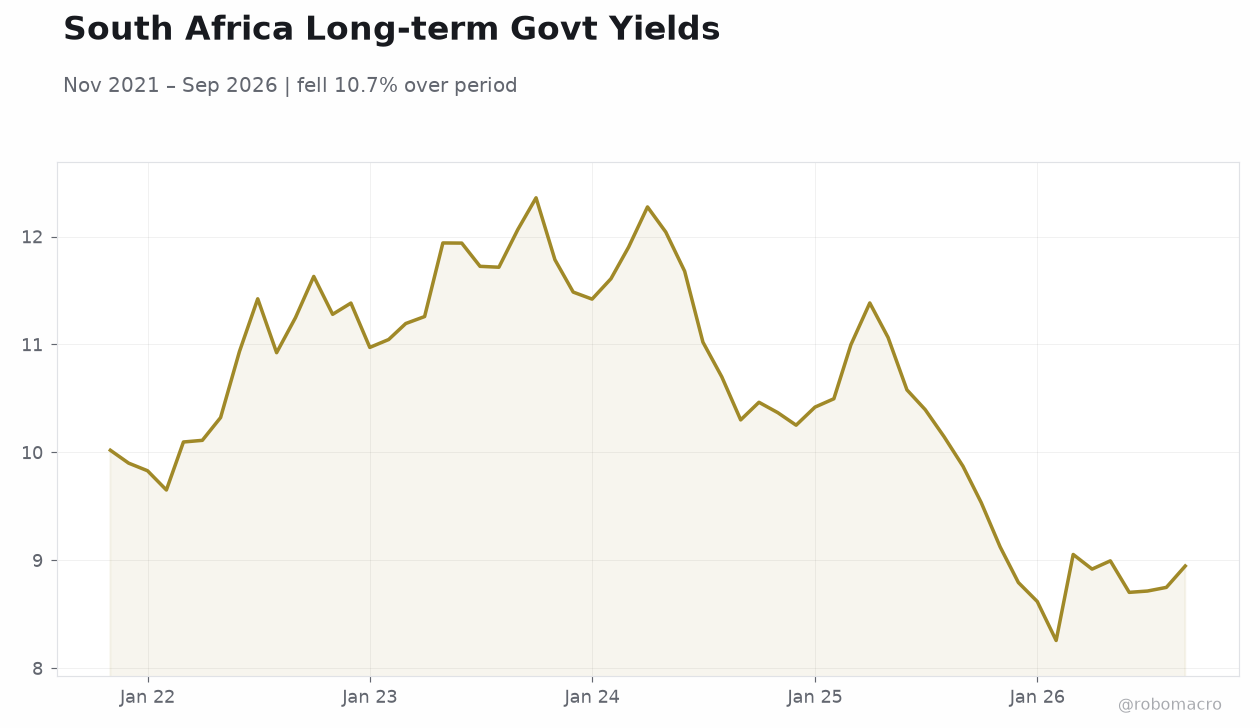 South Africa Long-term Govt Yields | Type: macro_line | Percent: 8.947 (2026-09-01) | Range: 8.257–12.36 | Trend(6pt): 10.02,10.97,11.9,11.07,8.715,8.947
Today's Economic Events
| Data | Prior | Cons | Time |
|---|---|---|---|
| Friday (2026-10-30) | |||
| Trade Balance | 20,470m | - | 08:00 |
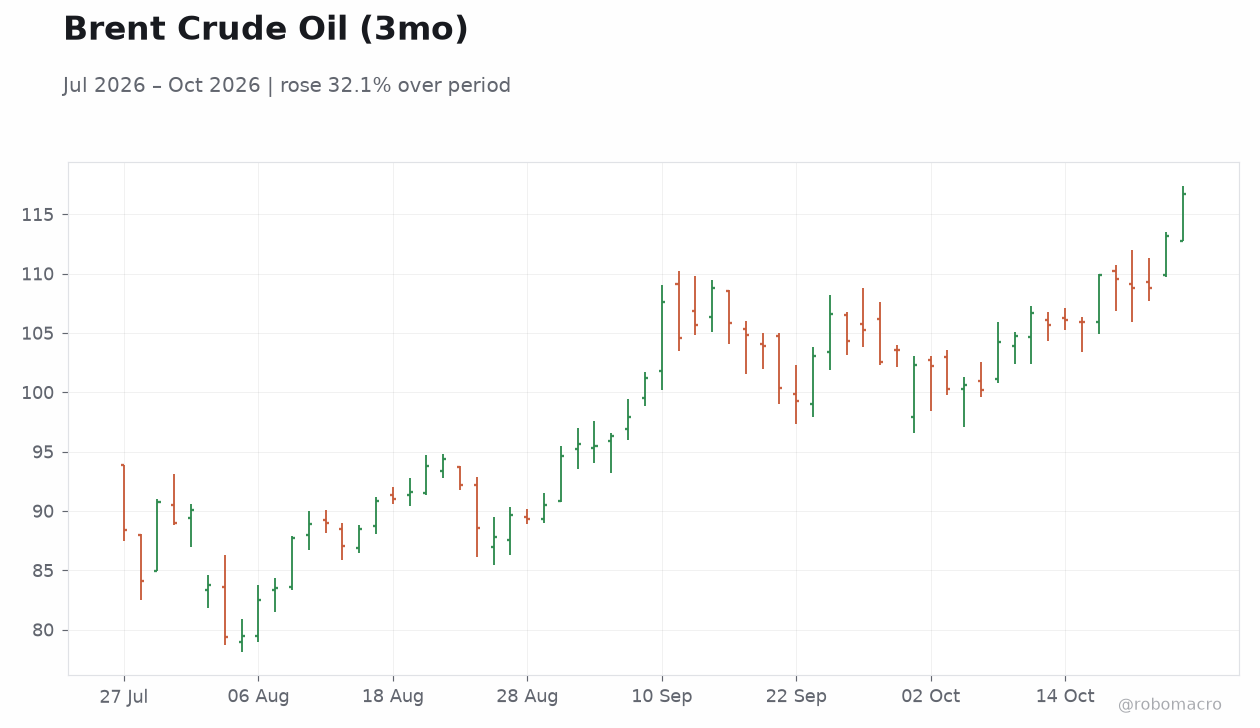
- USD/ZAR climbs 0.75% to 16.60 as Brent crude surges 3.14% to $116.72
- South Africa 10Y yield falls 7 bp to 8.82% while 5Y yield drops 10 bp to 8.59%
- JSE Top 40 slips 0.55% to 99,990.90 with platinum and gold both lower
Yesterday's Recap
South African markets recorded no major data releases on 25 October. The rand came under pressure as USD/ZAR advanced 0.75% to 16.60, driven by the sharp rise in Brent crude to $116.72. Equities weakened, with the JSE Top 40 falling 0.55% to 99,990.90 and Naspers the only notable gainer at +0.78%.
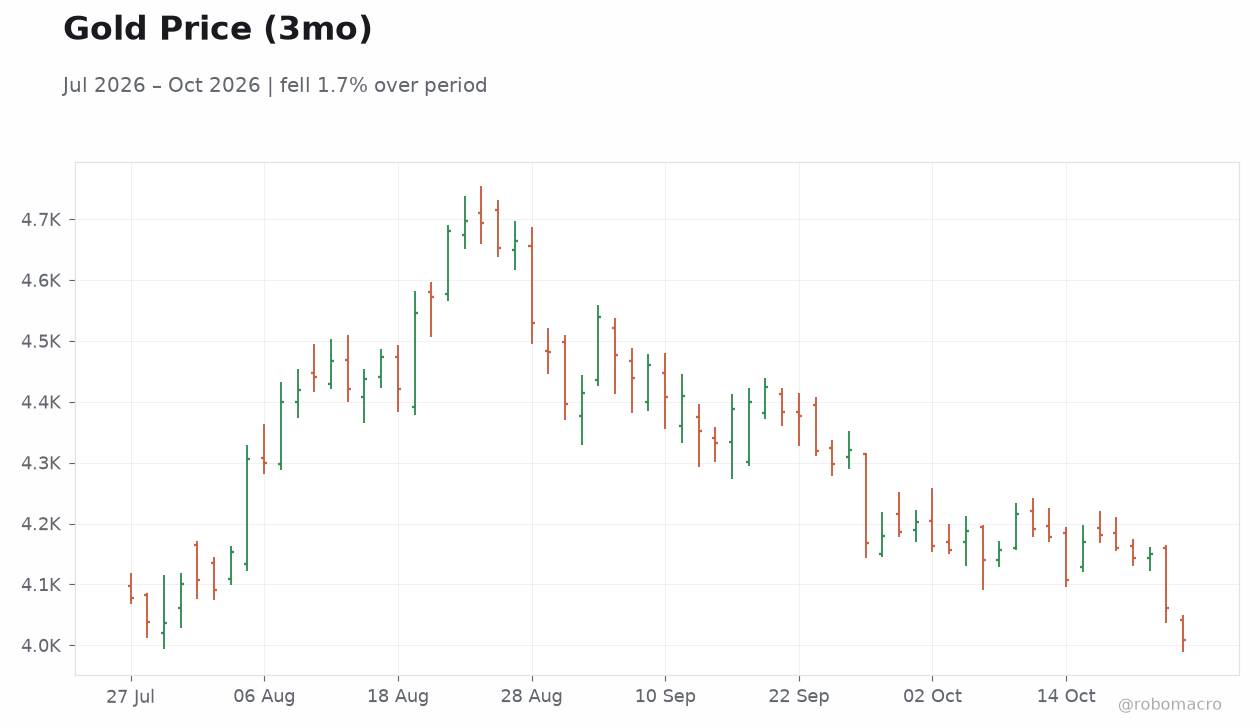
Government bonds attracted buying interest, pushing the 10-year yield down 7 bp to 8.82% and the 5-year yield 10 bp lower to 8.59%. Platinum and gold both declined, with platinum off 0.85% at $1,554.20 and gold dropping 1.29% to $4,007.90. Bitcoin also eased 1.63% to $79,470.71, adding to the risk-off tone across assets.
EUR/ZAR rose 0.55% to 18.49, underscoring broad rand softness against major currencies amid the commodity price spike.
The Day Ahead
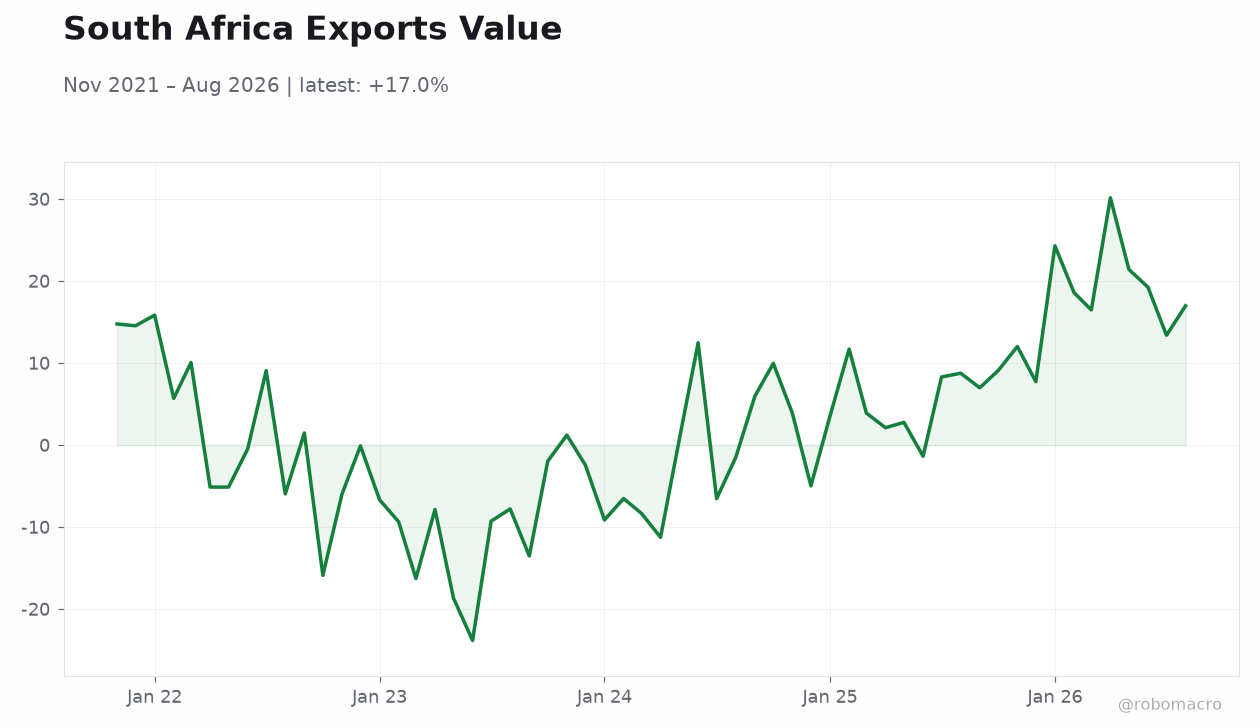
Attention turns to the October trade balance release scheduled for 30 October. The print will provide the first post-month-end gauge of export performance amid elevated oil prices. Markets will also monitor any updates on electricity supply constraints and their potential effect on manufacturing output.
Investor focus remains on whether stronger commodity revenues can offset rand weakness and support the current account. Positioning ahead of month-end flows may keep USD/ZAR sensitive to any surprise in the trade figures. Broader sentiment will hinge on global risk appetite and the outcome of the upcoming Fed meeting, which could influence capital flows into emerging-market assets including South African bonds and equities.
Other Economic Notes
South African retail stocks face continued pressure as households reduce discretionary spending on shopping and dining. Policymakers are advancing plans to position Johannesburg as a global financial centre, targeting deeper capital-market integration with Asia and the Middle East. At the same time, authorities are shaping an AI strategy that prioritises employment preservation over rapid labour displacement.
Persistent cash usage remains a structural feature of the payments landscape, complicating the shift to digital rails. These themes collectively point to a gradual, employment-focused transition rather than rapid structural change. Bilateral trade with China expanded nearly 24% year-on-year after the zero-tariff agreement, offering a modest buffer against softer domestic demand.