South Africa Macro Daily(Beta Mode)
Rand Slips as JSE Slides, Bonds Firm
Market Snapshot
| Asset | Level | Change |
|---|---|---|
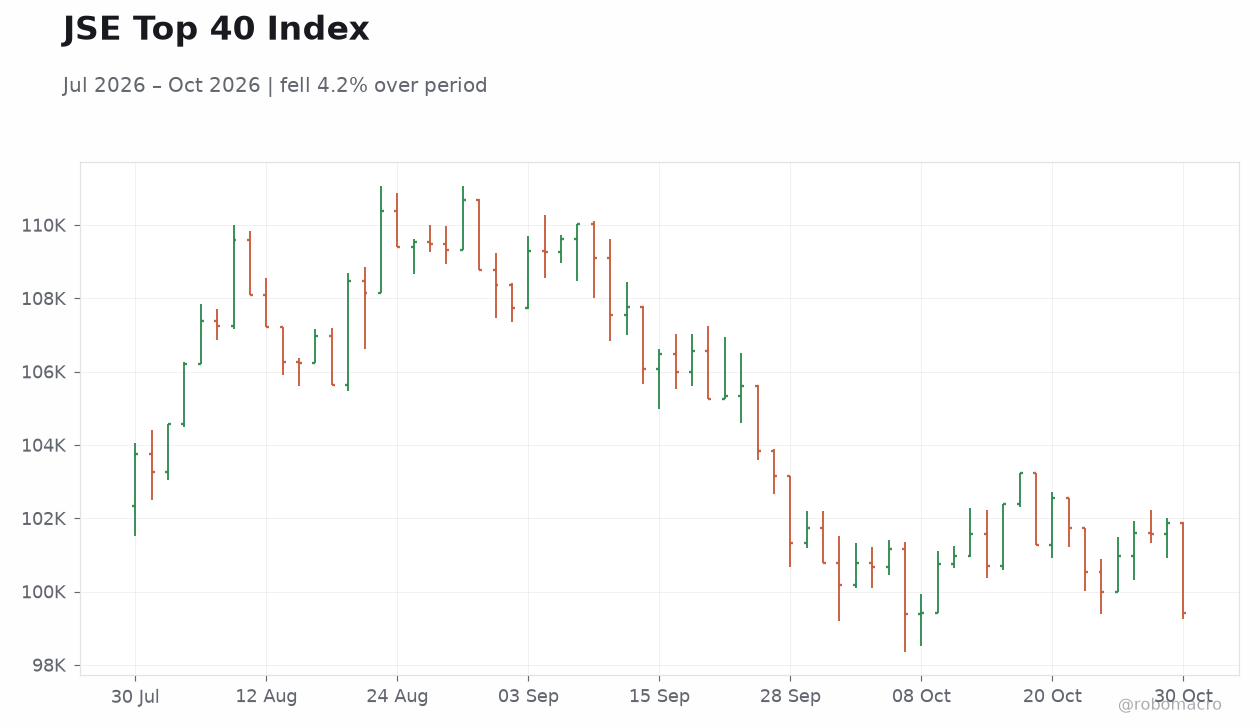
| JSE Top 40 | 99,412.30 | -2.42% |
| USD/ZAR | 16.70 | +0.57% |
| EUR/ZAR | 18.66 | +0.49% |
| Platinum | 1,437.50 | -0.03% |
| Gold | 3,914.60 | +0.40% |
| Brent Crude | 109.74 | -6.72% |
| Naspers | 67,860.00 | -1.61% |
| Bitcoin | 78,580.99 | +1.48% |
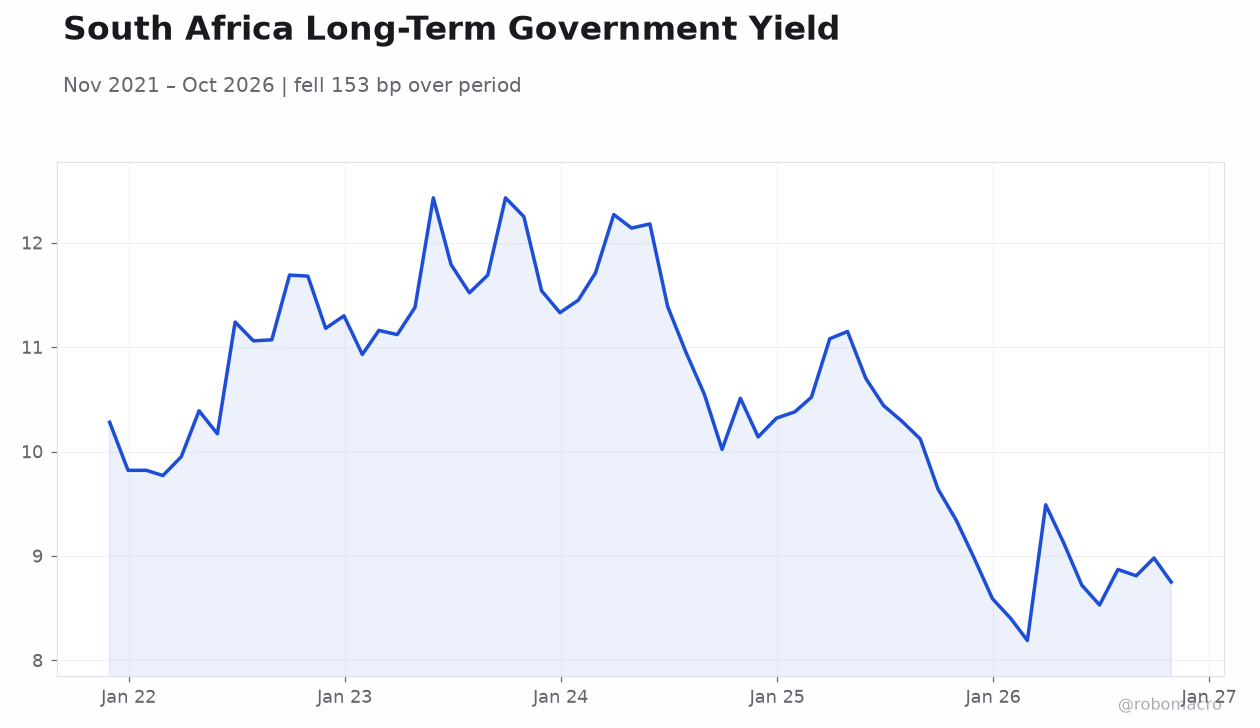
| South Africa 5Y Govt Yield | 8.54% | -4 bp |
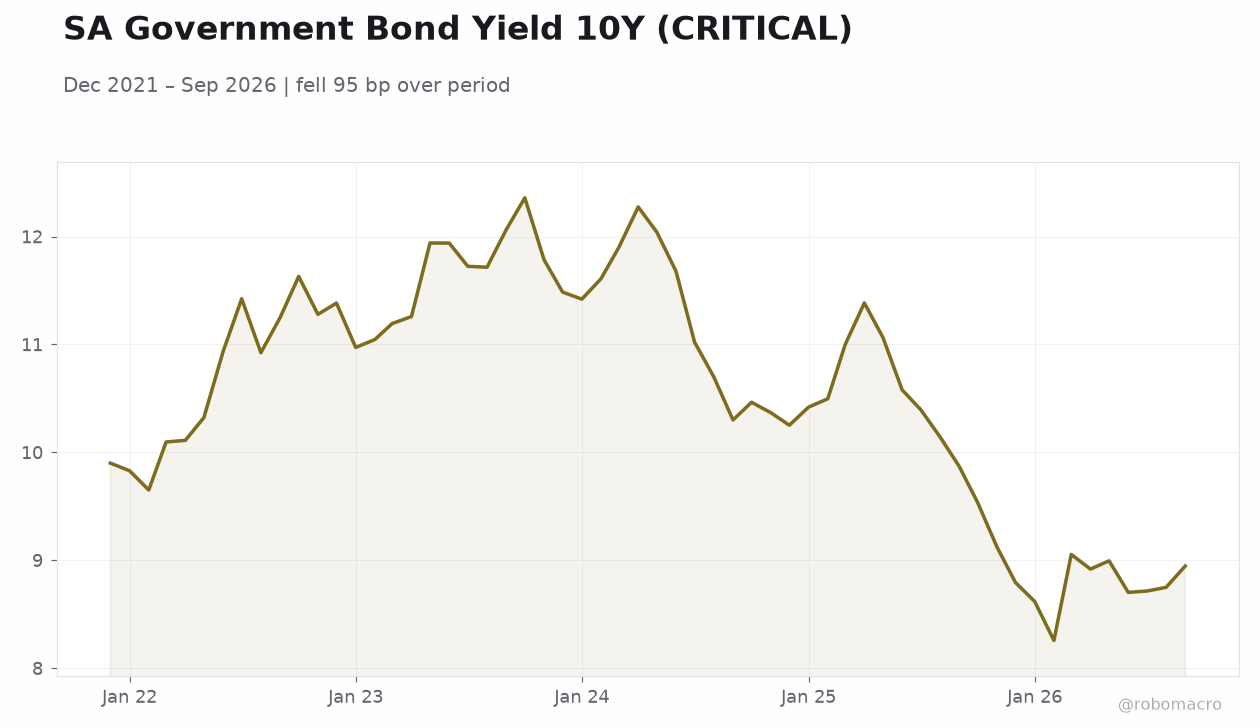
| South Africa 10Y Govt Yield | 8.75% | -4 bp |
Prior Economic Events
| Data | Prior | Cons | Actual |
|---|---|---|---|
| No events available | |||
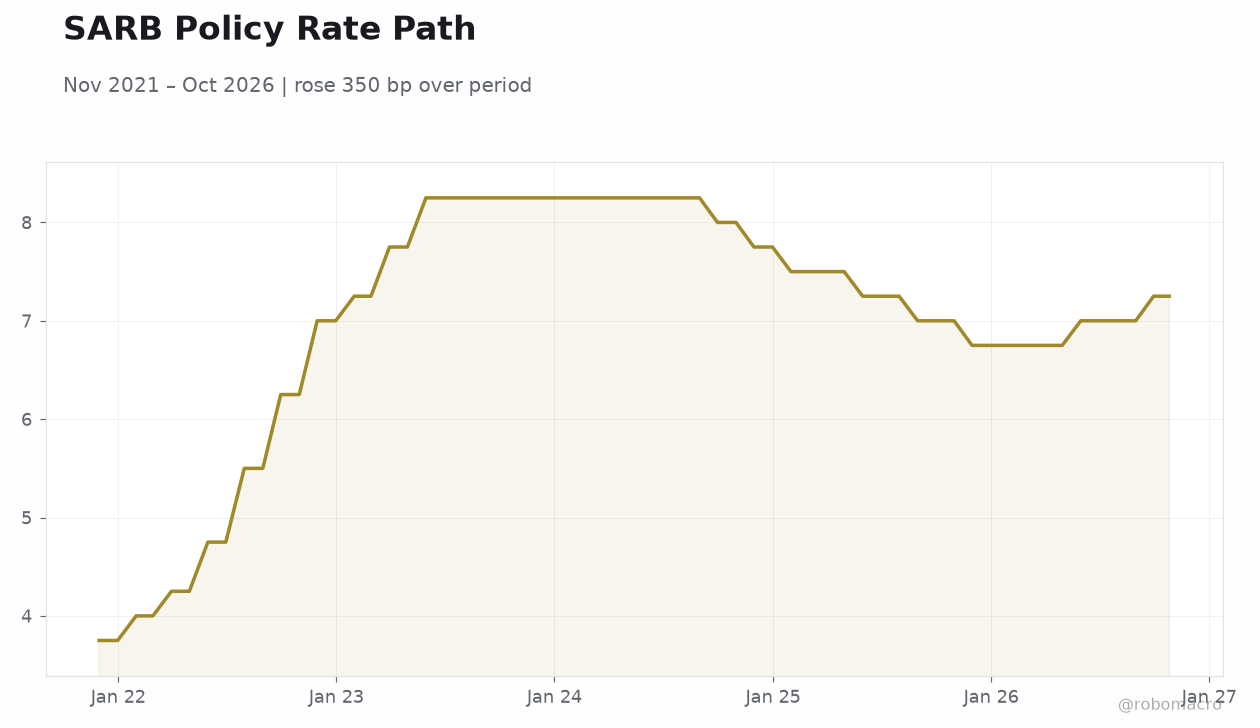 SARB Policy Rate Path | Type: macro_line | Policy Rate (%): 7.25 (2026-10-26) | Range: 3.75–8.25 | Trend(5pt): 3.75,7.25,8.25,7,7.25
Today's Economic Events
| Data | Prior | Cons | Time |
|---|---|---|---|
| No events available | |||
- JSE Top 40 fell 2.42% Friday while the rand weakened 0.57% to 16.70/USD amid broad risk-off sentiment
- Brent crude collapsed 6.72% to $109.74, easing imported inflation pressure but signaling global demand concerns
- South African 10-year yield eased 4 bp to 8.75% as bonds attracted safe-haven flows despite equity weakness
Yesterday's Recap
South African markets closed Friday's session sharply risk-off, with the JSE Top 40 shedding 2.42% to 99,412.30 as global equity sentiment soured. The rand bore the brunt of dollar strength, depreciating 0.57% to 16.70/USD, while the euro crossed at 18.66/ZAR, up 0.49%. Naspers led decliners among heavyweights, falling 1.61% to R67,860, tracking weakness in its Tencent proxy.
Despite the equity rout, government bonds found buyers — the 10-year yield eased 4 bp to 8.75% and the 5-year slipped 4 bp to 8.54%, suggesting domestic fixed income remains supported by carry appeal. Commodity markets offered little comfort: platinum was essentially flat at $1,437.50 (-0.03%) while gold edged up 0.40% to $3,914.60. The standout move was Brent crude's 6.72% plunge to $109.74, a significant disinflationary signal for South Africa's fuel import bill.
The Day Ahead
The domestic data calendar is empty for Monday, leaving markets to trade on global cues and positioning ahead of next week's local elections. With no scheduled SARB speeches or statistical releases, rand direction will be dictated by offshore risk appetite and commodity price action. Traders will watch whether Friday's Brent collapse extends, given its implications for South Africa's terms of trade and CPI trajectory.
Bond market participants will monitor whether the yield rally persists, particularly with the SARB's November 19 MPC meeting now less than three weeks away. Liquidity may be thinner than usual as investors await clarity on the political landscape.
Other Economic Notes
South Africa's growth trajectory remains anaemic, with recent commentary noting the economy "isn't getting any richer" — a structural constraint that limits fiscal space and weighs on consumer demand. The upcoming local elections next week introduce policy uncertainty, with service delivery failures, crime and unemployment dominating voter concerns. Durban's selection as the preferred host city for the 2036 or 2040 Olympics signals infrastructure ambitions that could catalyse long-term investment, though funding remains uncertain.
Illegal gold mining continues to plague Johannesburg, creating environmental liabilities and informal employment challenges. ↓ p.2