South Africa Macro Daily(Beta Mode)
Rand Holds Firm as AGOA Exclusion Hits Trade Outlook
Market Snapshot
| Asset | Level | Change |
|---|---|---|
| JSE Top 40 | 101,192.30 | -0.24% |
| USD/ZAR | 16.61 | +0.07% |
| EUR/ZAR | 18.67 | +0.50% |
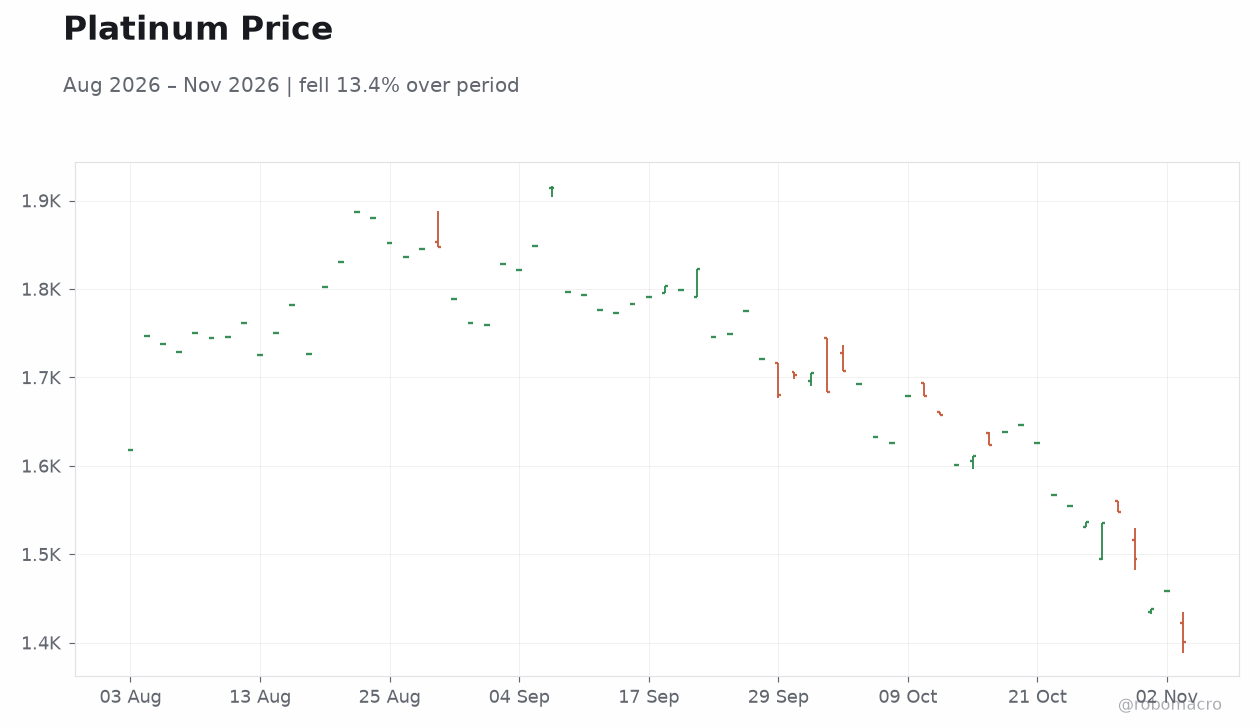
| Platinum | 1,400.00 | -4.04% |
| Gold | 3,957.00 | -0.32% |
| Brent Crude | 102.83 | -1.85% |
| Naspers | 70,420.00 | +1.32% |
| Bitcoin | 76,632.09 | -0.06% |
| South Africa 5Y Govt Yield | 8.54% | 0 bp |
| South Africa 10Y Govt Yield | 8.74% | -1 bp |
Prior Economic Events
| Data | Prior | Cons | Actual |
|---|---|---|---|
| No events available | |||
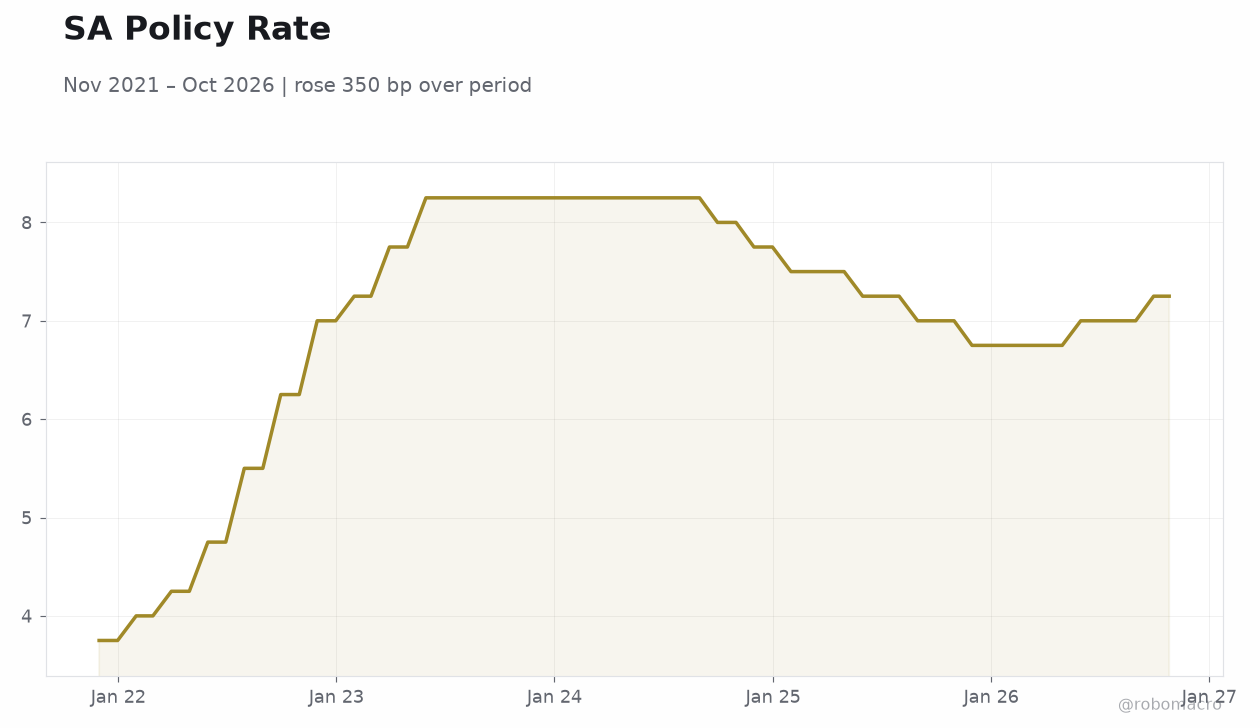 SA Policy Rate | Type: macro_line | Policy Rate %: 7.25 (2026-10-26) | Range: 3.75–8.25 | Trend(5pt): 3.75,7.25,8.25,7,7.25
Today's Economic Events
| Data | Prior | Cons | Time |
|---|---|---|---|
| No events available | |||
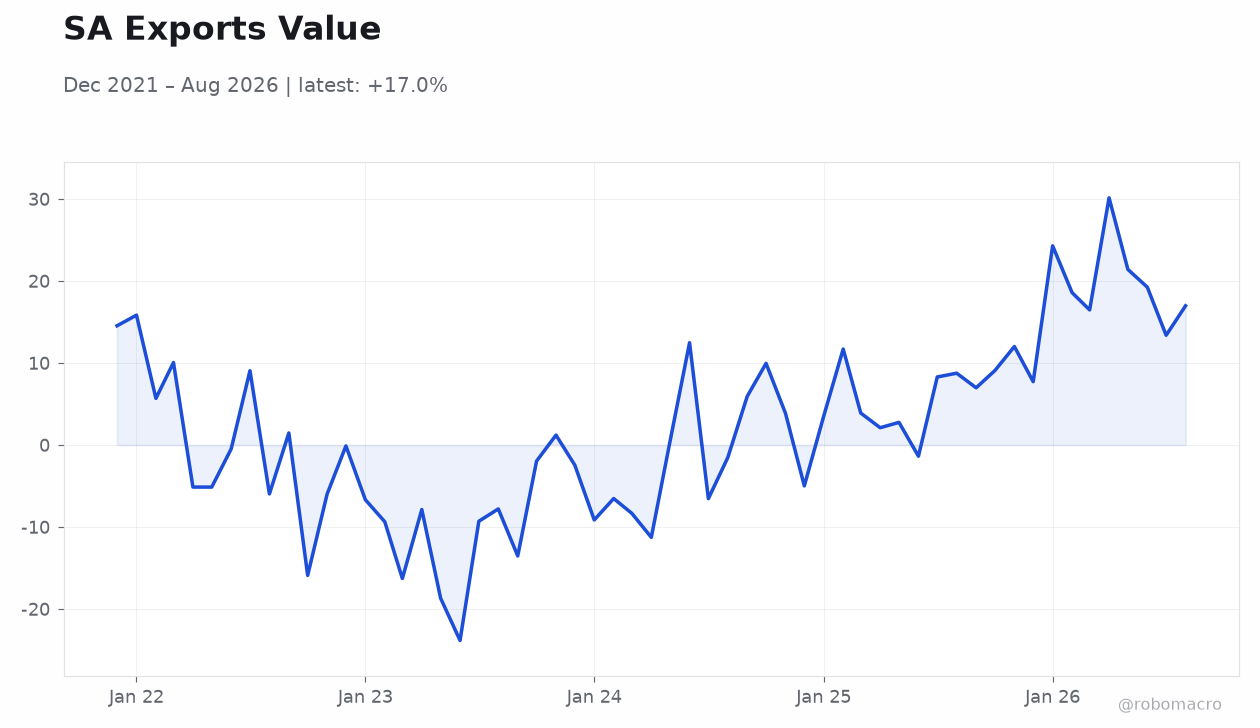
- US confirms South Africa's exclusion from AGOA duty-free trade deal, a structural blow to exports
- USD/ZAR holds near 16.61 despite trade shock; JSE Top 40 slips 0.24% as platinum plunges 4.04%
- Local elections dominate political risk; ANC braced for losses on service-delivery anger
Yesterday's Recap
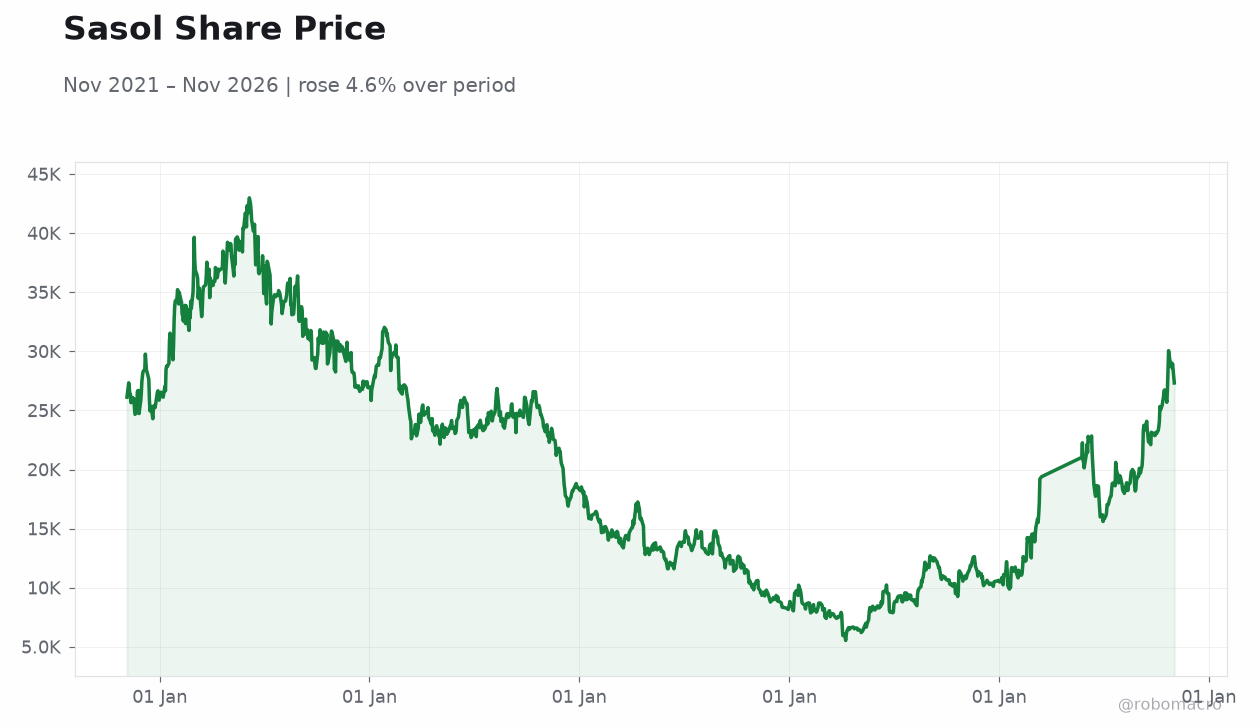
South African markets absorbed a significant trade-policy shock as the US Trade Representative confirmed South Africa and Rwanda would be excluded from the Africa-US duty-free trade arrangement, citing "practices inconsistent with" US interests. The rand proved resilient, with USD/ZAR closing at 16.61 (+0.07%) and EUR/ZAR at 18.67 (+0.50%), suggesting much of the AGOA risk was already priced. The JSE Top 40 fell 0.24% to 101,192.30, with Naspers bucking the trend at +1.32%.
Platinum was the standout loser, tumbling 4.04% to $1,400/oz, while gold eased 0.32% to $3,957/oz and Brent crude dropped 1.85% to $102.83. Fixed income was steady, with the 10-year government yield easing 1 bp to 8.74% and the 5-year unchanged at 8.54%. No scheduled South African data releases printed yesterday, leaving sentiment driven by trade headlines and election positioning ahead of Wednesday's municipal vote.
The Day Ahead
No tier-one South African data releases are scheduled for today, so markets will trade on election outcome risk and AGOA follow-through. Municipal elections across the country — including Johannesburg, the economic capital — are the dominant event, with the ANC expected to fall below a third of the vote amid frustration over water outages and power cuts. Traders will watch early turnout and provincial results for signals on coalition arithmetic and policy continuity.
The rand remains the key transmission channel, with USD/ZAR vulnerable to any post-election uncertainty. Bond markets will also monitor whether foreign investors treat the AGOA exclusion as a durable risk-premium event or a one-off headline.
Other Economic Notes
The AGOA exclusion is the most consequential trade development for South Africa this year, threatening agricultural and manufacturing export access to the US market and complicating the broader growth outlook. Electricity remains a structural constraint: the new 10-year electricity outlook appears reassuring on paper, but delivery assumptions — particularly gas procurement — are fragile and could undermine load-shedding relief. Political risk is elevated, with the ANC under pressure to reverse municipal decline and service-delivery failures now a central electoral theme.
↓ p.2