South Africa Macro Daily(Beta Mode)
Rand Slips, JSE Rallies on Metals Surge
Market Snapshot
| Asset | Level | Change |
|---|---|---|
| JSE Top 40 | 98,596.20 | +1.80% |
| USD/ZAR | 17.42 | -0.71% |
| EUR/ZAR | 19.12 | -0.58% |
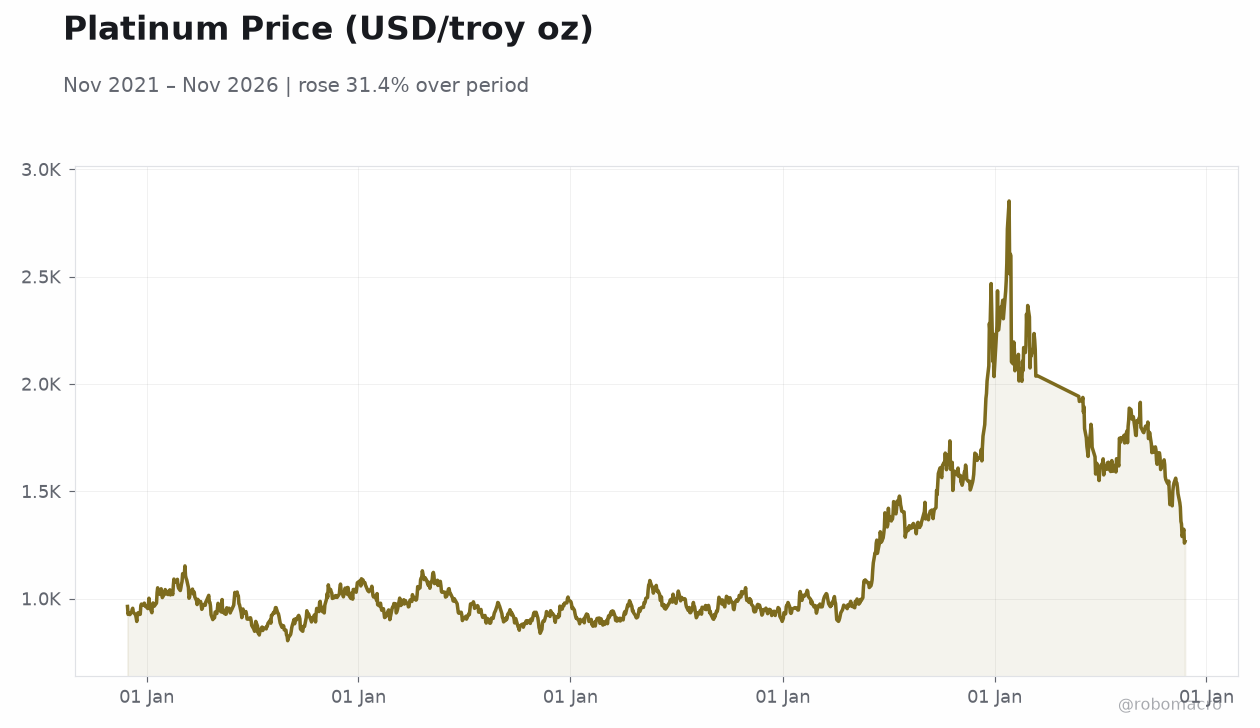
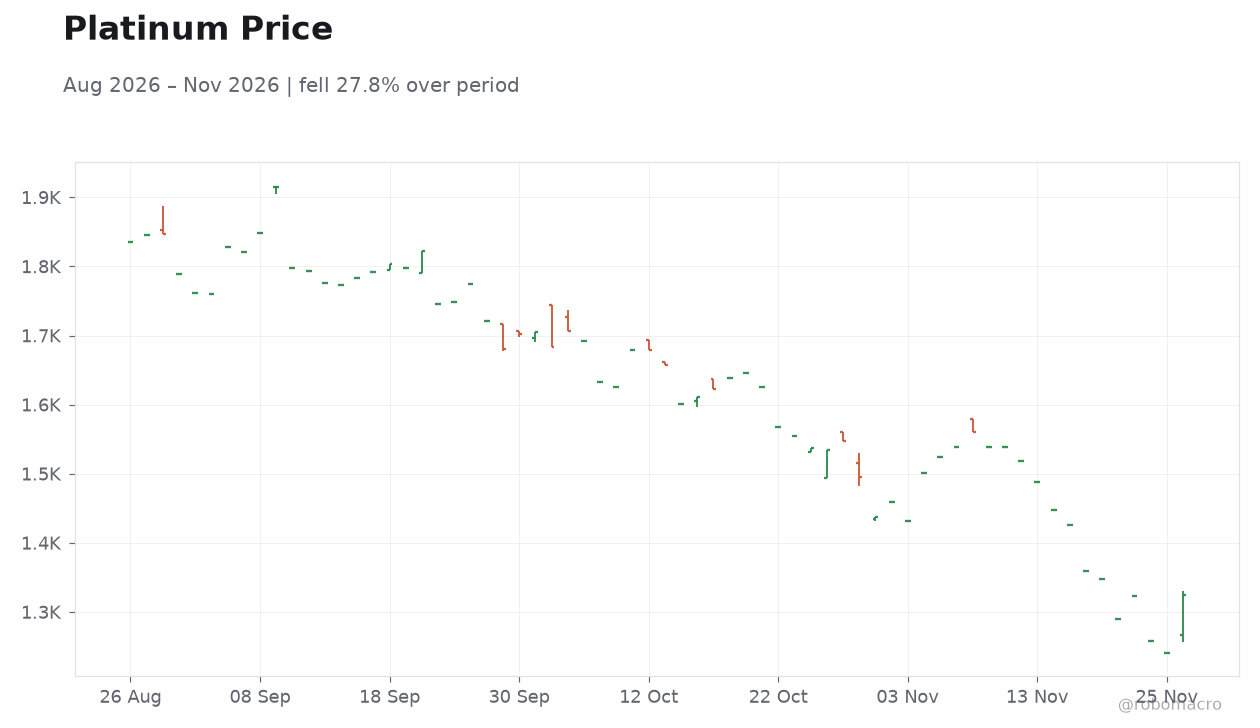
| Platinum | 1,324.30 | +6.68% |
| Gold | 3,656.10 | +3.40% |
| Brent Crude | 92.27 | -2.47% |
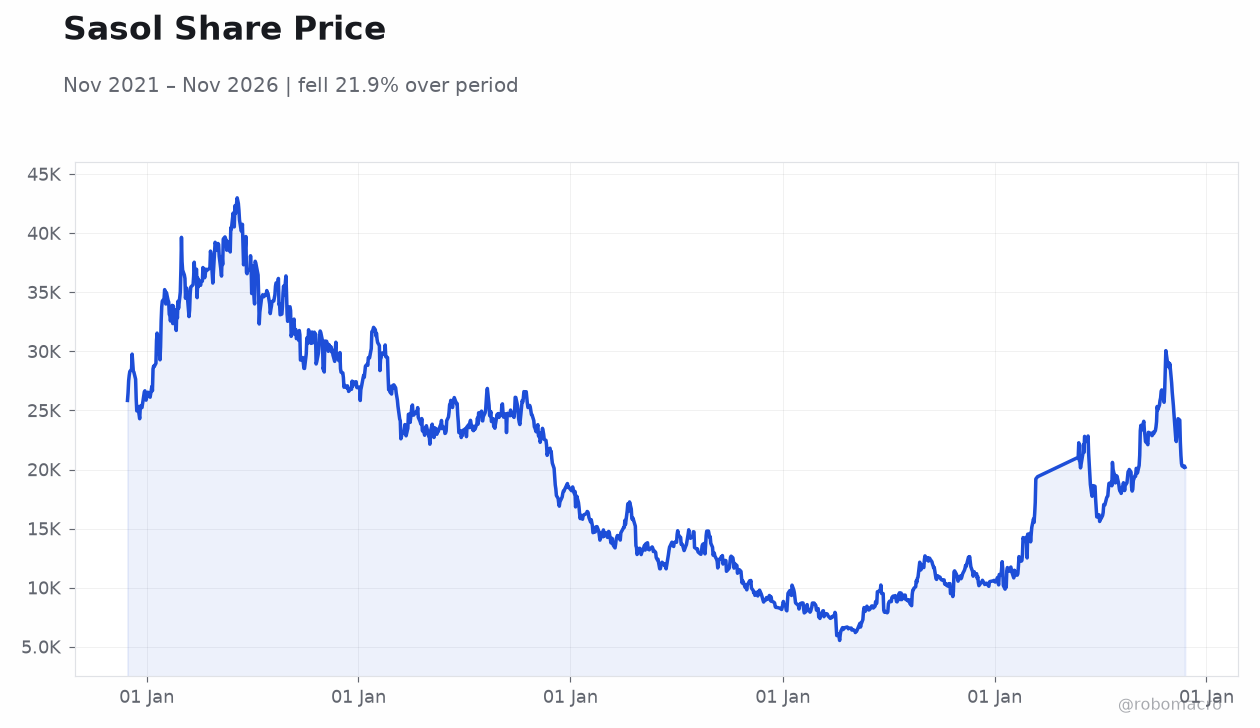
| Naspers | 62,300.00 | +1.94% |
| Bitcoin | 61,319.62 | +1.56% |
| South Africa 5Y Govt Yield | 8.67% | +1 bp |
| South Africa 10Y Govt Yield | 8.94% | +3 bp |
Prior Economic Events
| Data | Prior | Cons | Actual |
|---|---|---|---|
| No events available | |||
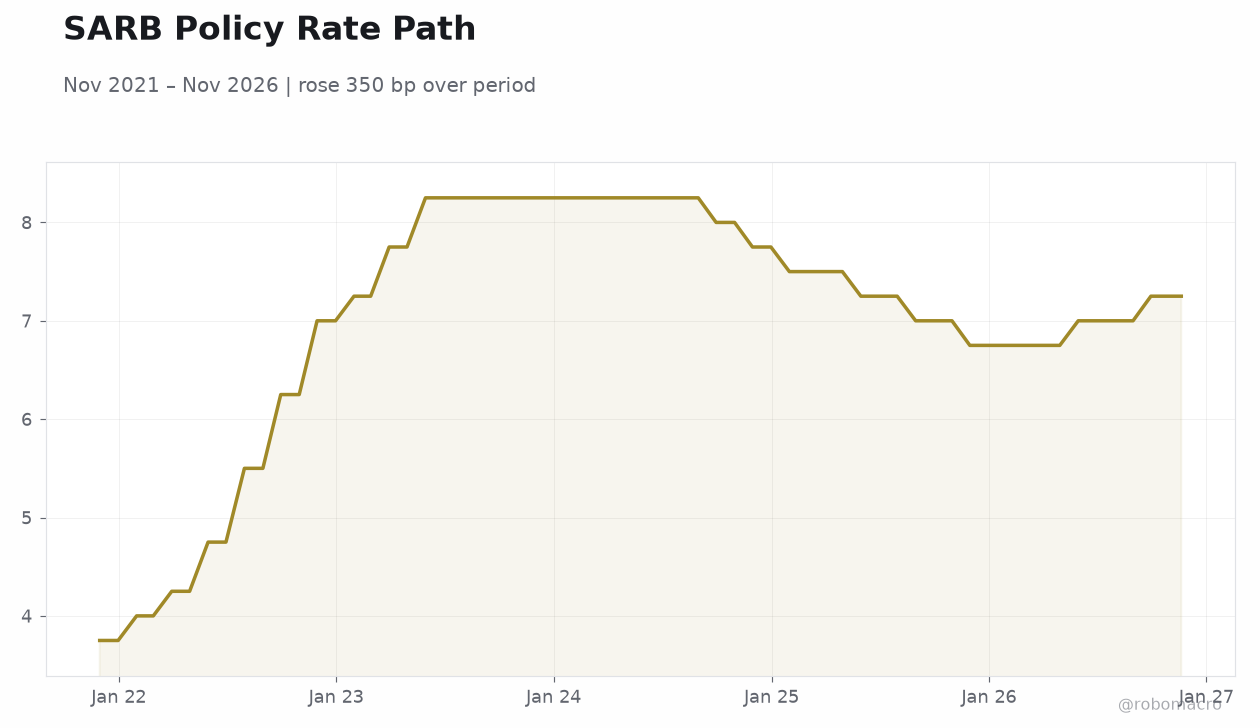 SARB Policy Rate Path | Type: macro_line | Policy Rate (%): 7.25 (2026-11-20) | Range: 3.75–8.25 | Trend(5pt): 3.75,7.25,8.25,7,7.25
Today's Economic Events
| Data | Prior | Cons | Time |
|---|---|---|---|
| No events available | |||
- JSE Top 40 surges 1.80% to 98,596 as platinum and gold rally fuels resource stocks
- Rand weakens 0.71% to 17.42/USD despite risk-on equity tone, with EUR/ZAR at 19.12
- SARB flags municipal finances as key infrastructure risk to financial stability
Yesterday's Recap
South African markets delivered a split session on 26 November, with the JSE Top 40 climbing 1.80% to 98,596.20 as precious metals strength lifted the resource complex. Platinum surged 6.68% to $1,324.30/oz and gold gained 3.40% to $3,656.10/oz, driving outsized gains in mining constituents. Naspers added 1.94% to R62,300, tracking broader risk appetite.
Despite the equity rally, the rand retreated 0.71% to 17.42/USD and 0.58% against the euro to 19.12, with selloff pressure attributed to inflation and interest-rate concerns per market commentary. Bond yields edged higher, with the 10-year government yield rising 3 bp to 8.94% and the 5-year up 1 bp to 8.67%. Brent crude fell 2.47% to $92.27/bbl, offering modest relief on the import bill.
No scheduled South African data releases printed during the session.
The Day Ahead
The calendar is empty for 27 November, with no tier-one South African data releases scheduled. Market attention will therefore pivot to secondary drivers: commodity price momentum in platinum and gold, which have become the dominant swing factor for JSE resource names, and rand positioning ahead of month-end. Traders will watch whether the currency can stabilise near 17.40 or extend the selloff toward 17.50, a level that would sharpen imported inflation pressure.
With no domestic prints to anchor direction, offshore risk sentiment and US rate expectations will likely dictate intraday flows. Liquidity may thin into the weekend, amplifying moves in the bond market where the 10-year sits at 8.94%.
Other Economic Notes
The SARB's latest Financial Stability Review has shifted its focus to municipal finances as the primary infrastructure threat to the financial system, a notable reclassification from prior emphasis on Eskom and national utility risk. This signals growing concern over local government arrears and service-delivery failures cascading into creditor and banking-sector exposure. Separately, President Ramaphosa confirmed ongoing negotiations with Washington over South Africa's AGOA exclusion, a critical trade file for agricultural and manufacturing exporters.
↓ p.2