UK Macro Daily(Beta Mode)
Gilt Pressure Builds Ahead of UK Jobs, CPI
Market Snapshot
| Asset | Level | Change |
|---|---|---|
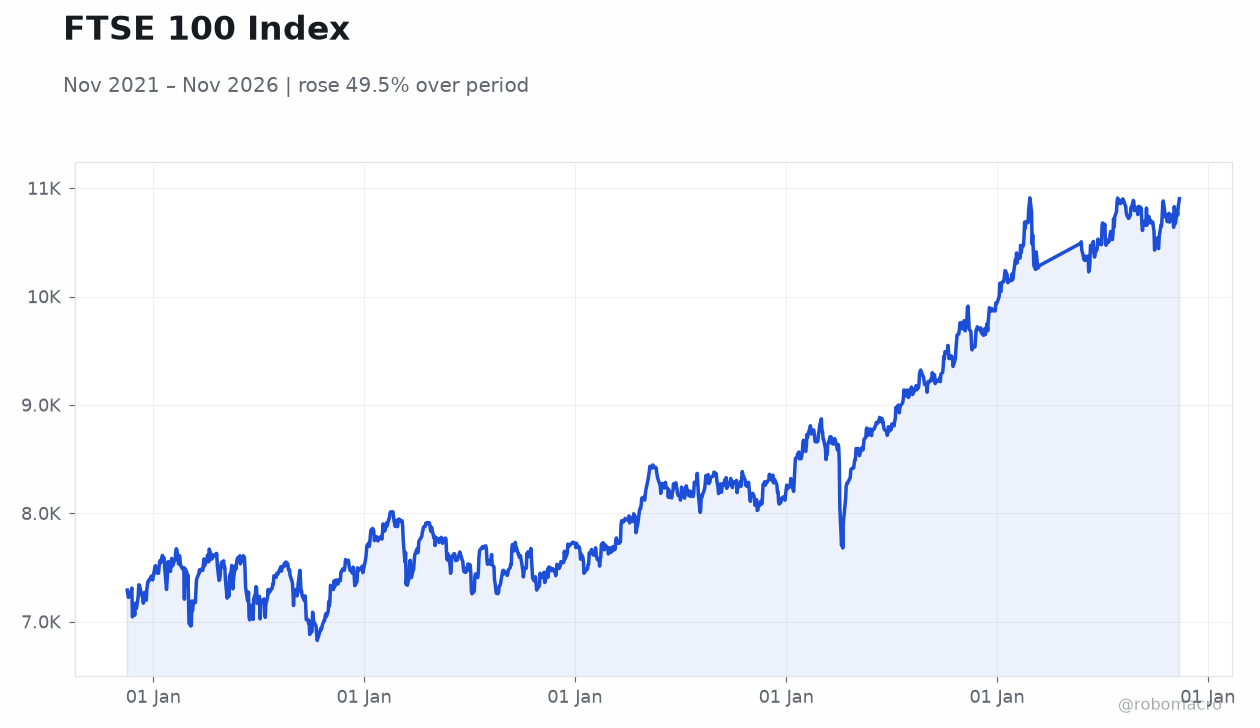
| FTSE 100 | 10,902.60 | +0.36% |
| FTSE 250 | 24,805.40 | -0.45% |
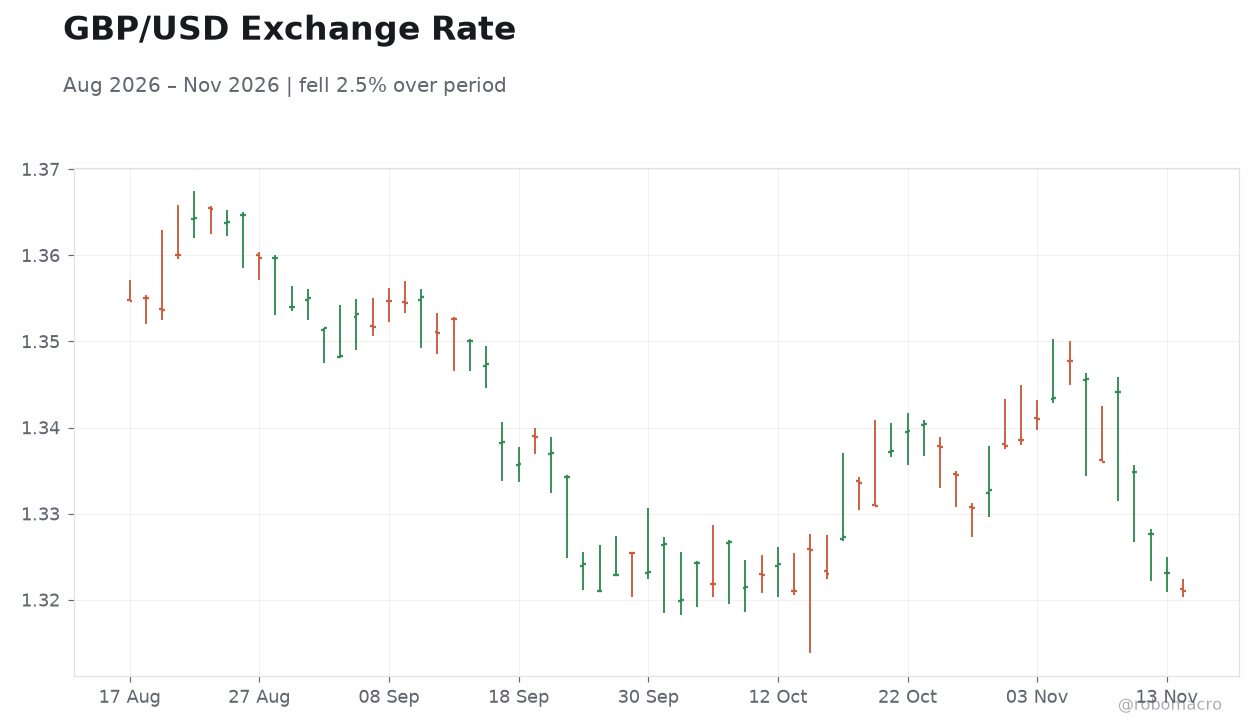
| GBP/USD | 1.32 | -0.15% |
| GBP/EUR | 1.20 | +0.10% |
| GBP/JPY | 210.55 | -0.47% |
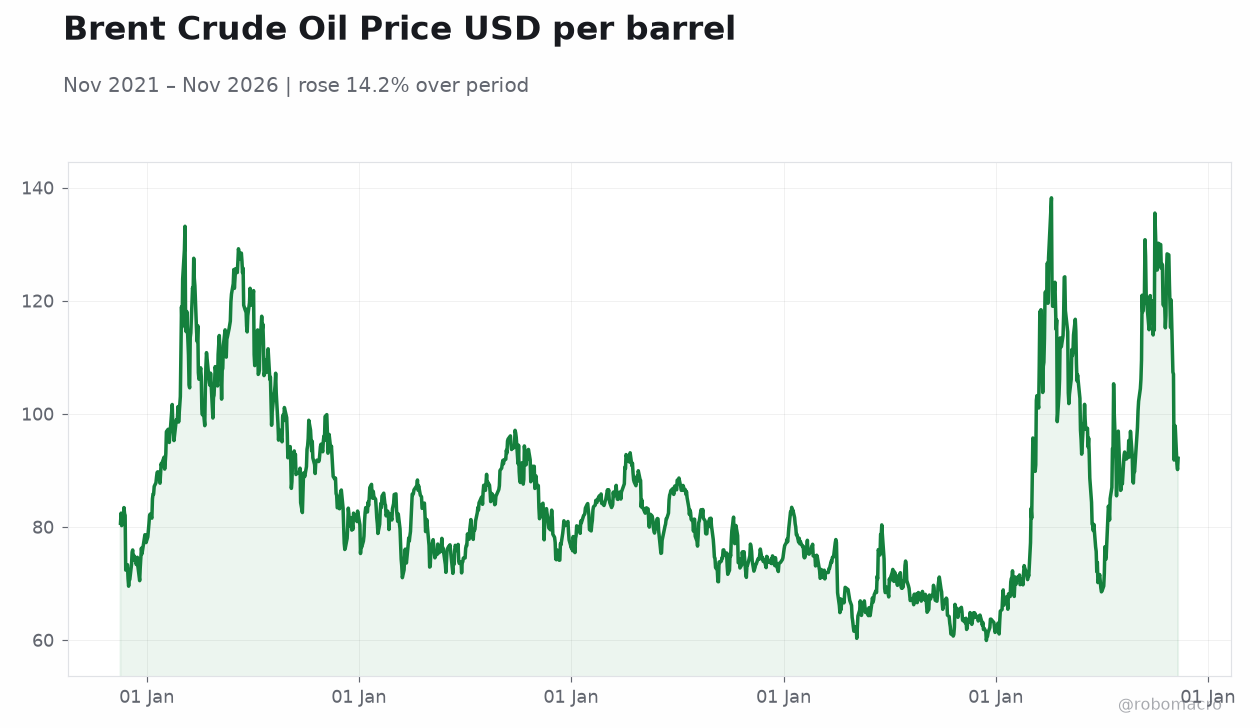
| Brent Crude | 95.82 | -0.02% |
| Gold | 3,855.30 | -0.80% |
| UK Nat Gas | 3.14 | -2.63% |
| Bitcoin | 64,274.54 | +0.23% |
| UK 2Y Gilt | 4.74% | +3 bp |
| UK 10Y Gilt | 5.26% | +5 bp |
Prior Economic Events
| Data | Prior | Cons | Actual |
|---|---|---|---|
| No events available | |||
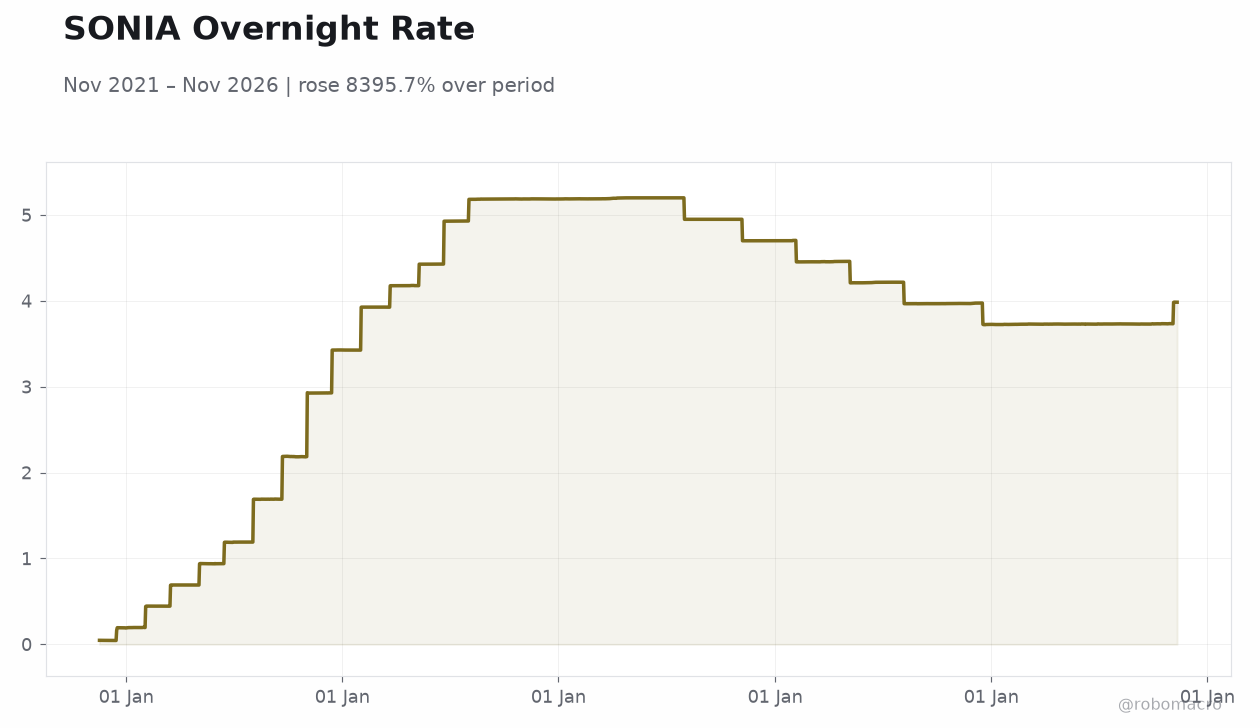
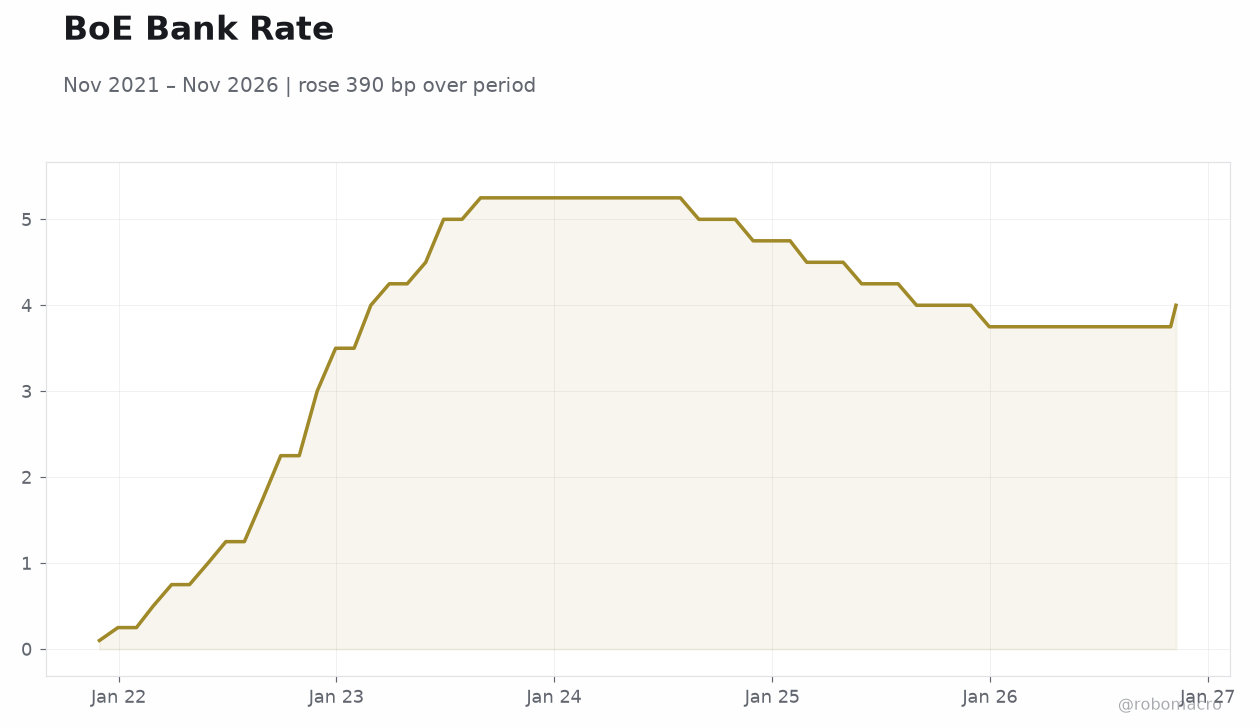 BoE Bank Rate | Type: macro_line | BoE Policy Rate (%): 4 (2026-11-09) | Range: 0.1–5.25 | Trend(5pt): 0.1,4,5.25,4,4
Today's Economic Events
| Data | Prior | Cons | Time |
|---|---|---|---|
| Tuesday (2026-11-17) | |||
| Headline Unemployment Rate | 4.70 | - | 02:00 |
| Average Earnings incl. Bonus (3Mo/Yr) | 3.70 | - | 02:00 |
| Employment Change | 102,000 | - | 02:00 |
| Wednesday (2026-11-18) | |||
| Inflation Rate Year-over-Year | 3.50 | - | 02:00 |
| Core Inflation Rate Year-over-Year | 2.80 | - | 02:00 |
| Inflation Rate Month-over-Month | 0.40 | - | 02:00 |
| Thursday (2026-11-19) | |||
| GFK Consumer Confidence Index | -24 | - | 19:01 |
- UK labour market data (Tuesday) and October CPI (Wednesday) are the week's pivotal releases, with the inflation print the key test for the BoE's hiking path.
- Gilts remain under pressure: 10-year yield at 5.26% (+5 bp) and 2-year at 4.74% (+3 bp), with curve steepening reflecting inflation and supply concerns.
- Sterling soft versus USD at 1.32 (-0.15%) but firmer versus EUR at 1.20 (+0.10%); FTSE 100 outperformed mid-caps.
Yesterday's Recap
No UK data releases were scheduled for Monday 15 November, leaving markets to position ahead of this week's heavy data slate. Gilts extended their sell-off, with the 10-year yield rising 5 bp to 5.26% and the 2-year up 3 bp to 4.74%, steepening the curve as investors demanded more compensation for inflation risk and heavy issuance. Sterling slipped 0.15% against the dollar to 1.32 but gained 0.10% versus the euro to 1.20, while GBP/JPY fell 0.47% to 210.55 amid broader risk-off sentiment.
The FTSE 100 edged up 0.36% to 10,902.60, though the domestically-focused FTSE 250 fell 0.45% to 24,805.40, underscoring caution on the UK consumer outlook. Energy markets were mixed, with Brent crude broadly flat at $95.82 and UK natural gas down 2.63% to 3.14. Gold fell 0.80% to $3,855.30 as real yields pushed higher.
The Day Ahead
Tuesday brings the headline unemployment rate at 02:00 ET, with the previous reading at 4.7%, alongside average earnings including bonus (previous 3.7%) and employment change (previous +102,000) — the wage data will be scrutinised for signs of persistent services inflation. Wednesday's October CPI is the week's centrepiece, with headline year-over-year previously at 3.5%, core at 2.8% and month-over-month at 0.4%; a hot print would reinforce expectations of further tightening. Thursday evening sees the GfK consumer confidence index (previous -24), a gauge of household sentiment under cost-of-living pressure.
Friday rounds out the week with retail sales month-over-month (previous -0.4%) and year-over-year (previous 0.8%), plus CBI industrial trends orders (previous -32).
Other Economic Notes
The UK economy faces a difficult combination of sticky inflation and softening demand, with CPI at 3.50% well above target and unemployment at 4.70%. Consumer-facing indicators are weak — retail sales fell 0.4% month-over-month in the prior reading and GfK confidence sits deeply negative — suggesting households remain squeezed by high borrowing costs and elevated energy prices. The labour market is cooling gradually, with employment growth slowing and wage growth of 3.7% still inconsistent with a rapid return to target.
↓ p.2