US Macro Daily(Beta Mode)
CPI Cools Sharply, Equities Slip
Market Snapshot
| Asset | Level | Change |
|---|---|---|
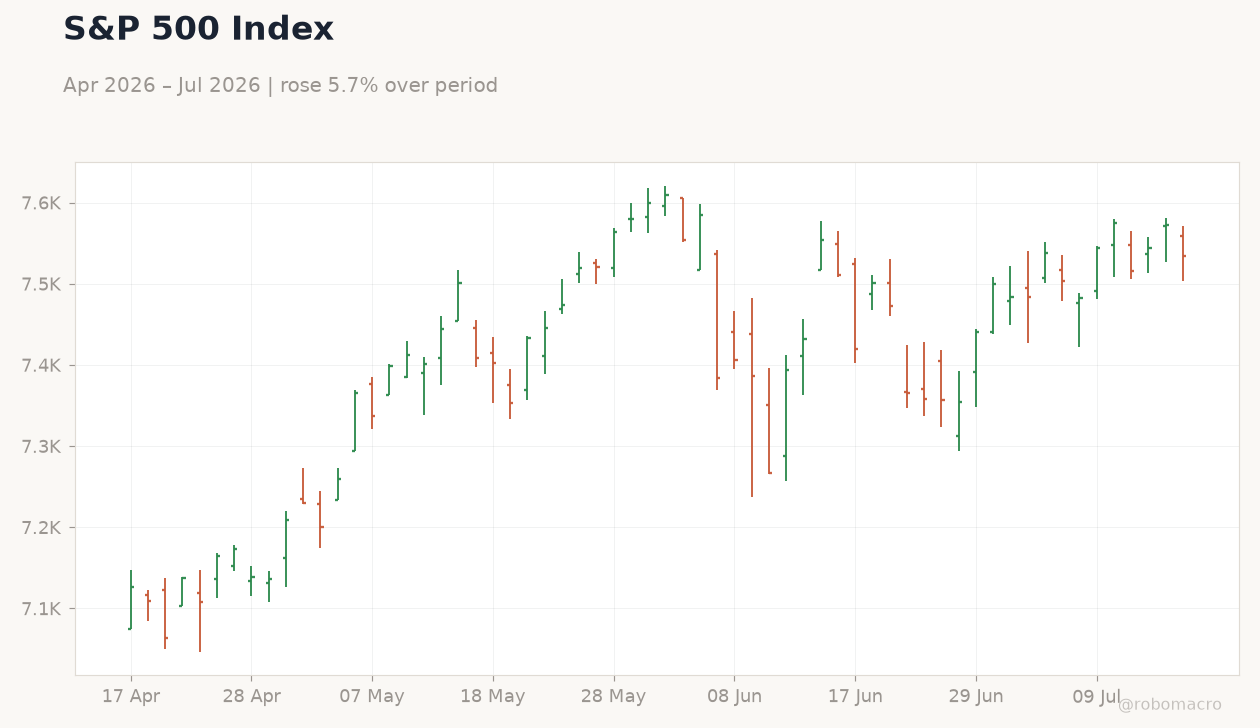
| S&P 500 | 7,533.77 | -0.51% |
| Nasdaq 100 | 29,025.77 | -1.62% |
| Dow Jones | 52,552.97 | -0.20% |
| Russell 2000 | 2,974.57 | -0.06% |
| USD/JPY | 162.34 | +0.16% |
| EUR/USD | 1.14 | -0.34% |
| GBP/USD | 1.34 | -0.79% |
| Gold | 3,996.90 | +0.28% |
| WTI Crude | 79.87 | +1.17% |
| Bitcoin | 63,131.76 | -1.03% |
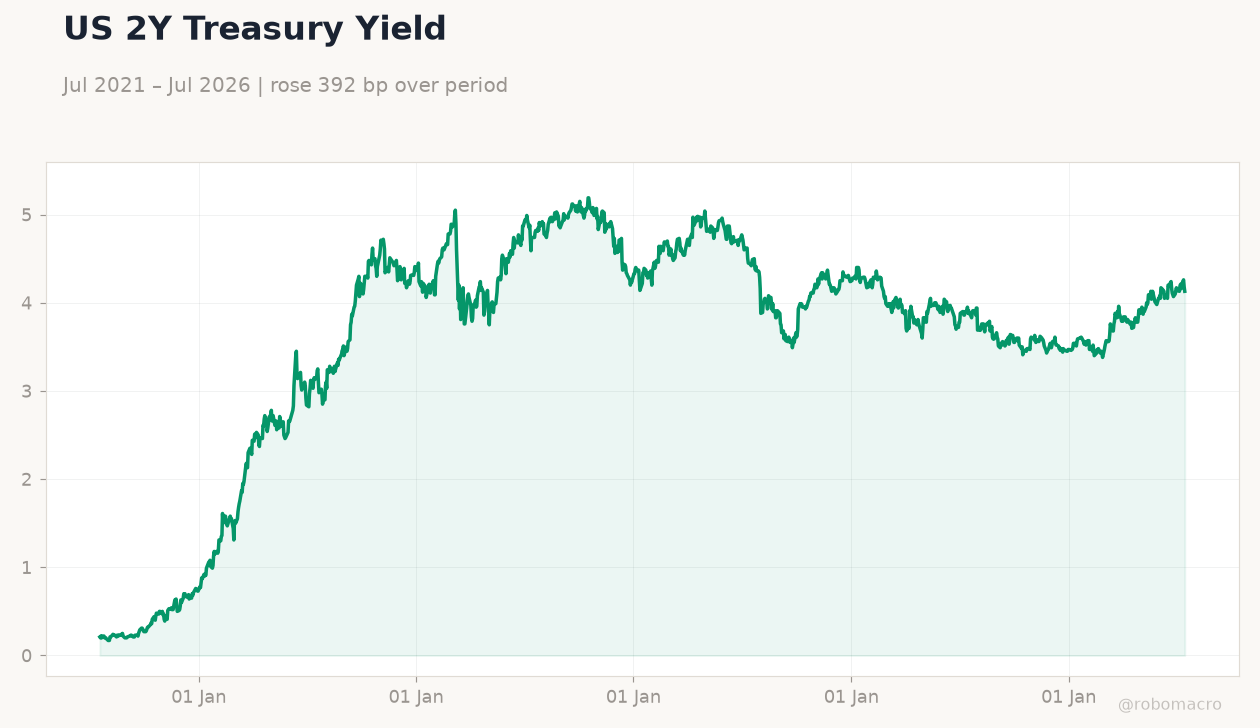
| US 2Y Treasury | 4.13% | -1.20% |
| US 10Y Treasury | 4.55% | -0.66% |
Prior Economic Events
| Data | Prior | Cons | Actual |
|---|---|---|---|
| Speech by Fed's Bowman | - | - | - |
| Speech by Fed's Waller | - | - | - |
| Monthly Budget Statement | -293,000m | -132,800m | -120,000m |
| ADP Employment Change Weekly | 21,000 | - | 19,750 |
| Core Inflation Rate Month-over-Month | 0.20 | 0.20 | 0 |
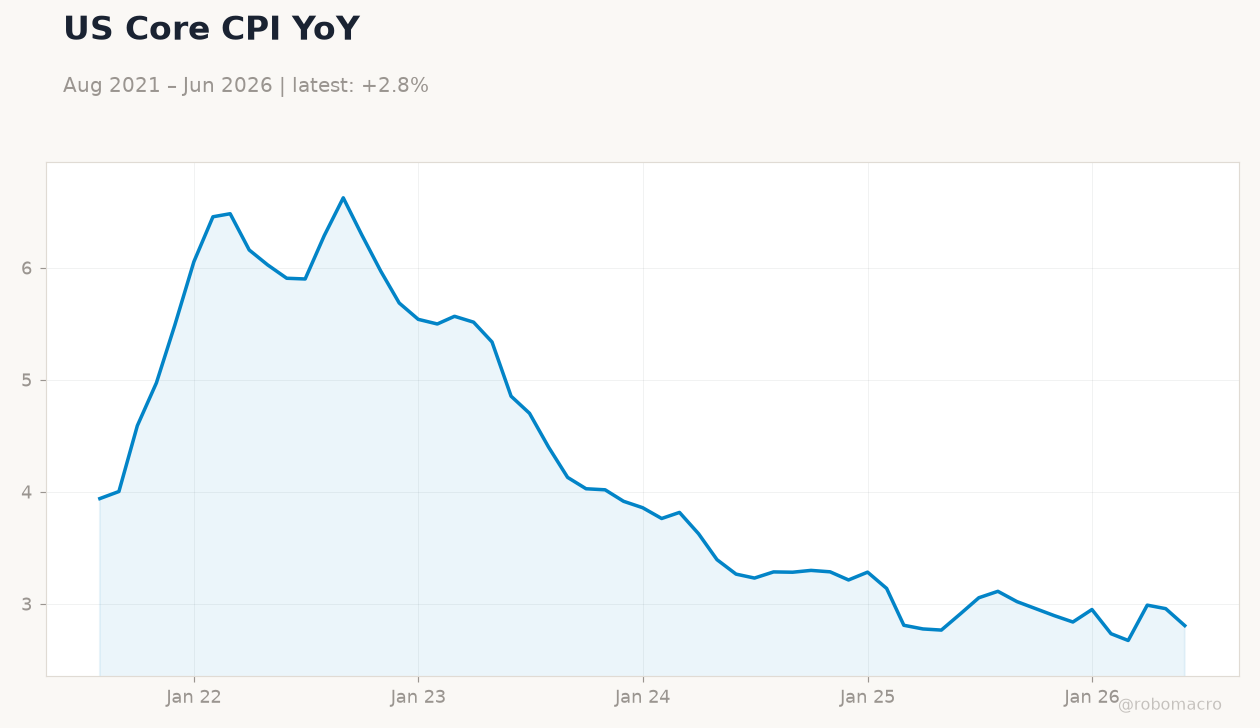
| Core Inflation Rate Year-over-Year | 2.90 | 2.80 | 2.60 |
| Inflation Rate Month-over-Month | 0.50 | -0.10 | -0.40 |
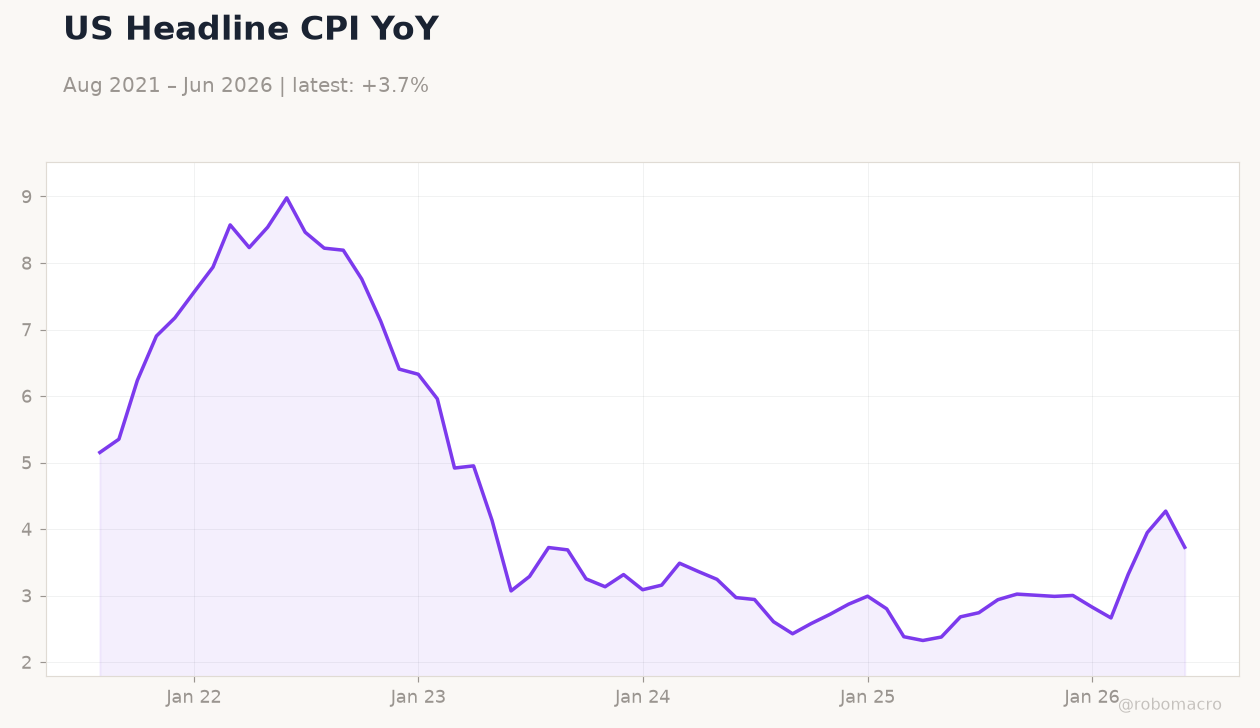
| Inflation Rate Year-over-Year | 4.20 | 3.80 | 3.50 |
| Consumer Price Index | 335.12 | 334.70 | 333.95 |
| Consumer Price Index SA | 333.98 | - | 332.57 |
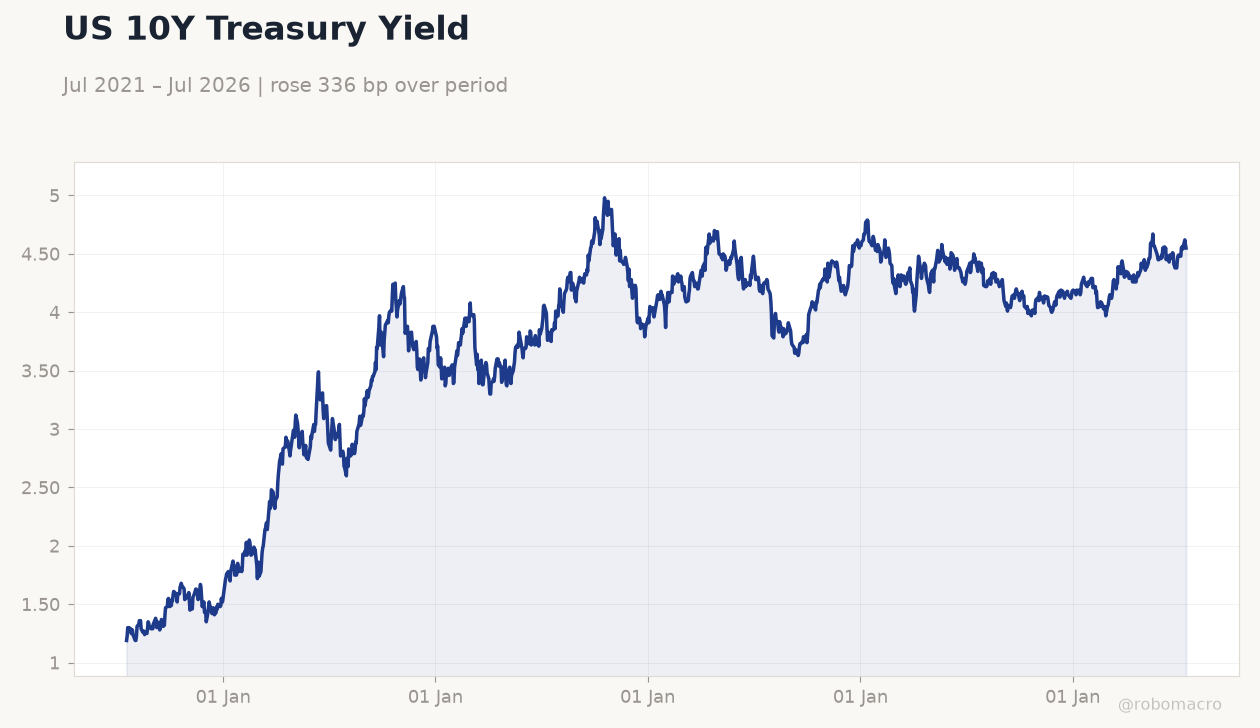 US 10Y Treasury Yield | Type: macro_line | 10Y Yield %: 4.55 (2026-07-15) | Range: 1.19–4.98 | Trend(6pt): 1.19,4,3.96,4.48,4.62,4.55
Today's Economic Events
| Data | Prior | Cons | Time |
|---|---|---|---|
| Building Permits Prel | 1.4m | 1.4m | 04:30 |
| Housing Starts Level | 1.2m | 1.3m | 04:30 |
| Building Permits Month-over-Month Prel | -0.90 | - | 04:30 |
| Export Prices Month-over-Month | 1.30 | -0.40 | 04:30 |
| Housing Starts Month-over-Month | -15.40 | - | 04:30 |
| Import Prices Month-over-Month | 1.90 | -0.70 | 04:30 |
| Industrial Production Month-over-Month | 0.10 | 0.20 | 05:15 |
| Michigan Consumer Sentiment Prel | 49.50 | 51 | 06:00 |
- June CPI rose 3.5% y/y and core 2.6% y/y, both below consensus, easing rate-cut odds.
- S&P 500 fell 0.51% and Nasdaq 100 dropped 1.62% as tech shares led losses.
- US 2-year yield declined to 4.13% and 10-year to 4.55%, with gold rising to $3,996.90.
Yesterday's Recap
June CPI data released July 14 showed headline inflation at 3.5% y/y versus 3.8% expected and core at 2.6% y/y versus 2.8% consensus, with month-over-month core flat against a 0.2% forecast. The softer print triggered immediate buying in Treasuries, pushing the 2-year yield down 1.20% to 4.13% and the 10-year yield 0.66% lower to 4.55%. Equity markets reacted negatively, with the S&P 500 closing at 7,533.77 (-0.51%), Nasdaq 100 at 29,025.77 (-1.62%), and Dow Jones at 52,552.97 (-0.20%).
Oil advanced 1.17% to $79.87 on Middle East supply concerns while the dollar strengthened modestly against the yen. Fed speakers including Bowman and Waller maintained data-dependent language without signaling shifts in near-term policy. ADP employment figures and the monthly budget statement also printed, showing modest private payroll growth and a narrower deficit than expected.
The Day Ahead
Markets will focus on preliminary building permits and housing starts data due at 8:30 a.m. ET. The releases will test whether housing metrics confirm cooling demand amid elevated mortgage rates.
No FOMC members are slated for public remarks, leaving the recent CPI print as the dominant driver of positioning. Treasury futures point to further yield compression if housing data disappoint, while equity traders will monitor semiconductor names after yesterday’s losses. Swap markets currently price roughly 50 basis points of cumulative easing by year-end following the inflation surprise.
Attention will also remain on oil-price stability after the prior session’s advance.
Other Economic Notes
Consumer spending remains resilient despite grumbling over prices, supporting the 2.10% GDP growth rate recorded in the first quarter. Retail sales rose 6.72% y/y through June, outpacing wage gains and indicating households continue to draw on savings and credit. UnitedHealth raised its full-year earnings outlook after stronger medical management, illustrating how select large-cap service firms are navigating cost pressures.
<i>↓ p.2</i>