Hot PPI, Solid Retail Sales Lift Yields
1.30 Producer Price Index0.80 Retail Sales0.70 Core PPI Month-over-Month25.50 NY Empire State20.90 Philadelphia Fed
S&P 5007,744.06+0.33%
US 10Y Treasury5.10%-9 bp
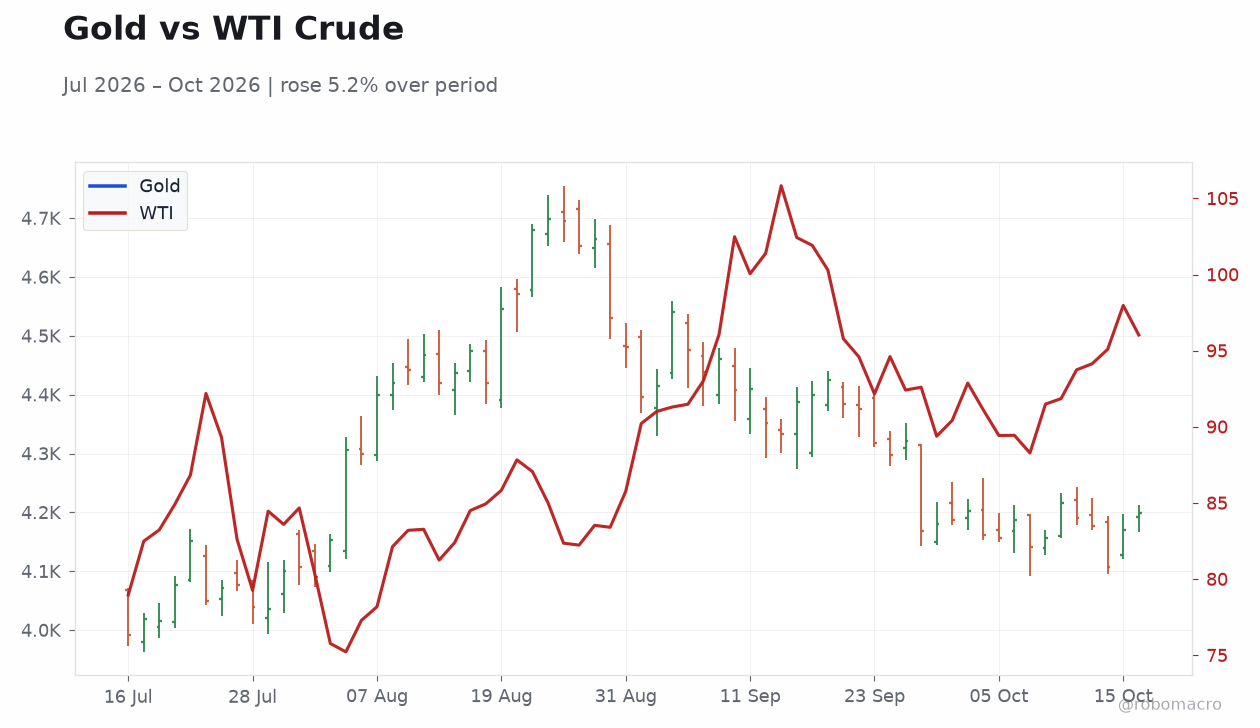
WTI Crude96.06-1.95%
Gold4,198.80+0.69%
Market Snapshot
| Asset | Level | Change |
|---|
| S&P 500 | 7,744.06 | +0.33% |
| Nasdaq 100 | 29,935.60 | -0.05% |
| Dow Jones | 52,177.69 | +1.08% |
| Russell 2000 | 2,767.27 | +1.38% |
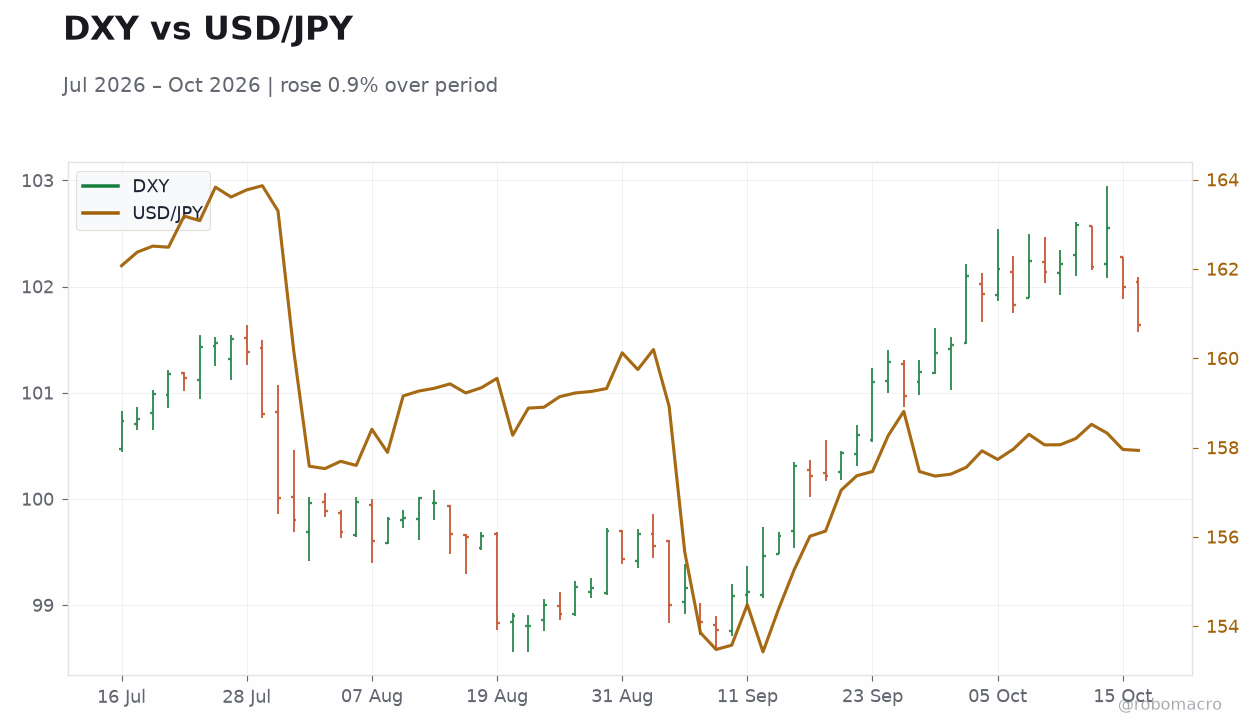
| USD/JPY | 157.96 | -0.23% |
| EUR/USD | 1.13 | +0.59% |
| GBP/USD | 1.33 | +0.82% |
| Gold | 4,198.80 | +0.69% |
| WTI Crude | 96.06 | -1.95% |
| Bitcoin | 82,107.24 | -0.04% |
| US 2Y Treasury | 4.77% | -5 bp |
| US 10Y Treasury | 5.10% | -9 bp |
Prior Economic Events
| Data |
Prior |
Cons |
Actual |
| Speech by Fed's Bowman | - | - | - |
| Producer Price Index Month-over-Month | 0.50 | 0.50 | 1.30 |
| Retail Sales Month-over-Month | 1.30 | 0.30 | 0.80 |
| Core PPI Month-over-Month | 0.20 | 0.30 | 0.70 |
| NY Empire State Manufacturing Index | 7.60 | 10.30 | 25.50 |
| Philadelphia Fed Manufacturing Index | 37.80 | 28.40 | 20.90 |
| Retail Sales Control Group Month-over-Month | 1.20 | 0.30 | 0.10 |
| Retail Sales Excluding Autos Month-over-Month | 1.40 | 0.50 | 0.90 |
| Weekly Jobless Claims | 198,000 | 200,000 | 199,000 |
| Business Inventories Month-over-Month | 0.90 | 0.40 | 0.40 |
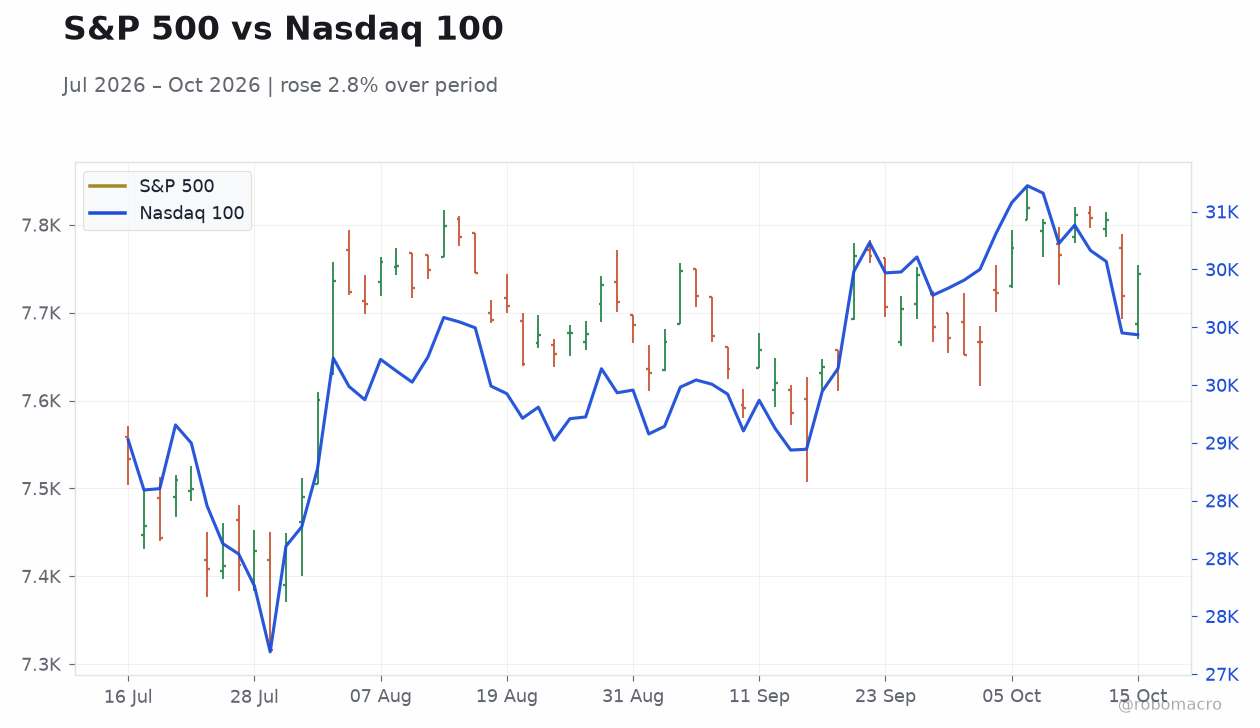 S&P 500 vs Nasdaq 100 | Type: market_hloc | S&P 500: 7744 (2026-10-15) | Range: 7316–7819 | Trend(5pt): 7534,7758,7686,7706,7744 | Nasdaq 100: 2.994e+04 (2026-10-15) | Range: 2.719e+04–3.122e+04 | Trend(5pt): 2.903e+04,2.972e+04,2.946e+04,3.047e+04,2.994e+04
Today's Economic Events
| Data |
Prior |
Cons |
Time |
| Export Prices Month-over-Month | 0.60 | 1 | 08:30 |
| Import Prices Month-over-Month | 0.70 | 0.80 | 08:30 |
| Industrial Production Month-over-Month | 0 | 0.40 | 09:15 |
| Monthly Budget Statement | -167,000m | -29,000m | 14:00 |
| Net Long-term TIC Flows | -27,900m | 75,200m | 16:00 |
- September PPI surged 1.3% m/m, double consensus, with core at 0.7% as energy costs filter through
- Retail sales rose 0.8% m/m, beating 0.3% estimates; control group cooled to 0.1%
- 10-year yield eased 9 bp to 5.10%; S&P 500 gained 0.33% as rotation favored cyclicals
Yesterday's Recap
US markets absorbed a heavier-than-expected inflation print alongside robust demand data. Producer prices jumped 1.3% m/m against a 0.5% consensus, while core PPI ran 0.7% versus 0.3% expected — evidence that the energy shock is now passing through to pipeline costs. Retail sales advanced 0.8% m/m, well above the 0.3% consensus, though the control group, which feeds GDP calculations, slowed sharply to 0.1% from 1.2% prior.
Regional manufacturing surveys diverged: the Empire State index surged to 25.5 from 7.6, while Philadelphia Fed activity cooled to 20.9 from 37.8, both remaining solidly in expansion. Jobless claims held at 199,000, underscoring labor-market resilience. Equities finished mixed but constructive — the S&P 500 added 0.33% to 7,744.06, the Dow rallied 1.08%, and the Russell 2000 outperformed at +1.38%, signaling rotation into domestic cyclicals — while the Nasdaq 100 slipped 0.05%.
Treasuries stabilized after recent volatility, with the 10-year yield easing 9 bp to 5.10% and the 2-year down 5 bp at 4.77%. WTI crude fell 1.95% to $96.06 after a large 8.6 million barrel crude inventory draw reversed expectations.
The Day Ahead
Today's calendar is light on tier-one data, leaving markets to digest yesterday's inflation surprise and Fed commentary. Attention turns to any follow-through from Chair Warsh's evening remarks on price stability and the AI-driven economic transformation. Export price data due this morning will offer a read on how much of the energy move is flowing through trade channels.
Traders will monitor the University of Michigan sentiment preliminaries and housing-related releases if scheduled, alongside continued positioning ahead of next week's heavier data flow. With the 10-year yield stabilizing near 5.10% in Asian trade, focus shifts to whether the bond market has found footing after the recent backup. Equity investors will watch whether the rotation from AI mega-caps into healthcare and value persists for a second session.
The dollar firmed against majors, with EUR/USD at 1.13 and GBP/USD at 1.33, and further direction hinges on rate-differential dynamics.
Page 1
Never miss an issue
Subscribe to US Macro Daily and get each new issue delivered to your inbox.
Already a member? Visit robomacro.com
to log in and manage subscriptions, or use Forgot Password to set a password.