US Macro Daily(Beta Mode)
Fed Watch: Warsh Era Begins, Yields Near 5%
Market Snapshot
| Asset | Level | Change |
|---|---|---|
| S&P 500 | 7,659.44 | -1.09% |
| Nasdaq 100 | 29,187.55 | -2.50% |
| Dow Jones | 52,002.41 | -0.34% |
| Russell 2000 | 2,721.37 | -1.66% |
| USD/JPY | 158.14 | +0.12% |
| EUR/USD | 1.12 | +0.08% |
| GBP/USD | 1.33 | +0.47% |
| Gold | 4,186.30 | +0.12% |
| WTI Crude | 98.00 | -3.36% |
| Bitcoin | 82,269.82 | +0.31% |
| US 2Y Treasury | 4.74% | -3 bp |
| US 10Y Treasury | 5.09% | -1 bp |
Prior Economic Events
| Data | Prior | Cons | Actual |
|---|---|---|---|
| No events available | |||
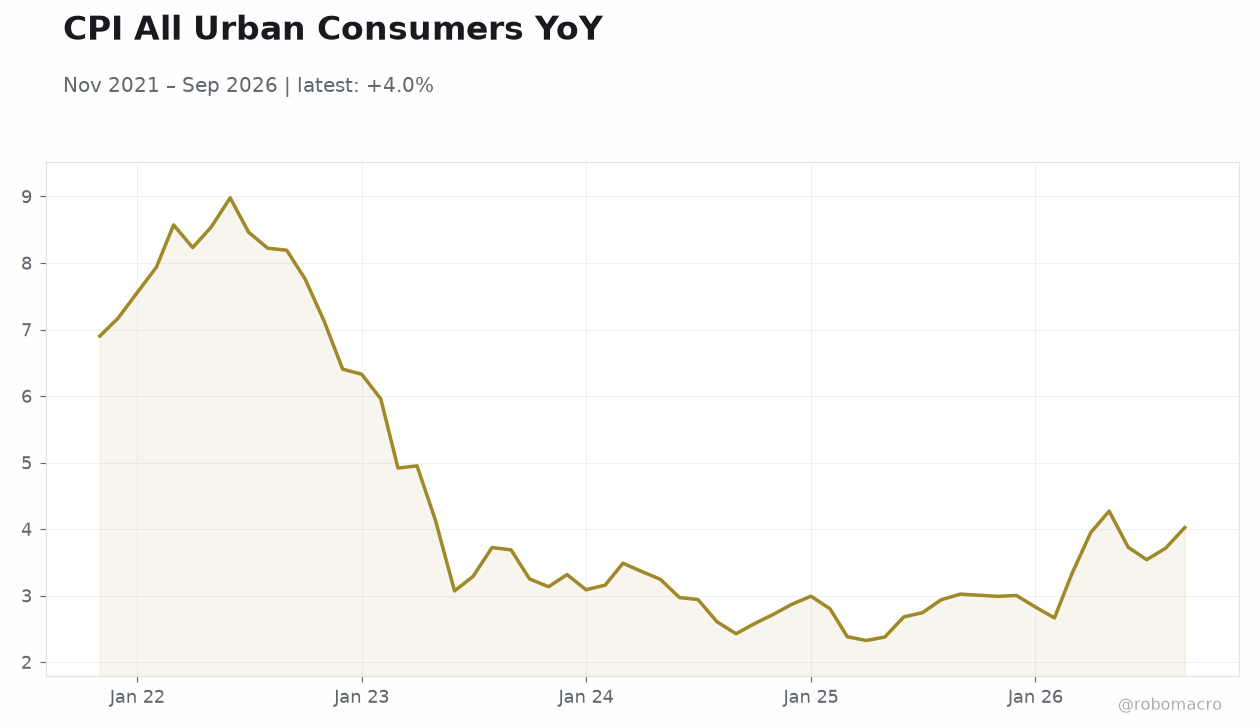 CPI All Urban Consumers YoY | Type: macro_line | CPI Index (YoY %): 4.023 (2026-09-01) | Range: 2.325–8.979 | Trend(6pt): 6.902,6.327,3.487,2.377,3.713,4.023
Today's Economic Events
| Data | Prior | Cons | Time |
|---|---|---|---|
| No events available | |||
- Equities slid Friday as the Nasdaq 100 fell 2.50% and the S&P 500 lost 1.09%, with the AI trade unwinding against mounting price pressures and the 10-year yield holding above 5%.
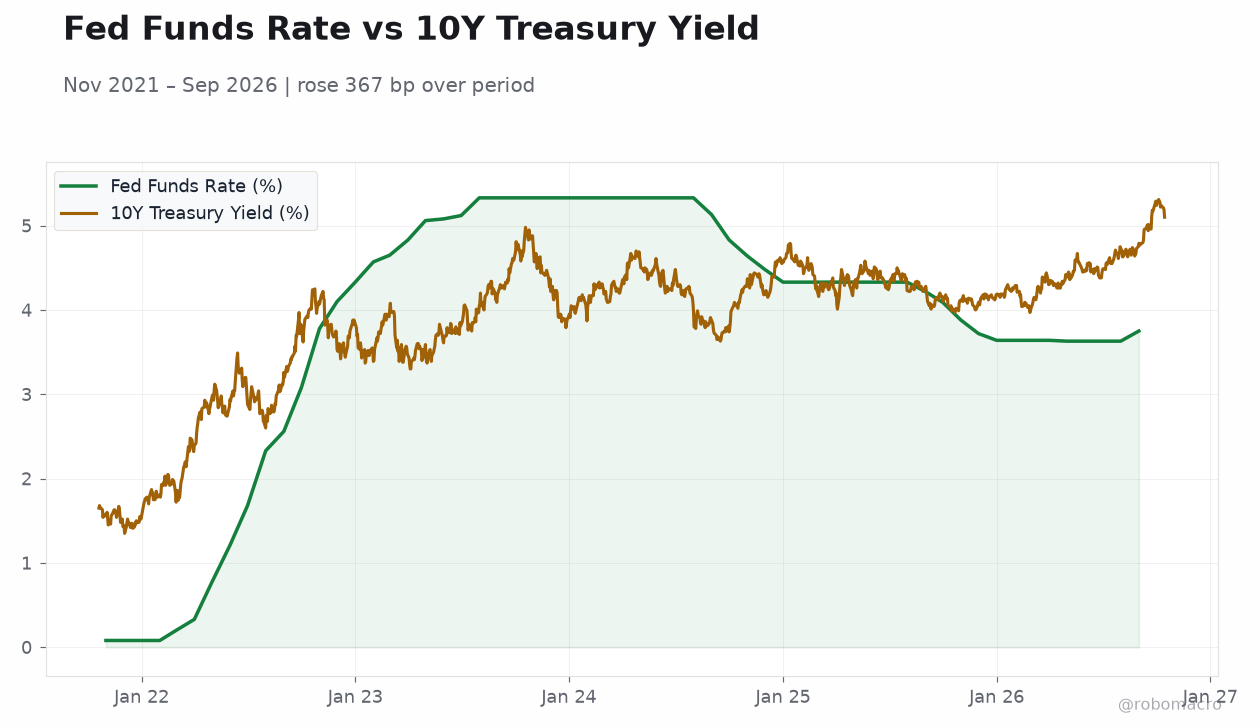
- New Fed Chair Kevin Warsh flagged stronger US growth while the Beige Book flagged rising inflation, complicating the easing path with the funds rate at 3.88%.
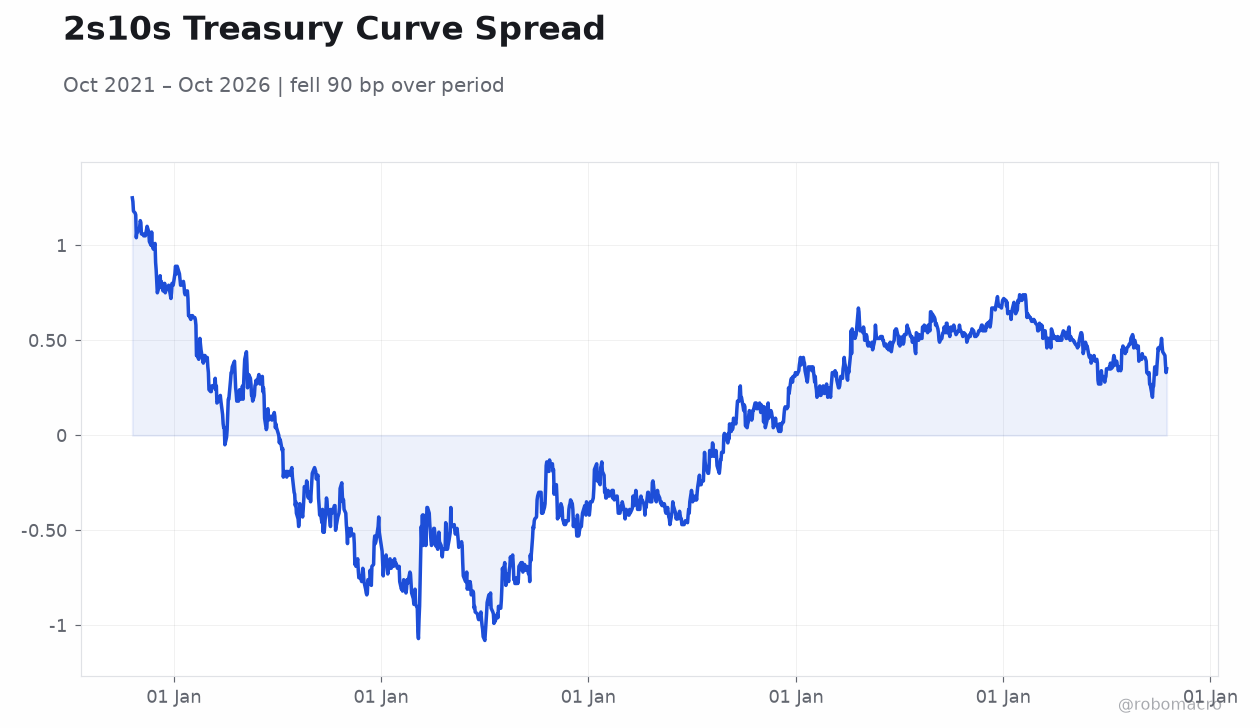
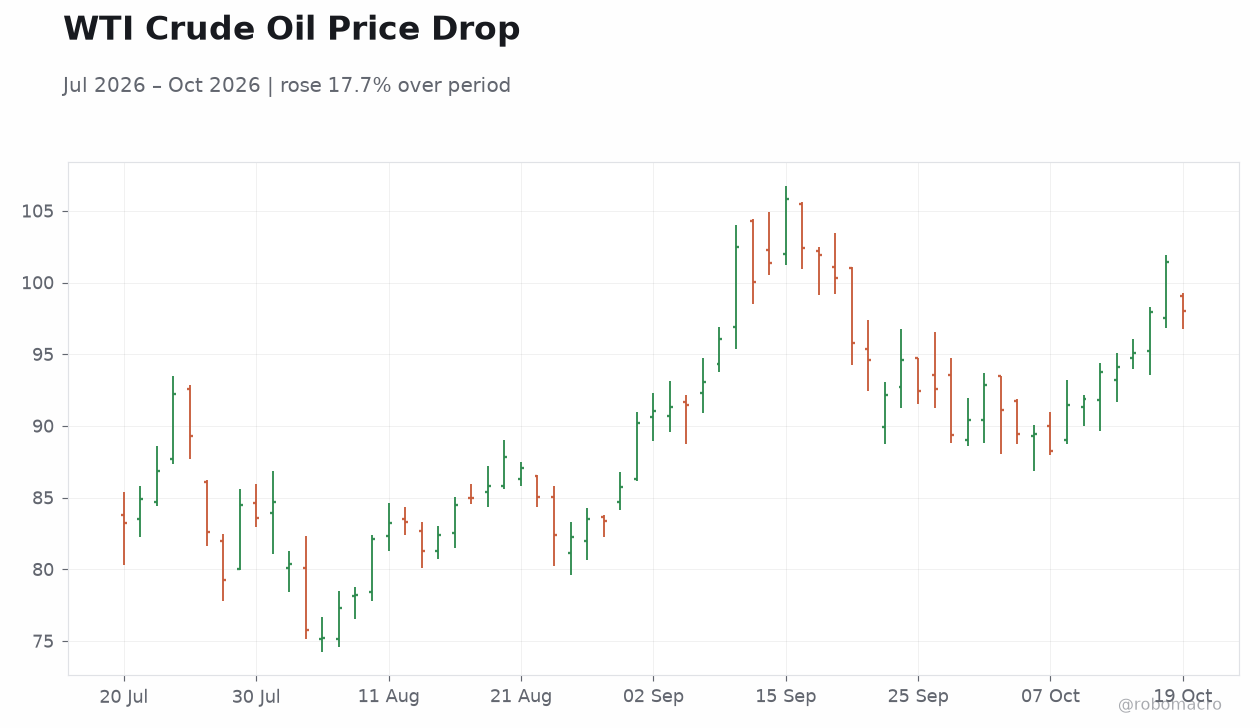
- Oil's 3.36% drop to $98 offers marginal CPI relief, yet the 2s10s spread sits at 35 bp, keeping term-premium and supply themes at the fore.
Yesterday's Recap
Friday's session delivered a risk-off close to the week, with the Nasdaq 100 down 2.50% to 29,187.55 and the S&P 500 shedding 1.09% to 7,659.44 as investors digested comments from Fed Chair Kevin Warsh. The Dow proved more resilient, easing just 0.34% to 52,002.41, while small caps lagged, the Russell 2000 falling 1.66% to 2,721.37. The Treasury curve bull-steepened modestly: the 2-year yield declined 3 bp to 4.74% and the 10-year eased 1 bp to 5.09%, the latter still above the 5% threshold.
In commodities, WTI crude slumped 3.36% to $98.00, unwinding part of the week's supply-driven spike. Gold edged up 0.12% to $4,186.30, while the dollar softened against peers—the euro gained 0.08% to 1.12 and sterling rose 0.47% to 1.33. Bitcoin bucked the equity malaise, adding 0.31% to $82,269.82.
The week's data had already painted a sticky-inflation picture, with September CPI at 3.70% year-over-year and wholesale prices pointing to costlier fuel filtering through.
The Day Ahead
Monday's calendar is light, with no major Tier-1 US releases scheduled, leaving markets to consolidate Friday's moves and position for a data-heavy stretch later in the week. Attention turns to corporate earnings, where results from mega-cap technology names will test whether AI-driven valuations can withstand a 5% 10-year yield. Fed speakers will be closely parsed following Warsh's remarks on economic resilience, with markets seeking clarity on the pace of balance-sheet runoff and the timing of any further adjustments to the 3.88% policy rate.
Treasury supply is also in focus as dealers position for upcoming auctions against a backdrop of elevated term premium. The dollar's trajectory will hinge on whether Friday's risk-off tone extends into the new week.
Other Economic Notes
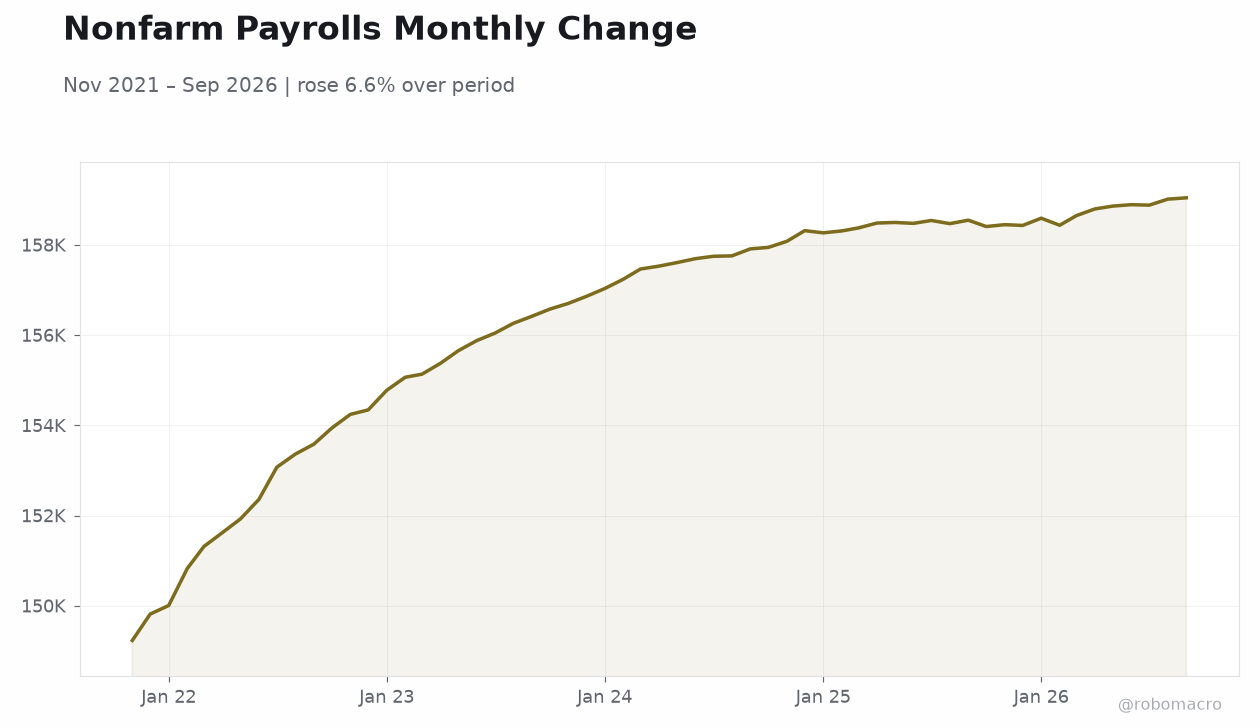
The inflation narrative has shifted decisively back to the fore, with the latest Beige Book describing moderate growth alongside rising price pressures across districts. ↓ p.2