US Macro Daily(Beta Mode)
Curve Flattens as Fed Hike Bets Build
Market Snapshot
| Asset | Level | Change |
|---|---|---|
| S&P 500 | 7,712.57 | +0.28% |
| Nasdaq 100 | 29,490.28 | -0.13% |
| Dow Jones | 52,495.88 | +1.02% |
| Russell 2000 | 2,773.42 | +1.65% |
| USD/JPY | 158.05 | -0.30% |
| EUR/USD | 1.12 | +0.17% |
| GBP/USD | 1.34 | +0.63% |
| Gold | 4,144.70 | +0.05% |
| WTI Crude | 99.97 | -1.79% |
| Bitcoin | 83,332.56 | +0.47% |
| US 2Y Treasury | 4.79% | +5 bp |
| US 10Y Treasury | 5.12% | -3 bp |
Prior Economic Events
| Data | Prior | Cons | Actual |
|---|---|---|---|
| No events available | |||
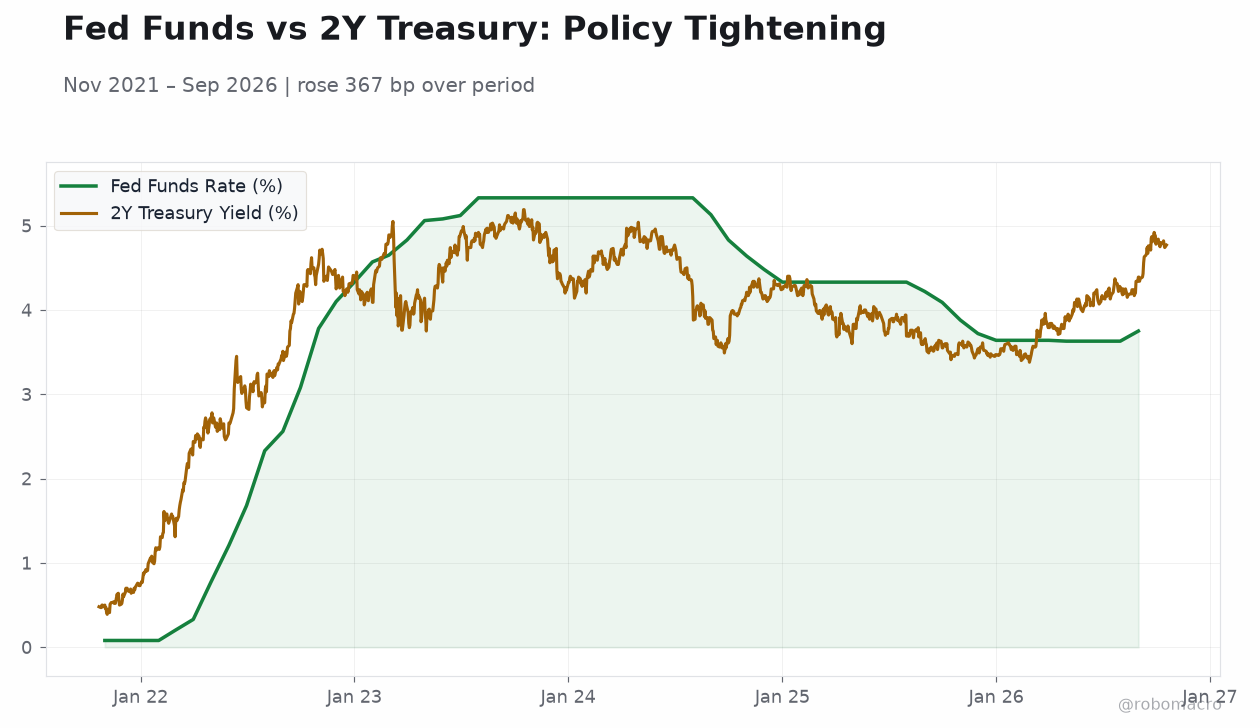
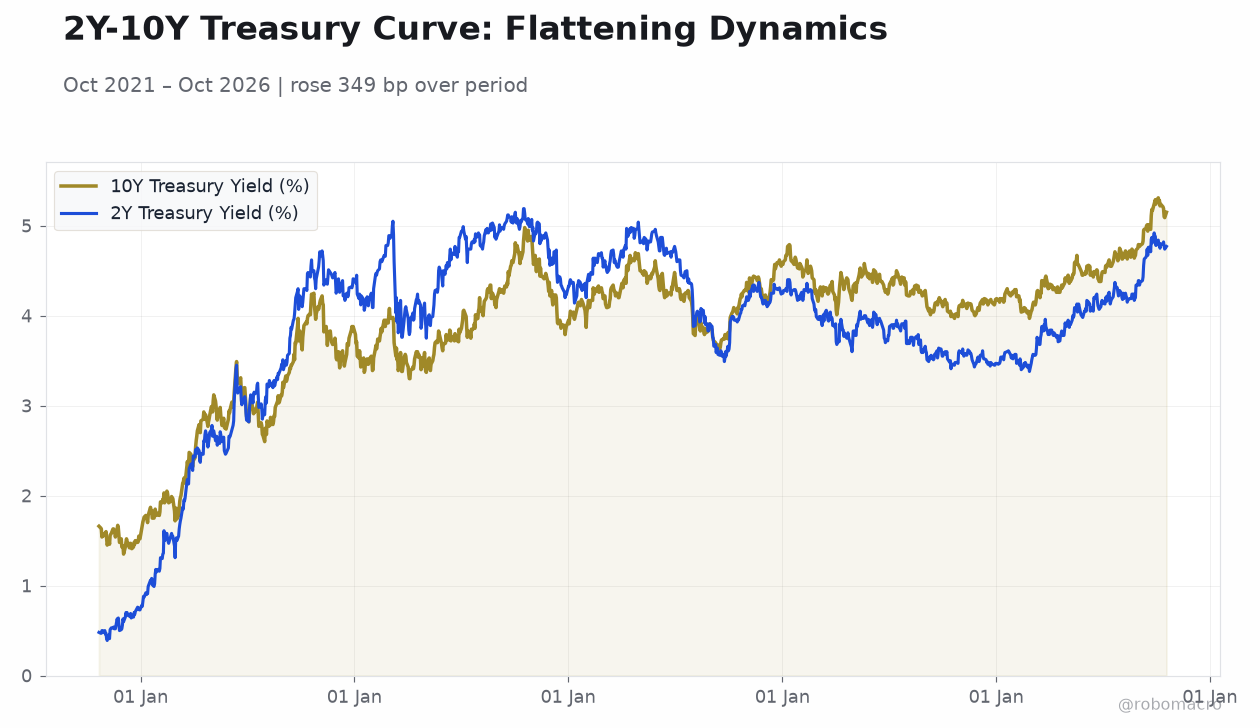 2Y-10Y Treasury Curve: Flattening Dynamics | Type: macro_line | 10Y Treasury Yield (%): 5.15 (2026-10-19) | Range: 1.35–5.31 | Trend(6pt): 1.66,3.46,4.62,4.38,5.09,5.15 | 2Y Treasury Yield (%): 4.77 (2026-10-19) | Range: 0.39–5.19 | Trend(6pt): 0.48,4.12,4.97,3.85,4.74,4.77
Today's Economic Events
| Data | Prior | Cons | Time |
|---|---|---|---|
| No events available | |||
- Front-end Treasuries sold off with the 2-year yield up 5 bp to 4.79% while the 10-year eased 3 bp to 5.12%, flattening the curve as markets price near-term Fed tightening against longer-run growth concerns.
- Equity performance diverged sharply: the Dow rose 1.02% and Russell 2000 jumped 1.65% on rotation into cyclicals and small caps, while the Nasdaq 100 slipped 0.13% as megacap tech lagged.
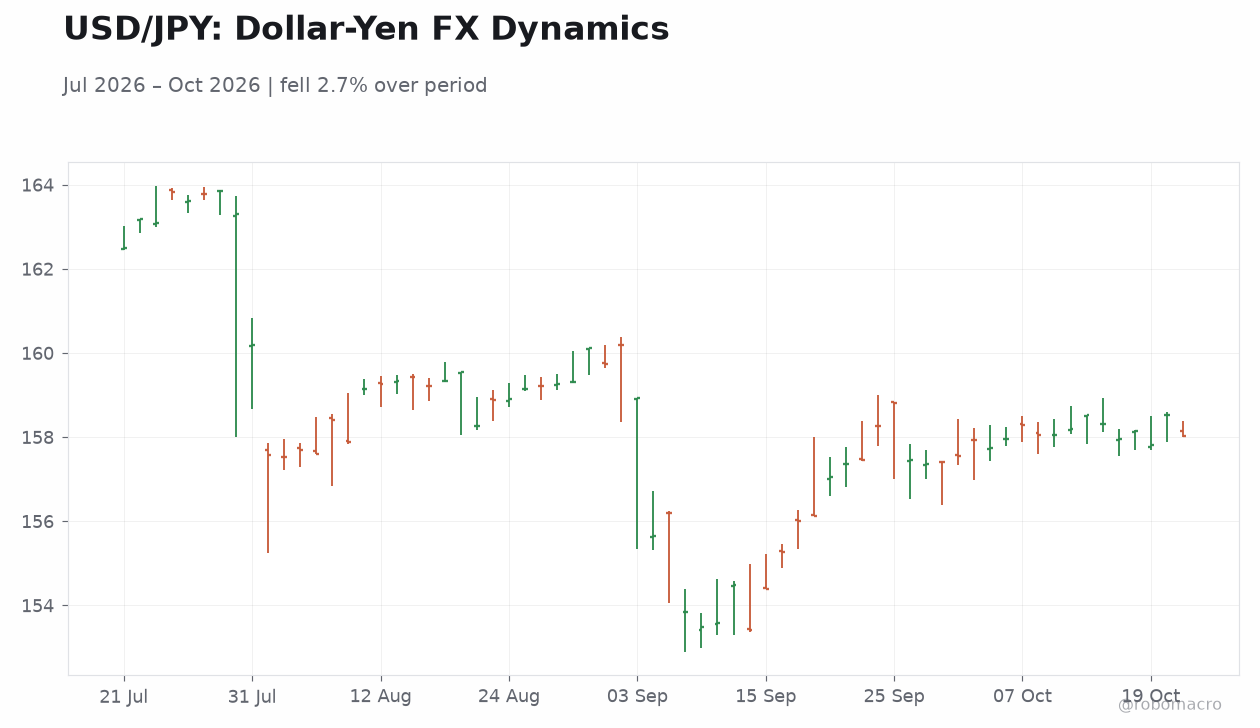
- WTI crude fell 1.79% to $99.97 and gold held near $4,144.70, with the dollar softer against the yen (USD/JPY 158.05) and sterling (GBP/USD 1.34) even as Fed hike expectations firmed.
Yesterday's Recap
No major US data releases were scheduled for the October 20 session, leaving markets to trade on positioning and Fed expectations ahead of the October FOMC meeting. The Treasury curve flattened decisively, with the 2-year yield climbing 5 bp to 4.79% on hawkish near-term policy pricing while the 10-year yield eased 3 bp to 5.12% as long-duration buyers stepped in. Equities showed a clear rotation: the Dow gained 1.02% to 52,495.88 and the Russell 2000 surged 1.65% to 2,773.42, while the Nasdaq 100 slipped 0.13% to 29,490.28 as megacap technology underperformed.
The S&P 500 edged up 0.28% to 7,712.57. Energy was the weak spot, with WTI crude sliding 1.79% to $99.97 a barrel, easing inflation pressure at the margin. In FX, the dollar softened against the yen and sterling, with USD/JPY down 0.30% to 158.05 and GBP/USD up 0.63% to 1.34, while EUR/USD firmed 0.17% to 1.12.
Gold was essentially flat at $4,144.70, and Bitcoin rose 0.47% to $83,332.56.
The Day Ahead
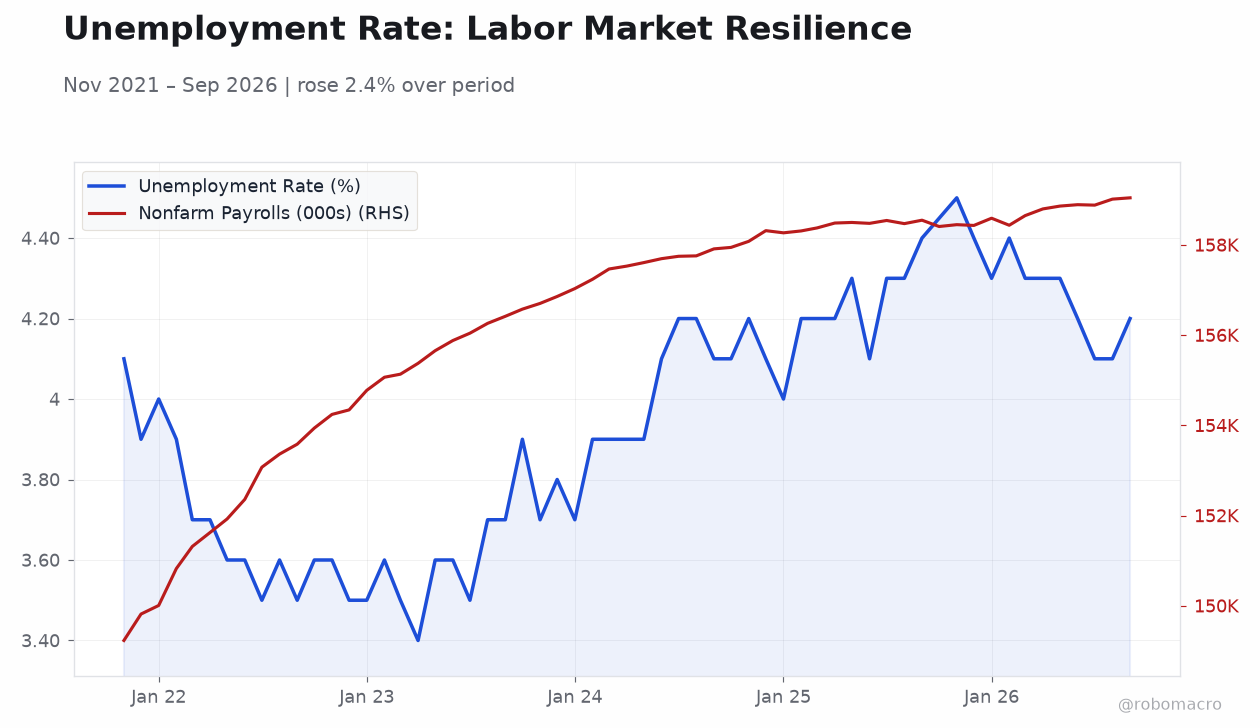
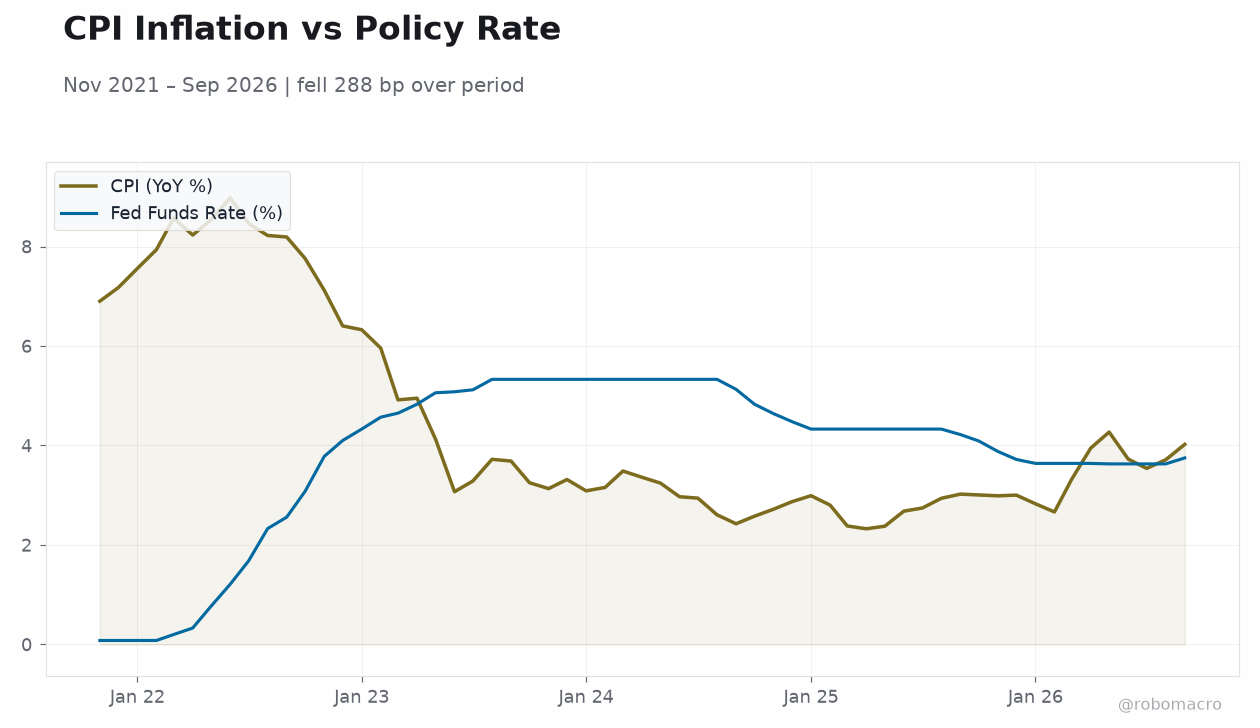
The October 21 calendar is light on top-tier US releases, with attention centered on weekly jobless claims and mortgage application data as investors gauge labor-market resilience and housing demand under elevated borrowing costs. With the fed funds rate at 3.88% and the 10-year yield above 5%, housing affordability remains a key transmission channel for policy, making the mortgage data a meaningful read on rate sensitivity. Markets will also continue positioning ahead of the October FOMC decision, where consensus points to a hold before a possible December hike.
Fed speakers and any incremental commentary on the inflation outlook will be scrutinized for signals on the December path. With CPI running at 3.70% year-over-year, well above target, the burden of proof remains on disinflation rather than on growth.
Other Economic Notes
The US economy continues to show resilience that complicates the disinflation narrative: GDP grew 2.20% quarter-over-quarter annualized in Q2, retail sales are up 6.29% year-over-year, and unemployment sits at 4.20%, all consistent with an economy that is not cooling fast enough to justify aggressive easing. ↓ p.2