Fed Holds as Inflation Persists, Curve Steepens
91.70 Cb Consumer Confidence676,000 New Home Sales-0.60 New Home Sales3.40 Atlanta Fed GDPNow-2.0m API Weekly Crude Oil
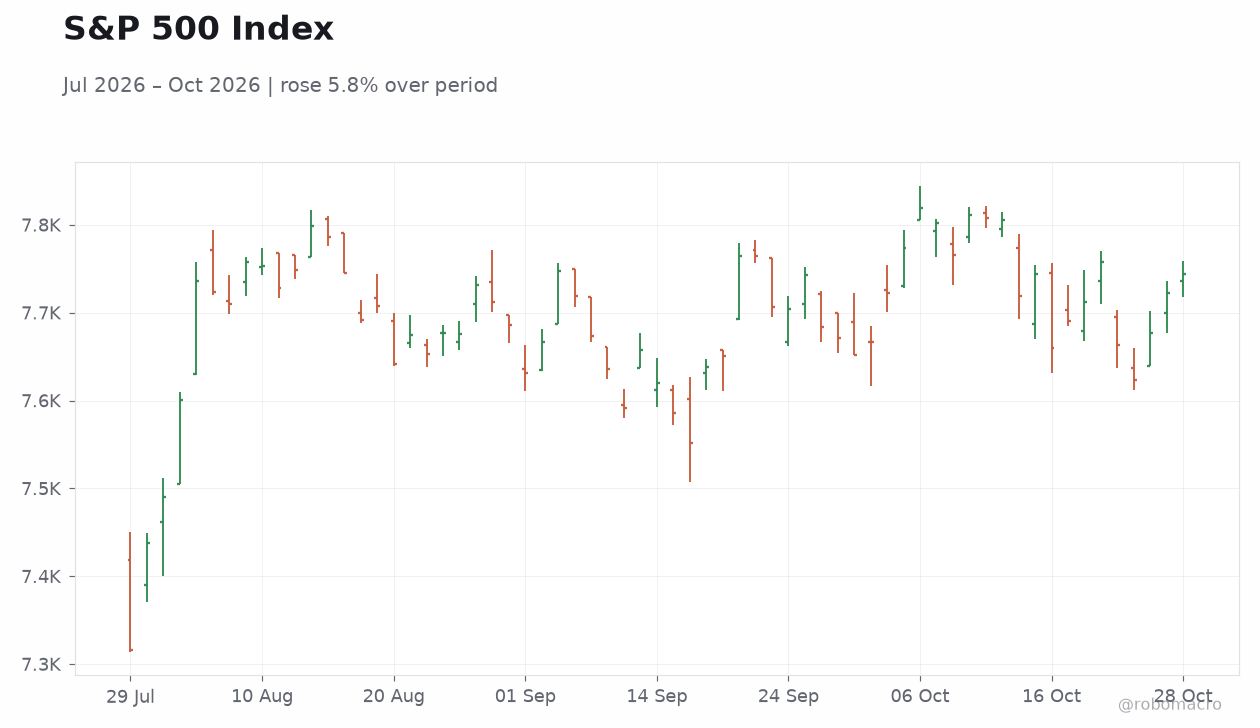
S&P 5007,743.98+0.28%
US 10Y Treasury5.05%+6 bp
WTI Crude101.45-1.29%
Gold4,044.50-0.18%
Market Snapshot
| Asset | Level | Change |
|---|
| S&P 500 | 7,743.98 | +0.28% |
| Nasdaq 100 | 29,813.16 | +0.55% |
| Dow Jones | 52,475.10 | +0.19% |
| Russell 2000 | 2,830.51 | +0.41% |
| USD/JPY | 157.98 | -0.01% |
| EUR/USD | 1.11 | +0.13% |
| GBP/USD | 1.33 | +0.11% |
| Gold | 4,044.50 | -0.18% |
| WTI Crude | 101.45 | -1.29% |
| Bitcoin | 80,051.60 | -1.50% |
| US 2Y Treasury | 4.67% | -3 bp |
| US 10Y Treasury | 5.05% | +6 bp |
Prior Economic Events
| Data |
Prior |
Cons |
Actual |
| Cb Consumer Confidence | 84.20 | - | 91.70 |
| New Home Sales | 680,000 | 650,000 | 676,000 |
| New Home Sales Month-over-Month | 5.10 | - | -0.60 |
| Atlanta Fed GDPNow | 3.50 | 3.50 | 3.40 |
| API Weekly Crude Oil Stocks | -4.9m | 800,000 | -2.0m |
| MBA 30-Year Mortgage Rate | 7.41 | - | 7.37 |
| Goods Trade Balance Adv | -132,070m | -130,000m | -134,900m |
| Retail Inventories Ex Autos Month-over-Month Adv | 0.10 | - | 0.40 |
| Wholesale Inventories Month-over-Month Adv | 0.50 | 0.50 | 0.60 |
| EIA Weekly Crude Oil Inventory | -3.1m | 0 | -1.9m |
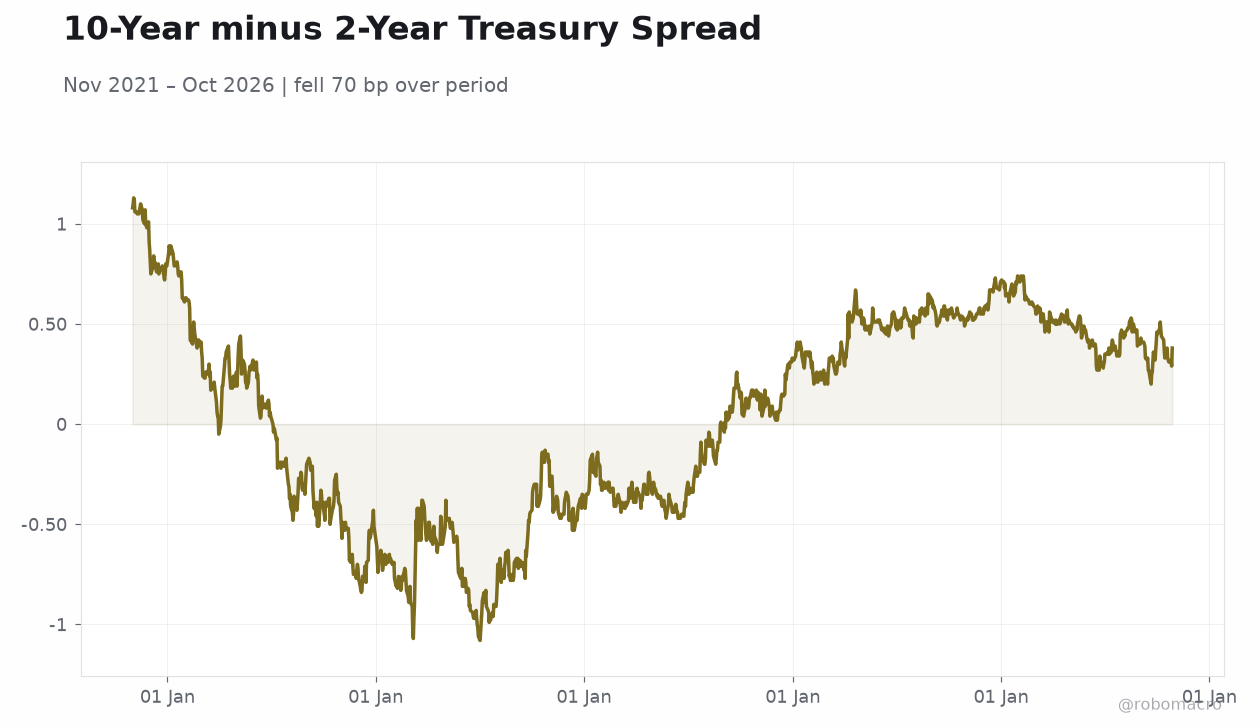
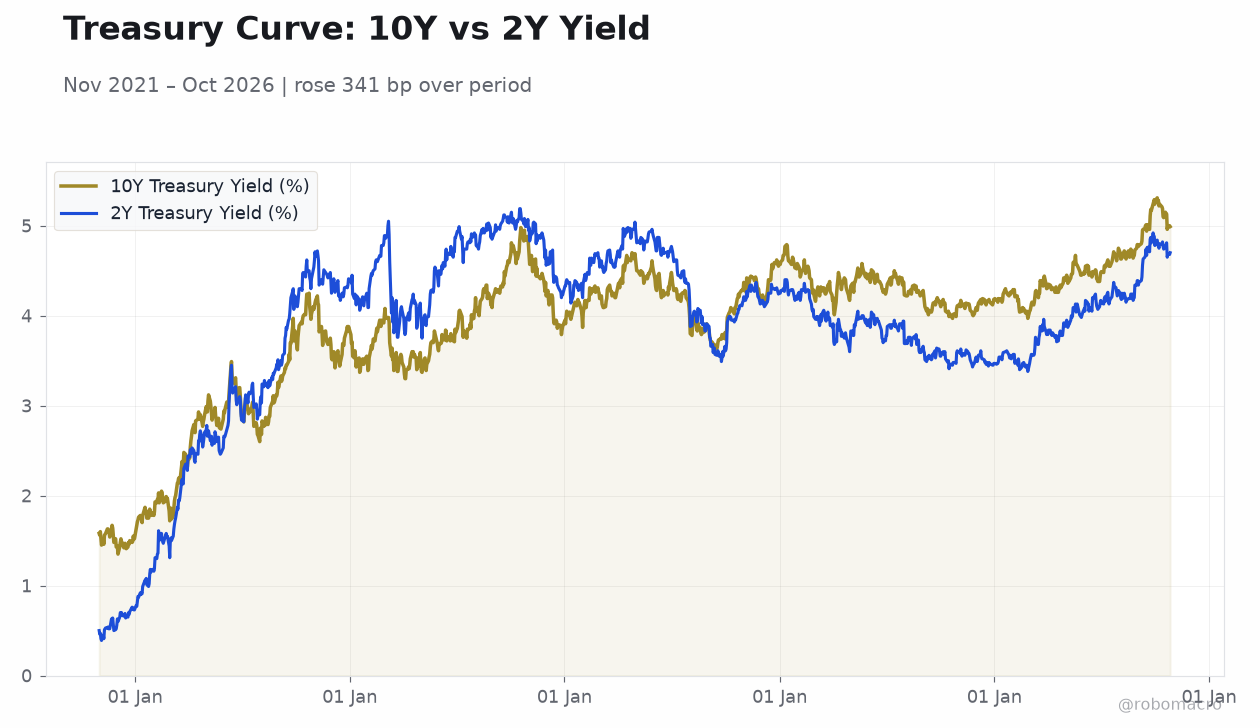 Treasury Curve: 10Y vs 2Y Yield | Type: macro_line | 10Y Treasury Yield (%): 4.99 (2026-10-27) | Range: 1.35–5.31 | Trend(6pt): 1.58,3.39,4.63,4.34,5,4.99 | 2Y Treasury Yield (%): 4.7 (2026-10-27) | Range: 0.39–5.19 | Trend(6pt): 0.5,4.09,4.97,3.86,4.68,4.7
Today's Economic Events
| Data |
Prior |
Cons |
Time |
| Core PCE Price Index Month-over-Month | 0.20 | 0.30 | 08:30 |
| GDP Growth Quarter-over-Quarter Advance Estimate | 2.20 | 3.20 | 08:30 |
| Personal Income Month-over-Month | 0.20 | 0.30 | 08:30 |
| Personal Spending Month-over-Month | 0.90 | 0.60 | 08:30 |
| GDP Price Index Quarter-over-Quarter Adv | 6.10 | - | 08:30 |
| PCE Price Index Month-over-Month | 0.30 | 0.50 | 08:30 |
| PCE Price Index Year-over-Year | 3.40 | 3.60 | 08:30 |
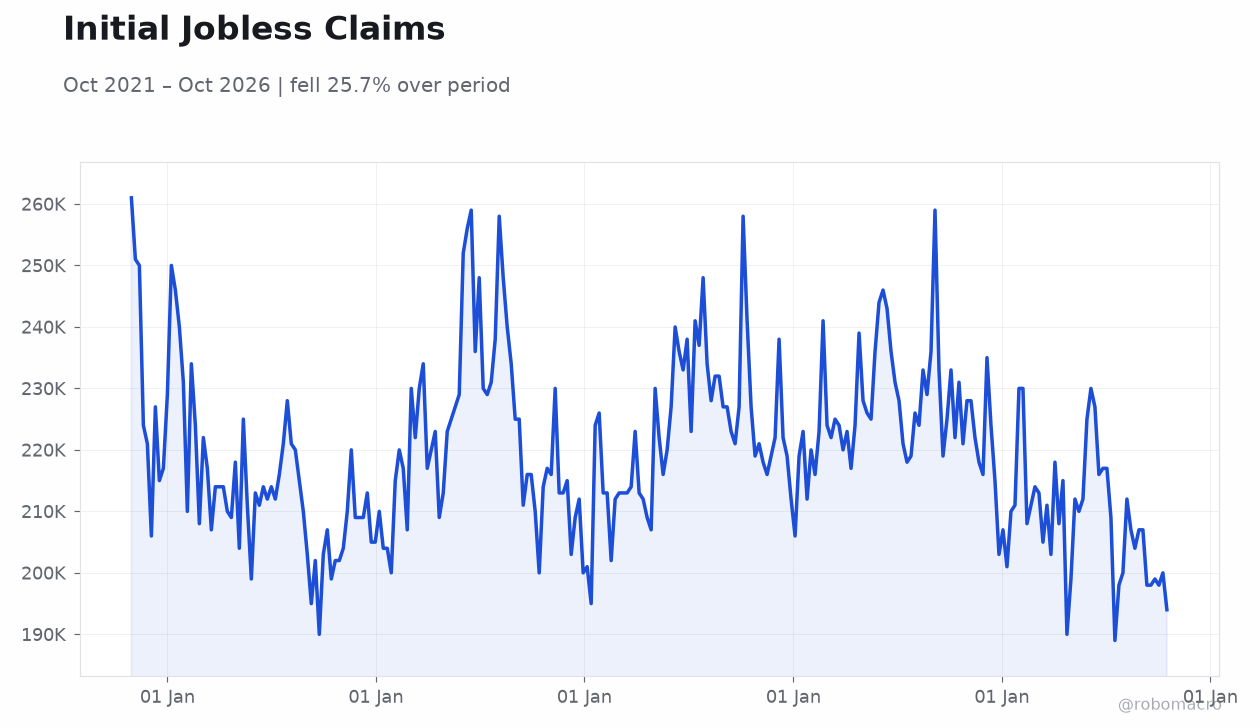
| Weekly Jobless Claims | 194,000 | 199,000 | 08:30 |
- FOMC held the benchmark rate at 4.00% on Wednesday despite elevated inflation, with markets now focused on earnings and forward guidance
- Treasury curve bear-steepened sharply: 10Y yield rose 6 bp to 5.05% while 2Y fell 3 bp to 4.67%, signaling growth and term-premium concerns
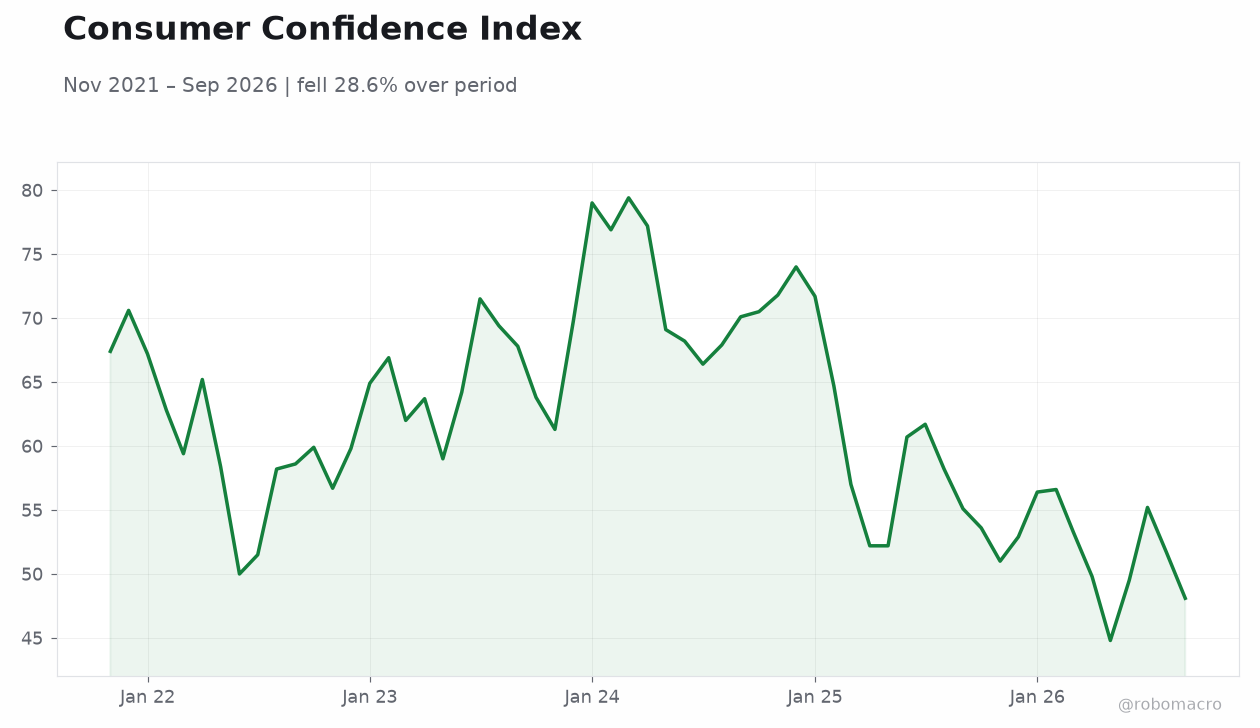
- Consumer confidence jumped to 91.7 and GDPNow ticked down to 3.3%, painting a mixed picture of resilient demand against slowing momentum
Yesterday's Recap
The FOMC concluded its October meeting with a decision to hold the benchmark rate at 4.00%, in line with consensus, as policymakers balanced persistent inflation against softening activity signals. Earlier in the day, the Conference Board's consumer confidence measure jumped to 91.7 from 84.2, a notable upside surprise suggesting households remain resilient despite elevated borrowing costs. New home sales printed at 676,000, down 0.6% month-over-month and below the 650,000 consensus, reflecting the drag from a 7.37% MBA 30-year mortgage rate.
The advance goods trade balance widened to a $134.9 billion deficit, worse than the $130 billion consensus, while wholesale inventories rose 0.6% and retail inventories ex-autos climbed 0.4%. The Atlanta Fed GDPNow estimate slipped to 3.3% from 3.4%, still indicating solid above-trend growth. EIA crude inventories fell 1.892 million barrels while gasoline stocks built 3.87 million barrels, a bearish product signal that pressured WTI 1.29% lower to $101.45.
Equities closed modestly higher, with the Nasdaq 100 up 0.55% and the S&P 500 adding 0.28%, while the 10-year yield climbed 6 bp to 5.05% and the 2-year eased 3 bp to 4.67%.
The Day Ahead
Thursday's calendar is light on tier-one US data, with attention shifting to corporate earnings from major technology names and any follow-through from the FOMC decision. Markets will parse the Fed's statement language and press conference tone for signals on the path toward any future adjustment, particularly given the divergence between still-firm inflation at 3.70% year-over-year and the committee's decision to stand pat. Weekly labor market indicators and any Fed speaker appearances will be monitored for clues on whether the hold represents a pause or a peak.
With the 10-year at 5.05% and the curve steepening, duration-sensitive sectors and mortgage-linked housing activity remain key watch items. Traders will also assess whether the prior session's risk-on equity tone persists into month-end positioning.
Page 1
Never miss an issue
Subscribe to US Macro Daily and get each new issue delivered to your inbox.
Already a member? Visit robomacro.com
to log in and manage subscriptions, or use Forgot Password to set a password.