US Macro Daily(Beta Mode)
Tech Rout Deepens as ISM Manufacturing PMI Looms
Market Snapshot
| Asset | Level | Change |
|---|---|---|
| S&P 500 | 7,580.07 | -1.82% |
| Nasdaq 100 | 28,384.85 | -3.46% |
| Dow Jones | 51,770.31 | -1.09% |
| Russell 2000 | 2,811.84 | -1.66% |
| USD/JPY | 157.94 | +0.09% |
| EUR/USD | 1.12 | +0.25% |
| GBP/USD | 1.34 | +0.29% |
| Gold | 3,910.20 | +0.29% |
| WTI Crude | 99.60 | -4.34% |
| Bitcoin | 77,773.64 | -0.61% |
| US 2Y Treasury | 4.56% | -5 bp |
| US 10Y Treasury | 4.94% | -4 bp |
Prior Economic Events
| Data | Prior | Cons | Actual |
|---|---|---|---|
| No events available | |||
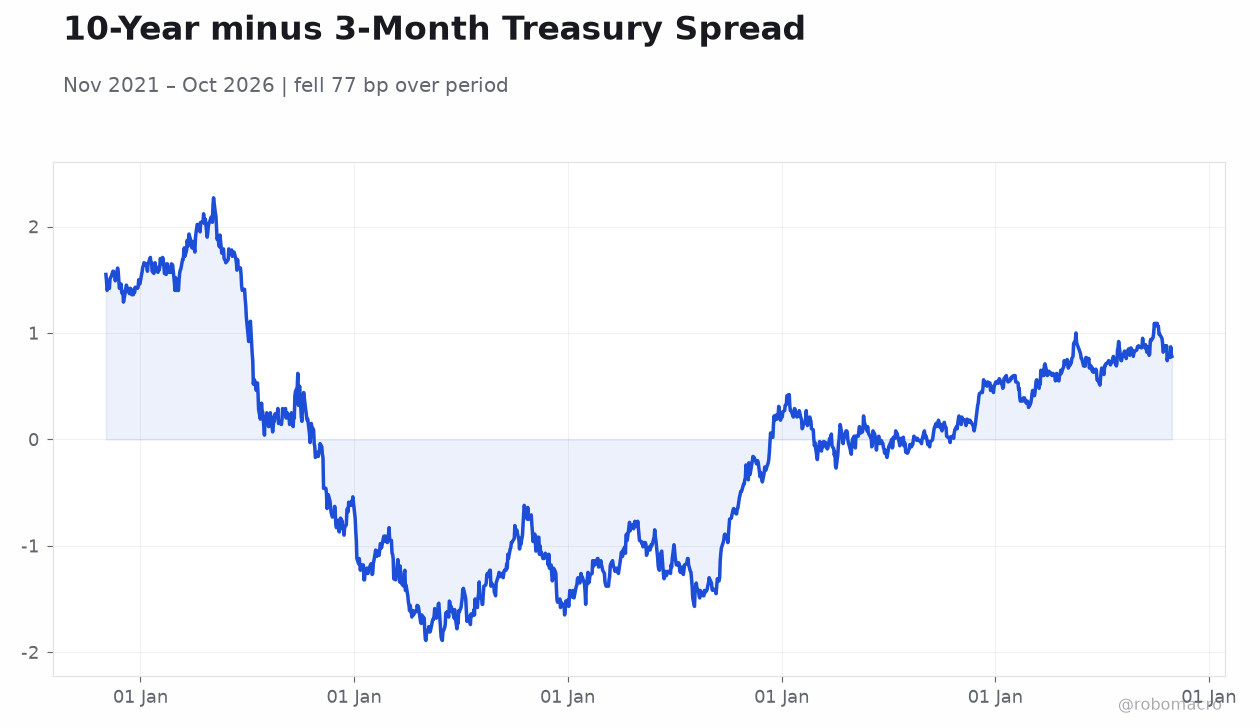
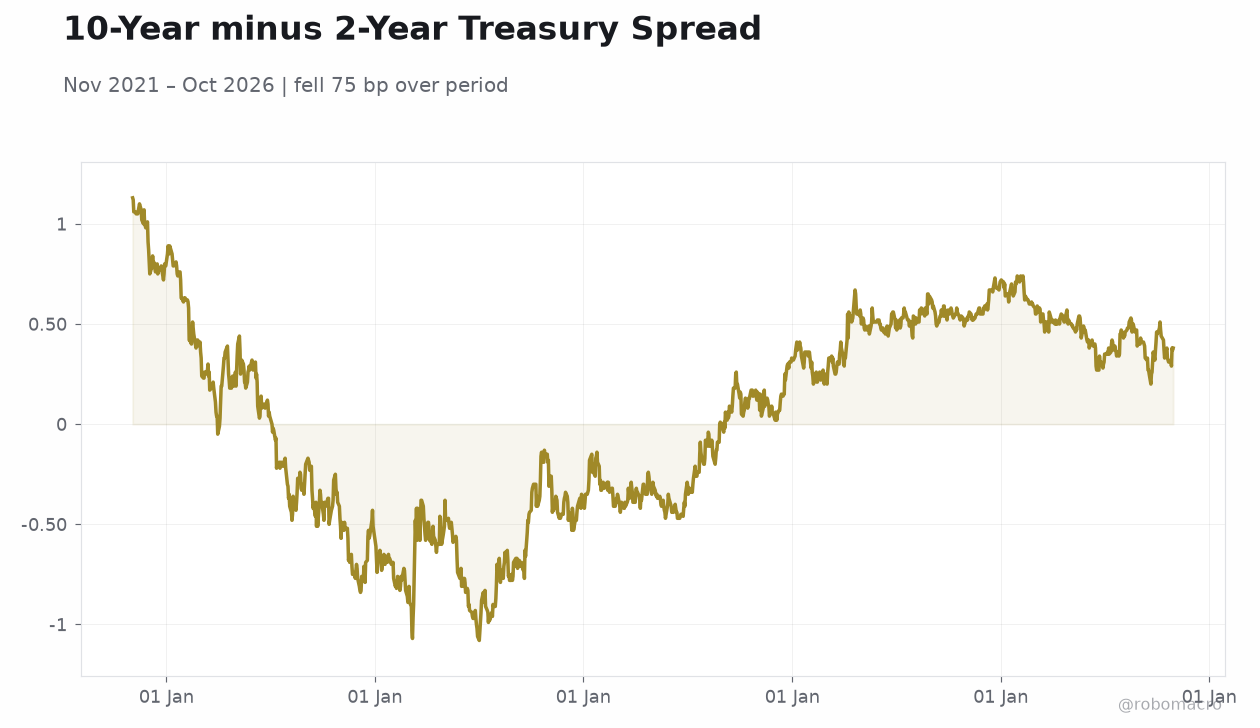 10-Year minus 2-Year Treasury Spread | Type: macro_line | 10-Year minus 2-Year Treasury Spread: 0.38 (2026-10-30) | Range: -1.08–1.13 | Trend(5pt): 1.13,-0.77,-0.33,0.43,0.38
Today's Economic Events
| Data | Prior | Cons | Time |
|---|---|---|---|
| ISM Manufacturing PMI | 54.50 | 54.70 | 10:00 |
| ISM Manufacturing Employment | 52.70 | - | 10:00 |
| Fed Goolsbee Speech | - | - | 11:15 |
| Tuesday (2026-11-03) | |||
| JOLTs Job Openings | 7.1m | 7.1m | 10:00 |
| Factory Orders Month-over-Month | 0.10 | 1.10 | 10:00 |
| API Weekly Crude Oil Stocks | -2.0m | - | 16:30 |
| Wednesday (2026-11-04) | |||
| MBA 30-Year Mortgage Rate | 7.37 | - | 07:00 |
| ADP Employment Change | 90,000 | 65,000 | 08:15 |
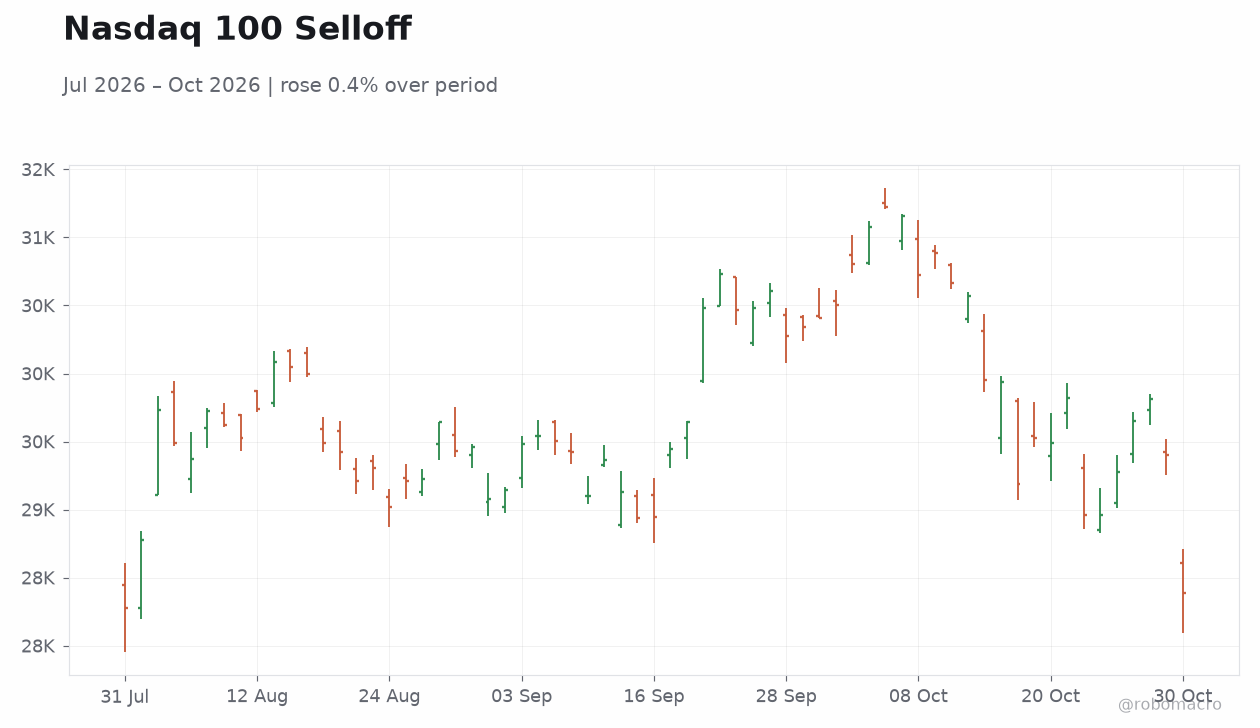
- Nasdaq 100 plunges 3.46% in tech-led selloff; S&P 500 drops 1.82% to 7,580.07
- Treasury yields ease modestly (10Y -4bp to 4.94%, 2Y -5bp to 4.56%) on safe-haven demand
- ISM Manufacturing PMI due 10:00 ET (consensus 54.7 vs prior 54.5); Fed's Goolsbee speaks 11:15
Yesterday's Recap
US equities suffered a sharp risk-off session Friday, with the Nasdaq 100 shedding 3.46% and the S&P 500 dropping 1.82% to 7,580.07 — the worst day for Wall Street since June, driven by a broad technology selloff. The Dow Jones fell a more modest 1.09% to 51,770.31, while the Russell 2000 declined 1.66% to 2,811.84, reflecting small-cap sensitivity to tightening financial conditions. Despite the equity rout, Treasuries rallied modestly, with the 10-year yield easing 4 bp to 4.94% and the 2-year falling 5 bp to 4.56%, suggesting investors sought safe-haven duration.
WTI crude collapsed 4.34% to $99.60 per barrel, signaling demand concerns amid broader growth anxiety. Gold edged up 0.29% to $3,910.20, while Bitcoin slipped 0.61% to $77,773.64. The dollar was mixed, with EUR/USD up 0.25% to 1.12 and GBP/USD gaining 0.29% to 1.34, while USD/JPY held near 157.94.
The Day Ahead
Markets await the ISM Manufacturing PMI at 10:00 ET, with consensus at 54.7 versus the prior 54.5 — a reading above 50 would confirm continued expansion in the industrial sector. The ISM Manufacturing Employment subindex, previously at 52.7, will be scrutinized for labor-market signals given recent Fed emphasis on employment conditions. Chicago Fed President Austan Goolsbee speaks at 11:15 ET, and his commentary will be parsed for hints on the December 9 FOMC decision.
Tuesday brings JOLTs job openings (consensus 7.10 million vs prior 7.079 million) and Factory Orders (consensus +1.1% vs prior +0.1%), offering further clarity on labor demand and industrial activity. Wednesday's ADP employment report (consensus 65,000 vs prior 90,000) and ISM Services PMI (consensus 54.8 vs prior 54.9) will round out a busy data week.
Other Economic Notes
The US economy remains resilient on paper — Q2 GDP grew 3.40% quarter-over-quarter SAAR and 2.07% year-over-year — but inflation at 3.70% YoY continues to pressure real incomes and complicate the Fed's easing path. Retail sales growth of 6.29% YoY underscores consumer resilience, yet the unemployment rate at 4.20% suggests gradual labor-market softening. Federal debt surpassing GDP for fiscal 2026 raises long-term fiscal sustainability concerns, particularly as Treasury issuance patterns evolve.
↓ p.2