US Macro Daily(Beta Mode)
AI Selloff Sparks Broad Risk-Off; Fed Signals Gradual Path
Market Snapshot
| Asset | Level | Change |
|---|---|---|
| S&P 500 | 7,353.73 | -4.36% |
| Nasdaq 100 | 26,629.81 | -6.36% |
| Dow Jones | 51,523.06 | -3.44% |
| Russell 2000 | 2,729.89 | -4.45% |
| USD/JPY | 158.27 | -0.05% |
| EUR/USD | 1.12 | -0.48% |
| GBP/USD | 1.34 | -0.58% |
| Gold | 4,074.80 | -0.94% |
| WTI Crude | 90.89 | +0.41% |
| Bitcoin | 76,010.63 | +0.09% |
| US 2Y Treasury | 4.46% | -12 bp |
| US 10Y Treasury | 4.84% | -6 bp |
Prior Economic Events
| Data | Prior | Cons | Actual |
|---|---|---|---|
| MBA 30-Year Mortgage Rate | 7.37 | - | 7.30 |
| ADP Employment Change | 86,000 | 69,000 | 86,000 |
| Exports Level | 315,700m | - | 321,500m |
| Imports Level | 421,400m | - | 426,600m |
| Trade Balance | -105,700m | -108,000m | -105,000m |
| Services Sector PMI | 54.90 | 54.80 | 54.50 |
| EIA Weekly Crude Oil Inventory | -1.9m | 900,000 | -865,000 |
| EIA Weekly Gasoline Inventory | 3.9m | 200,000 | -222,000 |
| Atlanta Fed GDPNow | 3.70 | - | 3.40 |
| Nonfarm Productivity Quarter-over-Quarter Prel | 2.10 | 2.80 | 3.60 |
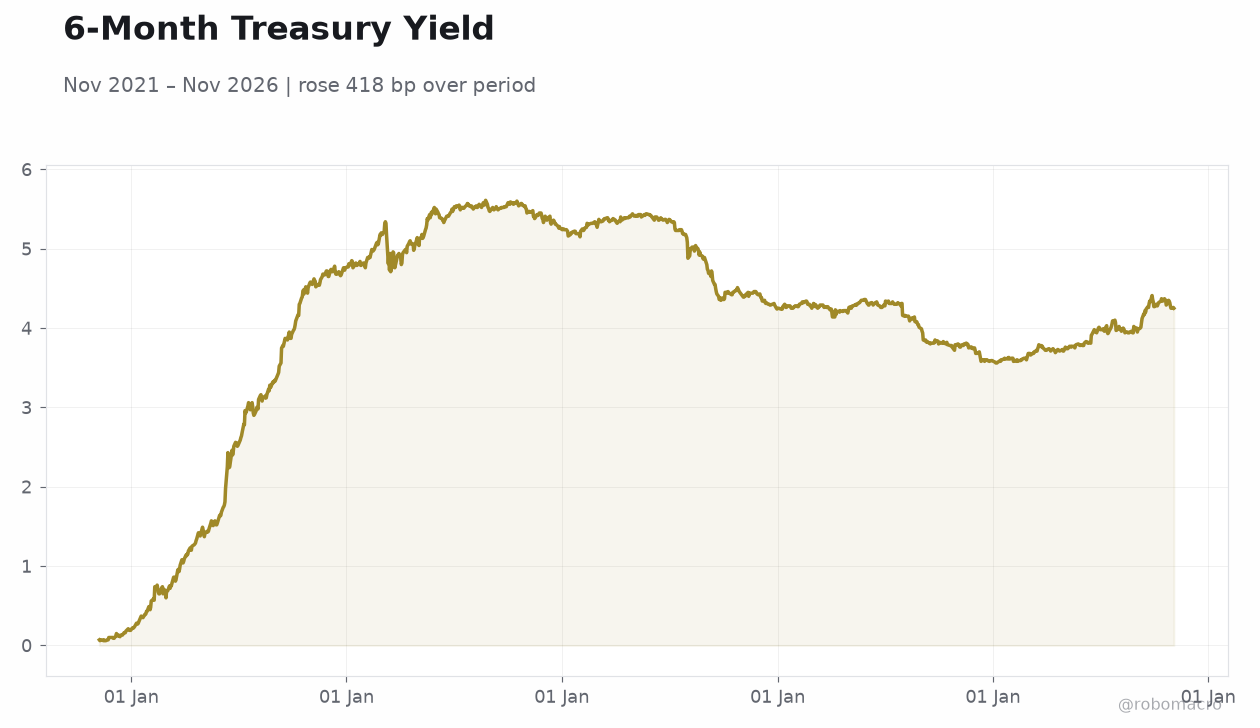 6-Month Treasury Yield | Type: macro_line | 6-Month Treasury Yield: 4.84 (2026-11-05) | Range: 0.06–5.61 | Trend(5pt): 0.07,4.88,5.42,4.16,4.25
Today's Economic Events
| Data | Prior | Cons | Time |
|---|---|---|---|
| Headline Unemployment Rate | 4.20 | 4.20 | 08:30 |
| Payroll Jobs Growth | 29,000 | 65,000 | 08:30 |
| Annual Wage Growth | 3 | 2.90 | 08:30 |
| Labor Force Participation | 61.80 | - | 08:30 |
| Monthly Wage Growth | 0.10 | 0.30 | 08:30 |
| Speech by Fed's Musalem | - | - | 09:10 |
| Michigan Consumer Sentiment Prel | 48 | 48 | 10:00 |
| Speech by Fed's Bowman | - | - | 12:15 |
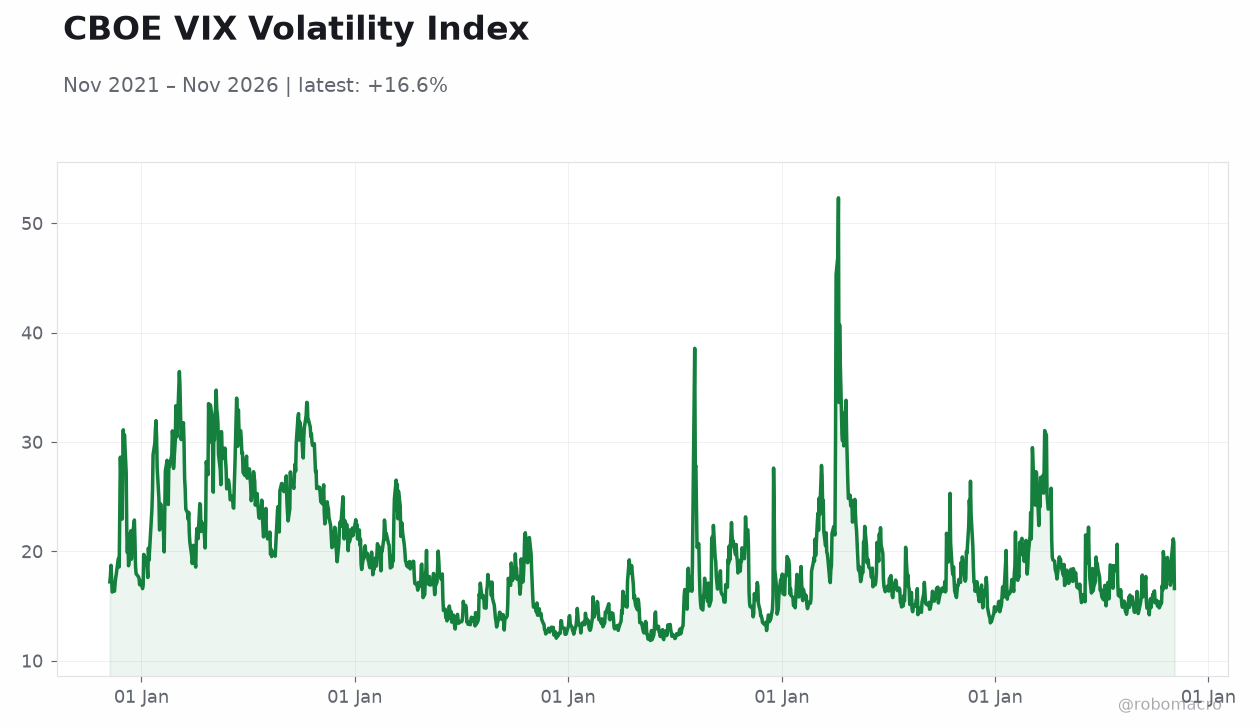
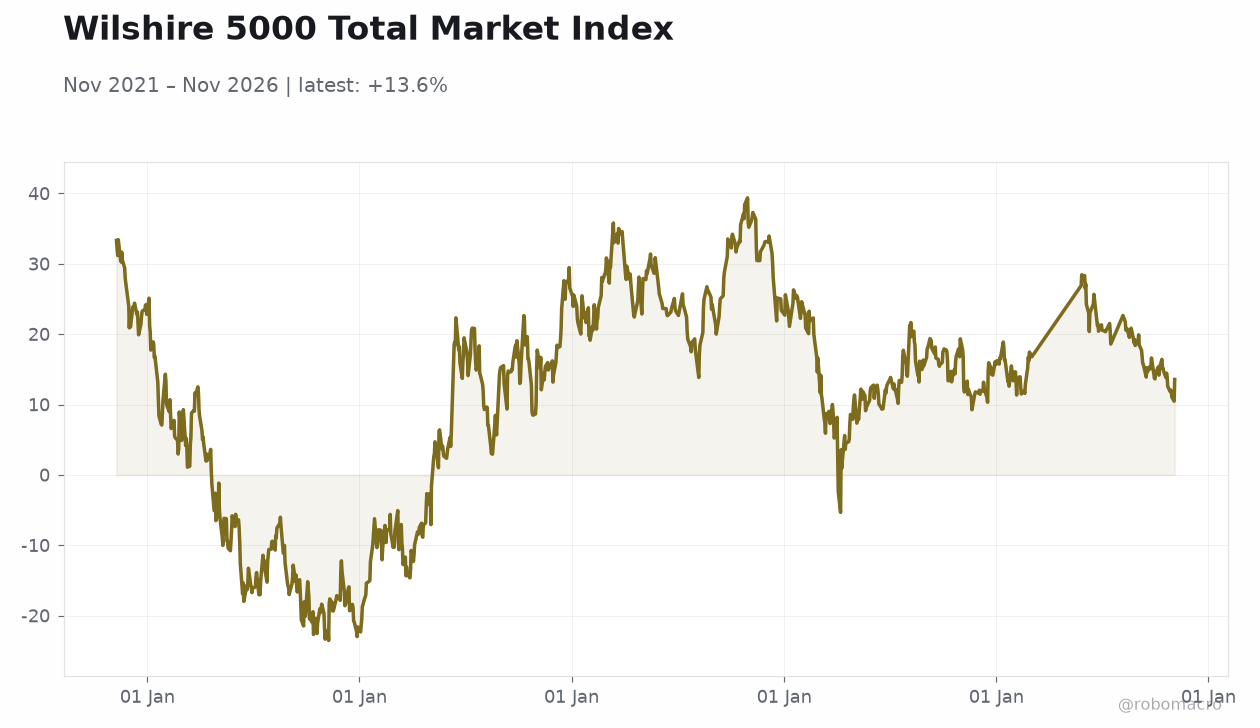
- S&P 500 plunged 4.36% to 7,353.73 as AI-linked names led a brutal selloff; Nasdaq 100 fell 6.36%
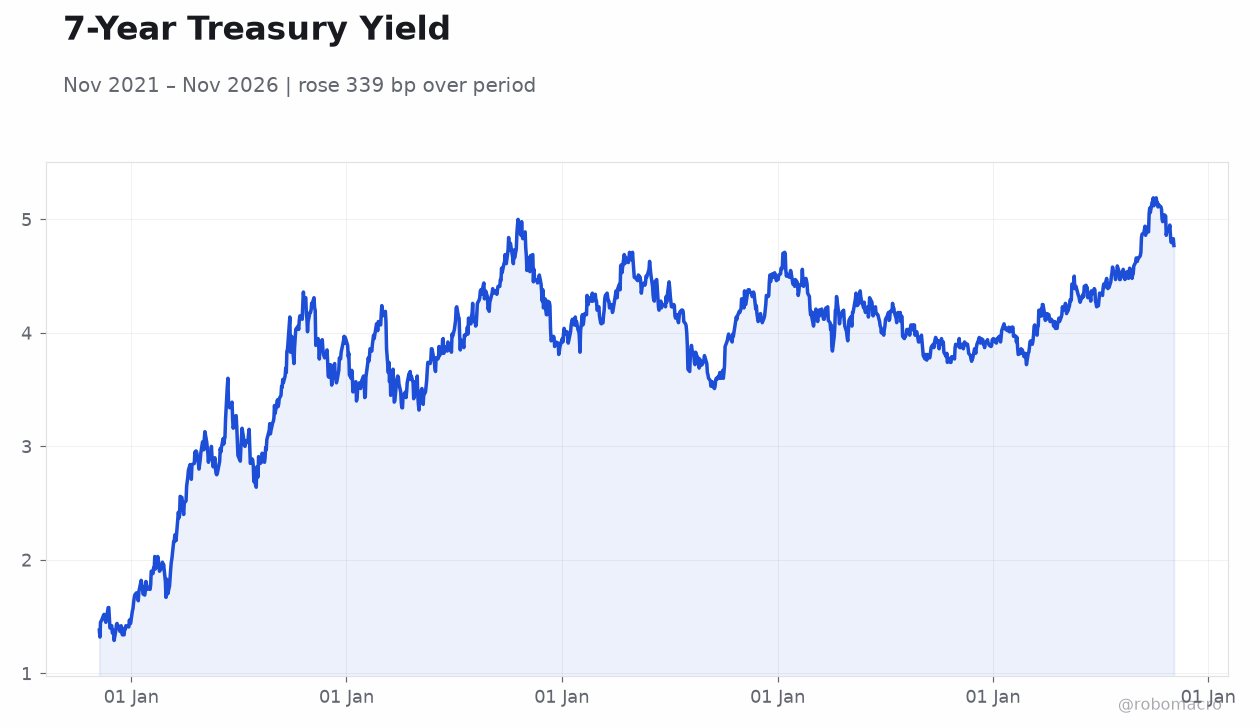
- Treasury yields fell sharply on risk-off flows: 2Y down 12 bp to 4.46%, 10Y down 6 bp to 4.84%
- Fed's Hammack, Barkin, and Williams all flagged inflation as too high, favoring a gradual rate path
Yesterday's Recap
US equities suffered a severe risk-off session Wednesday, with the S&P 500 tumbling 4.36% to 7,353.73 and the Nasdaq 100 cratering 6.36% as AI-related stocks led a broad wipeout. The Dow Jones fell 3.44% and the Russell 2000 dropped 4.45%, underscoring the breadth of the selloff. Safe-haven demand drove Treasury yields lower, with the 2-year yield easing 12 bp to 4.46% and the 10-year declining 6 bp to 4.84%.
On the data front, ADP employment change printed at 86,000, matching the prior month and beating the 69,000 consensus. The US trade balance narrowed to -$105.0 billion versus the -$108.0 billion consensus, with exports rising to $321.5 billion and imports to $426.6 billion. The services sector PMI slipped to 54.5 from 54.9, missing the 54.8 consensus, while the MBA 30-year mortgage rate edged down to 7.30% from 7.37%.
EIA data showed crude inventories fell 865,000 barrels versus a 900,000-barrel build expected, and gasoline stocks drew 222,000 barrels against a 200,000-barrel build consensus. Atlanta Fed GDPNow was revised down to 3.4% from 3.7%. Separately, Thursday's releases showed nonfarm productivity for Q3 surged to 3.6% quarter-over-quarter, well above the 2.8% consensus, and weekly jobless claims fell to 189,000 versus the 196,000 expected, signaling continued labor market resilience.
The Day Ahead
The headline event is the November employment report at 08:30 ET, with the unemployment rate consensus at 4.2% and prior at 4.2%. Markets will also parse a busy Fed speaker slate, with Williams scheduled at 04:30 ET, following Wednesday's remarks from Hammack, Barkin, and Logan. Investors will digest the prior day's productivity and claims data for signals on the labor market and inflation trajectory.
With equities in a sharp drawdown, attention will focus on whether policymakers acknowledge tightening financial conditions. The next FOMC meeting is December 9, and markets will look for guidance on the rate path amid elevated inflation at 3.70% YoY.
Other Economic Notes
The productivity surge to 3.6% offers a constructive supply-side signal that could ease unit labor costs and support the disinflation narrative. ↓ p.2