US Macro Daily(Beta Mode)
Nvidia Reinstatement Fuels Risk Rally as PMIs Cool
Market Snapshot
| Asset | Level | Change |
|---|---|---|
| S&P 500 | 7,237.17 | +4.73% |
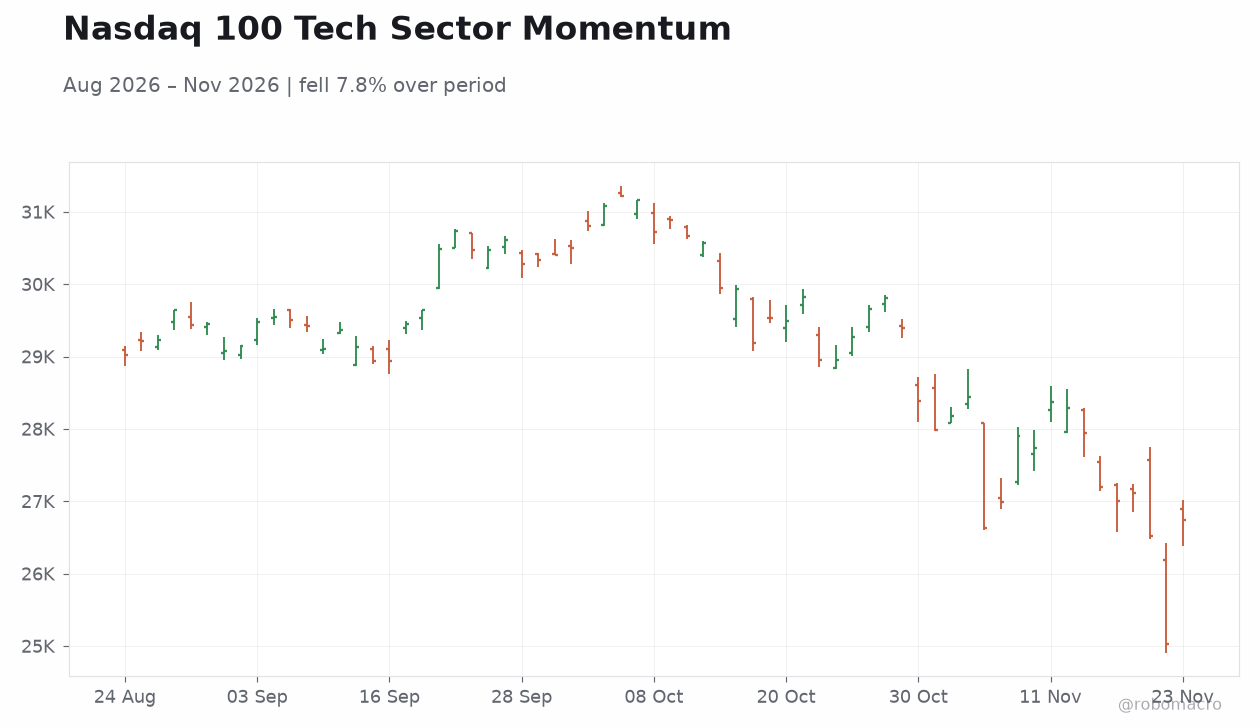
| Nasdaq 100 | 26,746.10 | +6.86% |
| Dow Jones | 49,595.31 | +3.01% |
| Russell 2000 | 2,669.66 | +3.40% |
| USD/JPY | 159.23 | +0.19% |
| EUR/USD | 1.09 | -0.21% |
| GBP/USD | 1.31 | -0.17% |
| Gold | 3,623.40 | -0.77% |
| WTI Crude | 79.96 | -0.26% |
| Bitcoin | 59,732.13 | -2.42% |
| US 2Y Treasury | 4.63% | 0 bp |
| US 10Y Treasury | 4.92% | 0 bp |
Prior Economic Events
| Data | Prior | Cons | Actual |
|---|---|---|---|
| Chicago Fed National Activity Index | 0.07 | - | -0.06 |
| S&P Global Composite PMI Flash | 55.90 | - | 54.60 |
| S&P Global Manufacturing PMI Flash | 54.90 | 54.60 | 54.50 |
| S&P Global Services PMI Flash | 56.10 | 55.80 | 54.70 |
| Speech by Fed's Williams | - | - | - |
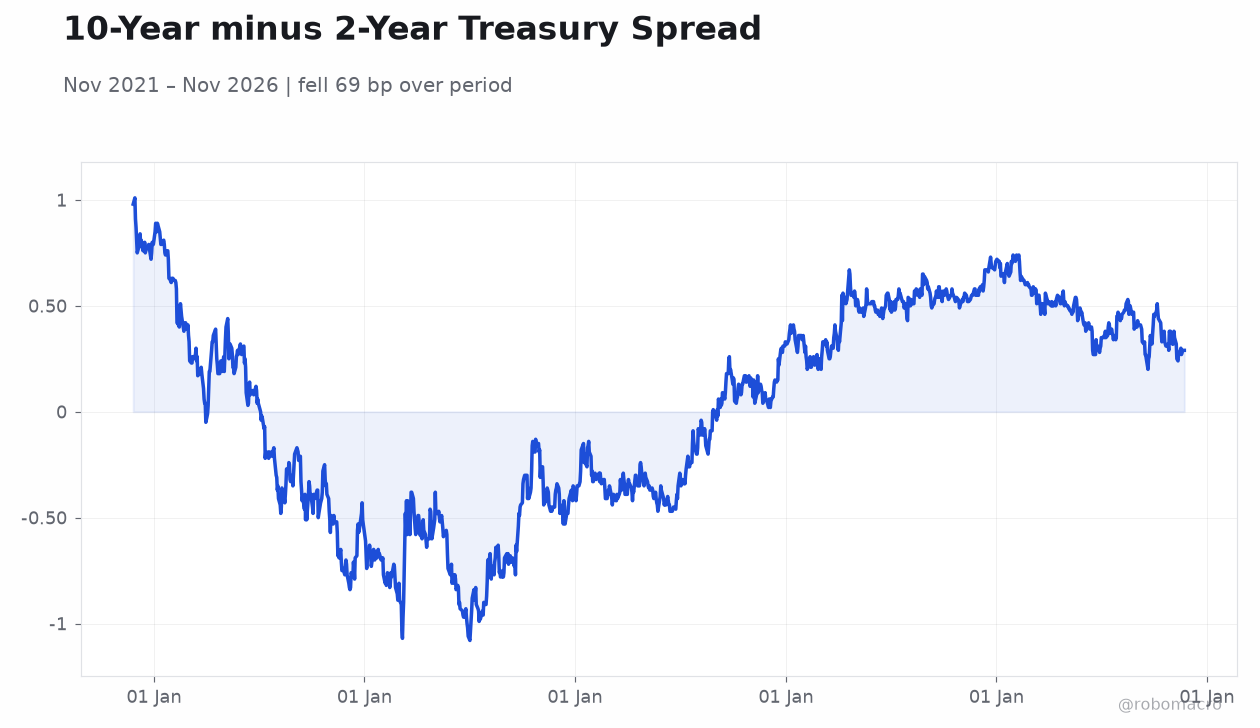
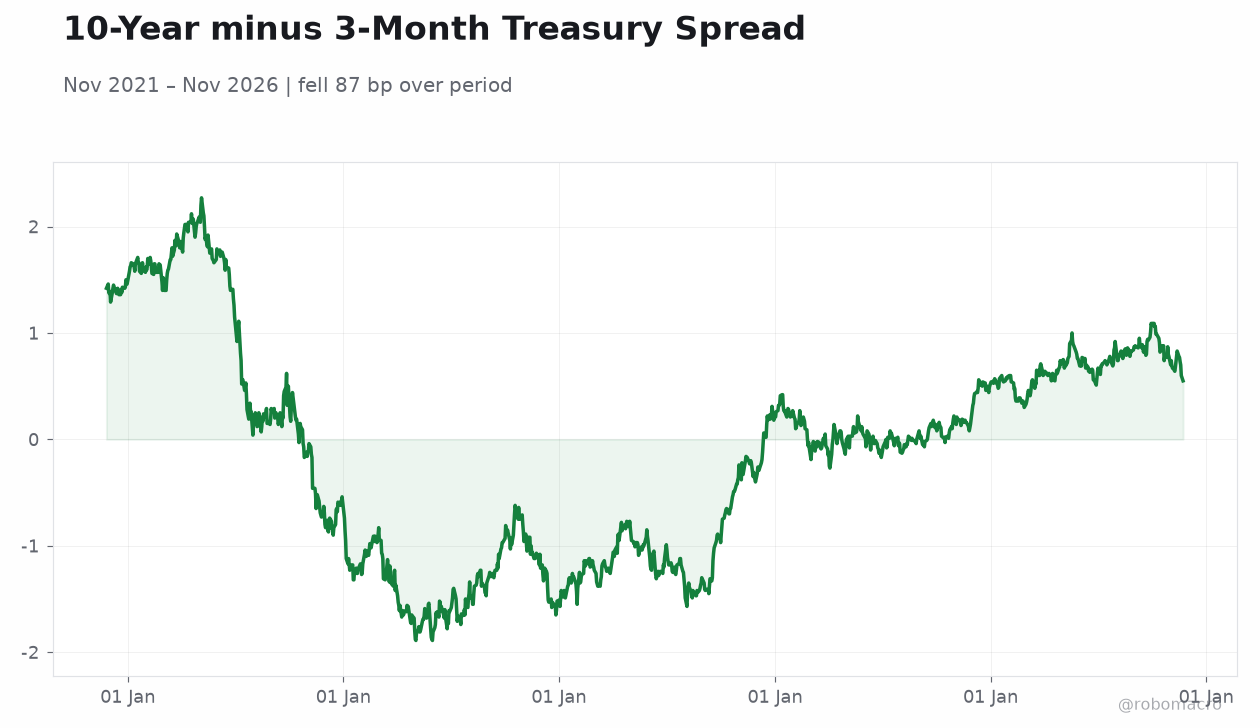
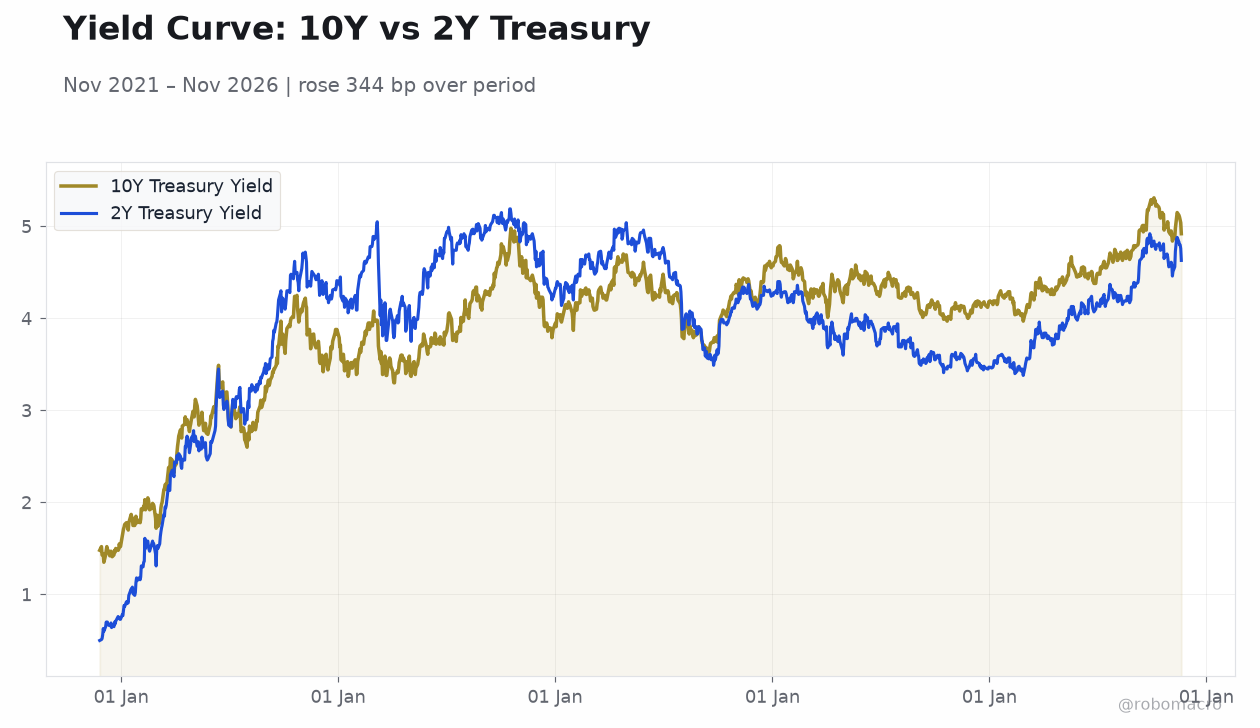 Yield Curve: 10Y vs 2Y Treasury | Type: macro_line | 10Y Treasury Yield: 4.92 (2026-11-20) | Range: 1.35–5.31 | Trend(6pt): 1.48,3.92,4.43,4.33,5.04,4.92 | 2Y Treasury Yield: 4.63 (2026-11-20) | Range: 0.5–5.19 | Trend(6pt): 0.5,4.78,4.86,3.79,4.76,4.63
Today's Economic Events
| Data | Prior | Cons | Time |
|---|---|---|---|
| ADP Employment Change Weekly | 23,750 | - | 08:15 |
| S&P/Case-Shiller Home Price Year-over-Year | 2.70 | 2.70 | 09:00 |
| CB Consumer Confidence | 91.70 | 92.50 | 10:00 |
| API Weekly Crude Oil Stocks | 5.3m | - | 16:30 |
| Wednesday (2026-11-25) | |||
| MBA 30-Year Mortgage Rate | 7.35 | - | 07:00 |
| Core PCE Price Index Month-over-Month | 0.30 | 0.30 | 08:30 |
| Durable Goods Orders Month-over-Month | 1.90 | 0.40 | 08:30 |
| GDP Growth Quarter-over-Quarter Second Estimate | 2.20 | 3.40 | 08:30 |
| Personal Income Month-over-Month | 0.20 | 0.40 | 08:30 |
- US equities surged Monday, with the Nasdaq 100 up 6.86% and S&P 500 up 4.73%, driven by Nvidia's reinstatement of Jensen Huang as CEO
- S&P Global Flash Composite PMI fell to 54.6 from 55.9, with services cooling to 54.7 and manufacturing at 54.5
- Treasury yields held steady at 4.92% (10Y) and 4.63% (2Y) as markets await Wednesday's Core PCE and GDP data
Yesterday's Recap
US equities staged a powerful rally Monday, with the S&P 500 gaining 4.73% to 7,237.17 and the Nasdaq 100 surging 6.86% to 26,746.10, led by Nvidia's 30% jump after the board reinstated Jensen Huang as CEO with support from President Trump. The Russell 2000 rose 3.40% and Dow Jones added 3.01%, reflecting broad risk-on sentiment. However, economic data painted a more mixed picture: the Chicago Fed National Activity Index fell to -0.06 from 0.07, signaling below-trend growth, while S&P Global Flash PMIs showed cooling across sectors—Composite at 54.6 (prior 55.9), Manufacturing at 54.5 (prior 54.9), and Services at 54.7 (prior 56.1).
Treasury yields were unchanged, with the 10-year holding at 4.92% and 2-year at 4.63%, suggesting bond markets viewed the equity rally as idiosyncratic rather than macro-driven. Fed's Williams spoke late in the session, though markets largely shrugged off his remarks amid the tech-led enthusiasm. The dollar weakened modestly against the yen (USD/JPY +0.19% to 159.23) but gained versus the euro (EUR/USD -0.21% to 1.09).
The Day Ahead
Tuesday's calendar features several second-tier releases that will provide incremental color on consumer health and housing. ADP Employment Change Weekly is due at 08:15 ET, with prior at 23,750. S&P/Case-Shiller Home Price Year-over-Year at 09:00 ET is expected to hold at 2.7%, consistent with prior.
CB Consumer Confidence at 10:00 ET is consensus 92.5 versus prior 91.7, a modest expected improvement that would suggest resilient household sentiment despite elevated rates. API Weekly Crude Oil Stocks at 16:30 ET will offer a preview of energy inventory trends. Markets will also begin positioning ahead of Wednesday's high-impact data deluge, including Core PCE, Durable Goods, GDP Second Estimate, and Personal Income—all released at 08:30 ET.
Other Economic Notes
The divergence between buoyant equity markets and softening PMI data warrants attention. While the Composite PMI at 54.6 remains comfortably in expansion territory, the deceleration from 55.9 suggests momentum is fading as restrictive financial conditions bite. The Chicago Fed National Activity Index turning negative (-0.06) reinforces this caution—readings below zero historically signal below-trend growth.
↓ p.2