RoboMacro AI Economic Research

Global Macro Watch

BETA
May 10, 2026 robomacro.com
Global Macro Watch
May 10, 2026
  • Falling oil prices, with Brent down 9.03% to 104.11, eased inflation fears and fueled risk-on sentiment across major markets.
  • Tech-led equity rallies, exemplified by Nasdaq 100's 5.73% gain to 29,234.99 and KOSPI's 8.09% surge to 7,498.00, highlighted resilient growth signals.
  • Central banks maintained vigilant, data-dependent stances, with Fed speakers emphasizing inflation monitoring amid steady policy expectations as of May 10, 2026.
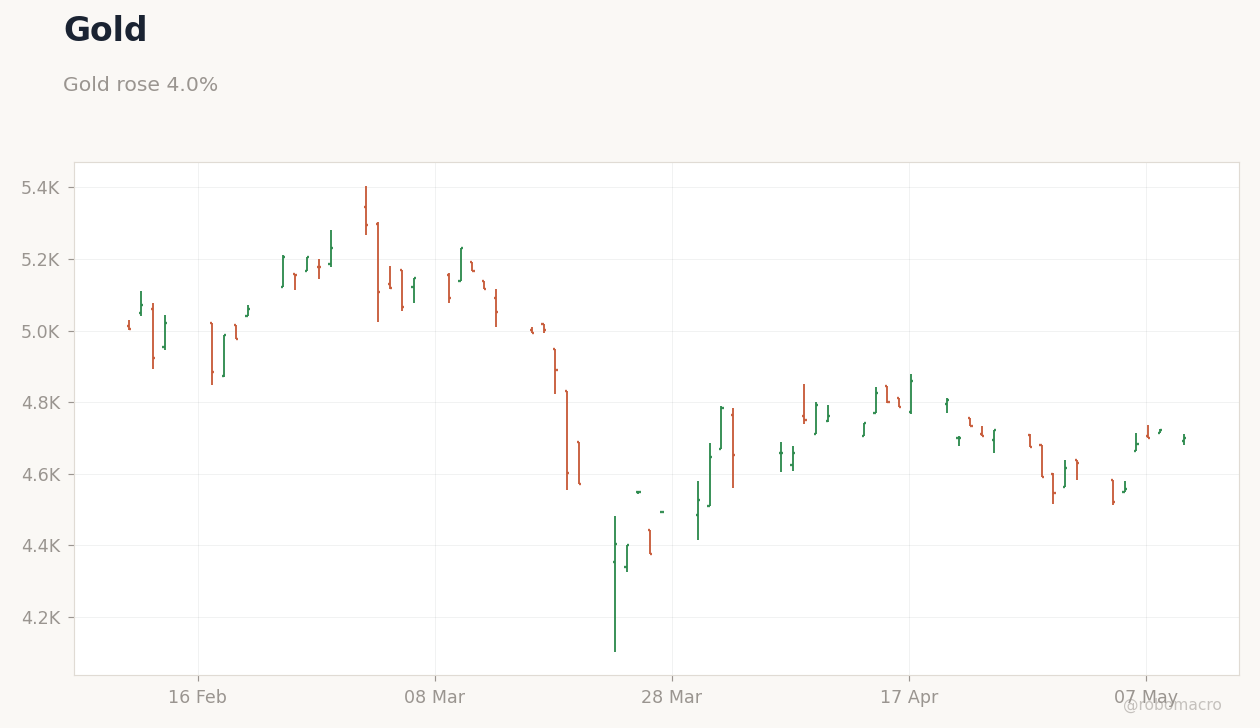
  • Cross-asset divergence showed equities advancing while yields eased, such as US 10Y down 1bp to 4.36%, and commodities split with gold up 4.0% to 4,700.50 versus oil's decline.
Oil Plunge Ignites Global Equity Surge

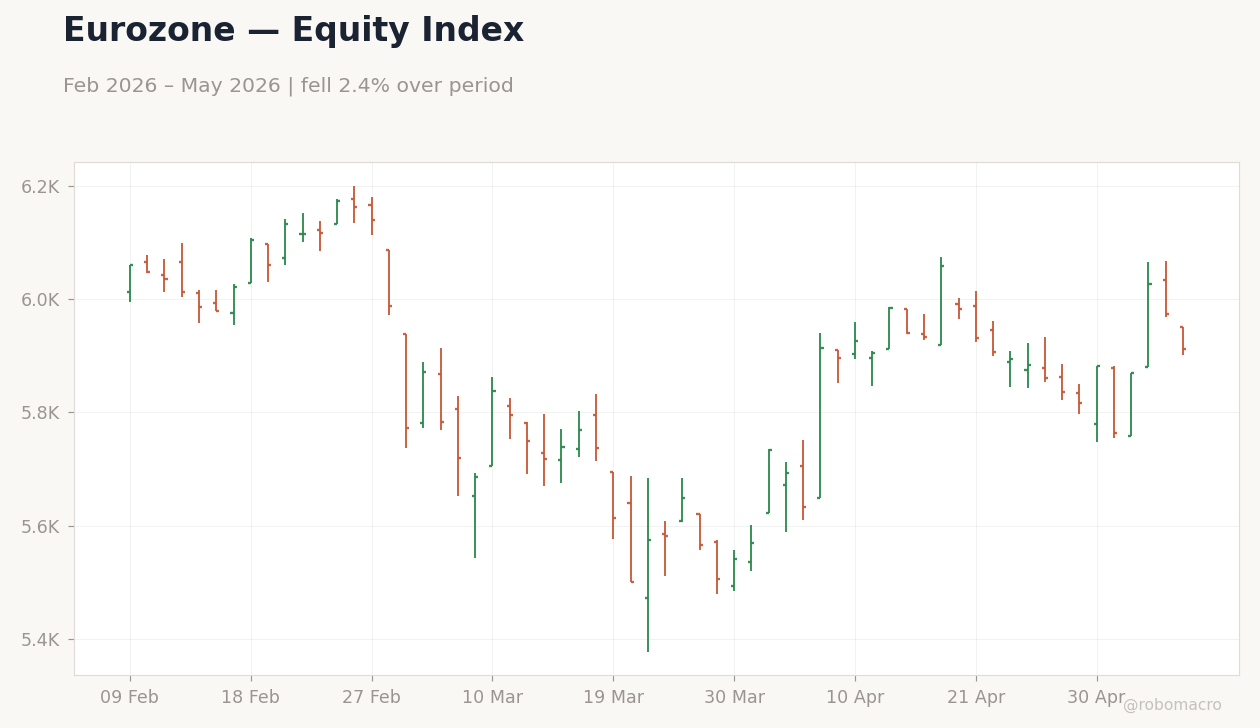
The data suggests we are midway through a post-pandemic recovery cycle, with equity indices reflecting optimism: the Nasdaq 100 surged 5.73% to 29,234.99, propelled by resilient US economic indicators such as factory orders rising above consensus. Similarly, the KOSPI rallied 8.09% to 7,498.00, fueled by AI-driven semiconductor gains, including Samsung Electronics up 15.48% to 268,500.00 won. This global equity momentum, with the Euro Stoxx 50 up 2.57% to 5,911.53, points to a narrative of sustained growth despite geopolitical tensions in the Middle East influencing gold's 4.0% gain to 4,700.50. We observe that falling energy costs, like WTI crude's 7.9% drop to 98.01, are easing fiscal pressures in oil-dependent economies, potentially extending the cycle by reducing input costs for businesses.

From a policy implication standpoint, this week's developments imply a reduced urgency for aggressive monetary tightening, as oil's decline mitigates imported inflation. In the US, Federal Reserve speakers, including Williams on May 10, 2026, maintained a data-dependent stance, emphasizing vigilance on inflation metrics amid robust manufacturing demand. Across regions, the narrative connects to a broader theme of cycle resilience: Spanish unemployment fell sharply, beating expectations, while Nordic equities diverged with Sweden's OMX Stockholm 30 rising 1.26% to 3,073.69. These indicators suggest the global cycle is gaining traction, with oil relief acting as a catalyst for reflationary trades. However, the split in commodities—platinum up 5.14% to 2046.9 in South Africa—highlights vulnerabilities, as energy exporters face headwinds that could fragment the recovery if oil remains below 100 for WTI.

Join the AIeconomist.app Waitlist

Published every Sunday afternoon 100% AI-generated — not financial advice

RoboMacro AI Economic Research

Global Macro Watch

May 10, 2026 robomacro.com

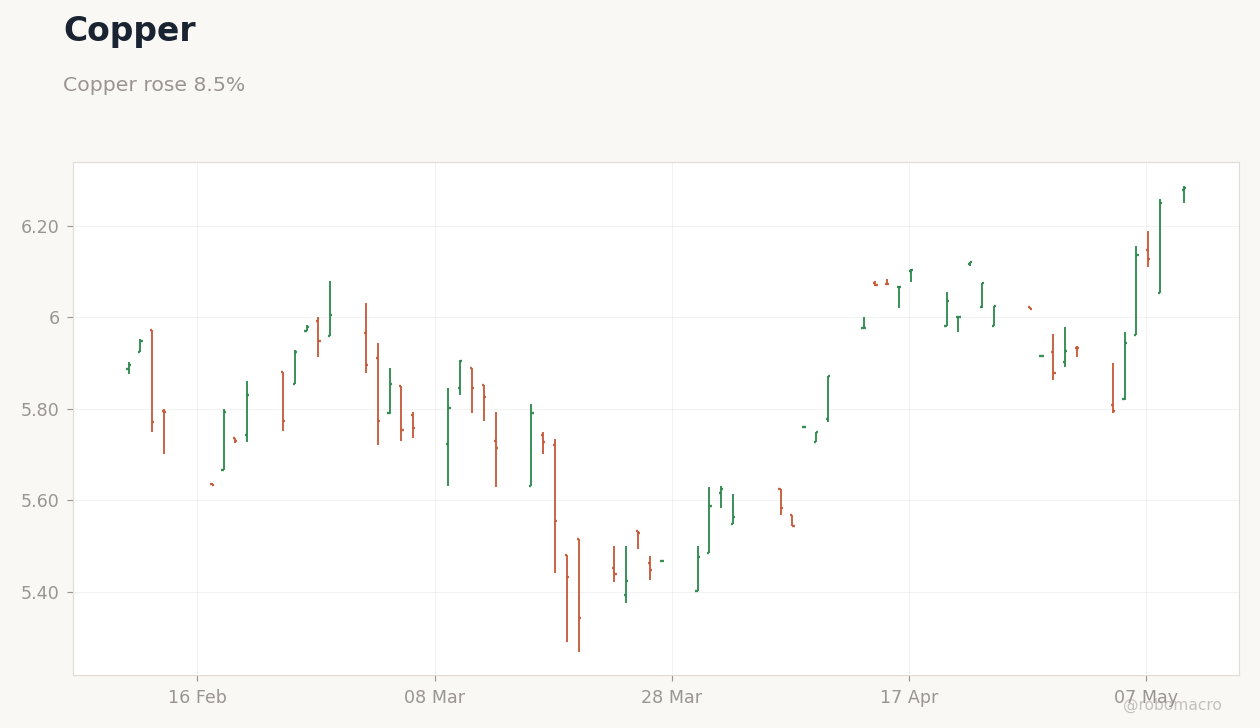
Global Cycle Positioning: Oil Relief Amid Resilient Growth We note that the global economic cycle as of May 10, 2026, appears firmly in an expansionary phase, characterized by robust equity performance and easing inflationary pressures from commodities. The week's dominant narrative centered on a sharp decline in oil prices, which contrasted with strength in industrial metals and safe-haven assets, collectively signaling a pivot toward risk-on sentiment while tempering near-term inflation risks. Brent crude tumbled 9.03% week-over-week to 104.11, driven by global supply dynamics and inventory draws, providing broad relief to energy importers and bolstering consumer spending power. This oil slump, juxtaposed against copper's 8.41% surge to 6.28, underscores a bifurcated commodity landscape where industrial demand remains vigorous, supporting manufacturing recoveries seen in beats like Spain's manufacturing PMI exceeding forecasts.

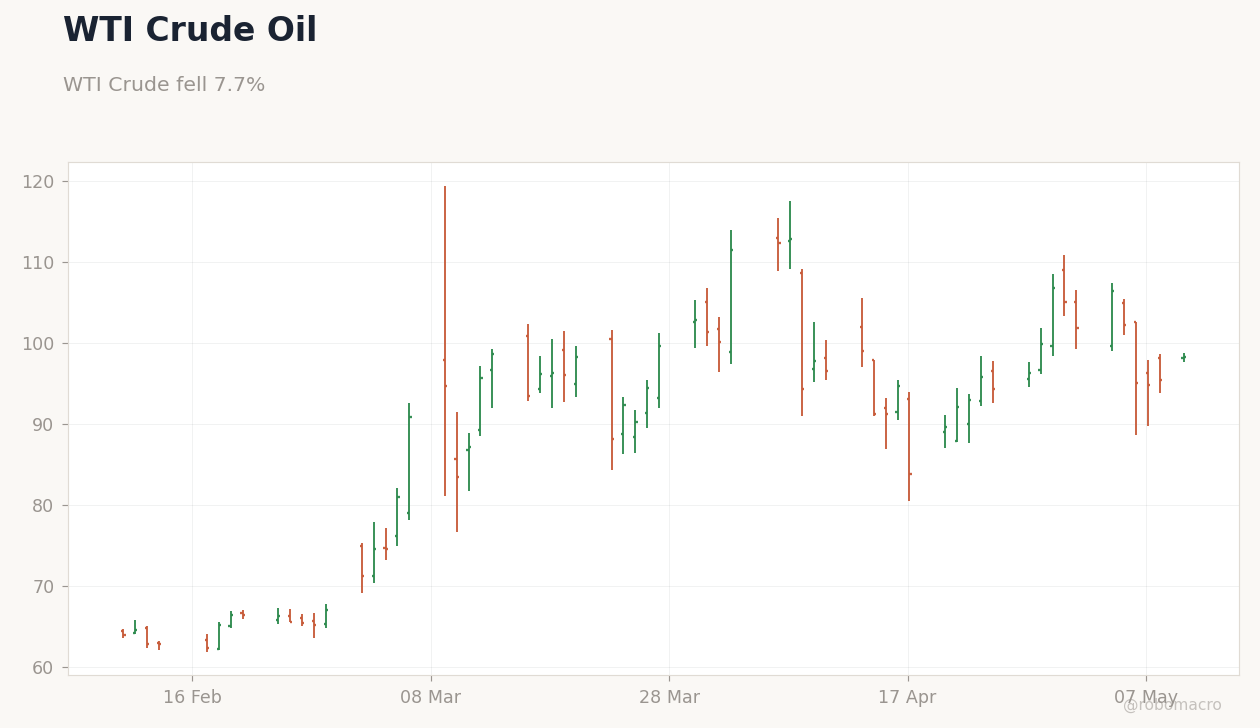
The data suggests we are midway through a post-pandemic recovery cycle, with equity indices reflecting optimism: the Nasdaq 100 surged 5.73% to 29,234.99, propelled by resilient US economic indicators such as factory orders rising above consensus. Similarly, the KOSPI rallied 8.09% to 7,498.00, fueled by AI-driven semiconductor gains, including Samsung Electronics up 15.48% to 268,500.00 won. This global equity momentum, with the Euro Stoxx 50 up 2.57% to 5,911.53, points to a narrative of sustained growth despite geopolitical tensions in the Middle East influencing gold's 4.0% gain to 4,700.50. We observe that falling energy costs, like WTI crude's 7.9% drop to 98.01, are easing fiscal pressures in oil-dependent economies, potentially extending the cycle by reducing input costs for businesses.

From a policy implication standpoint, this week's developments imply a reduced urgency for aggressive monetary tightening, as oil's decline mitigates imported inflation. In the US, Federal Reserve speakers, including Williams on May 10, 2026, maintained a data-dependent stance, emphasizing vigilance on inflation metrics amid robust manufacturing demand. Across regions, the narrative connects to a broader theme of cycle resilience: Spanish unemployment fell sharply, beating expectations, while Nordic equities diverged with Sweden's OMX Stockholm 30 rising 1.26% to 3,073.69. These indicators suggest the global cycle is gaining traction, with oil relief acting as a catalyst for reflationary trades. However, the split in commodities—platinum up 5.14% to 2046.9 in South Africa—highlights vulnerabilities, as energy exporters face headwinds that could fragment the recovery if oil remains below 100 for WTI.

Overall, the week's macro story positions the global economy in a sweet spot of moderating inflation and accelerating growth, with equity gains like the Bovespa's 10.1% climb to 80.46 reflecting broad optimism. This sets the stage for policy makers to navigate divergences, as seen in CEE currencies strengthening, with EUR/HUF down 1.84% to 354.3. As we assess the cycle's maturity, the data from May 10, 2026, implies an extension into late-2026, contingent on sustained commodity stability and no escalation in Middle East tensions driving gold beyond 4,700.50.

Developed Market Dynamics: Equity Resilience Meets Yield Compression In developed markets, we observe a cohesive theme of economic resilience translating into equity gains and modest yield declines, with cross-regional read-across pointing to synchronized recoveries tempered by energy dynamics as of May 10, 2026. The US led with the Nasdaq 100's 5.73% surge to 29,234.99, underpinned by factory orders beating consensus and oil's 7.9% fall to 98.01 boosting risk appetite. This resilience echoes in the Eurozone, where manufacturing PMIs in Spain and Italy exceeded forecasts, driving the Euro Stoxx 50 up 2.57% to 5,911.53, while Spanish unemployment's sharp drop signals labor market strength.

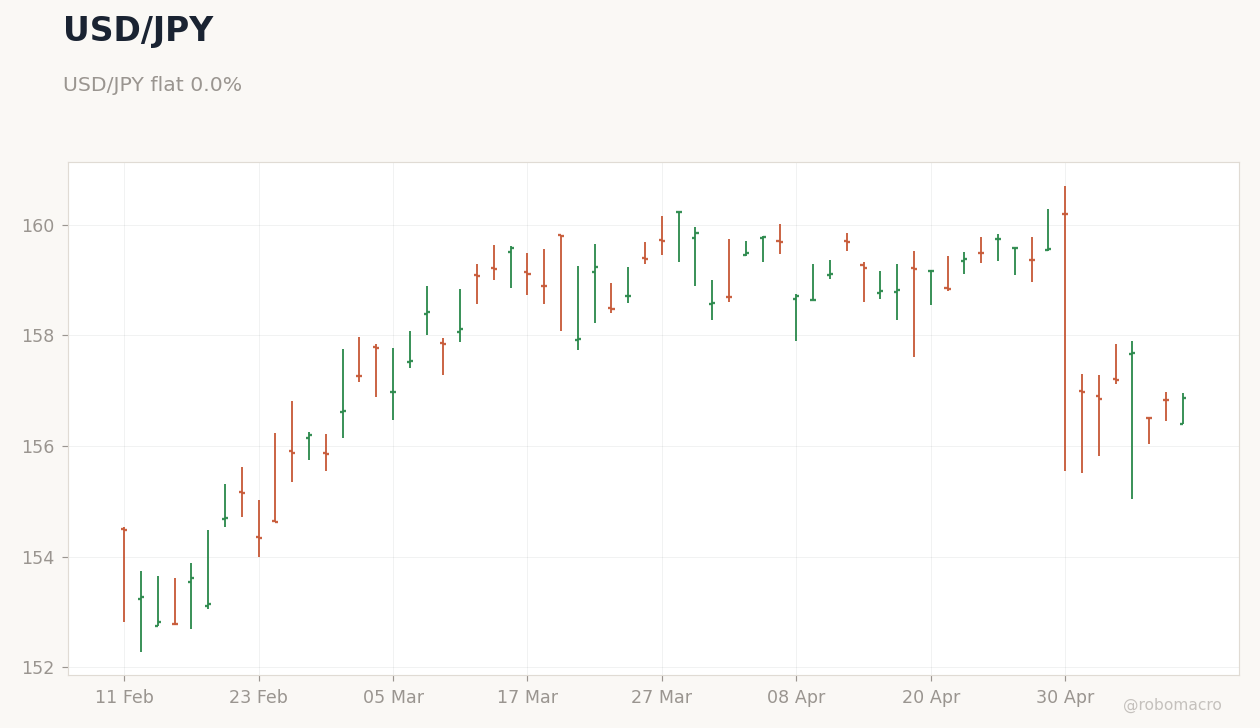
Japan's markets showed mixed signals, with the Nikkei 225 declining 0.19% to 62,713.65 amid exporter pressures from global risk-off undertones, yet USD/JPY's modest 0.03% gain to 156.89 reflects currency stability. In the UK, the FTSE 250 advanced 1.81% to 22,849.4, buoyed by mid-cap resilience despite Brent crude's 8.81% drop to 104.36 pressuring energy sectors. Yield curves across DMs compressed slightly, with the US 10Y yield down 1bp to 4.36% and Germany's 10Y easing 3bp to 3.00%, suggesting markets are pricing in less hawkish policy paths amid falling energy costs.

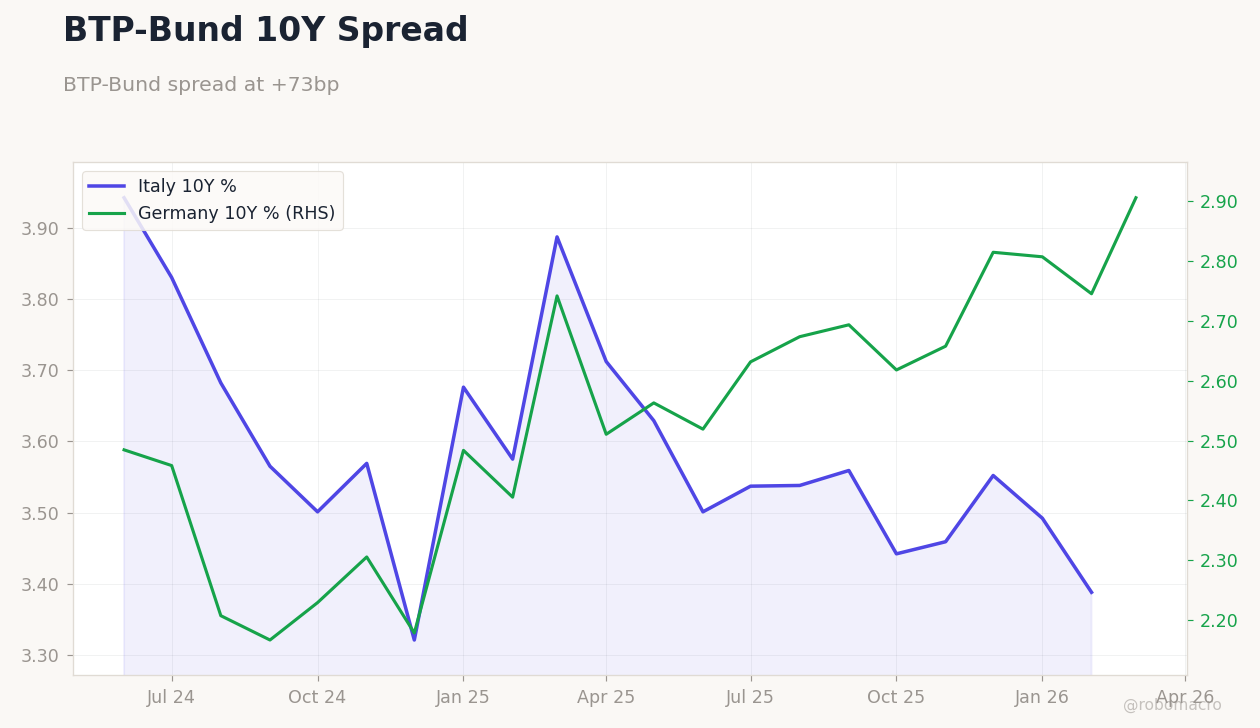
Policy implications here center on central bank caution: ECB speakers were silent this week, but stronger data supports a potential rate cut pause, aligning with the Fed's data-dependent emphasis from Williams on May 10, 2026. In Japan, gold's 4.0% advance to 4,700.50 as a safe-haven underscores inflation outlook pressures from Brent's tumble. The read-across to the UK and Eurozone implies a converging DM narrative of growth support, with Canada's S&P/TSX up 1.3% to 34,077.8 driven by metals strength despite oil declines. We note that this week's DM data, including Italy's 10Y yield down 13bp to 3.73%, reinforces a theme of fiscal breathing room, potentially delaying tightening cycles if oil remains subdued below 104.11 for Brent.

Emerging Market Themes: Currency Strength and Commodity Tailwinds Emerging markets exhibited a pattern of currency appreciation and equity rallies fueled by commodity divergences, with data flows indicating reduced inflation risks as of May 10, 2026. In Latin America, Brazil's Bovespa climbed 10.1% to 80.46, supported by USD/BRL weakening 4.03% to 4,701.6, while copper's 8.41% surge to 6.28 drove MSCI Peru up 7.03% to 83.33. This strength contrasts with oil pressures in Colombia, where USD/COP rose 2.12% to 3,732.90 amid Brent's 8.81% fall to 104.36.
RoboMacro AI Economic Research

Global Macro Watch

May 10, 2026 robomacro.com

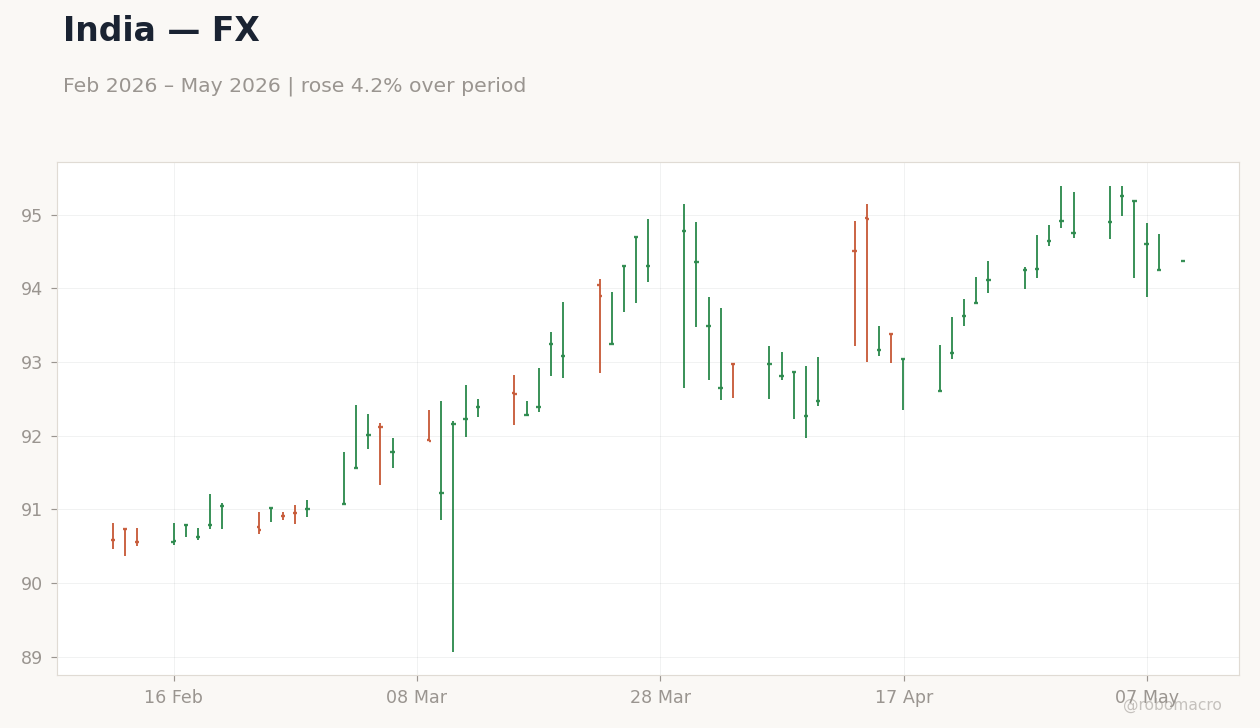
Asia's EMs showed tech-led momentum, with South Korea's KOSPI up 8.09% to 7,498.00 on semiconductor gains, and USD/KRW declining 0.7% to 1,461.43 easing tightening pressures. In India, the Nifty 50 advanced 0.24% to 24,176.15, benefiting from Brent's 8.68% drop to 104.51 relieving import bills, while USD/INR depreciated 0.56% to 94.37. Central bank actions remained steady, with Bank Indonesia facing USD/IDR's 0.47% rise to 17,370, yet regional currencies like USD/THB down 0.71% to 32.25 strengthened overall.

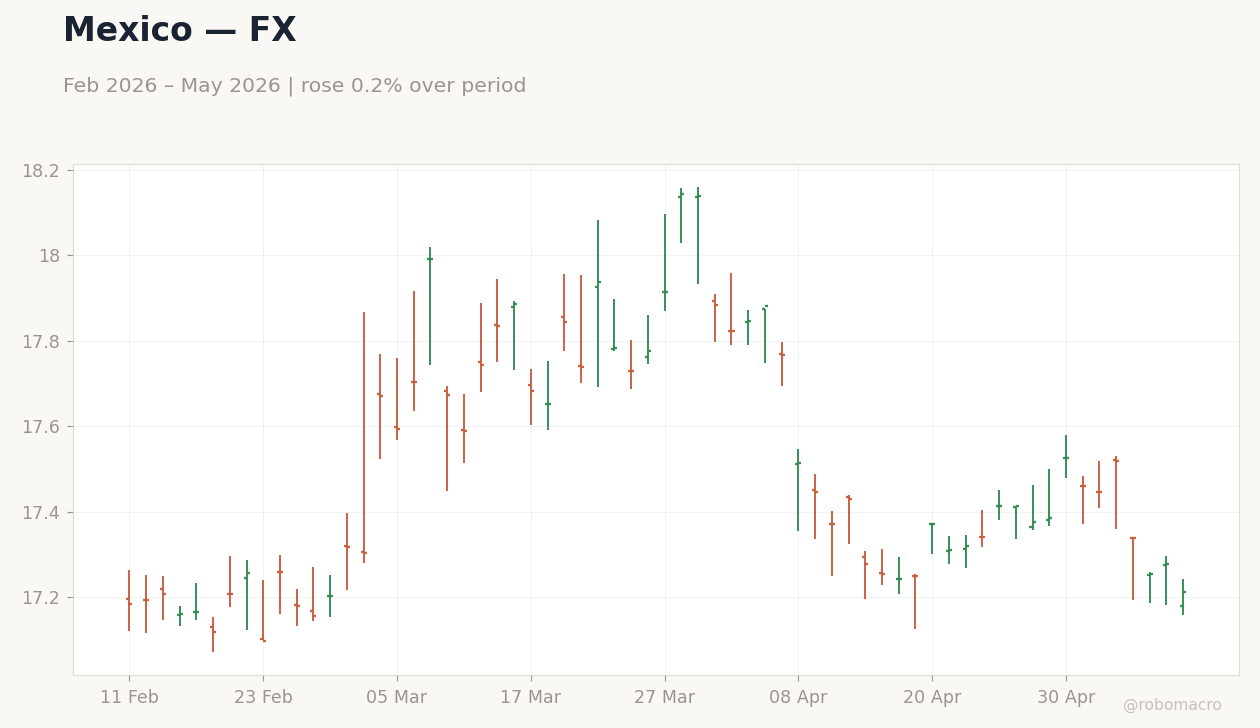
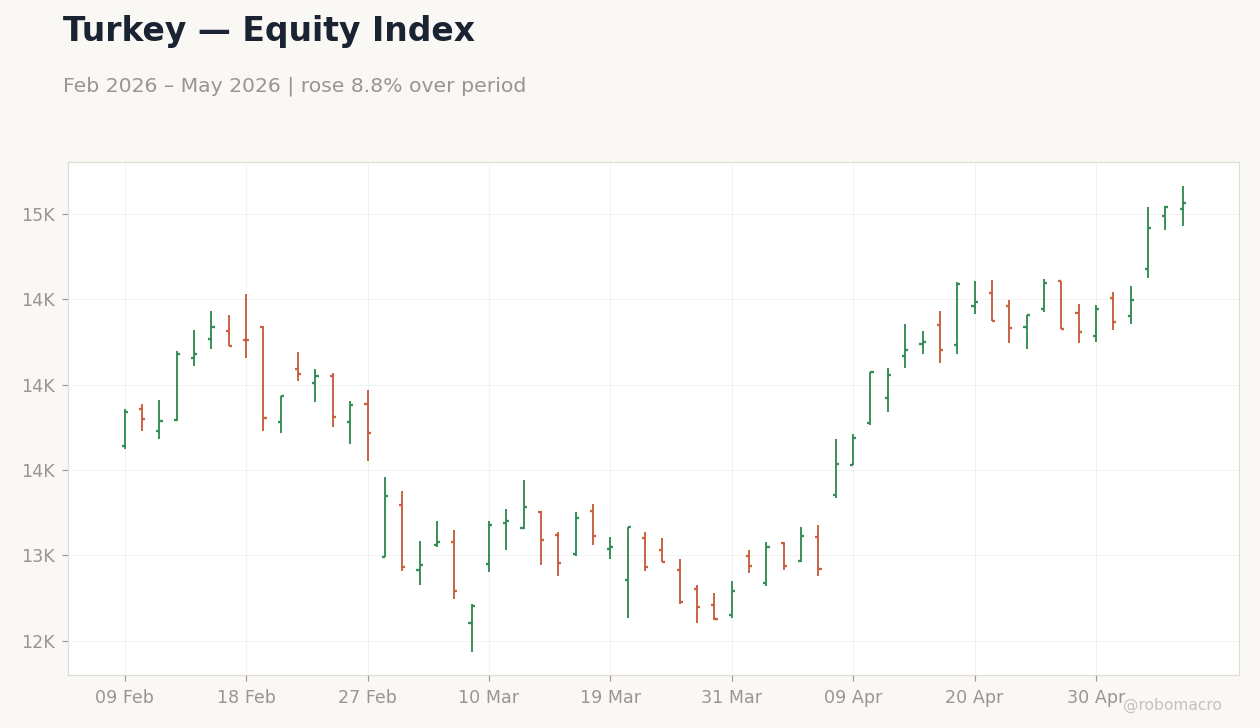
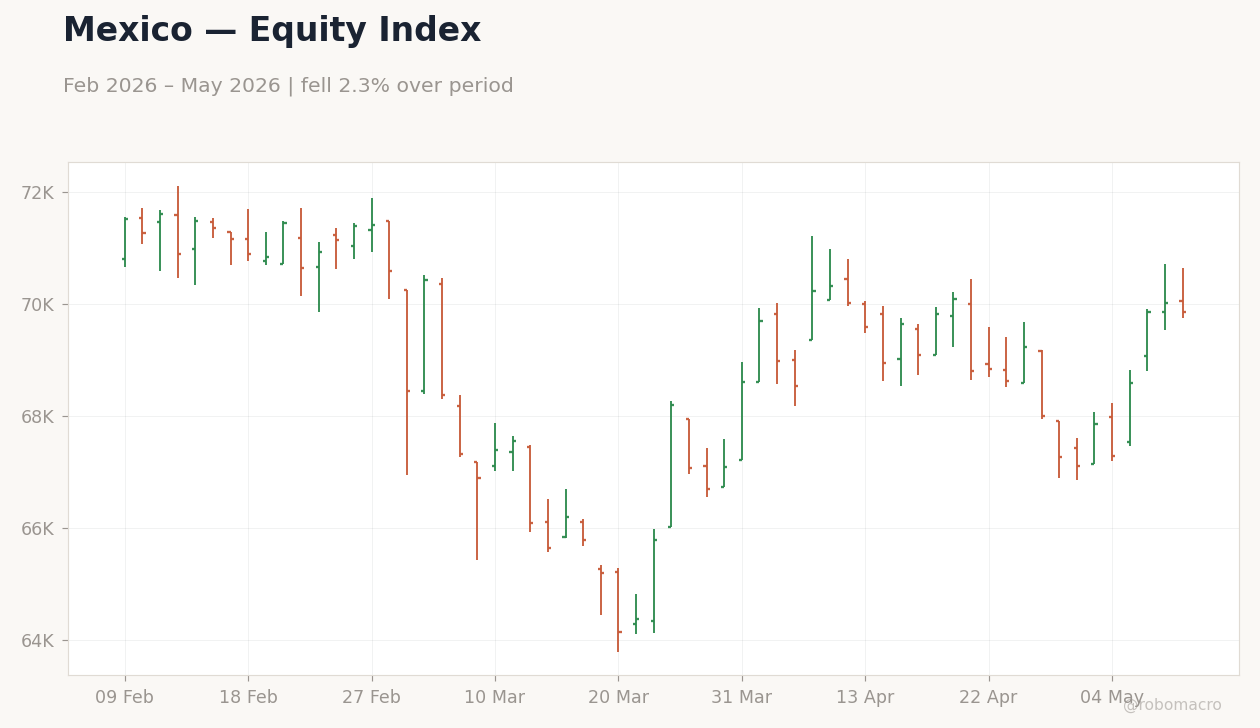
Policy-wise, these FX moves imply scope for EM central banks to normalize gradually, as seen in Turkey's BIST 100 rallying 4.82% to 15,062.70 amid Brent's decline. In South Africa, the JSE Top 40 gained 3.19% to 110,096.1, with USD/ZAR down 0.84% to 16.44 and gold up 3.99% to 4,699.8 providing hedges. The EM theme connects commodity relief to growth upside, with Mexico's IPC Bolsa up 3.82% to 69,855.58 and USD/MXN down 0.97% to 17.28 signaling peso resilience despite WTI's 7.82% drop to 98.1.

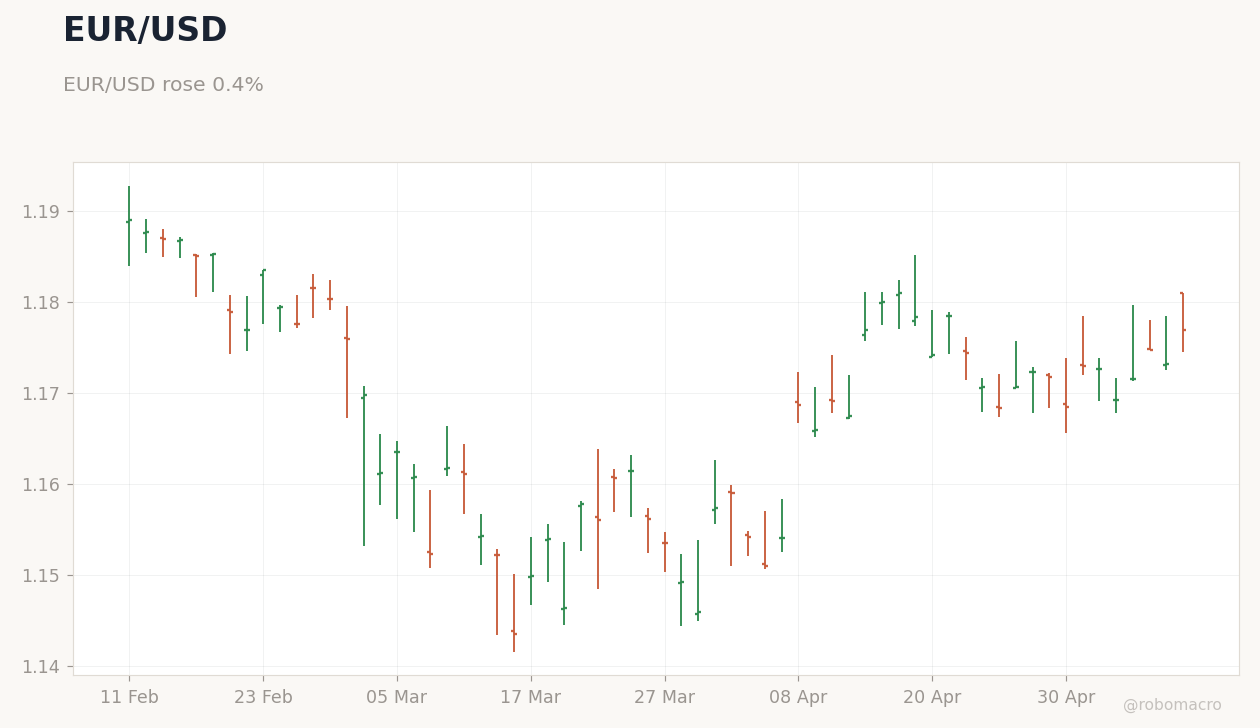
Cross-Asset Signals: Risk-On Amid Divergent Moves Cross-asset themes this week reveal a risk-on tilt driven by oil's decline, with equities advancing while fixed income and commodities diverged as of May 10, 2026. Global equities surged, led by Nasdaq 100's 5.73% to 29,234.99 and KOSPI's 8.09% to 7,498.00, contrasting with yield compressions like the US 2s10s at +35bp and Italy's 10Y down 13bp to 3.73%. FX markets showed USD weakness, with DXY down 0.5% to 98.03 and EUR/USD up 0.4% to 1.1769, supporting EM risk assets.

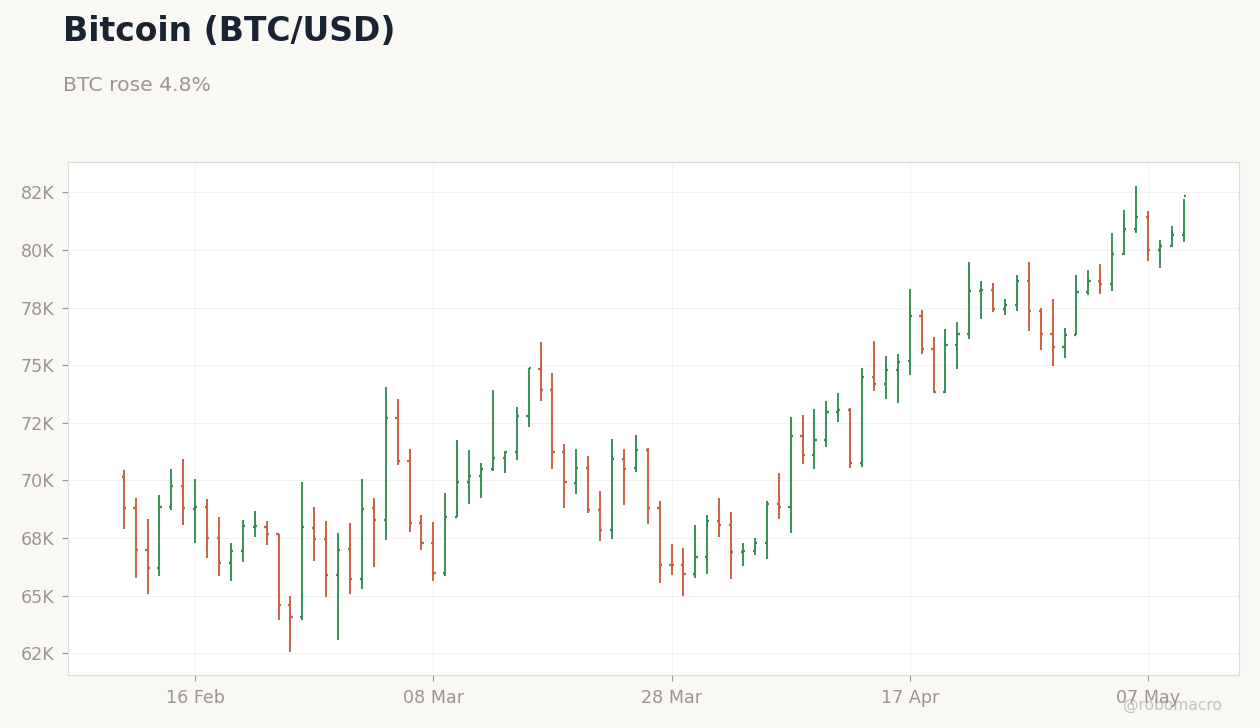
Commodities split sharply: Brent fell 9.03% to 104.11, easing inflation, while copper rose 8.41% to 6.28 and gold gained 4.0% to 4,700.50 amid tensions. This divergence tells us markets are positioning for growth reacceleration, with Bitcoin's 4.8% gain to 82,311.46 reflecting alternative hedging. In rates, Australia's 10Y eased 4bp to 4.97%, aligning with equity resilience like ASX 200 up 0.54% to 8,744.4. Overall, the cross-asset narrative implies bullish positioning, with policy easing potential if oil stays below 98.01 for WTI.

Policy Outlook: Divergences in a Vigilant Landscape The global central bank landscape as of May 10, 2026, features vigilance amid rate path divergences, with DMs leaning data-dependent and EMs gaining flexibility from commodity relief. The Fed's stance, reiterated by speakers like Williams, supports steady expectations, with US 10Y at 4.36% down 1bp signaling no immediate hikes. ECB alignment is evident in Germany's 10Y at 3.00% down 3bp, while Japan's 10Y at 2.48% down 3bp reflects BoJ caution.

EM divergences show Brazil's 2Y down 21bp to 13.53% amid Bovespa's 10.1% gain, contrasting Turkey's 10Y down 43bp to 33.66%. Nordic banks held rates steady, emphasizing inflation vigilance with Brent at 104.36. These paths imply DM-EM gaps narrowing if oil's 9.03% drop persists, reducing tightening needs.
Forward Look: Monitoring Commodities and Tech Flows Looking ahead to the week of May 11-15, 2026, we anticipate focus on commodity trajectories and tech sector updates to gauge growth and policy directions. With no major releases, markets will track Brent crude moves from 104.11, as rebounds could pressure equities like KOSPI at 7,498.00. Semiconductor flows, following Samsung's 15.48% surge, will signal AI demand, potentially influencing Bank of Korea normalization.

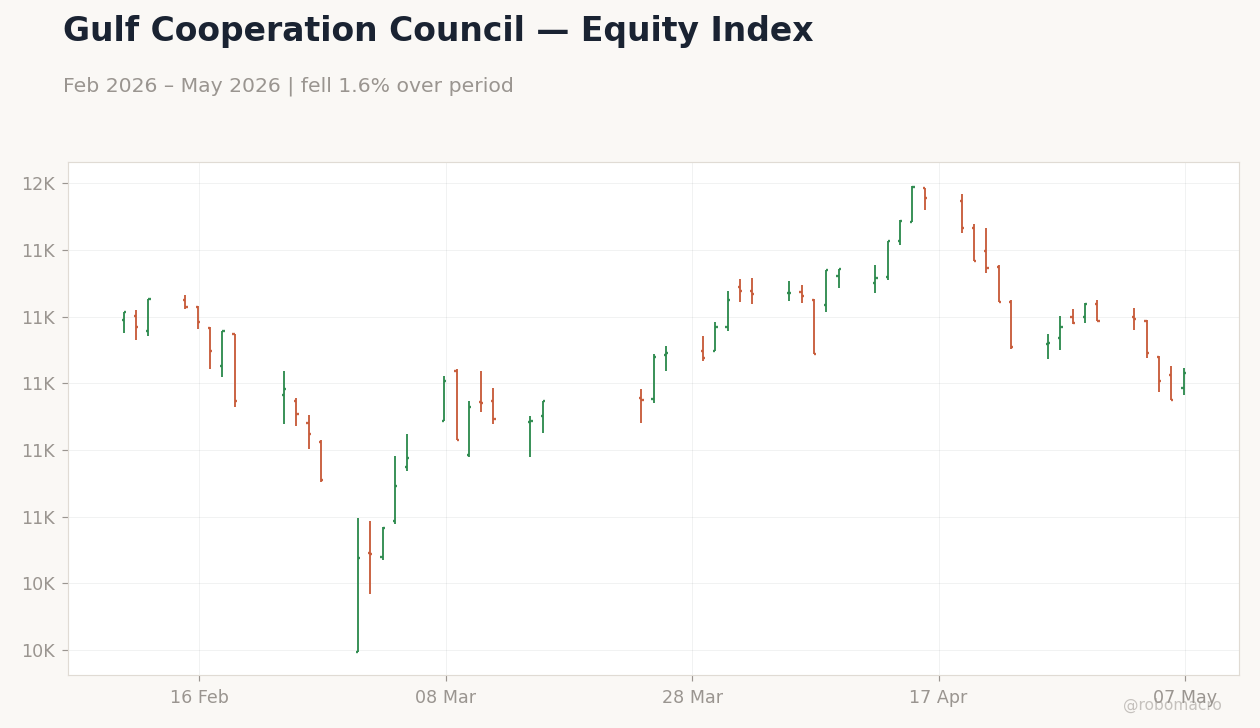
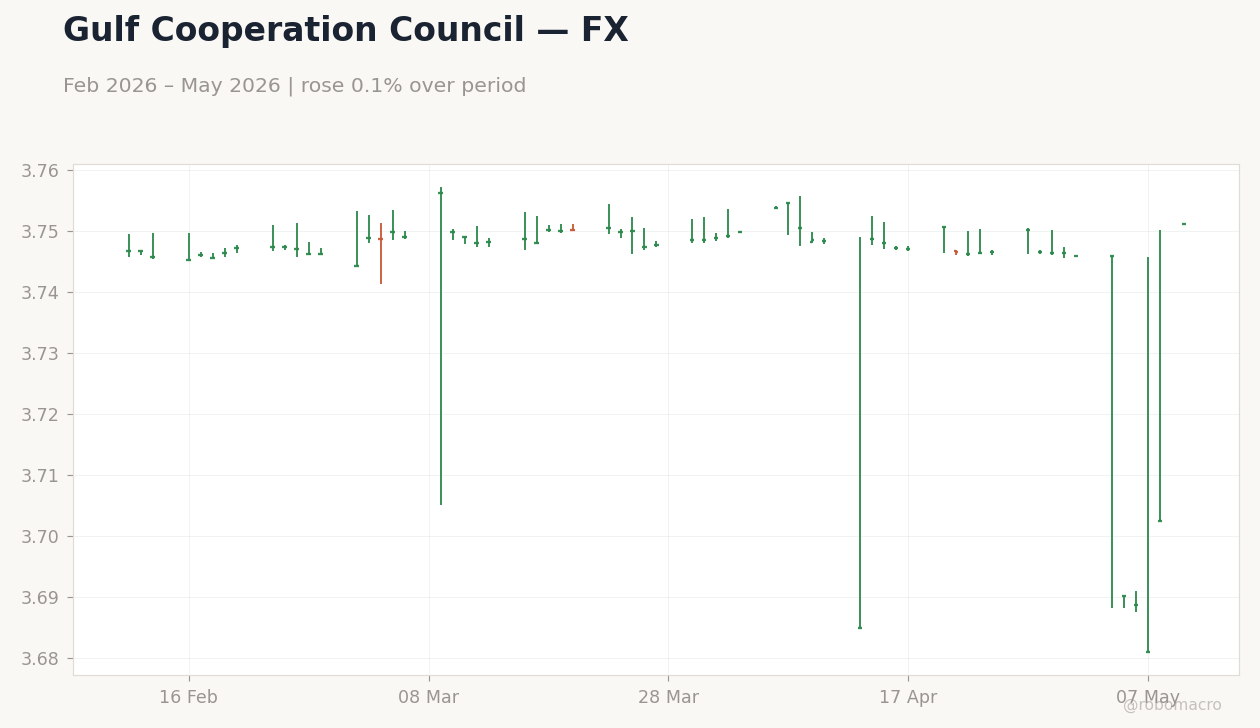
USD/KRW at 1,461.43 and gold at 4,700.50 will be key for haven demand, while EM FX like USD/ZAR at 16.44 could strengthen further on metals like copper at 6.28. Risks include oil supply vulnerabilities reversing the 7.9% WTI drop to 98.01, impacting global risk appetite. We suggest watching GCC equities, with MSCI UAE up 3.11% to 19.57, for energy cues amid peg stability at USD/SAR 3.75.

RoboMacro AI Economic Research

Global Macro Watch

May 10, 2026 robomacro.com
Global Economic Outlook Summary
Consensus forecasts, % change year-on-year. Sources: IMF WEO, OECD, World Bank, national central bank projections. Generated by xAI Grok from public institutional data as of May 10, 2026.
Economy Real GDP (% y/y) Consumer Prices (% y/y)
2026E2027E2028E 2026E 2027E2028E
Americas
United States2.12.22.32.02.02.1
Canada1.81.92.02.22.12.0
Mexico2.52.62.73.53.23.0
Brazil2.02.12.24.03.83.5
Argentina3.03.54.050.030.020.0
Colombia3.23.33.44.54.03.5
Chile2.82.93.03.02.82.5
Peru3.53.63.72.52.32.0
Asia / Pacific
Japan1.01.11.21.51.41.3
China4.54.34.21.00.80.5
India6.56.76.84.54.24.0
Australia2.22.32.42.52.32.2
New Zealand2.02.12.22.01.91.8
South Korea2.52.62.72.01.81.7
Indonesia5.05.15.23.02.82.5
Malaysia4.54.64.72.52.32.0
Philippines6.06.26.33.53.23.0
Singapore2.52.62.72.01.81.7
Thailand3.03.13.21.51.41.3
Taiwan3.03.13.21.81.71.6
Vietnam6.56.76.83.53.23.0
Western Europe
Euro area1.51.61.72.01.91.8
Germany1.21.31.42.01.81.7
France1.41.51.61.81.71.6
Italy1.01.11.21.51.41.3
Spain2.02.12.22.22.01.9
United Kingdom1.81.92.02.01.91.8
Sweden1.71.81.91.51.41.3
Norway1.92.02.12.01.81.7
Denmark1.61.71.81.81.71.6
Switzerland1.31.41.50.50.40.3
Netherlands1.51.61.72.01.91.8
Poland3.03.13.23.53.23.0
Czech Republic2.52.62.72.52.32.0
Hungary2.82.93.04.03.53.0
Romania3.53.63.74.54.03.5
EMEA Emerging
Turkey3.03.23.425.015.010.0
South Africa1.51.61.74.54.24.0
Israel3.03.13.22.52.32.0
Saudi Arabia3.53.63.72.01.81.7
UAE4.04.14.22.52.32.0
Egypt4.54.74.815.010.08.0
Nigeria3.03.23.420.015.012.0
Kenya5.55.65.76.05.55.0
Global Aggregates
Global3.23.33.43.02.82.7
Developed markets1.81.92.02.01.91.8
Emerging markets4.24.34.44.54.03.5
E = estimate/forecast. Sources: IMF WEO, OECD Economic Outlook, World Bank GEP, FOMC SEP, ECB staff projections, national MPRs. Median consensus where sources diverge. Data synthesised by Grok from publicly available institutional forecasts.
RoboMacro AI Economic Research

Global Macro Watch

May 10, 2026 robomacro.com
Global Central Bank Watch
Policy rates and quarterly forecasts as of May 10, 2026. Sources: central bank official releases, OIS market pricing, consensus surveys.
Central Bank Instrument Current
Rate
Last
Change
bp Next
Meeting
Expected
Move
Q1
2026
Q2
2026
Q3
2026
Q4
2026
The Americas
Federal ReserveFed funds upper3.50%Mar 2026-25Jun 11-12Hold3.753.503.253.00
Bank of CanadaO/N rate3.75%Apr 2026-25Jun 5-25bp4.003.503.253.00
BCB (Brazil)SELIC10.50%Mar 2026-50Jun 18-19-50bp11.0010.009.509.00
BanxicoO/N rate9.25%Feb 2026-25Jun 27Hold9.509.259.008.75
BCRA (Argentina)Repo rate40.00%Apr 2026-500May 23-300bp50.0035.0030.0025.00
BanRep (Colombia)Repo9.25%Apr 2026-50Jun 28-25bp10.009.008.508.00
BCCh (Chile)MPR5.75%Apr 2026-25Jun 18Hold6.005.755.505.25
Europe / Africa
ECBDepo rate3.00%Apr 2026-25Jun 6Hold3.253.002.752.50
Bank of EnglandBank rate4.00%Mar 2026-25Jun 20-25bp4.253.753.503.25
RiksbankRepo rate2.75%Feb 2026-25Jun 27Hold3.002.752.502.25
Norges BankDep rate3.50%Mar 20260Jun 20Hold3.503.503.253.00
SNBPolicy rate1.00%Mar 2026-25Jun 20Hold1.251.000.750.50
CNB (Czech)2-wk repo4.00%May 2026-25Jun 27-25bp4.503.753.503.25
NBH (Hungary)Base rate6.50%Apr 2026-50May 28-25bp7.006.005.505.00
NBP (Poland)Ref rate5.25%Apr 20260Jun 4-5Hold5.255.255.004.75
SARBRepo rate7.50%Mar 2026-25May 30Hold7.757.507.257.00
CBRT (Turkey)1-wk repo45.00%Apr 2026-500May 23Hold50.0045.0040.0035.00
Asia / Pacific
RBACash rate3.85%Feb 2026-25Jun 17-18Hold4.103.853.603.35
RBNZOCR4.50%Apr 2026-25Jul 10-25bp4.754.254.003.75
BoJPol rate0.25%Mar 2026+15Jun 13-14Hold0.100.250.250.50
PBoC1-yr LPR3.45%Jan 2026-10TBDHold3.453.453.353.25
RBI (India)Repo rate6.50%Feb 20260Jun 5-7Hold6.506.506.256.00
BoK (Korea)Base rate3.00%Apr 2026-25May 23Hold3.253.002.752.50
BI (Indonesia)BI-Rate5.75%Apr 2026-25Jun 19-20Hold6.005.755.505.25
BSP (Philippines)Rev repo5.50%Apr 2026-25Jun 27-25bp5.755.255.004.75
BoT (Thailand)1-day repo2.00%Apr 2026-25Jun 12Hold2.252.001.751.50
CBC (Taiwan)Disc rate1.75%Mar 20260Jun 20Hold1.751.751.501.50
MAS (Singapore)SGD NEER0% slope%Apr 20260Jul 2026Hold0% slope0% slope0% slope0% slope
Rate forecasts: OIS market pricing + central bank forward guidance + consensus surveys. Generated by xAI Grok from publicly available sources. Shaded rows denote regional groupings. Data as of May 10, 2026.
RoboMacro AI Economic Research

Global Macro Watch

May 10, 2026 robomacro.com
Markets in ReviewRates & Fixed Income
Rates & Fixed Income Chart 1
Rates & Fixed Income Chart 2
Rates & Fixed Income Chart 3
Rates & Fixed Income Chart 4

Week in Review

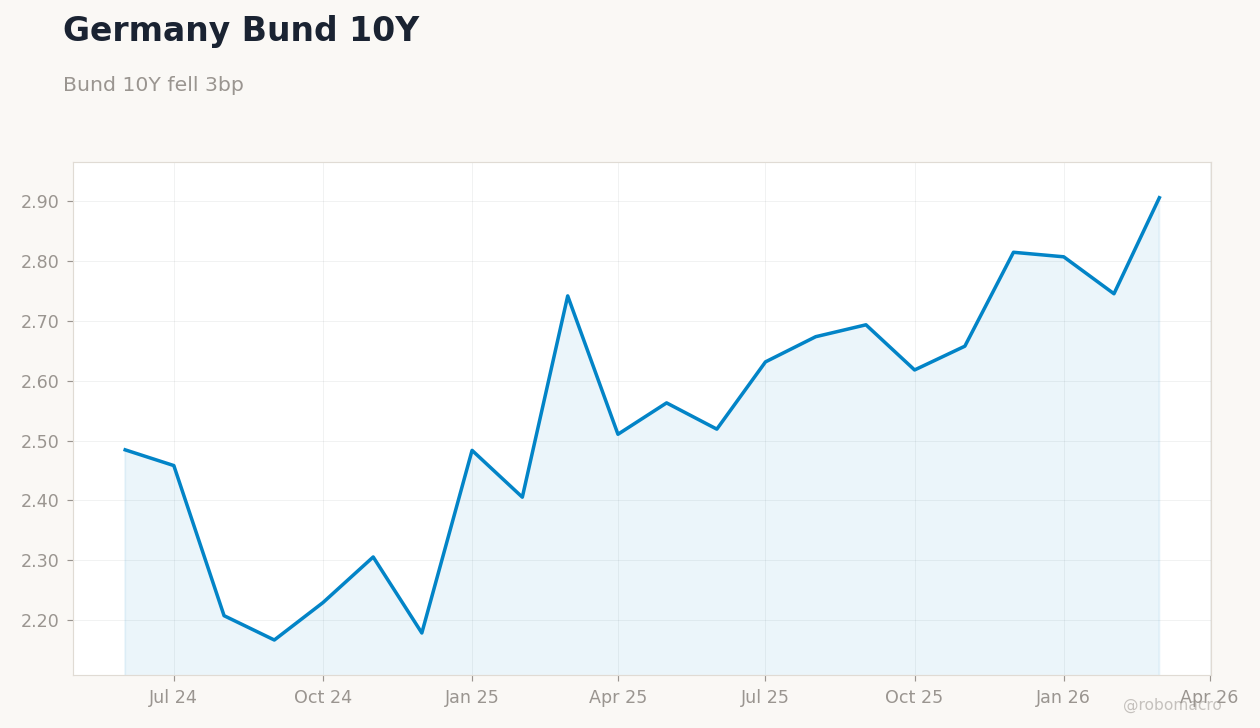
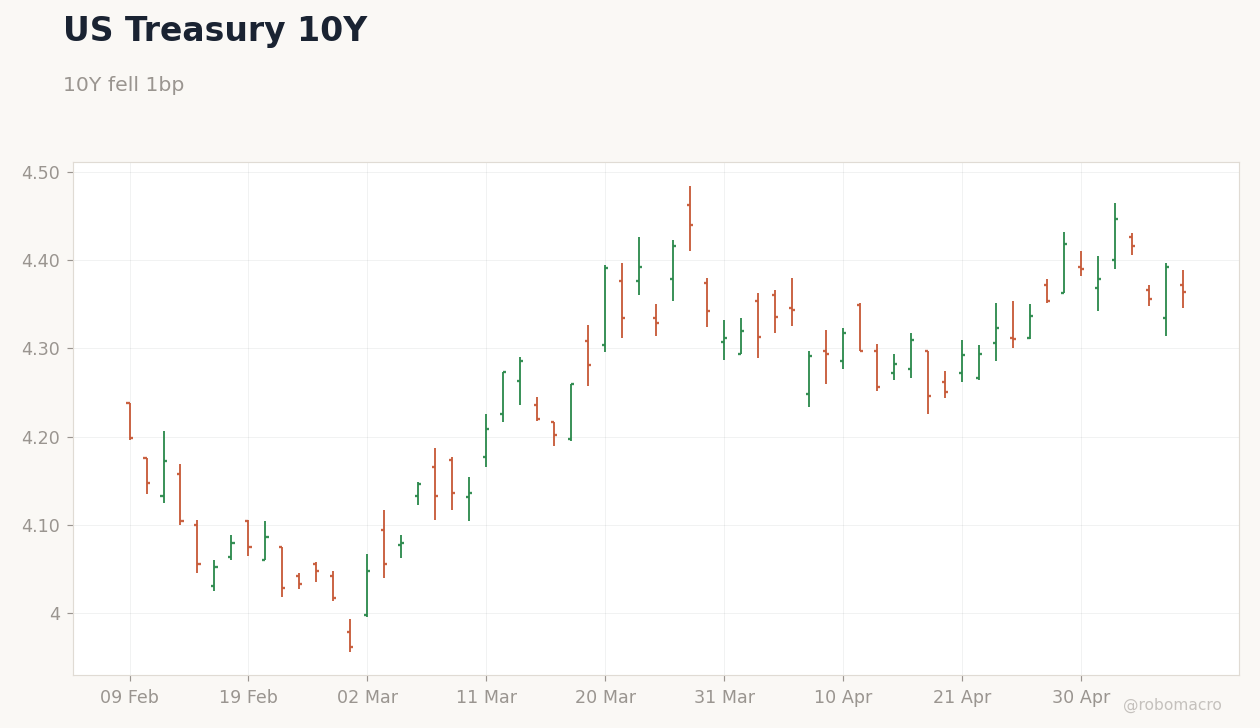
UK 10-year gilt yields fell 5bp to 4.92%. US 10-year Treasury yields declined 1bp to 4.36%, German 10-year bund yields fell 3bp to 3.00%, and Japanese 10-year bond yields eased 3bp to 2.48%. In the US, the 10-year yield opened the week at 4.4460 on Monday before falling to 4.3560 on Wednesday, rebounding modestly to 4.3920 on Thursday, and closing at 4.3640 on Friday. The US 30-year yield similarly declined from 5.0250 to 4.9470 over the same period, with a weekly change of -2bp to 4.95%. UK 30-year yields dropped 7bp to 5.58% while German 30-year yields were 1bp lower at 3.55%. Overall, fixed income markets remained stable amid resilient equities and falling oil prices.

Curve & Spreads

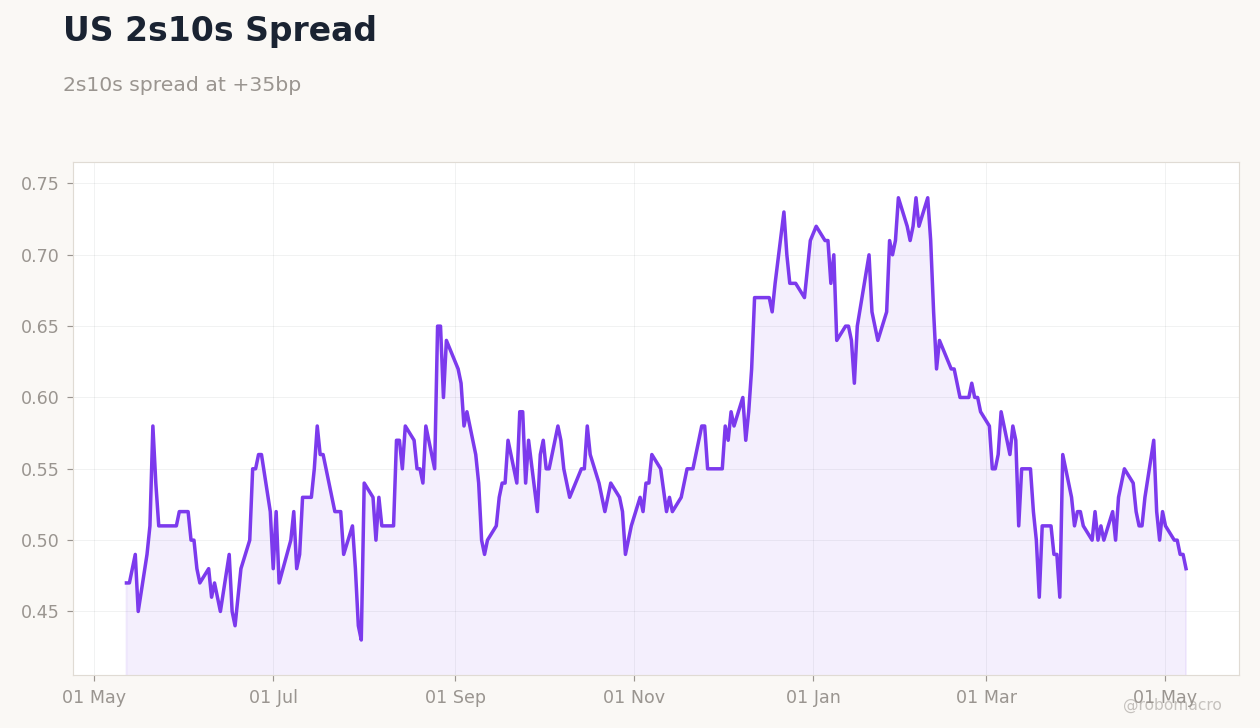
The 2s10s spread stands at +35bp in the US, +41bp in Germany, and +54bp in the UK. The steeper curve shape in the UK and Germany relative to the US implies more optimistic growth expectations in Europe. In contrast, the flatter US curve suggests tempered growth prospects over the coming years. This configuration across DM markets indicates that while growth is anticipated, it is not expected to be robust enough to drive a significant steepening.

EM Bonds

In emerging markets, Turkish 10-year yields stand at 33.66% and Brazilian 10-year yields at 13.89%. South African 10-year yields are at 8.63%, while Indonesian 10-year yields are at 6.70%. Turkish yields moved significantly lower over the week, with the 2s10s spread at -706bp highlighting an inverted curve. These EM yield levels are substantially higher than those in DM, such as the US at 4.36% and Germany at 3.00%, underscoring a wide spread differential amid differing risk profiles and policy outlooks.

Central Bank Read

The current curve shape with a positive 2s10s spread of +35bp in the US implies an easing bias from policymakers. This is echoed in Germany where the 2-year yield fell 5bp versus 3bp for the 10-year, contributing to a +41bp 2s10s spread that similarly implies an easing bias. In the UK, with a +54bp 2s10s, front-end yields declined 3bp against a 5bp drop in 10-year yields. Such moves across the front-end relative to the back-end suggest that markets are factoring in future policy accommodation as economic data remains resilient but inflation concerns linger. Central banks are thus seen as likely to maintain a data-dependent approach with a bias toward eventual easing.

Week Ahead

With an empty economic calendar for next week, there are no major CPI/inflation prints, payrolls/jobs data, central bank meetings or GDP releases listed. This suggests limited catalysts for significant moves in yields from data. Market participants will instead monitor any Treasury auctions for supply impacts. Such auctions could still influence duration risk by testing investor appetite at current yield levels.

RoboMacro AI Economic Research

Global Macro Watch

May 10, 2026 robomacro.com
Markets in ReviewFixed Income
Global Government Bond Yields
Yields in %. WoW change in basis points. Source: CBOE/yfinance (US), FinanceFlowAPI (international).
Country2Y2Y WoW10Y10Y WoW30Y30Y WoW2s10s
United States4.01%-1bp4.36%-1bp4.95%-2bp+35bp
United Kingdom4.38%-3bp4.92%-5bp5.58%-7bp+54bp
Germany2.59%-5bp3.00%-3bp3.55%-1bp+41bp
France2.73%-5bp3.63%-7bp4.49%-3bp+89bp
Italy2.77%-9bp3.73%-13bp4.56%-8bp+96bp
Spain2.69%-7bp3.42%-7bp4.16%-4bp+73bp
Japan1.37%-2bp2.48%-3bp3.72%-0bp+111bp
Canada2.86%-7bp3.47%-5bp3.86%-4bp+61bp
Australia4.68%-3bp4.97%-4bp5.44%+1bp+30bp
China1.28%+1bp1.76%+1bp2.29%+3bp+48bp
India6.25%-2bp6.96%-10bp7.53%-4bp+71bp
Brazil13.53%-21bp13.89%0bp+36bp
Mexico9.07%-14bp
South Korea3.46%-2bp3.91%-2bp3.83%+4bp+45bp
Indonesia6.70%-13bp6.87%0bp
Turkey40.71%-82bp33.66%-43bp-706bp
South Africa8.63%-16bp9.20%-9bp
Poland5.61%-16bp

Government bond yields broadly declined last week, with Turkey's 2Y yield plunging -82bp to 40.71% and its 10Y dropping -43bp to 33.66%, while Brazil's 2Y fell -21bp to 13.53%; China's yields bucked the trend, rising modestly with the 30Y up +3bp to 2.29%. Moves were driven by softer inflation data supporting rate cut bets in EM, ECB policy signals easing Eurozone curves, and portfolio flows into safe havens amid equity volatility. Italy led Eurozone declines with its 10Y down -13bp to 3.73%, diverging from Germany's milder -3bp drop to 3.00%. The UK saw steeper falls, with the 30Y off -7bp to 5.58%, versus the US's modest -2bp to 4.95%. Curves steepened in Japan to +111bp on 2s10s, but inverted sharply in Turkey at -706bp. Watch upcoming US CPI data, BoE meeting, and EM central bank decisions for further direction.

RoboMacro AI Economic Research

Global Macro Watch

May 10, 2026 robomacro.com
Markets in ReviewGlobal Equities
Global Equities Chart 1
Global Equities Chart 2
Global Equities Chart 3
Global Equities Chart 4

Week in Review

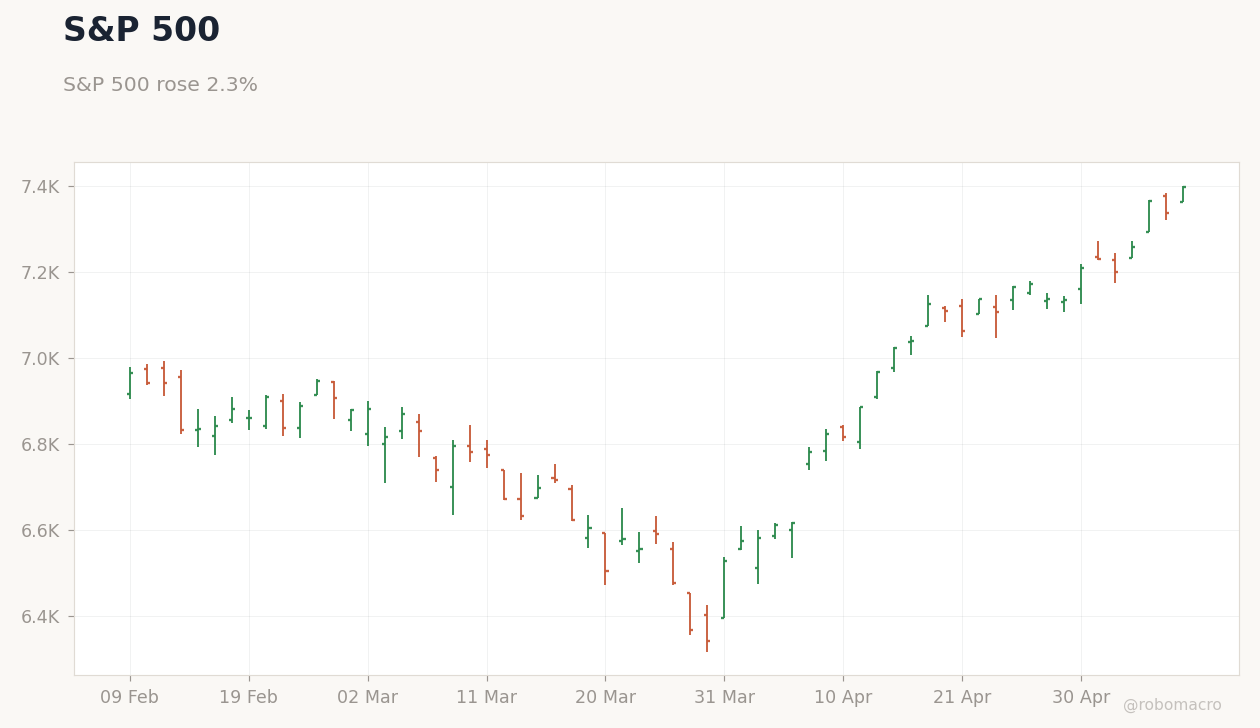
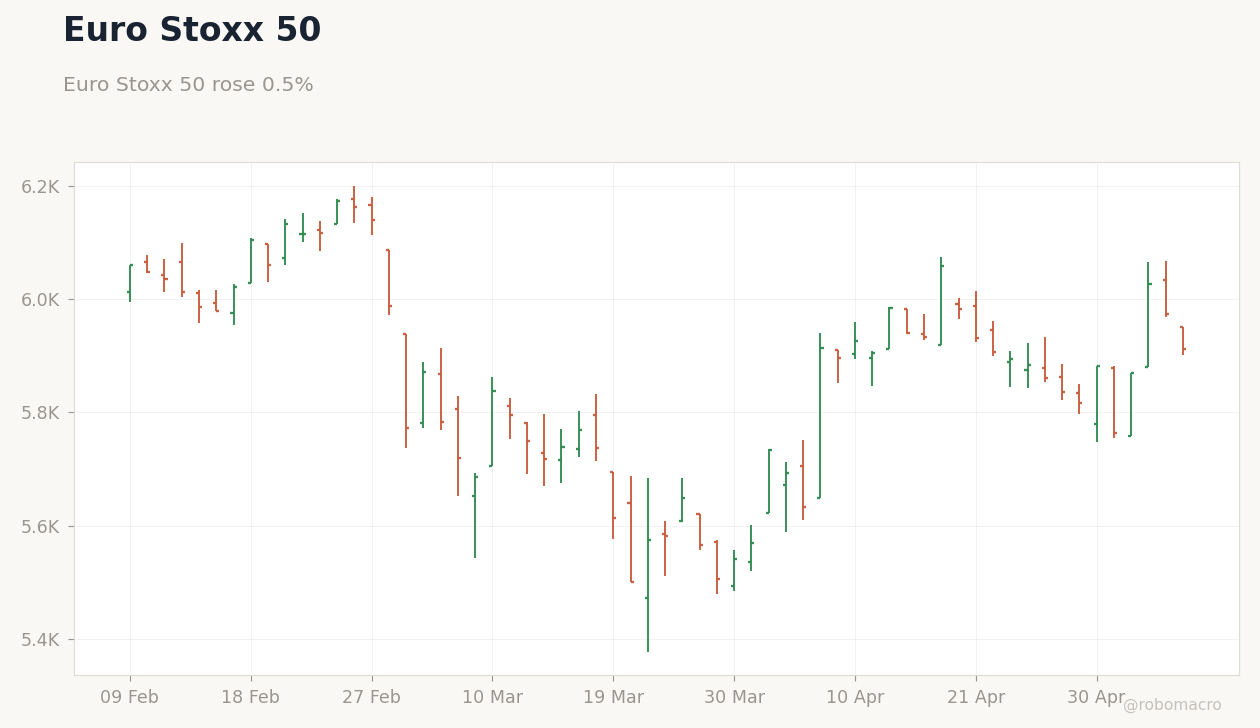
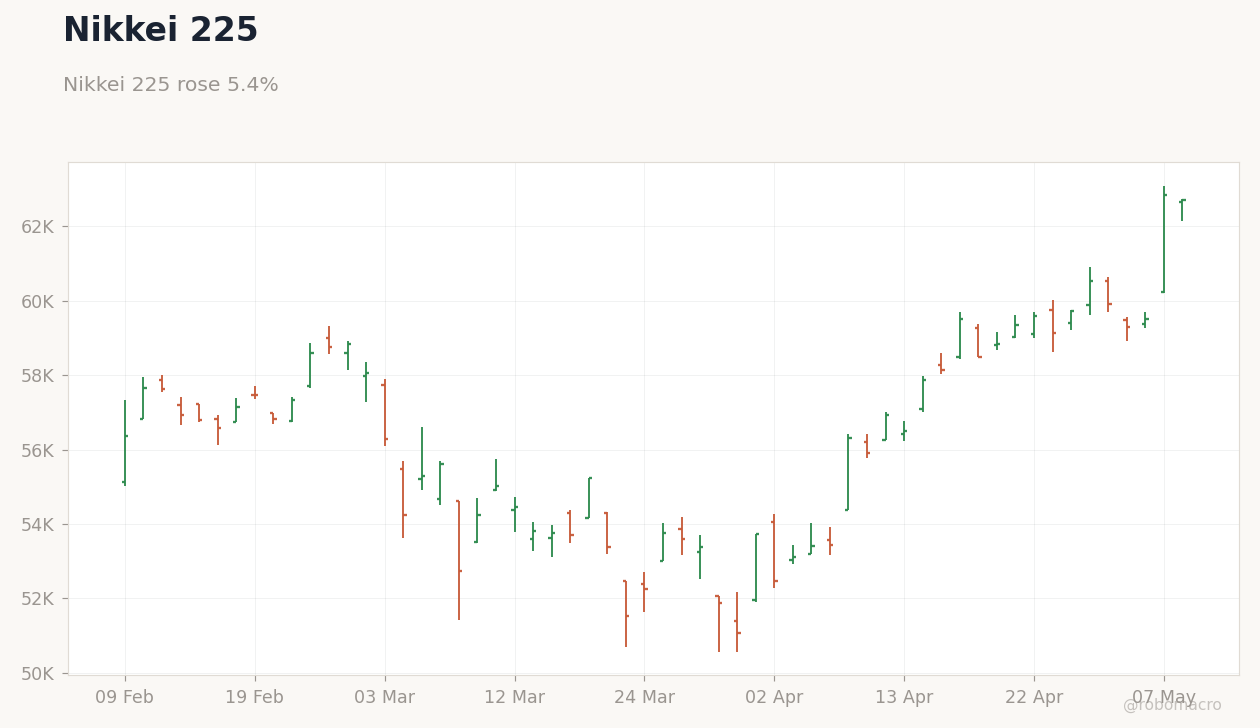
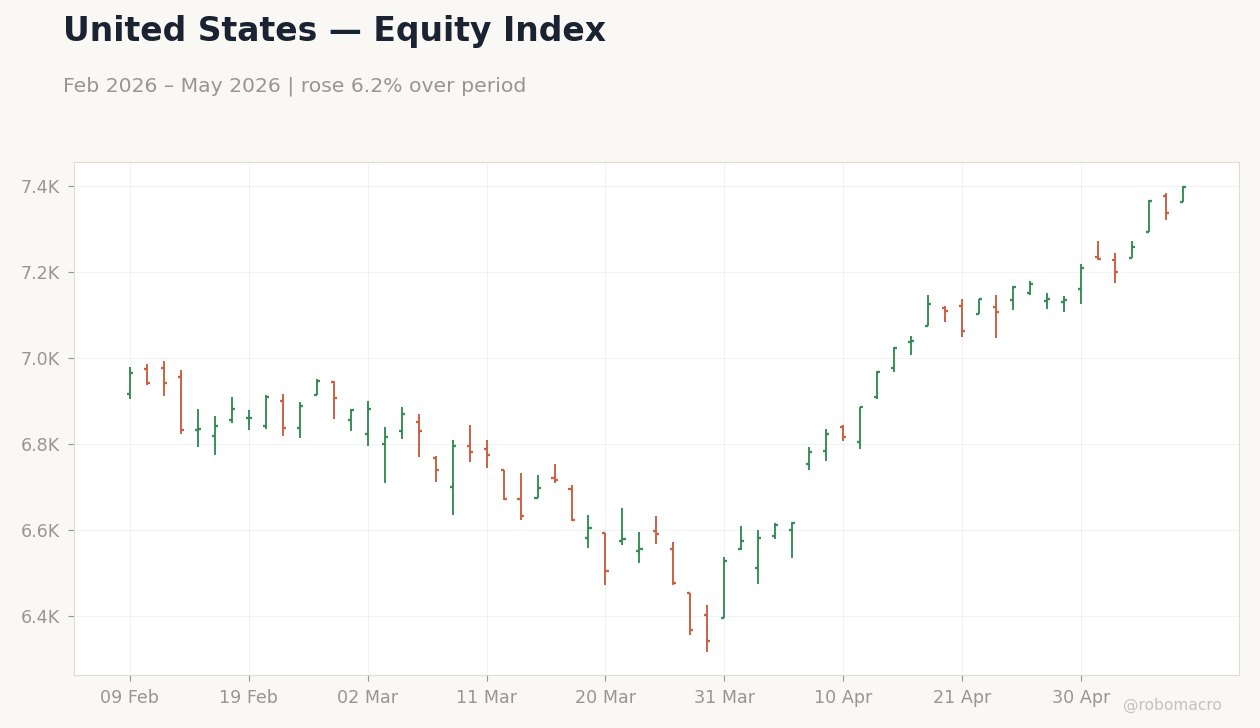
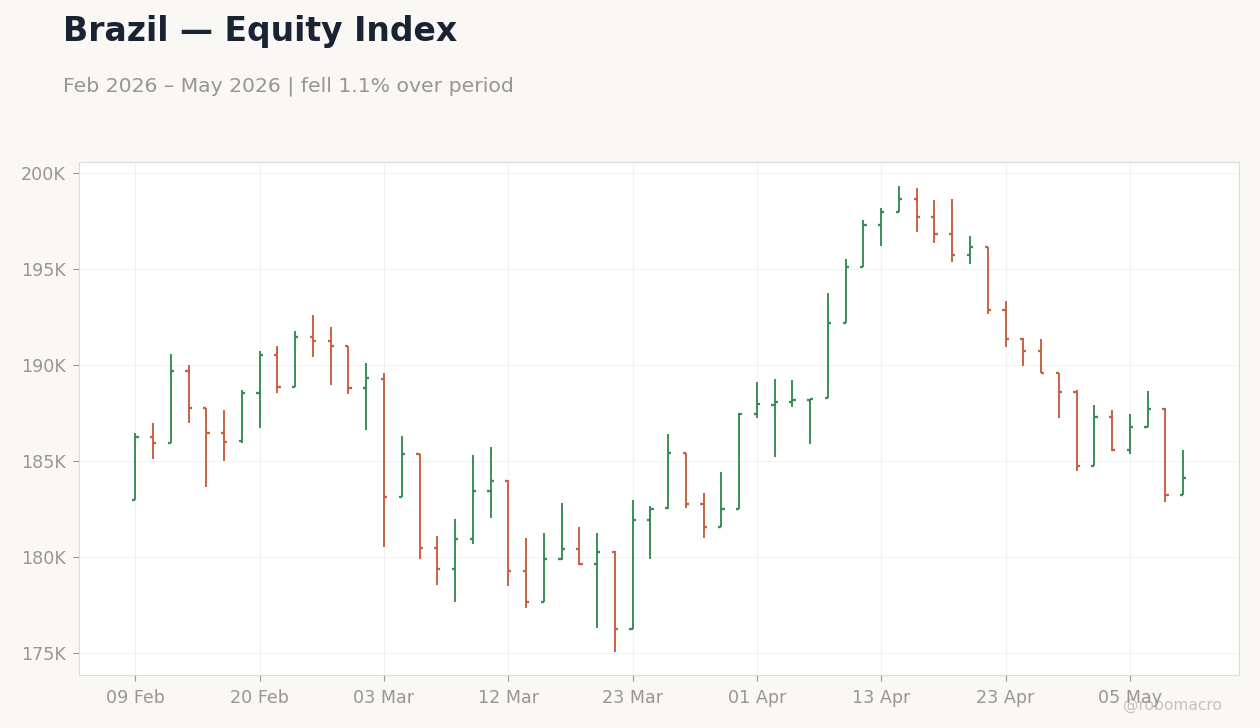
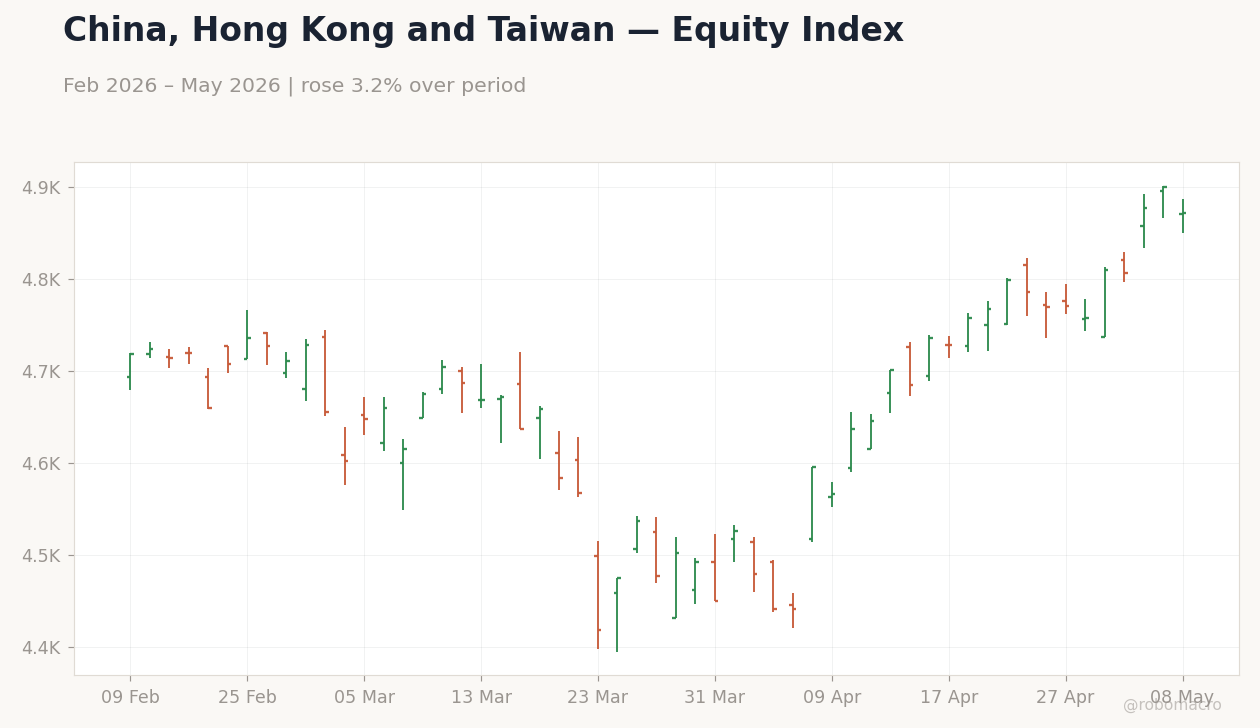
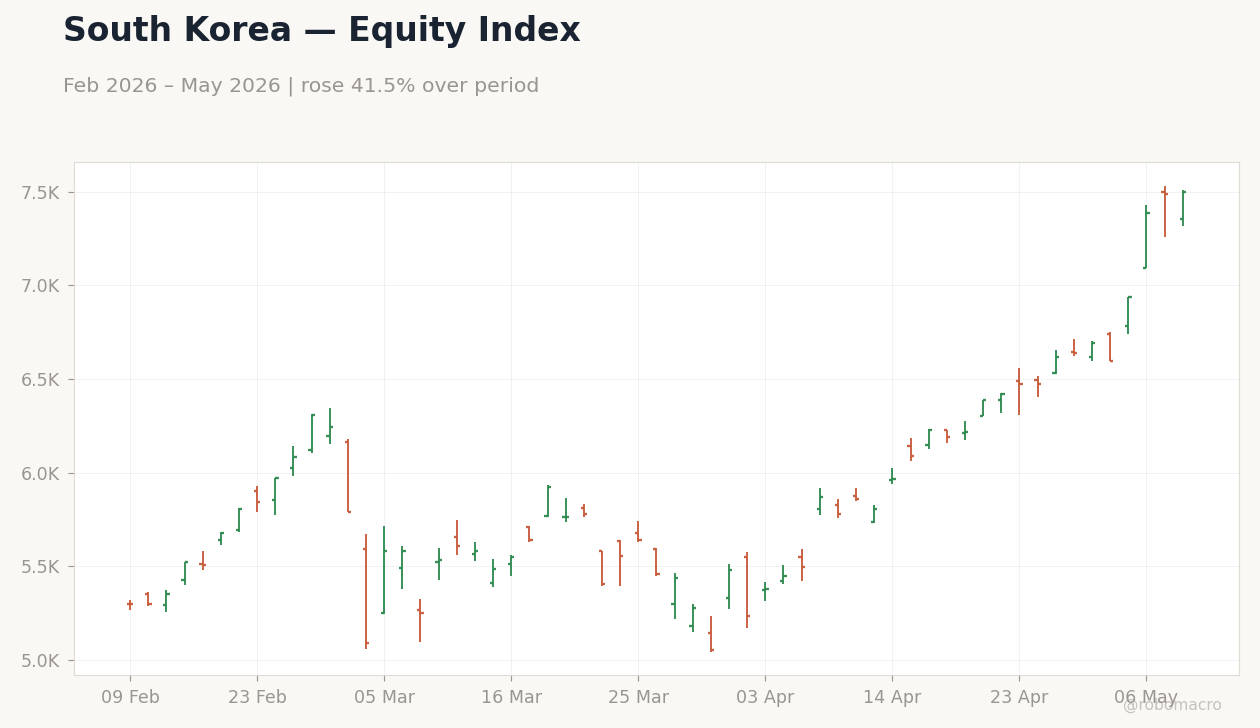
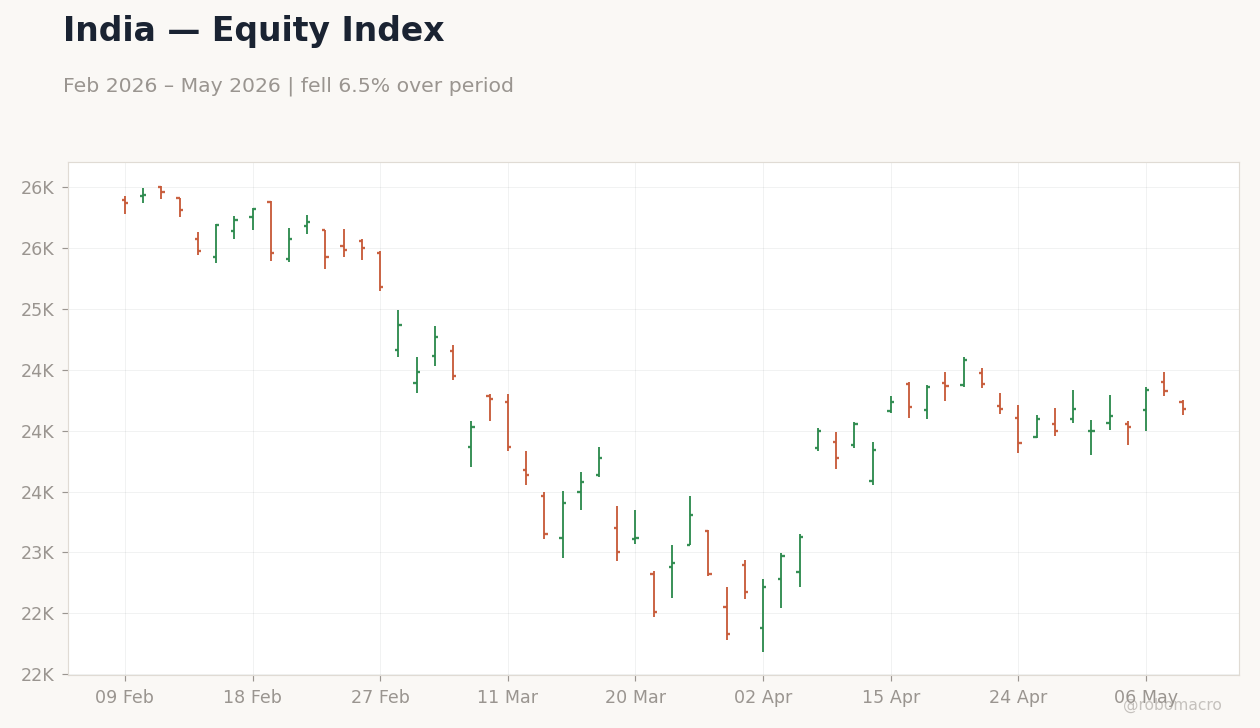
The S&P 500 rose +2.3% week-over-week to close at 7,399. The index climbed from 7,201 on Monday to 7,259 on Tuesday and reached 7,365 on Wednesday before easing to 7,337 on Thursday and rebounding on Friday. In the US, the Nasdaq 100 surged +5.5% to 29,235 while the Dow Jones added +0.2% to 49,609 and the Russell 2000 gained +1.7% to 2,861. European markets were mixed, with the Euro Stoxx 50 up +0.5% to 5,912 after peaking at 6,027 mid-week, the FTSE MIB rising +2.2% to 49,290, the IBEX 35 advancing +0.6% to 17,889, and the FTSE 100 declining -1.3% to 10,233. Asian equities posted strong gains, led by the Nikkei 225 up +5.4% to 62,714 and the KOSPI surging +13.6% to 7,498, with the Hang Seng adding +2.4% to 26,394 and the CSI 300 rising +1.3% to 4,872. Emerging market indices showed divergence, as the IPC Mexico gained +2.9% to 69,856 and the JSE Top 40 rose +4.5% to 7,210 while the Ibovespa fell -1.7% to 184,108.

Regional Divergences

The KOSPI led global performance with a +13.6% weekly gain, outpacing the Nasdaq 100 at +5.5% and the Nikkei 225 at +5.4%, while the S&P 500's +2.3% advance highlighted US resilience amid falling oil prices and resilient economic data. European indices diverged sharply, with the FTSE 100 down -1.3% against gains in the FTSE MIB at +2.2% and Euro Stoxx 50 at +0.5%, reflecting manufacturing PMI strength in Spain and Italy that supported selective recovery. Latin American markets split, as the IPC Mexico rose +2.9% while the Ibovespa declined -1.7%, consistent with energy sector pressure from commodity moves and broad optimism in select EM equities. These divergences underscore macro catalysts including tumbling oil prices boosting risk appetite in technology and metals-linked markets, alongside stronger-than-expected labor and factory data in the US and Europe that favored growth-oriented regions over energy-heavy ones.

Volatility & Risk Appetite

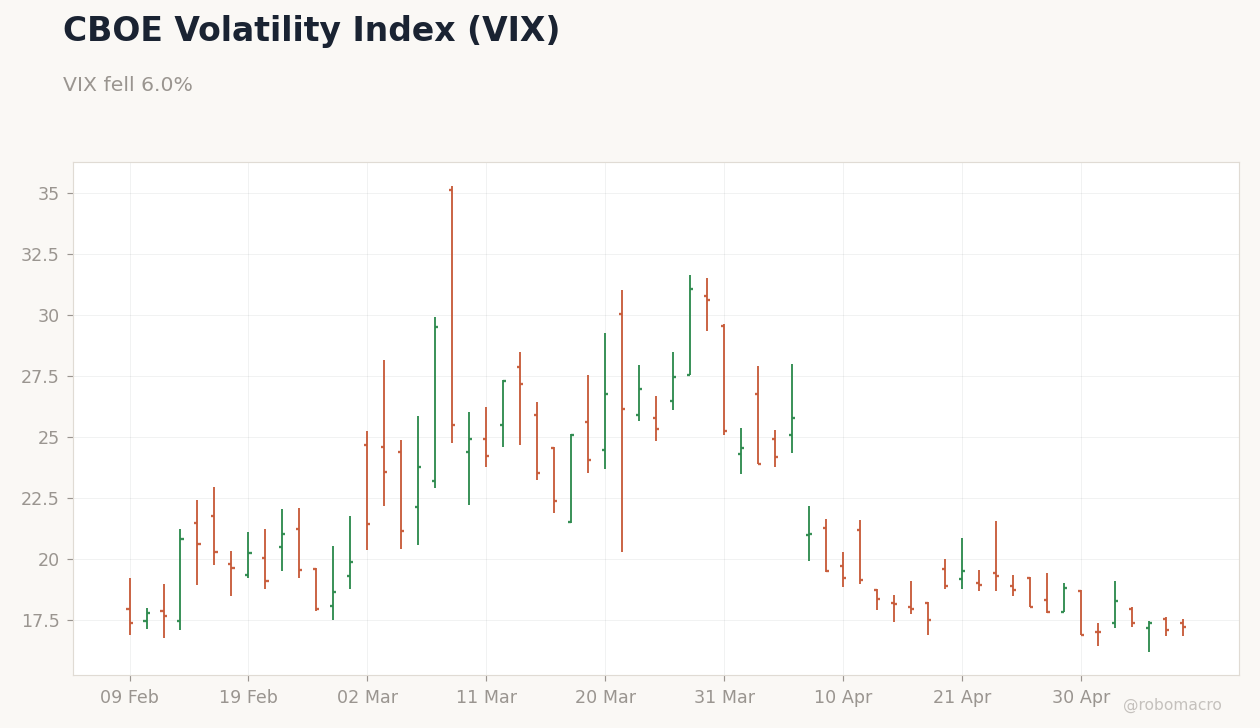
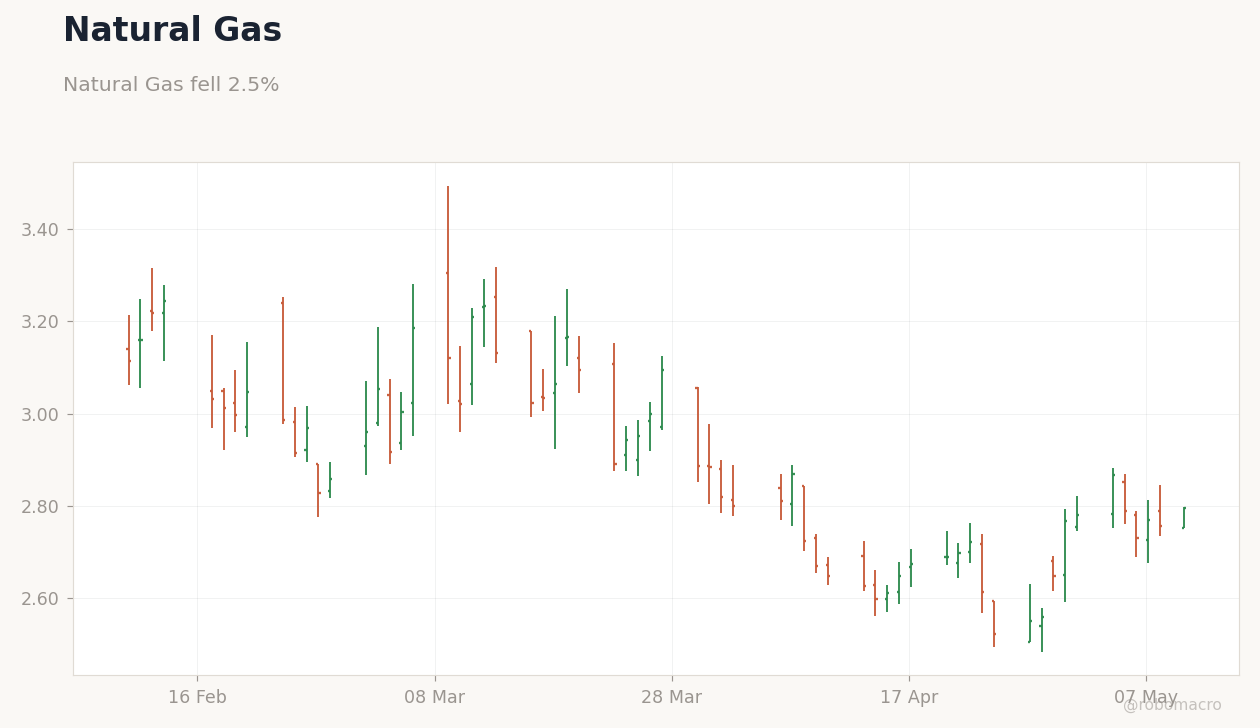
The VIX ended the week at 17.2 after starting at 18.3, reflecting moderated fear levels. Growth outperformed value, with the Nasdaq 100 surging +5.5% versus the Dow Jones gain of +0.2%. Small caps trailed large caps modestly, as the Russell 2000 rose +1.7% compared with the S&P 500's +2.3% advance. Commodity signals pointed to clear sector rotation, with WTI Crude down -7.7%, Brent Crude down -8.7%, and Natural Gas down -2.5% weighing on energy names, while Gold rose +4.0%, Silver surged +10.2%, Copper climbed +8.5%, and Iron Ore gained +2.9%, supporting materials, mining, and safe-haven plays. Overall risk appetite improved as falling oil prices eased inflationary concerns and allowed technology and metals sectors to drive equity gains.

Week Ahead

The economic calendar next week is relatively light, with focus on PMI releases and GDP prints across major economies that could reinforce or challenge the resilient data narrative. Earnings reports from key companies will remain central, particularly in technology and materials sectors that led this week's outperformance. CPI and payrolls data pose the biggest risk to equity markets, where hotter-than-expected figures could tilt toward risk-off moves while softer prints would favor continued risk-on sentiment. Central bank meetings and speeches are also due, with any shifts in data-dependent guidance likely to influence volatility in the Nasdaq 100 and broader global indices.

RoboMacro AI Economic Research

Global Macro Watch

May 10, 2026 robomacro.com
Markets in ReviewGlobal Equities
Global Equity Indices
Week-on-week, month-to-date, year-to-date. Source: Yahoo Finance.
IndexLevelWoWMTDYTD
S&P 5007,399+2.3%+2.3%+7.9%
Nasdaq 10029,235+5.5%+5.5%+16.0%
Dow Jones49,609+0.2%+0.2%+2.5%
Russell 20002,861+1.7%+1.7%+14.1%
S&P/TSX34,078+0.6%+0.6%+6.9%
FTSE 10010,233-1.3%-1.3%+2.8%
Euro Stoxx 505,912+0.5%+2.6%-0.2%
DAX24,339+0.2%+1.4%-0.8%
CAC 408,113-0.0%+1.7%-1.0%
FTSE MIB49,290+2.2%+3.8%+8.6%
IBEX 3517,889+0.6%+3.1%+2.3%
Nikkei 22562,714+5.4%+5.4%+21.0%
Hang Seng26,394+2.4%+1.1%+0.2%
CSI 3004,872+1.3%-0.1%+3.3%
S&P/ASX 2008,744+0.2%+0.2%+0.2%
Nifty 5024,176+0.7%+0.2%-7.5%
Ibovespa184,108-1.7%-0.8%+14.7%
IPC Mexico69,856+2.9%+3.8%+8.9%
JSE Top 407,210+4.5%+5.1%+2.2%

Global equities advanced modestly last week, led by Korea's KOSPI surging +13.6% amid robust tech sector inflows and export data beats. Japan's Nikkei 225 climbed +5.4% on yen weakness and corporate earnings optimism, while the US Nasdaq 100 rose +5.5% driven by AI hype and Fed policy signals. Laggards included Brazil's Ibovespa down -1.7% on fiscal concerns and the UK's FTSE 100 off -1.3% amid energy sector drags. Moves were fueled by mixed US jobs data supporting rate cut bets, alongside China stimulus flows lifting the Hang Seng +2.4%. Divergences emerged with US indices like the S&P 500 (+2.3%) outperforming Europe's Euro Stoxx 50 (+0.5%), reflecting transatlantic growth gaps, while EM standouts like Mexico's IPC (+2.9%) contrasted India's Nifty 50 (+0.7%). Asia-Pacific strength, including Australia's S&P/ASX 200 (+0.2%), highlighted regional policy divergences. Looking ahead, watch US CPI prints and ECB meeting for volatility cues.

Equity Performance Heat Map
IndexWoWMTDYTD
S&P 500+2.3%+2.3%+7.9%
Nasdaq 100+5.5%+5.5%+16.0%
Dow Jones+0.2%+0.2%+2.5%
Russell 2000+1.7%+1.7%+14.1%
S&P/TSX+0.6%+0.6%+6.9%
FTSE 100-1.3%-1.3%+2.8%
Euro Stoxx 50+0.5%+2.6%-0.2%
DAX+0.2%+1.4%-0.8%
CAC 40-0.0%+1.7%-1.0%
FTSE MIB+2.2%+3.8%+8.6%
IBEX 35+0.6%+3.1%+2.3%
Nikkei 225+5.4%+5.4%+21.0%
Hang Seng+2.4%+1.1%+0.2%
CSI 300+1.3%-0.1%+3.3%
S&P/ASX 200+0.2%+0.2%+0.2%
Nifty 50+0.7%+0.2%-7.5%
Ibovespa-1.7%-0.8%+14.7%
IPC Mexico+2.9%+3.8%+8.9%
JSE Top 40+4.5%+5.1%+2.2%
RoboMacro AI Economic Research

Global Macro Watch

May 10, 2026 robomacro.com
Markets in ReviewFX & Digital Assets
FX & Digital Assets Chart 1
FX & Digital Assets Chart 2
FX & Digital Assets Chart 3
FX & Digital Assets Chart 4

Week in Review

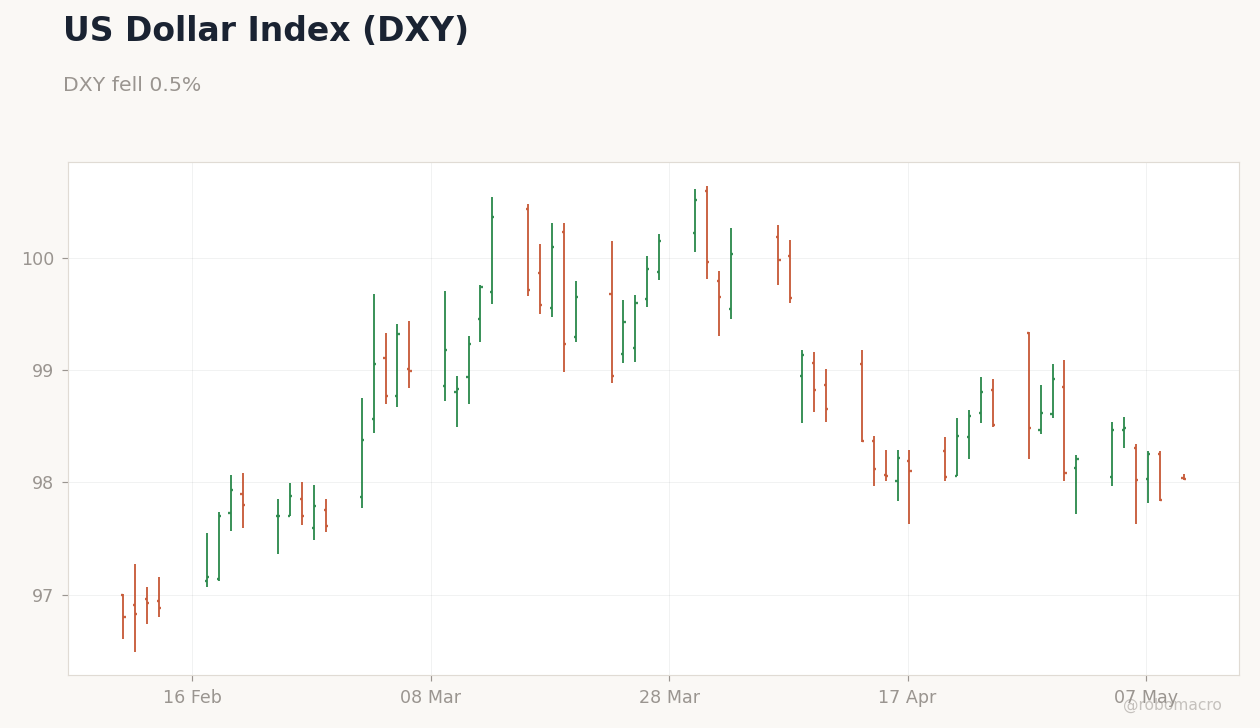
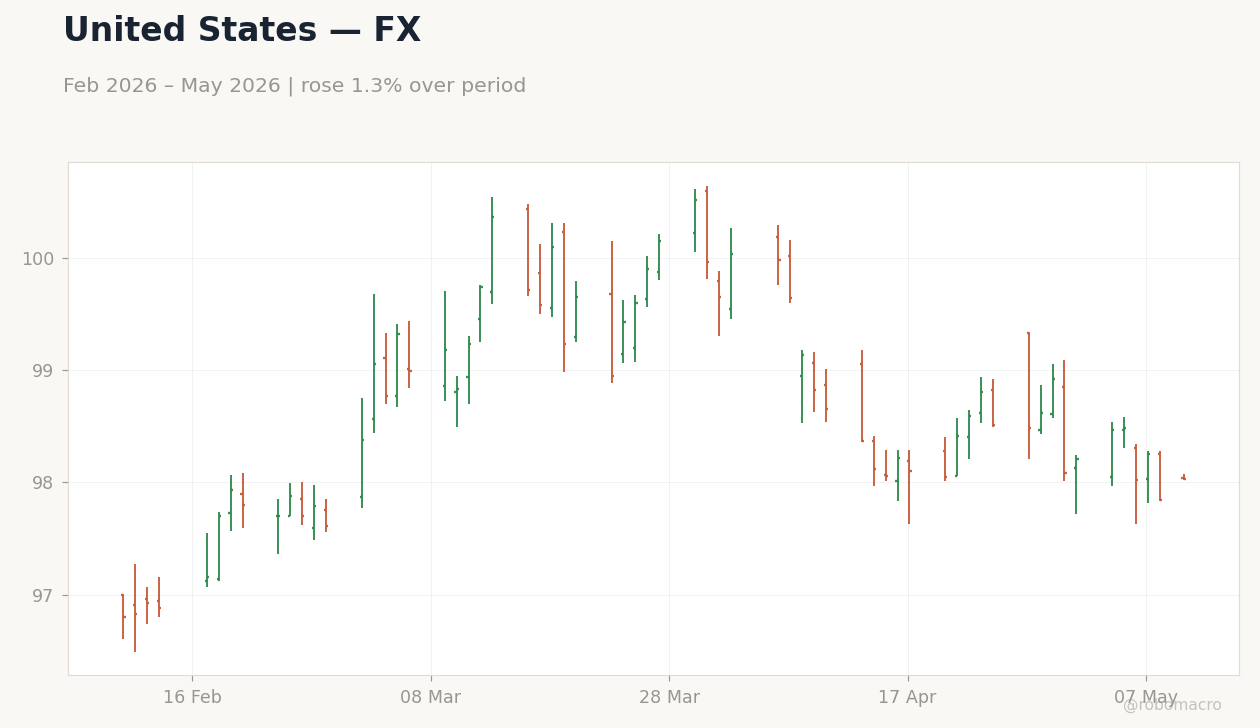
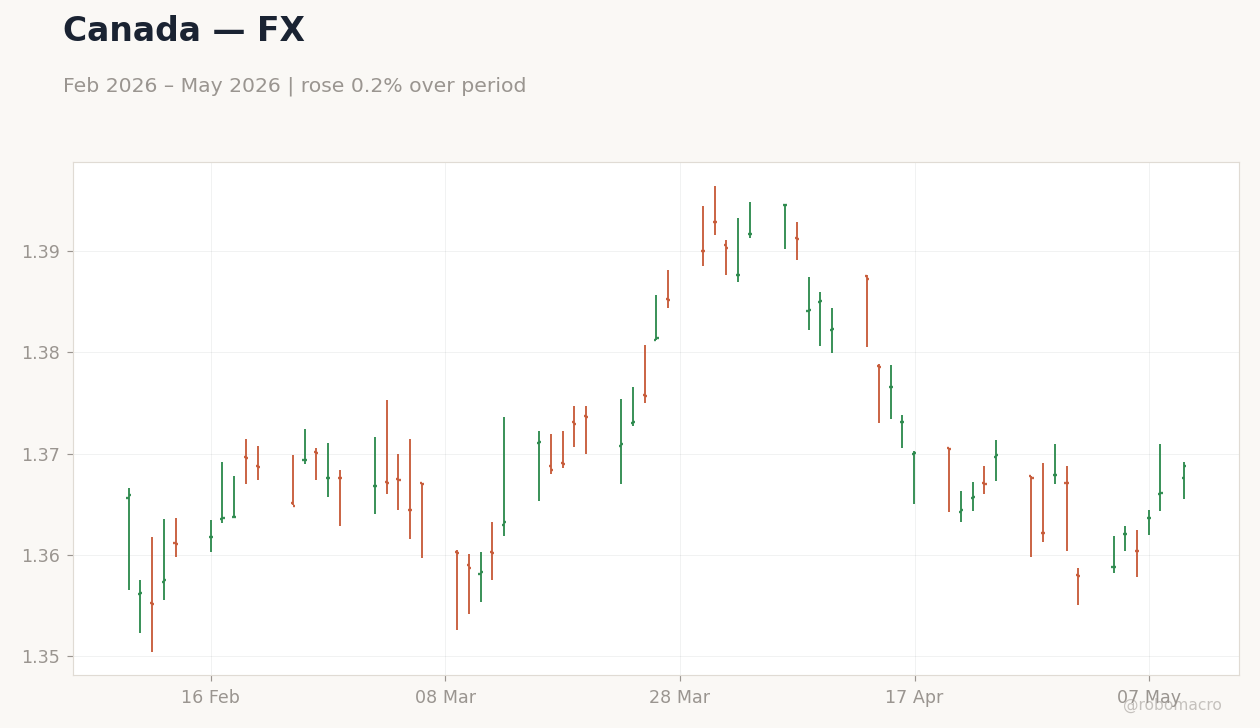
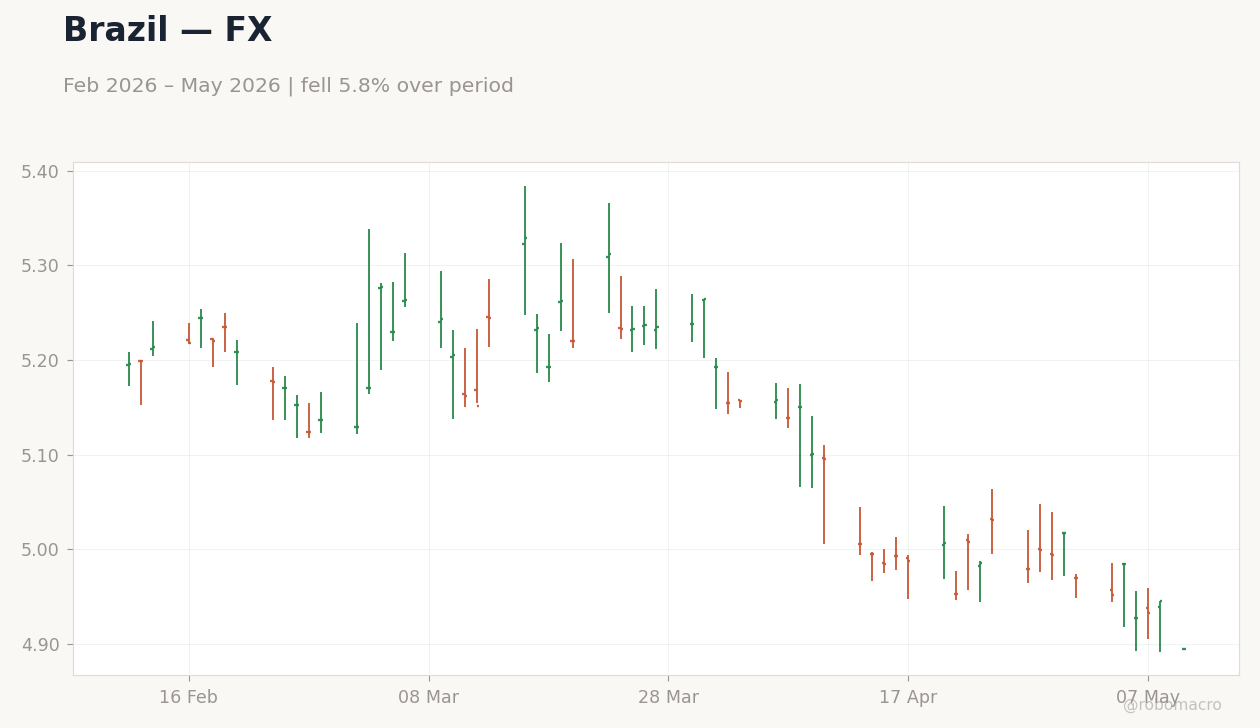
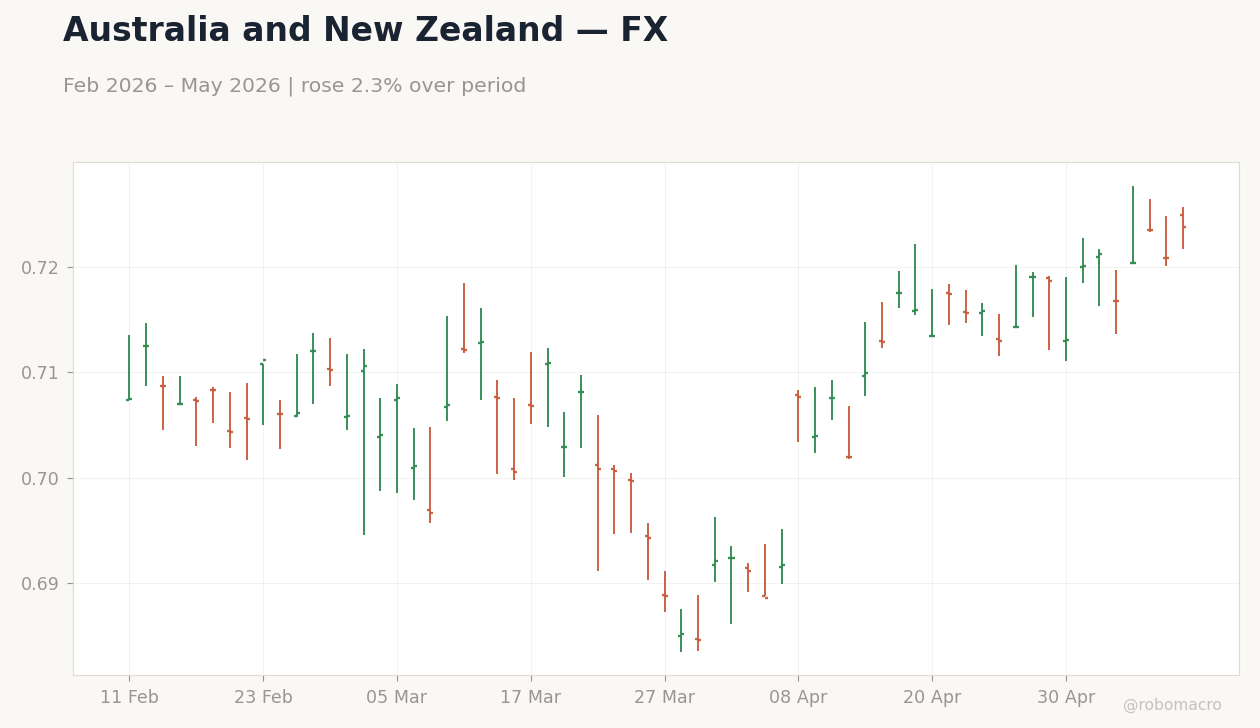
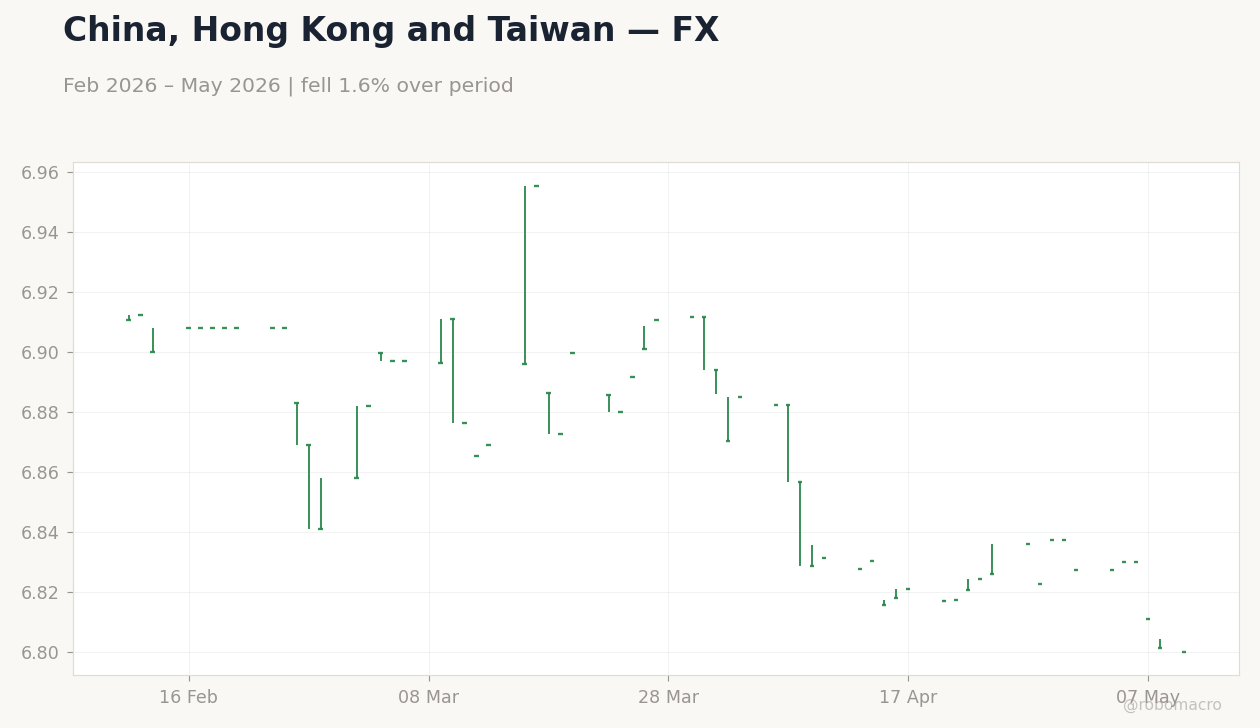
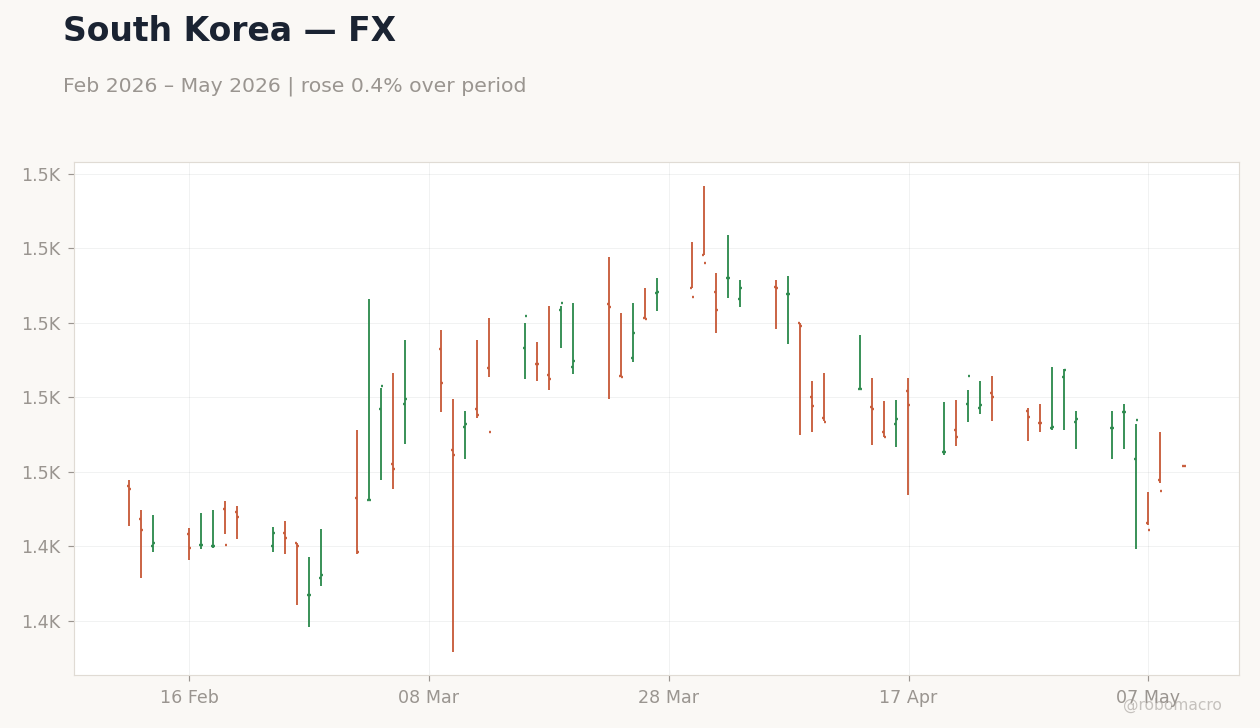
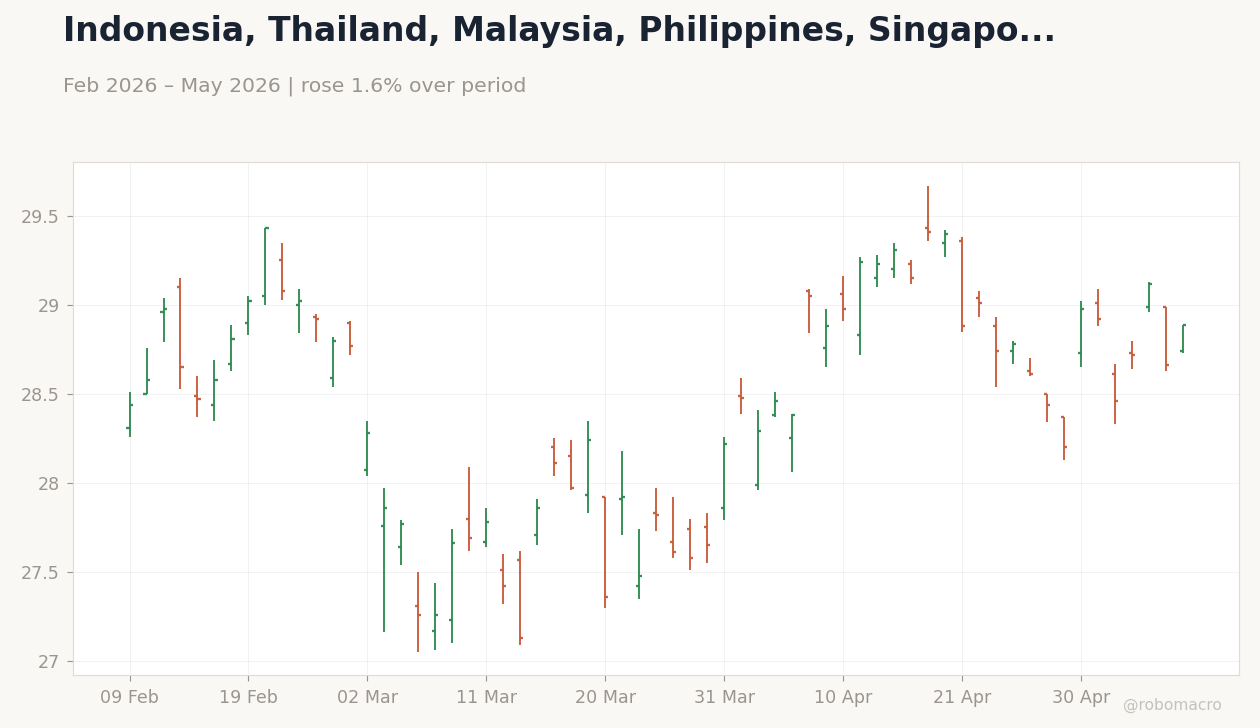
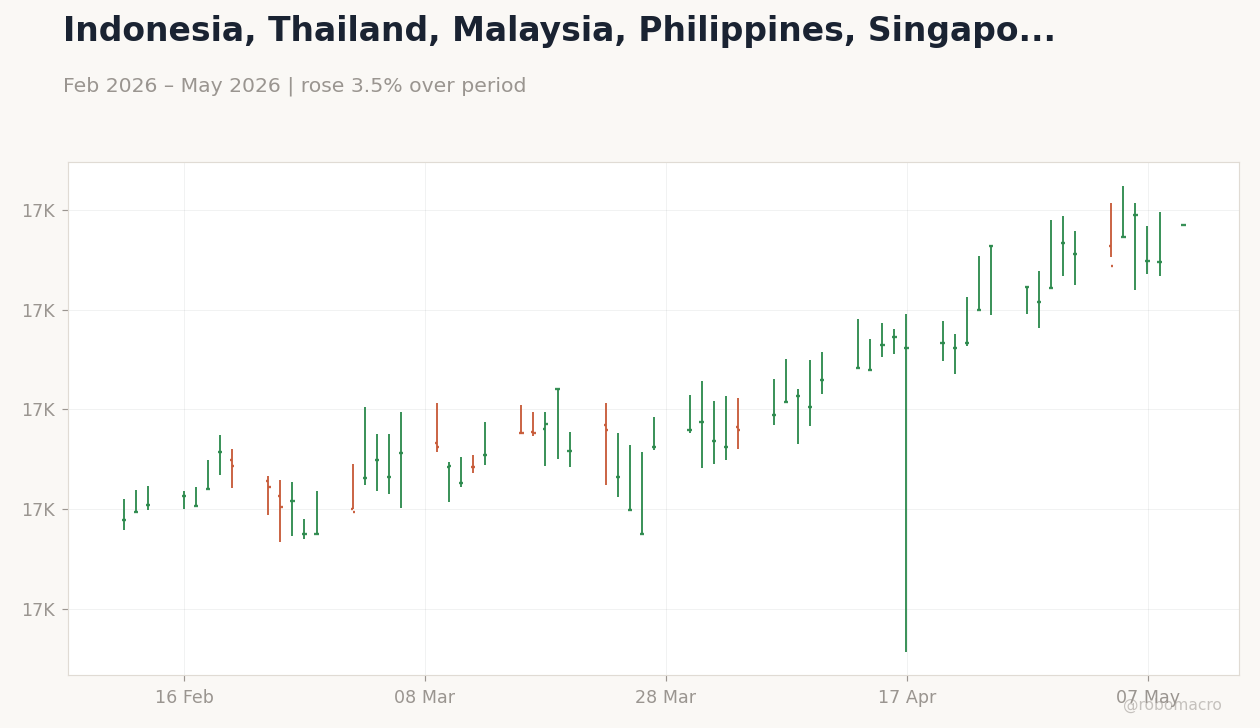
The DXY fell 0.5% week-over-week to 98.03. The index followed a volatile daily path, closing at 98.5 on Tuesday, 98.0 on Wednesday, 98.2 on Thursday, and 97.8 on Friday before settling at the latest print. G10 currencies were mostly firmer against the dollar, with EUR/USD rising 0.4% to 1.1769, GBP/USD gaining 0.1% to 1.3591, AUD/USD advancing 0.3% to 0.7239, and NZD/USD climbing 0.8% to 0.5953, while USD/CAD rose 0.7% to 1.3686 and USD/CHF fell 0.4% to 0.7778. USD/JPY was unchanged at 156.88 after fluctuating from 157 to a brief high of 158 midweek before returning to 157. In EM FX, USD/BRL fell 1.2% to 4.8945, USD/MXN fell 1.4% to 17.21, USD/ZAR fell 0.9% to 16.42, USD/CNY fell 0.4% to 6.8000, and USD/INR fell 0.6% to 94.37, with USD/TRY the outlier rising 0.3% to 45.33.

Dollar & G10

Favorable rate differentials provided underlying support for the dollar even as the DXY posted a weekly decline. EUR/USD rose 0.4% to close at 1.1769 after advancing from 1.1692 on Tuesday through 1.1716 on Wednesday, 1.1747 on Thursday, 1.1732 on Friday, and 1.1769 on Monday. GBP/USD gained 0.1% to end at 1.3591, tracing a path from 1.3531 on Tuesday to 1.3591 on Monday. USD/JPY recorded a 0.0% move to finish at 156.88 after closing at 157 on Tuesday, spiking to 158 on Wednesday, and then holding at 157 for the remainder of the period.

EM FX

EM currencies generally strengthened as USD/BRL fell 1.2% to 4.8945, USD/MXN fell 1.4% to 17.21, and USD/ZAR fell 0.9% to 16.42. USD/CNY declined 0.4% to 6.8000, reflecting continued firmness in the yuan, while USD/INR eased 0.6% to 94.37. USD/TRY bucked the trend by rising 0.3% to 45.33. These moves occurred against a backdrop of directional shifts in commodity prices and evolving bond yield differentials that favored select EM assets.

Bitcoin & Crypto

Bitcoin rose 4.8% week-over-week to $82,299. Price action showed an intra-week dip from 81,428 on Wednesday to 80,010 on Thursday before recovering to 80,187 on Friday and 80,664 on Saturday, underscoring underlying bid interest. Ethereum gained 2.5% to $2,379, Solana surged 14.8% to $96, and XRP advanced 6.2% to $1. The broad-based crypto rally reflected improved risk appetite even as regulatory themes around platforms and central bank reserves remained prominent in Europe.

Week Ahead

The week ahead is light on scheduled catalysts, with no central bank rate decisions listed that would directly influence FX. Absence of CPI or payrolls releases limits fresh rate differential signals, while no trade balance data appears for EM FX pairs. Crypto markets may stay attuned to regulatory developments, including themes around licensed platforms and reserve initiatives, though no specific ETF deadlines or on-chain upgrades are flagged. Overall, reduced event risk could allow technical positioning and carry flows to dominate.

RoboMacro AI Economic Research

Global Macro Watch

May 10, 2026 robomacro.com
Markets in ReviewCommodities
Commodities Chart 1
Commodities Chart 2
Commodities Chart 3
Commodities Chart 4

Week in Review

Silver led commodity performance with a 10.2% gain to 80.51. Energy markets weakened notably as WTI Crude fell 7.7% to 98.26 and Brent Crude declined 8.7% to 104.51. Daily closes for WTI Crude showed a sharp drop from 102 on Tuesday to 95.1 on Wednesday and 94.8 on Thursday before settling at 95.4 on Friday. Gold advanced 4.0% to 4701.20, rising steadily from 4,556 on Tuesday to 4,682 on Wednesday, 4,700 on Thursday and 4,720 on Friday. Copper climbed 8.5% to 6.29 while natural gas eased 2.5% to 2.79. Agricultural markets were subdued with wheat declining 0.9% to 619.00.

Energy Complex

WTI Crude settled the week at 98.26 after a 7.7% decline while Brent Crude closed at 104.51, down 8.7%. Natural gas finished at 2.79 following a 2.5% weekly pullback. tumbling oil prices reflected easing supply disruption fears tied to the conflict in Iran even as inventory dynamics and global demand signals remained in focus. OPEC diplomacy continued to shape market expectations around production policy amid broader geopolitical currents. The energy complex divergence supported risk appetite elsewhere even as it weighed on energy-linked currencies and equities in select regions.

Metals & Ags

Gold rose 4.0% to 4701.20 while silver surged 10.2% to 80.51. Silver’s outperformance tightened the gold-silver ratio. Copper gained 8.5% to 6.29, reinforcing the growth signal and aligning with positive developments around copper projects and miner earnings. The metals rally provided a tailwind for related equities and commodity currencies, consistent with broader risk-on sentiment. Wheat eased 0.9% to 619.00, showing limited directional conviction amid otherwise firm industrial metals.

Week Ahead

The economic calendar next week contains no commodity-relevant events including EIA crude or gas inventories, OPEC meetings, China PMI or industrial data, US CPI releases, or central bank meetings that would directly affect commodity currencies such as the CAD, AUD or BRL. With the schedule light, participants will instead monitor non-calendar risks. Geopolitical developments, weather patterns for agriculture and natural gas demand, and ongoing OPEC diplomacy remain the primary drivers likely to influence volatility across the complex. The week underscored a classic macro rotation where falling energy prices eased inflationary fears and boosted financial markets while precious and industrial metals attracted safe-haven and growth positioning. Silver’s double-digit advance highlighted broad-based buying across the metals spectrum, outpacing gold and underscoring investor appetite for both monetary and industrial exposure. Copper’s 8.5% climb to 6.29 stood out as a particularly constructive signal for global manufacturing and infrastructure themes, especially against a backdrop of resilient equity indices. Natural gas traded in a narrow range around the 2.79 level, reflecting balanced supply and demand fundamentals heading into the shoulder season. The sharp decline in crude benchmarks from mid-week lows nevertheless left Brent Crude above 104 and WTI Crude near 98, levels that still offer support to producers even after the weekly reset. Looking forward, the absence of scheduled data forces greater reliance on real-time developments. Any escalation in Middle East tensions could quickly revive the risk premium in oil, while shifts in OPEC+ rhetoric have the potential to alter forward curves. Weather forecasts will also warrant attention given their direct impact on wheat yields and cooling-driven natural gas consumption. Overall, the metals complex enters the new week with upward momentum while energy appears range-bound pending fresh catalysts.

RoboMacro AI Economic Research

Global Macro Watch

May 10, 2026 robomacro.com
Markets in ReviewFX, Commodities & Crypto
Foreign Exchange
PairLevelWoWMTDYTD
DXY98.02-0.5%-0.2%-0.4%
EUR/USD1.1769+0.4%+0.3%+0.2%
GBP/USD1.3593+0.1%-0.1%+0.9%
USD/JPY156.87+0.0%-0.1%+0.1%
AUD/USD0.7237+0.3%+0.5%+8.4%
NZD/USD0.5952+0.8%+0.8%+3.4%
USD/CAD1.3685+0.7%+0.8%-0.2%
USD/CHF0.7778-0.4%-0.5%-1.8%
USD/CNY6.8000-0.4%-0.4%-2.8%
USD/BRL4.8945-1.2%-1.5%-11.3%
USD/MXN17.21-1.4%-1.4%-4.3%
USD/INR94.37-0.6%-0.4%+4.9%
USD/ZAR16.43-0.9%-1.4%-0.7%
USD/TRY45.35+0.4%+0.5%+5.5%
Commodities
CommodityLevelWoWMTDYTD
WTI Crude98.36-7.6%-3.5%+71.6%
Brent Crude104.41-8.8%-3.5%+71.9%
Gold4702.80+4.1%+1.6%+9.0%
Silver80.63+10.3%+6.2%+14.3%
Copper6.29+8.5%+6.0%+11.5%
Natural Gas2.80-2.3%+0.7%-22.6%
Wheat619.00-0.9%-0.9%0.0%
Iron Ore110.93+2.9%+2.9%+3.5%
Crypto Assets
AssetLevelWoWMTDYTD
Bitcoin$82,369+4.9%+5.4%-7.2%
Ethereum$2,379+2.5%+3.6%-20.7%
Solana$96+14.6%+14.8%-24.1%
XRP$1+6.2%+6.4%-21.5%

The dollar index (DXY) slipped 0.5% WoW to 98.03, extending its YTD decline to 0.4% amid softer US yields. Headline movers included NZD/USD up 0.8% to 0.5953 and EUR/USD up 0.4% to 1.1769 on the upside, while USD/MXN fell 1.4% to 17.21 and USD/BRL dropped 1.2% to 4.8945 on the downside. Moves were driven by Fed signals on rate cuts boosting risk appetite, alongside EM inflows amid stabilizing commodity prices. Antipodeans diverged positively with AUD/USD +0.3% to 0.7239 and NZD/USD gains, contrasting USD/CAD's 0.7% rise to 1.3686 on oil volatility. EM crosses showed bifurcation, with USD/INR down 0.6% to 94.37 versus USD/TRY up 0.3% to 45.33. Watch ECB policy hints and US payrolls next week for further FX impetus. Commodities and crypto remained rangebound absent fresh catalysts.

RoboMacro AI Economic Research

Global Macro Watch

May 10, 2026 robomacro.com
United States
Market Scorecard
AssetLevelWoW
S&P 5007398.93+2.8%
Nasdaq 10029234.99+5.7%
Dow Jones49609.16+1.4%
Russell 20002861.21+2.3%
USD/JPY156.9+0.0%
EUR/USD1.18+0.3%
GBP/USD1.36+0.1%
Gold4700.5+4.0%
WTI Crude98.01-7.9%
Bitcoin82018.06+4.4%
Chart 1
Chart 2
Chart 3
Chart 4
  • Nasdaq 100 surged 5.73% week-over-week to 29,234.99, driven by resilient economic data and falling oil prices that boosted risk appetite.
  • Factory orders rose, beating consensus, signaling robust manufacturing demand amid a resilient economy.
  • Federal Reserve speakers maintained a data-dependent stance, with Williams emphasizing inflation vigilance, supporting steady policy expectations.
  • Oil prices tumbled 7.9% week-over-week to 98.01, contrasting with gold's 4.0% gain to 4,700.50, amid inventory draws and Middle East tensions influencing global energy dynamics.

Week in Review

The United States economy demonstrated resilience throughout the week ending May 10, 2026, with multiple data beats underscoring manufacturing and labor market strength, though services showed slight cooling. Equities rallied broadly, led by technology sectors, as oil prices plunged amid inventory surprises, alleviating inflation concerns. Treasury yields fluctuated, ending higher week-over-week, while the dollar exhibited mixed performance against major currencies. Fed speakers reinforced a neutral, data-driven policy outlook, with no major shifts in forward guidance. Resilient Data Drives Market Optimism Factory orders rose, exceeding consensus, which propelled early-week equity gains. JOLTs job openings beat forecast, indicating persistent labor tightness. New home sales climbed, surpassing consensus, reflecting housing sector vigor. Services PMI eased, missing consensus but remaining in expansion territory. The trade balance improved relative to expectations. Oil Volatility and Equity Swings Oil prices fell sharply following an API crude stock draw exceeding forecast, which supported a risk-on rally with Nasdaq 100 advancing notably. However, equities dipped mid-week as markets digested mixed signals. ADP employment beat consensus, providing positive labor insights. Policy and Global Echoes Fed speakers like Williams and Goolsbee stuck to inflation-focused rhetoric, contributing to Treasury yield increases. Overall, the week closed with S&P 500 up 2.75% to 7,398.93, capturing a narrative of economic strength tempered by energy market volatility and steady policy expectations.

Fed Watch

Federal Reserve speakers this week maintained a consistent data-dependent tone, with no indications of imminent policy shifts, as evidenced by Williams' speech emphasizing the need for sustained progress toward the 2% inflation target. Goolsbee reiterated that recent data resilience does not preclude rate adjustments if inflation cools, aligning with market pricing for steady rates through Q3 2026. Hammack and Bowman stressed inflation vigilance without providing new forward guidance. This week's strong data suggest upside risks to the neutral rate path, potentially delaying cuts if growth remains above trend. The medium-term rate outlook holds steady, with upcoming inflation data critical for any recalibration. Overall, the Fed's rhetoric supports policy remaining restrictive until core inflation durably approaches 2% year-over-year.

Data Review

This week's economic releases painted a picture of a resilient U.S. economy in the late-cycle expansion phase, with beats in manufacturing and labor indicators suggesting sustained growth momentum that could delay Federal Reserve rate cuts. Factory orders rose, beating consensus, highlighting robust demand and supporting a positive outlook for Q2 GDP growth. JOLTs job openings topped consensus, indicating a cooling yet tight labor market that aligns with the Fed's goal of moderating wage pressures without derailing employment. New home sales exceeded consensus, reversing prior weakness and reflecting improved affordability. The trade balance improved relative to expectations, suggesting trade could add modestly to growth despite global headwinds. Services PMI dipped, missing consensus yet still signaling expansion and a potential softening in service-sector inflation that supports the Fed's 2% target path. ADP private payrolls beat consensus, reinforcing labor resilience and implying upside risks to the inflation outlook if wage growth accelerates. Collectively, these data points indicate the economy is navigating a soft landing, with inflation likely to moderate gradually, potentially keeping the Fed on hold through mid-2026.

RoboMacro AI Economic Research

Global Macro Watch

May 10, 2026 robomacro.com

Calendar data unavailable

Chart 5
Chart 6
Chart 7
Chart 8

The Week Ahead

Next week's calendar features high-impact releases including existing home sales, CPI, ADP employment change, Fed speakers, the monthly budget statement, and API crude stocks. Inflation data takes center stage, critical for assessing whether disinflation is stalling and potentially shifting the Fed's path. A hotter print could reduce rate-cut odds. Fed speakers including Williams and Goolsbee could move markets if they diverge from this week's neutral stance. Overall, volatility is anticipated around CPI, as it could either reinforce a soft-landing narrative or heighten stagflation risks.

Risks & Themes

This week's data beats shift the outlook toward sustained growth, reducing downside recession risks but elevating the potential for sticky inflation that keeps Fed rates higher for longer. Upside scenarios include stronger-than-expected CPI pushing yields higher. Downside risks center on oil volatility, with WTI's 7.9% drop to 98.01 potentially easing CPI pressures but exposing vulnerabilities if Middle East tensions reverse the trend. Market positioning appears crowded in tech equities, with Nasdaq 100's 5.73% gain to 29,234.99 signaling overbought conditions and potential for volatility spikes if inflation data disappoints. Flow considerations include risk-on rotations that lifted Russell 2000 by 2.33% to 2,861.21, but any Fed hawkishness could prompt outflows from small-caps. Overall, mispricing signals emerge in FX, where USD/JPY's modest 0.04% rise to 156.9 underestimates intervention risks from global central banks.

Cross-Asset

U.S. equities advanced strongly this week, with the S&P 500 up 2.75% to 7,398.93, fueled by resilient data beats and tumbling oil prices that eased inflation fears. The Nasdaq 100 outperformed with a 5.73% week-over-week rise to 29,234.99, driven by risk-on sentiment. Bonds saw yields climb overall, reflecting policy steadiness. The dollar showed mixed performance in FX, with USD/JPY edging up 0.04% to 156.9, while EUR/USD gained 0.35% to 1.18 and GBP/USD rose 0.07% to 1.36. Commodities diverged sharply, with WTI crude down 7.9% to 98.01 amid an inventory draw, contrasting gold's 4.0% advance to 4,700.50 amid Middle East tensions, while Bitcoin climbed 4.43% to 82,018.06, buoyed by broader crypto momentum.
Global Context

Global macro developments over the last seven days, including Japan's interventions to defend the yen amid USD/JPY pressures around 156.9, could spill over to U.S. markets by strengthening the dollar and impacting export competitiveness. Geopolitical risks escalated with Middle East tensions contributing to oil's 7.9% weekly decline to 98.01, potentially benefiting U.S. inflation dynamics but raising supply chain concerns. Gold advanced 4.0% to 4,700.50 as a hedge against energy volatility.

RoboMacro AI Economic Research

Global Macro Watch

May 10, 2026 robomacro.com
Eurozone
Market Scorecard
AssetLevelWoW
Euro Stoxx 505911.53+2.6%
DAX24338.63+1.4%
CAC 408112.57+1.7%
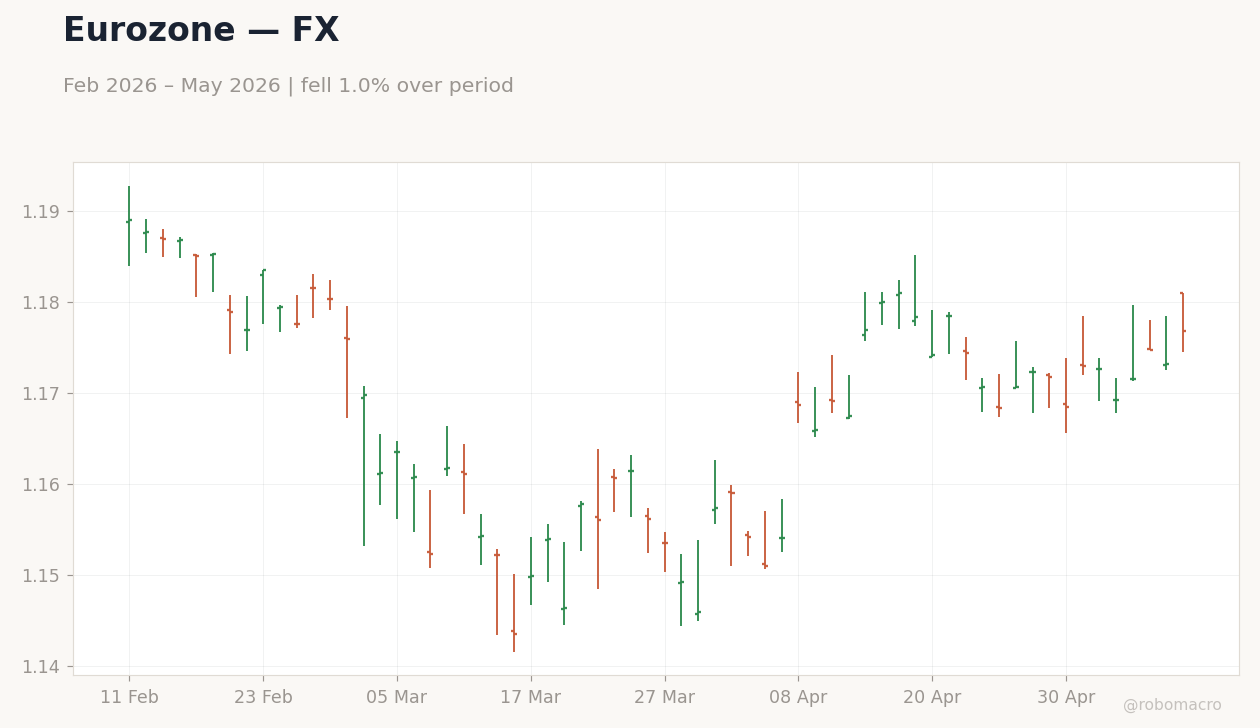
EUR/USD1.18+0.3%
EUR/GBP0.87+0.3%
EUR/JPY184.57+0.3%
Gold4700.5+4.0%
Brent Crude104.11-9.0%
Bitcoin82018.06+4.4%
Chart 1
Chart 2
  • Spanish unemployment fell sharply, exceeding consensus expectations and signaling robust labor market resilience amid broader Eurozone recovery.
  • Manufacturing PMIs in Spain and Italy beat forecasts, indicating sector expansion.
  • ECB speakers remained silent this week, but stronger-than-expected data supports a potential rate cut pause in the near term.
  • Eurozone equities gained on net, with the Euro Stoxx 50 up 2.57% week-over-week to 5,911.53, while Brent crude plunged 9.03% to 104.11 amid global supply dynamics, highlighting cross-asset divergence tied to energy pressures.

Week in Review

The Eurozone's economic narrative this week centered on uneven but broadly positive data surprises, particularly in manufacturing and labor markets, which drove equity gains despite mixed services signals and German disappointments. Markets opened with optimism as Spanish and Italian manufacturing PMIs exceeded expectations, supporting Euro Stoxx 50 gains. Sentiment held firm with further PMI beats, though equities showed mixed responses including DAX declines amid export concerns. Equities surged following strong French industrial production and Italian retail sales, lifting the CAC 40. However, German trade and production misses dragged the Euro Stoxx 50 lower. Manufacturing Resilience Emerges. Spanish manufacturing PMI climbed above consensus and prior readings, driven by rising orders. Italy's equivalent rose above forecast from prior levels, aided by export improvements. These beats marked a shift from contraction. Labor and Services Diverge. Spain's unemployment dropped far better than consensus, enhancing consumer prospects. Yet, Spanish services PMI disappointed below consensus, signaling contraction. Italian services PMI improved slightly, still below expansion. German Data Weighs on Sentiment. German factory orders rose month-over-month, beating consensus, but industrial production declined against expectations. The trade balance narrowed versus forecast, contributing to DAX drops. Overall, the week's through-line was a tentative recovery trend, with consensus misses in Germany offset by southern Eurozone strength, leading to net market advances like the 0.35% week-over-week EUR/USD gain to 1.18.

ECB Watch

The European Central Bank provided no new speakers, minutes, or decisions this week, maintaining a quiet stance amid incoming data that we interpret as supportive of steady policy in the near term. Stronger-than-expected releases suggest inflationary pressures from labor tightness, potentially delaying further rate cuts. French industrial production's beat reinforces our view that growth is stabilizing, reducing urgency for ECB easing. We note that German 10-year Bund yields moved higher this week, pricing in less dovish forward guidance. In the absence of direct quotes, the data implies a medium-term rate path with ECB OIS likely holding steady, as misses like Germany's trade balance highlight vulnerabilities without derailing the disinflation trend. Overall, this week's developments point to a cautious ECB, with potential for reaffirmed forward guidance at upcoming meetings if southern Eurozone strength persists.

Data Review

This week's economic data painted a picture of diverging fortunes across the Eurozone, with southern economies showing unexpected vigor while Germany lagged, potentially signaling a mid-cycle slowdown that could temper ECB rate cut expectations. Spanish manufacturing PMI surprised positively, beating consensus and improving from prior readings, indicating expansion driven by new orders and output growth. Italy's manufacturing PMI outperformed versus forecast and prior levels, supported by export demand amid global trade recovery. Spain's unemployment change dropped sharply, exceeding consensus and bettering prior readings, pointing to labor market tightening that bolsters wage growth and inflation risks. French industrial production rose month-over-month, surpassing consensus after prior declines, reflecting manufacturing rebound tied to supply chain easing. However, Spanish services PMI disappointed below consensus from prior levels, highlighting services sector contraction that could weigh on overall growth. Italian retail sales advanced month-over-month, topping consensus after prior declines, suggesting resilient consumer spending despite inflationary pressures. German trade balance narrowed versus consensus from prior levels, underscoring export vulnerabilities that may extend the cycle's softening phase and support a dovish ECB stance into the medium term.

RoboMacro AI Economic Research

Global Macro Watch

May 10, 2026 robomacro.com

Calendar data unavailable

The Week Ahead

Next week's calendar features key releases including Italy's industrial production, Germany's ZEW Economic Sentiment Index, France's unemployment rate, and Germany's wholesale prices. These high-impact indicators matter for gauging manufacturing momentum, business confidence, labor dynamics, and upstream inflation pressures influencing ECB policy outlooks and rate path expectations. No central bank speakers are scheduled, leaving data to drive narratives around growth and inflation. These releases matter collectively for the Eurozone cycle, as beats could reinforce recovery themes, while misses might revive dovish ECB bets. We anticipate volatility around forward-looking confidence measures, with implications for EUR/USD levels near 1.18.

Risks & Themes

This week's data shifts the outlook toward upside growth risks, potentially mispricing ECB rate cuts if inflation reaccelerates. Downside scenarios include German weaknesses persisting, which could amplify recession fears and boost volatility in the DAX around 24,338.63. Market positioning appears crowded in equities, with the Euro Stoxx 50's 2.57% weekly gain to 5,911.53 suggesting overbought conditions if next week's data disappoints. Flow considerations point to haven inflows into gold, up 4.0% to 4,700.50, amid Brent crude's 9.03% decline to 104.11 signaling energy sector outflows. We see mispricing in FX, where EUR/USD's 0.35% rise to 1.18 underestimates euro resilience if services recover. Overall, themes revolve around uneven recovery, with positioning risks tilted toward corrections if global spillovers intensify.

Cross-Asset

Eurozone equities posted net gains this week, with the Euro Stoxx 50 rising 2.57% week-over-week to 5,911.53, driven by positive PMI surprises, though daily moves varied. The DAX advanced 1.45% over the week to 24,338.63, offsetting drops tied to weak trade figures. CAC 40 climbed 1.71% week-over-week to 8,112.57, highlighted by rallies following industrial production beats. In FX, EUR/USD appreciated 0.35% week-over-week to 1.18, while EUR/GBP rose 0.26% to 0.87 and EUR/JPY gained 0.34% to 184.57, reflecting euro strength from data surprises. German 10-year Bund yields moved higher this week on inflation concerns despite mixed growth signals. Commodities diverged sharply, with gold surging 4.0% week-over-week to 4,700.50 as a safe-haven play, while Brent crude tumbled 9.03% to 104.11, pressured by global oversupply fears. Bitcoin rose 4.43% week-over-week to 82,018.06, diverging from risk-off trends in energy.

Global Context

Global macro developments over the last seven days underscore geopolitical risks that could spill over to Eurozone energy imports, especially with Brent crude down 9.03% to 104.11. Ceasefire efforts eased immediate disruption fears, supporting Eurozone export stability. Trade dynamics shifted with German data misses, potentially linked to broader supply chain pressures from Asia, influencing EUR/JPY's 0.34% gain to 184.57. Geopolitical tensions highlight risks to Eurozone inflation if energy flows are affected, tying into gold's 4.0% rise to 4,700.50 as a hedge.

RoboMacro AI Economic Research

Global Macro Watch

May 10, 2026 robomacro.com
Japan
Market Scorecard
AssetLevelWoW
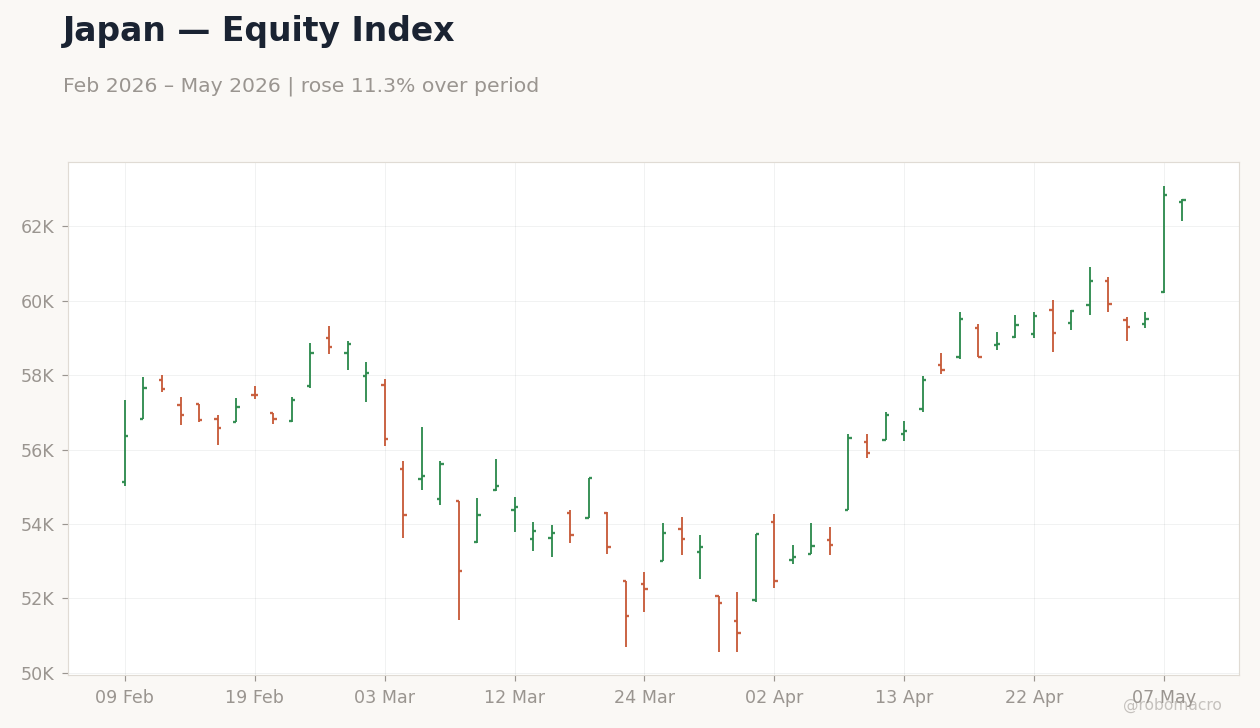
Nikkei 22562713.65-0.2%
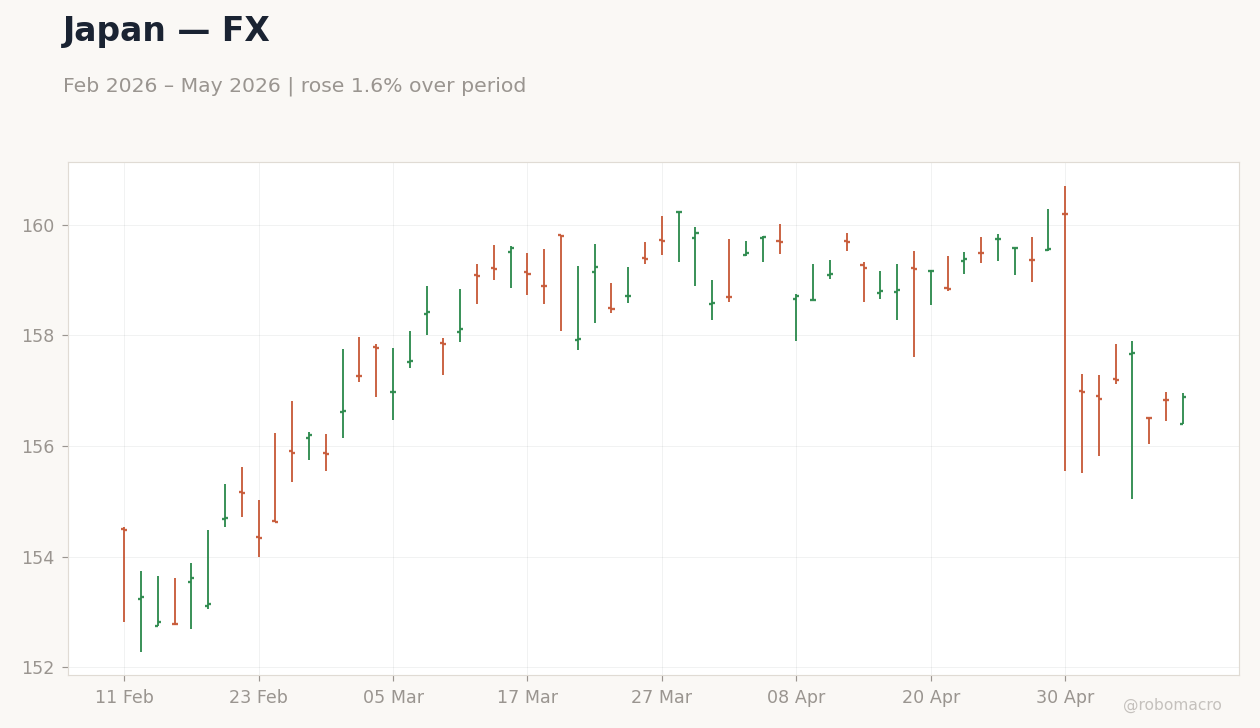
USD/JPY156.89+0.0%
GBP/JPY213.18+0.1%
Gold4700.5+4.0%
Brent Crude104.11-9.0%
Bitcoin82021.15+4.4%
Chart 1
Chart 2
  • USD/JPY posted a modest 0.03% weekly gain to 156.89 amid currency volatility.
  • Nikkei 225 declined 0.19% to 62,713.65 as global risk-off sentiment weighed on exporters.
  • Gold advanced 4.0% to 4,700.50 for safe-haven gains, while Brent crude tumbled 9.03% to 104.11, pressuring the inflation outlook.

Week in Review

Japanese markets posted mixed results, with the Nikkei 225 down 0.19% at 62,713.65 amid broader risk adjustments. USD/JPY edged higher by 0.03% to 156.89, while GBP/JPY gained 0.08% to 213.18. Commodity trends diverged sharply, underscoring inflation cross-currents for the Bank of Japan.

Currency Movements Shape Risk Sentiment USD/JPY closed the week at 156.89, up 0.03%, reflecting yen resilience amid global flows. GBP/JPY advanced 0.08% to 213.18. Gold rose 4.0% to 4,700.50, offsetting declines in Brent crude, which fell 9.03% to 104.11. Bitcoin gained 4.43% to 82,021.15.

Markets Balance Global Commodity Shifts Brent crude's weekly decline to 104.11 eased imported inflation pressures but highlighted energy vulnerability. Gold's advance to 4,700.50 supported haven demand tied to currency flows. Equities drew back amid light volumes, with the Nikkei 225 settling 0.19% lower at 62,713.65. These dynamics reinforce Bank of Japan vigilance on pass-through risks to growth and prices.

Equity Resilience Tested Nikkei 225 volumes remained contained, with the index closing down 0.19% at 62,713.65. Commodity rebounds late in the week aided sentiment, as Brent crude moved higher from mid-week lows and gold extended gains. The pattern underscores policy focus on external balances amid subdued domestic momentum.

BoJ Watch

Bank of Japan policy remains data-dependent amid currency stability and commodity swings influencing inflation pass-through. Weekly USD/JPY gains to 156.89 and Brent crude's drop to 104.11 ease near-term pressures but highlight growth risks. Markets price a cautious normalization path, with gold's advance to 4,700.50 underscoring external uncertainties. Vigilance on yen defense supports hawkish positioning if depreciation resumes.

RoboMacro AI Economic Research

Global Macro Watch

May 10, 2026 robomacro.com

Calendar data unavailable

The Week Ahead

Next week's calendar is light with no major releases scheduled, leaving yen pairs and the Nikkei exposed to global risk flows and commodity trends. Bank of Japan signals will dominate, testing rate path pricing as markets gauge inflation sustainability. Upside surprises in external data could accelerate normalization bets, while energy volatility risks renewed imported price pressures.

Risks & Themes

Yen stability limits depreciation risks but elevates carry unwind potential, as in USD/JPY's weekly close at 156.89. Upside risks stem from firmer external balances pushing yields higher. Downside centers on Brent crude moving above 104.11, intensifying import costs and challenging the 2% inflation target. Markets risk underpricing Bank of Japan resolve amid gold's 4.0% rise to 4,700.50 signaling haven flows. Policy normalization themes intensify, balanced against commodity-driven inflation volatility.

RoboMacro AI Economic Research

Global Macro Watch

May 10, 2026 robomacro.com
Canada
Market Scorecard
AssetLevelWoW
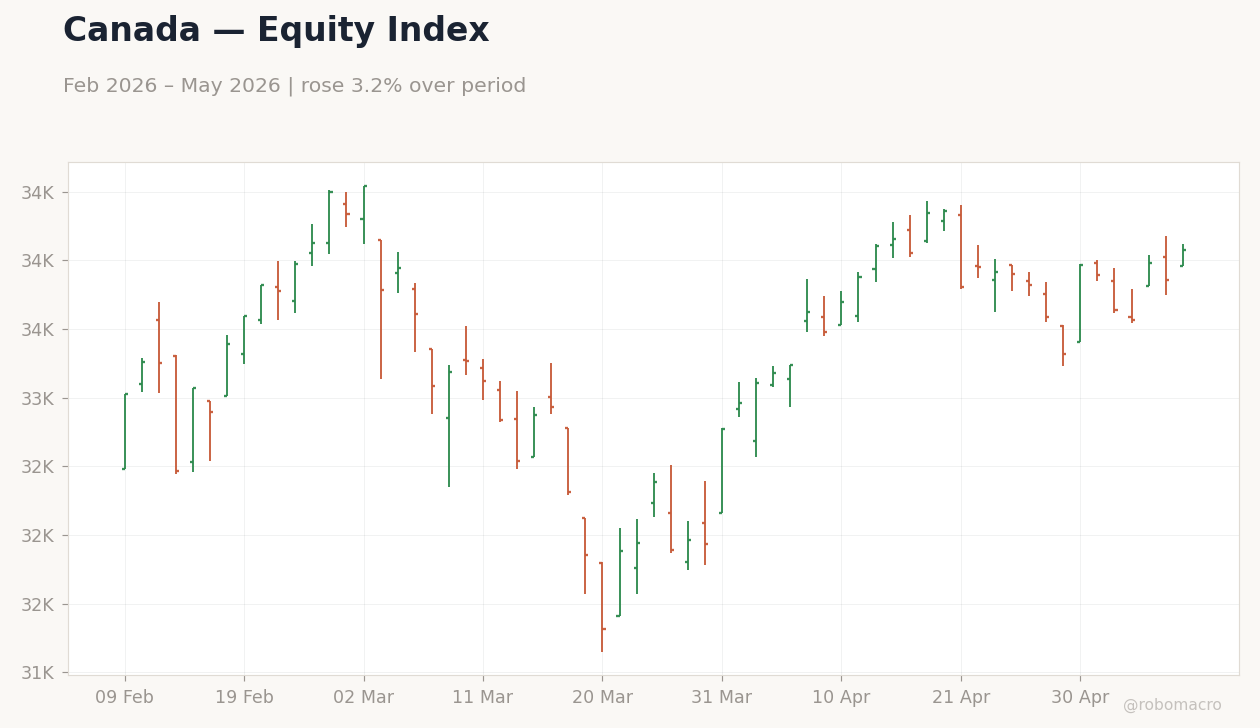
S&P/TSX34077.8+1.3%
USD/CAD1.37+0.7%
EUR/CAD1.61+1.1%
WTI Crude98.01-7.9%
Natural Gas2.8-2.5%
Gold4700.5+4.0%
Brent Crude104.11-9.0%
Bitcoin82021.15+4.4%
Chart 1
Chart 2
  • S&P/TSX Composite advanced 1.3% week-over-week to 34077.8, driven by metals strength despite sharp oil declines.
  • USD/CAD rose 0.73% to 1.37, reflecting USD resilience amid CAD pressures from falling energy prices.
  • Gold rose 4.0% to 4700.5 week-over-week, while WTI crude plunged 7.9% to 98.01 and Brent fell 9.03% to 104.11.

Week in Review

The week featured strong equity gains clashing with commodity volatility, challenging CAD resilience and rate cut expectations. S&P/TSX Composite advanced 1.3% week-over-week to 34077.8, driven by metals strength despite oil's sharp decline. USD/CAD rose 0.73% to 1.37 over the seven-day period, reflecting broader USD resilience amid CAD pressures from falling energy prices.

Policy Signals and Inflation Watch Bond markets reacted with Canada 10-year government yields climbing, signaling reduced bets on near-term easing. This coincided with WTI crude plunging 7.9% week-over-week to 98.01.

Data Surprises in Trade and Activity Gold prices provided a safe-haven lift, rising 4.0% week-over-week to 4700.5, while Bitcoin gained 4.43% to 82021.15 amid risk asset volatility.

Labor Market Setback and Market Close EUR/CAD climbed 1.08% to 1.61 over the week. Brent crude fell 9.03% to 104.11 week-over-week, exacerbating energy sector drags on the TSX despite its net gains. Overall, commodity trends highlighted softening energy support that could weigh on growth outlook.

BoC Watch

Bank of Canada forward guidance emphasizes data-dependence amid mixed signals. This week's commodity declines suggest potential easing of inflationary pressures but also growth risks. We observe Canada bond yields moving higher, implying market pricing for sustained rates. BoC OIS pricing likely shifted modestly hawkish, reducing implied cuts over coming quarters given energy volatility.

RoboMacro AI Economic Research

Global Macro Watch

May 10, 2026 robomacro.com

Calendar data unavailable

The Week Ahead

Next week's calendar is light but features the BoC Market Participants Survey and Housing Starts, offering insights into market expectations and housing trends that could influence the Bank of Canada's data-dependent rate path. Stronger housing data might reduce urgency for cuts, while weakness could amplify downside risks to consumption. These releases matter for assessing whether recent market strength extends into broader recovery signals, potentially firming OIS pricing against easing in coming quarters.

Risks & Themes

This week's data shifts the outlook toward a balanced but cautious growth narrative, with upside risks from gold's 4.0% rise to 4700.5 potentially supporting stronger activity, while downside scenarios emerge from energy volatility, with WTI crude's 7.9% week-over-week decline to 98.01 pressuring export sectors if prolonged. Themes of inflation vigilance persist amid yields climbing on the 10-year, suggesting over-optimism on cuts. Upside scenarios include commodity rebounds lifting the TSX beyond its 1.3% gain to 34077.8, while downside risks involve further energy declines amplifying slowdown signals in coming quarters. Signals to watch include any divergence in next week's BoC survey, which could recalibrate OIS curves.

RoboMacro AI Economic Research

Global Macro Watch

May 10, 2026 robomacro.com
Mexico
Market Scorecard
AssetLevelWoW
IPC Bolsa69855.58+3.8%
USD/MXN17.28-1.0%
EUR/MXN20.28-0.9%
WTI Crude98.1-7.8%
Silver184108.0-0.8%
Gold4701.6+4.0%
Brent Crude98.1-7.8%
Bitcoin82097.75+4.5%
Chart 1
Chart 2
  • The IPC Bolsa rallied 3.82% week-over-week to 69,855.58, reflecting investor optimism.
  • USD/MXN declined 0.97% week-over-week to 17.28, signaling peso strength.
  • WTI Crude and Brent Crude declined 7.82% week-over-week to 98.1, easing energy pressures.

Week in Review

Mexican markets advanced amid commodity declines, with the IPC Bolsa gaining 3.82% week-over-week to 69,855.58 as the peso strengthened. USD/MXN fell 0.97% to 17.28 and EUR/MXN declined 0.86% to 20.28, while Gold rose 4.03% to 4,701.6. Equities outperformed despite WTI Crude and Brent Crude dropping 7.82% to 98.1, pointing to economic stabilization supported by USMCA-linked investments.

Business Sentiment Stabilizes Amid Nearshoring Gains Nearshoring under USMCA drove improvements in manufacturing and services. The IPC Bolsa rallied 3.82% week-over-week to 69,855.58, while USD/MXN declined 0.97% to 17.28 and EUR/MXN fell 0.86% to 20.28.

Oil Pressures Ease into Mid-Week Rally WTI Crude and Brent Crude declined 7.82% week-over-week to 98.1, pressuring energy sectors, yet the IPC Bolsa climbed 3.82% to 69,855.58. USD/MXN declined 0.97% to 17.28, while Gold rose 4.03% to 4,701.6.

Inflation Undershoot Confirms Disinflation Path Disinflation trends supported peso strength, with USD/MXN falling 0.97% to 17.28, and bolstered the IPC Bolsa to 69,855.58.

Rate Cycle Concludes with Market Resilience Markets showed resilience, with the IPC Bolsa at 69,855.58 after a 3.82% week-over-week gain, while WTI Crude settled at 98.1. Bitcoin advanced 4.53% to 82,097.75. Moderating commodity pressures confirmed growth stability, reinforcing economic resilience amid falling oil prices.

Banxico Watch

Market developments support a stable Banxico rate path, as peso appreciation and equity gains signal resilience, while lower oil prices aid disinflation. OIS pricing reflects steady rates, with long-term yields moving lower. The stance aligns with trends paving the way for neutral policy if growth holds firm.

RoboMacro AI Economic Research

Global Macro Watch

May 10, 2026 robomacro.com

Calendar data unavailable

The Week Ahead

With a light economic calendar, markets will focus on global cues and nearshoring investments under USMCA. Commodity movements could influence Banxico's rate path via imported inflation. The absence of releases shifts emphasis to market reactions, where disinflation signals reinforce steady rates. Emerging global risks could impact the peso and forward guidance. Low volatility is anticipated, allowing consolidation of IPC Bolsa gains, which rose 3.82% last week. This quiet period highlights monitoring nearshoring for the rate outlook.

Risks & Themes

Market data shifts the outlook toward a stable monetary path, with upside potential from nearshoring accelerating growth. Disinflation and commodity volatility persist, with WTI Crude's 7.82% week-over-week decline to 98.1 easing energy pressures. Upside scenarios include USMCA investments boosting GDP. Downside risks center on oil weakness pressuring the peso if USD/MXN reverses its 0.97% weekly decline from 17.28. Signals point to balanced risks, with fiscal discipline maintaining stable spreads.

RoboMacro AI Economic Research

Global Macro Watch

May 10, 2026 robomacro.com
Brazil
Market Scorecard
AssetLevelWoW
Bovespa80.46+10.1%
USD/BRL4701.6+4.0%
EUR/BRL104.34-8.8%
Vale16.63+5.0%
Petrobras20.33-7.6%
WTI Crude98.1-7.8%
Gold82097.75+4.5%
Bitcoin4701.6+4.0%
Chart 1
Chart 2
  • Bovespa index climbed 10.1% week-over-week to close at 80.46, reflecting broad market optimism.
  • USD/BRL pair weakened 4.03% over the week to 4701.6, underscoring a stronger real.
  • Petrobras shares declined 7.63% week-over-week to 20.33 amid WTI crude's 7.82% drop to 98.1, while Vale rose 4.99% to 16.63.

Week in Review

Brazil's markets advanced amid commodity volatility, with the Bovespa index climbing 10.1% week-over-week to close at 80.46. The USD/BRL pair weakened 4.03% over the week to 4701.6, supported by external demand dynamics. Petrobras shares declined 7.63% week-over-week to 20.33, hit by WTI crude's 7.82% drop to 98.1, while Vale rose 4.99% to 16.63 on commodity strength. Overall, equities confirmed a rebound trajectory amid mixed sector performances.

BCB Watch

Resilient equity performance and a stronger real suggest moderating price pressures, paving the way for a less hawkish BCB rate path in coming quarters. Commodity volatility, including WTI crude's fluctuations around 98.1, keeps policymakers vigilant on inflation risks.

RoboMacro AI Economic Research

Global Macro Watch

May 10, 2026 robomacro.com

Calendar data unavailable

The Week Ahead

Attention turns to key activity and inflation indicators that could influence the Banco Central do Brasil's rate outlook. Stronger-than-expected outcomes could reinforce a benign rate path, while disappointments might heighten hawkish bets.

Risks & Themes

Positive market momentum, including Vale's 4.99% weekly gain, shifts the outlook toward firmer growth in coming quarters, reducing downside risks if commodity demand sustains. Upside scenarios include accelerated export growth from commodities, where Vale's advance signals strength. Downside risks persist from global commodity volatility, such as WTI crude fluctuations around 98.1, which could pressure inflation. Broader themes center on external demand resilience supporting the real and equities. Overall, risks balance toward growth upside.

RoboMacro AI Economic Research

Global Macro Watch

May 10, 2026 robomacro.com
Argentina
Market Scorecard
AssetLevelWoW
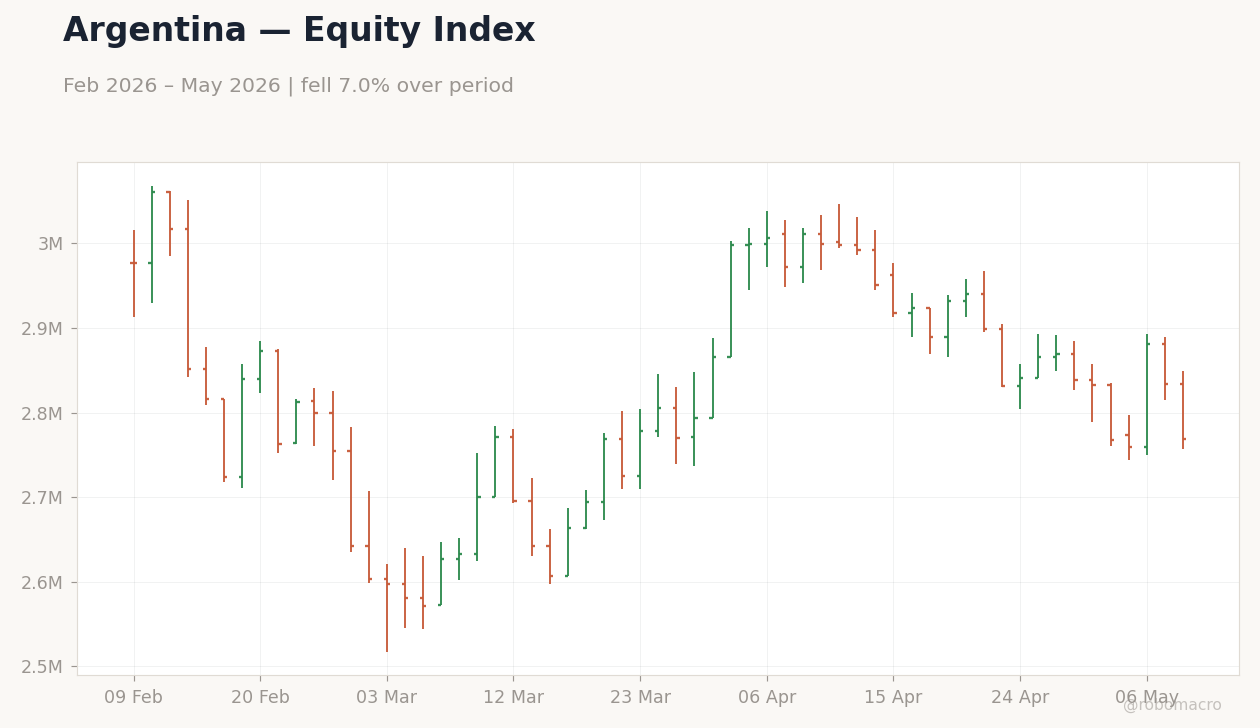
MERVAL2769127.0+0.1%
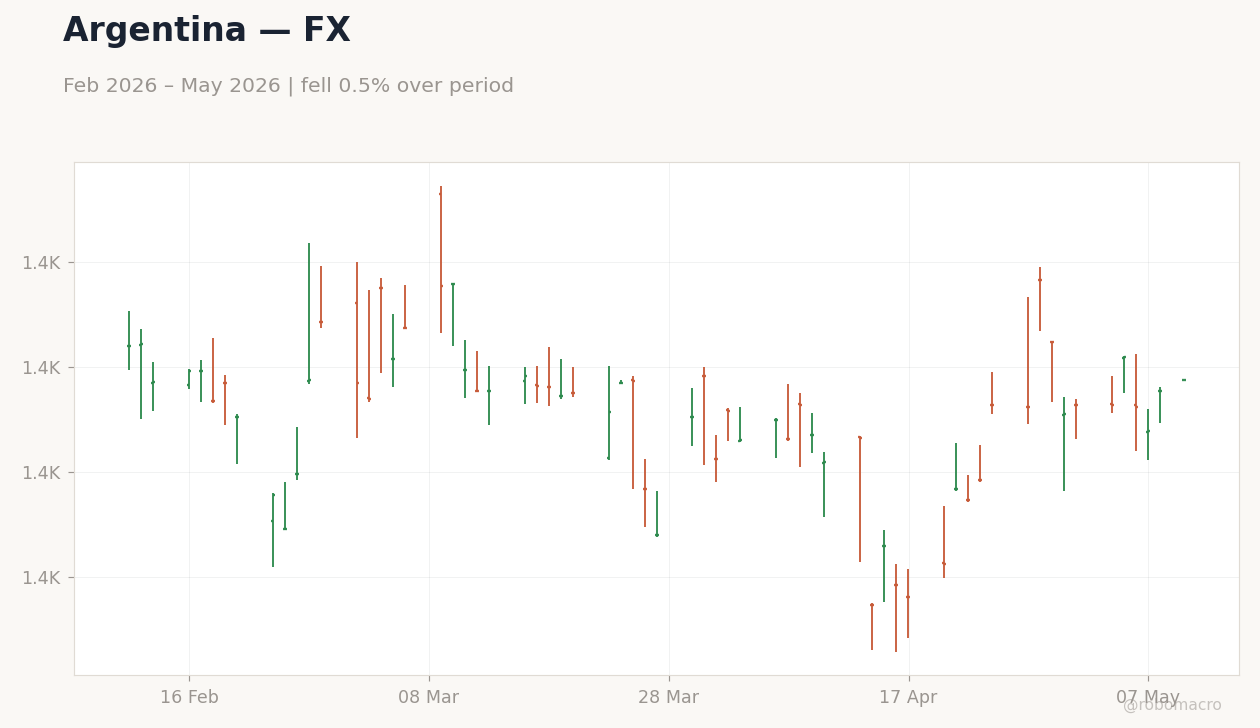
USD/ARS1397.5+0.3%
YPF42.37-4.6%
MercadoLibre1632.52-10.0%
Globant39.23-2.4%
Soybeans1208.0+0.0%
Gold4701.7+4.0%
Bitcoin82129.06+4.6%
Chart 1
Chart 2
  • The Merval index closed the week nearly flat with a 0.07% gain to 2,769,127.00.
  • USD/ARS rose 0.34% week-over-week to 1,397.50 amid crawling peg adjustments.
  • BCRA maintained its controlled devaluation strategy with no policy decisions or speaker events, supporting reserve stability signals.

Week in Review

Argentine markets ended the week with a near-flat performance for the Merval index at 2,769,127.00, reflecting a 0.07% week-over-week gain. The USD/ARS official rate climbed 0.34% over the week to 1,397.50, amid low FX volatility. No economic data releases occurred, leaving sentiment tied to global cues and commodity trends, as evidenced by gold's 4.03% week-over-week advance to 4,701.70. Bitcoin rose 4.57% week-over-week to 82,129.06, while soybeans edged up 0.04% to 1,208.00, supporting export revenues.

Equity and Sector Volatility: Key stocks showed divergence, with MercadoLibre declining 9.98% week-over-week to 1,632.52. Globant fell 2.36% week-over-week to 39.23, reflecting emerging market caution. YPF declined 4.64% over the week to 42.37 amid energy sector weakness.

Commodity and Currency Dynamics: Soybeans ended at 1,208.00, aiding trade balances, while gold closed at 4,701.70. The USD/ARS maintained the crawling peg without evident disruptions. Parallel rates remained stable with narrow gaps.

Broader Macro Narrative: The week confirmed expectations of gradual fiscal stabilization, setting a constructive tone for reserve building.

BCRA Watch

The Banco Central de la Republica Argentina (BCRA) made no policy decisions, rate changes, or speaker appearances this week, maintaining its crawling peg strategy amid stable FX volatility. Forward guidance remained implicit through steady USD/ARS management, with the rate ending at 1,397.50 after a 0.34% week-over-week increase, signaling controlled devaluation. Commodity strength, including gold's 4.03% rise to 4,701.70, bolsters reserve prospects, easing pressure on the rate path. The data supports a neutral stance, reducing odds of near-term tightening unless external shocks intensify.

RoboMacro AI Economic Research

Global Macro Watch

May 10, 2026 robomacro.com

Calendar data unavailable

The Week Ahead

With no scheduled economic releases on Monday, markets will focus on global commodity trends and any unscheduled BCRA updates on reserves, influencing USD/ARS volatility and the rate path. Tuesday lacks data, shifting attention to potential fiscal reform announcements, critical for reform momentum and upcoming decisions. Wednesday's quiet calendar may highlight parallel FX rate movements, signaling capital controls and expectations for the next meeting. Thursday brings no events, allowing digestion of mid-week global cues such as energy prices, key for BCRA's export-driven reserve strategy. Friday rounds out the week without releases, with sentiment tied to broader EM flows and range-bound trading. These non-events underscore a low-volatility outlook, but surprise policy hints could recalibrate the rate path toward stability. The absence of data reinforces focus on external factors like commodity exports, key for BCRA's inflation control and growth support.

Risks & Themes

Persistent inflation poses upside risks to volatility. Upside scenarios include sustained commodity gains such as soybeans above 1,208.00, bolstering reserves and enabling looser policy; downside risks emerge if global risk aversion intensifies, pressuring USD/ARS beyond 1,397.50. Key themes center on export recovery, with gold at 4,701.70 signaling haven demand amid geopolitical tensions. Monitoring export signals will gauge cyclical upturns.

RoboMacro AI Economic Research

Global Macro Watch

May 10, 2026 robomacro.com
Colombia, Chile and Peru
Market Scorecard
AssetLevelWoW
MSCI Chile41.64+3.8%
MSCI Peru83.33+7.0%
USD/COP3732.9+2.1%
USD/CLP892.23-0.8%
USD/PEN3.43-2.1%
Copper6.28+8.4%
Gold4700.8+4.0%
Brent Crude104.36-8.8%
Bitcoin82184.01+4.6%
Chart 1
Chart 2
  • Copper prices surged 8.41% week-over-week to 6.28, driving strong gains in Chilean and Peruvian equities with MSCI Chile up 3.81% to 41.64 and MSCI Peru up 7.03% to 83.33.
  • Brent crude fell 8.81% week-over-week to 104.36, pressuring Colombian assets and contributing to USD/COP rising 2.12% to 3,732.90 amid oil-dependent fiscal concerns.

Week in Review

Andean markets navigated a commodity-driven week ending May 10, 2026, with copper and gold strength offsetting oil weakness, culminating in net gains for Chile and Peru while Colombia lagged. The absence of major economic data releases shifted focus to external drivers. The week's narrative highlighted diverging fortunes tied to export profiles, as Chile and Peru benefited from mining strength while Colombia grappled with energy sector vulnerabilities.

Commodity Splits Shape Market Volatility Copper surged 8.41% to 6.28, lifting MSCI Chile 3.81% to 41.64 and MSCI Peru 7.03% to 83.33. Gold rose 4.01% to 4700.8, with USD/CLP down 0.78% to 892.23 and USD/PEN down 2.09% to 3.43. Brent crude declined 8.81% to 104.36, driving USD/COP up 2.12% to 3732.9.

Sector News Amplifies Risks Markets absorbed commodity moves absent notable sector developments.

Broader Implications for Growth Commodity divergence confirmed expectations, with no consensus misses on the empty calendar. USD/PEN declined 2.09% to 3.43 on gold strength, while USD/COP rose 2.12% to 3732.9. These shifts signal cooling inflation pressures in mining-heavy economies, easing fiscal strains in Chile where MSCI rose 3.81% overall. Colombia's oil exposure amplified vulnerabilities amid Brent weakness. The arc reinforced needs for diversified exports across the region.

Andean Central Banks Watch

No central bank activity occurred amid the empty calendar, leaving forward guidance untouched. Commodity data, including copper's 8.41% surge and gold's 4.01% gain, suggests easing inflationary pressures for Chile and Peru, potentially flattening BCCh and BCRP rate paths. Brent weakness underscores BanRep fiscal challenges. Lack of surprises reinforces gradual normalization in coming meeting cycles.

RoboMacro AI Economic Research

Global Macro Watch

May 10, 2026 robomacro.com

Calendar data unavailable

The Week Ahead

The week of May 11-15, 2026, features a continued quiet calendar with no major economic releases scheduled across Colombia, Chile, or Peru, directing attention to commodity trends and external spillovers. Focus remains on copper and gold prices, where sustained strength could bolster CLP and PEN appreciation, influencing BCCh and BCRP inflation outlooks. Brent crude developments remain critical for BanRep fiscal considerations. The absence of data could amplify volatility from global events. Consensus expects no surprises, but dynamics signal export revenue stability, potentially delaying BCCh easing if copper holds gains. Subdued trading anticipated absent commodity challenges to expectations. This setup tests Andean resilience without domestic catalysts.

Risks & Themes

Commodity divergence shifts outlook toward upside risks for Chile and Peru, where copper's 8.41% rally and gold's 4.01% gain signal stronger export revenues to accelerate growth recovery, mispricing BCCh and BCRP OIS for premature easing. Downside looms for Colombia, as Brent's 8.81% drop exacerbates fiscal deficits and inflation passthrough, raising risks of prolonged BanRep tightening if oil stays depressed. Markets underprice geopolitical volatility that could widen USD/COP. Key themes include mining strength and energy diversification for balanced growth. Upside emerges if global demand lifts commodities uniformly, narrowing Andean gaps. Data signals bifurcated recovery, with Peru positioned for outperformance.

RoboMacro AI Economic Research

Global Macro Watch

May 10, 2026 robomacro.com
United Kingdom
Market Scorecard
AssetLevelWoW
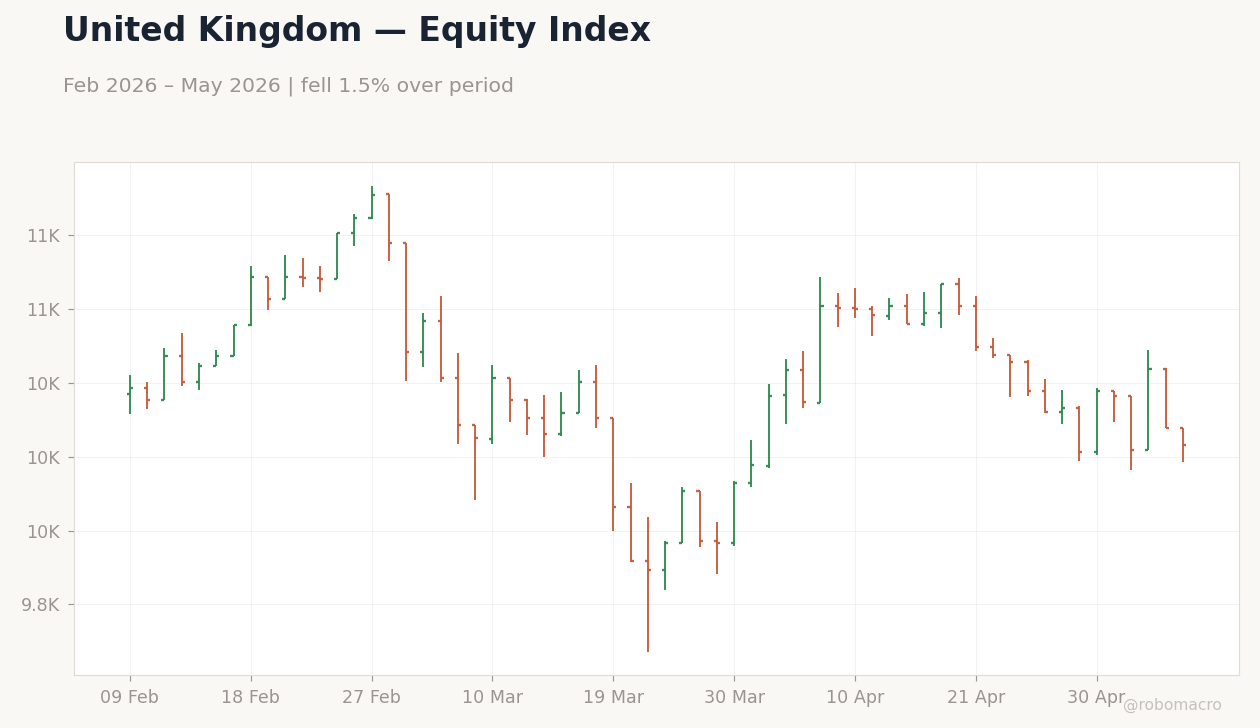
FTSE 10010233.1+0.1%
FTSE 25022849.4+1.8%
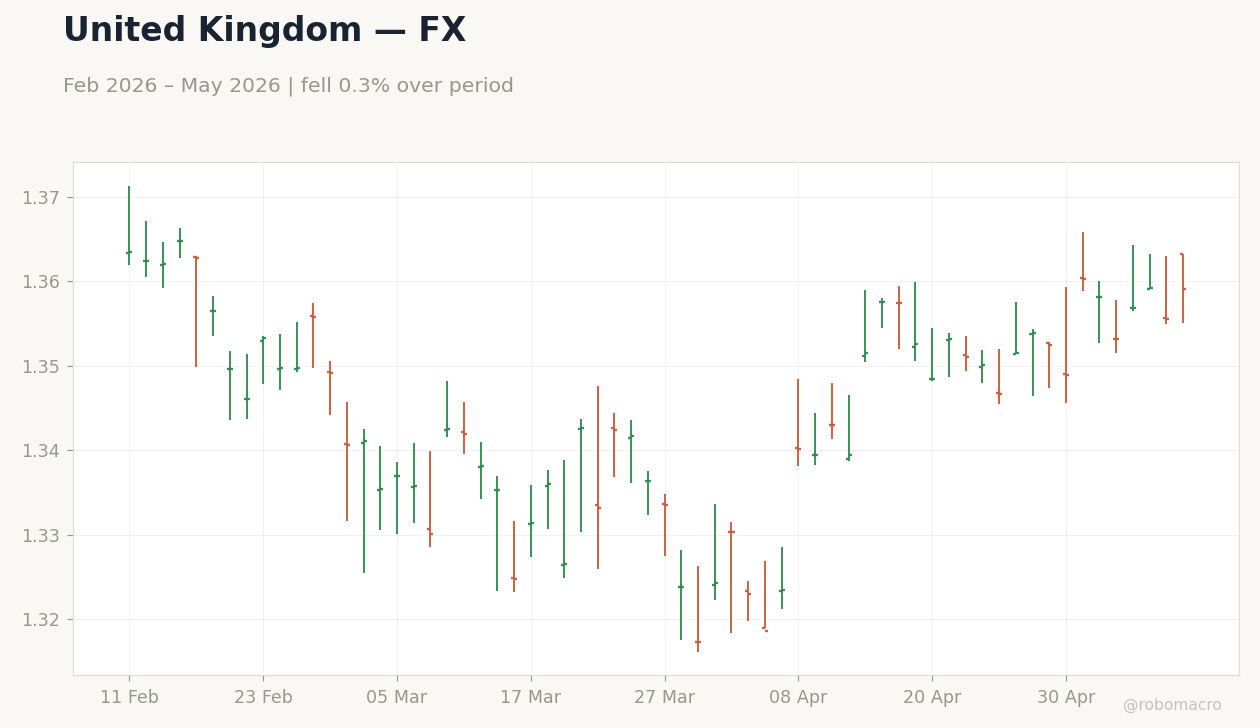
GBP/USD1.36-0.2%
GBP/EUR1.16-0.2%
GBP/JPY212.58-0.2%
Brent Crude104.36-8.8%
Gold4699.3+4.0%
UK Nat Gas2.79-2.6%
Bitcoin82364.24+4.9%
Chart 1
Chart 2
  • FTSE 100 edged up 0.14% week-over-week to 10,233.1 despite volatility.
  • FTSE 250 advanced 1.81% week-over-week to 22,849.4, buoyed by mid-cap resilience.
  • Brent crude fell 8.81% week-over-week to 104.36, pressuring energy sectors.
  • Gold climbed 3.98% week-over-week to 4,699.3 as investors sought safe-haven assets.

Week in Review

UK markets posted gains amid commodity volatility in the week ending May 10, 2026. Equity indices advanced, with the FTSE 100 rising 0.14% week-over-week to 10,233.1 and the FTSE 250 gaining 1.81% to 22,849.4. Sterling dipped modestly, with GBP/USD down 0.19% week-over-week to 1.36 amid relative dollar weakness. Gilt yields rose, signaling expectations of sustained higher rates. Commodities swung sharply, with Brent crude dropping 8.81% to 104.36 on demand concerns, while gold rose 3.98% to 4,699.3.

Data Misses Highlight Cyclical Weakness Economic data flow was light, underscoring vulnerabilities in consumer-sensitive sectors and pointing to subdued investment amid elevated rates. Steady labor market conditions offered limited offset, reinforcing caution on growth.

Market Reactions and Policy Echoes Equities advanced unevenly, with FTSE 250 strength contrasting broader repricing toward caution. Currency markets saw modest sterling declines across major pairs. The pattern links to Bank of England vigilance, delaying rate cut expectations.

Geopolitical Overhang Persists Commodity swings amplified risks to energy imports, as flagged in policy commentary.

BoE Watch

The Bank of England maintained a data-dependent stance with no new decision this week, emphasizing inflation vigilance. Weak prior signals suggest limited easing scope, supporting rates through mid-2026. Forward guidance stays hawkish amid energy volatility above 104.36 levels.

Data Review

This week's economic calendar featured limited releases, directing focus to asset performance amid ongoing inflation and growth challenges. Absent major prints, prior trends suggest softening momentum, weighing on investment and heightening recession risks. For the BoE rate path, positioning supports holding steady, as persistent pressures exceed the target and constrain easing. The outlook tilts cautious, with subdued demand poised to moderate inflation if momentum fades.

RoboMacro AI Economic Research

Global Macro Watch

May 10, 2026 robomacro.com

Calendar data unavailable

The Week Ahead

The week of May 11-15, 2026, features a light UK calendar with no major releases scheduled. Markets will monitor any ad-hoc Bank of England comments for clues on the rate path. These developments matter for refining inflation and growth views, with surprises potentially influencing policy timing.

Risks & Themes

Market gains mask volatility, with FTSE 100 up 0.14% amid Brent's plunge to 104.36 raising downside growth risks. Upside emerges if energy stabilizes, easing pressures and enabling BoE cuts by late 2026. Gilt yields appear elevated relative to labor slack signals. Positioning stays cautious, favoring safe-havens like gold up 3.98%, with sterling volatility around 1.36. Cross-asset flows support GBP/JPY above 212.58 in risk-off scenarios.
Cross-Asset

UK equities ended the week higher, with the FTSE 100 up 0.14% week-over-week to 10,233.1 and the FTSE 250 gaining 1.81% week-over-week to 22,849.4 on domestic resilience. Bonds faced pressure, with the 10-year Gilt yield climbing amid hawkish rhetoric. In FX, GBP/USD dipped 0.19% week-over-week to 1.36, GBP/EUR fell 0.23% to 1.16, and GBP/JPY declined 0.20% to 212.58 amid safe-haven flows. Commodities tumbled, as Brent crude fell 8.81% week-over-week to 104.36 on demand worries, while gold rose 3.98% to 4,699.3 and UK natural gas declined 2.58% to 2.79.

Global Context

Global commodity developments spilled over via energy markets, with Brent crude declining 8.81% to 104.36 and elevating UK import risks. Safe-haven flows boosted gold 3.98% to 4,699.3 while weighing on sterling crosses like GBP/JPY down 0.20% to 212.58. Spillovers could lift yields and limit fiscal flexibility amid policy normalization.

RoboMacro AI Economic Research

Global Macro Watch

May 10, 2026 robomacro.com
Sweden, Norway, Denmark and Finland
Market Scorecard
AssetLevelWoW
OMX Stockholm 303073.69+1.3%
Oslo Bors1970.28-2.9%
OMX Copenhagen 251745.08+0.6%
OMX Helsinki 256241.09-1.3%
USD/SEK9.28+0.7%
USD/NOK9.29+0.1%
EUR/SEK10.88+0.7%
EUR/NOK10.9+0.2%
Brent Crude104.36-8.8%
Gold4699.3+4.0%
Bitcoin82323.5+4.8%
Chart 1
Chart 2
  • Brent crude prices declined 8.81% week-over-week to $104.36, pressuring Norway's oil-linked equities and fiscal outlook while easing inflationary concerns across the Nordics.
  • Nordic equities showed divergence, with Sweden's OMX Stockholm 30 rising 1.26% week-over-week to 3,073.69 amid cyclical rebounds, contrasted by Norway's Oslo Bors falling 2.94% to 1,970.28 on energy sector weakness.
  • Central banks held rates steady as anticipated, with forward guidance emphasizing inflation vigilance amid oil stability, while Danmarks Nationalbank and the Bank of Finland aligned with ECB's steady path.

Week in Review

The Nordic region navigated a week of central bank anticipation and oil-driven volatility, culminating in mixed market outcomes that reinforced divergent economic paths, with Sweden and Denmark showing resilience while Norway faced headwinds from declining energy prices. Policy holds confirmed expectations of steady rates amid cooling inflation signals, with no major data due to a light calendar. Brent's decline challenged consensus views on sustained commodity support for growth.

Equity Markets Diverge on Sector Pressures. Nordic equities diverged, with Sweden's OMX Stockholm 30 rising 1.26% week-over-week to 3,073.69 amid cyclical rebounds, while Norway's Oslo Bors fell 2.94% to 1,970.28 on energy sector weakness. Denmark's OMX Copenhagen 25 rose 0.63% to 1,745.08, and Finland's OMX Helsinki 25 declined 1.34% to 6,241.09, reflecting eurozone linkages.

Currencies Reflect Policy and Commodity Dynamics. Currency pairs moved higher week-over-week, with USD/SEK up 0.71% to 9.28, USD/NOK edging up 0.12% to 9.29, EUR/SEK advancing 0.71% to 10.88, and EUR/NOK rising 0.16% to 10.9, tied to policy stability and Brent's decline. These shifts challenged expectations of krona strength.

Yields and Commodities Signal Inflation Watch. Bond yields rose ahead of central bank decisions, signaling inflation concerns. Brent declined amid volatility, while gold advanced 3.98% week-over-week to $4,699.30 and Bitcoin rose 4.82% to $82,323.50. The light calendar aligned with policy holds and moderating inflation trends.

Policy and Geopolitical Context. Central bank holds supported fiscal outlooks without challenging growth expectations. The week's narrative reinforced steady rate paths.

Nordic Central Banks Watch

Central banks held rates steady as consensus expected, emphasizing inflation vigilance amid oil stability and signaling no immediate hikes given cooling signals. Norges Bank highlighted resilient growth and oil support, eyeing a possible raise if wage trends persist. Danmarks Nationalbank aligned with eurozone stability via ECB peg, benefiting Denmark's OMX Copenhagen 25 rise of 0.63% week-over-week. The Bank of Finland echoed euro area caution under ECB auspices, as Finland's OMX Helsinki 25 declined 1.34%. This week's oil decline to $104.36 and mixed equities reinforced a hold stance, with data supporting steady paths over near-term easing.

RoboMacro AI Economic Research

Global Macro Watch

May 10, 2026 robomacro.com

Calendar data unavailable

The Week Ahead

With a light calendar ahead, attention turns to any unscheduled central bank speakers that could provide color on the rate path, particularly for the Riksbank amid ongoing inflation monitoring. Monday offers potential follow-up from recent auctions, which could influence SEK pairs if volumes exceed expectations. Tuesday brings no major releases, but Norges Bank commentary could emerge if oil prices extend volatility, impacting the krone. Midweek ECB-related signals could affect Danmarks Nationalbank's peg and the Bank of Finland's outlook, swaying euro-linked currencies. Thursday may feature peripheral data or speeches clarifying forward guidance, crucial for upside inflation risks. Friday expects steady sentiment unless global factors intervene, with implications for Norges Bank's oil-dependent path. These elements gauge policy divergence, as stronger signals could steepen OIS curves. The week allows digestion of recent holds, though commodity surprises could alter meeting expectations.

Risks & Themes

This week's Brent decline of 8.81% to $104.36 shifts the Nordic outlook toward downside risks for Norway's growth, potentially cooling fiscal revenues and prompting Norges Bank to delay hikes if oil stabilizes lower. Upside scenarios include rebounds in equities like the OMX Stockholm 30, which rose 1.26% week-over-week, if global demand supports Sweden's exports. Markets misprice NOK weakness, as USD/NOK's 0.12% rise underestimates oil volatility's drag, while SEK pairs appear fairly valued post-hold. Themes center on policy divergence, with Riksbank contrasting Norges Bank, amplified by ECB alignment for Denmark and Finland. Downside risks escalate if geopolitical tensions spike inflation. Yield spreads suggest room for convergence if data moderates trends.

RoboMacro AI Economic Research

Global Macro Watch

May 10, 2026 robomacro.com
Poland, Czech Republic, Hungary, Romania and Turkey
Market Scorecard
AssetLevelWoW
WIG2082311.46+4.8%
BIST 10015062.7+4.8%
iShares Poland39.03+2.7%
EUR/PLN4.23-0.3%
EUR/HUF354.3-1.8%
EUR/CZK24.29-0.2%
USD/TRY45.22+0.1%
Brent Crude104.42-8.8%
Gold4699.8+4.0%
Bitcoin82311.46+4.8%
Chart 2
  • Regional equities rallied, with Turkey's BIST 100 climbing 4.82% WoW to 15,062.70 and Poland's iShares ETF rising 2.71% WoW to 39.03.
  • CEE currencies strengthened, with EUR/HUF declining 1.84% WoW to 354.3, EUR/PLN down 0.32% to 4.23, and EUR/CZK falling 0.23% to 24.29.
  • Brent crude dropped 8.76% WoW to 104.42, supporting energy importers and risk assets.
  • Gold advanced 3.99% WoW to 4,699.80 alongside Bitcoin's 4.8% WoW gain to 82,311.46, reflecting hedging demand.

Week in Review

Regional equities advanced amid improved risk appetite, with Turkey's BIST 100 gaining 4.82% WoW to 15,062.70 and Poland's iShares ETF climbing 2.71% WoW to 39.03. CEE currencies firmed versus the euro, led by EUR/HUF's 1.84% WoW decline to 354.3, as global flows favored EM. USD/TRY edged higher 0.09% WoW to 45.22 amid lira dynamics. Brent crude plunged 8.76% WoW to 104.42, bolstering currencies and equities. Gold rose 3.99% WoW to 4,699.80, underscoring haven flows. Cross-asset strength signals resilient growth outlooks, limiting CB easing scope across the region.

Emerging Europe Central Banks Watch

No central bank decisions occurred this week. Regional CBs maintained neutral stances amid supportive equity and FX moves, with BIST 100 up 4.82% WoW bolstering growth views. Currency strength like EUR/HUF down 1.84% WoW limits easing scope, pointing to higher-for-longer paths. Commentary likely to emphasize resilience, with rate trajectories stable through mid-2026 barring reversals in Brent at 104.42 or risk flows.

Data Review

No high-impact data releases occurred this week. Market dynamics dominated, with equity gains in Turkey's BIST 100 up 4.82% WoW and Poland's iShares ETF ahead 2.71% WoW pointing to solid external demand and mid-cycle positioning. Currency strength in EUR/HUF down 1.84% WoW and peers supports soft-landing narratives, with growth holding firm. Brent's 8.76% WoW drop to 104.42 eases import pressures, favoring steady CB paths. Collectively, these moves suggest Emerging Europe balancing growth resilience against inflation risks, tilting rates higher for longer.

RoboMacro AI Economic Research

Global Macro Watch

May 10, 2026 robomacro.com

Calendar data unavailable

The Week Ahead

Next week's calendar is light with no major releases scheduled, allowing digestion of recent equity rallies like BIST 100's 4.82% WoW gain. Attention may turn to unscheduled central bank speakers, potentially addressing FX trends such as EUR/PLN at 4.23. Regional growth remains in focus amid currency strength in EUR/HUF at 354.3. No high-impact data expected through May 15, shifting emphasis to global cues. Overall, limited catalysts support positioning in risk assets, with CEE yields and CB paths steady unless flows reverse.

Risks & Themes

Market rallies shift outlooks toward sustained growth, with BIST 100's 4.82% WoW advance signaling upside for CB hold strategies. Stronger external demand could drive EUR/PLN below 4.23, highlighting mispricing in rate markets for premature cuts. Downside risks involve Brent rebounding from 104.42, straining currencies and prompting tighter policy. Positioning crowded in CEE equities after iShares Poland's 2.71% WoW rise, vulnerable to pullbacks on risk-off. Elevated volatility evident in gold's 3.99% WoW gain to 4,699.80 points to hedging needs. Flows favor local currency strength, amplifying regional divergence.

Cross-Asset

Regional equities advanced this week, with Turkey's BIST 100 gaining 4.82% WoW to 15,062.70 and Poland-focused iShares ETF climbing 2.71% WoW to 39.03. Bond markets saw yields rise amid global rate repricing. FX markets favored CEE currencies, with EUR/PLN declining 0.32% WoW to 4.23, EUR/HUF dropping 1.84% to 354.3, and EUR/CZK falling 0.23% to 24.29, driven by risk-on flows despite USD/TRY's modest 0.09% WoW uptick to 45.22. Commodities were mixed, as Brent crude plunged 8.76% WoW to 104.42, with gold rising 3.99% WoW to 4,699.80 and Bitcoin advancing 4.8% WoW to 82,311.46.
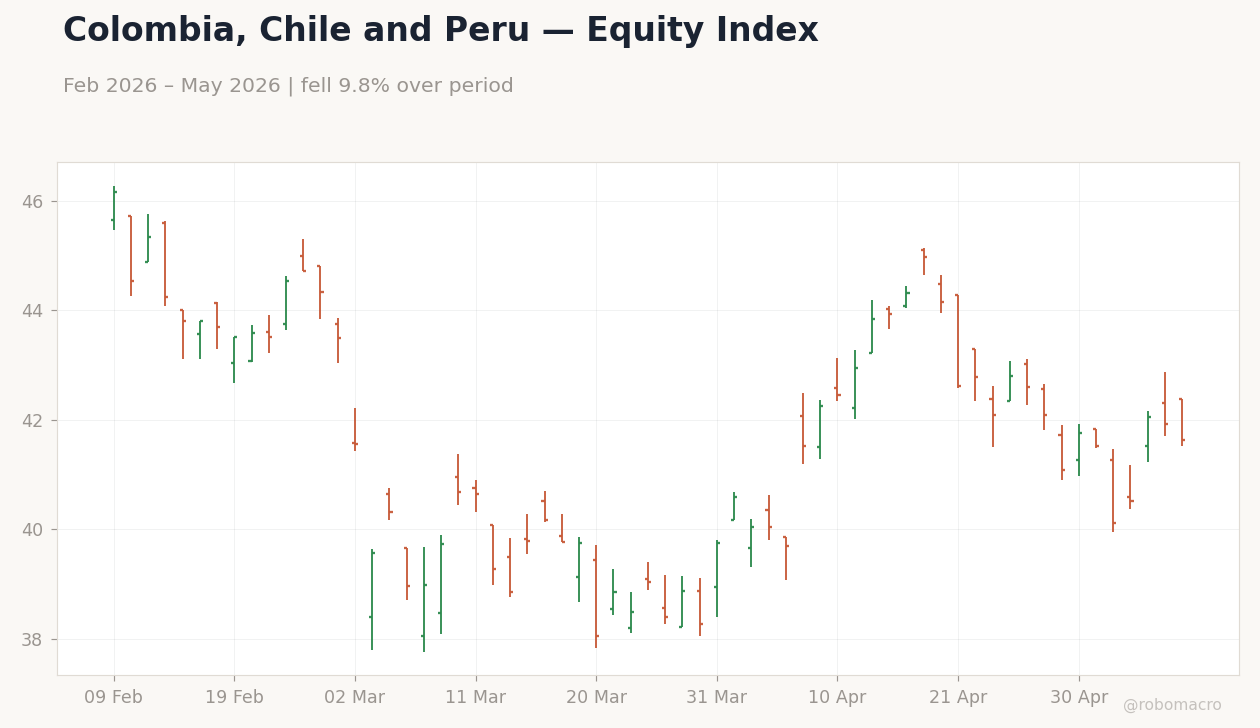
Global Context

Global risk-on flows buoyed Emerging Europe's assets, with BIST 100 up 4.82% WoW and CEE currencies gaining amid Brent's 8.76% WoW decline to 104.42. These dynamics underscore supply chain resilience, supporting CEE trade positions. Cross-border spillovers favor energy importers, with gold's 3.99% WoW rise to 4,699.80 reflecting broader caution.
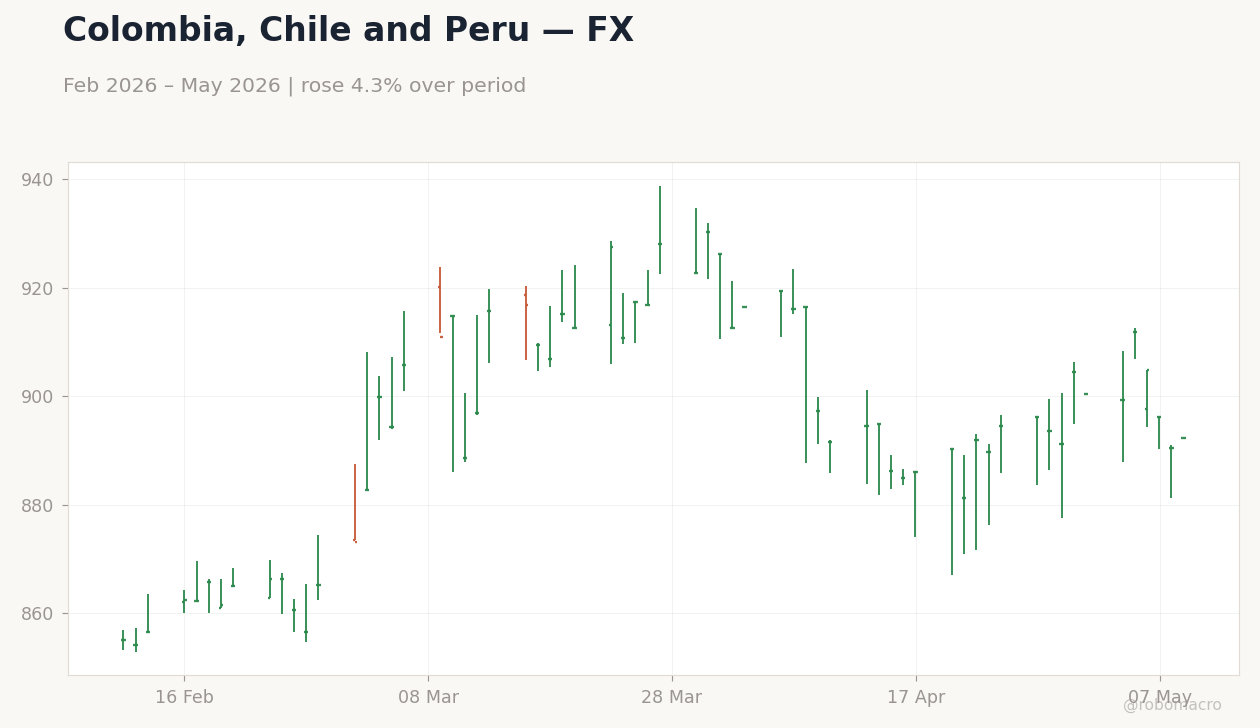
RoboMacro AI Economic Research

Global Macro Watch

May 10, 2026 robomacro.com
South Africa
Market Scorecard
AssetLevelWoW
JSE Top 40110096.1+3.2%
USD/ZAR16.44-0.8%
EUR/ZAR19.29-0.8%
Platinum2046.9+5.1%
Gold4699.8+4.0%
Naspers104.42-8.8%
Bitcoin89300.0-0.6%
Chart 1
Chart 2
  • JSE Top 40 gained 3.19% to 110096.1.
  • Rand strengthened, USD/ZAR declined 0.84% to 16.44 and EUR/ZAR fell 0.79% to 19.29.
  • Commodities rallied, platinum rose 5.14% to 2046.9 and gold advanced 3.99% to 4699.8.

Week in Review

South African markets advanced amid commodity strength. JSE Top 40 rose 3.19% to 110096.1. Rand firmed, USD/ZAR down 0.84% to 16.44 and EUR/ZAR off 0.79% to 19.29. Platinum climbed 5.14% to 2046.9 and gold gained 3.99% to 4699.8, supporting mining sentiment and growth outlook. Naspers fell 8.76% to 104.42 amid tech pressures, while Bitcoin dipped 0.55% to 89300.0. These developments bolster export prospects and reinforce expectations for steady SARB policy.

SARB Watch

Market gains, rand strength, and commodity advances support a steady SARB rate path, easing near-term easing pressures. Focus centers on inflation stability amid export boosts, with markets pricing limited shifts ahead. Central bank will track global cues closely for policy flexibility.

RoboMacro AI Economic Research

Global Macro Watch

May 10, 2026 robomacro.com

Calendar data unavailable

The Week Ahead

Next week's calendar features no major releases, directing focus to commodity trends and global developments. Rand pairs like USD/ZAR merit monitoring amid carry flows. Steady data digestion supports expectations of stable rates, though external tensions could introduce volatility and test SARB flexibility.

Risks & Themes

Commodity rallies and equity gains signal upside to growth from exports if platinum sustains gains. Rand stability reduces policy pressures, though Naspers weakness highlights tech vulnerabilities. Upside includes carry trades pressing USD/ZAR lower; downside from renewed global tensions curbing inflows. Energy and fiscal dynamics remain watchpoints capping momentum.

RoboMacro AI Economic Research

Global Macro Watch

May 10, 2026 robomacro.com
Australia and New Zealand
Market Scorecard
AssetLevelWoW
ASX 2008744.4+0.5%
NZX 5013175.13+1.2%
AUD/USD0.72-0.1%
NZD/USD0.59+0.5%
AUD/NZD1.21-0.6%
BHP57.95+5.5%
Gold4700.8+4.0%
Brent Crude104.5-8.7%
Bitcoin82222.3+4.7%
Chart 1
Chart 2
  • Policy tightening and mixed data drove volatile ASX 200 moves, ending the week up 0.54% at 8,744.4.
  • New Zealand data supported NZX 50 advance of 1.16% to 13,175.13.
  • Policy divergence showed in FX, with AUD/USD down 0.06% to 0.72, NZD/USD up 0.54% to 0.59, and AUD/NZD narrowing 0.57% to 1.21.

Week in Review

The week featured central bank decisions and data releases that set a cautious tone amid commodity volatility, before markets digested developments with resilience. ASX 200 closed up 0.54% at 8,744.4, NZX 50 advanced 1.16% to 13,175.13, reflecting policy divergence. Brent crude declined 8.69% to 104.5, easing pressures and aiding equity rebounds.

Policy Tightening and Market Reactions Central bank actions pressured Australian equities initially, while New Zealand markets edged higher. AUD/USD ended down 0.06% at 0.72, NZD/USD rose 0.54% to 0.59, and AUD/NZD narrowed 0.57% to 1.21, underscoring FX divergence tied to rate outlooks.

Labor and Industry Data Surprises Labor data softened and industry metrics improved marginally, challenging growth views yet supporting equity gains as markets weighed policy implications.

Trade Shock and Commodity Swings Trade data disappointed amid weak exports, yet BHP surged 5.46% to 57.95 as gold rose 4.01% to 4,700.8. Vulnerabilities to external demand persisted, but equities closed higher despite Brent crude's sharp decline, confirming sticky inflation alongside easing growth risks.

ANZ Central Banks Watch

Central bank communications emphasized inflation persistence and growth strains in Australia, contrasting New Zealand's focus on system resilience. Mixed data reinforces RBA restriction and delays cuts, while supporting RBNZ's steady stance. FX divergence—with AUD/USD down 0.06% to 0.72 and NZD/USD up 0.54% to 0.59—signals widening rate paths, as equity gains reflect higher-for-longer Australian bets amid commodity risks.

RoboMacro AI Economic Research

Global Macro Watch

May 10, 2026 robomacro.com

Calendar data unavailable

The Week Ahead

Attention turns to Australia's consumer confidence and business confidence surveys early next week, alongside the federal budget and housing finance data, followed by New Zealand's PMI. Softer consumer or housing figures would underscore spending strains and growth risks, pressuring RBA toward extended restriction. Expansionary fiscal measures could add inflation risks. PMI contraction would reinforce RBNZ caution on slowdowns. Upside surprises may firm OIS pricing against near-term cuts, highlighting policy divergence amid commodity volatility.

Risks & Themes

Policy divergence persists, with upside Australian inflation risks from commodity swings despite Brent crude's 8.69% drop to 104.5. Downside includes widening trade shortfalls exacerbating slowdowns, forcing RBA to balance restriction against recession threats. Markets underprice RBNZ easing potential amid softening data. Commodity resilience dominates, with gold up 4.01% to 4,700.8 driving safe-haven flows and BHP gaining 5.46% to 57.95 on mining strength. Sticky conditions challenge RBNZ guidance, risking hawkish shifts.

RoboMacro AI Economic Research

Global Macro Watch

May 10, 2026 robomacro.com
China, Hong Kong and Taiwan
Market Scorecard
AssetLevelWoW
Shanghai Composite4179.95+0.5%
CSI 3004871.91-0.1%
Hang Seng26393.71+1.1%
TAIEX41603.94+2.2%
USD/CNY6.8-0.4%
USD/HKD7.83-0.0%
Copper6.28+8.4%
Brent Crude104.5-8.7%
Gold4700.3+4.0%
Bitcoin82228.78+4.7%
Chart 1
Chart 2
  • Greater China equities diverged with Taiwan's TAIEX up 2.21% WoW on semiconductor strength, while copper jumped 8.4% WoW amid industrial optimism, contrasting Brent crude's 8.69% WoW decline on global supply dynamics.

Week in Review

Greater China markets navigated a week of mixed asset moves, with equities posting net gains amid commodity volatility. The narrative arc featured early equity strength, mid-week manufacturing gains, and weekly closes underscoring resilience, as investors weighed policy stability against global risks. Overall, the week reinforced Greater China's market resilience, with Taiwan equities leading advances.

Robust Growth Signals Emerge Early Regional indices advanced early, with Taiwan's TAIEX surging on semiconductor strength tied to global demand. Mainland China's Shanghai Composite edged higher, while the CSI 300 held steady. USD/CNY remained stable under PBoC guidance.

PMI and Trade Data Drive Mid-Week Momentum Services data signaled expansion, propelling mainland indices higher on tech and manufacturing gains. Hong Kong's Hang Seng saw profit-taking, while Taiwan's TAIEX added gains on export outlooks. Copper climbed reflecting industrial optimism, while Brent crude dropped on supply concerns.

Trade Surplus Widens, Closing the Week Strong Trade data supported regional equity gains, with the TAIEX posting 2.21% WoW to 41,603.94 and the Hang Seng rising 1.14% WoW to 26,393.71. The Shanghai Composite advanced 0.48% WoW to 4,179.95, though the CSI 300 slipped 0.11% WoW to 4,871.91. USD/CNY weakened 0.40% WoW to 6.80. Copper surged 8.4% WoW to 6.28, offsetting Brent crude's 8.69% WoW decline to 104.50. Gold rose 4.0% WoW to 4,700.3.

Greater China Central Banks Watch

The People's Bank of China (PBoC) maintained a steady yuan fixing throughout the week, with USD/CNY easing to 6.80 amid market resilience. The Hong Kong Monetary Authority (HKMA) highlighted FX market stability and plans for stablecoin monitoring. Taiwan's Central Bank (CBC) issued no significant updates, aligning with its pegged rate framework. Strong market data reduces urgency for PBoC easing, keeping OIS rates neutral in the medium term. HKMA's guidance suggests a proactive stance on fintech risks, with no base rate shifts. For the CBC, growth implies steady policy. Overall, developments point to medium-term rate stability, with PBoC OIS holding steady unless tensions escalate.

Data Review

This week's economic releases highlighted resilience in Greater China, pointing to a mid-cycle expansion phase. Strong trade figures underscored external demand, supporting a widening surplus that bolsters the yuan and eases pressure on the PBoC's rate path. Services PMI indicated expansion, pointing to consumer-driven growth. These figures suggest reacceleration, with inflation likely subdued. For the PBoC, data supports a steady policy stance, with the medium-term OIS path tilting toward neutral and upside risks to GDP forecasts. Taiwan semiconductor trends reinforce a positive cycle outlook.

RoboMacro AI Economic Research

Global Macro Watch

May 10, 2026 robomacro.com

Calendar data unavailable

The Week Ahead

Next week brings a lighter but pivotal calendar for Greater China, starting with inflation prints that could shape PBoC expectations, followed by current account data offering trade insights. China's April CPI and PPI releases are critical for gauging deflation risks and producer pressures amid commodity moves like copper's recent surge. These could influence the PBoC's rate path, with softer inflation supporting easing bets. The week shifts focus to PBoC or HKMA speakers on debt risks. Friday features China's preliminary Q1 current account, important for capital flows amid trade trends. No central bank decisions scheduled, but watch for CBC commentary on cross-strait investments. Upside surprises could strengthen the yuan, while inflation misses might pressure equities.

Risks & Themes

This week's market advances shift the outlook toward upside growth risks, potentially mispricing PBoC easing bets if inflation softens. Key themes include export resilience, with consumption strength offsetting geopolitical tensions. Market mispricing evident in commodities, where copper's 8.4% WoW rally may overstate demand if global slowdowns materialize, contrasting Brent crude's 8.69% WoW drop. Positioning crowded in Taiwan equities, with TAIEX up 2.21% WoW, vulnerable to volatility if talks falter. Upside scenarios involve trade boosts lifting GDP revisions, while downside includes yuan depreciation beyond 6.80 on global hawkishness. Flows point to inflows into gold, up 4.0% WoW, hedging frictions.

Cross-Asset

Greater China cross-asset markets showed divergence this week, with equities posting net gains amid strong data, while commodities reflected industrial optimism offset by energy volatility; FX remained stable under central bank guidance, though bond yields were unavailable for precise tracking. Equities advanced overall, as the TAIEX climbed 2.21% WoW to 41,603.94, the Hang Seng rose 1.14% WoW to 26,393.71, the Shanghai Composite gained 0.48% WoW to 4,179.95, and the CSI 300 fell 0.11% WoW to 4,871.91. In FX, USD/CNY weakened 0.40% WoW to 6.80; USD/HKD edged down 0.01% WoW to 7.83. Commodities were volatile: copper surged 8.4% WoW to 6.28, while Brent crude plunged 8.69% WoW to 104.50. Gold advanced 4.0% WoW to 4,700.3, and Bitcoin climbed 4.7% WoW to 82,228.78. Bond markets lacked yield data, but stability inferred from FX trends, with potential downward pressure on longer-dated yields from growth signals.

Global Context

Global macro developments over the last seven days have spillover effects on Greater China via trade channels. Escalating tensions could impact trade surpluses. Geopolitical risks contributed to Brent crude's 8.69% WoW decline to 104.50, easing import costs. Metals gains tied to copper's 8.4% WoW rise reflect commodity dynamics benefiting industrial rebound. Competitive pressures position China favorably in trade narratives.

RoboMacro AI Economic Research

Global Macro Watch

May 10, 2026 robomacro.com
South Korea
Market Scorecard
AssetLevelWoW
KOSPI7498.0+8.1%
KOSDAQ1207.72-0.5%
USD/KRW1461.43-0.7%
Samsung268500.0+15.5%
SK Hynix1686000.0+16.5%
Brent Crude104.51-8.7%
Gold4700.3+4.0%
Bitcoin82222.3+4.7%
Chart 1
Chart 2
  • KOSPI rallied 8.09% week-over-week to 7,498.00, driven by AI-fueled semiconductor gains.
  • Samsung Electronics surged 15.48% to 268,500.00 won; SK Hynix climbed 16.52% to 1,686,000.00 won.
  • USD/KRW declined 0.7% to 1,461.43 as KOSDAQ fell 0.5% to 1,207.72, with Brent crude dropping 8.68% to 104.51.
  • ### WEEK_REVIEW
  • South Korean equities rallied sharply this week, led by semiconductors signaling robust demand and improved growth outlook that supports Bank of Korea policy normalization.
RoboMacro AI Economic Research

Global Macro Watch

May 10, 2026 robomacro.com

Calendar data unavailable

RoboMacro AI Economic Research

Global Macro Watch

May 10, 2026 robomacro.com
Indonesia, Thailand, Malaysia, Philippines, Singapore and Vietnam
Market Scorecard
AssetLevelWoW
JCI6969.4-0.0%
SET1500.36+0.7%
KLCI1748.06+0.5%
PSEi5960.97+0.3%
STI4921.9-0.1%
USD/IDR17370.0+0.5%
USD/THB32.25-0.7%
USD/MYR3.92-1.2%
USD/PHP60.47-1.2%
USD/SGD1.27-0.3%
Brent Crude104.47-8.7%
Gold4700.7+4.0%
Chart 1
Chart 2
  • USD/IDR rose 0.47% week-over-week to 17,370, pressuring Bank Indonesia to support the rupiah.
  • Philippines PSEi advanced 0.32% week-over-week to 5,960.97 amid broader regional gains.
  • Regional currencies strengthened versus USD, with USD/THB down 0.71% to 32.25, USD/MYR down 1.25% to 3.92, and USD/SGD down 0.29% to 1.27, easing CB tightening pressures.

Week in Review

Regional equities posted mixed results amid USD strength and commodity volatility, with gains in Thailand, Malaysia, and Philippines offsetting losses in Indonesia and Singapore. Rupiah Weakness. USD/IDR climbed 0.47% week-over-week to 17,370, while JCI edged down 0.04% week-over-week to 6,969.40. PSEi Resilience. PSEi rose 0.32% week-over-week to 5,960.97. Mixed Signals Across the Region. Thailand's SET advanced 0.69% week-over-week to 1,500.36, supported by baht appreciation as USD/THB declined 0.71% to 32.25. Malaysia's KLCI gained 0.48% to 1,748.06, aided by ringgit strength with USD/MYR falling 1.25% to 3.92. Singapore's STI dipped -0.05% to 4,921.90, while USD/SGD eased -0.29% to 1.27. Vietnam saw no major data releases, but regional commodity trends, including Brent crude's -8.71% week-over-week drop to $104.47, likely pressured export-oriented sectors. Overall, equities reflected resilience in select markets, as gold rose 4.01% to $4,700.70 and Bitcoin climbed 4.72% to $82,242.47, offering hedges against volatility. Currency gains challenged slowdown narratives, confirming pockets of strength while commodity declines heightened export risks.

ASEAN Central Banks Watch

Bank Indonesia (BI) focused on rupiah stabilization amid USD/IDR's rise to 17,370, supporting a potential pause at the next meeting. The Bangko Sentral ng Pilipinas (BSP) maintained tight policy vigilance. Bank of Thailand (BoT) and Bank Negara Malaysia (BNM) saw no speakers or decisions, but baht and ringgit strength—with USD/THB down 0.71% and USD/MYR down 1.25%—eases imported inflation, supporting steady rates. Monetary Authority of Singapore (MAS) maintained its band policy without shifts, as USD/SGD fell 0.29%, while State Bank of Vietnam (SBV) remained quiet amid absent data, though regional trends could align with neutral guidance. OIS pricing likely reflected currency moves, with minimal MAS band repricing. This week's figures suggest divergent paths, with BI gaining flexibility while BSP remains vigilant.

RoboMacro AI Economic Research

Global Macro Watch

May 10, 2026 robomacro.com

Calendar data unavailable

The Week Ahead

The week ahead appears relatively light on major economic releases across Indonesia, Thailand, Malaysia, Philippines, Singapore, and Vietnam, allowing markets to digest recent data and global cues without fresh catalysts. On Monday, no key prints are scheduled, providing breathing room for BI to monitor rupiah levels around 17,370, potentially influencing OIS expectations for the next meeting. Tuesday similarly lacks headline events, though any ad-hoc statements from BoT or BNM could address currency strength, with USD/THB at 32.25 and USD/MYR at 3.92 signaling import cost dynamics for rate paths. Midweek on Wednesday offers no significant data, but BSP watchers may focus on recent developments, assessing risks to upcoming decisions. Thursday remains quiet, enabling MAS to gauge trade flows amid USD/SGD at 1.27, which could subtly shift band repricing if global yields move. Friday concludes with no releases, leaving SBV's outlook tied to regional trends like Brent at $104.47, potentially affecting export growth in coming quarters. Overall, the absence of data heightens sensitivity to external factors, such as commodity volatility, for central bank trajectories. Without consensus figures to beat or miss, attention turns to policy signals that could confirm steady rates or hint at adjustments.

Risks & Themes

This week's data shifts the ASEAN outlook toward cautious optimism, with currency strength suggesting lower imported inflation risks and supporting steady CB paths. Downside scenarios include rupiah pressure above 17,370 weighing on BI flexibility, while Brent's -8.71% drop to $104.47 could cool energy importers like Thailand and Singapore but hurt Malaysia's fiscal balances. Markets may overlook Vietnam's SBV stability amid data voids and regional contagion from USD strength. Themes center on currency divergence, with upside if global risks ease, allowing looser policy in coming quarters. Conversely, renewed commodity spikes could force hawkish pivots across the region.

RoboMacro AI Economic Research

Global Macro Watch

May 10, 2026 robomacro.com
India
Market Scorecard
AssetLevelWoW
Nifty 5024176.15+0.2%
Sensex77328.19+0.1%
USD/INR94.37-0.6%
EUR/INR111.37+0.1%
Reliance1435.2-1.9%
HDFC Bank780.85+0.2%
Brent Crude104.51-8.7%
Gold4701.2+4.0%
Bitcoin82370.0+4.9%
Chart 1
Chart 2
  • Brent crude prices declined 8.68% week-over-week to 104.51, providing relief to India's import bill amid Middle East tensions.
  • The Nifty 50 advanced 0.24% week-over-week to 24,176.15, reflecting selective equity resilience.
  • The USD/INR pair depreciated 0.56% week-over-week to 94.37, as the rupee gained mild strength.

Week in Review

The week began with rupee pressures from oil volatility but evolved into a narrative of easing commodity risks and mixed economic signals, culminating in modest equity gains despite global uncertainties. The Nifty 50 advanced 0.24% week-over-week to 24,176.15, reflecting selective resilience. The Sensex edged up 0.08% to 77,328.19 over the same period, supported by intermittent buying in key sectors.

Oil Volatility Eases Inflation Fears: Brent crude declined 8.68% week-over-week to 104.51, offering respite to India's energy importers. Gold surged 4.02% week-over-week to 4,701.20, underscoring safe-haven demand amid geopolitical risks.

Currency and Equity Dynamics: The USD/INR pair depreciated 0.56% week-over-week to 94.37, as the rupee gained mild strength. Equities showed volatility. Key stocks were mixed: Reliance Industries declined 1.91% week-over-week to 1,435.20, while HDFC Bank edged up 0.19% to 780.85.

Growth Signals: Bitcoin rose 4.88% week-over-week to 82,370.0, tracking global digital asset trends. The EUR/INR pair appreciated 0.10% week-over-week to 111.37, reflecting varied currency flows. Overall, the week's arc confirmed moderating inflation risks but highlighted vulnerabilities in growth outlooks.

RBI Watch

The Reserve Bank of India offered no new speakers, minutes, or policy decisions this week. This week's sharp Brent crude decline of 8.68% to 104.51 eases near-term price pressures, potentially reinforcing a neutral rate path in the coming quarters. Forward guidance remains absent. OIS pricing showed minimal shifts, as markets priced in stability. Overall, the data suggests the RBI may hold rates at the next meeting unless external shocks intensify.

RoboMacro AI Economic Research

Global Macro Watch

May 10, 2026 robomacro.com

Calendar data unavailable

The Week Ahead

Next week features no major releases scheduled, leaving markets to consolidate on rupee and equity flows amid lingering oil risks. This quiet calendar shifts focus to any ad-hoc RBI commentary on dollar inflow strategies. Overall, markets will track flows in shaping views on monetary policy.

Risks & Themes

This week's Brent crude drop of 8.68% to 104.51 shifts the outlook toward reduced inflation risks, but persistent Middle East tensions pose upside scenarios for renewed oil spikes that could pressure the rupee beyond its 0.56% week-over-week appreciation to 94.37. Equities like the Nifty 50's 0.24% gain underplay growth resilience. Downside risks include further FDI outflows amid global shocks. Upside themes revolve around energy security measures, such as RBI's potential state bank foreign bonds, bolstering reserves and supporting a stable rate path. Signals from gold's 4.02% rise to 4,701.20 highlight safe-haven flows that may intensify if geopolitical uncertainties escalate. In sum, the arc favors a neutral RBI stance, but markets may be underestimating tail risks from weak growth meeting oil volatility.

RoboMacro AI Economic Research

Global Macro Watch

May 10, 2026 robomacro.com
Turkey
Market Scorecard
AssetLevelWoW
BIST 10015062.7+4.8%
USD/TRY45.22+0.1%
EUR/TRY53.08+0.1%
GBP/TRY61.34-0.1%
Gold (TRY)4701.9+4.0%
Brent Crude104.51-8.7%
EUR/USD1.17+0.0%
Bitcoin82329.52+4.8%
Chart 1
Chart 2
  • BIST 100 rallied 4.82% week-over-week to close at 15,062.7, marking the strongest equity performance.
  • Brent crude prices declined 8.68% week-over-week to $104.51, reflecting volatility in energy markets that could ease imported inflation pressures for Turkey.

Week in Review

Turkish equities rallied with the BIST 100 advancing 4.82% week-over-week to close at 15,062.7, supported by stable currency movements where USD/TRY edged up 0.09% to 45.22. Gold (TRY) surged 4.04% to 4701.9 amid global commodity fluctuations. Currency pairs showed mixed dynamics, as EUR/TRY climbed 0.11% week-over-week to 53.08, while GBP/TRY declined 0.12% to 61.34. Equity Rally Accelerates: Investor optimism drove the advance, underscoring resilient equity performance. Brent crude fell 8.68% to $104.51, highlighting commodity divergence. The lira held steady with limited FX volatility. Commodity Volatility and Closing Moves: Bitcoin climbed 4.83% week-over-week to $82,329.52, reflecting positive risk sentiment. The absence of major economic releases shifted focus to market internals. The week's data challenged bearish narratives on energy-driven inflation, with Brent's decline supporting disinflationary trends. EUR/USD held steady with a 0.04% week-over-week gain to 1.17, influencing cross rates minimally.

CBRT Watch

The Central Bank of the Republic of Turkey (CBRT) released no new minutes, decisions, or forward guidance this week, with no scheduled speakers or policy announcements in the economic calendar. Stable FX levels, where USD/TRY rose 0.09% week-over-week to 45.22, supported balance sheet resilience. Brent crude's 8.68% decline to $104.51 implies relief on imported inflation, allowing the CBRT to maintain its current stance without immediate rate adjustments. The equity rally, with BIST 100 up 4.82% to 15,062.7, supports a data-dependent approach, potentially delaying hawkish pivots unless growth indicators surprise upward. Limited volatility in TRY pairs, such as EUR/TRY's 0.11% gain to 53.08, reinforces a neutral rate path outlook for the next meeting.

RoboMacro AI Economic Research

Global Macro Watch

May 10, 2026 robomacro.com

Calendar data unavailable

The Week Ahead

With no major economic releases scheduled next week, attention will remain on market sentiment and unscheduled news flows that could influence CBRT rate expectations through implied inflation channels. Investors will digest the prior week's commodity moves like Brent's volatility, which matters for the CBRT's imported cost assessments and potential policy tweaks in coming quarters. Global energy or FX developments could indirectly pressure TRY stability, a critical factor in shaping the rate path amid ongoing reserve management strategies. Consensus would watch for ad-hoc indicators on growth, as stronger signals might reduce the need for accommodative CBRT measures. Sustained equity strength could signal confidence in the economic cycle, potentially leading to steadier OIS pricing ahead of upcoming decisions. The light calendar underscores risks from external shocks rather than domestic data surprises, with any upside in commodities like gold potentially supporting CBRT's diversification efforts without altering the baseline rate outlook. Minimal shifts in consensus expectations are likely, as the absence of catalysts keeps the focus on gradual disinflation for future policy normalization.

Risks & Themes

This week's data, including the BIST 100's 4.82% rally to 15,062.7 and Brent's 8.68% decline to $104.51, shifts the outlook toward a more balanced growth-inflation trade-off, reducing downside risks from energy costs in coming quarters. Upside scenarios include curbed imports boosting GDP estimates by alleviating price pressures and supporting CBRT's inflation-targeting framework. Downside risks emerge if commodity volatility reverses, reigniting imported inflation and prompting tighter policy signals. The market may misprice resilience in TRY pairs, such as USD/TRY's 0.09% weekly move to 45.22, underestimating external geopolitical themes that could affect energy and FX stability. The week's arc suggests cooling from elevated commodity levels, positioning Turkey for steady progress unless global disruptions intensify.

RoboMacro AI Economic Research

Global Macro Watch

May 10, 2026 robomacro.com
Gulf Cooperation Council
Market Scorecard
AssetLevelWoW
MSCI Saudi38.730.0%
MSCI UAE19.57+3.1%
DFM General5902.21+2.1%
MSCI Qatar19.18+1.5%
MSCI Kuwait38.76+1.0%
Brent Crude104.51-8.7%
WTI Crude98.4-7.5%
Gold4702.3+4.0%
USD/SAR3.75+0.1%
USD/AED3.670.0%
USD/KWD0.31-0.2%
Bitcoin82277.7+4.8%
Chart 1
Chart 2
  • Brent crude prices declined 8.68% week-over-week to $104.51, with WTI crude down 7.54% to $98.4, pressuring energy exporters amid stable demand signals.
  • GCC equities displayed resilience despite oil weakness, as MSCI UAE rose 3.11% to 19.57, MSCI Qatar advanced 1.54% to 19.18, and MSCI Saudi held flat at 38.73.
  • Central banks maintained dollar pegs and Fed alignment, with stable FX including USD/SAR at 3.75, USD/AED at 3.67, and USD/KWD at 0.31, supporting steady rate guidance.

Week in Review

Oil market declines dominated the week in the Gulf Cooperation Council, with Brent crude falling 8.68% to $104.51 and WTI dropping 7.54% to $98.4, offset by strength in safe-haven gold up 4.04% to 4702.3 and equities. MSCI Saudi remained flat week-over-week at 38.73, while MSCI UAE gained 3.11% to 19.57 and MSCI Qatar rose 1.54% to 19.18, underscoring non-oil sector buoyancy.

Oil Declines Pressure Energy Markets Brent crude ended 8.68% lower at $104.51, with WTI crude mirroring the trend down 7.54% to $98.4. Gold advanced 4.04% to 4702.3, reflecting risk aversion, while Bitcoin climbed 4.76% to 82277.7 amid broader sentiment shifts. These moves challenged expectations for oil price stability, highlighting supply vulnerabilities.

Equity Resilience Signals Diversification GCC equities held firm against energy headwinds, with MSCI UAE up 3.11% week-over-week to 19.57 and MSCI Qatar advancing 1.54% to 19.18. MSCI Kuwait rose 1.02% to 38.76, and DFM General gained 2.12% to 5902.21. Foreign investor interest stabilized, supporting growth outlooks independent of oil.

Stable FX Anchors Policy Outlook FX rates showed limited movement, with USD/SAR up 0.14% to 3.75, USD/AED flat at 3.67, and USD/KWD down 0.22% to 0.31. Overall, oil declines tested fiscal buffers, but equity gains validated diversification progress, aligning with neutral central bank stances amid pegged currencies.

GCC Central Banks Watch

GCC central banks made no decisions, upholding dollar pegs including USD/AED at 3.67 and USD/SAR at 3.75 in line with Fed policy. Oil declines to $104.51 for Brent and equity resilience, such as MSCI UAE up 3.11%, point to neutral rate paths, offsetting energy pressures. Stable FX and gold's 4.04% advance to 4702.3 imply limited volatility, with forward guidance favoring steady policy to nurture non-oil growth.

RoboMacro AI Economic Research

Global Macro Watch

May 10, 2026 robomacro.com

Calendar data unavailable

The Week Ahead

The GCC calendar for May 11-15 remains light, directing focus to oil price stability after Brent's 8.68% decline to $104.51. Oil recovery above $100 would ease fiscal strains and reinforce steady central bank rates. Non-oil equity momentum, as in MSCI UAE's 3.11% rise to 19.57, could signal growth upside, influencing forward guidance. Markets will monitor energy dynamics for rate path implications, with peg stability at USD/SAR 3.75 supporting neutral policy.

Risks & Themes

Brent's 8.68% slump to $104.51 elevates fiscal risks across the GCC, potentially widening deficits if oil stays depressed, though equity gains like MSCI UAE up 3.11% to 19.57 buffer via diversification. Upside risks include oil rebound toward recent highs, bolstering budgets and enabling steady rates. Downside centers on sustained low oil, testing pegs like USD/SAR at 3.75. Equities undervalue non-oil strength amid gold's 4.04% rise to 4702.3, with Bitcoin at 82277.7 sensitive to energy volatility.

RoboMacro AI Economic Research

Global Macro Watch

May 10, 2026 robomacro.com
Week Ahead CalendarMay 11 – May 15, 2026
Time Country Event Consensus Prior Impact
●●● High impact    ●●○ Medium impact    CB Central bank event    All times ET    Source: RoboMacro Economic Calendar
RoboMacro AI Economic Research

Global Macro Watch

May 10, 2026 robomacro.com

Disclosures & Important Information

AI-Generated Content: This publication is 100% generated by artificial intelligence systems (xAI Grok) and should not be considered as financial advice, investment recommendation, or professional research. All analysis, forecasts, and commentary are algorithmically produced.

Data Sources: Market data sourced from Yahoo Finance, CBOE, FinanceFlow API, FRED, and national statistics offices. Economic calendar data from RoboMacro Economic Calendar. Forecast data based on IMF WEO, OECD Economic Outlook, and consensus surveys. All data subject to revision and may be delayed.

No Warranty: RoboMacro makes no warranty, express or implied, regarding the accuracy, completeness, or reliability of the information contained in this publication. Data may be delayed, incomplete, or contain errors. Past performance is not indicative of future results.

Not Financial Advice: Nothing in this publication constitutes investment advice, tax advice, legal advice, or any other form of professional advice. Any opinions expressed are AI-generated and do not represent the views of any individual or organisation. Readers should consult qualified professionals before making investment decisions.

Forecast Methodology: GDP and CPI forecasts are derived from IMF World Economic Outlook projections, OECD estimates, and real-time consensus surveys. Central bank rate paths incorporate OIS market pricing, forward guidance analysis, and Taylor rule estimates. All forecasts are point estimates and carry significant uncertainty.

Contact: [email protected] | robomacro.com

Publication: Global Macro Watch is published weekly on Fridays. © 2026 RoboMacro. All rights reserved.