ANZ Macro Daily(Beta Mode)
AUD Weakens on US Inflation; RBA Easing Path in Focus
Market Snapshot
| Asset | Level | Change |
|---|---|---|
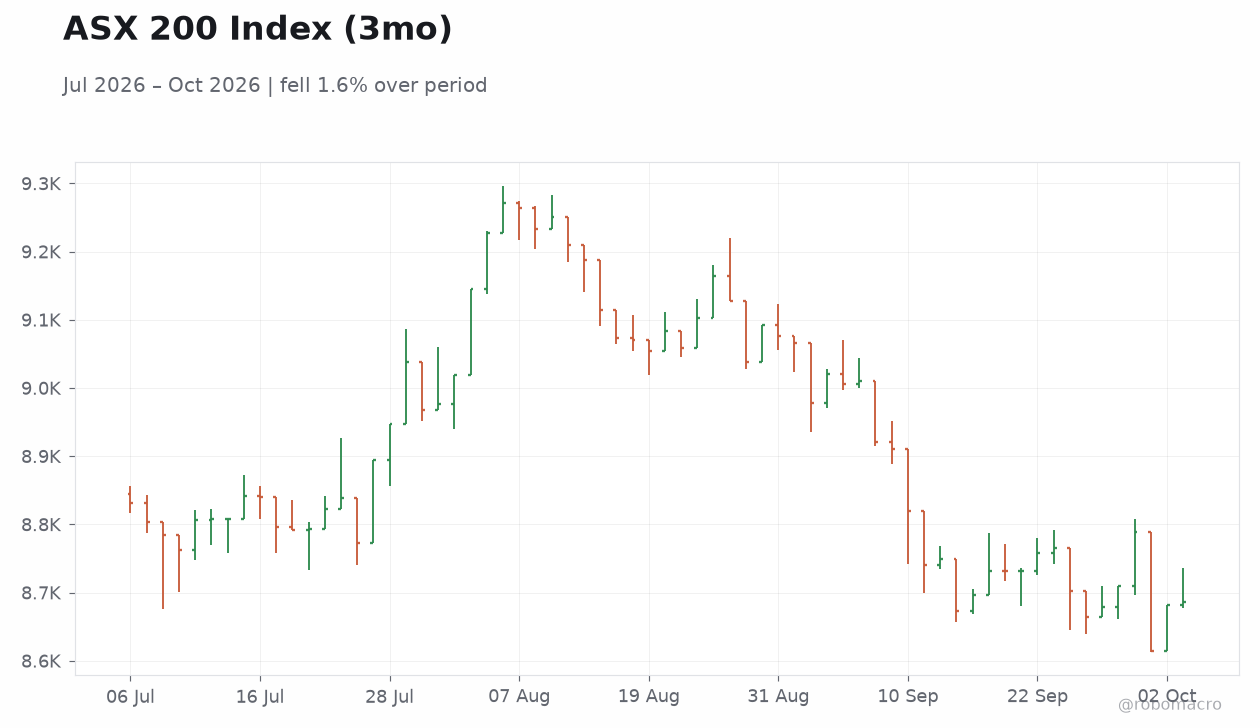
| ASX 200 | 8,686.40 | +0.05% |
| NZX 50 | 13,699.02 | +0.14% |
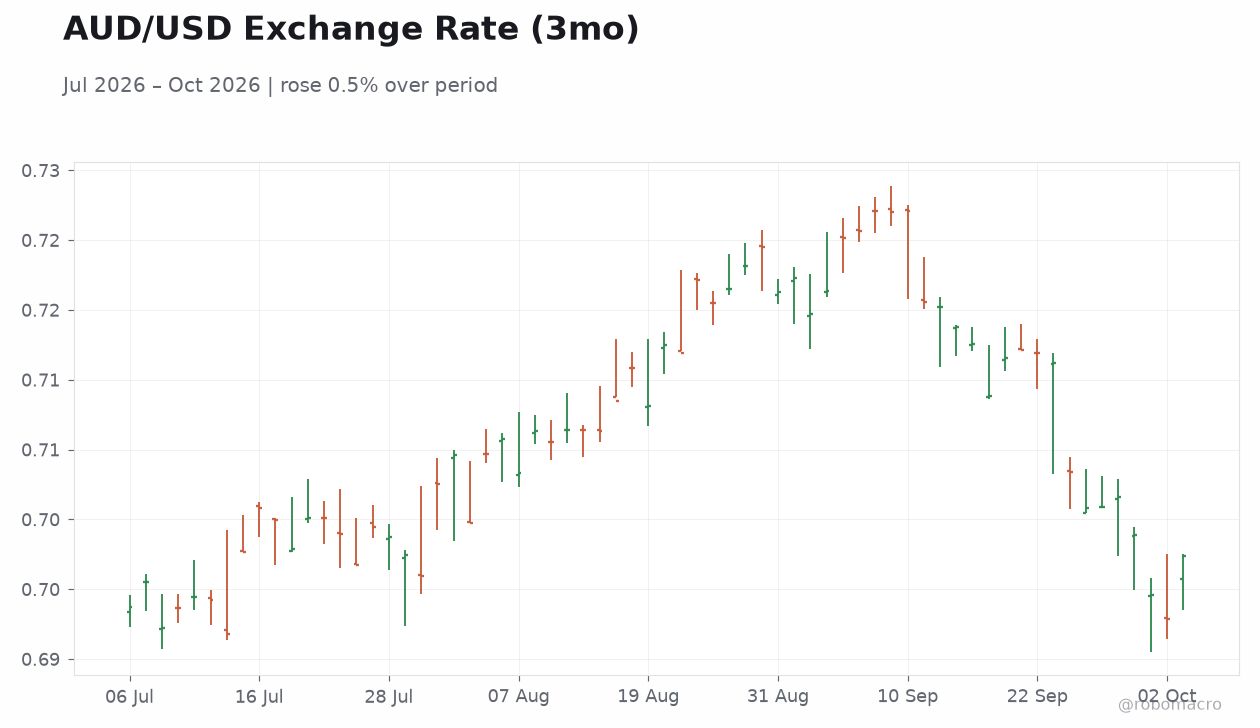
| AUD/USD | 0.70 | +0.65% |
| NZD/USD | 0.56 | -0.03% |
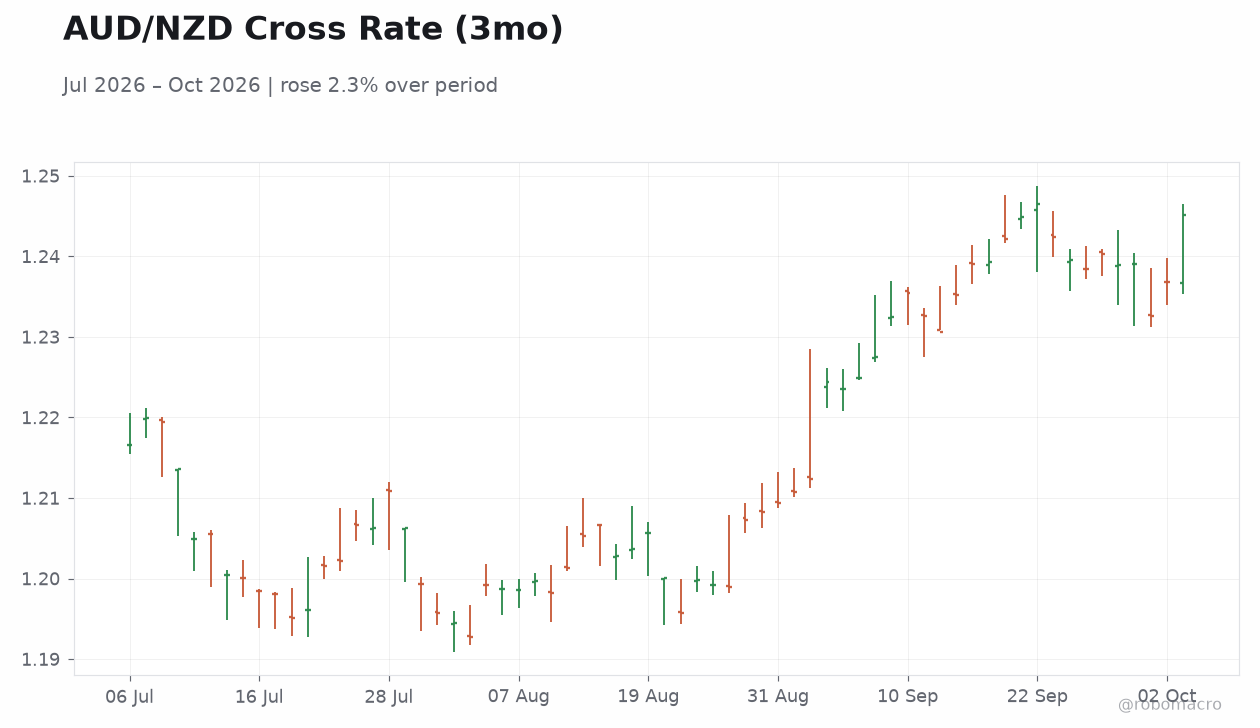
| AUD/NZD | 1.24 | +0.06% |
| BHP | 61.21 | +1.58% |
| Gold | 4,168.00 | +0.14% |
| Brent Crude | 100.16 | -2.04% |
| Bitcoin | 85,743.72 | -0.85% |
| Australia 2Y Govt Yield | - | - |
| Australia 10Y Govt Yield | - | - |
Prior Economic Events
| Data | Prior | Cons | Actual |
|---|---|---|---|
| No events available | |||
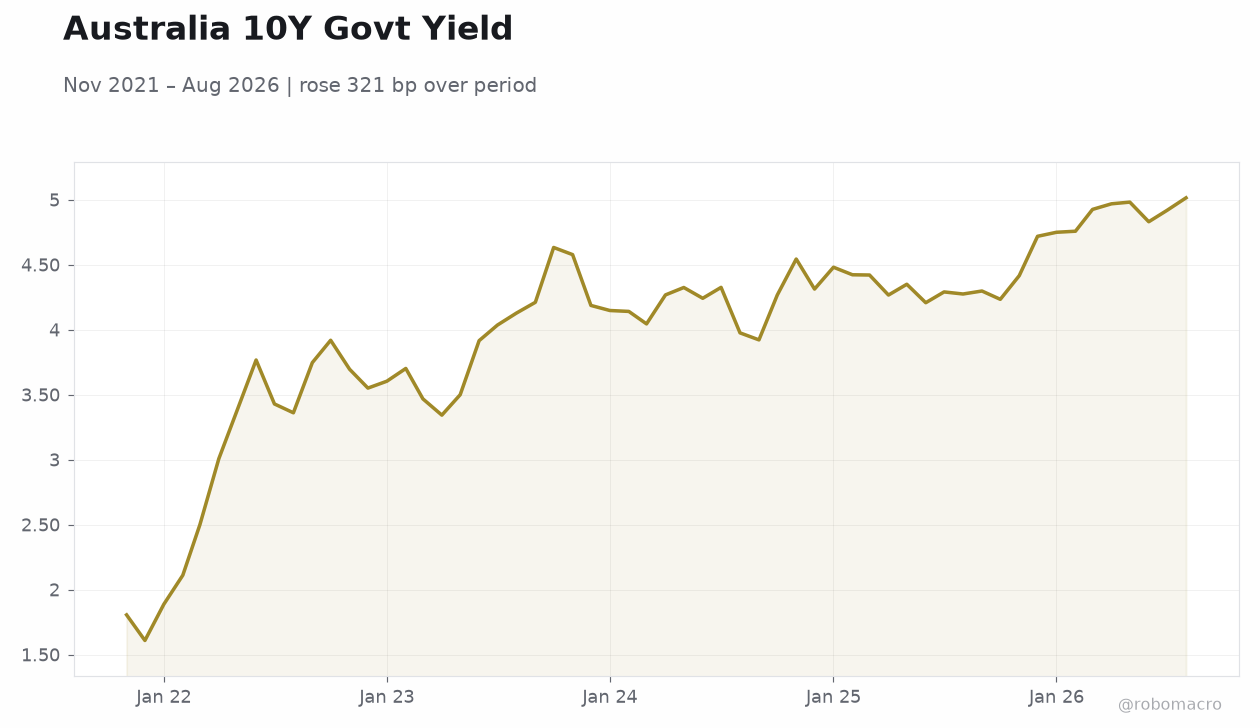 Australia 10Y Govt Yield | Type: macro_line | Yield %: 5.015 (2026-08-01) | Range: 1.609–5.015 | Trend(6pt): 1.806,3.604,4.045,4.35,4.919,5.015
Today's Economic Events
| Data | Prior | Cons | Time |
|---|---|---|---|
| Westpac Consumer Confidence Change | -5.20 | - | 19:30 |
| Westpac Consumer Confidence Index | 84.40 | - | 19:30 |
| Ai Group Industry Index | -3.50 | - | 18:00 |
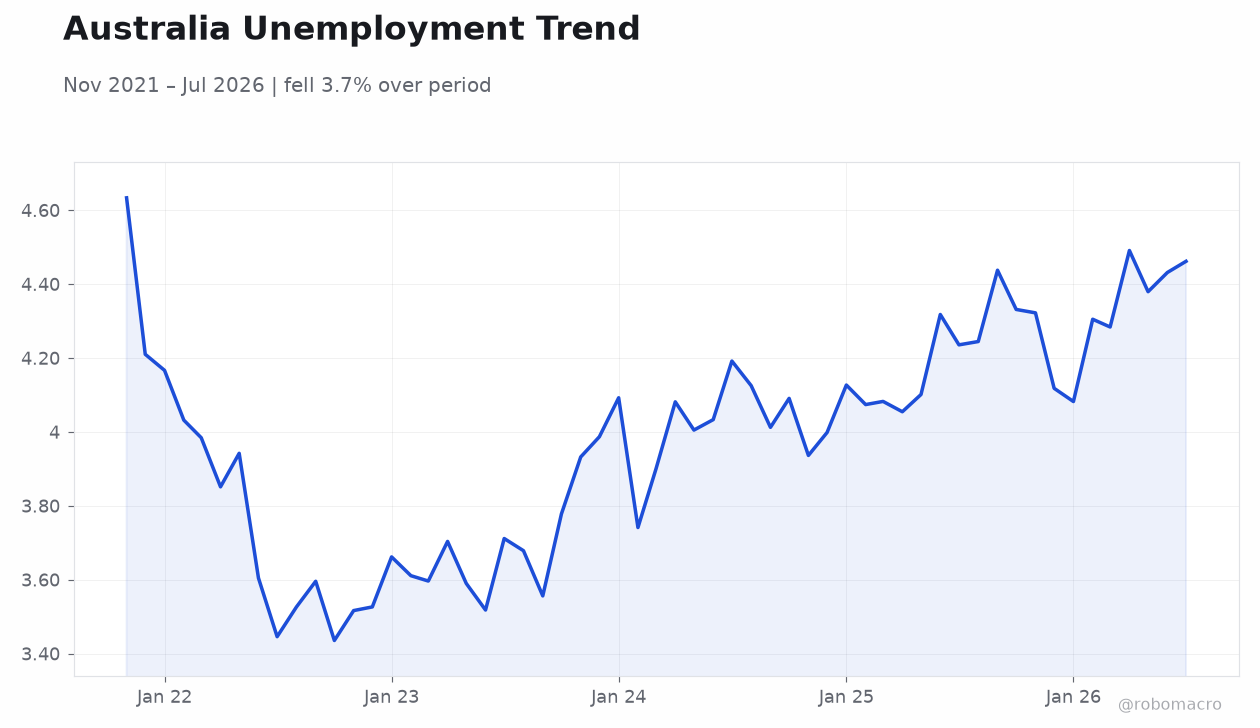
- Australian consumer confidence data due tonight amid ongoing inflation concerns at 4.00% YoY.
- Equity markets edged higher while AUD/USD rose 0.65% to 0.70 on mixed currency flows.
- RBA and RBNZ maintain separate easing paths with cash rate at 4.35% and OCR at 2.75%.
Yesterday's Recap
No economic releases occurred in Australia or New Zealand on 4 October. The ASX 200 closed at 8,686.40, up 0.05%, while the NZX 50 advanced 0.14% to 13,699.02. BHP rose 1.58% to 61.21, supporting broader sentiment.
AUD/USD gained 0.65% to 0.70, NZD/USD eased 0.03% to 0.56, and AUD/NZD ticked 0.06% higher to 1.24. Gold rose 0.14% to 4,168.00 while Brent Crude fell 2.04% to 100.16. News flow centred on persistent US inflation supporting the dollar and weighing on the Australian dollar, alongside Middle East tensions and cooler Australian inflation readings.
Treasurer Chalmers linked higher inflation and borrowing costs to US-Iran developments.
The Day Ahead
Westpac Consumer Confidence Change and Index print at 19:30 ET tonight, following prior readings of -5.2 and 84.4. The Ai Group Industry Index releases at 18:00 ET on 6 October after a prior print of -3.5. No RBA or RBNZ meetings or minutes are scheduled.
Markets will watch consumer sentiment for signs of resilience ahead of further policy easing. Commodity price updates, particularly iron ore and dairy, remain key external inputs for both economies.
Other Economic Notes
Australia’s 4.00% YoY CPI continues to shape RBA deliberations on the speed of rate cuts. New Zealand’s 4.10% YoY CPI reading supports the RBNZ’s more measured approach. Housing affordability pressures persist in both countries as higher-for-longer rates weigh on mortgage holders.
China demand signals remain the dominant external driver for Australian commodity exports and New Zealand dairy prices. BHP’s outperformance highlights mining sector resilience despite global uncertainty.
Global Macro News
Persistent US inflation concerns continue to bolster the dollar and pressure the Australian dollar. Middle East tensions have added to upside risks for energy prices and imported inflation in Australia. ↓ p.2