| Asset | Level | Change |
|---|---|---|
| ASX 200 | 8,783.90 | +0.01% |
| NZX 50 | 13,749.60 | -0.19% |
| AUD/USD | 0.70 | -0.00% |
| NZD/USD | 0.56 | -0.01% |
| AUD/NZD | 1.24 | +0.06% |
| BHP | 61.28 | -1.84% |
| Gold | 4,188.10 | -0.06% |
| Brent Crude | 105.98 | -0.63% |
| Bitcoin | 83,183.89 | +1.74% |
| Australia 2Y Govt Yield | 4.94% | +1 bp |
| Australia 10Y Govt Yield | 5.40% | +1 bp |
| Data | Prior | Cons | Actual |
|---|---|---|---|
| NAB Business Confidence Index | -8 | - | -13 |
| RBA Meeting Minutes | - | - | - |
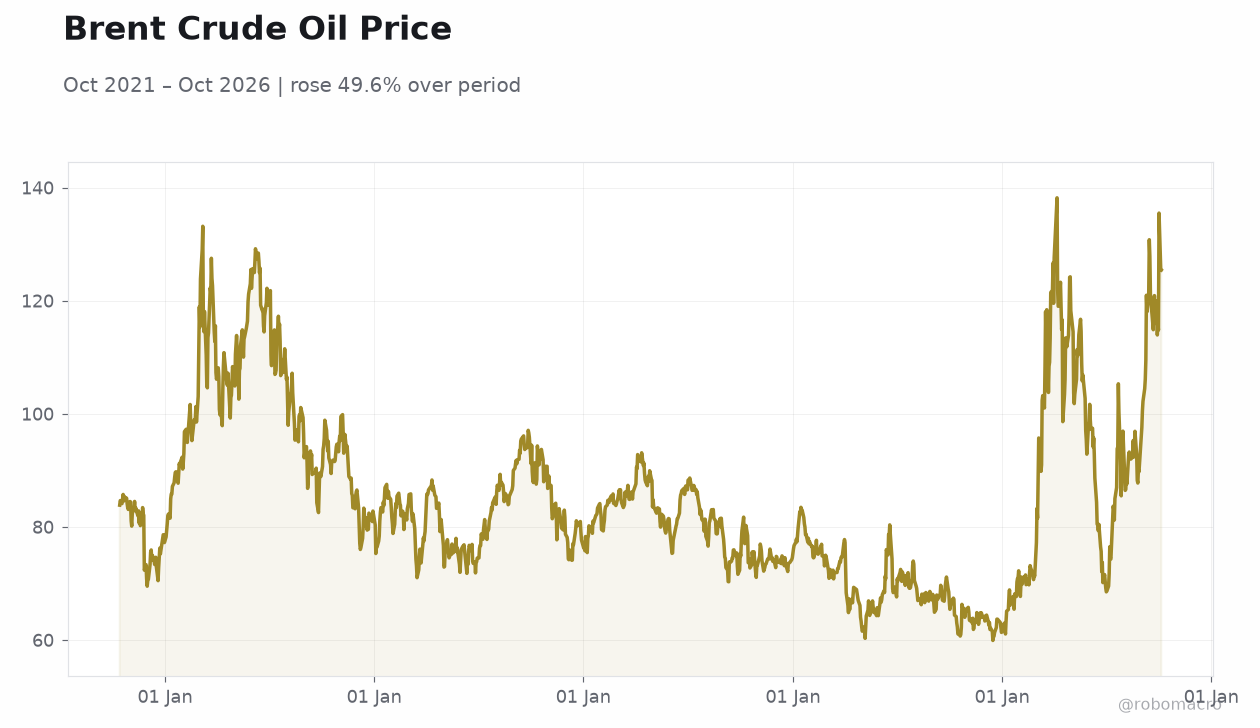
Brent Crude Oil Price | Type: macro_line | USD/bbl: 125.4 (2026-10-06) | Range: 59.93–138.2 | Trend(6pt): 83.86,82.59,91.49,71.98,125.5,125.4
| Data | Prior | Cons | Time |
|---|---|---|---|
| Employment Change | 39,500 | 20,000 | 20:30 |
| Full-Time Employment Change | -6,300 | - | 20:30 |
| Headline Unemployment Rate | 4.60 | 4.60 | 20:30 |
| Business NZ PMI | 53.10 | - | 17:30 |
| Trade Balance | -1,349m | - | 17:45 |
Australian data dominated the session. The NAB Business Confidence Index fell to -13 from -8 previously, a sharp deterioration in sentiment pointing to softening conditions across the non-mining economy even as the Reserve Bank retains a tightening bias. The release of the RBA meeting minutes provided the day's key policy signal, with the board flagging that the economy has less breathing room than previously assumed and that persistent inflation pressures may require the cash rate — currently 4.35% — to move higher if required.
Governor Bullock's commentary sought to distinguish between rising unemployment and outright job losses, suggesting the labour market is cooling in an orderly fashion rather than cracking. The AUD edged higher against a softer US dollar, with the hawkish RBA tone offering support, though gains were marginal with the pair holding near 0.70. Australian government yields firmed modestly, the 2-year up 1 bp to 4.94% and the 10-year up 1 bp to 5.40%.
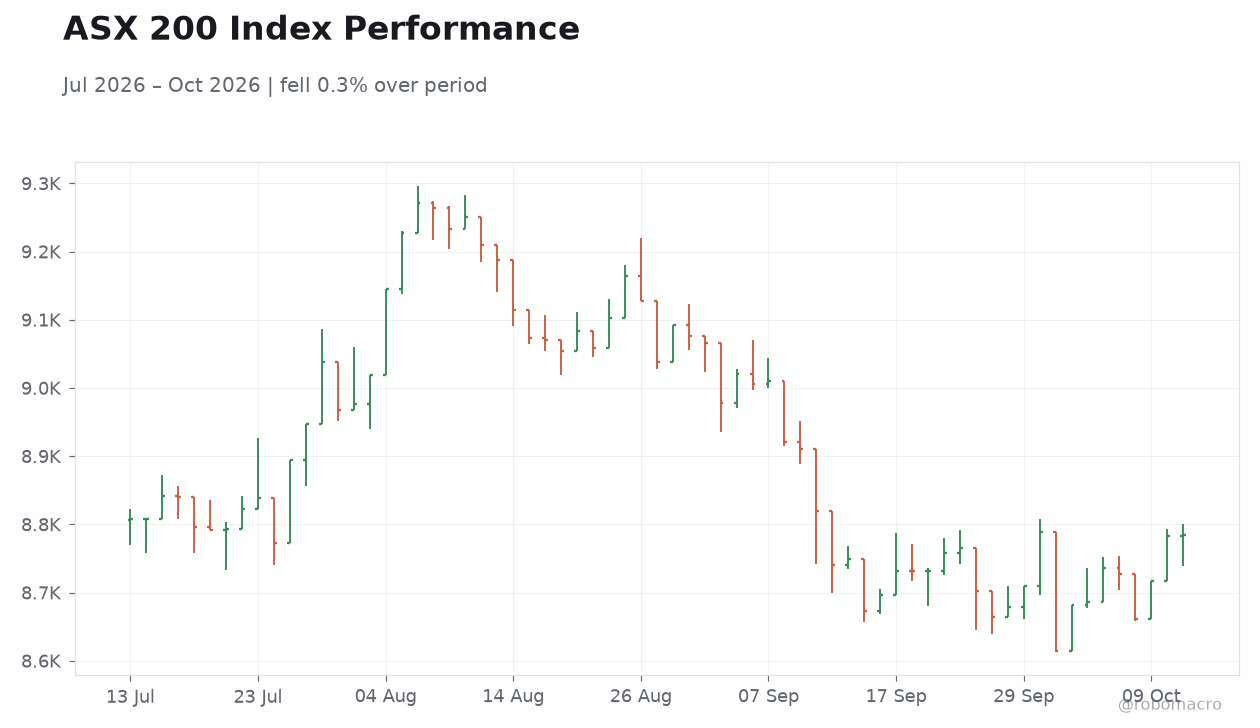
Equities were flat-to-softer: the ASX 200 closed at 8,783.90, essentially unchanged, while the NZX 50 slipped 0.19% to 13,749.60. BHP fell 1.84% to 61.28, a drag on the mining complex and a caution flag for the resources-heavy index. Brent crude eased 0.63% to 105.98, gold was little changed at 4,188.10, and Bitcoin rallied 1.74% to 83,184.
AUD/NZD firmed 0.06% to 1.24.
The calendar is quiet until late in the week for Australian data, with the highlight Thursday's labour force report. Consensus looks for employment growth of 20,000 following last month's outsized 39,500 gain, with full-time employment — which contracted by 6,300 last month — the component to watch for quality signals. The unemployment rate is expected to hold at 4.6%, a level consistent with an orderly cooling rather than rapid slack build-up.
↓ p.2
Subscribe to ANZ Macro Daily and get each new issue delivered to your inbox.
Already a member? Visit robomacro.com to log in and manage subscriptions, or use Forgot Password to set a password.
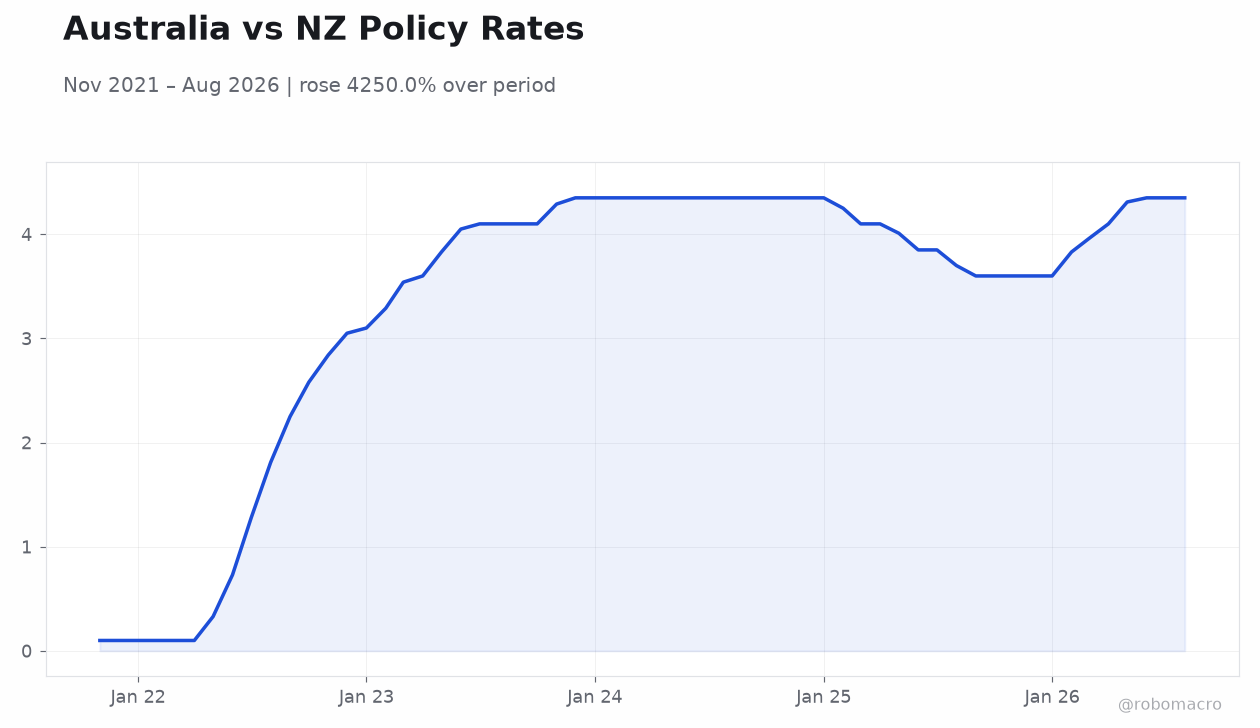
Australia vs NZ Policy Rates | Type: macro_line | AU Short Rate (%): 4.35 (2026-08-01) | Range: 0.1–4.35 | Trend(5pt): 0.1,3.1,4.35,4.01,4.35
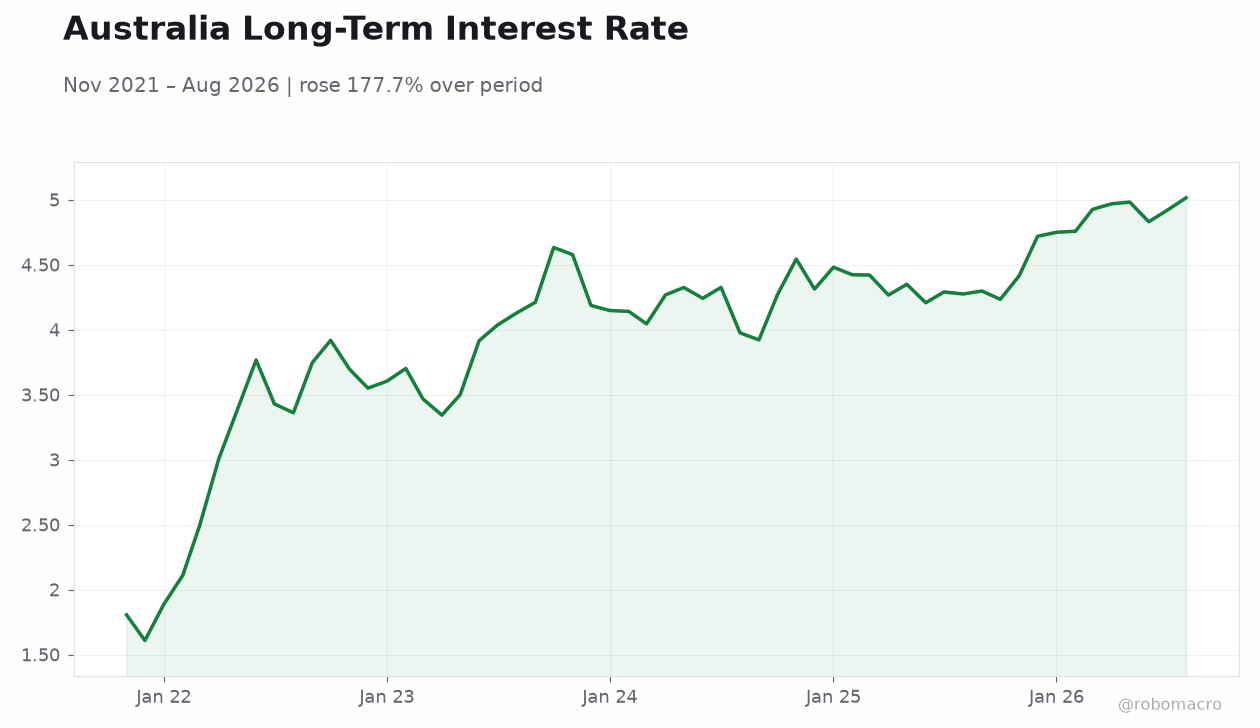
Australia Long-Term Interest Rate | Type: macro_line | 10Y Yield (%): 5.015 (2026-08-01) | Range: 1.609–5.015 | Trend(6pt): 1.806,3.604,4.045,4.35,4.919,5.015
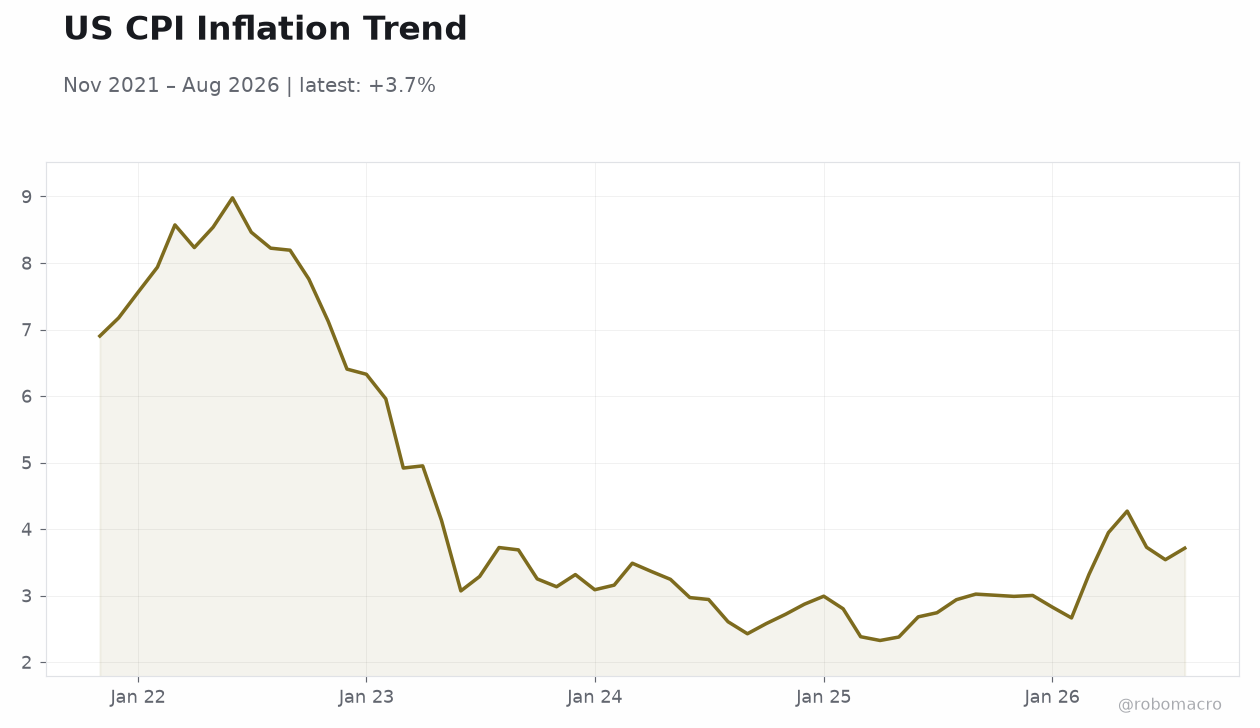
US CPI Inflation Trend | Type: macro_line | CPI Index YoY (%): 3.713 (2026-08-01) | Range: 2.325–8.979 | Trend(5pt): 6.902,6.327,3.487,2.377,3.713
ASX 200 Index Performance | Type: market_hloc | Index Level: 8784 (2026-10-13) | Range: 8614–9272 | Trend(6pt): 8808,9146,9128,8732,8717,8784
A softer print would reinforce the case that the RBA's tightening cycle is complete at 4.35%; a strong one, particularly in full-time roles, would keep the hike narrative alive given the minutes' emphasis on limited spare capacity. For New Zealand, the Business NZ PMI is due Wednesday, with the prior at 53.1 — a reading above 50 would confirm continued manufacturing expansion and support the view that the RBNZ's easing cycle, with the OCR at 2.75%, is nearing its trough. The NZ trade balance follows early next week.
Inflation dynamics remain the central macro tension in both economies. Australian CPI is running at 4.0% year-on-year, well above the RBA's 2-3% target band, while New Zealand CPI sits at 4.1%, similarly above the RBNZ's 1-3% range. The persistence of services inflation and the slow pass-through of earlier policy tightening are complicating the disinflation narrative in both countries.
NAB's chief economist has warned that sticky price pressures could keep the RBA's "finger on the trigger" on rates, a view echoed in the minutes' more hawkish tilt. The commodity complex offers mixed signals: Brent crude near 106 supports the terms of trade for both exporters, though BHP's 1.84% decline suggests some caution on the China-linked iron ore outlook, which remains the single most important external variable for Australian mining revenues.
The US dollar held firm near 18-month highs against a basket of peers, supported by safe-haven flows as the Middle East conflict escalated and investors positioned cautiously ahead of key US inflation data. That strength is a headwind for antipodean currencies, though the AUD found offsetting support from hawkish RBA repricing. Dollar-yen turned volatile around reports on Bank of Japan policy, briefly sliding to 157.83 as speculation swirls about the timing of further normalisation — a move with implications for carry trades that fund Antipodean exposure.
In Asia, the Hong Kong dollar pressed the weak end of its trading band, raising the prospect of HKMA intervention and underscoring tight HKD liquidity conditions. Regional central banks have reportedly been trimming dollar reserves, a gradual diversification theme. The rupiah strengthened as oil prices and the dollar index eased, offering a template for how commodity currencies can benefit from any dollar consolidation.
For AUD and NZD, the interplay of elevated US yields, risk sentiment tied to the Middle East, and China's growth trajectory will dominate the near-term path.
The RBA minutes were the week's key policy document, revealing a board increasingly concerned that the economy's spare capacity is thinner than assumed and that inflation at 4.0% remains too persistent for comfort. The cash rate stands at 4.35%, and the tone of the minutes — coupled with NAB's warning on sticky inflation — suggests the bar for a further hike is lower than market pricing implied a month ago. Bullock's public framing has been careful: rising unemployment does not equal job losses, and policy remains data-dependent with a tightening bias.
The Thursday labour report will be pivotal for the November meeting calculus; consensus of 20,000 jobs and a steady 4.6% unemployment rate would likely see the RBA hold, while upside surprises could trigger repricing toward a hike. Across the Tasman, the RBNZ cut the OCR to 2.75% at its October review, continuing an easing cycle that contrasts sharply with the RBA's hawkish hold. The divergence is now wide — 160 bp between the two policy rates — and favours AUD/NZD strength, consistent with the cross firming to 1.24.
The RBNZ's easing trajectory reflects a faster return of inflation toward target and a softer New Zealand economy, though the 4.1% CPI print suggests the final leg of disinflation may prove bumpy. The upcoming NZ PMI will gauge whether momentum holds above the 50 expansion threshold. Watch also for RBNZ commentary on the housing market, where lower mortgage rates are already stimulating activity and could feed into demand pressures that complicate the easing path.
The policy divergence trade remains the dominant theme in the cross-rate market.