RBA Minutes Flag Hike Risk; Confidence Slumps
-13 NAB Business Confidence
ASX 2008,727.90-0.64%
NZX 5013,760.39+0.08%
AUD/USD0.70+0.26%
NZD/USD0.56+0.10%
Market Snapshot
| Asset | Level | Change |
|---|
| ASX 200 | 8,727.90 | -0.64% |
| NZX 50 | 13,760.39 | +0.08% |
| AUD/USD | 0.70 | +0.26% |
| NZD/USD | 0.56 | +0.10% |
| AUD/NZD | 1.25 | +0.14% |
| BHP | 60.86 | -0.69% |
| Gold | 4,123.10 | -1.30% |
| Brent Crude | 105.99 | +0.28% |
| Bitcoin | 81,794.72 | -1.56% |
| Australia 2Y Govt Yield | 4.94% | +1 bp |
| Australia 10Y Govt Yield | 5.40% | +1 bp |
Prior Economic Events
| Data |
Prior |
Cons |
Actual |
| NAB Business Confidence Index | -8 | - | -13 |
| RBA Meeting Minutes | - | - | - |
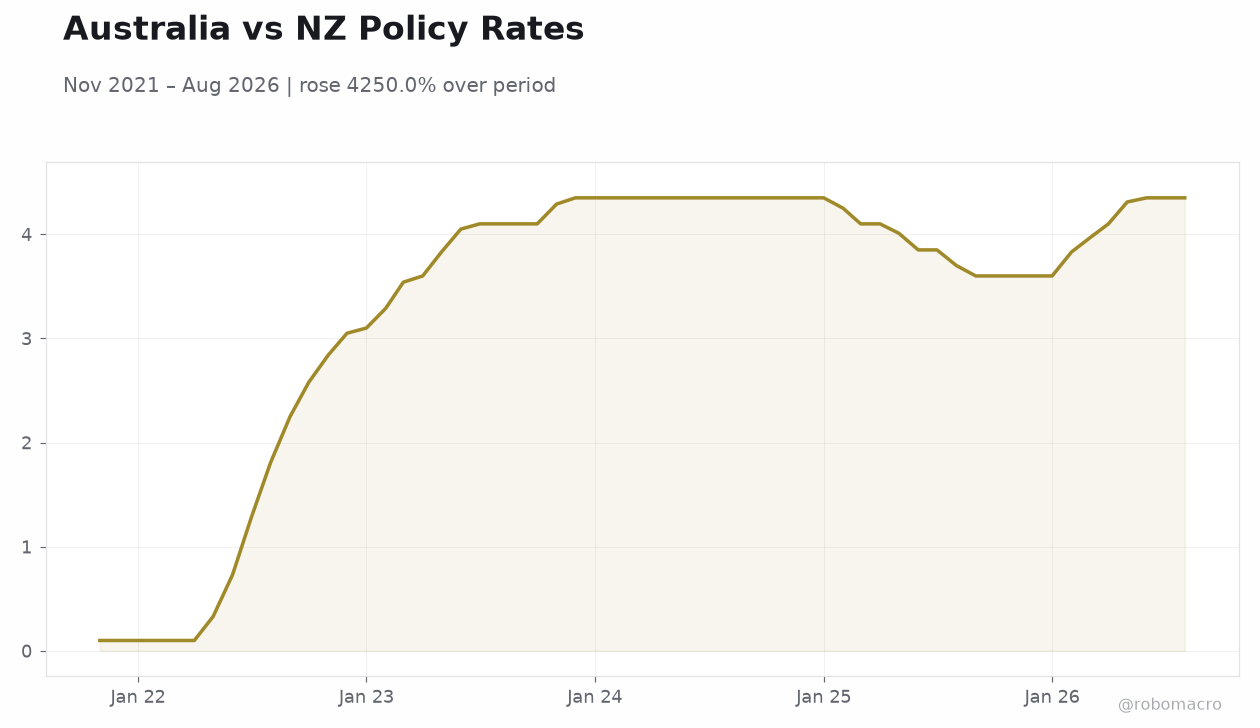 Australia vs NZ Policy Rates | Type: macro_line | AU Short Rate (%): 4.35 (2026-08-01) | Range: 0.1–4.35 | Trend(5pt): 0.1,3.1,4.35,4.01,4.35
Today's Economic Events
| Data |
Prior |
Cons |
Time |
| Employment Change | 39,500 | 20,000 | 20:30 |
| Full-Time Employment Change | -6,300 | - | 20:30 |
| Headline Unemployment Rate | 4.60 | 4.60 | 20:30 |
| Business NZ PMI | 53.10 | - | 17:30 |
| Trade Balance | -1,349m | - | 17:45 |
- Australian NAB business confidence slumped to -13 in September from -8, extending a run of weak sentiment readings and underscoring the squeeze from still-restrictive policy.
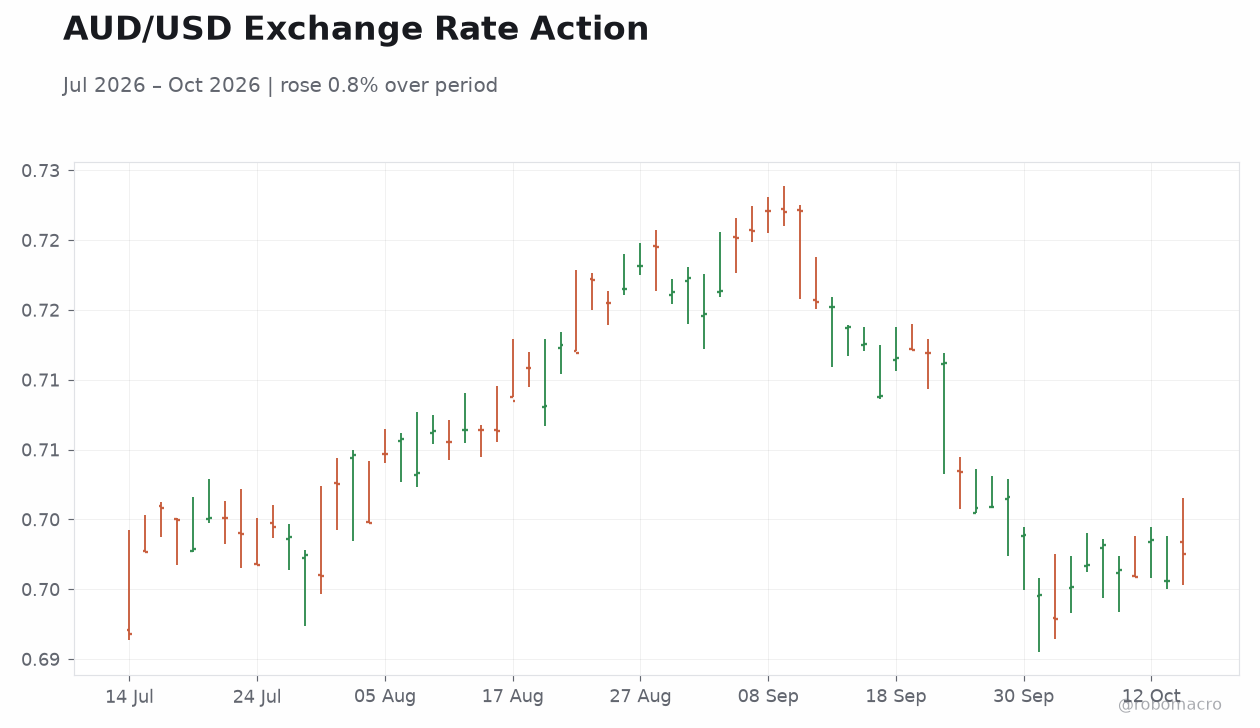
- RBA meeting minutes struck a hawkish tone, flagging possible future hikes if inflation proves sticky, keeping the AUD supported near 0.70.
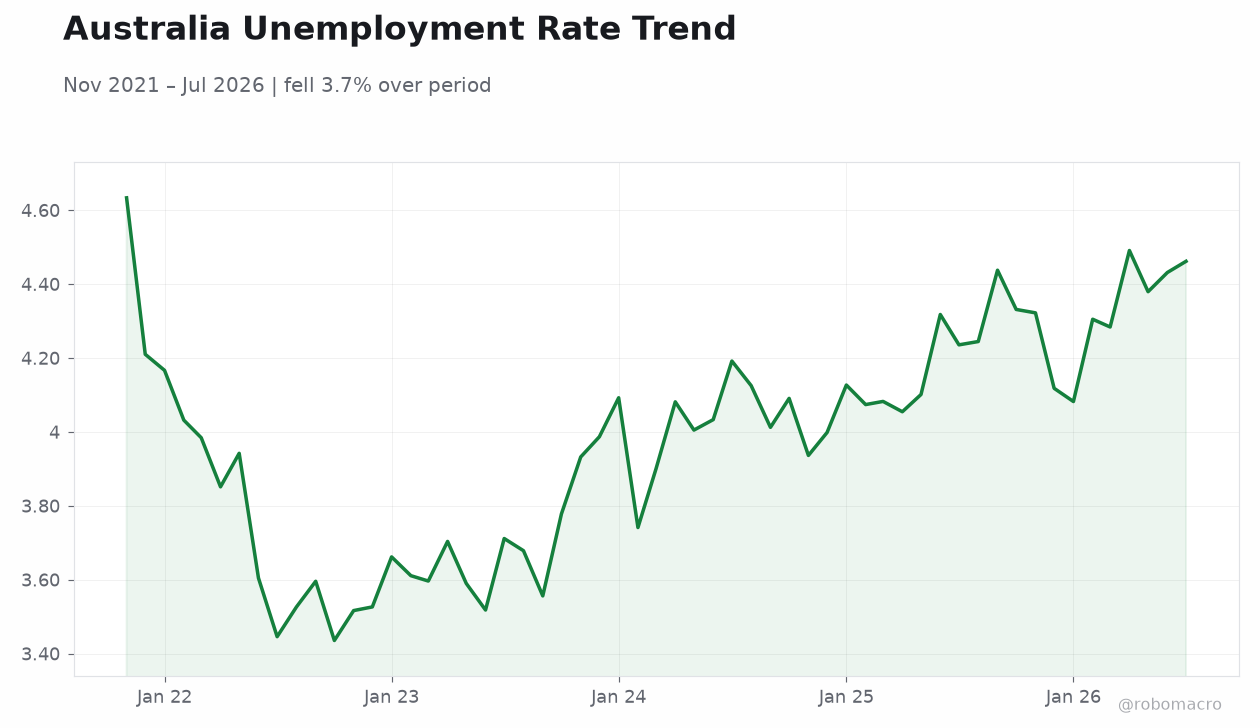
- Australian labour data dominates today's calendar, with consensus looking for 20,000 jobs added and the unemployment rate steady at 4.6%.
Yesterday's Recap
Australian markets closed lower, with the ASX 200 shedding 0.64% to 8,727.90 as mining heavyweight BHP slipped 0.69% to 60.86, while the NZX 50 edged up 0.08% to 13,760.39. The key Australian data print was the NAB business confidence index, which deteriorated to -13 from -8 previously, a high-impact release that reinforced concerns about the health of corporate sentiment under restrictive monetary conditions. The RBA meeting minutes were also published, and press coverage characterised the message as hawkish, with the central bank signalling possible future rate hikes if required to return inflation to target.
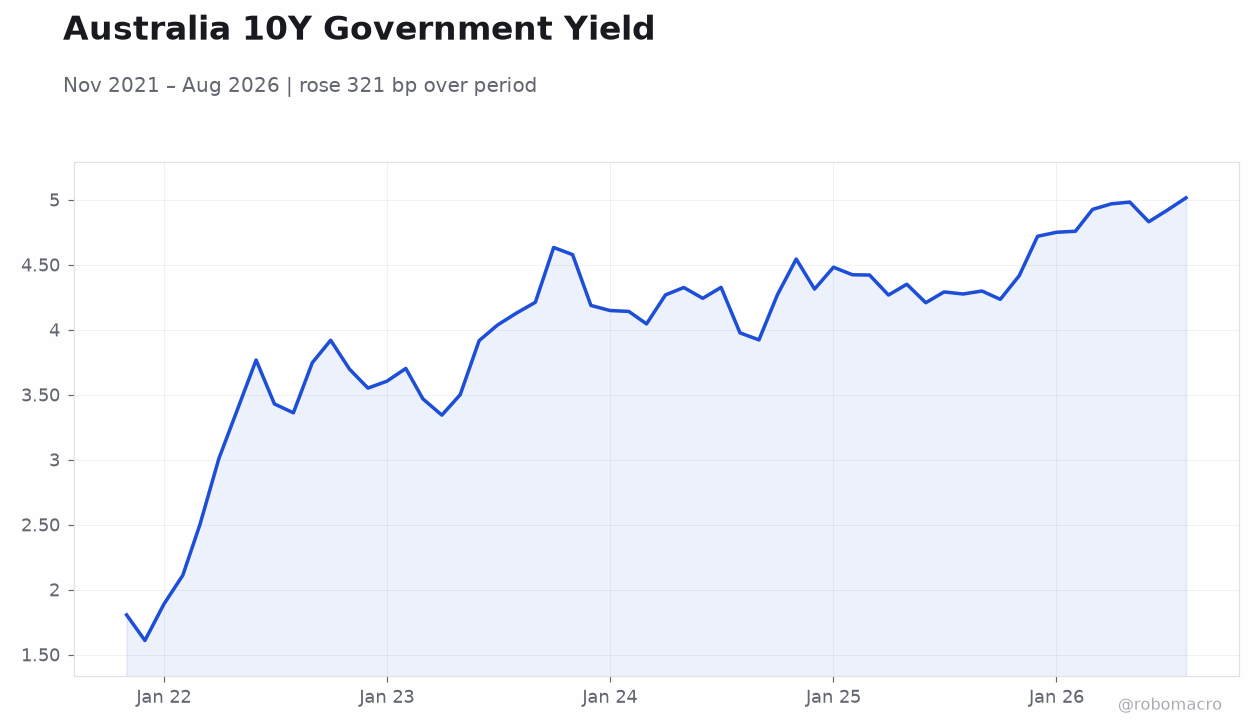
In FX, the AUD firmed 0.26% to 0.70 against a softer US dollar, with the hawkish RBA commentary cited as a supporting factor, while the NZD gained a more modest 0.10% to 0.56. AUD/NZD rose 0.14% to 1.25. Australian government bond yields ticked higher, with the 2-year up 1 bp to 4.94% and the 10-year up 1 bp to 5.40%, a modest steepening in a quiet session.
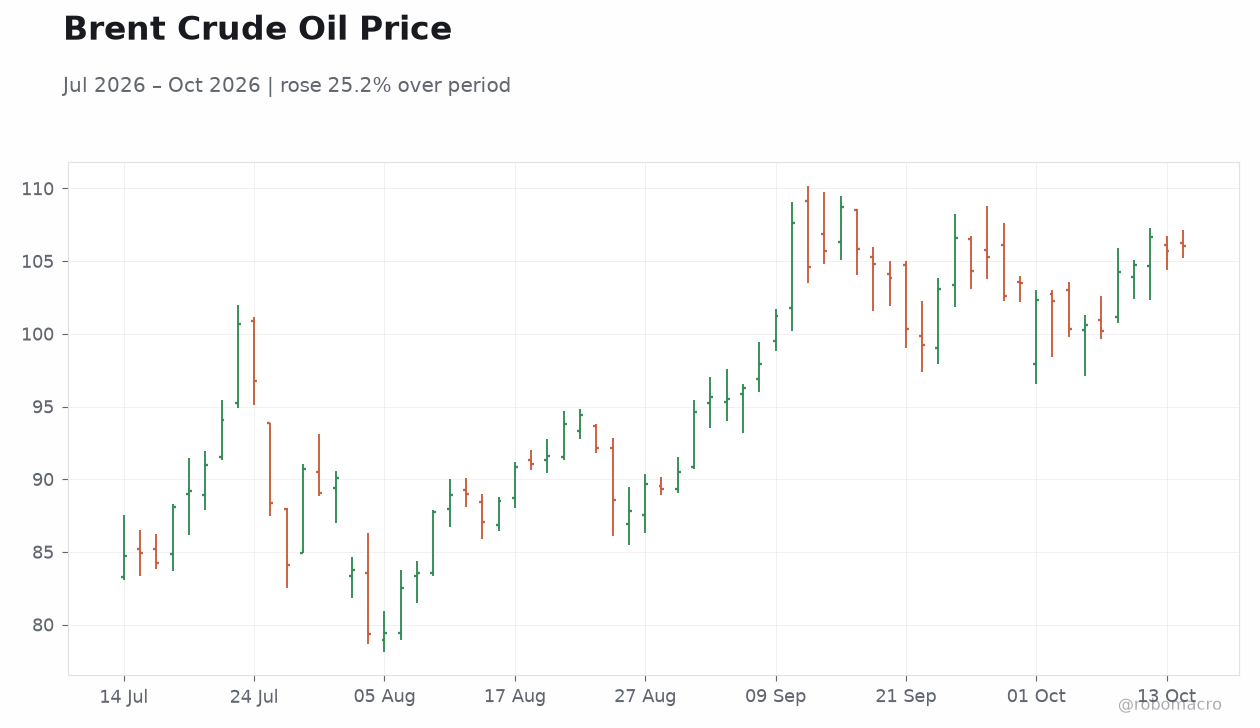
Elsewhere, gold fell 1.30% to 4,123.10 and Brent crude added 0.28% to 105.99, while Bitcoin dropped 1.56% to 81,794.72.
The Day Ahead
Today's Australian labour market report is the highlight, with employment change expected to slow to 20,000 from the prior 39,500 gain, and full-time employment watched closely after last month's 6,300 contraction. The headline unemployment rate is forecast to hold at 4.6%, and any deviation will shape expectations for the RBA's next move given the bank's stated data dependence. The composition of the print matters as much as the headline, with full-time hiring a better gauge of underlying labour demand.
Overnight into tomorrow, New Zealand's Business NZ PMI is due, with the prior reading at 53.1; a softer result would add to evidence of sluggish activity across the Tasman. Later in the week, New Zealand's trade balance is scheduled, following a prior deficit of 1.349 billion. Attention will also turn to how the labour data feeds into wage pressure dynamics, a key input for the RBA's inflation outlook.
Page 1
Never miss an issue
Subscribe to ANZ Macro Daily and get each new issue delivered to your inbox.
Already a member? Visit robomacro.com
to log in and manage subscriptions, or use Forgot Password to set a password.